






How to keep livestock building cladding sealed and washable
Panels for agricultural buildings
At a glance
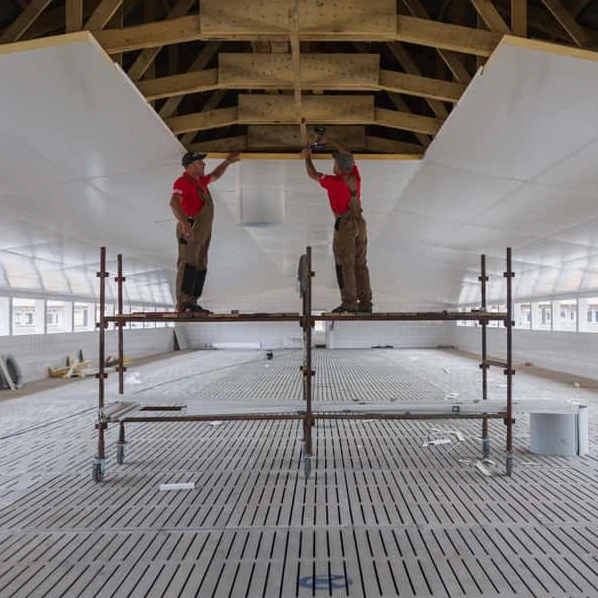
Wash water and substances present in a livestock building act on joints, fasteners and cut edges as well as on the broad faces of the panels. A laminate can help keep the room clean if the complete assembly suits the environment. Plan the cleaning procedure alongside the cladding: identify the dirt, washing frequency, water temperature and how cleaning agents are applied. Pressure washing, foaming and hand brushing place different demands on surfaces and joints. Give this information to the person specifying the cladding before the facings are ordered.
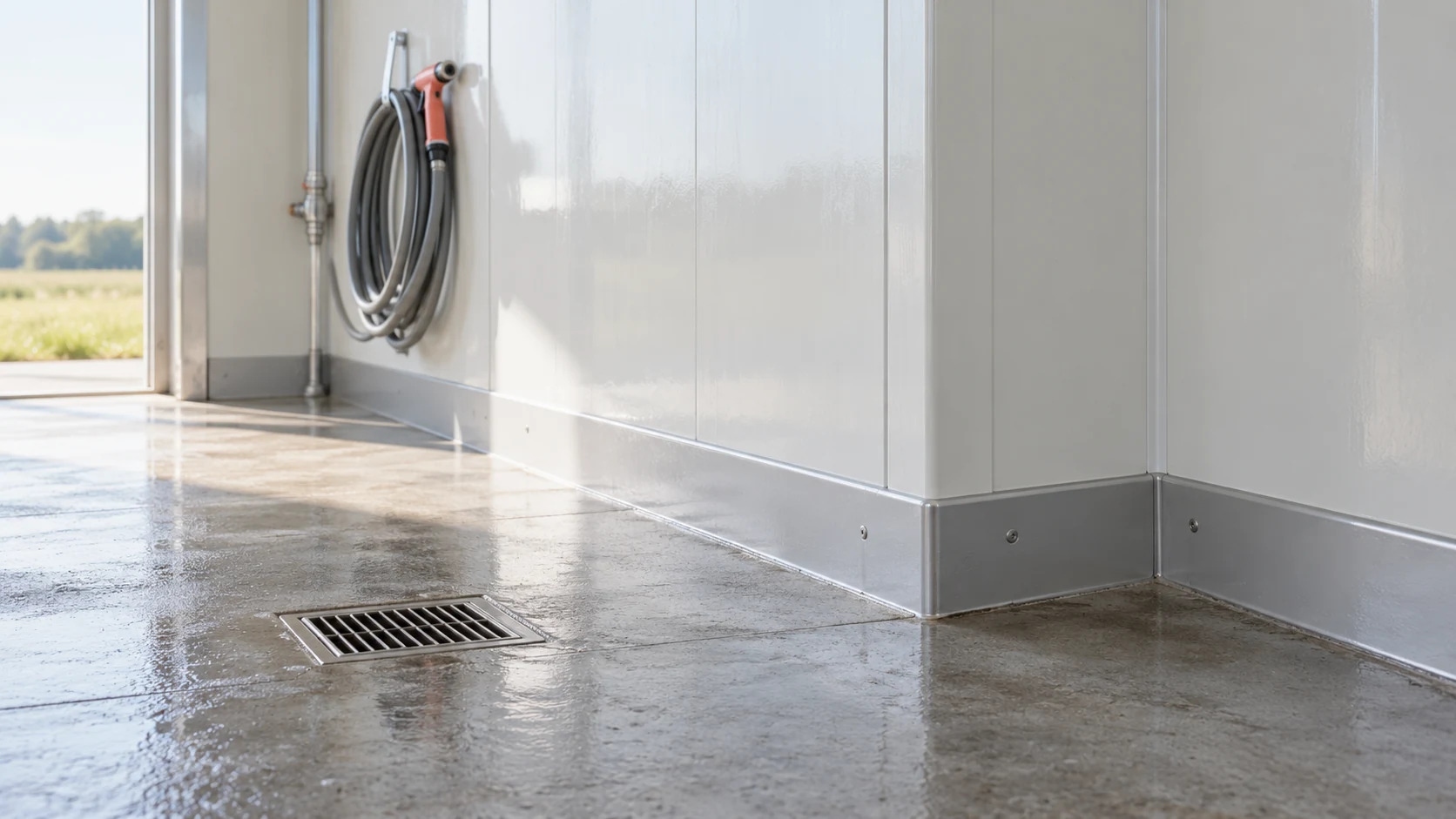
Describe how the building is actually washed
“Ammonia-resistant” without a product designation and exposure conditions is insufficient. Other substances, condensation and disinfectants also occur in the building. Check the actual combination. If husbandry or cleaning practices change, reassess the conditions of use.
Confirm cleaning-agent compatibility
Confirm the agent is suitable for the coating or laminate. Concentration, contact time and rinsing matter. A product that is mild at the recommended dilution may behave differently if it concentrates in a recess as water evaporates. Keep the cladding instructions available to cleaning staff.
If a trial is specified, agree its location and extent. No immediate colour change is not proof of long-term compatibility. Assess seals and fasteners too. Do not use the same procedure for coated steel and laminate simply because both are smooth and white.
Protect every cut and exposed end
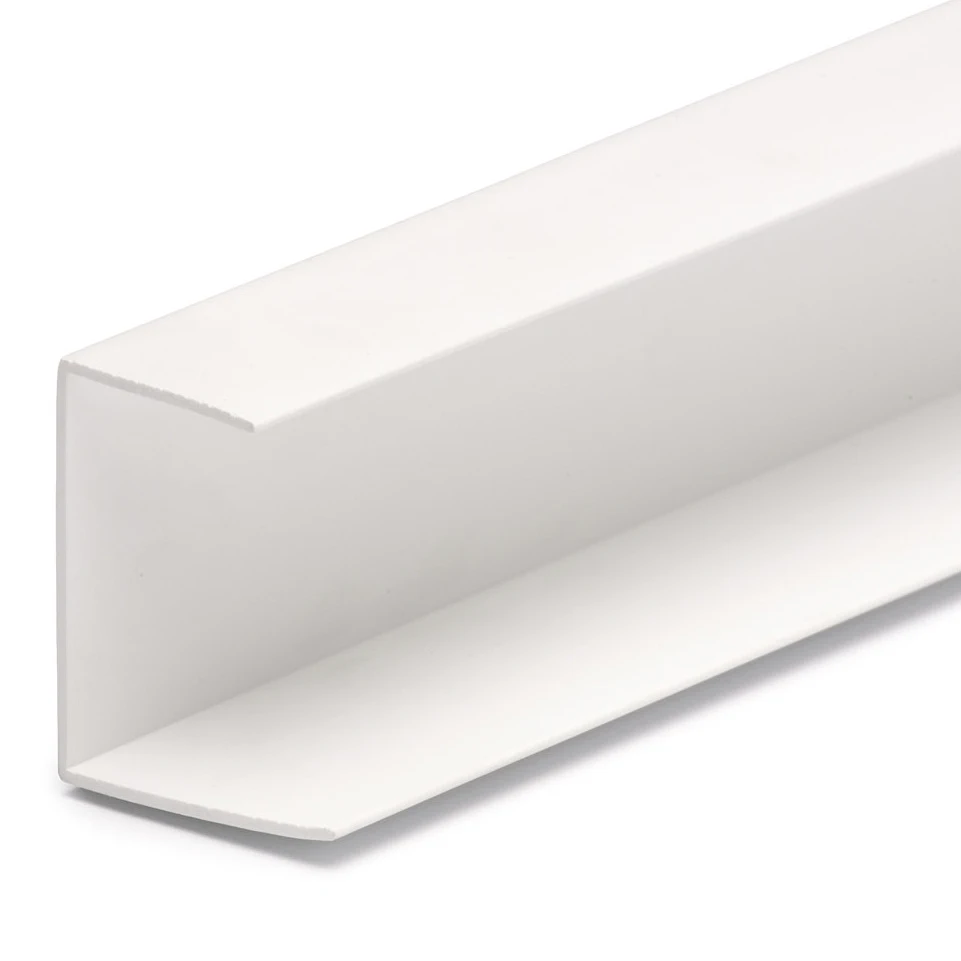
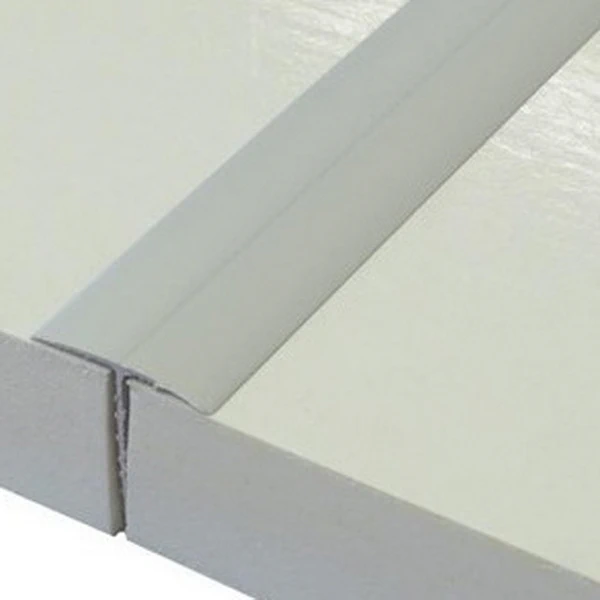
Close panel edges at openings, plinths and ceilings with the specified detail. Prevent water from reaching the core or getting behind the facing. Select cover profiles for the material and cleaning method. An unclosed gap can collect dirt even if the adjacent wall surface is spotless.
Check guards and equipment attachments in impact-prone areas. After damage, restore edge protection rather than merely concealing exposed foam. Group pipe and cable penetrations at planned locations to reduce unplanned holes requiring later sealing.
Assess the joints separately
A water jet directed into a joint acts differently from one hitting a flat face. The system instructions should establish permissible distance, direction and equipment settings. The resistance of the laminate does not permit maximum pressure at every seam.
Check gasket continuity, sealant adhesion and fastener condition. Thermal and mechanical movement can weaken connections over time. Details should allow inspection and replacement of worn parts. Drain wash water from the base so the wall closure does not stand in residual solution.
Keep a short inspection record
After washing, inspect corners, plinths, penetrations and equipment fixing points. Record the position of scratches, separation or leaks. Photographs taken from the same position show whether damage is progressing. Mark zones on a plan so staff and service contractors can identify the same spot.
Monitor ventilation and condensation as well. Persistent moisture may affect areas outside the normal cleaning route. A sudden local change may indicate a ventilation fault, leak or damaged detail. Find the cause before repeatedly washing the affected area.
Repair according to the panel construction
A damaged steel coating, cracked laminate and panel delamination need different repairs. Establish depth and extent first. Repair materials must suit the facing and its environment; do not use arbitrary paint or sealant simply to match the colour.
Replacement may be necessary if damage affects capacity, sealing or hygienic suitability. Assess the actual panel and function. After repair, check closures and cleanability. Record the repair method and date for the next inspection of that location.
Questions and answers
Can any pressure washer be used on laminate?
Follow the product and joint instructions. Pressure, temperature, distance and jet direction all affect the risk of damaging surfaces and seams.
Does a resistant facing protect an exposed core?
No. Cuts and openings need suitable closures. Protection depends on the complete detail, not on the flat laminate face alone.

Free quote
What to include in your enquiry
Tell us how you plan to use the material, the dimensions and the quantity you need. Include the thickness, grade or variant name, along with the delivery town or your preferred collection branch. For a specific product, add its name or a link to the product page. We will reply to the email address you provide to discuss availability and the terms of your order.
Read next
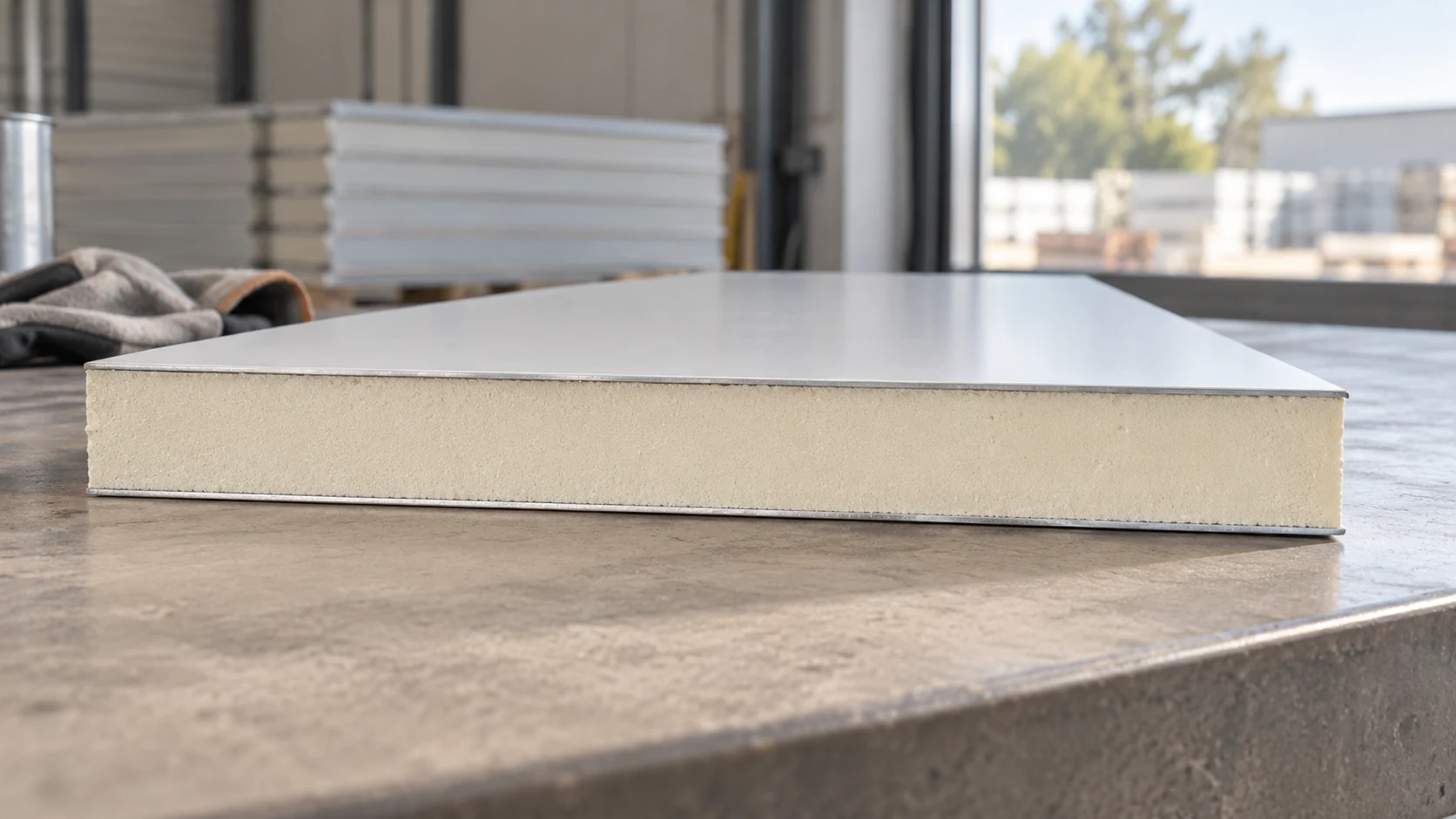
A price per square metre is only the starting point for a thin wall panel. Identify the core, facings and sales unit,…
In a passive house, comfort depends partly on everyday habits. Insulation limits heat loss and a well-adjusted ventilation system replaces stale air.…
The panel price per square metre is only one part of a wall budget. Include flashings, seals, fixings, transport, equipment hire and…

Two prices per square metre can look different and still produce the same price for one sheet. The difference is the area…
Mineral wool panels combine finished facings, insulation and defined fire performance. Choosing them affects wall thickness, weight and installation, so consider all…
Two roofers can quote different prices per square metre for the same slope because they are pricing different work. One may include…
An English or German quotation may state a perfectly valid thermal conductivity without answering the question in a Polish specification. What matters…
Completed roofing work should leave the building manager with clear information about what was done and the conditions relevant to later servicing.…
