






Steel or PVC gutters: which system suits your home?
Gutters and flashings
Size the drainage before comparing steel with PVC. Mark the roof area feeding each gutter, the valleys that concentrate runoff and the positions of outlets and downpipes. A change of material cannot make up for an undersized outlet. Once the layout is known, compare complete systems including brackets, corners, downpipe fittings and installation. Steel offers stiffness and a finish that can match a metal roof. PVC is light and does not rust, but needs more room for thermal movement. Both systems rely on the right supports and on outlets that can be reached for cleaning.
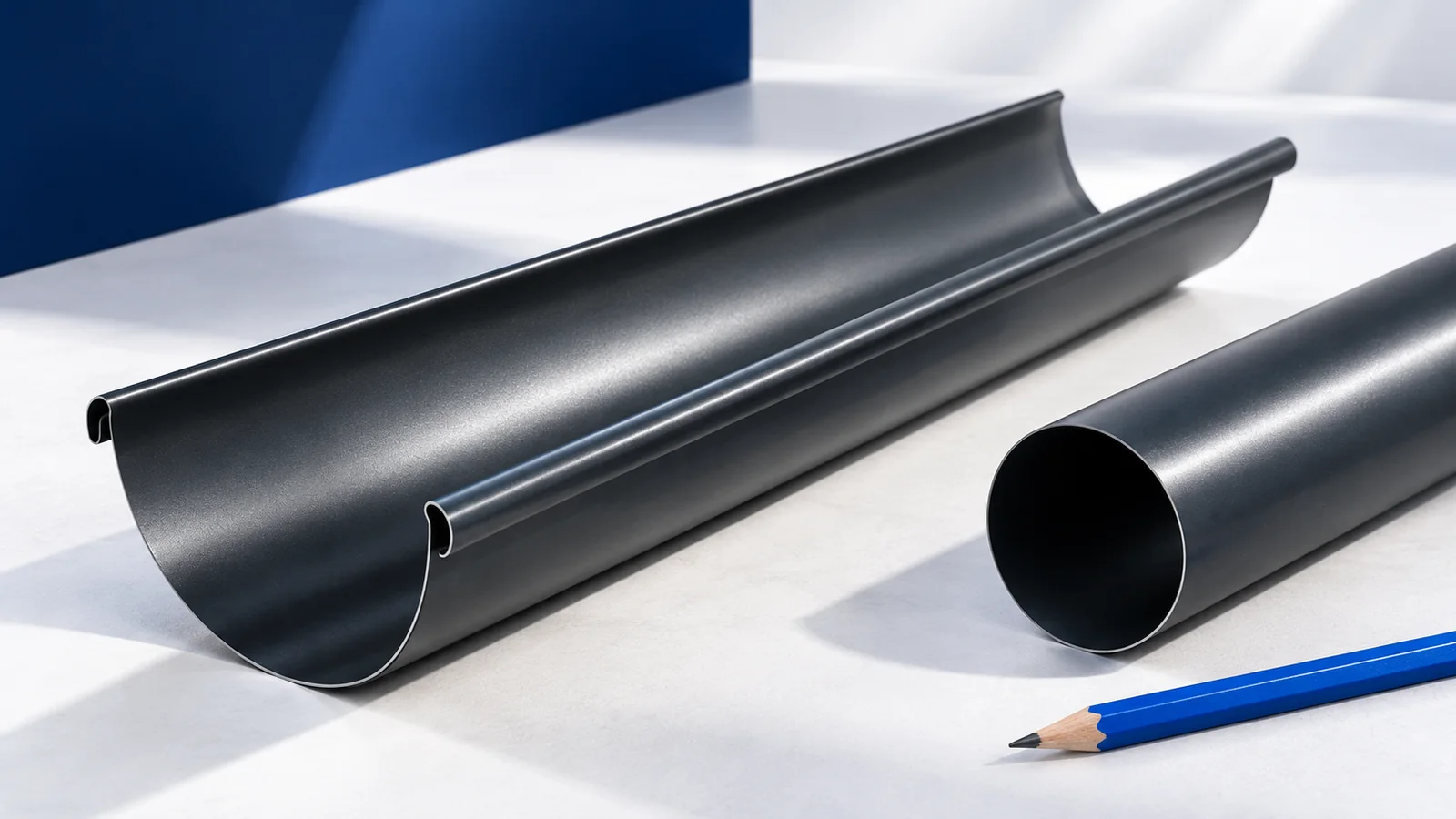
What should you establish before choosing a material?
Determine the catchment area for each gutter run. Roof shape, valleys and the number and positions of downpipes all matter. Runoff from several roof sections can converge at one point. Eaves length alone is not enough to select gutter size or outlet numbers.
Check where the water goes after it leaves the downpipe. A pipe ending at the foundations is not a complete drainage solution. Allow access to clean the system and inspect its joints. Compare materials for that defined layout: a gutter that lacks capacity does not gain it simply by changing material.
What are the advantages of steel gutters?
Steel components are stiff and pair well with tile-effect or trapezoidal steel roofing. A metallic coating, often supplemented by an organic finish, protects the steel. Different colours and cross-sections allow the drainage to suit either traditional eaves or a modern building.
Protect the coating during transport, cutting and installation. Damaged areas and metal swarf left on the finish may start to corrode. In coastal or industrial locations, check the specified exposure limits. Protection levels and sheet thicknesses vary: consult the data for the actual system.
When should you consider PVC gutters?
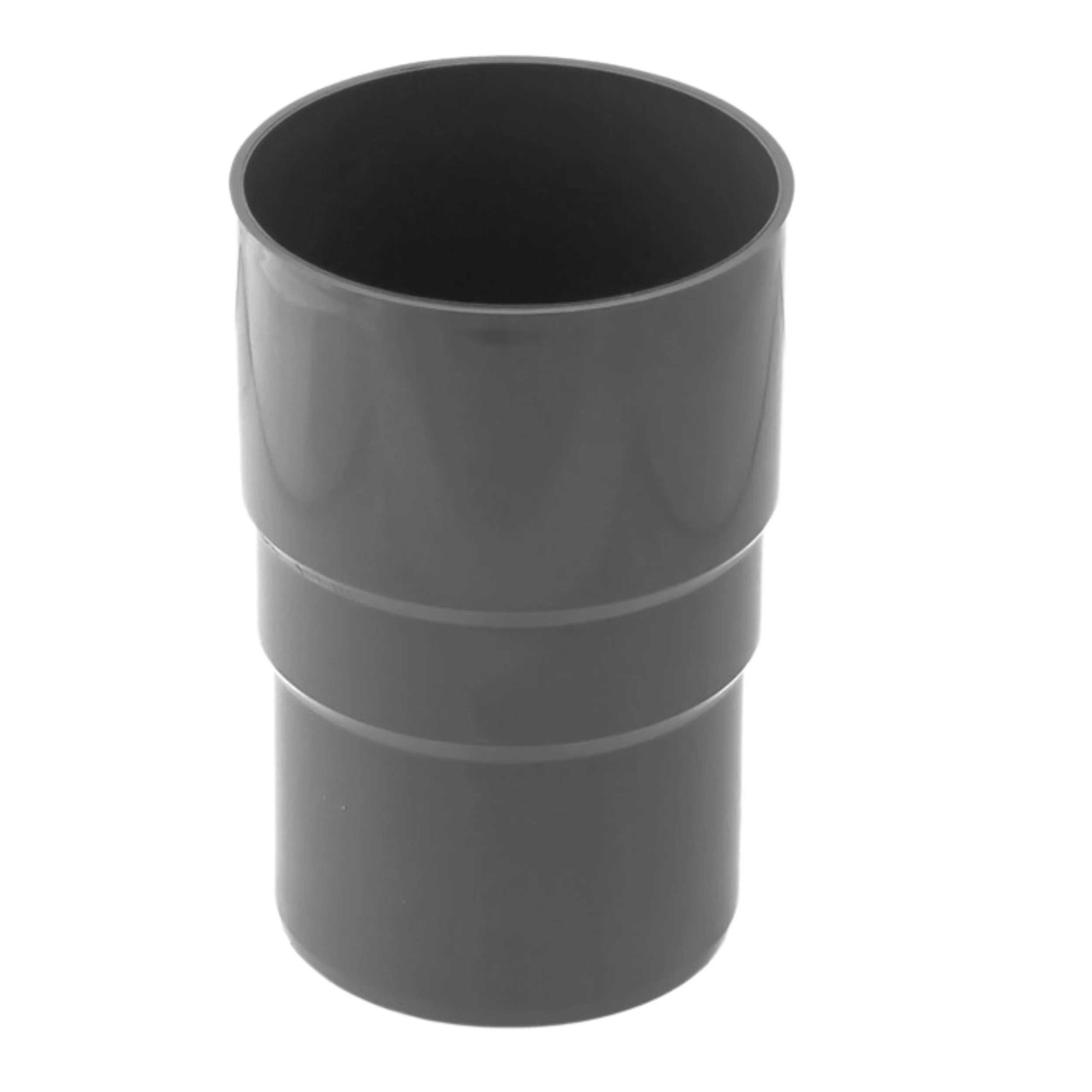
PVC components are light and do not rust like unprotected steel. This makes them easy to move and handle on smaller buildings. The system includes gutters, brackets, corners, outlets and downpipes. Choose compatible parts: a similar-looking connector may not fit a different product range.
PVC expands and contracts more than steel as the temperature changes. Leave the specified clearances and allow the components to slide where required. Do not lock a joint that is designed to move. Observe the product’s installation temperature limits, particularly in cold weather.
What most affects the life of either system?
Use the bracket spacing specified for the gutter and provide support at corners and outlets. No one spacing suits every product. Maintain the fall required by the design or instructions. Long unsupported runs can distort; guessing at a thicker gutter is no substitute for proper support.
Snow sliding off the roof is another concern. Gutters are not snow guards. If snow retention is needed, design it separately. With either material, check outlets after leaf fall: a blocked outlet can send water over the façade or leave it to freeze at joints.
How do you compare the costs of steel and PVC?
Compare prices for the same layout, counting all brackets, corners, stop ends, unions, pipe clips and pipe lengths. Include labour and scaffolding where required. The gutter lengths alone may be only a fraction of the bill. A house with many corners needs more fittings than one with two straight eaves.
Check the warranty scope and availability of replacement parts. Appearance, watertightness and material durability may have separate terms. Compatibility with new parts matters if an extension is planned. The lowest purchase price can be offset by difficult servicing or an uncommon replacement fitting.
Can components from different systems be combined?
Matching diameter and colour do not establish compatibility. Unions, seals and brackets are designed for specific profiles. An improvised combination may fail to seal or prevent thermal movement. For a repair, identify the existing system and measure it before choosing components.
If parts are obsolete, compare renewing a complete run with adapting a substitute. A local change of material also needs a properly detailed transition. A confirmed combination gives you a clear basis for acceptance; a set of parts that merely look alike does not.
Which option works best in practice?
Consider steel where stiffness and a close visual match to metal roofing are priorities. PVC suits a light, straightforward installation if allowance is made for expansion. Base the decision on exposure, design and the specific offer. Joint tightness depends on more than the gutter material.
At handover, check falls, the stability of brackets and the seating of seals. Make sure outlets are clear and downpipes securely fixed. Keep the system instructions. After a gale or heavy rain, inspect visible joints from a safe position. Regular checks help either system drain as intended.

Free quote
What to include in your enquiry
Tell us how you plan to use the material, the dimensions and the quantity you need. Include the thickness, grade or variant name, along with the delivery town or your preferred collection branch. For a specific product, add its name or a link to the product page. We will reply to the email address you provide to discuss availability and the terms of your order.
Read next
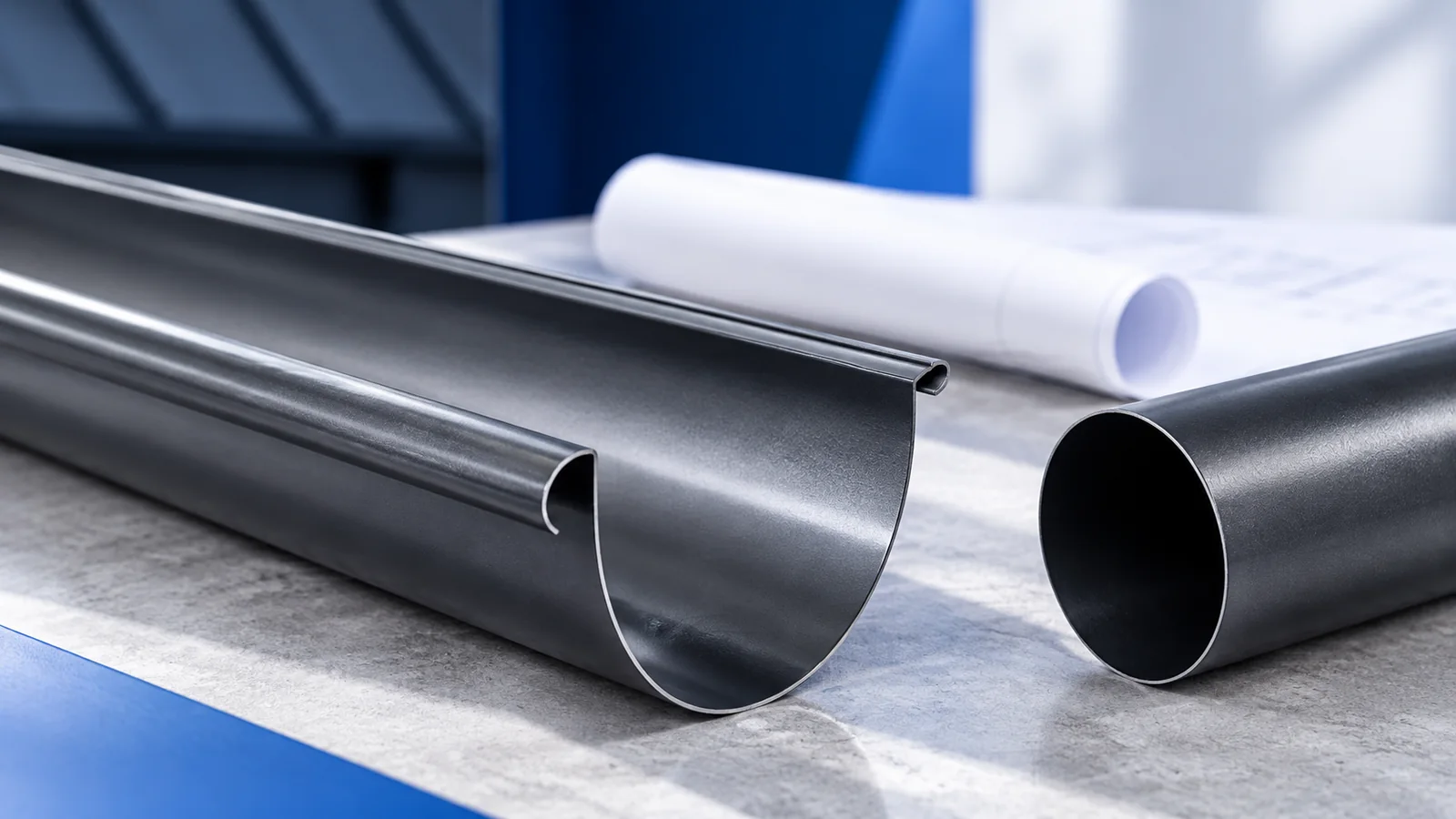
Square gutters emphasise the straight edge of a metal roof. Their outline tells you little about how much rainwater they can carry.…
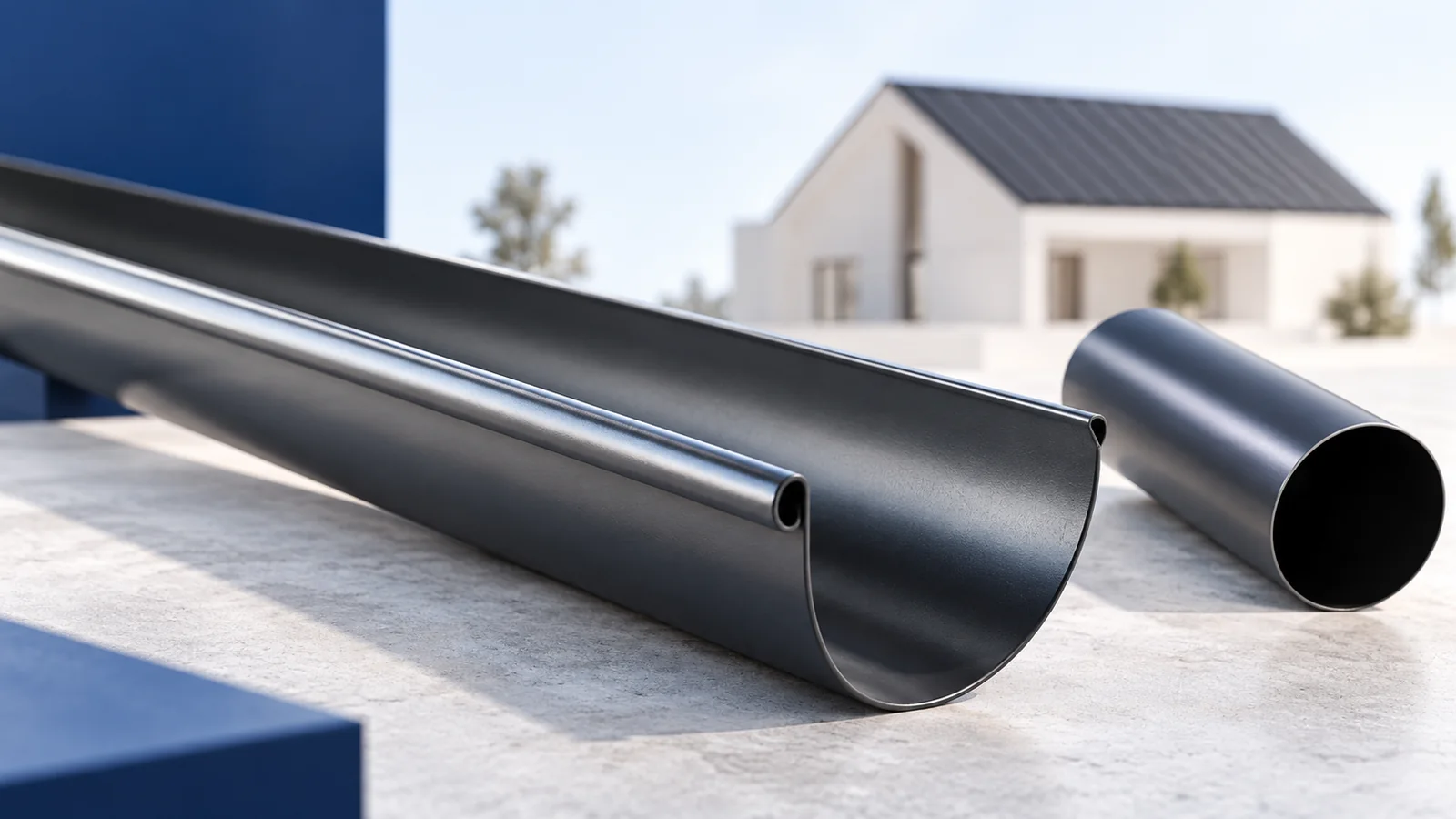
A complete roof price covers the load-bearing structure, the layers beneath the covering, the covering itself and the details that keep water…
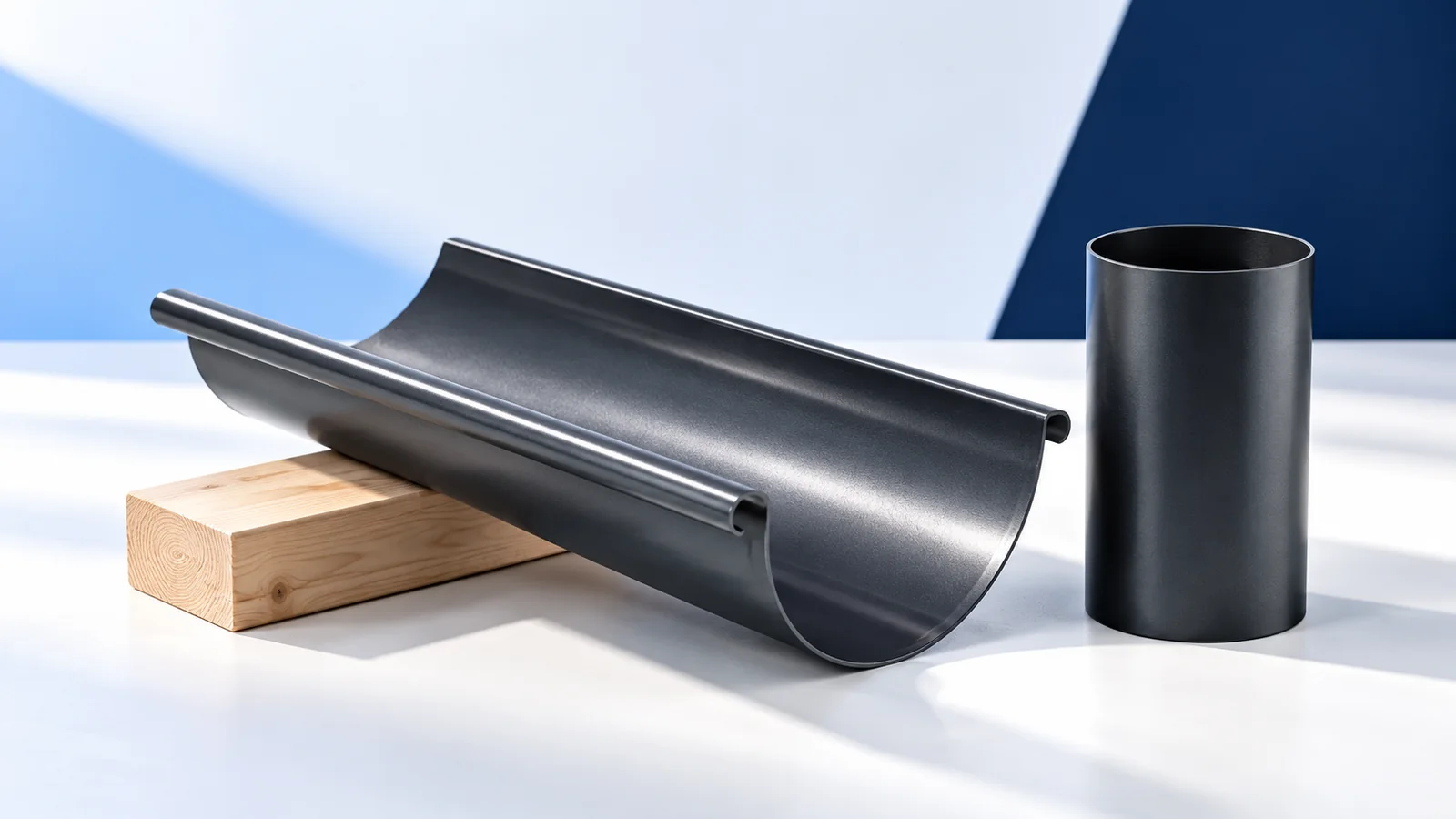
A concealed gutter can give a metal roof a straight eaves line if the detail leaves room for the gutter, the downpipe,…
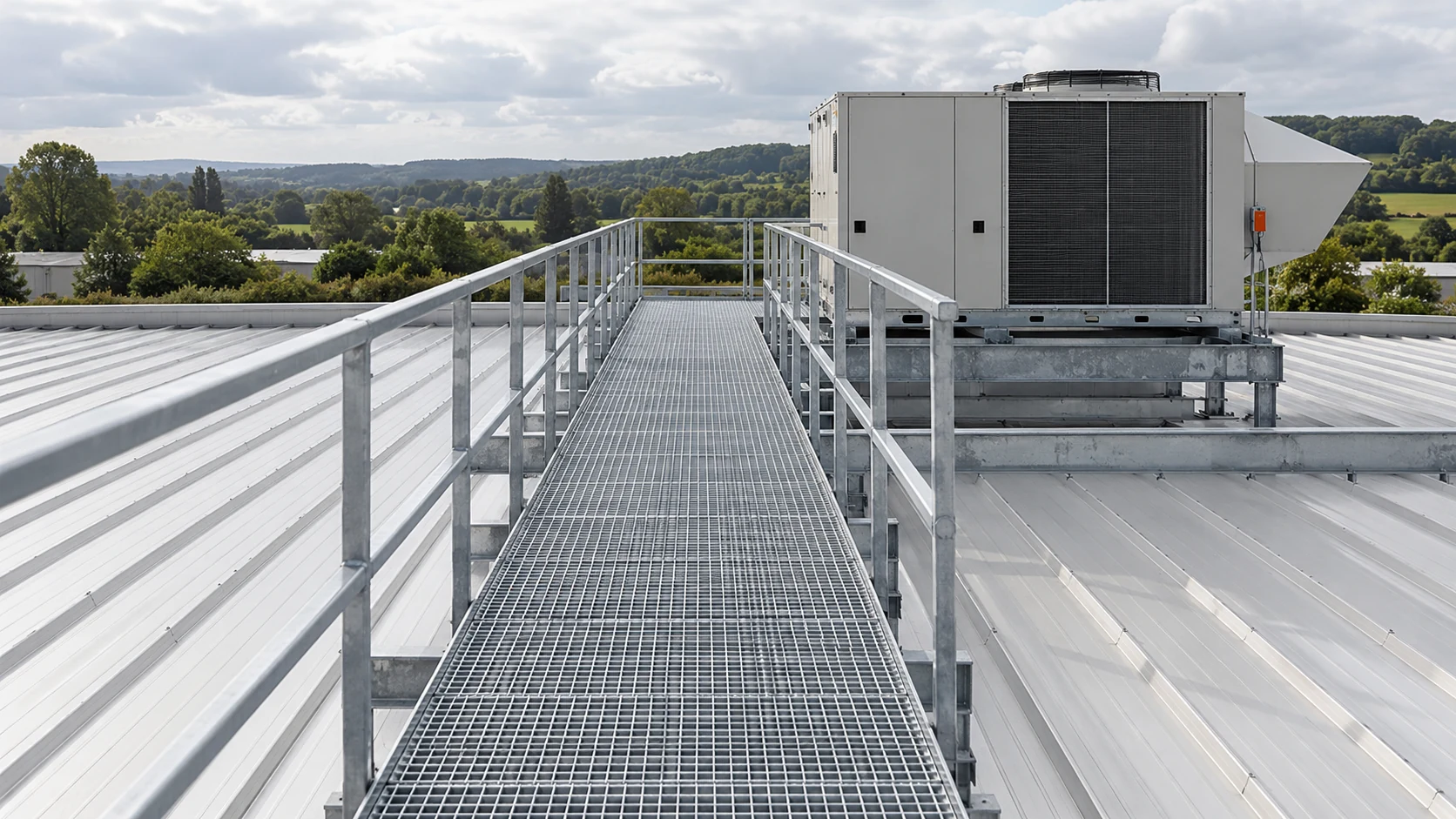
Plan roof access around the maintenance task, the equipment involved and how often people need to reach it. An occasional gutter inspection…
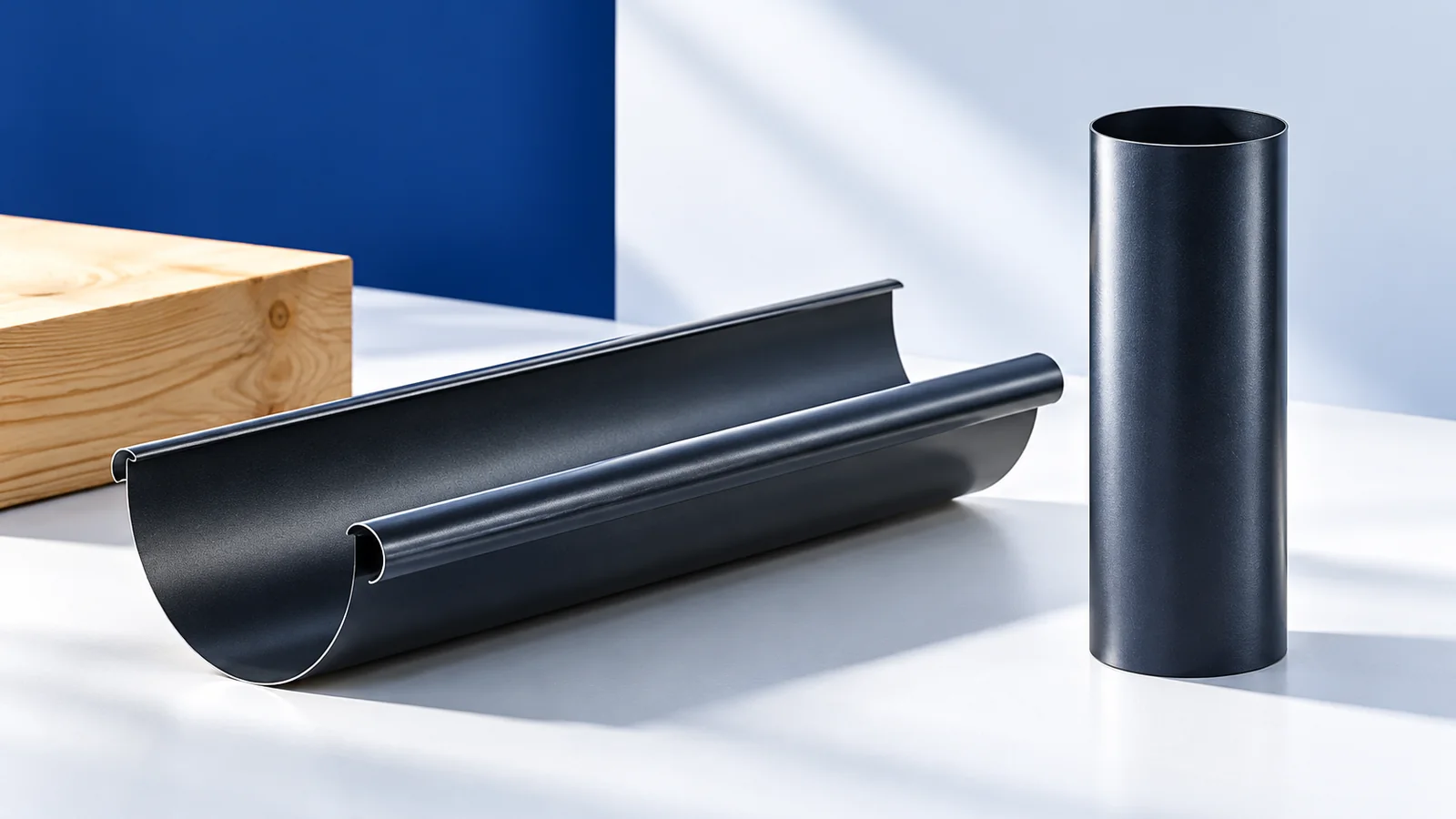
To select gutters for a metal roof, mark the area draining to each outlet on a roof plan. A valley may concentrate…
