Panels · Sheet metal · Insulation · Accessories

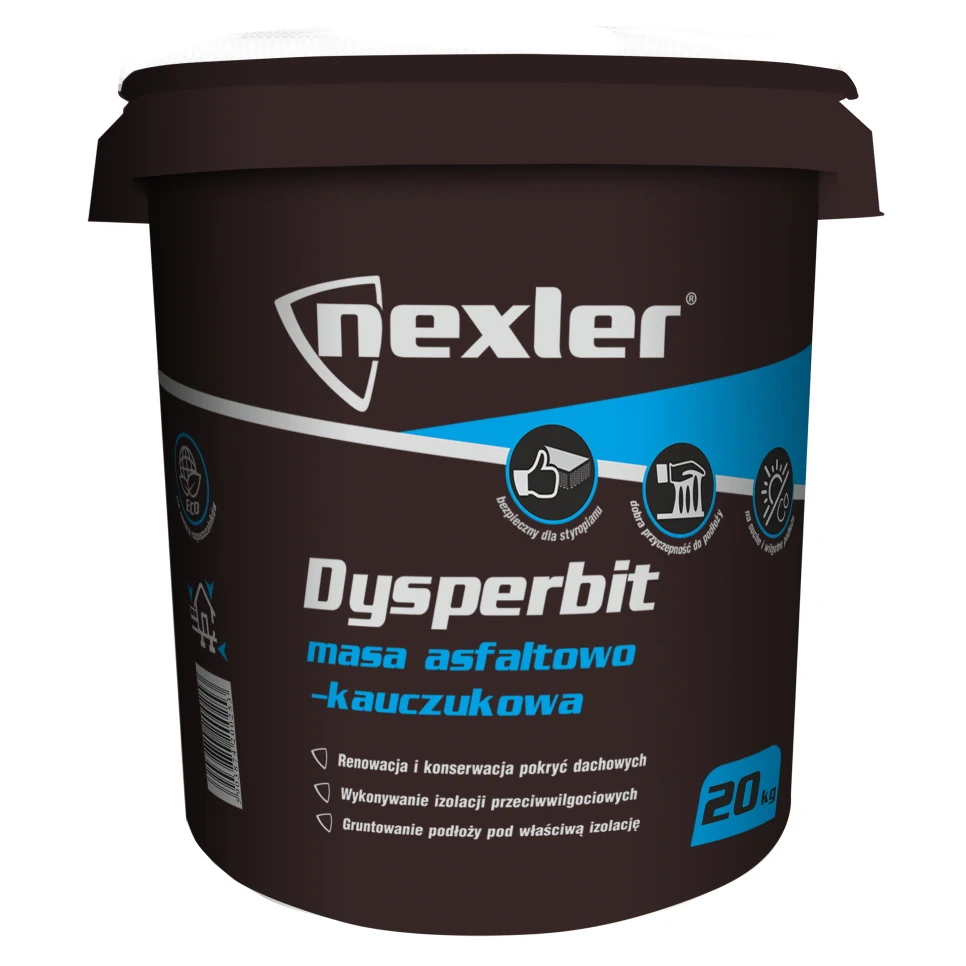
NEXLER Dysperbit bitumen-rubber coating, 20 kg

15,54 € incl. VAT

In stock

Water-based bitumen dispersion with rubber, fillers and modifying additives.

Priming mineral and bituminous substrates: approximately 0.2 kg/m². Priming mineral wool beneath bituminous roofing membranes: at least 0.8 kg/m².

Roof maintenance: approximately 0.5 kg/m² per coat. Damp-proofing: approximately 1.5 kg/m² for each 1 mm of dry coating. Minimum dry thickness for damp-proofing: 1 mm.

Substrate and air temperature during application: +5 to +30 °C. Allow approximately 5 hours between coats and approximately 5 hours for rain resistance. Film formation takes up to 6 hours.

Price per 20 kg pail.
In stock

SKU: ecoprofil-9100 Category:

Description

NEXLER Dysperbit at a building plinth and wall

Before starting at the plinth, use the section drawing to locate the upper limit of the below-ground damp-proofing. Mark it on the wall so the cladding installer knows which sections must remain accessible for inspection.

Ground level and work areas

Where ground level changes, divide the wall into sections. Calculate each area from its actual height and length.

Substrate condition at penetrations

Inspect repair edges and service penetrations before priming. Take the junction details from the design; the compound alone does not define the construction detail.

Primer and coating thickness

For each section, list the primer quantity and the amount needed for the required dry coating thickness. These use different consumption figures in the Dysperbit data sheet.

Inspecting the upper edge of the coating

Record where the coating ends on the handover drawing, particularly where flashings or wall cladding will later conceal it.

At handover, identify primed areas separately from those with completed damp-proofing. Allow time for drying before concealment and provide the mechanical protection specified in the design.

SteelProfil product guide: Waterproofing

What our customers say

Back to top