






When should you compare 150 and 200 mm mineral wool panels?
Mineral wool panels
At a glance
Start by asking what the extra 50 mm should achieve: lower heat loss, or compliance with a particular wall requirement. Extra thickness also changes the weight and the details at edges and openings. Compare variants from one panel range, then price the change across the building design. Identify the target indoor temperature and heating schedule. Additional insulation has a different effect in a warehouse heated occasionally than in a hall occupied around the clock. If the design specifies a thermal requirement, first check whether each option meets it.
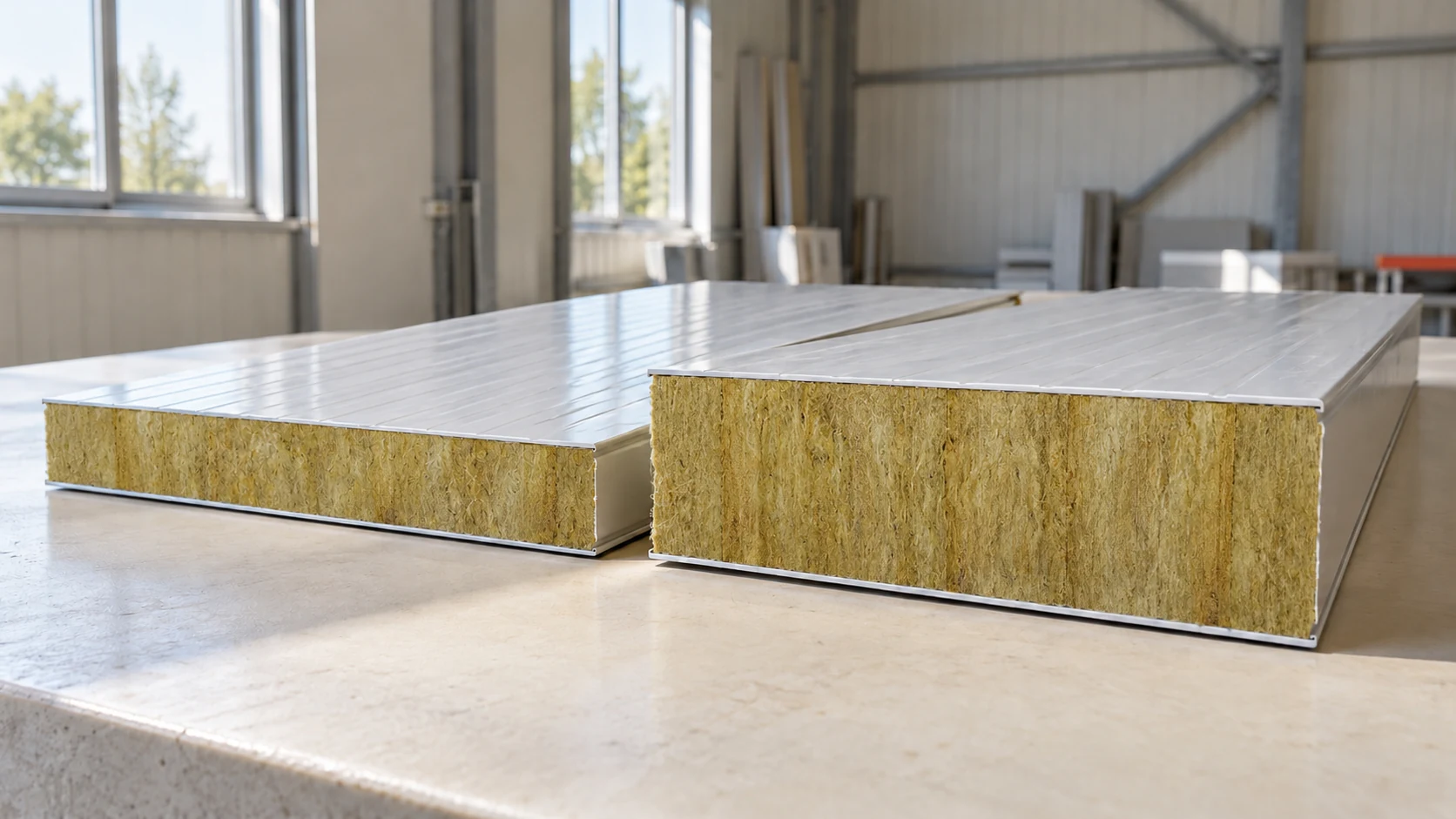
Define the purpose of the extra thickness
The 200 mm option is not necessarily best. If ventilation and vehicle doors dominate heat losses, walls may account for a smaller share. On the other hand, thickening a finished envelope is difficult. Consider the building’s planned use beyond its first heating season.
Compare variants within one range
In one dual-density core range, the 150 mm panel has a U-value of 0.25 W/(m²K) and the 200 mm panel 0.19 W/(m²K). With 0.5/0.5 mm facings they weigh 21.3 and 25.6 kg/m² respectively. Other ranges and geometries may give different results.
Check cover width, available lengths and fixing method. Here the difference of 4.3 kg/m² adds 1,806 kg over 420 m². Account for it in the structure and logistics as well as comparing U-values.
With identical facings the extra weight comes chiefly from the core. Compare the actual cutting schedules: a revised panel layout can change delivery weight differently from installed weight. Record two totals, one for the load on the frame and one for transport including offcuts.
Calculate the difference in wall heat loss
Across 420 m² at a 24 K temperature difference, the instantaneous heat loss is about 2.52 kW at U = 0.25 and 1.92 kW at U = 0.19. The difference is 604.8 W for the panel field under these conditions.
This is not an annual energy saving. Annual estimates need climate data, heating hours and system efficiency, as well as the other building elements and thermal bridges. The example indicates scale but cannot establish a payback period.
Check the space around openings
The additional 50 mm changes reveals, flashing widths and the face of the wall. Check door tracks, sills and services for clashes. Decide which side will gain thickness, particularly at existing edges and insulation junctions in a refurbishment.
Size fasteners for the whole assembly, not just the thicker core. Check the plinth support too. A wide flashing is no substitute for structural bearing. A section drawing lets you price the detail before the first panel reaches site.
Verify the fire rating separately
Greater thickness may permit a different fire-resistance class within one system. There is no universal class for all 150 or 200 mm panels. The result depends on product construction, seals, fixings, orientation and assessed spans.
Verify that openings and junctions are covered by the chosen classification. If the thinner variant already meets the requirement, extra thickness does not permit simpler detailing. Reaction to fire of the core or panel is distinct from the fire resistance of the finished wall.
Choose for the complete wall detail
Add material, flashings, fixings and any structural changes; allow for heavier transport and equipment. For a 420 m² order, an increase equivalent to PLN 1 (about €0.23) net per square metre adds €97.32 net at the unrounded rate in panels alone. Price the remaining work separately.
Choose the variant that meets the requirements and works across the enclosure. With a limited budget, compare other options too. Sealing a vehicle door or improving the plinth detail may matter as much. Let the design and calculations settle the choice.
Questions and answers
Do all 200 mm mineral wool panels have the same U-value?
No. It depends on the product and its geometry. The 0.19 W/(m²K) figure applies to the example, not to every 200 mm panel.
Can existing flashings stay when moving from 150 to 200 mm?
Check the sections first. Plinths, reveals and wall end dimensions change. Recheck fastener lengths and assess the added weight as well.

Free quote
What to include in your enquiry
Tell us how you plan to use the material, the dimensions and the quantity you need. Include the thickness, grade or variant name, along with the delivery town or your preferred collection branch. For a specific product, add its name or a link to the product page. We will reply to the email address you provide to discuss availability and the terms of your order.
Read next
A mineral wool core alone cannot guarantee a quiet hall. First locate the source and the point that needs protection: a machine…
The panel price per square metre is only one part of a wall budget. Include flashings, seals, fixings, transport, equipment hire and…
A mineral wool acoustic sandwich panel can enclose a building and absorb sound on its inner face. A perforated facing distinguishes this…
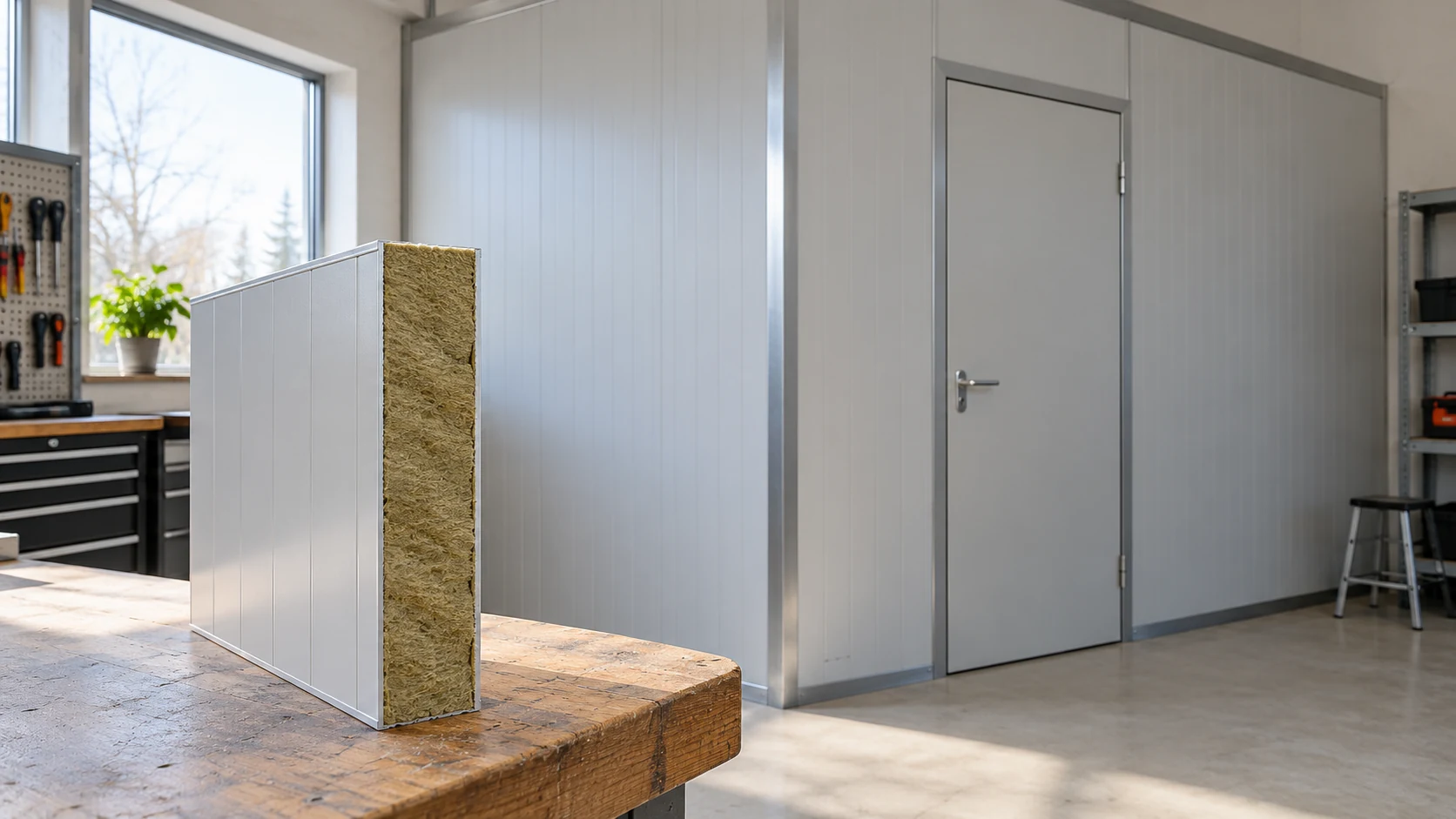
Choose a thin mineral wool panel for what the partition has to do, not simply for the floor space it saves. Even…
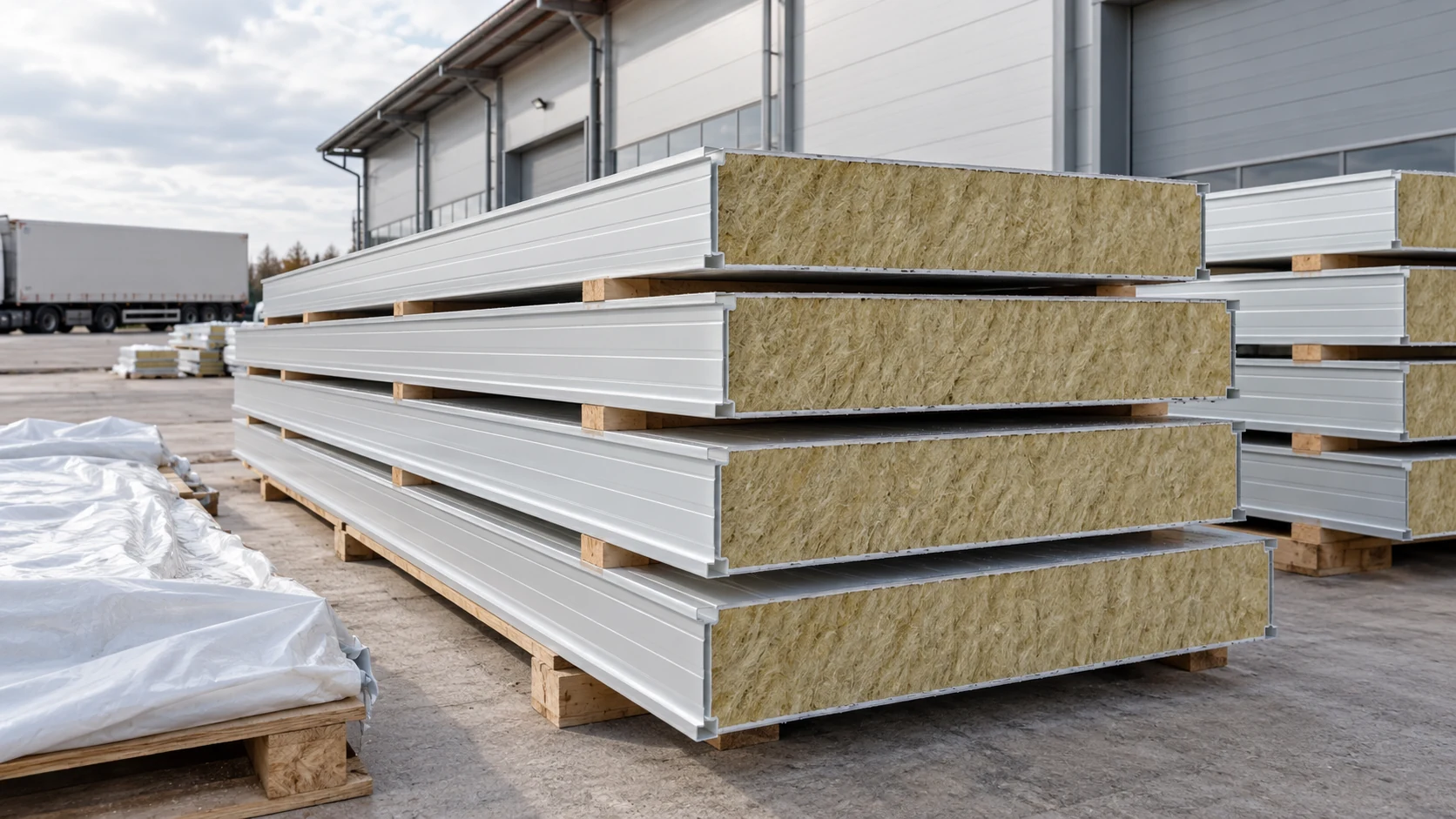
Before booking transport or lifting equipment, find the weight of each panel and each pack. A figure in kilograms per square metre…
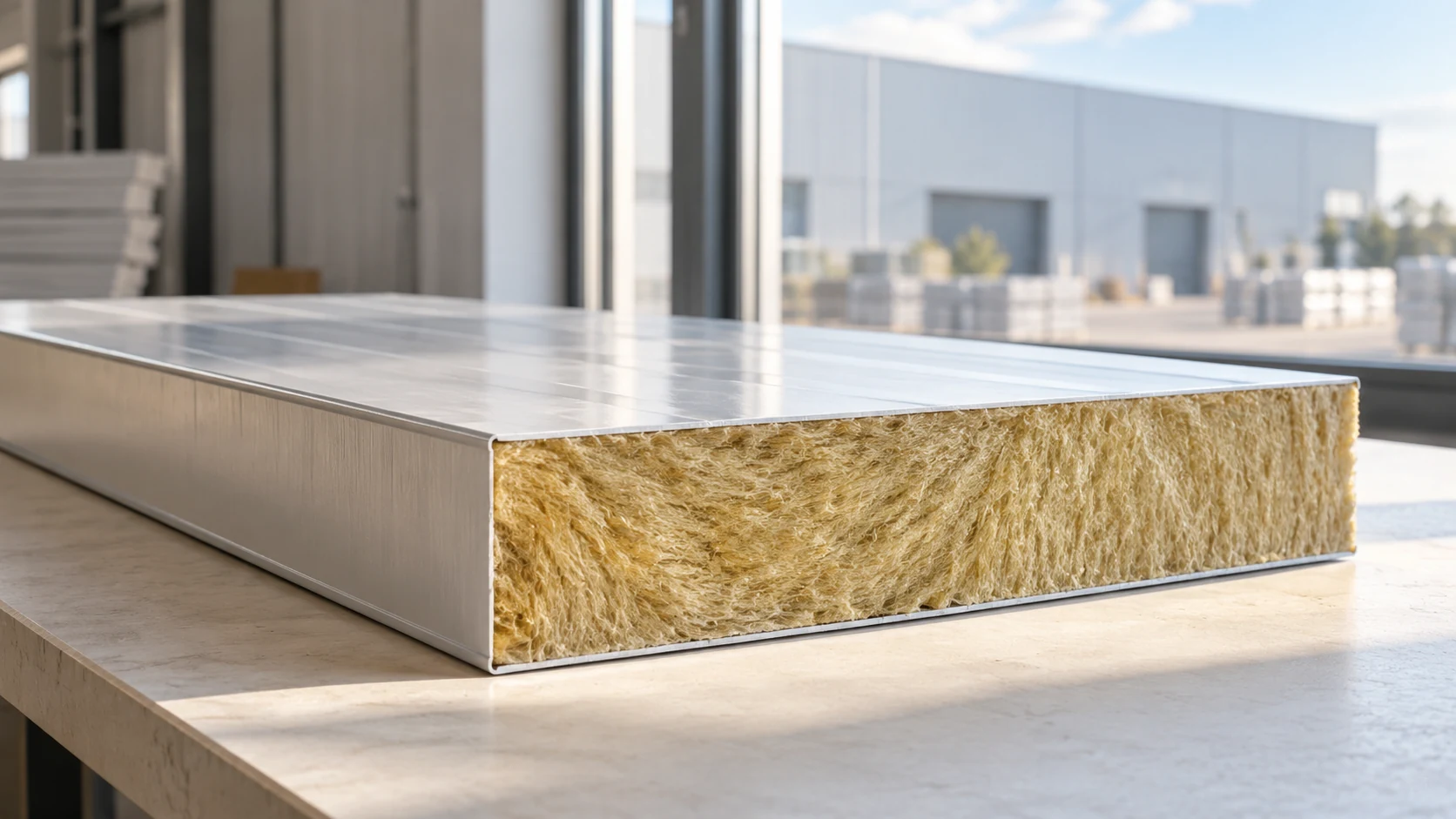
Thermal conductivity (lambda) describes the material; the U-value describes heat transfer through a specified element. When buying mineral wool wall panels, use…
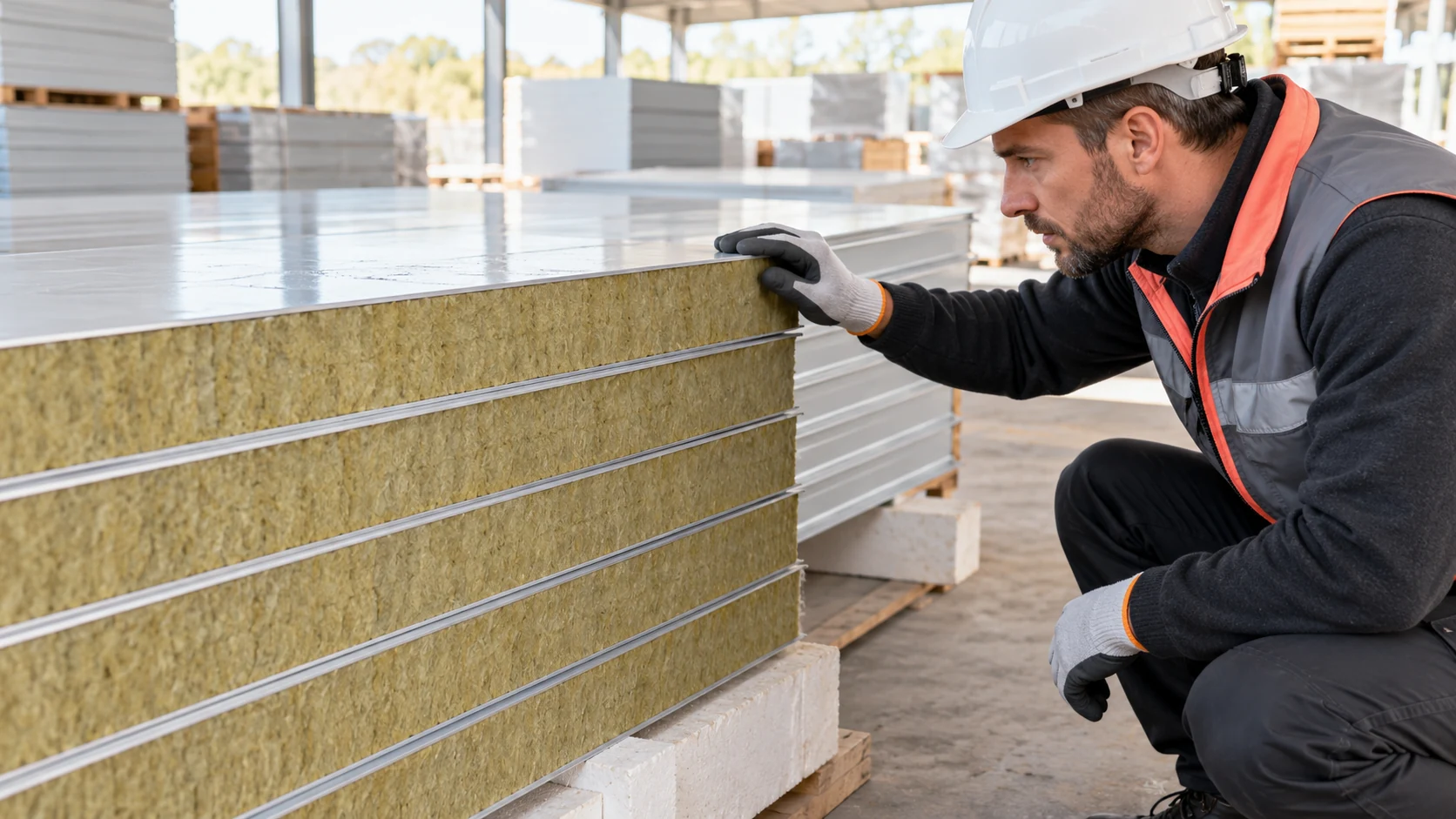
Clearance mineral wool panels can cut the cost of a wall if the batch fits the project. Usable lengths, intact joints and…
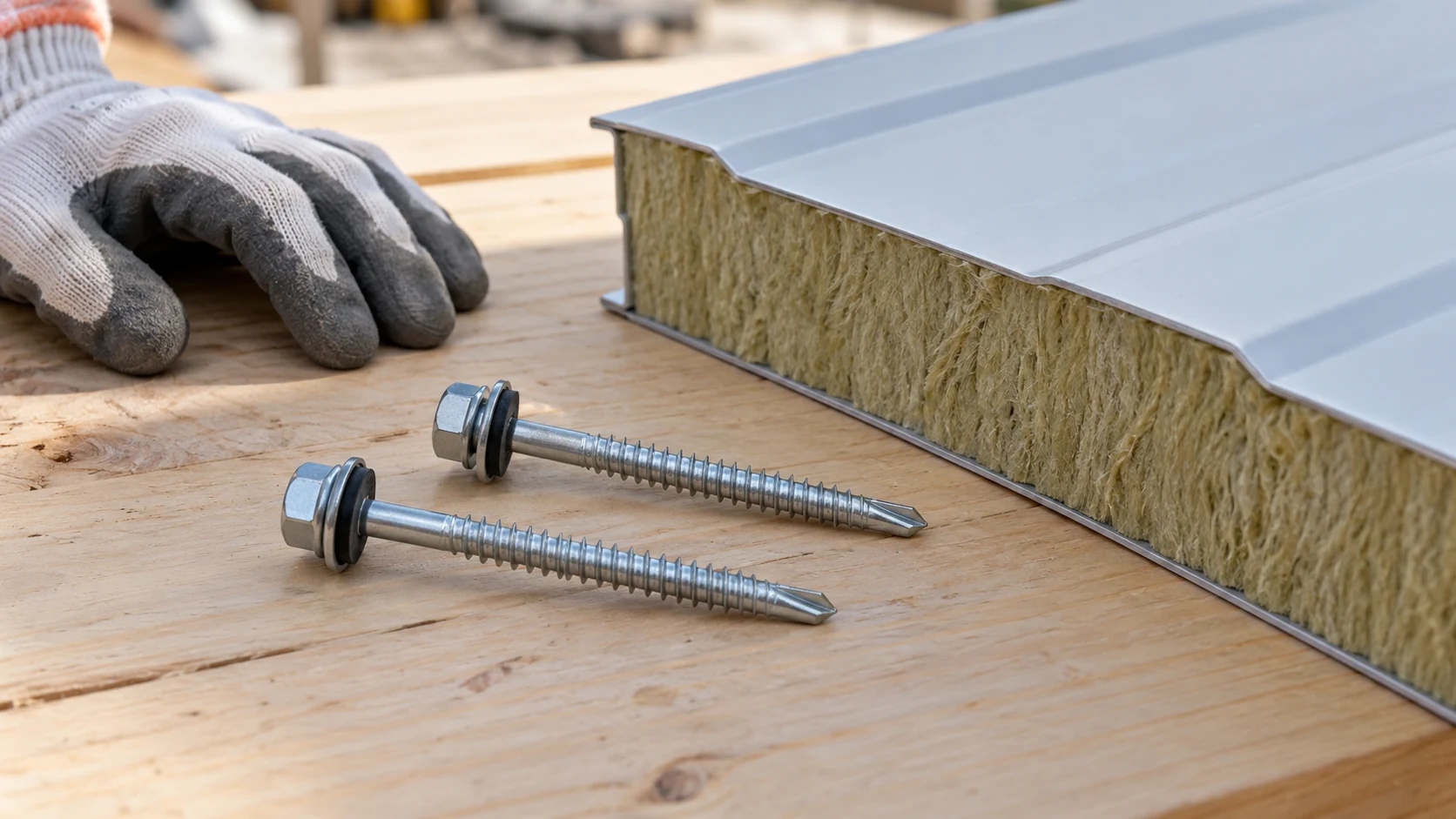
A panel fixing must suit the panel, support and expected loads. Wool thickness alone is not enough to select a screw. Check…
