How much do mineral wool panels weigh for transport and installation?
Mineral wool panels
At a glance
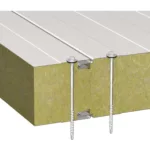
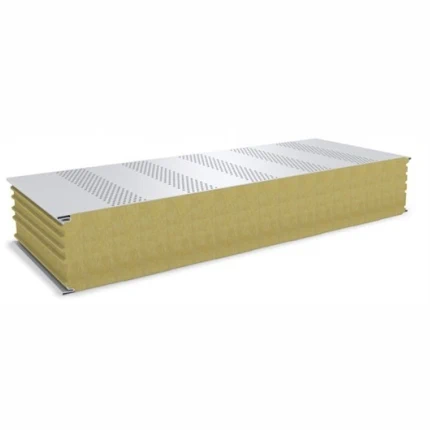
Before booking transport or lifting equipment, find the weight of each panel and each pack. A figure in kilograms per square metre tells you neither on its own. Use the data sheet for the exact core and facing thicknesses, together with panel width and length. Allow separately for packaging, lifting accessories and site conditions. A 100 mm panel with 0.5/0.5 mm facings can weigh less than one with 0.5/0.6 mm facings. Core construction and geometry also differ between ranges, so check that the table describes the panels on your order.
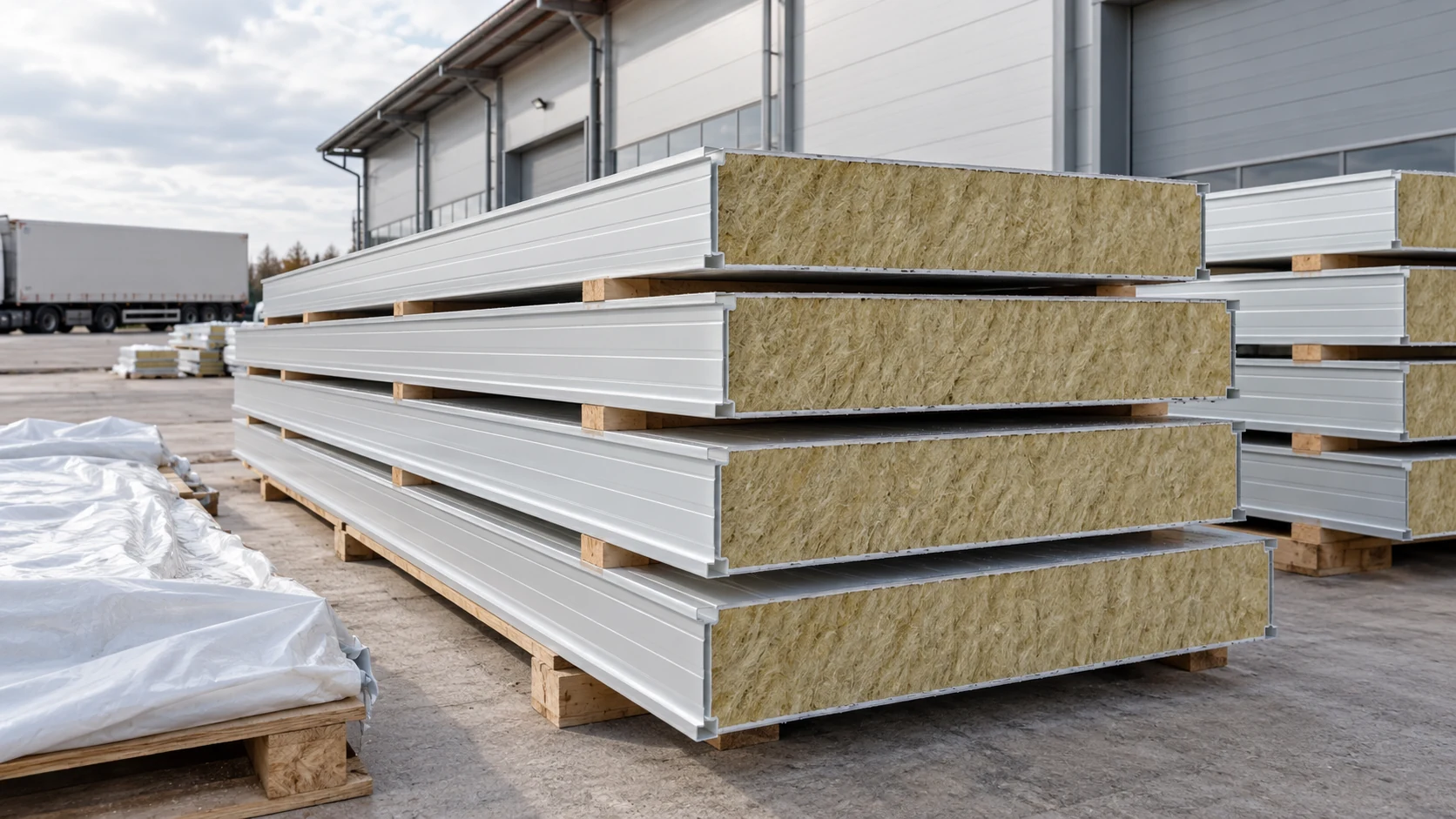
Find the weight of the specified variant
For one 100 mm dual-density wool panel, the figures are 17.0 kg/m² with 0.5/0.5 mm steel and 17.9 kg/m² with 0.5/0.6 mm steel. They apply to that product. Check the reference area and declared tolerances when ordering.
Calculate the weight of one panel
An element with a cover width of 1.15 m and a length of 4.8 m covers 5.52 m². If the quoted 17.9 kg/m² refers to cover area, its weight is 5.52 × 17.9 = 98.808 kg. For preliminary planning, allow about 98.8 kg for the panel alone.
This does not specify the lifting capacity required. Slings, clamps and other accessories are not included, and weight alone does not tell you how to handle a long panel without damage. Follow the system instructions and lift plan for gripping, support and manoeuvring.
If the shipment includes several cover widths, list each width separately. Pieces of identical thickness and length can have different weights. Recording them by line item lets the crew choose a handling method before opening the pack.
Total the order and confirm pack sizes
The 24 identical panels in this example weigh about 2,371.4 kg before packaging and other delivery items. If lengths vary, total each group separately; multiplying the shortest panel’s weight by the total quantity understates the load.
Confirm how many pieces the supplier packs together and obtain the gross weight and dimensions of each load unit. Ask whether flashings, fixings and accessories travel separately. These details determine loading, unloading and storage space on site.
Check the lifting equipment
Nominal capacity alone does not establish whether a machine can unload the panels. Check actual reach, attachments, ground conditions and working range. Give the operator panel dimensions and weights: a long panel handles differently from a compact load of the same weight.
Do not determine crew size for manual handling simply by dividing the load. Shape, wind, grip and susceptibility to bending also matter. The contractor should plan the work around suitable equipment, the product instructions and safe working conditions.
Give the designer the cladding weights
Cladding weight is a structural load. When replacing lighter panels with heavier wool panels, send the revised weights to the designer. Supports, connections and load paths need checking. Several kilograms per square metre can add up across a façade.
Assess self-weight separately from wind and other actions. A heavier panel does not necessarily resist more wind suction; capacity depends on the complete assembly. If a load table includes self-weight, follow its stated calculation method.
Plan the route to the installation point
Check the entrance width, vehicle turning space and distance from stacks to the wall. At an operating facility, separate delivery movements from regular traffic. Extra handling takes time and increases the risk of damage. Pair the weight schedule with a plan of where and how to place the material.
Stack packs on prepared ground according to the supplier’s instructions. Arrange protection from water and plan when each pack will be needed. Matching the loading order to the erection sequence reduces unnecessary moves; the list of lengths, quantities and weights makes that possible.
Questions and answers
Should I use overall width or cover width?
Use the data sheet’s reference area. If kg/m² refers to cover area, use cover width. For transport, also confirm the actual panel and pack weights with the supplier.
Should lifting accessories be added to the panel weight?
Yes. Equipment selection must account for everything lifted and the actual operating conditions. The installation plan must relate the load to the machine’s permitted capacity at the working position.

Free quote
What to include in your enquiry
Tell us how you plan to use the material, the dimensions and the quantity you need. Include the thickness, grade or variant name, along with the delivery town or your preferred collection branch. For a specific product, add its name or a link to the product page. We will reply to the email address you provide to discuss availability and the terms of your order.
Read next
Similar vertical ribs on two roofs can conceal quite different joints. Snap-lock panels have factory-formed edges that engage with one another. In…
Before cladding an existing masonry wall, establish its condition and how the new loads will reach the structure. Panels should not conceal…
A good installation plan for T18 or T35 starts at the eaves, before the first sheet goes up. Check the diagonals of…
The first course of tile-effect roofing sets the alignment of every sheet above it. Before laying it, check the eaves line, diagonals,…
A metal roof can carry a photovoltaic array when the mounting system suits the particular roof and the structure can take the…
Most problems with a sandwich panel roof are easier to correct before the first lift. Check the supports, laying direction, crew equipment…
The roof area alone tells you little about how many flashings to order. Mark each eaves, verge, ridge and valley on the…
A roof estimate starts with slope dimensions and ends with the weatherproof details. Distinguish the area to be covered from the quantity…