






What distinguishes square gutters on a metal roof?
Gutters and flashings
Square gutters emphasise the straight edge of a metal roof. Their outline tells you little about how much rainwater they can carry. For each outlet, establish the contributing roof area, the position of valleys and the route down to the final discharge point. In the eaves section, check where runoff from the sheet enters the gutter and how the underlay drains. Compare complete systems with brackets, corners, outlets and any fascia cover. Before choosing by shape and colour, agree how the gutter will be cleaned and whether connectors can be reached and replaced.
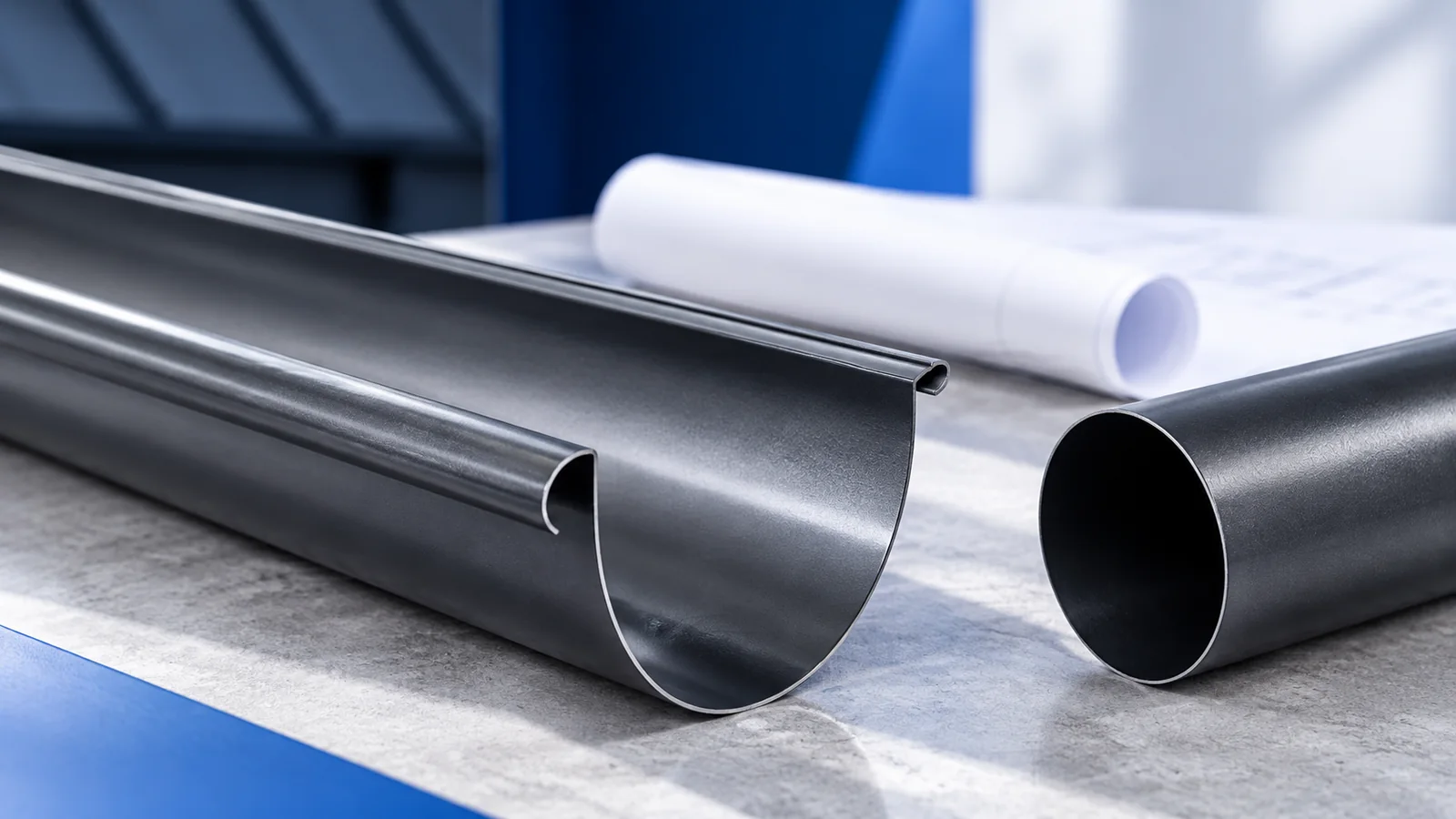
What difference does the square section make?
The straight sides of the gutter and downpipe can echo the lines of windows, façade and sheet roofing. This visible difference tells you little about capacity. Two square profiles may have different dimensions and serve different roof areas.
View the whole assembly at the eaves. Brackets, connectors and corners affect the finish as much as the trough itself. Some systems accept a front cover, while others remain exposed. Compare the configuration you will actually install rather than relying on a short catalogue sample.
Will a square gutter suit any metal roof?
Square gutters can serve different coverings with a suitable eaves detail. Tile-effect metal sheets and trapezoidal profiles discharge runoff according to their geometry. Position the sheet edge and eaves flashing relative to the gutter. If they are poorly aligned, heavy rainfall can overshoot the trough.
Trace the drainage from the underlay as well. Water beneath the covering should not enter the insulation or run behind the fascia board. Agree the eaves geometry before ordering sheets so the gutter is integrated into the detail from the outset.
How do you size gutters and choose the number of downpipes?
Select the arrangement for the area served by each outlet and the layout of the gutters. Flow distance and outlet positions matter. Matching the fascia board width is insufficient. Check the stated capacity of the complete system in the manufacturer’s documentation.
Valleys can concentrate runoff at one point even where the average area per downpipe is modest. Look at those locations separately. Also check the downstream discharge. A restricted lower pipe or outlet can limit an otherwise correctly sized gutter.
What matters when installing the system?
Support brackets at the specified spacing. Follow the system instructions and design for gutter position and fall. Maintain the specified seals and allow for thermal movement at joints. Similar-looking parts that clip together are not necessarily compatible over their service life.
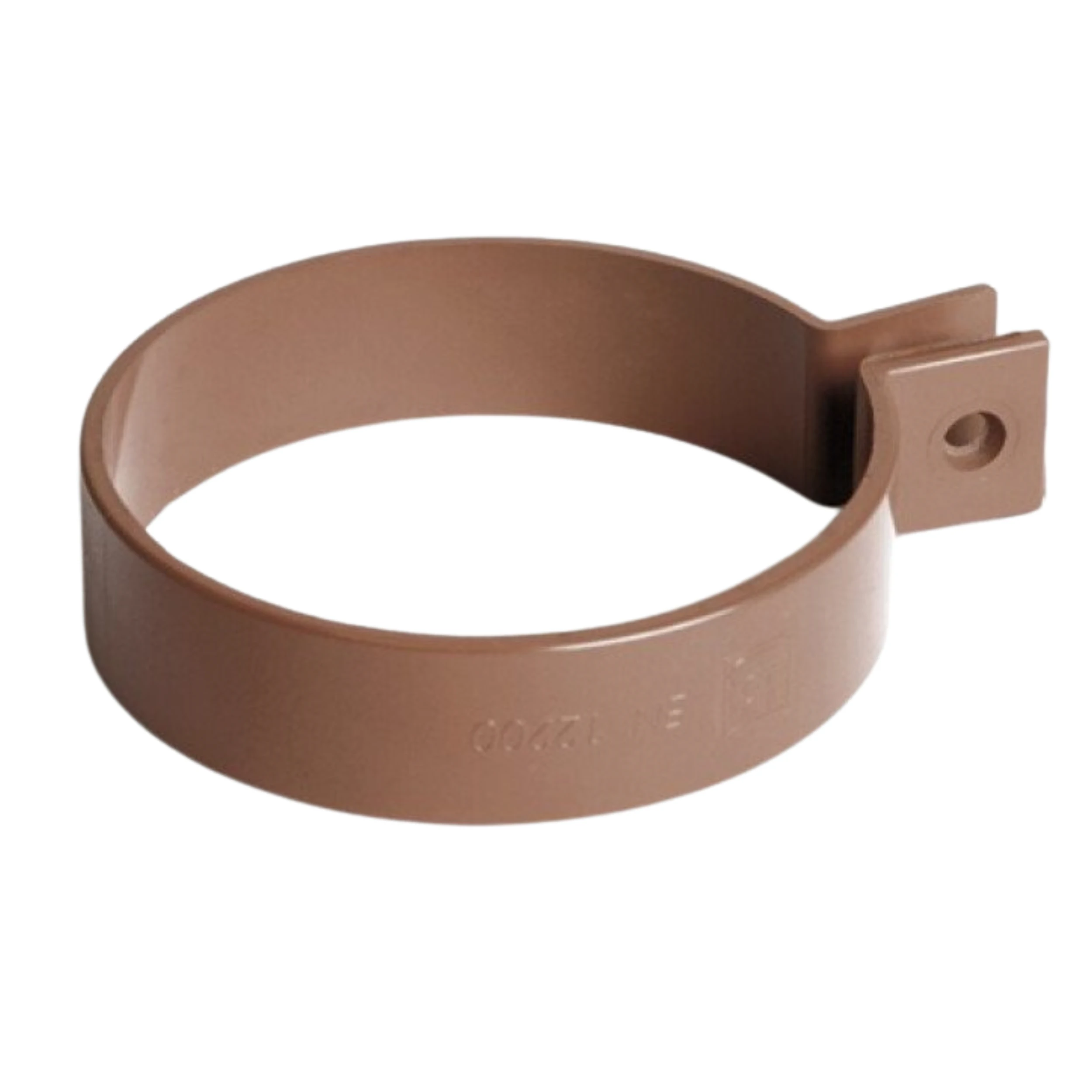
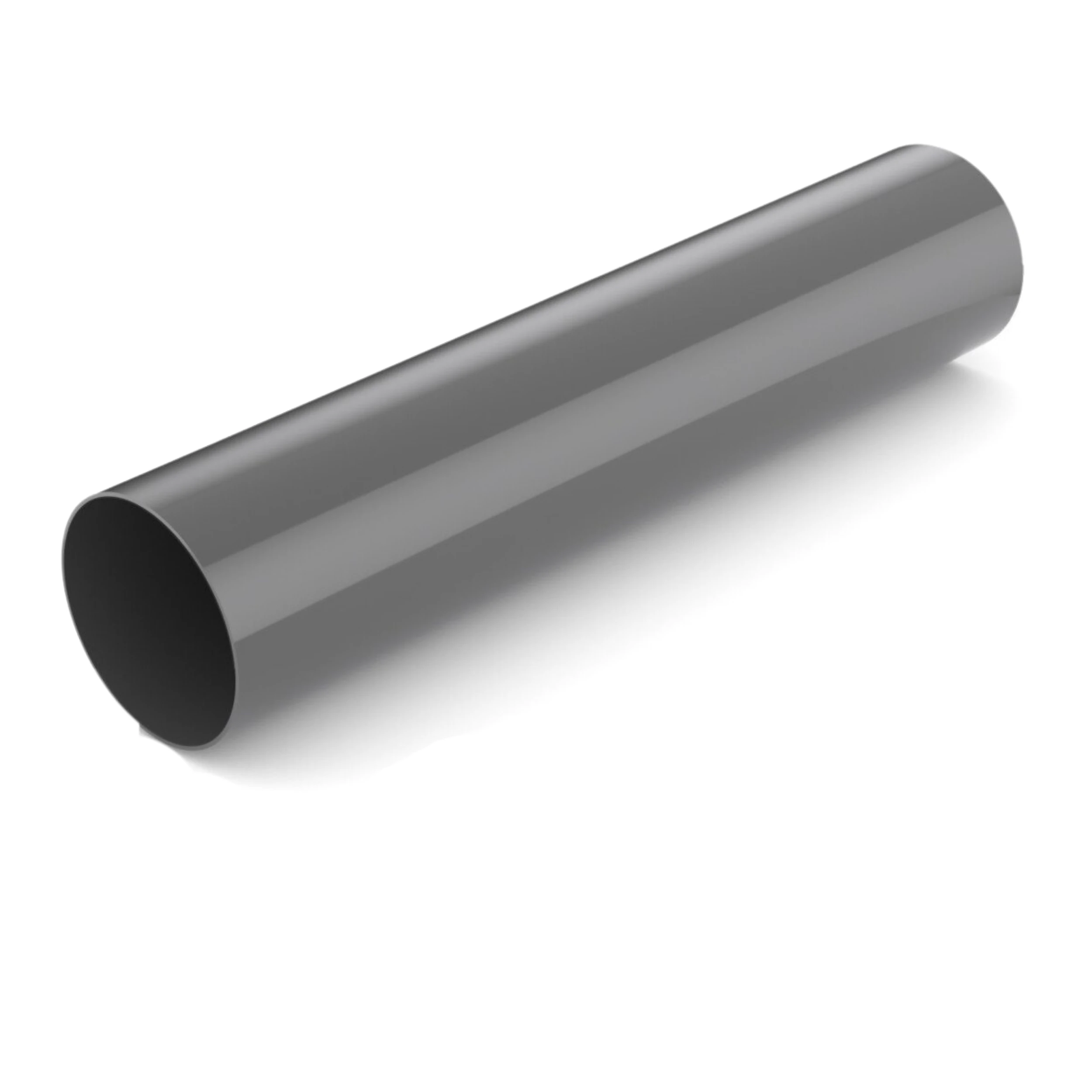
The downpipe needs suitable clips and properly made joints too. Provide an inspection point where the water leaves the system. Use tools that protect the coating and remove swarf. Careful metalwork matters just as much here as on the main roof.
Does a fascia cover make the whole system concealed?
A cover can screen the front of the gutter while the downpipe remains on the façade. Hiding the pipe as well calls for a prepared space and a suitable insulation detail. Specify the intended appearance and connections so the quotation includes the correct work.
A front cover must permit cleaning and access to connectors. Provide a safe route for water if the outlet partially blocks. Check what happens during heavy rain, leaf fall and frost, including when the neat eaves detail hides the buildup of debris.
How do costs compare with a half-round gutter?
Compare complete sets serving the same roof area. Include brackets, corners, outlets, clips and stop ends, plus installation of any fascia cover. Accessories can make up a significant part of the order, so the price per metre of gutter alone is a poor cost comparison.
Compare base materials and protective finishes as well. Coated steel and another material may require different joints and maintenance. Check warranty conditions and the availability of replacement parts. Being able to replace a single corner later may outweigh a small saving now.
How can you keep the system in good condition?
Clear leaves and deposits before they restrict drainage. Inspect joints and coatings, especially below valleys and near trees. Set inspection intervals to match the surroundings. A covered gutter can collect debris even when you cannot see its inside from the ground.
A square gutter can form a coherent detail on a metal roof when its proportions, capacity and installation work together. Select a complete system with clear instructions. The resulting eaves line can then provide the intended appearance while reliably draining the roof.

Free quote
What to include in your enquiry
Tell us how you plan to use the material, the dimensions and the quantity you need. Include the thickness, grade or variant name, along with the delivery town or your preferred collection branch. For a specific product, add its name or a link to the product page. We will reply to the email address you provide to discuss availability and the terms of your order.
Read next
A complete roof price covers the load-bearing structure, the layers beneath the covering, the covering itself and the details that keep water…
A concealed gutter keeps the drainage out of sight along the eaves. Before choosing one, look at the cross-section: where will rainwater…
Plan roof access around the maintenance task, the equipment involved and how often people need to reach it. An occasional gutter inspection…
A concealed gutter can give a metal roof a straight eaves line if the detail leaves room for the gutter, the downpipe,…
To select gutters for a metal roof, mark the area draining to each outlet on a roof plan. A valley may concentrate…
