






EPS, PIR or mineral wool for a commercial building: how do you choose?
EPS and building insulation
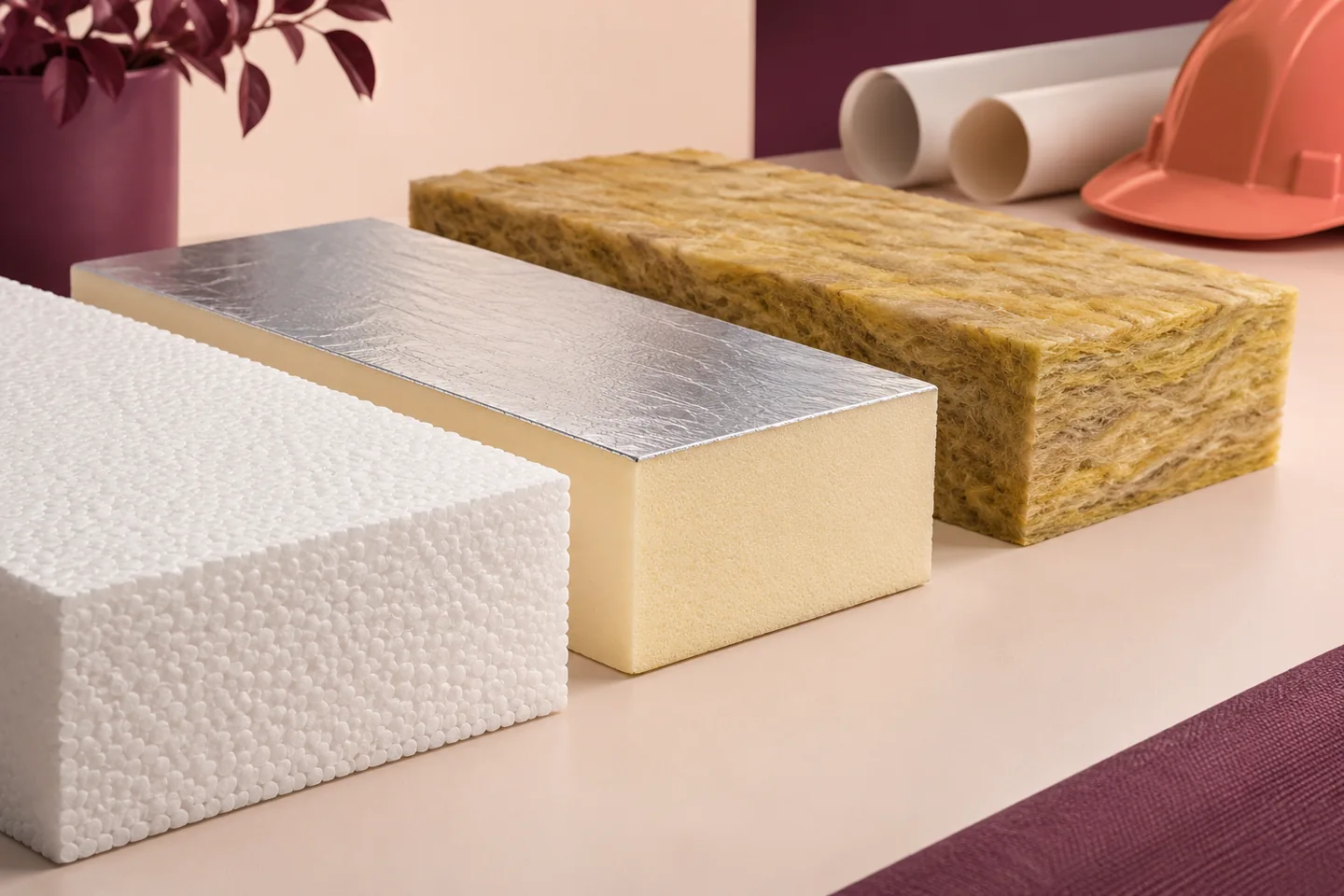
Choose insulation for each part of a commercial building by asking what the finished wall, floor or roof has to do. A repair workshop needs a floor that can carry equipment. A practice above another tenancy may need a floating screed with a tested impact sound insulation layer. A roof refurbishment may leave little depth at the threshold. Compare EPS, PIR and mineral wool at the thickness available, then check the declared properties, moisture exposure and fire performance of the proposed assembly. Price each option with the fixings, protective layers and junctions it needs.
In this guide
Define the function of the building element
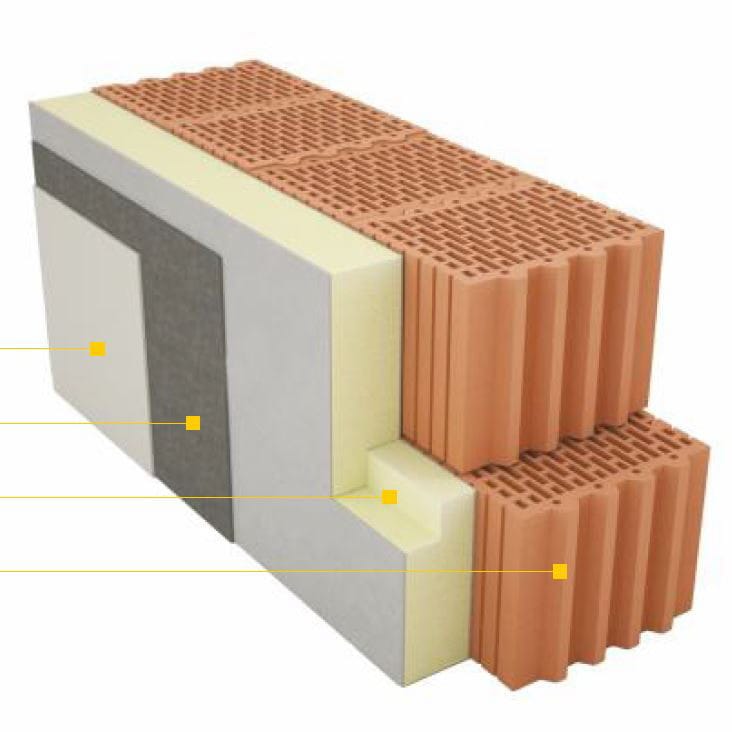
Before comparing prices, establish any fire, acoustic or mechanical requirements that rule out an assembly. An insulation board with low thermal conductivity can still require extra protective layers. A board documented for roof use also needs to be approved for the particular external wall insulation system if it is to be used on a façade.
Compare thermal resistance at the available thickness
A uniform layer’s thermal resistance depends on its thickness and thermal conductivity. Some PIR boards have lower declared conductivity than typical EPS boards and can provide the required resistance in less space. Use the data for the particular product, facing and thickness range. A single conductivity value cannot describe an entire material family.
White and graphite EPS boards are available with different declared properties. If a thinner board is proposed, check the U-value of the complete element and the surrounding junctions as well as its other properties. A substantial thermal bridge at a parapet can offset part of the benefit gained in the roof field.
Check fire performance separately
Mineral wool products include boards classified as non-combustible. EPS is combustible, and many construction grades declare reaction-to-fire class E. For PIR, check the specific board and the evidence for the proposed construction. The type of foam alone does not establish non-combustibility.
For a completed roof or wall, read the classification alongside the design. Check the layer sequence, fixings, connections and field of application. EPS may suit one part of the building while a different build-up is needed elsewhere. The documented arrangement must also be the one installed.
Assess acoustic performance as well as heat loss
Fibrous mineral wool can play a role in noise control. The acoustic performance also depends on the assembly’s mass, airtightness and connections. Rigid load-bearing EPS floor boards have a different function from resilient acoustic EPS used to reduce impact sound under a floating screed.
Where premises share a separating floor, examine both the floor construction and flanking sound paths. Low thermal conductivity tells you little about footfall noise. For acoustic EPS, check dynamic stiffness, compressibility, permissible loading and the specified screed construction. Coordinate these choices with the required thermal resistance.
Check moisture, loads and material compatibility
At foundations, check water absorption and the permitted conditions of ground contact. Below floors, assess pressure and long-term deformation. Roofs may also carry maintenance traffic. A material’s CS(10) value describes a compression test and cannot on its own establish the load capacity of the assembly.
Check the membrane, adhesive and separation layers against the board specification. PIR facings can affect vapour diffusion and adhesive choice. Keep substances that attack polystyrene away from EPS. Mineral wool must likewise remain within its documented service conditions. Detail the waterproofing independently of the insulation material.
Compare the cost of the finished assembly
Add delivery, fixings, protection and junction work to the board price. A thinner refurbishment build-up may avoid alterations to thresholds, although that saving will not always cover the extra material cost. Compare the same area and intended service period using options that meet the same thermal and operational requirements.
EPS manufacturers include Swisspor, Austrotherm, Paneltech and Termo Organika. Use the full product data sheets for comparison. A single project can use different materials in different zones. Wherever they meet, detail how the thermal insulation, waterproofing and fire protection continue across the junction.

Free quote
What to include in your enquiry
Tell us how you plan to use the material, the dimensions and the quantity you need. Include the thickness, grade or variant name, along with the delivery town or your preferred collection branch. For a specific product, add its name or a link to the product page. We will reply to the email address you provide to discuss availability and the terms of your order.
Read next
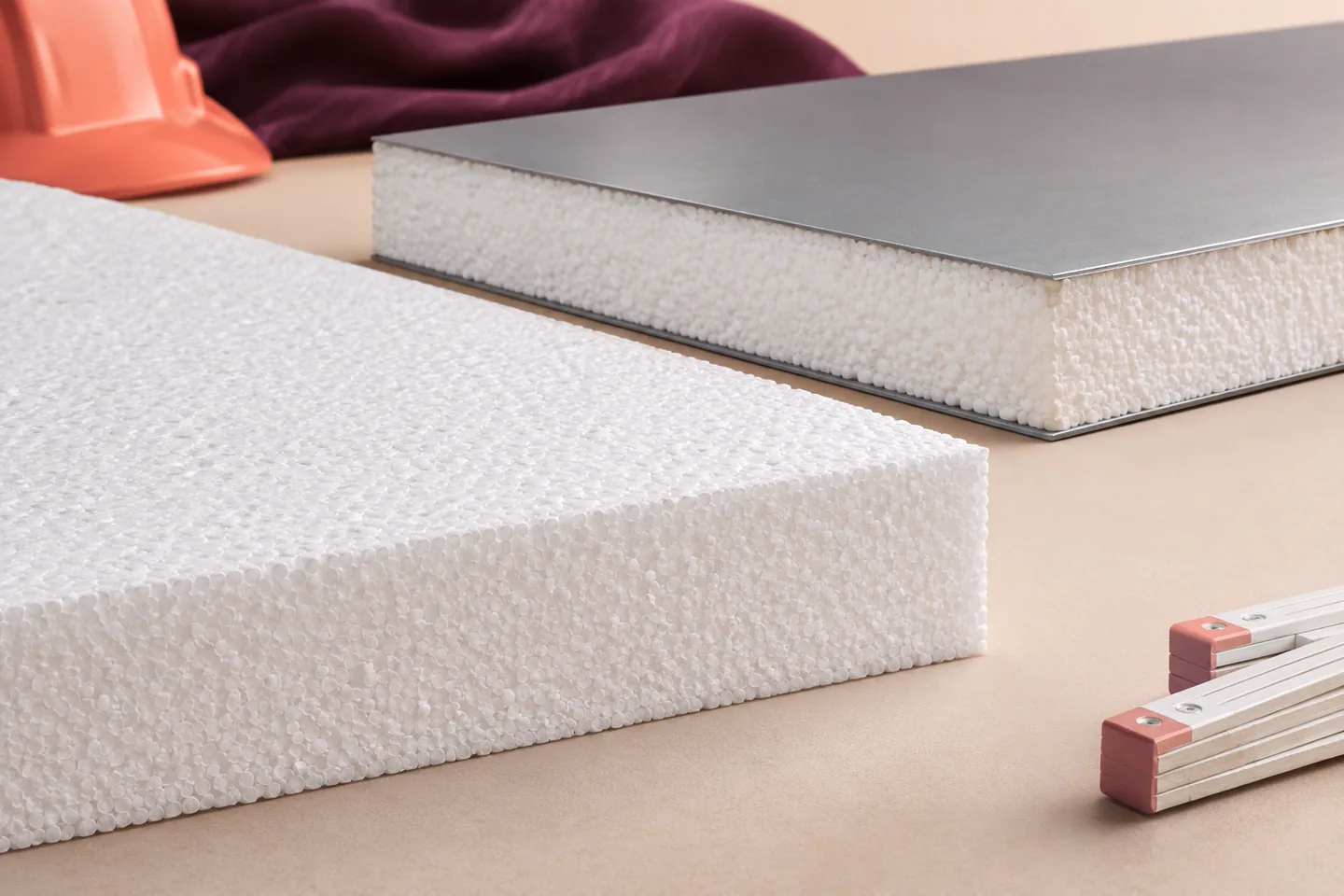
An EPS insulation board forms one layer of a wall, floor or roof. An EPS-core sandwich panel is a factory-bonded unit whose…
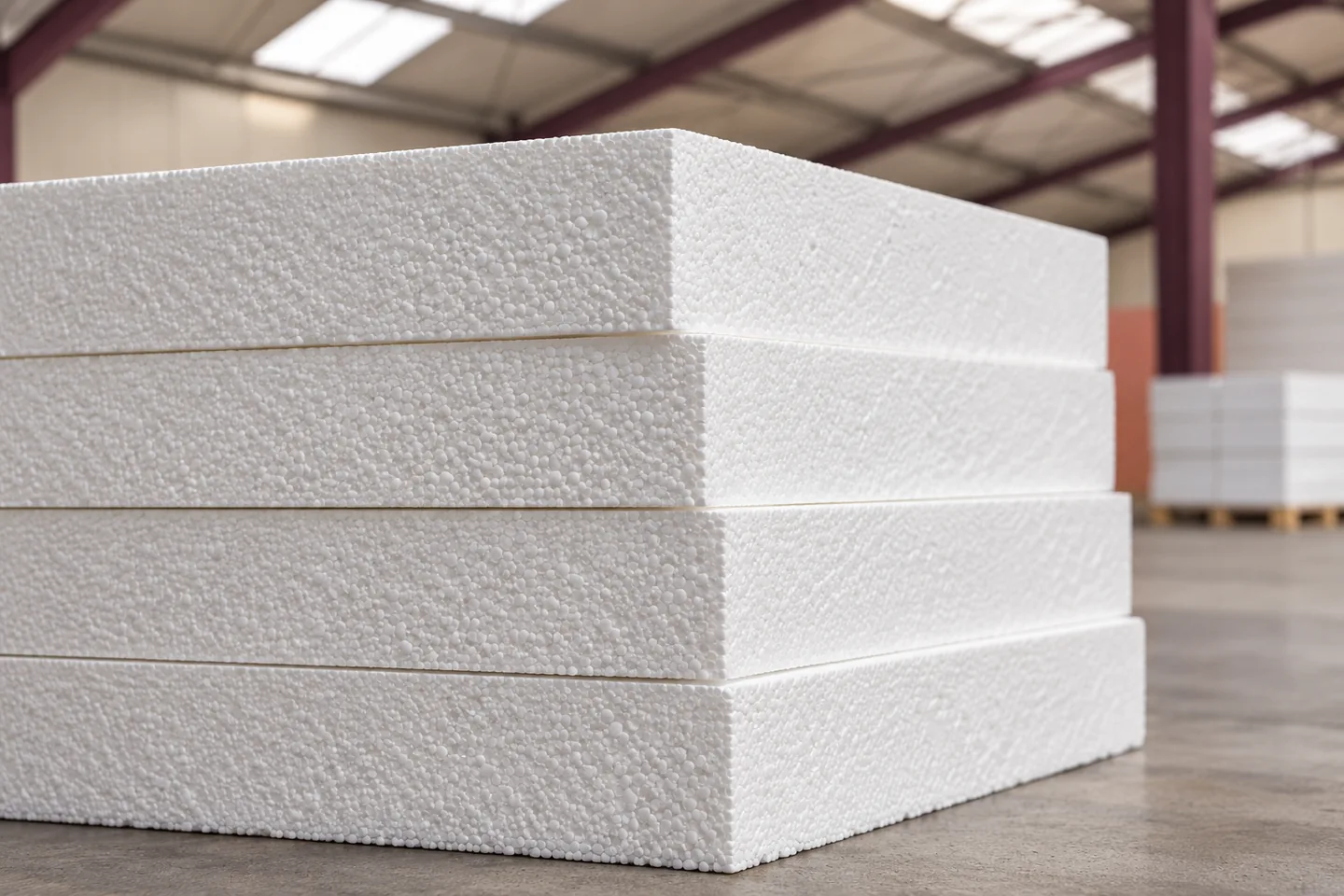
Start with the position of the waterproofing. On a conventional flat roof, it covers the insulation. On an inverted roof, the insulation…
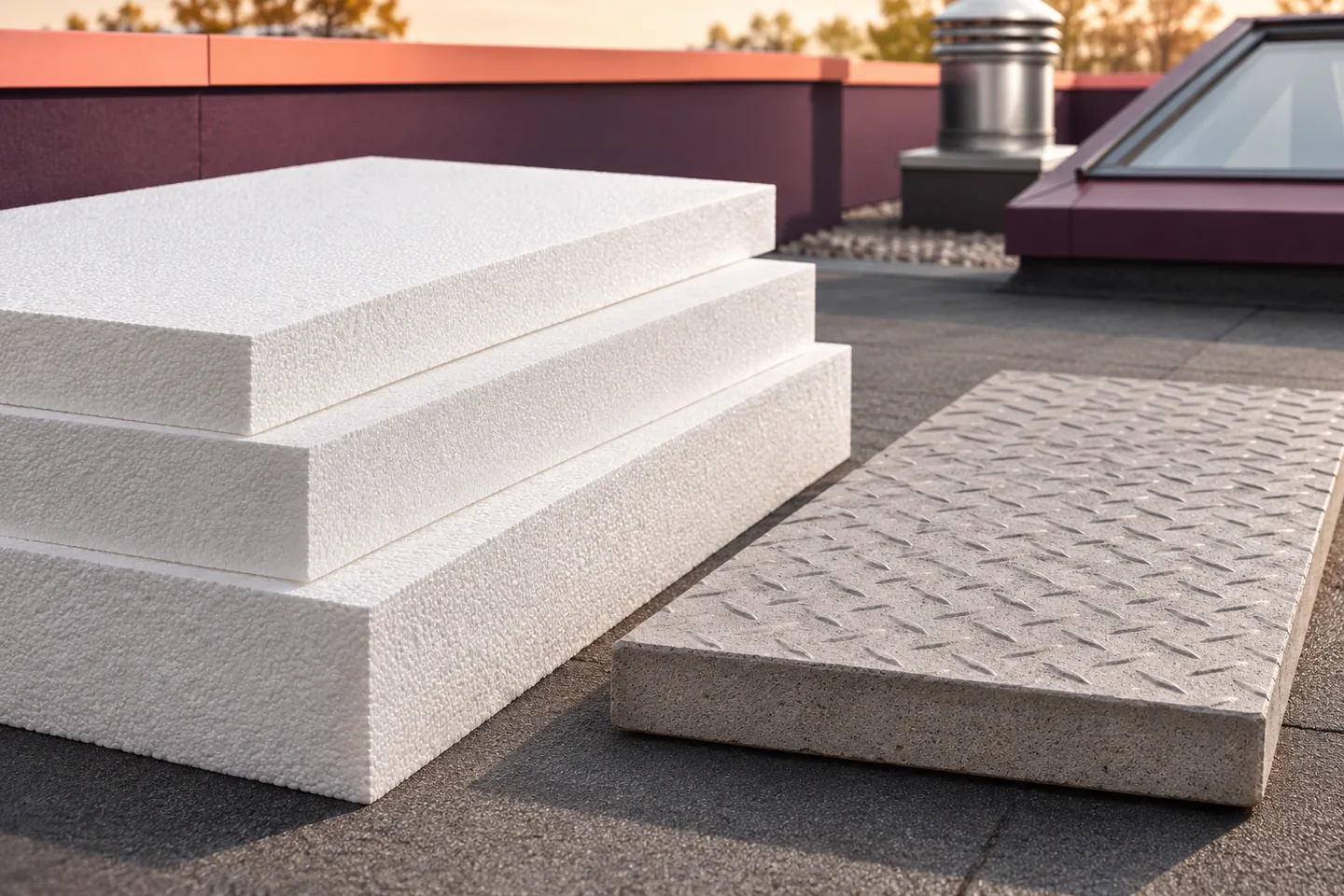
Plot the journeys a technician will actually make, from the roof hatch to each drain and item of plant. Allow room to…
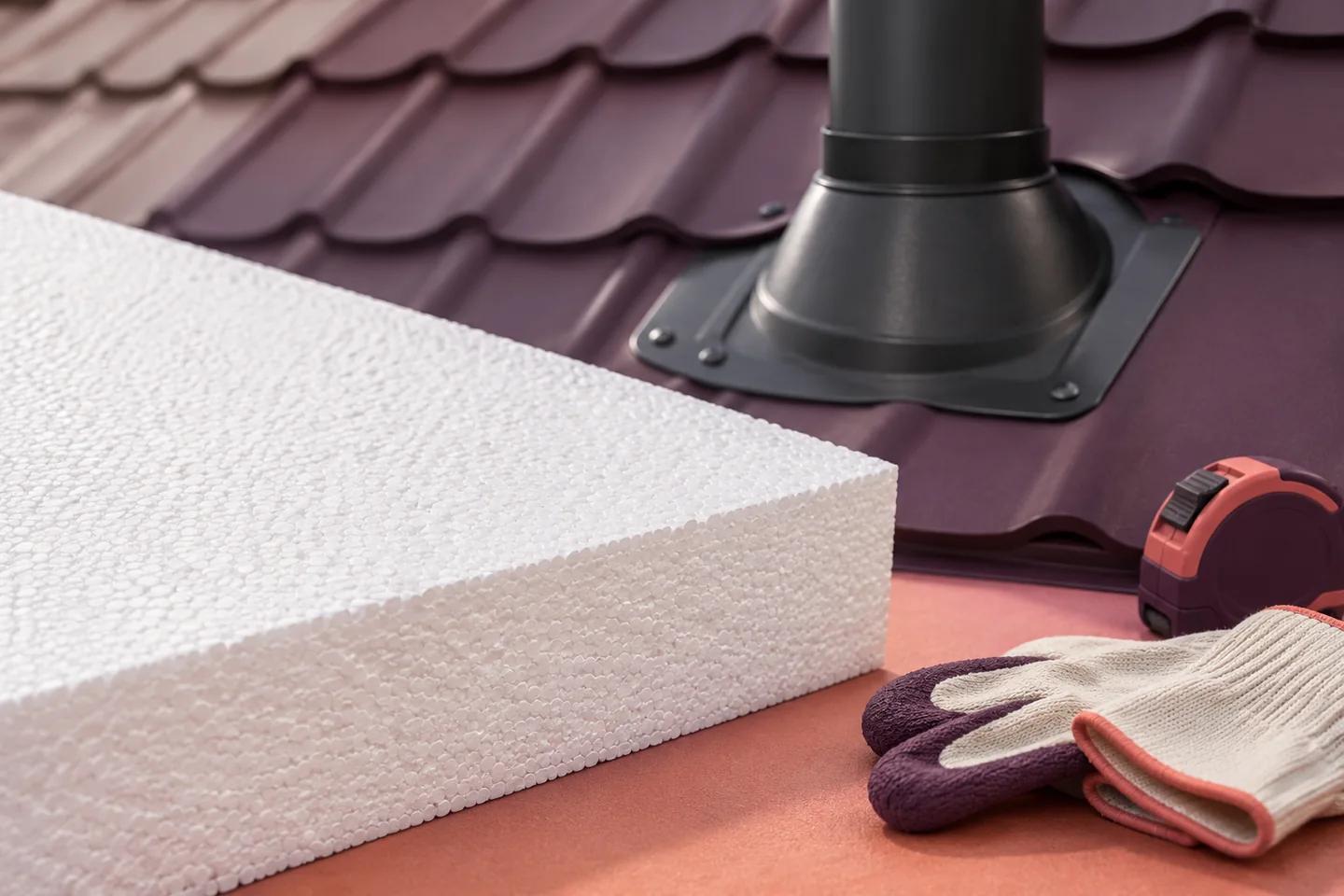
For each pipe, duct or cable crossing an EPS-insulated roof, draw a section showing the deck, air and vapour control layer, insulation…
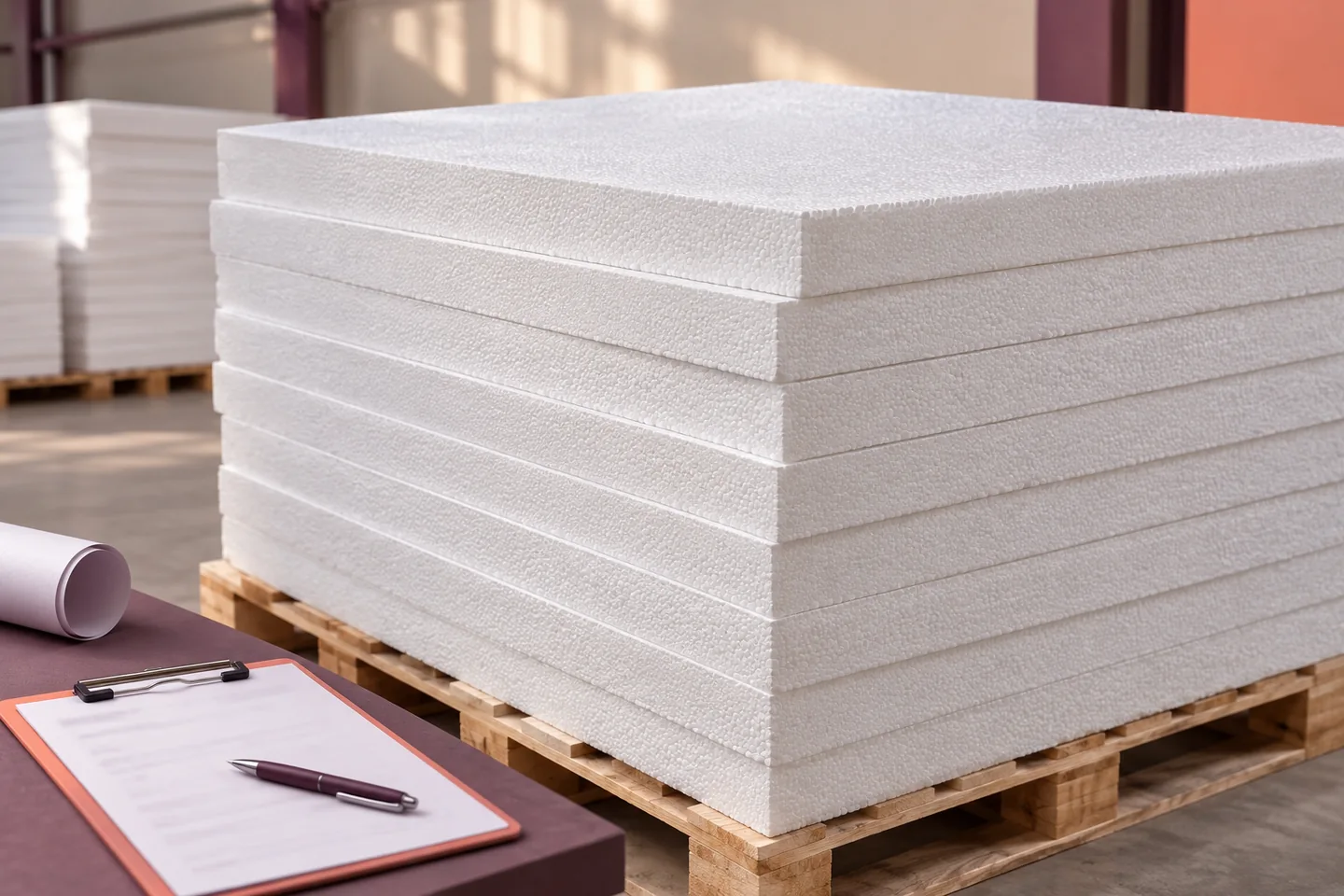
Give each use of expanded polystyrene its own order line, identified by the zone or grid reference on the drawings. Two boards…
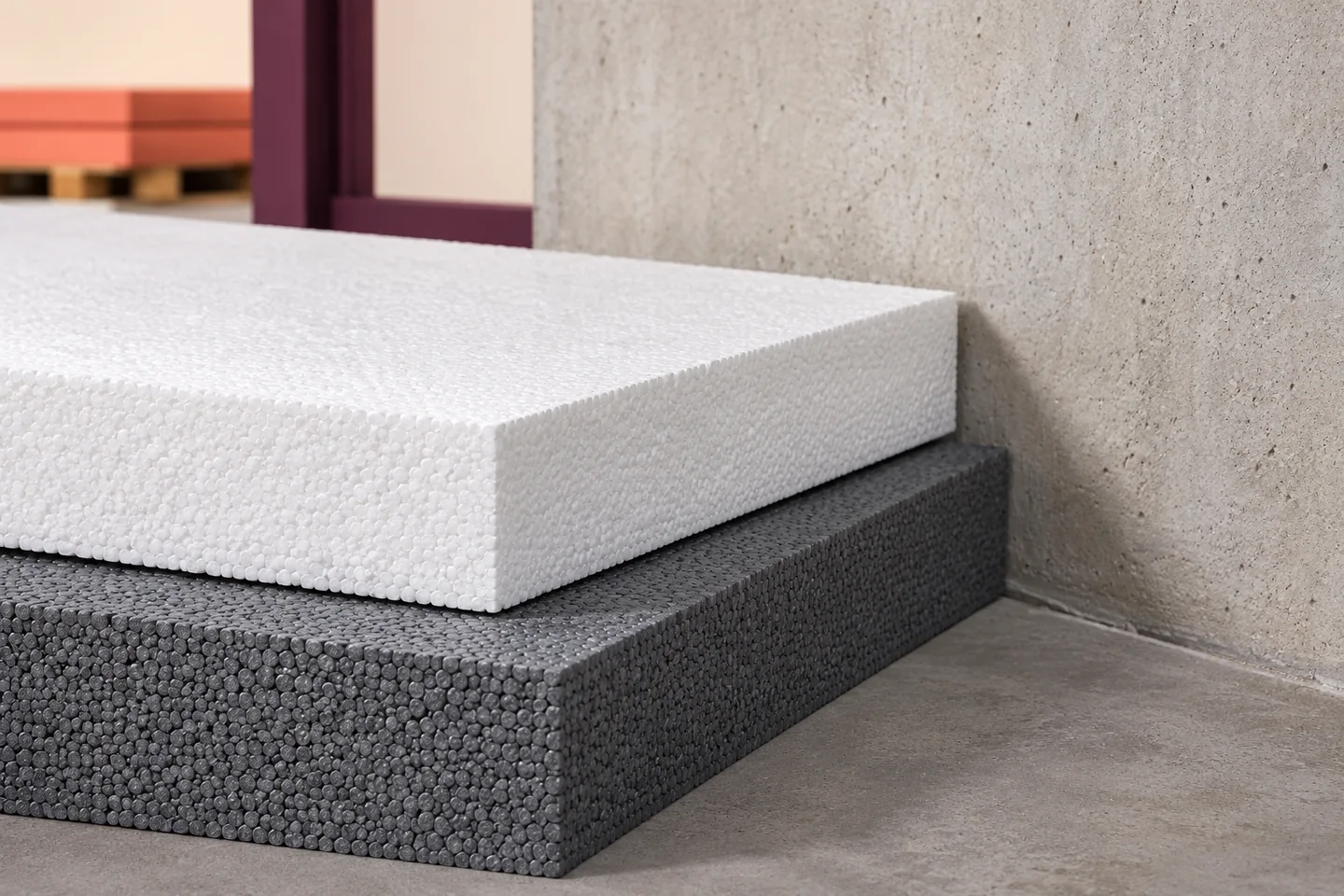
On a section through the edge of the hall, trace the insulation from beneath the floor to the base of the wall.…
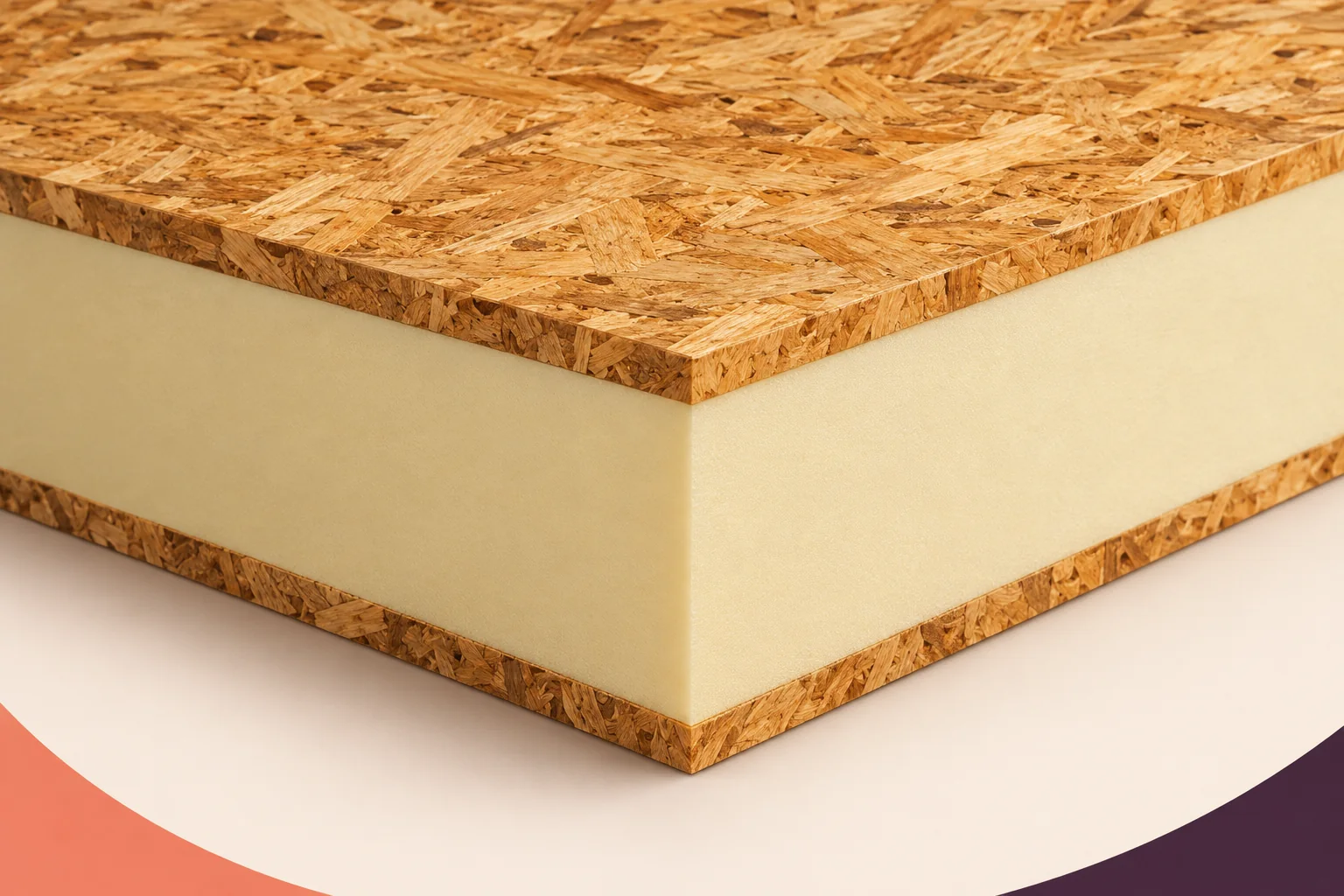
When comparing structural insulated panels, first identify what each quoted figure describes. Thermal conductivity, λ, belongs to a material. Thermal resistance, R,…
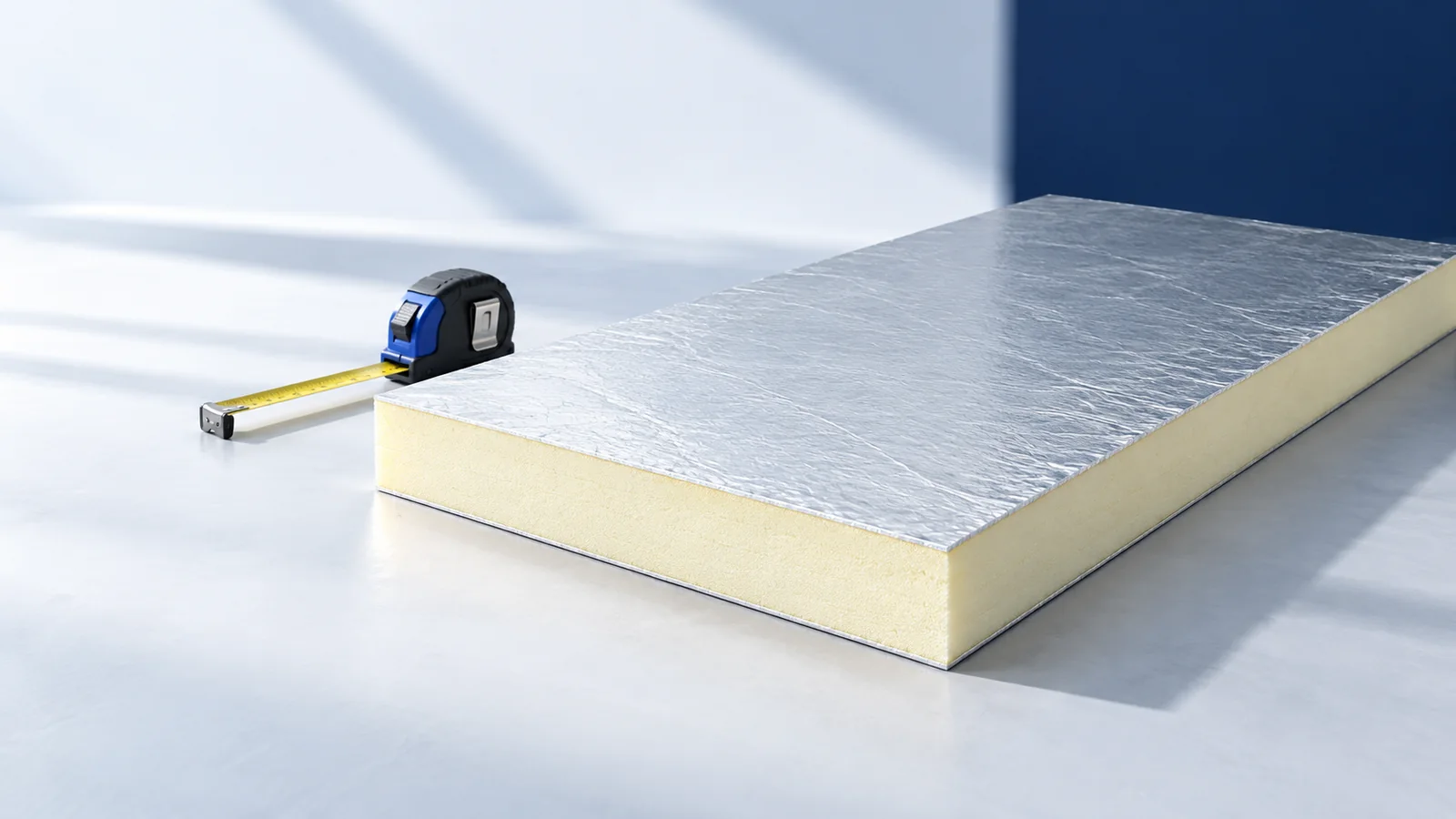
Measure the depth available at the eaves, roof windows and parapets, then compare insulation products at the thermal resistance your roof needs.…
