






After roofing work: what information should the building manager receive?
Roofs and roof coverings
Completed roofing work should leave the building manager with clear information about what was done and the conditions relevant to later servicing. Invoices alone do not explain where materials were installed, which details changed or what restrictions matter before another task. This guide proposes an organised document handover after refurbishment or installation: a work map, change schedule, product-specific instructions and an outstanding-issues list. It is an organisational aid, not a universal list of documents required by law or contract. The relevant people establish the formal requirements for the project. Handed-over information supports future planning; it does not replace a current roof assessment or competent preparation of safe access.
In this guide
Show what was actually completed
Prepare the handover while work is underway. Reconstructing a photograph’s location or the reason for a detail change later is harder than linking that information to the relevant roof area at the time.
Start with a brief scope map showing the roof slopes or sections involved, the work carried out and what remained untouched. Use names consistent with drawings and the contractor’s references. This prevents “roof refurbishment” from obscuring the difference between replacing all roofing and repairing selected joints.
Link documents to locations
Keep the completed-work schedule separate from an assessment of the whole building. A record for one roof section should not be labelled as confirmation of other sections that were not checked. Preserve the scope, date and author of each inspection result.
Assign installed product names and identifiers to their locations. A general catalogue of several similar models is insufficient. Where instructions cover a product family, identify the variant used on the building while retaining its actual specifications and manufacturer designation.
Keep a traceable change record
Photographs of layers later concealed are useful when their subject is identifiable. Add the location, work stage and corresponding detail reference. They help reconstruct the work sequence, but a photograph alone neither proves every requirement has been met nor replaces specified checks.
The change schedule should identify the final arrangement and the record explaining it. Retain earlier versions as clearly marked archives. Two drawings with the same name and no date can leave the next contractor working from an outdated joint or service-penetration detail.
Separate instructions from confirmations
Do not fill missing information from the memory of someone unable to substantiate it. A discrepancy between a drawing and the contractor’s account should be recorded as a question to resolve. An organised pack can contain explicit gaps; it should not conceal them behind an appearance of completeness.
Product instructions describe conditions of use, whereas an inspection record concerns a particular check. These documents serve different purposes. Arrange them so that general instructions cannot be mistaken for confirmation of the entire roof’s workmanship or the current condition of access equipment.
Hand over restrictions and open issues
Retain restrictions on the use of installations left on the building where specified by the relevant competent people or documentation. Do not extend those findings to similar-looking components. Permanent equipment being present does not mean every future task can proceed without its own assessment.
List outstanding matters separately: their subject, who will resolve them and what evidence is needed for closure. Distinguish a request for a document from unfinished work. Handing over this list does not itself determine contractual acceptance or payment; it makes the current position clear.
Check that the whole pack is usable
Test information retrieval with the person receiving the documents. Can they locate the correct instructions for an area, find the latest drawing and see unresolved remarks? If this requires calling several people, improve the index and filenames before completing the handover.
Agree where the current pack will be kept and how it will reach the next authorised contractor. Later modifications should be recorded without losing the history. Good post-work records reduce the loss of knowledge about the roof, while every subsequent job still needs preparation suited to its scope and current conditions.

Free quote
What to include in your enquiry
Tell us how you plan to use the material, the dimensions and the quantity you need. Include the thickness, grade or variant name, along with the delivery town or your preferred collection branch. For a specific product, add its name or a link to the product page. We will reply to the email address you provide to discuss availability and the terms of your order.
Read next

Insurance for a house under construction should reflect the stage the work has reached. An open structure faces different risks from a…

Both profiles can work on a house. Start with the roof section, slope layout, pitch and supporting structure before choosing the appearance.…

Installing solar panels does not necessarily invalidate a roof covering warranty. Whether the warranty continues to apply depends on the provider's terms,…
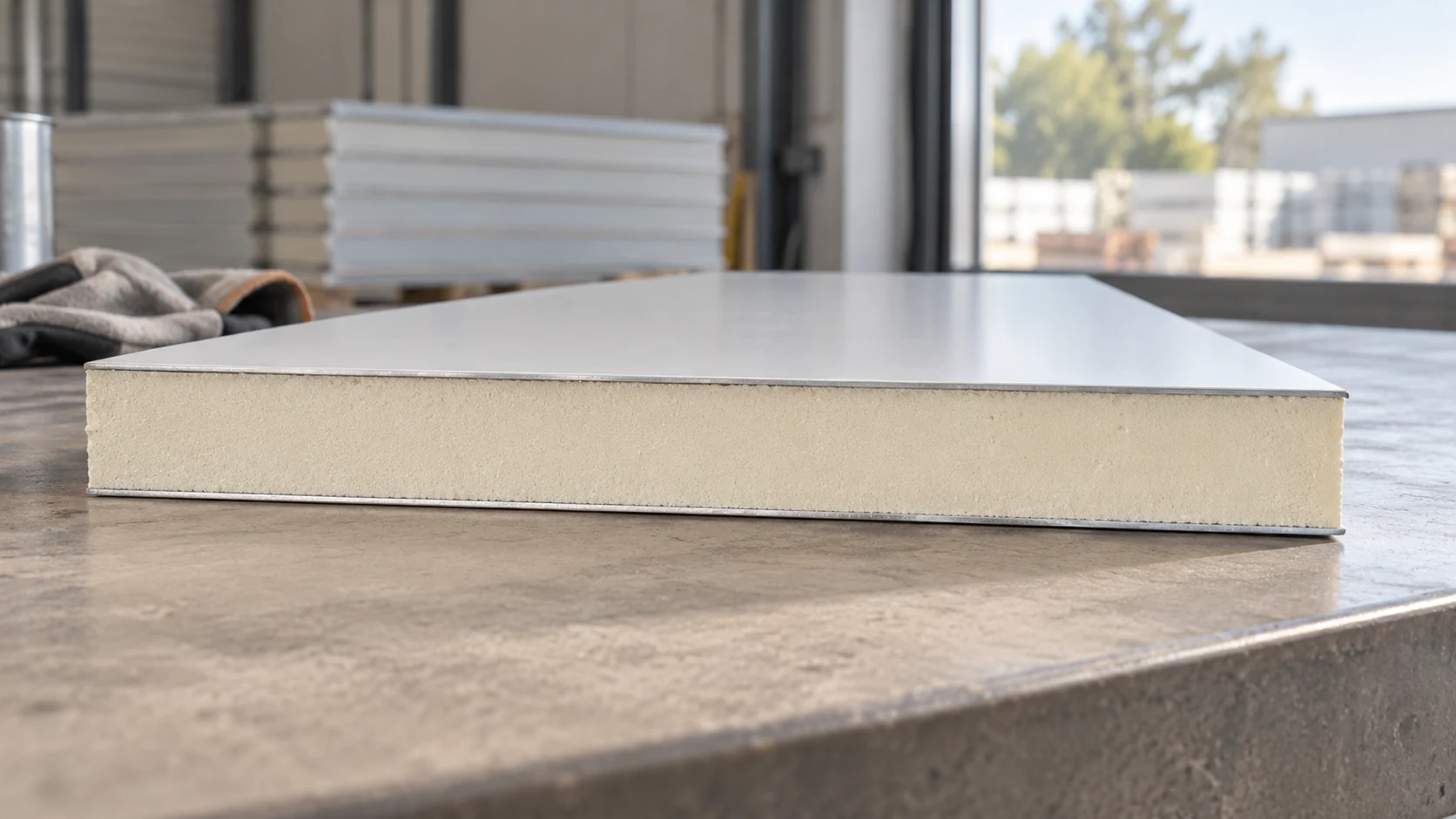
A price per square metre is only the starting point for a thin wall panel. Identify the core, facings and sales unit,…
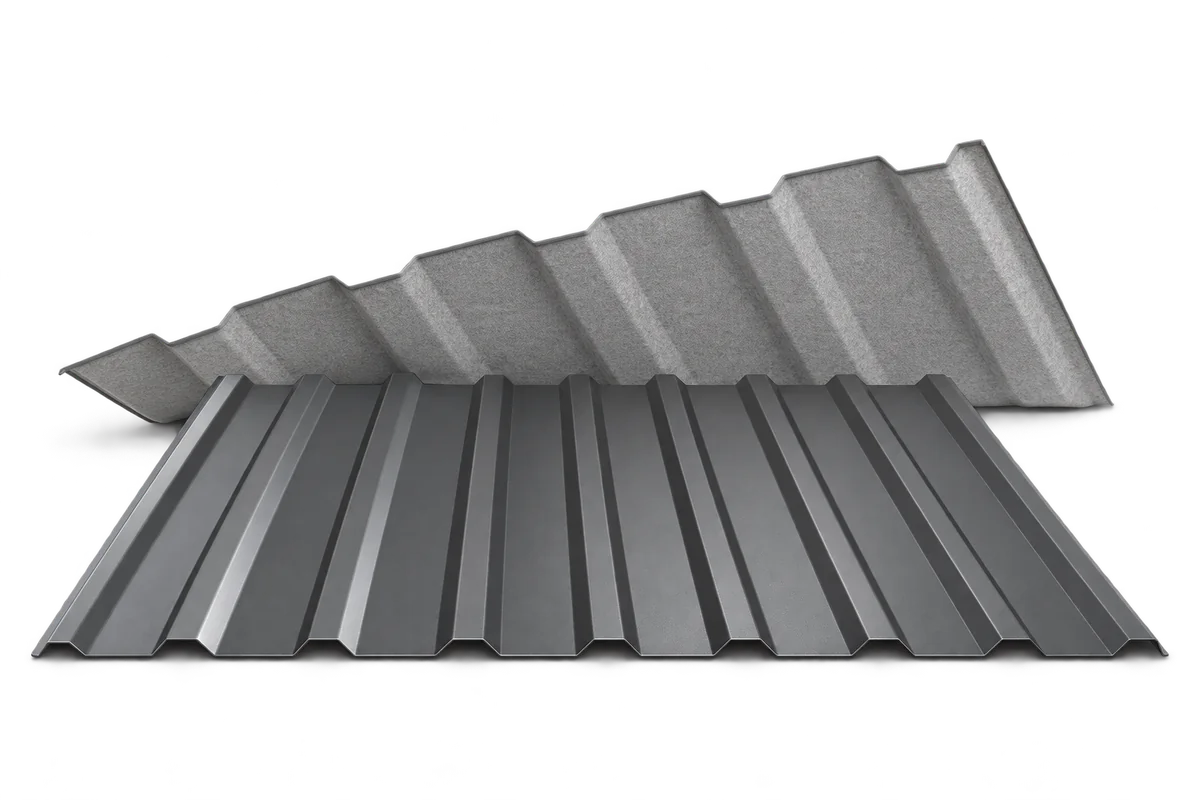
How much noise you hear under a metal roof depends on the entire roof assembly and how well it was installed. A…
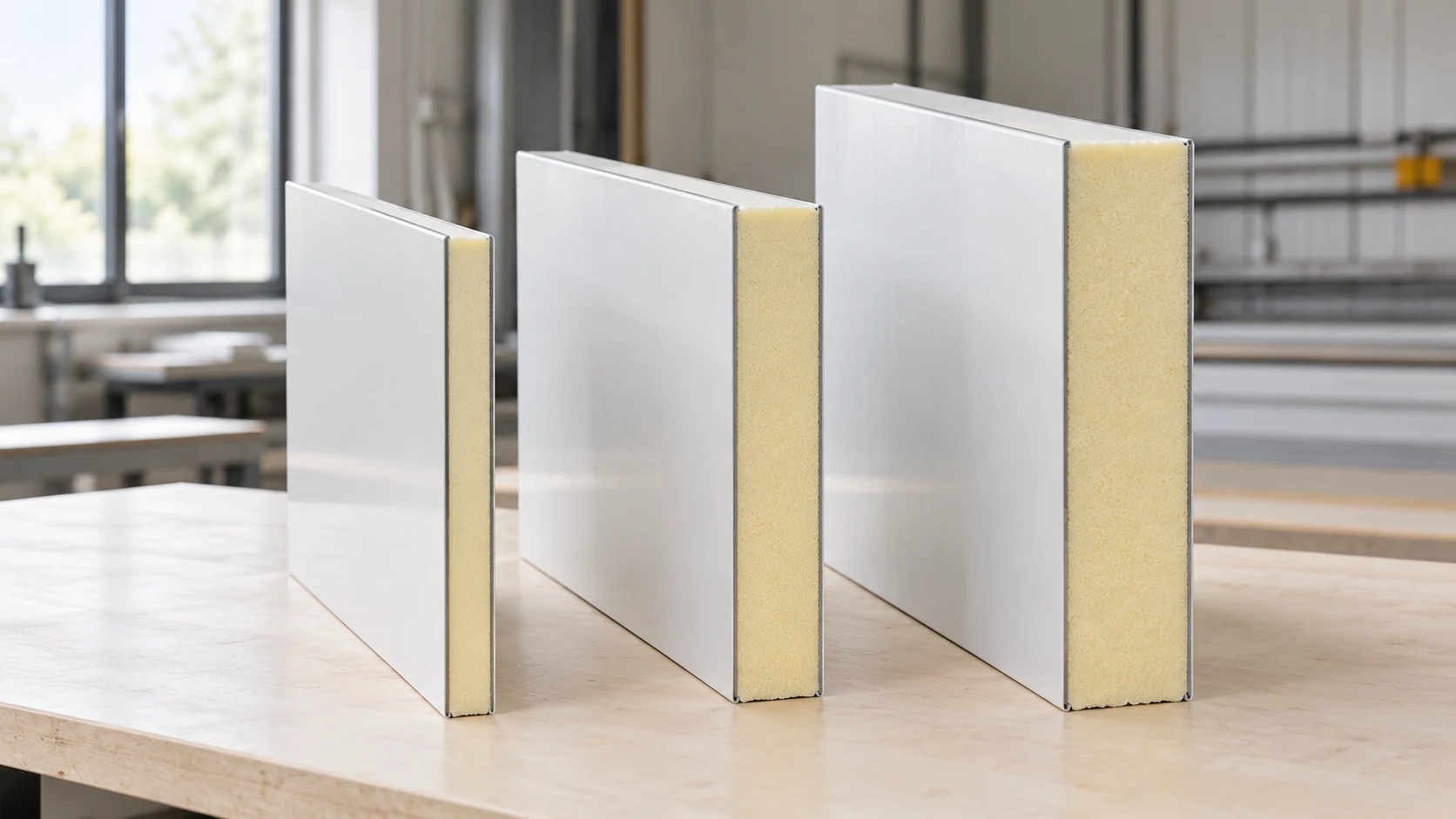
A quotation is useful when the price can be traced to a particular panel and quantity. Different cores, facings and fasteners can…

A calculator result is useful only when you know what was modelled. The same wall can give a different result if indoor…

Polish sellers use the informal term “płyta obornicka” for different sandwich panels. It does not identify the core, fire classification or suitability…
