






Can a thin mineral wool panel be used as a partition?
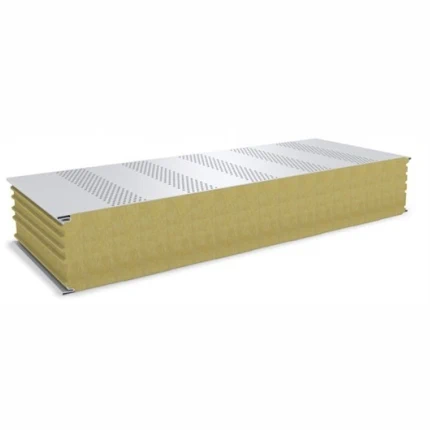
Mineral wool panels
At a glance
Choose a thin mineral wool panel for what the partition has to do, not simply for the floor space it saves. Even between rooms at similar temperatures, the wall needs proper supports and opening details. Some systems offer a 60 mm panel; the thickness itself establishes no fire rating. Determine temperature and humidity on both sides. Dividing two heated rooms is different from separating a cold store. Record the acoustic and fire requirements too. Together, these conditions show whether a thin panel is a sensible choice in this location.
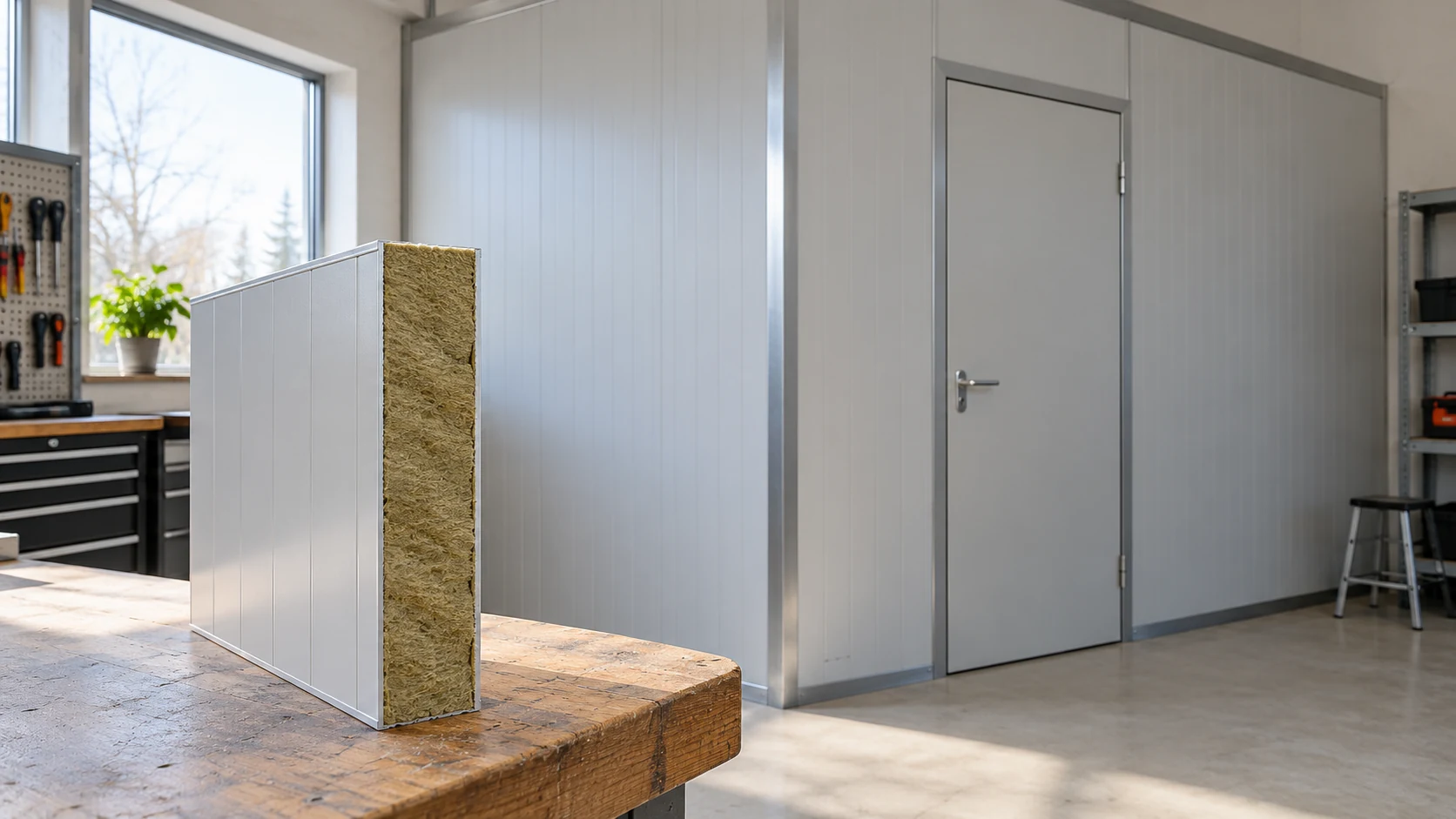
Identify what the partition separates
Consider use. Beside a transport route, accidental impacts matter; near noisy equipment, assess the complete sound path. Saved space is useful only if the partition still performs its intended function.
Between a workshop and its ancillary rooms, check the door seals and cable penetrations. These everyday details often determine comfort. A better panel will not close a large gap under the door through which sound or air can pass.
Check which thicknesses are available
Some wall panel ranges start at 60 mm. Others, including certain concealed-fixing systems, may start thicker. Check the production range for the system selected. Availability in one family tells you nothing definite about another.
Other core materials are available at 40 mm. This is not evidence for an equivalent wool panel. If offered a 40 mm product, ask for its exact designation and data. A trade name and photograph do not establish core material, performance or permitted use.
Read the figures for the thin variant
One 60 mm dual-density wall panel has a U-value of 0.61 W/(m²K) and weighs 13.6 kg/m² with 0.5/0.5 mm steel facings. These figures support transport and thermal calculations for that particular configuration only.
Where both rooms have similar temperatures, limiting heat loss may be secondary. Still check support spacing and deflection. Tall partitions and large openings can require extra framing. A lightweight panel cannot be erected without designed fixings.
Detail doors and equipment fixings
Design the door frame and its anchorage. Repeated opening introduces loads beyond the stationary leaf weight. Do not judge support by the visible facing thickness at the cut-out. Check whether the system provides a suitable frame or requires a separate support member.
Apply the same reasoning to shelves, cupboards and services. Thin facings should not take unintended loads. Plan equipment fixings before ordering to avoid later penetrations that compromise air seals and sound insulation.
Do not infer fire resistance from thickness
A non-combustible core does not establish an EI rating. The thin variant’s data sheet may state NPD, meaning no performance determined for that characteristic. It is neither a zero result nor evidence of the required class. Obtain evidence for the proposed wall.
If fire resistance is specified, select the complete system and its details. Doors, service penetrations and the junction with the floor slab above all count. A general statement about wool at high temperatures cannot qualify the finished assembly.
Cost the whole internal wall
Budget for the frame, door surround, top and bottom flashings and seals. These can be a large share of a short partition’s cost. Compare the full assembly with a thicker option if that allows a different frame. The cheaper panel need not produce the cheaper wall.
Allow for future layout changes. For a demountable partition, plan access to fixings and edge finishes. Heavily cut panels may be hard to reuse. A clear module layout and planned openings make later alterations easier and reduce waste.
Questions and answers
Is 60 mm of mineral wool sufficient for the external wall of a heated building?
Check the building’s thermal requirements and heat balance. Product availability does not prove suitability; the complete external wall, junctions and thermal bridges matter.
Does NPD mean that the panel burns?
No. NPD applies only to the characteristic for which no performance is declared. It may refer to fire resistance while reaction to fire is declared separately. Read the two entries independently.

Free quote
What to include in your enquiry
Tell us how you plan to use the material, the dimensions and the quantity you need. Include the thickness, grade or variant name, along with the delivery town or your preferred collection branch. For a specific product, add its name or a link to the product page. We will reply to the email address you provide to discuss availability and the terms of your order.
Read next
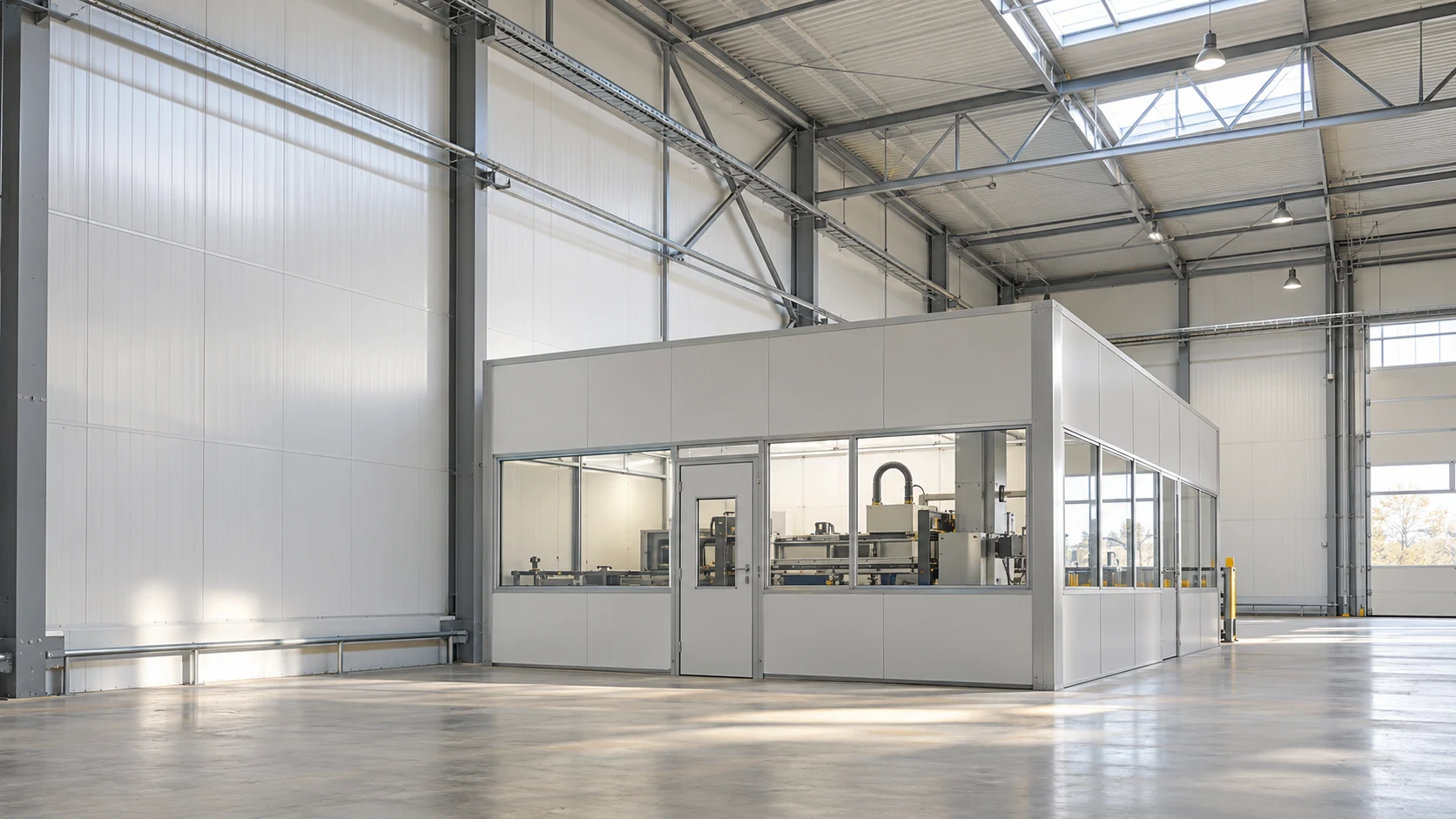
A mineral wool core alone cannot guarantee a quiet hall. First locate the source and the point that needs protection: a machine…
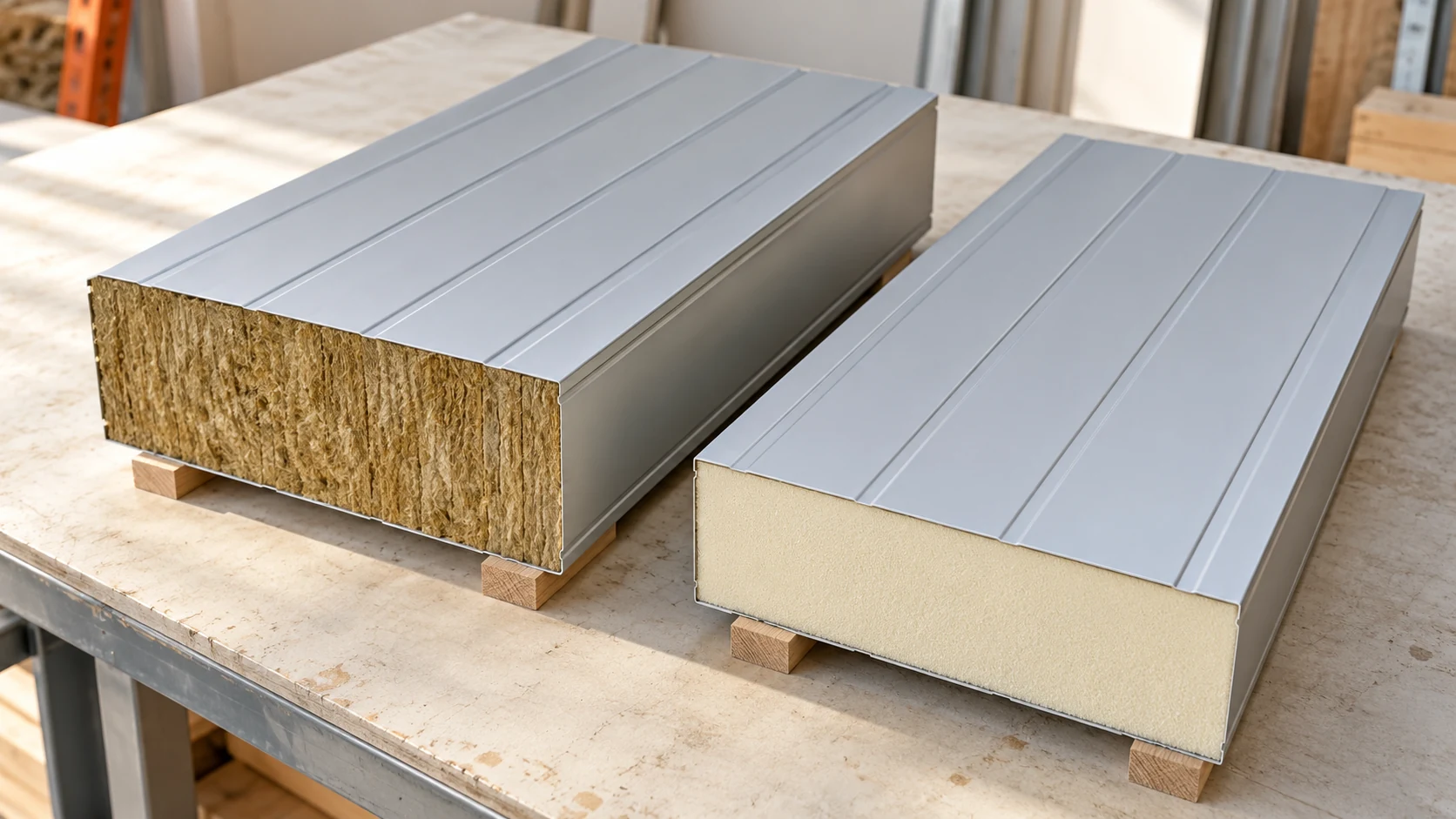
Choose the core for the job the wall or roof must do. Mineral wool and PIR offer different combinations of insulation, weight…
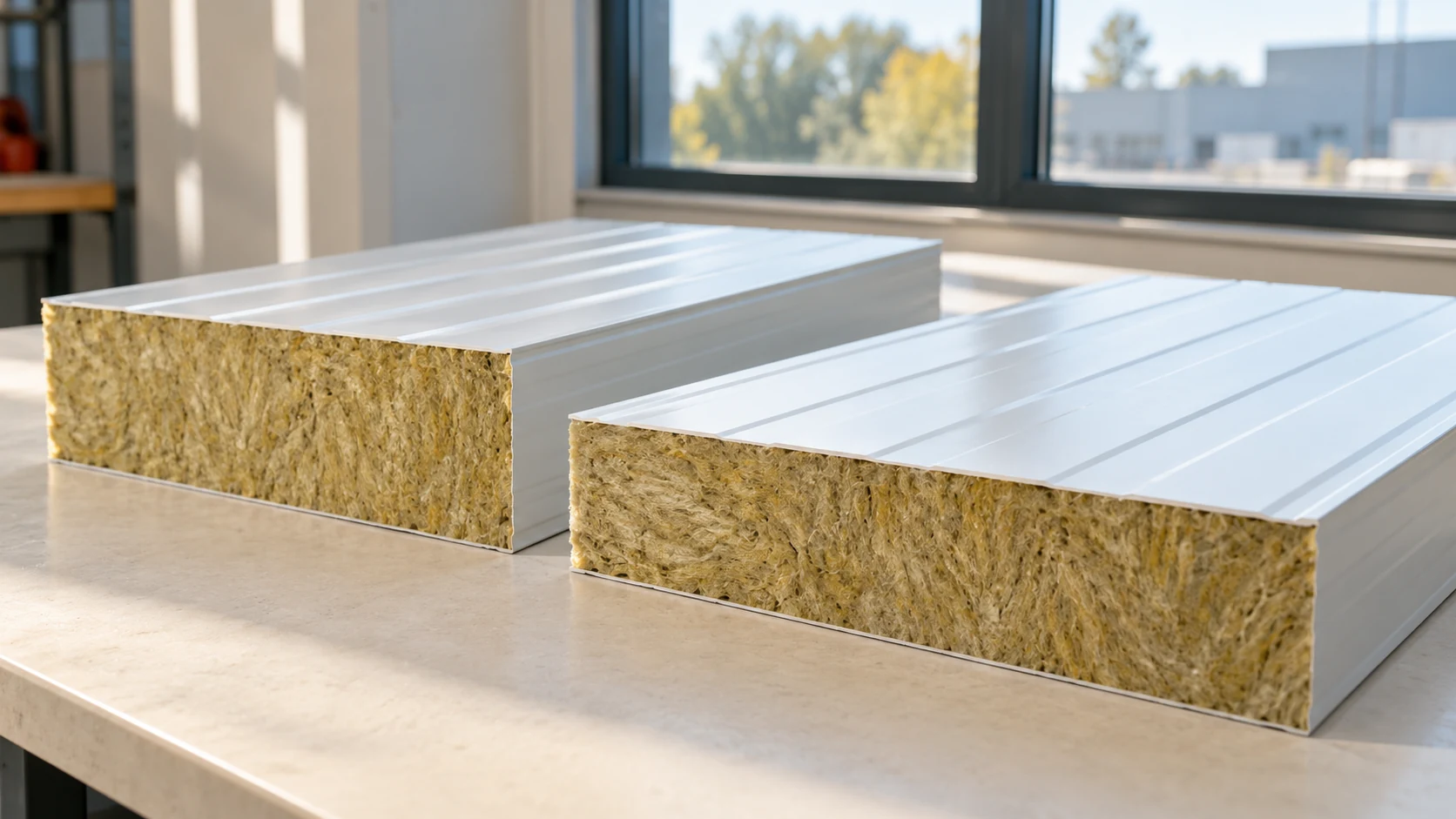
Two quotations for a 100 mm mineral wool wall panel can refer to quite different products. Weight, geometry, facings and permitted applications…
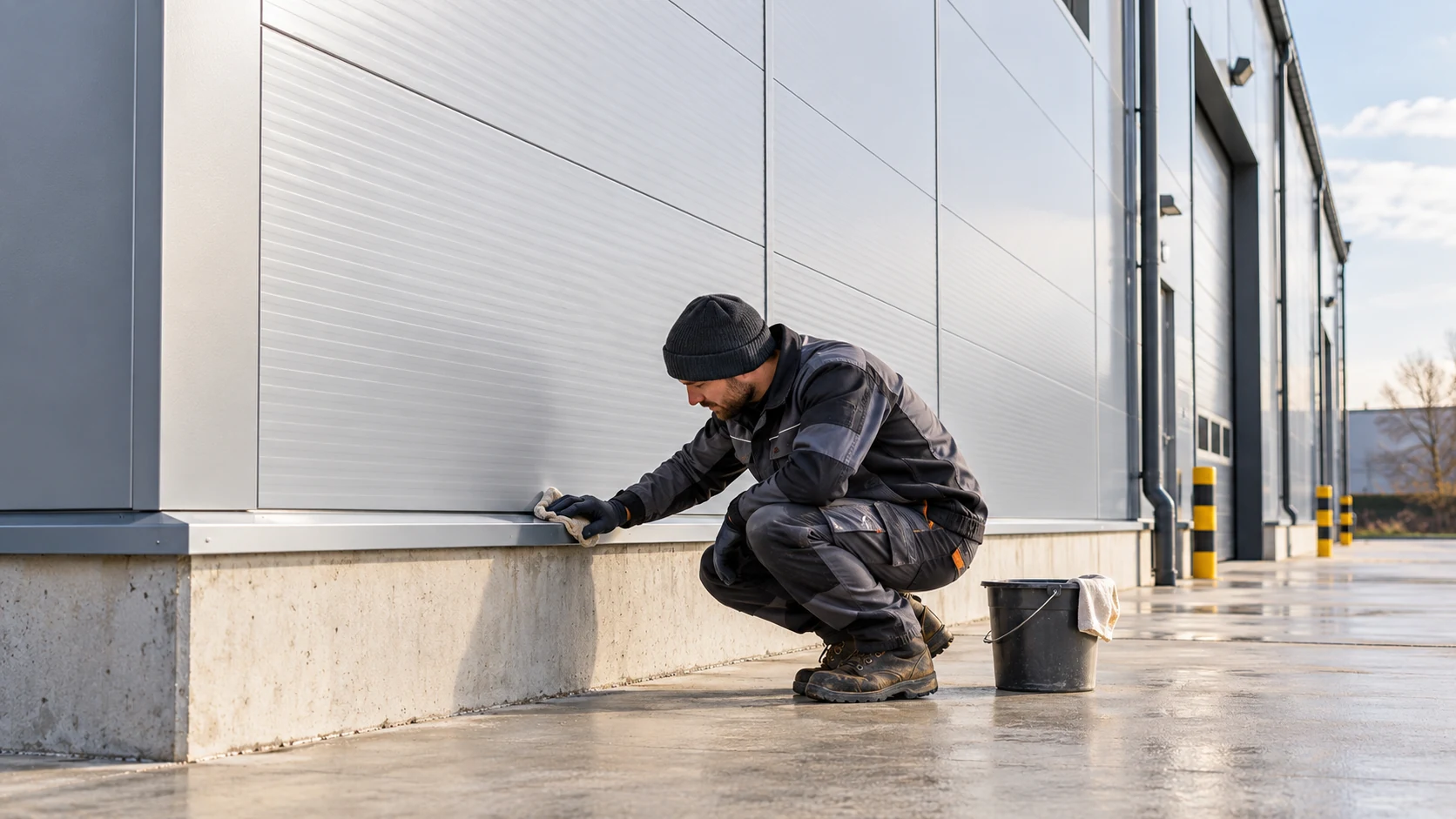
There is no single service life in years for a mineral wool panel wall. A sheltered warehouse, a vehicle wash and a…
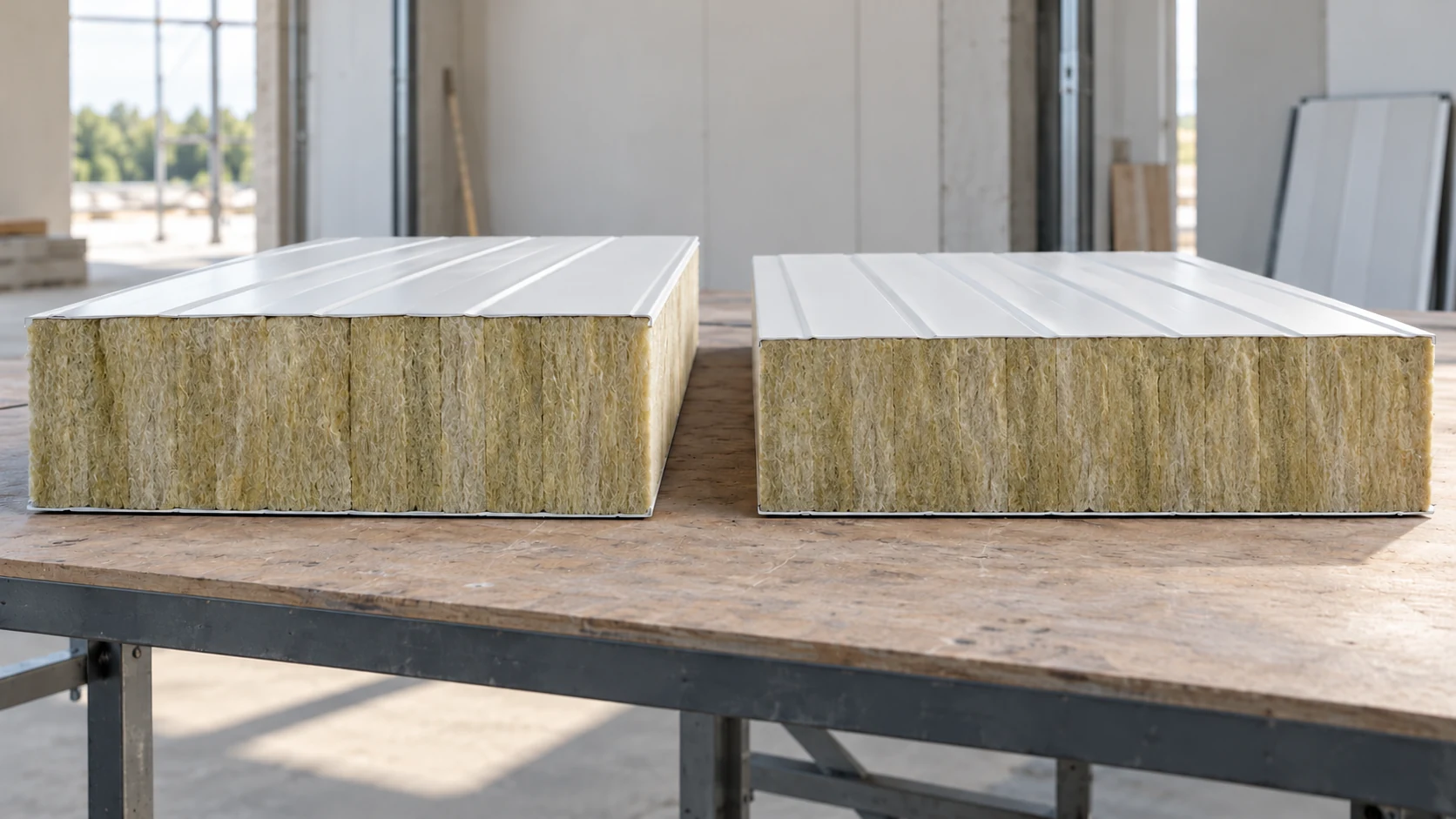
One mineral wool panel range may include standard, lighter or differently fire-rated variants. Their names do not tell you what changed. Compare…
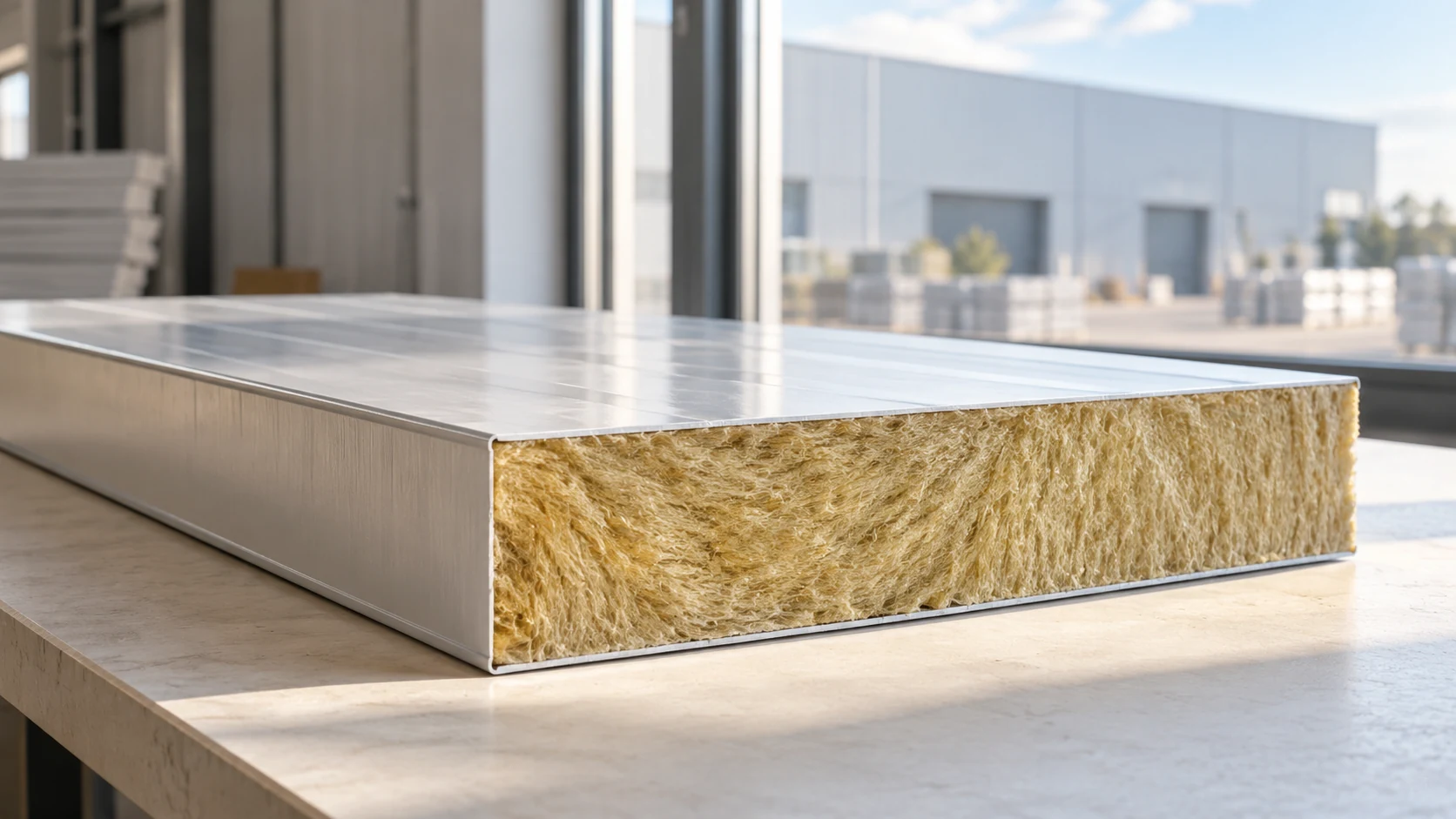
Thermal conductivity (lambda) describes the material; the U-value describes heat transfer through a specified element. When buying mineral wool wall panels, use…
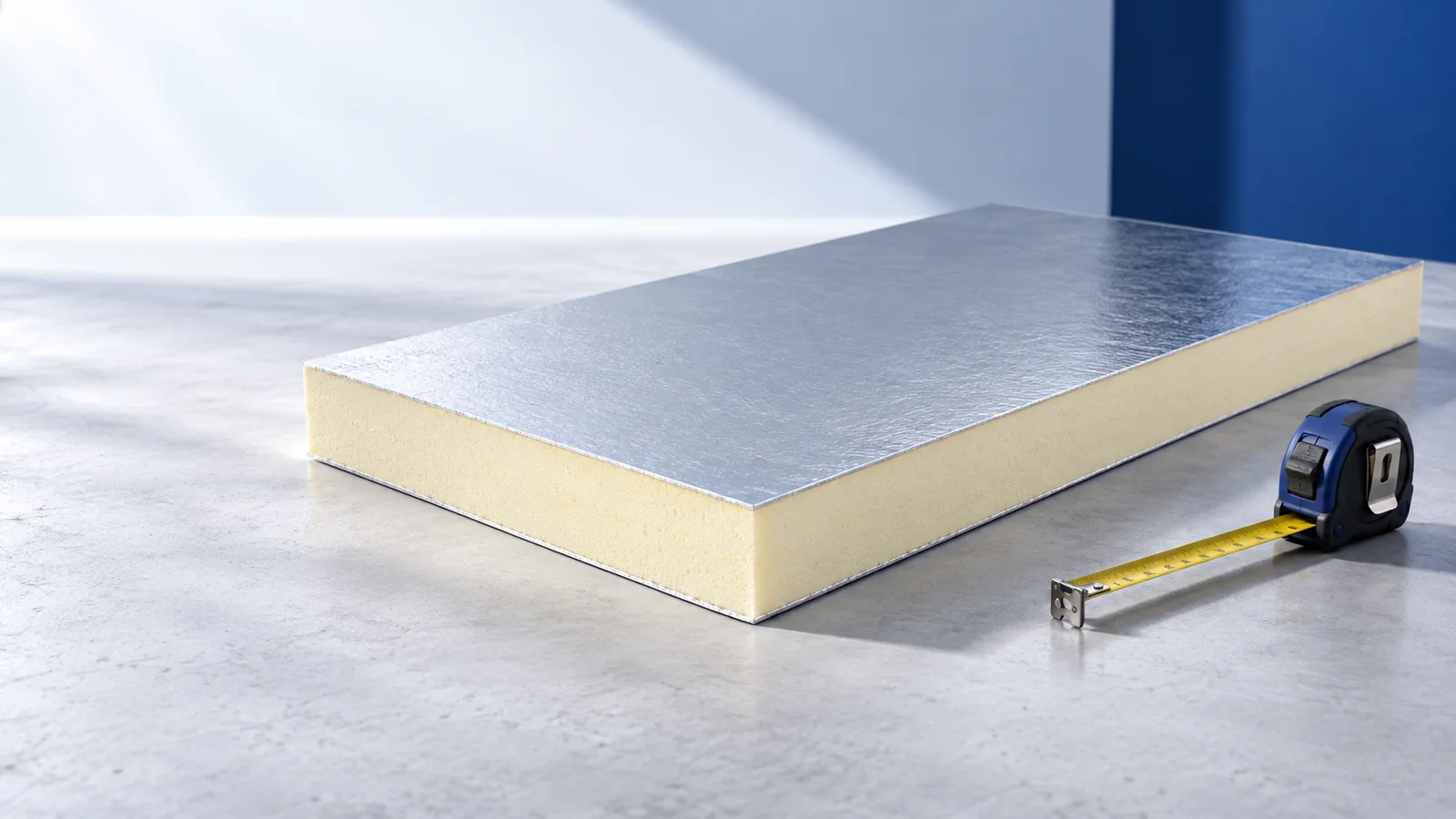
Trace the boundary of the heated rooms on a section through the building. For an unheated loft it may run across the…
The panel price per square metre is only one part of a wall budget. Include flashings, seals, fixings, transport, equipment hire and…
