






Will mineral wool sandwich panels make a hall quieter?
Acoustics in use
At a glance
A mineral wool core alone cannot guarantee a quiet hall. First locate the source and the point that needs protection: a machine operator, an adjacent office or the area outside the plant. Record when noise peaks and which equipment is running. Is sound coming through the wall, reverberating inside the hall or travelling through the structure as vibration? Each calls for a different treatment. Panel test data help with selection, but a large open door, a ventilation grille or a structural connection can carry enough sound to determine the result.
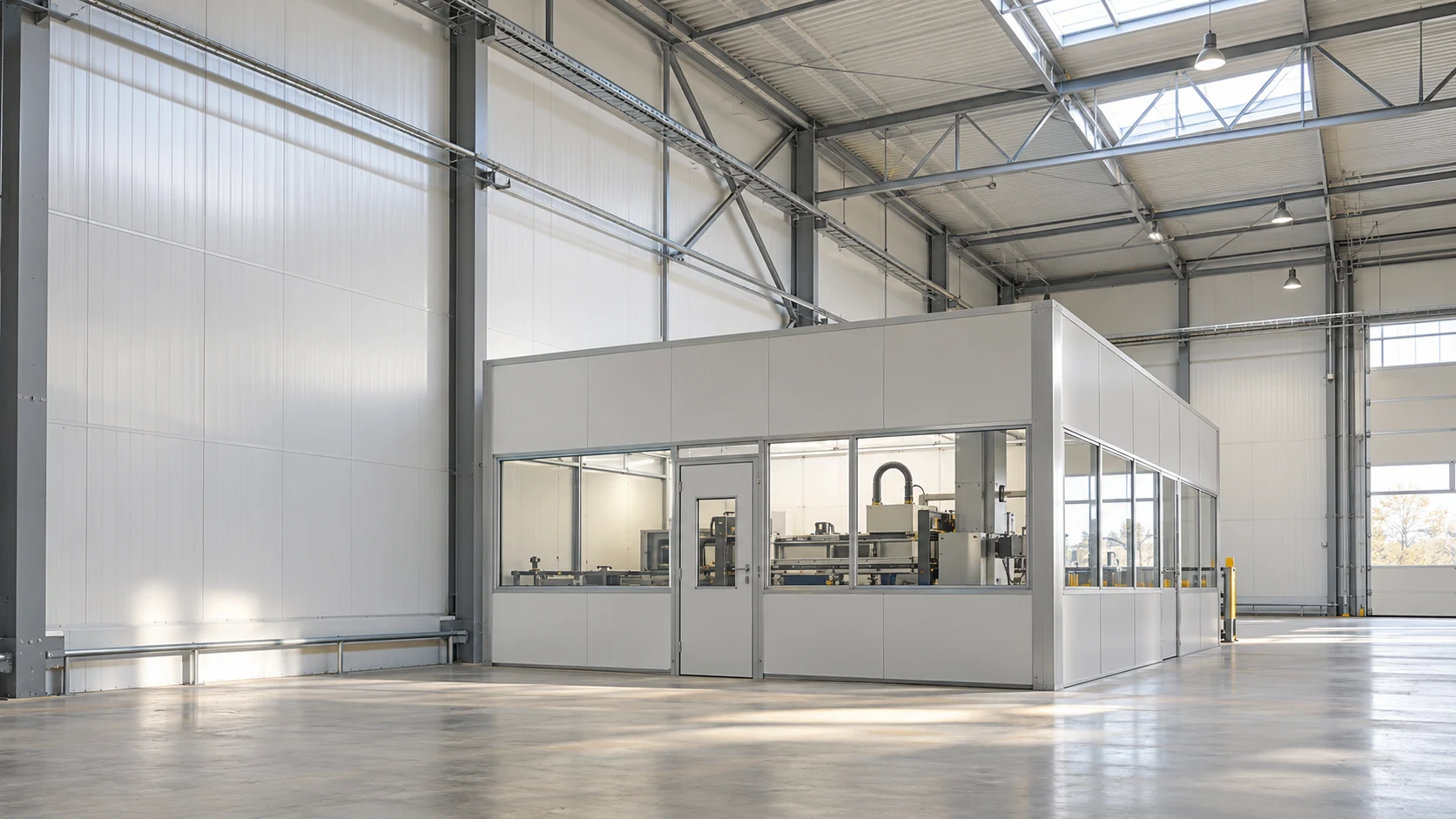
Trace the sound path
Check for vibration as well. A machine rigidly attached to a shared base can transmit energy to other parts of the building. Changing the panel core leaves that path in place. Base material selection on measurements and an assessment of the building in operation.
Describe a normal operating cycle, including impacts, start-up and steady noise. These may require different assessment methods. In an office on the other side of the wall, speech intelligibility may also matter. These observations establish what to measure and what the alterations should achieve.
Distinguish sound insulation from absorption
Sound insulation limits transmission through a partition. One measure is the weighted sound reduction index Rw, expressed in decibels. Absorption describes how much incident sound energy does not return to the room as a reflection. The weighted absorption coefficient αw describes this property.
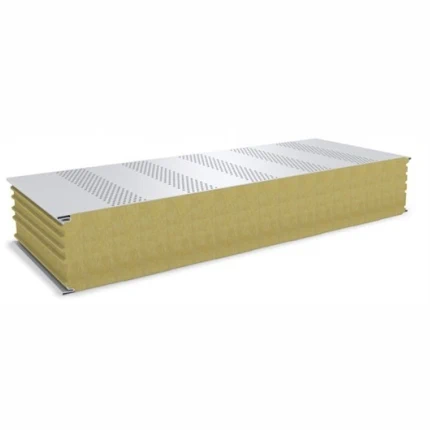
A solid steel facing behaves differently from a purpose-designed perforated surface. Wool enclosed between solid sheets does not automatically provide high absorption. To shorten reverberation, check the surface design and its documented performance.
Interpret the tested assembly
One of the wool-core wall panels examined has a declared Rw of 27 dB. A second, 100 mm acoustic wall panel with a perforated inner facing has a declared Rw of 31 dB. Each value applies to its particular construction and test conditions. Also compare the ratings that account for the noise spectrum.
The 100 mm perforated acoustic panel also has a declared αw of 0.65. The table for the first panel gives no αw. A sound insulation figure therefore cannot stand in for an absorption figure. Laboratory results describe the tested assembly. Flanking transmission, imperfect junctions and openings also affect the finished building.
Inspect doors and ventilation
Consider a noisy machine beside a large loading door. If the door stays open for most of the shift, improving the wall panels leaves the main transmission path open. A poorly selected air intake or exhaust can have a similar effect. Establish how much these openings contribute.
With doors closed, inspect the seals, service penetrations and junctions with adjacent elements. A high-performing panel still needs well-detailed openings. Address ventilation noise while maintaining the required airflow. Do not seal ventilation openings indiscriminately.
Match the treatment to the source
For excessive reverberation, determine the area and distribution of absorbers. For noise entering an adjoining zone, review the whole partition including its doors. Vibration may require a different machine base or vibration isolation. Each measure addresses a different design task.
Check hygiene, fire and operating requirements. A perforated facing may be unsuitable for a room washed down with water. Additional absorbers must clear services and their loads need to be accounted for. Coordinate the acoustic design with the rest of the building.
Plan how to verify the result
Record operating conditions and initial readings at the points that matter to users. After the work, repeat the measurements with comparable machine loads and door positions. This distinguishes the effect of the changes from a quieter production shift. A perceived reduction in echo describes only one part of the outcome.
Specify the required outcome and acceptance method in the order. A panel’s Rw does not predict an equal reduction in noise throughout the hall. The final measurement should address the original protection objective.
Questions and answers
Does Rw 31 dB mean every workstation gets 31 dB quieter?
No. Rw describes the tested element under specified conditions. Workstation noise depends on the source, distance, reflections, openings and other transmission paths.
Does thicker wool always shorten reverberation?
No. Reverberation depends on surface absorption and room geometry. Wool enclosed by solid steel works differently from an acoustic absorber with a surface that admits sound.

Free quote
What to include in your enquiry
Tell us how you plan to use the material, the dimensions and the quantity you need. Include the thickness, grade or variant name, along with the delivery town or your preferred collection branch. For a specific product, add its name or a link to the product page. We will reply to the email address you provide to discuss availability and the terms of your order.
Read next
Before switching on the saw, confirm the dimensions, support the panel and decide how to close the exposed edge. Choose tooling for…
Water on a steel facing does not prove that the panel leaks. Rain, a leaking service or condensation on a cold surface…
A cold room is a large insulated chamber, but its performance depends on the details. The walls, ceiling, floor and doors must…
A roof that looks flat still needs a reliable drainage path. For a sandwich panel roof, check the minimum pitch for the…
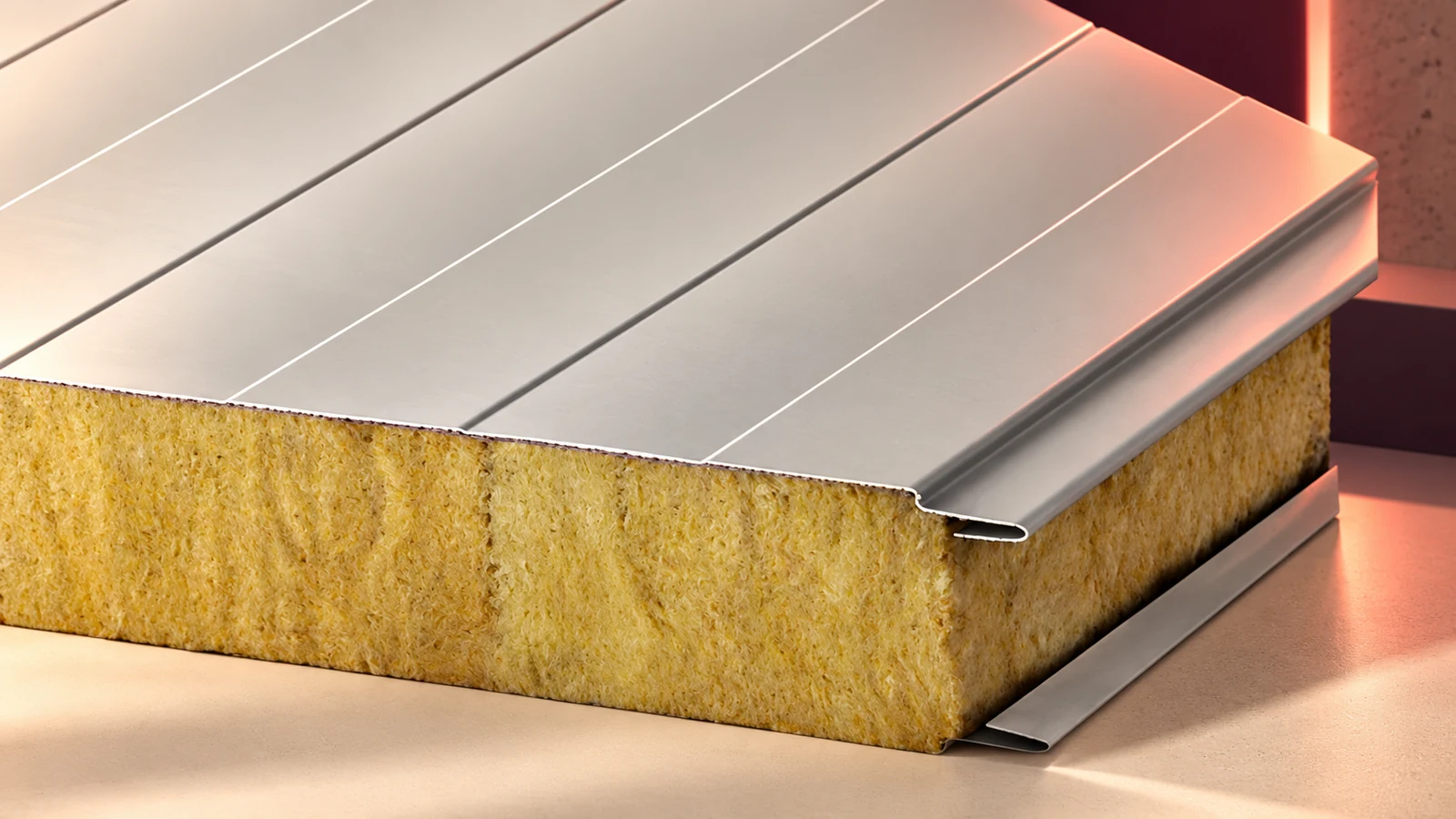
Mineral wool sandwich panels have metal facings bonded to an insulating core. They are used for walls and roofs. Each model needs…
A good contractor can explain how they will build to your design, define exactly what their quote covers and show how each…
The total price of a building tells you little about when you will need the money. Budget separately for site preparation, the…
An old warehouse can often be adapted to store potatoes without building a new hall. Three things must work together: an airtight…
