






One or two tile courses per metal roofing sheet: which size suits your roof?
Roof coverings
The choice between one-course and two-course metal roofing sheets starts with a scale drawing of the roof. Mark the valleys, hips and dormers, then compare how many whole and cut sheets each layout needs. A one-course unit is easier to pass through a tight space. A two-course unit covers more roof each time it is lifted into position and can reduce the number of end laps on a regular slope. Compare effective cover, waste and labour on the same specification of steel and coating. A difference in the price per sheet alone tells you little about the total cost.
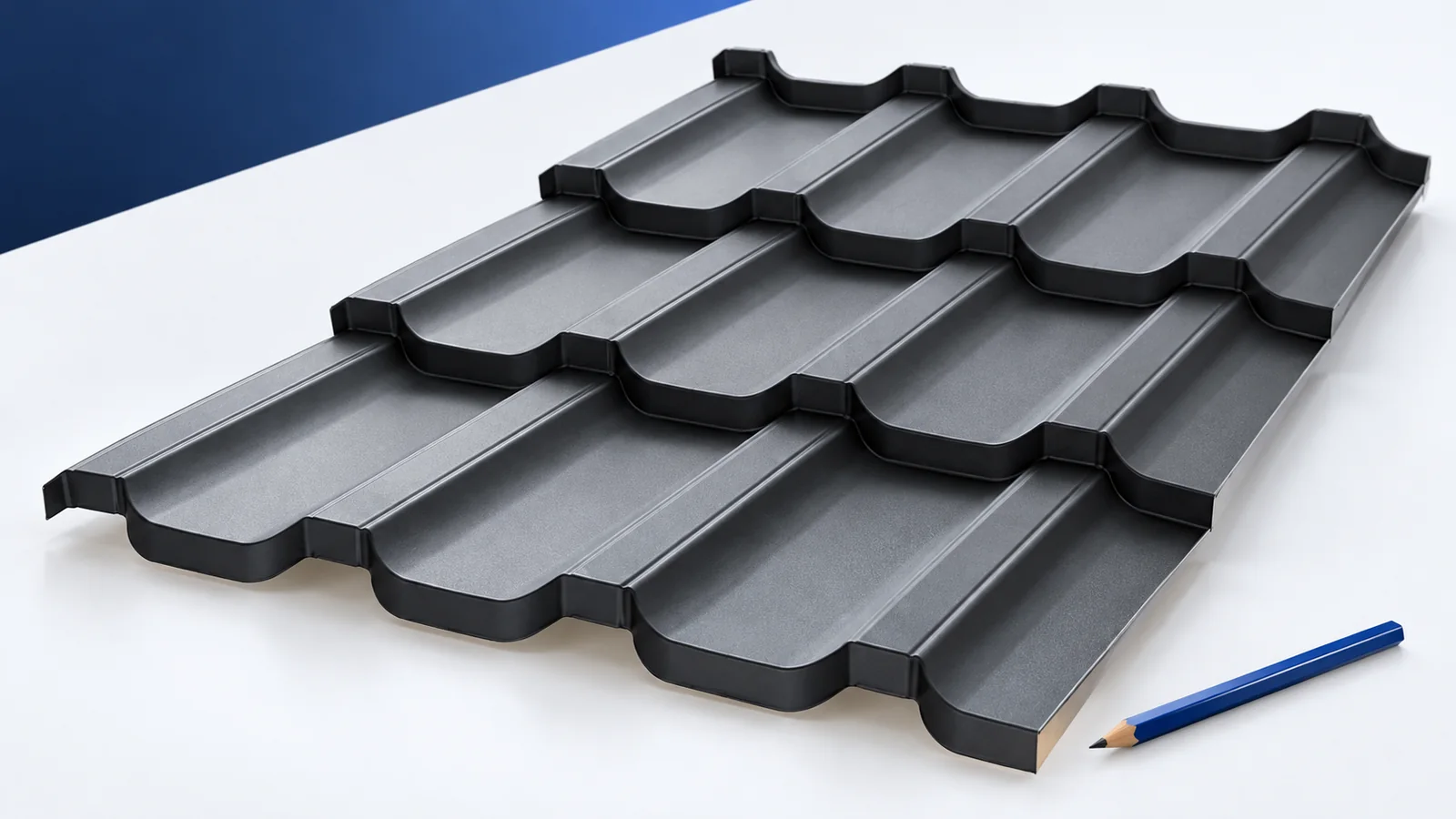
What do one and two modules mean?
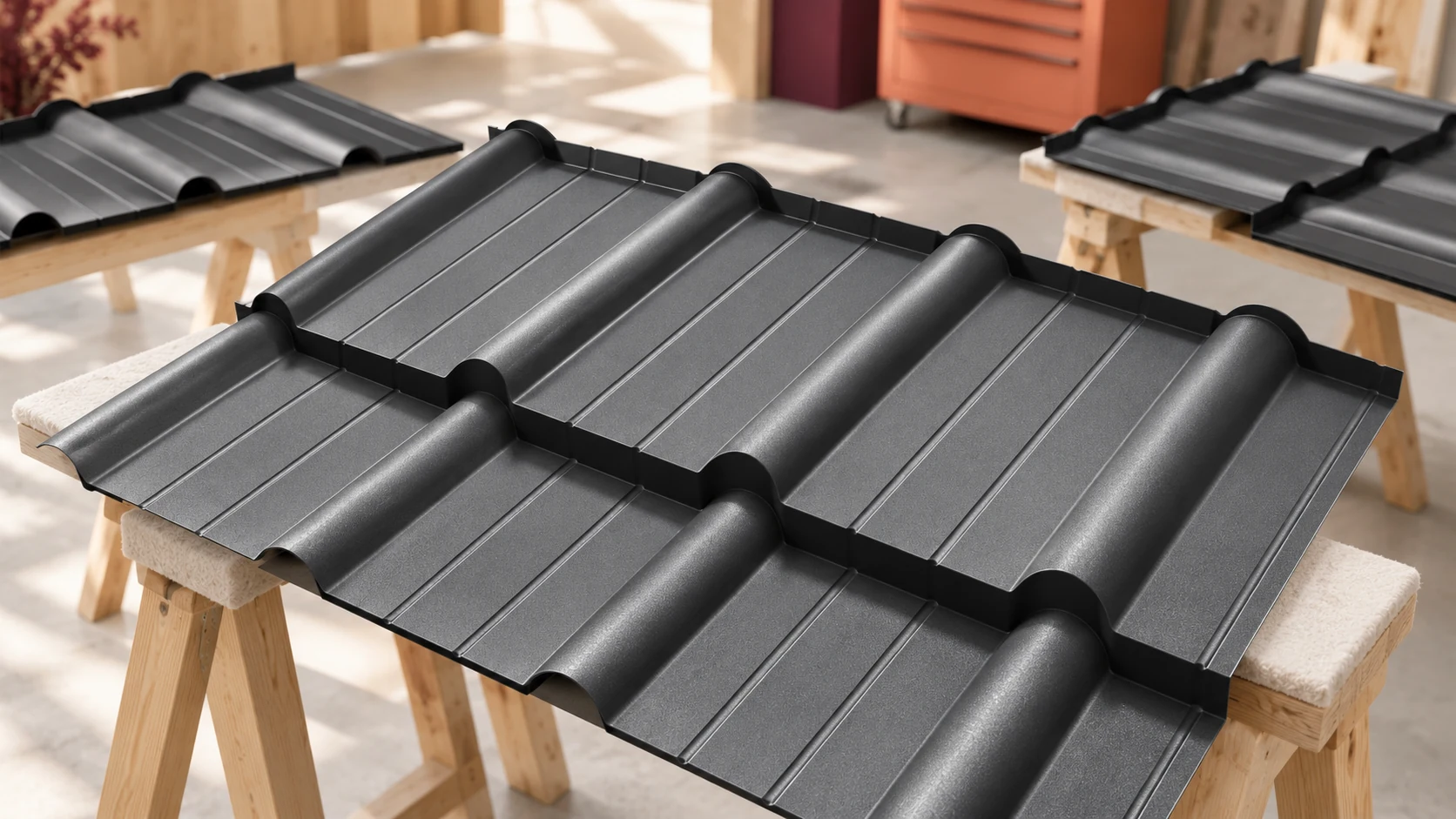
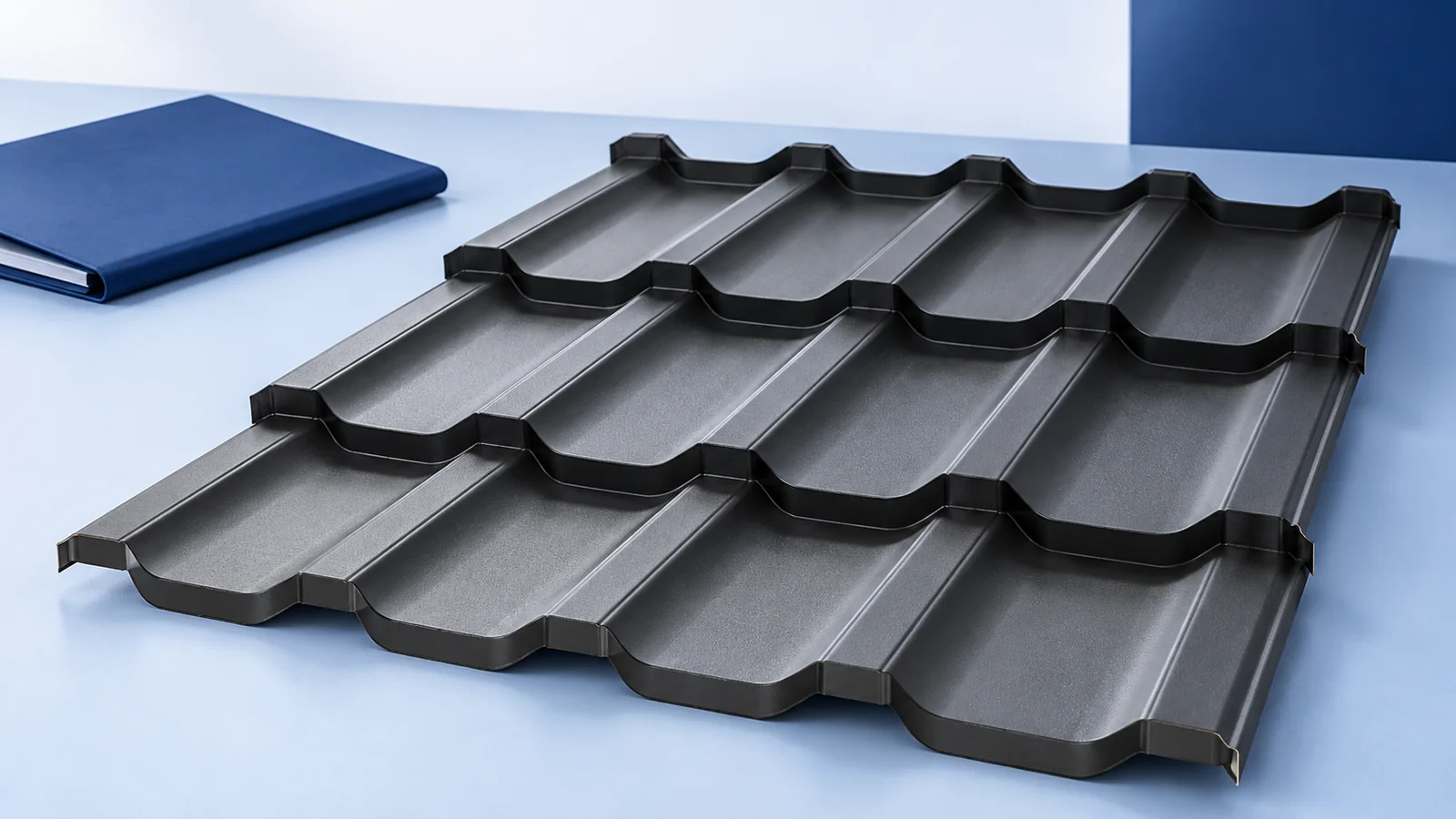
On the technical drawing, look along the fall of the roof. Each repeat of the tile pattern in that direction is one module. A single-module sheet contains one course and a double-module sheet contains two. Both can have several waves across their width, so counting all the tile shapes on the face gives the wrong measure.
Edge shapes and laps also affect the dimensions. Two short sheets need not have the same total metal area as one longer unit. Some of the metal forms the joint and is covered by the next sheet. Compare the effective cover figures given for the products.
How should you compare prices per sheet?
Divide the sheet price by the area it actually covers. In a catalogue example dated 28 October 2026, a two-course sheet had a cover width of 1.14 m and a cover length of 0.70 m, or 0.798 m². Its historical net price of PLN 35 converts to about €8.11 per sheet and €10.16 per m² of cover, excluding VAT, using the shop’s 12 November 2026 rate of €0.231723 per PLN.
Use the dimensions for the exact product you are pricing. A single-course sheet may have a different cover width or overlap. Once the price per covered square metre is known, add cutting waste and the other roof components. The cheaper unit may still produce the higher order total.
When is a shorter sheet easier to use?
A one-course sheet is easier to carry and lift where space is tight. Short units can give more freedom when laying out material around dormers, valleys and hips. The laying direction and shape of the mating edges still determine which pieces fit.
Convenient handling is particularly valuable where access to the building is restricted. Arrange safe working access for either format and observe the rules for moving on the covering. Dragging or setting down even a short sheet carelessly can damage the finish or crush the profile.
What does a two-course sheet offer?
A sheet that covers two courses can reduce the number of lifts and placements. On a regular slope this can keep work moving and reduce the number of joints between rows. The actual installation rate also depends on the fixing pattern, profile shape and crew’s familiarity with the system.
A two-course unit is still shorter than a sheet cut to the full slope length. It can combine manageable transport with more cover per lift. On a roof with many diagonal cuts, compare cutting layouts before deciding whether this advantage outweighs the waste.
Do smaller modules always produce less waste?
Waste depends on the shape of the roof and whether offcuts can be reused. A piece removed from one edge may face the wrong way at another because of the lap direction or an asymmetric profile. A take-off for the measured roof is more reliable than a general percentage allowance in an advertisement.
Ask for two cutting plans using the same roof dimensions. Compare the number of full sheets and pieces to be cut. Check the allowance for spares and the terms for additional deliveries. This will show whether a format that costs more per square metre can make up the difference through better use of material.
Which requirements apply to both formats?
Both formats need an even supporting surface and the batten spacing specified for the profile. A first row laid out of line can throw off subsequent courses. Check laps, screw positions and washer pressure as you go. Matching colour alone does not establish compatibility of accessories.
The number of courses per sheet does not determine its service life. Compare the steel, its protective layers and the intended exposure. If two offers include different coatings, part of the price difference comes from the material specification. Show those items separately in the comparison.
How do you choose the right size for your house?
For a regular roof, check the total cost and laying rate possible with the larger unit. On a complex roof, assess how shorter sheets fit around the details. Discuss unloading and lifting with the installer, using the actual site access and working space to plan both options.
Compare the complete covering, offcuts and labour together. View samples close up and look at a finished roof from the distance at which you would normally see your own house. Either format can work well when it fits the technical requirements, makes good use of material and can be installed accurately.

Free quote
What to include in your enquiry
Tell us how you plan to use the material, the dimensions and the quantity you need. Include the thickness, grade or variant name, along with the delivery town or your preferred collection branch. For a specific product, add its name or a link to the product page. We will reply to the email address you provide to discuss availability and the terms of your order.

Read next
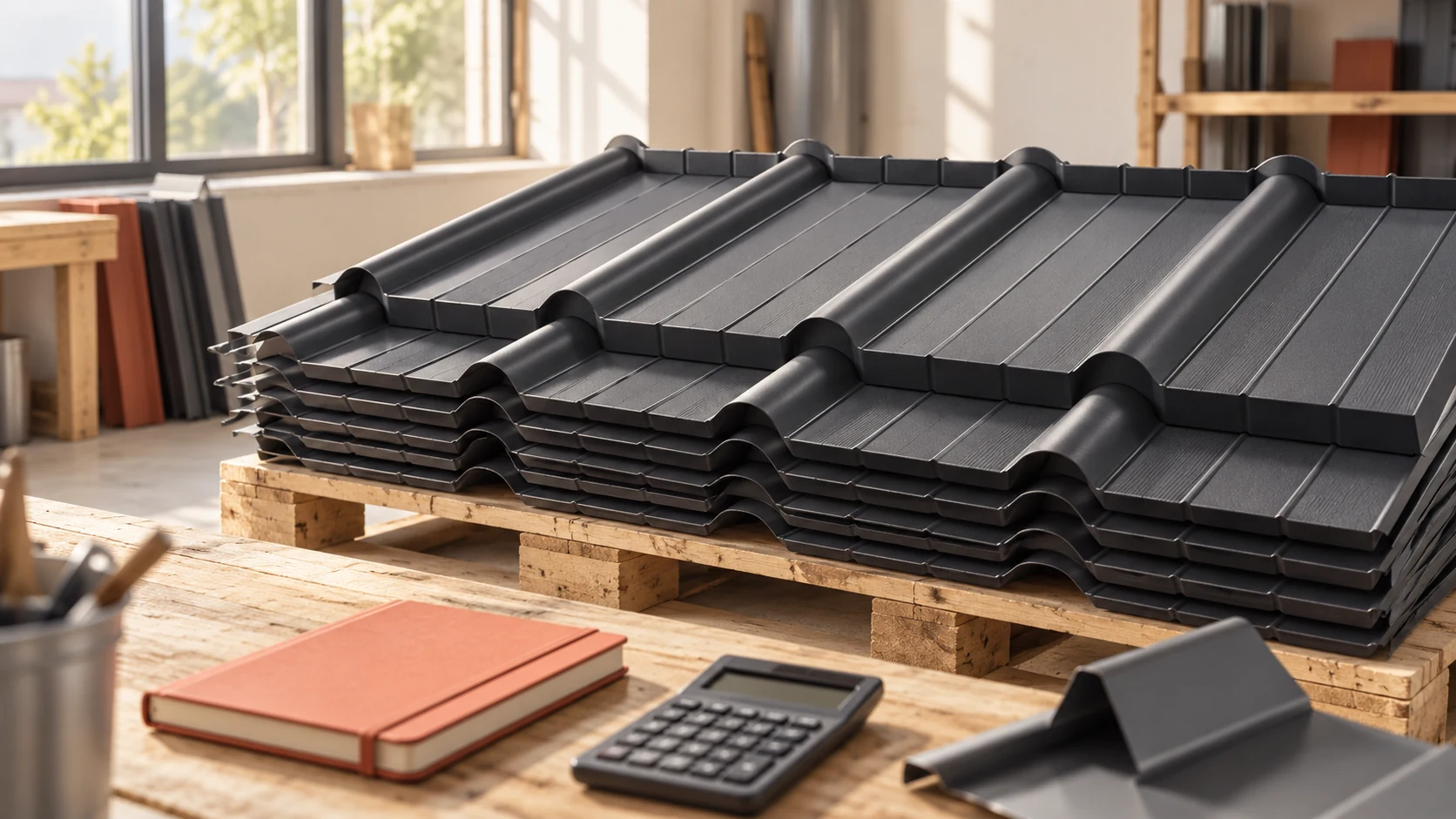
To compare prices, establish which square metre the supplier charges for, how much material the roof needs and what is included. Coating,…
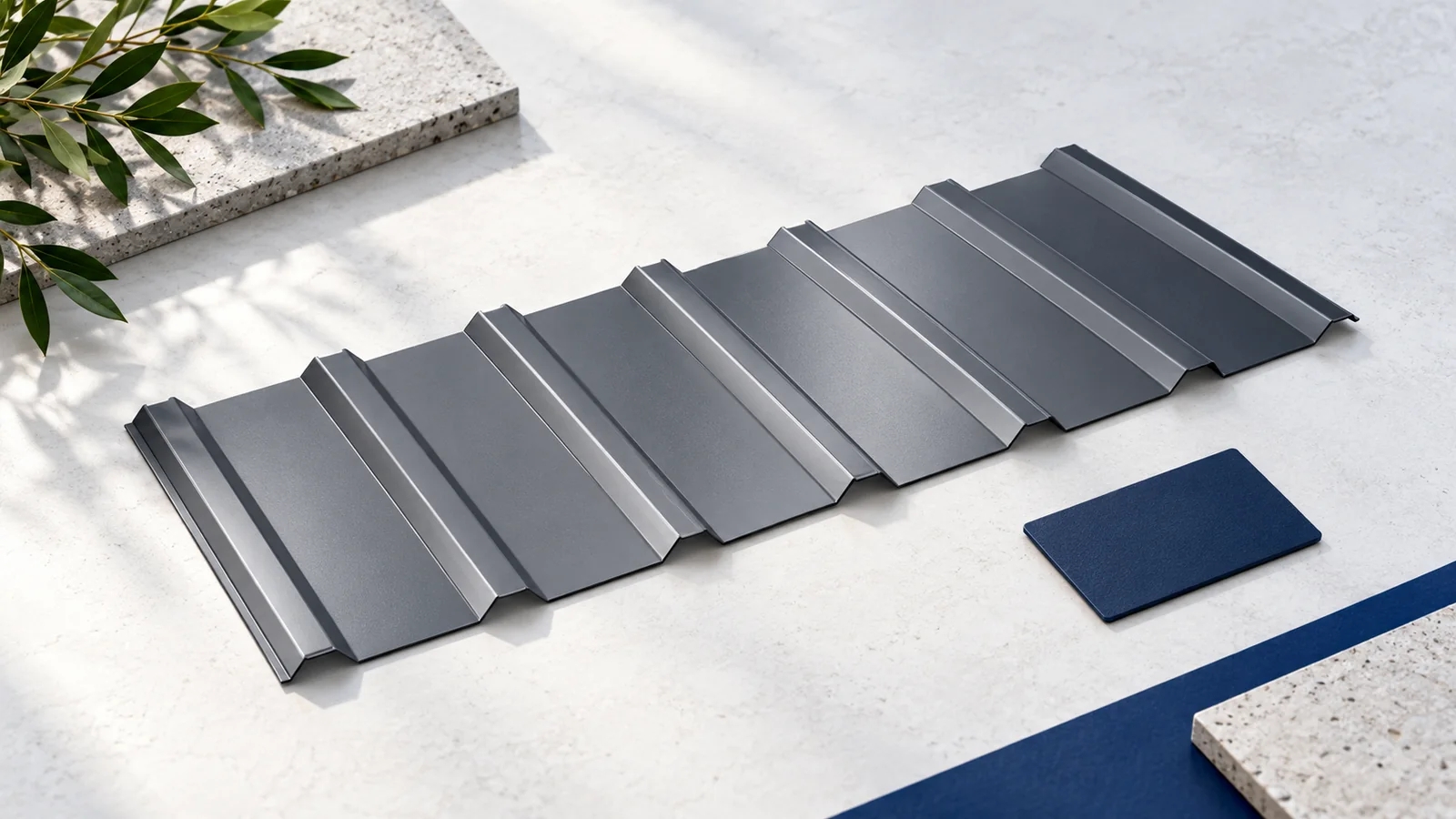
A roof with several intersecting slopes can follow the wings of a house and shape the rooms beneath. Before choosing the covering,…
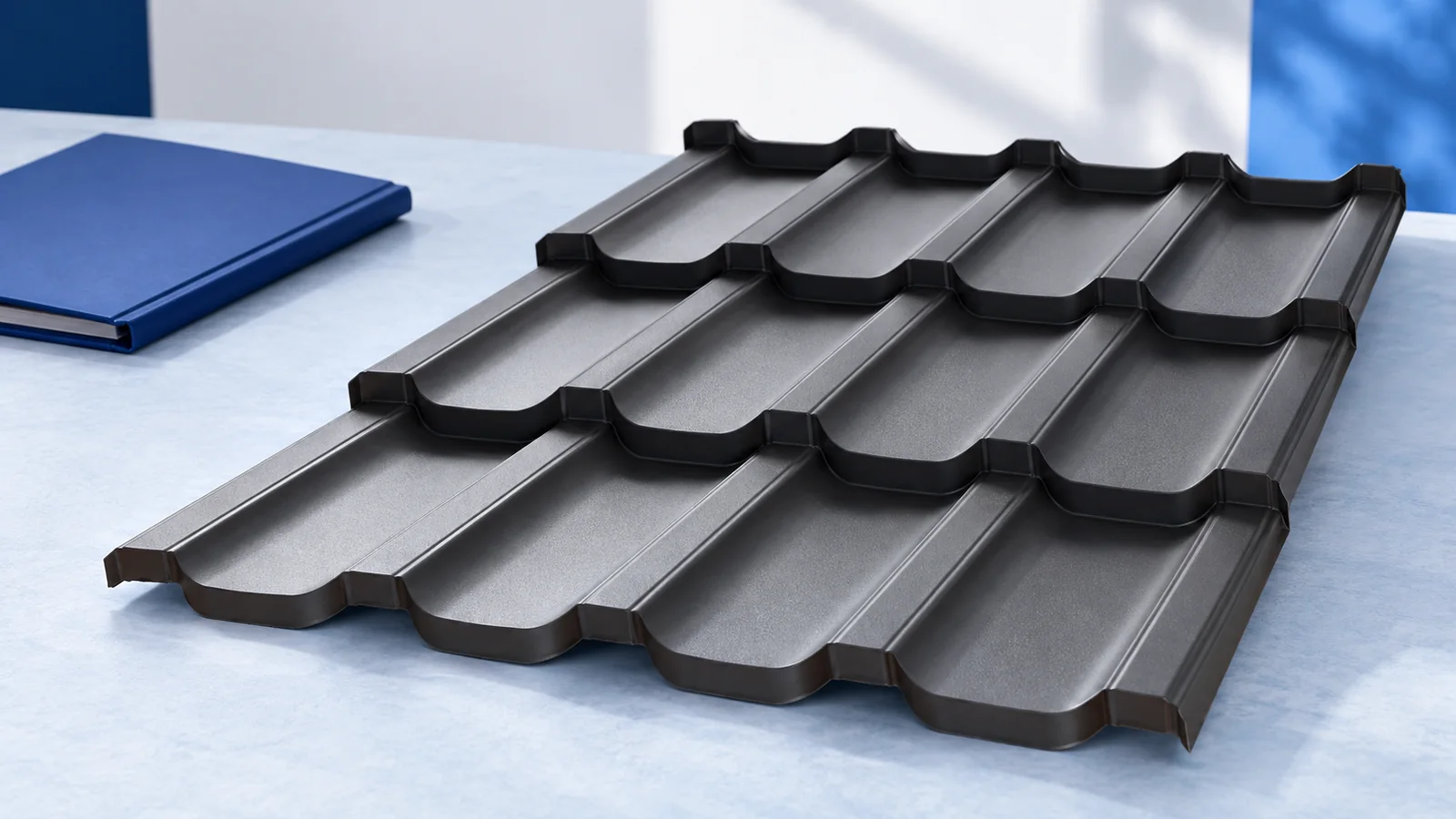
A single-module metal roofing sheet covers one course of the tile pattern down the slope. It can still be several tile widths…
Sheet format affects how a roof is delivered and installed. A long sheet can cover an uninterrupted strip of slope, whereas small…
Choose between matt and gloss by comparing two named coating systems on the same roof profile. The surface finish affects reflections, while…
Both profiles can work on a house. Start with the roof section, slope layout, pitch and supporting structure before choosing the appearance.…
When replacing a roof, start with the existing building. The price of sheets or tiles accounts for only part of the work.…
To select gutters for a metal roof, mark the area draining to each outlet on a roof plan. A valley may concentrate…
