Coated steel sheet: how to assess the steel, profile and finish
Roof coverings
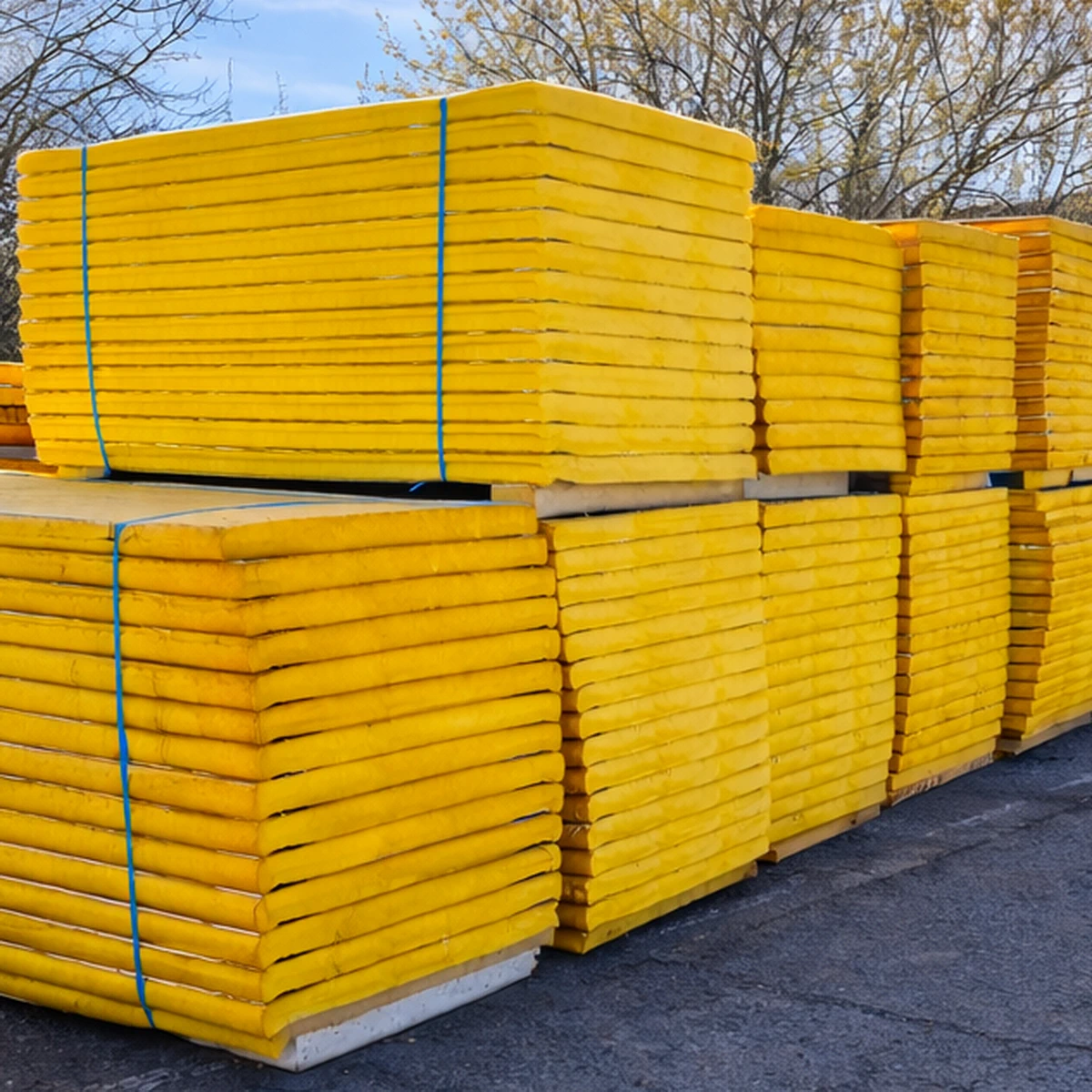
When comparing coated steel sheets, start with the part of the building they will cover. A roof sheet must span its supports and withstand exposure on the outside; on an open canopy the underside may also be visible. Ask for the steel thickness, profile drawing and coating specification for each face. Then compare the declared resistance to corrosion and sunlight with conditions on site. For the cost comparison, use the area actually covered after overlaps. A colour sample helps you choose the finish, but it tells you little about the steel or the protection beneath it.
What layers make up a coated sheet?
Beneath the visible finish, a metallic coating helps protect the steel. This metallic layer and the outer organic coating do different jobs. The reverse face also has a specified finish. Check the product data for the sequence and thickness of the layers; these vary between sheets.
Distinguish the steel core thickness from the coating thickness. They describe different things and are generally quoted in different units. Extra paint cannot make up for missing steel, and a good finish will not compensate for misaligned supports. Check how the selected sheet will work in the structure.
Check which face the coating description refers to. On an open-sided shelter or soffit you may see a backing coat in a different shade from the weather face. Agree the appearance of both faces before ordering; a photograph of the top surface shows only one of them.
Why does the profile matter?
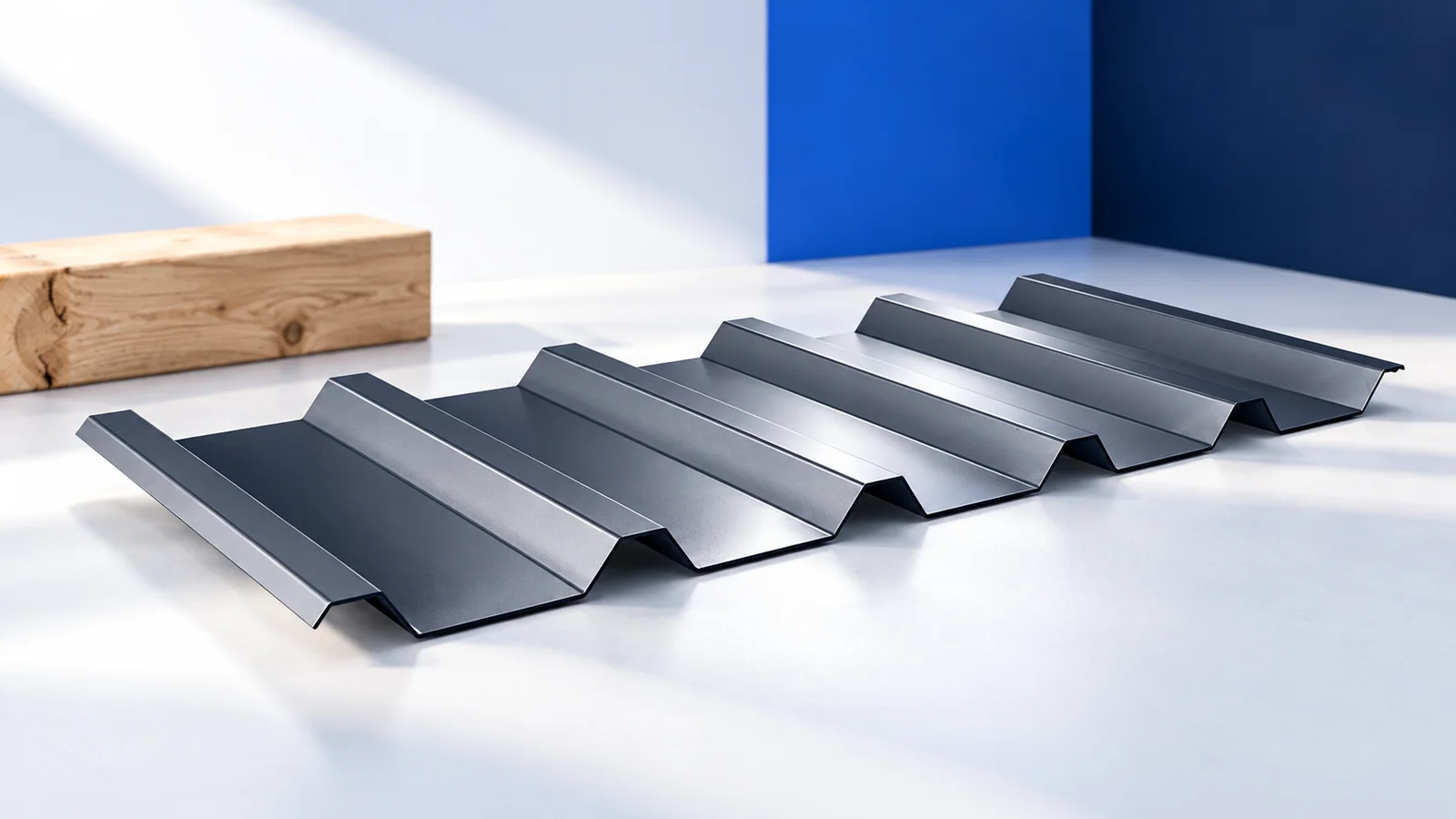
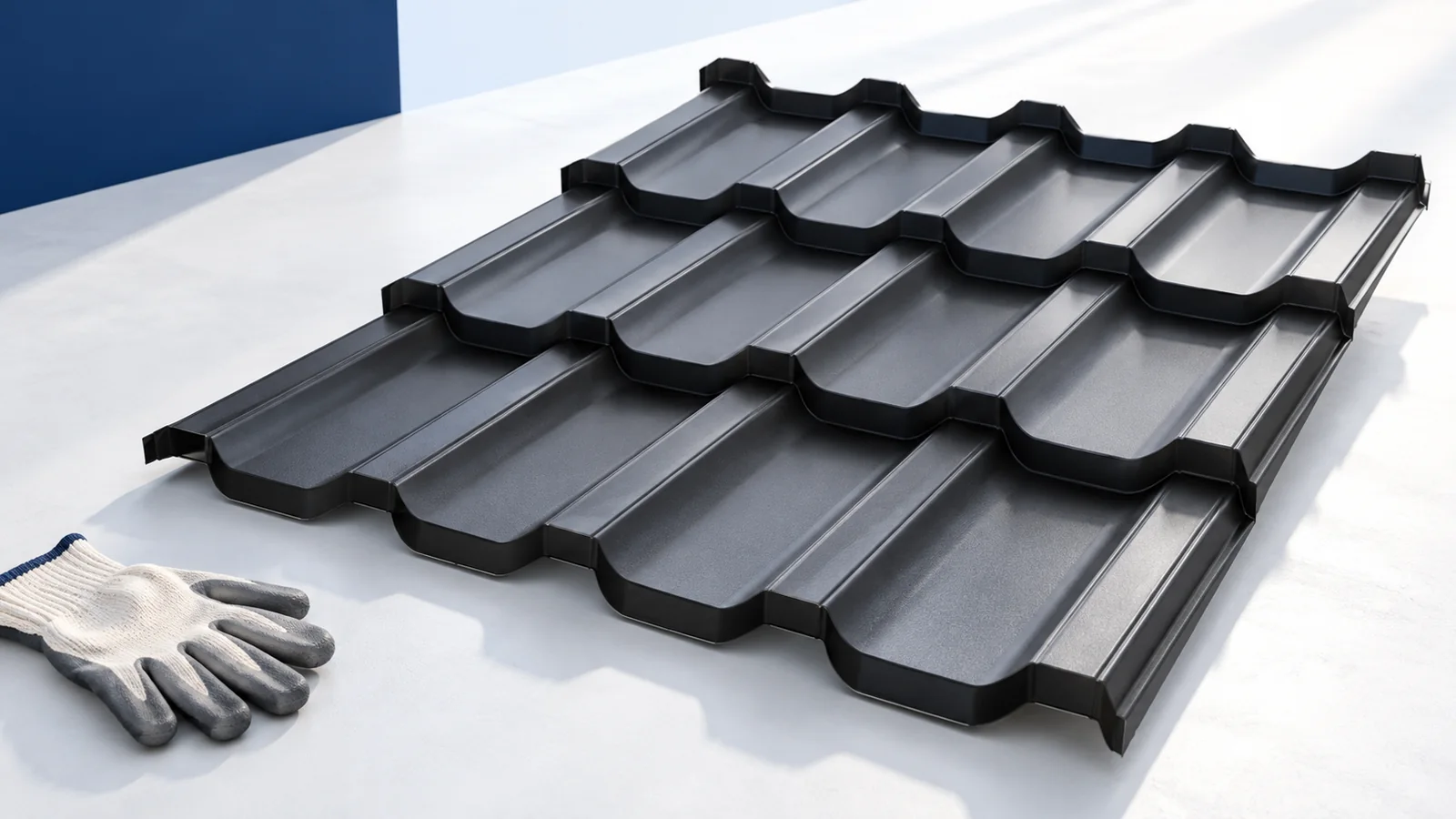
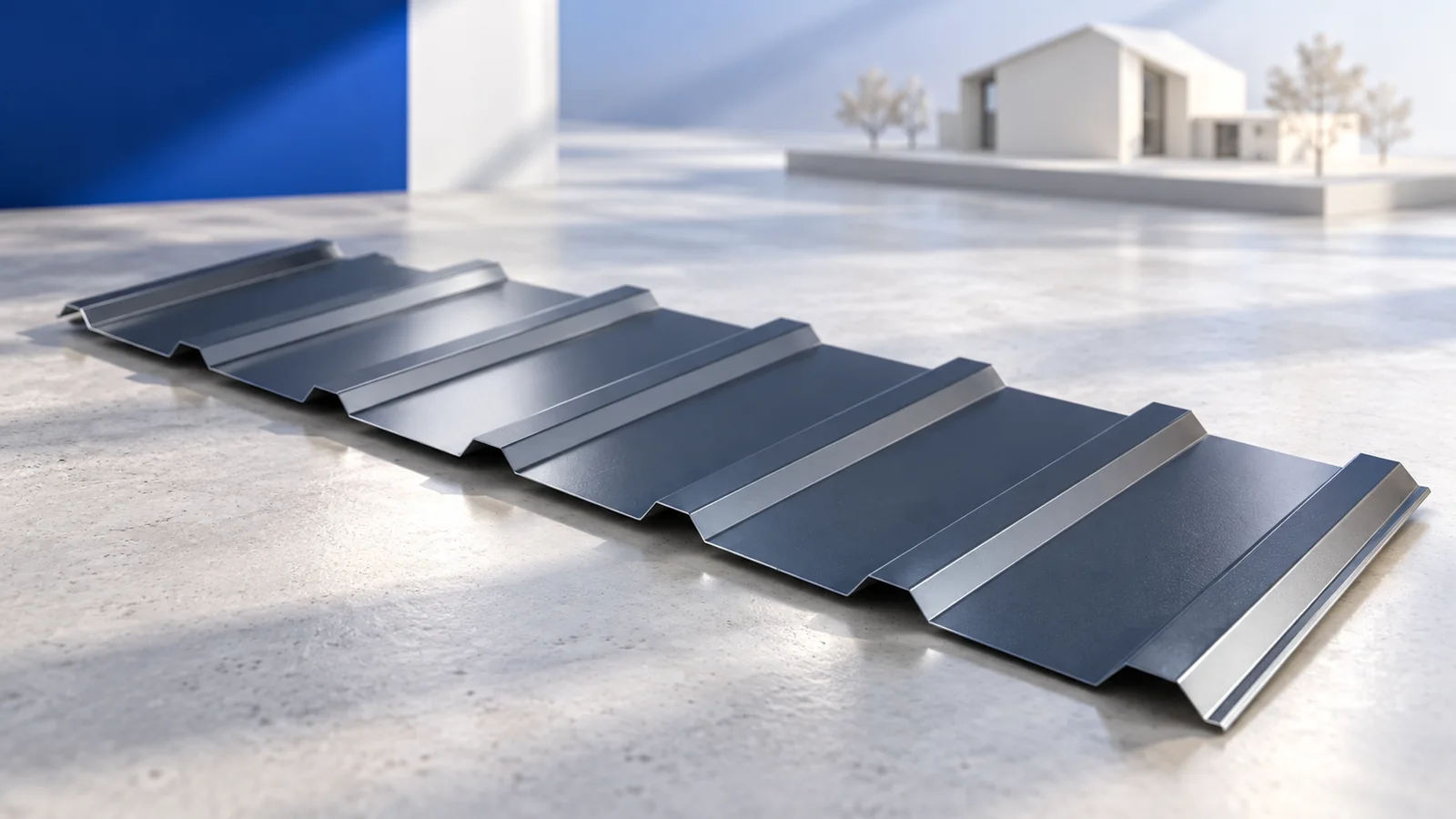
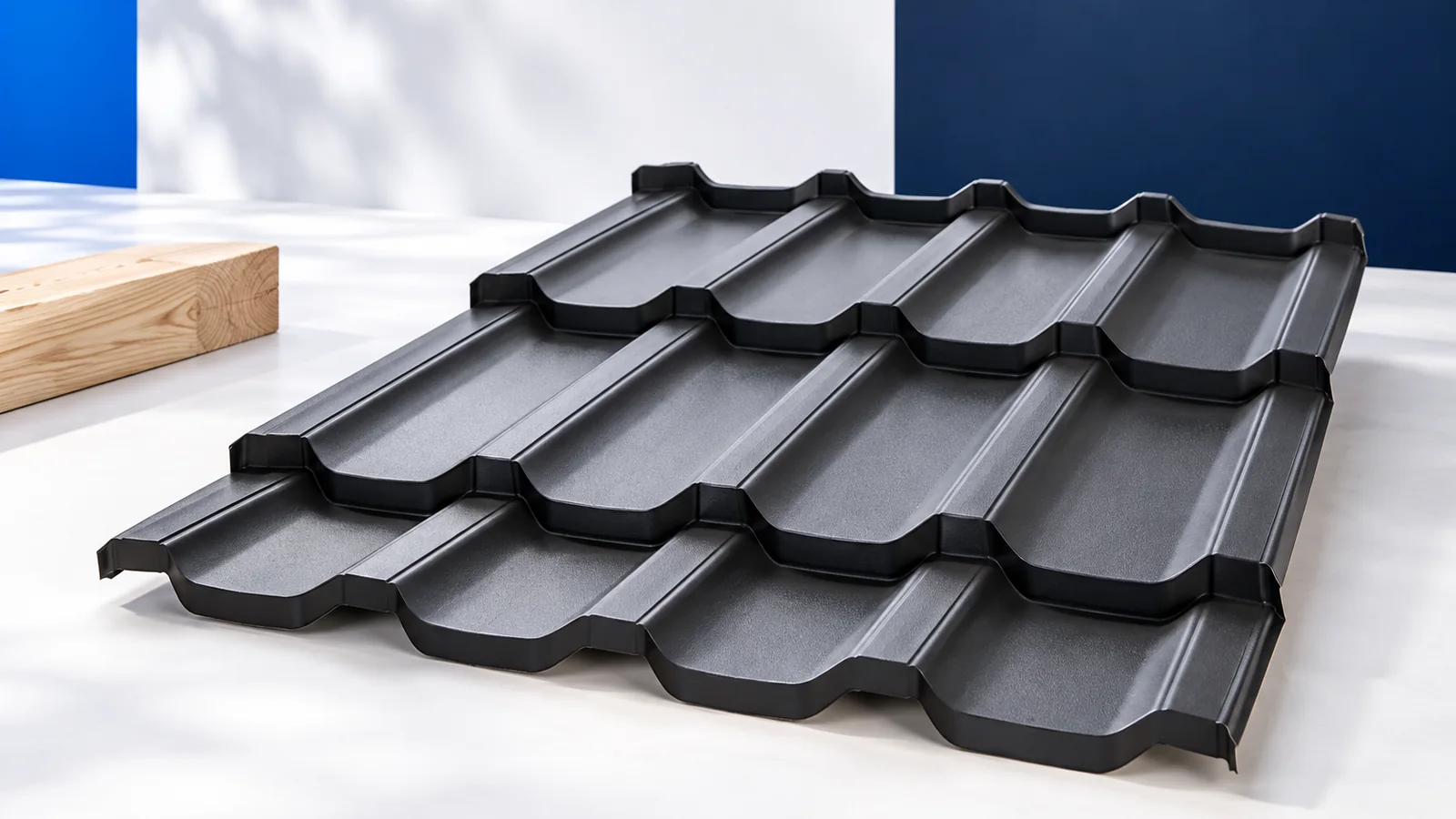
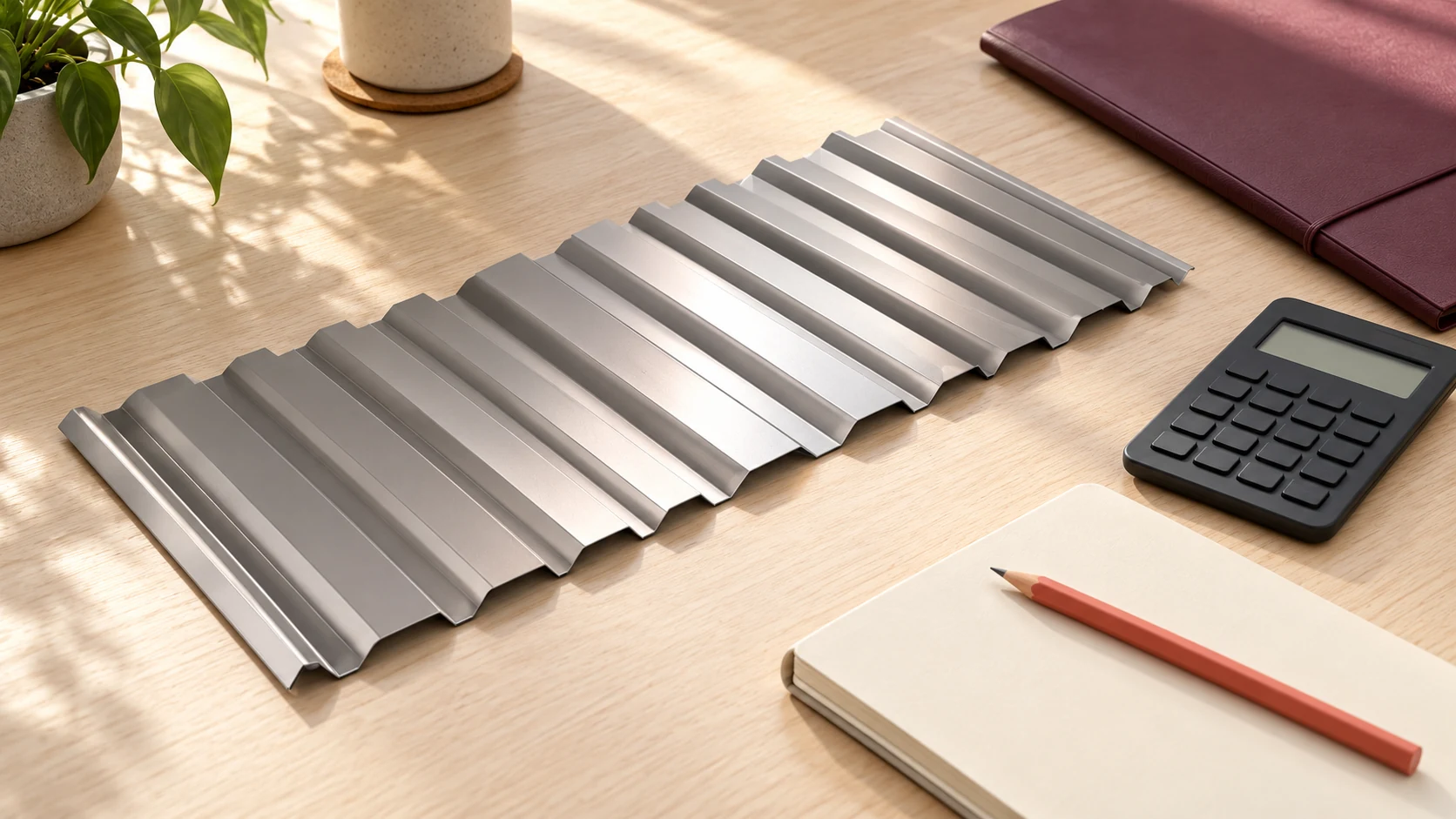
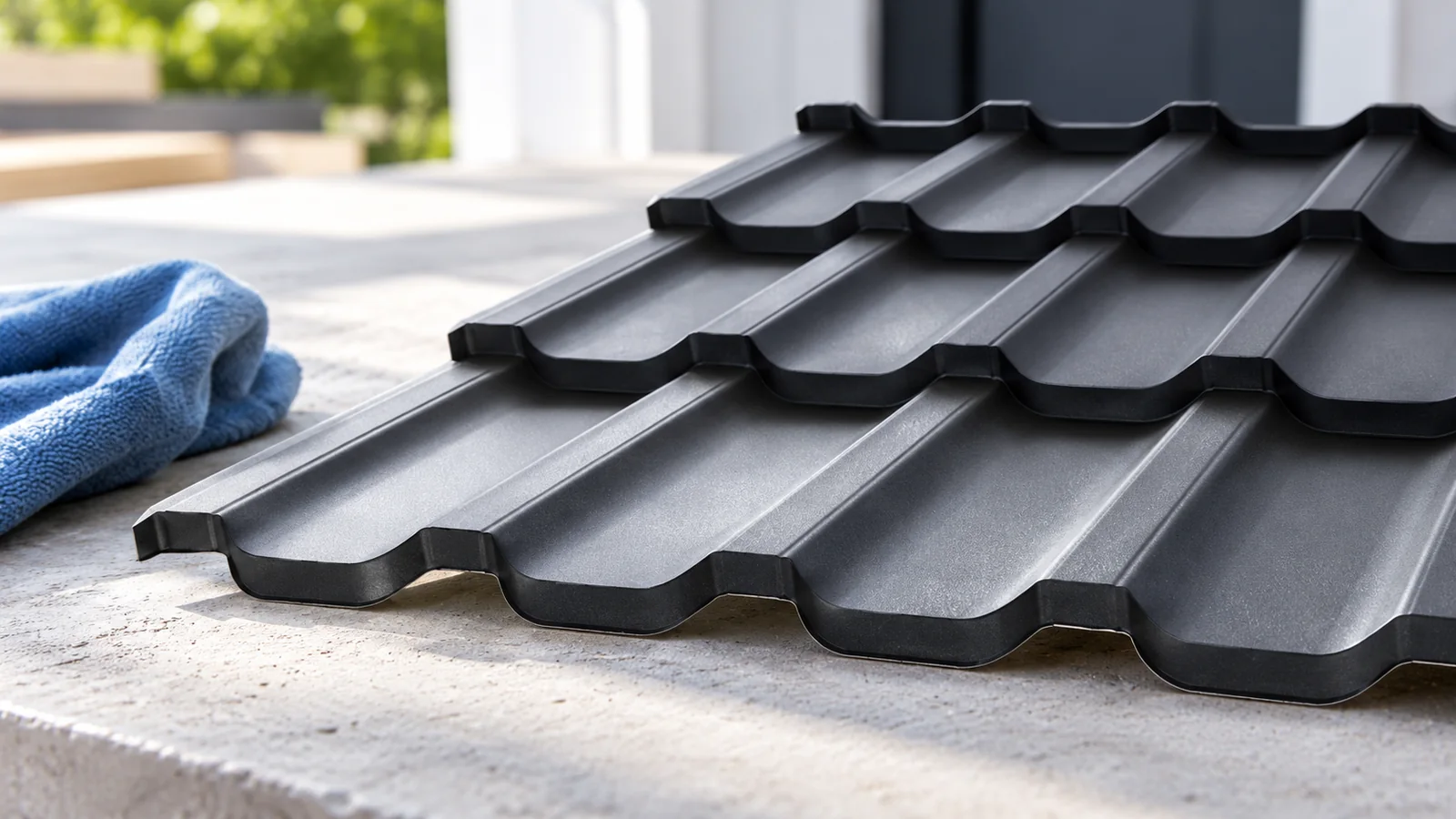
Forming ribs makes a thin sheet stiffer than flat steel of comparable thickness. T18 and T35 trapezoidal steel sheets differ in rib height and are available in different cross-sections. Tile-effect sheets have a different pattern of ribs and steps, while deep structural decking serves a different purpose again. Price per kilogram tells you little about suitability.
Load capacity also depends on steel thickness, grade and support arrangement. Even profiles of equal depth can have different capacities. Use the data for the exact cross-section. Before substituting a sheet, check it against the design loads and the spacing of the supports.
Which coating suits the exposure?
A sheltered residential site differs from a coastal, industrial or agricultural location. Choose a finish intended for the actual exposure. Consider the inside face separately, particularly where humidity is high or aggressive substances are present. Shelter from direct rain does not rule out corrosion.
Compare declared corrosion resistance, UV resistance and warranty terms. Micrometres alone are a poor basis for ranking different coating systems. Matt and gloss describe appearance, not a common durability class. Inspect a physical sample alongside its technical data sheet.
How does a warranty differ from service life?
A warranty covers specified defects and may have separate terms for colour and appearance. Read the installation requirements, inspection duties and environmental exclusions. The warranty period is neither a promise that the finish will remain unchanged nor a prediction of service life on a particular building.
Drainage, detailing and use affect the life of the finish. Standing water, metal swarf and contact with unsuitable substances can damage even a well-chosen coating. Keep purchase records and batch labels. If sheets are added later, new material may look different from a surface that has weathered for years.
How can you protect the sheets before use?
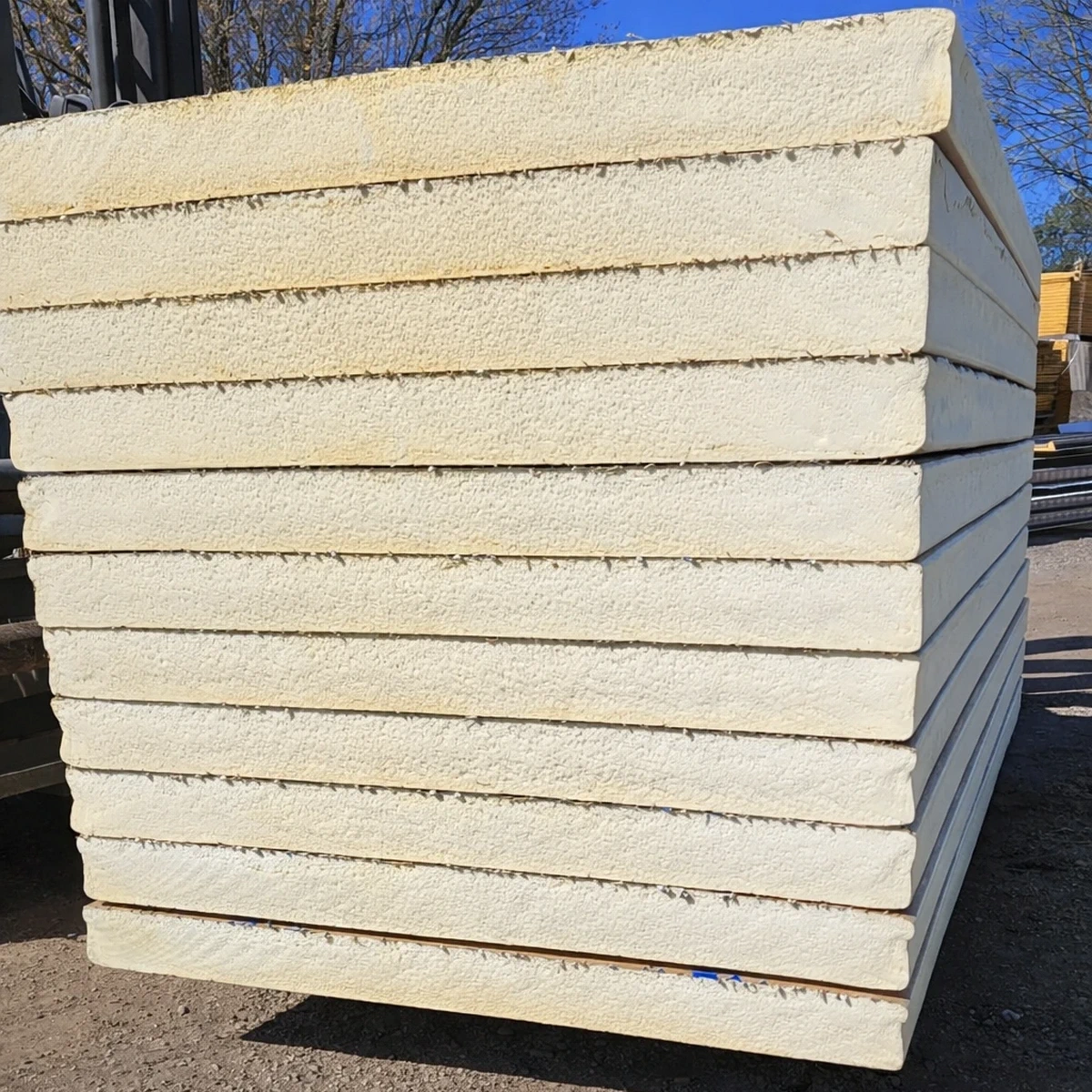
Protect the finish during unloading and handling. Lift sheets clear rather than sliding them across one another. Support long lengths to prevent kinks. Follow the storage instructions and keep packs from getting wet: water trapped between stacked sheets is particularly troublesome.
Cut with tools approved for the coated sheet. Sparks and excessive heat can damage the protective layers. Remove swarf after cutting or drilling. Peel off the protective film within the stated time; prolonged heating can make it harder to remove and spoil the finish.
What should comparable quotations include?
List the profile, steel core thickness, coating, colour and sales unit in each quotation. For roof sheets, compare effective cover width rather than overall width. For flashings, check the developed width of the blank and the length of each piece. Similar prices can buy different quantities or levels of protection.
Include accessories, fixings and delivery. Specify the face that will be on view, particularly for soffits and fencing. The most expensive coated sheet is not automatically the right one. Choose a specification suited to the site and an installation method that preserves the protection you paid for.

Free quote
What to include in your enquiry
Tell us how you plan to use the material, the dimensions and the quantity you need. Include the thickness, grade or variant name, along with the delivery town or your preferred collection branch. For a specific product, add its name or a link to the product page. We will reply to the email address you provide to discuss availability and the terms of your order.
Read next
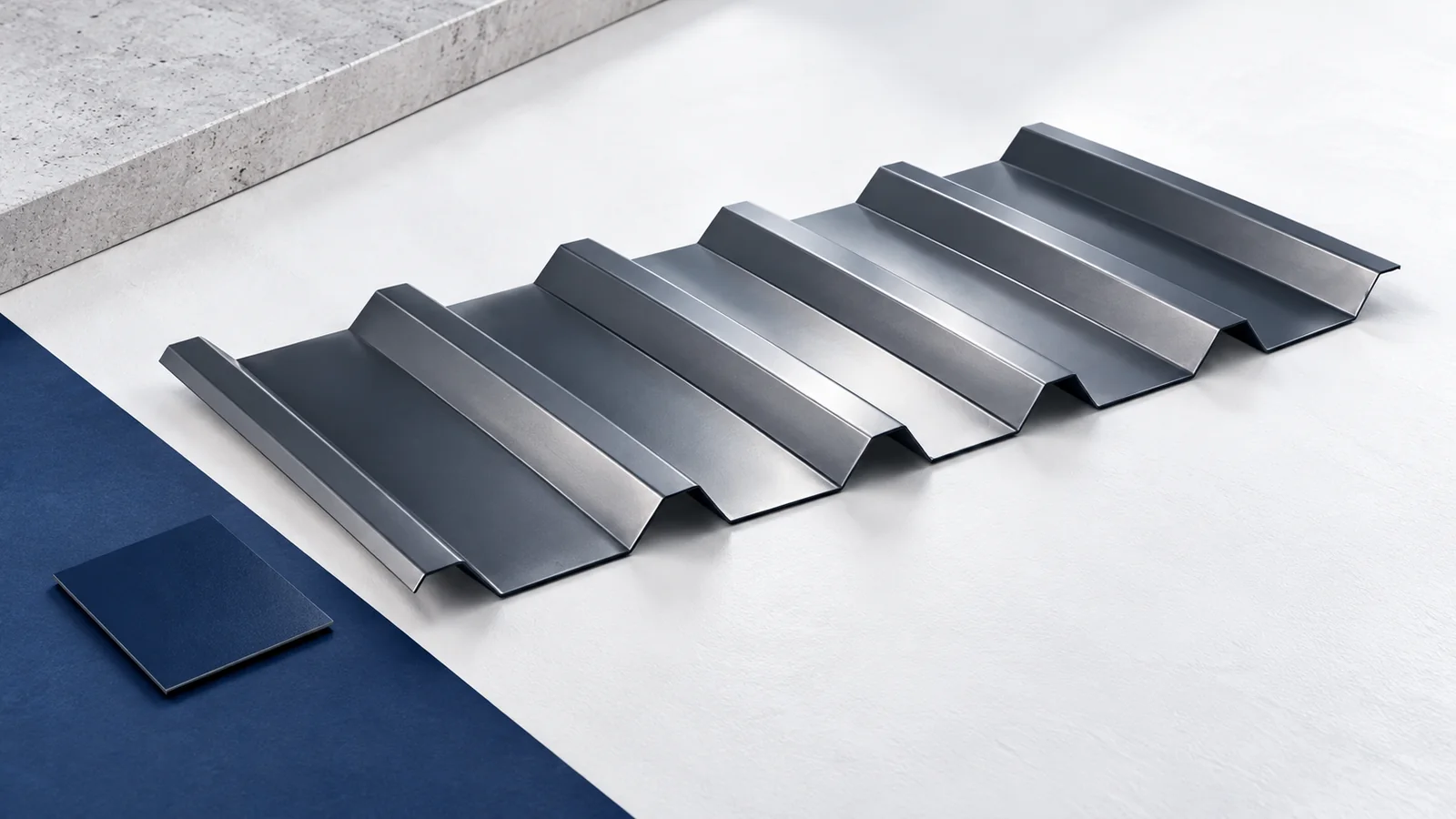
T35 identifies a family of trapezoidal sheets with ribs about 35 mm deep. The depth is useful when comparing profiles, but a…
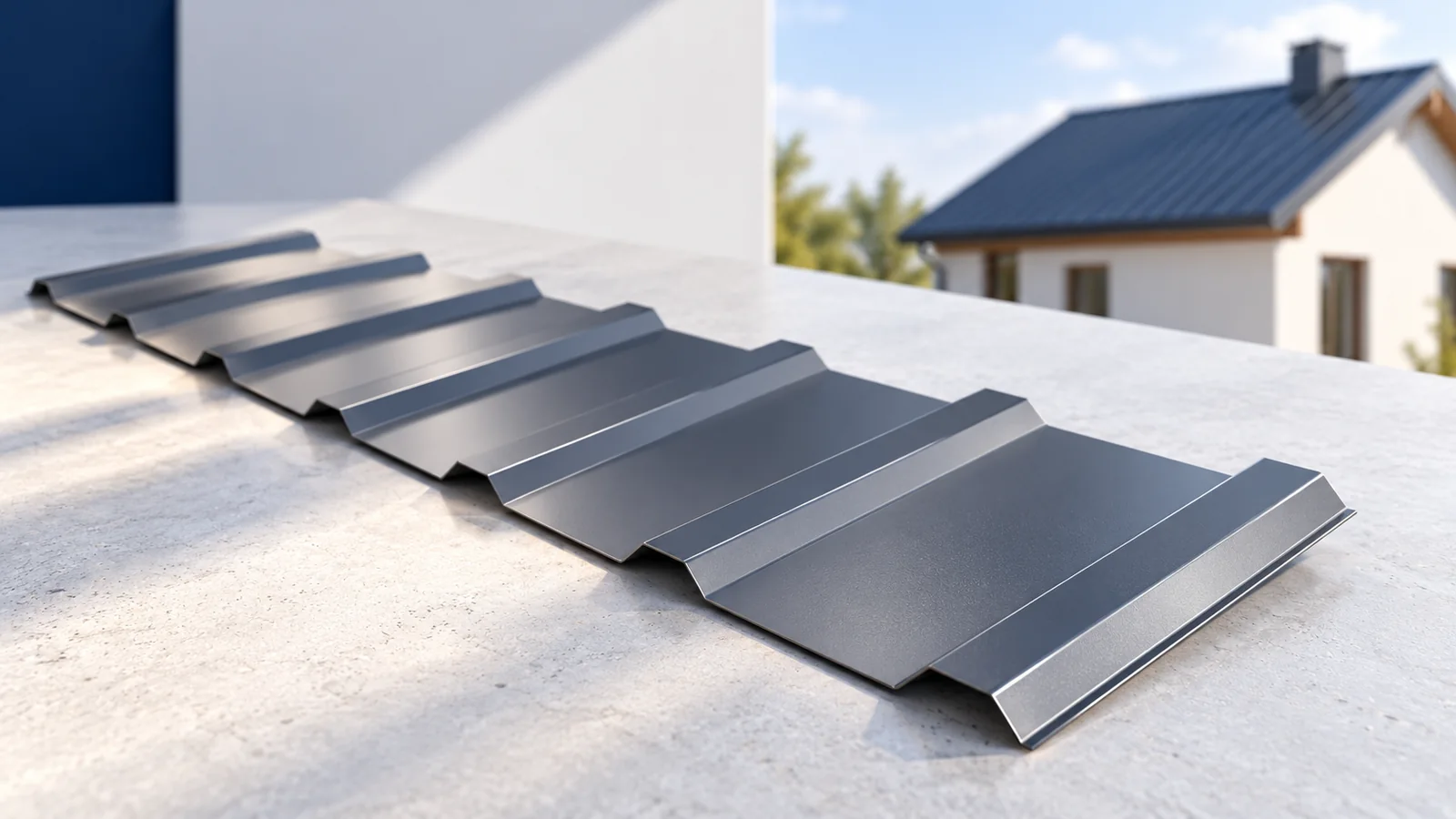
Trapezoidal steel sheets can suit a traditional house, especially where a simple roof lets the parallel ribs follow the lines of the…
Before specifying a roof vent, trace the intended air path in section. If the space beneath the sheets is ventilated, air needs…
When comparing finishes for tile-effect steel roofing, read the material sheet alongside the colour sample. The steel core provides the mechanical properties.…
To decide whether modular tile-effect roofing is good value, ask for the number of sheets needed for your measured roof, not just…
Two prices per square metre can look different and still produce the same price for one sheet. The difference is the area…
Before stripping a roof, find out how water reached the damaged area and what may need replacing underneath. Ask the roofer to…
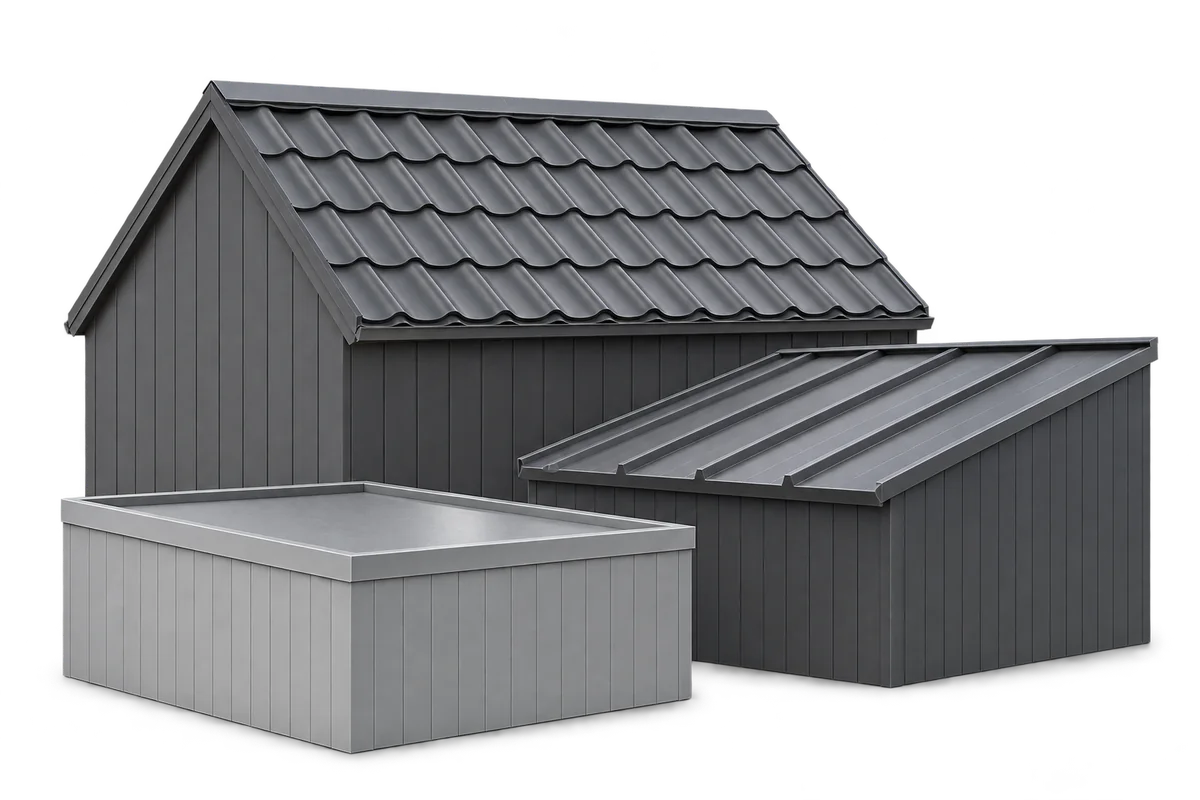
The proportions of a roof, the rhythm of its joints and the finish at its edges shape its appearance. Modular metal roof…