






PIR insulation boards: choosing facings, thickness and size
At a glance
PIR insulation boards reduce heat flow through roofs, walls and floors. They have a rigid polyisocyanurate foam core but vary in their facings, edge profiles and intended uses. A foil-faced insulation board differs from a sandwich panel with steel on both sides. To compare quotations, identify the exact board type, declared properties, construction build-up and unit of sale. The PIR designation and thickness alone leave important questions open. This guide explains how to read a data sheet, match the size to the job and compare square-metre and pack prices. The examples describe specific models.
What a thin facing does
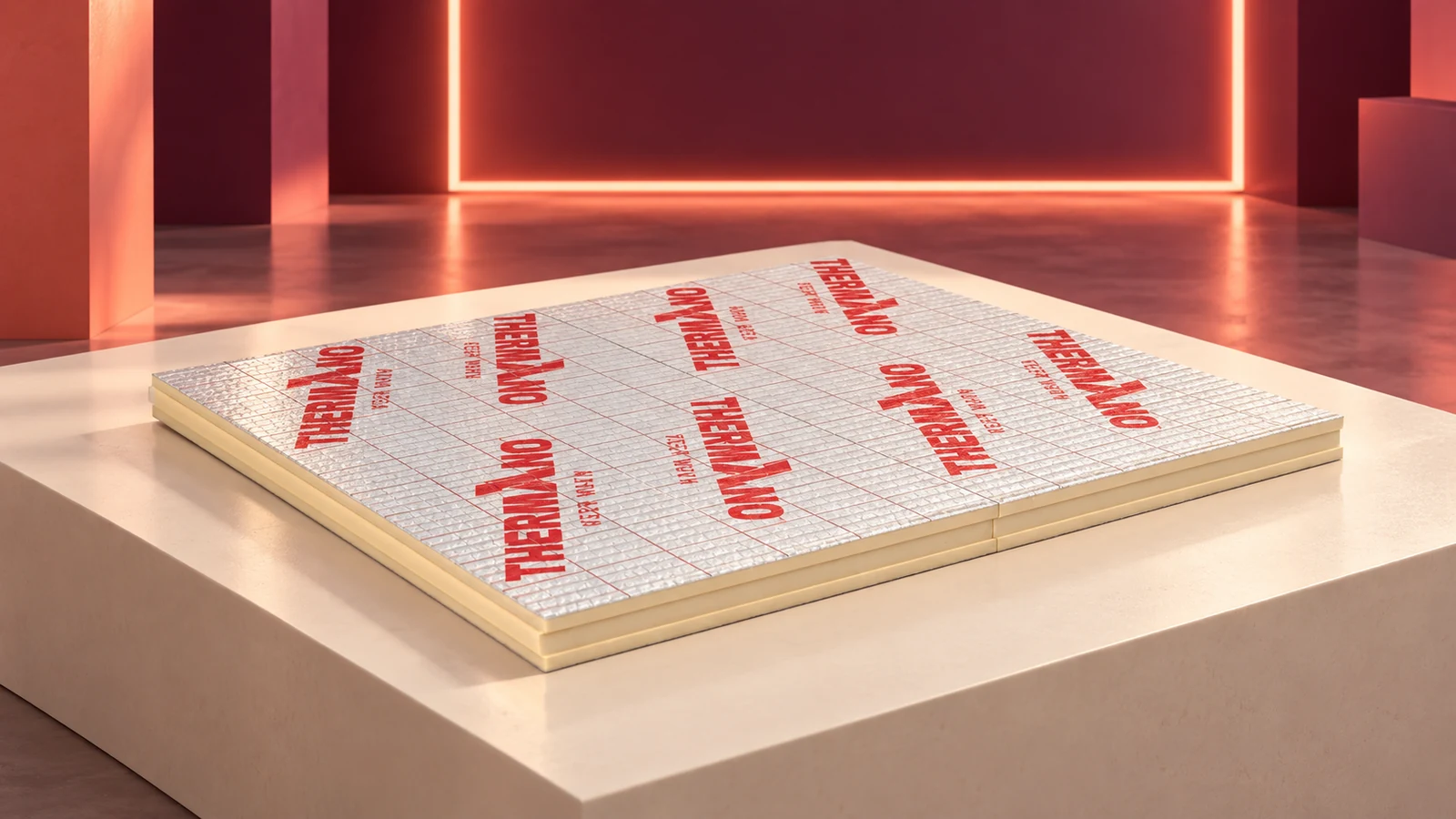
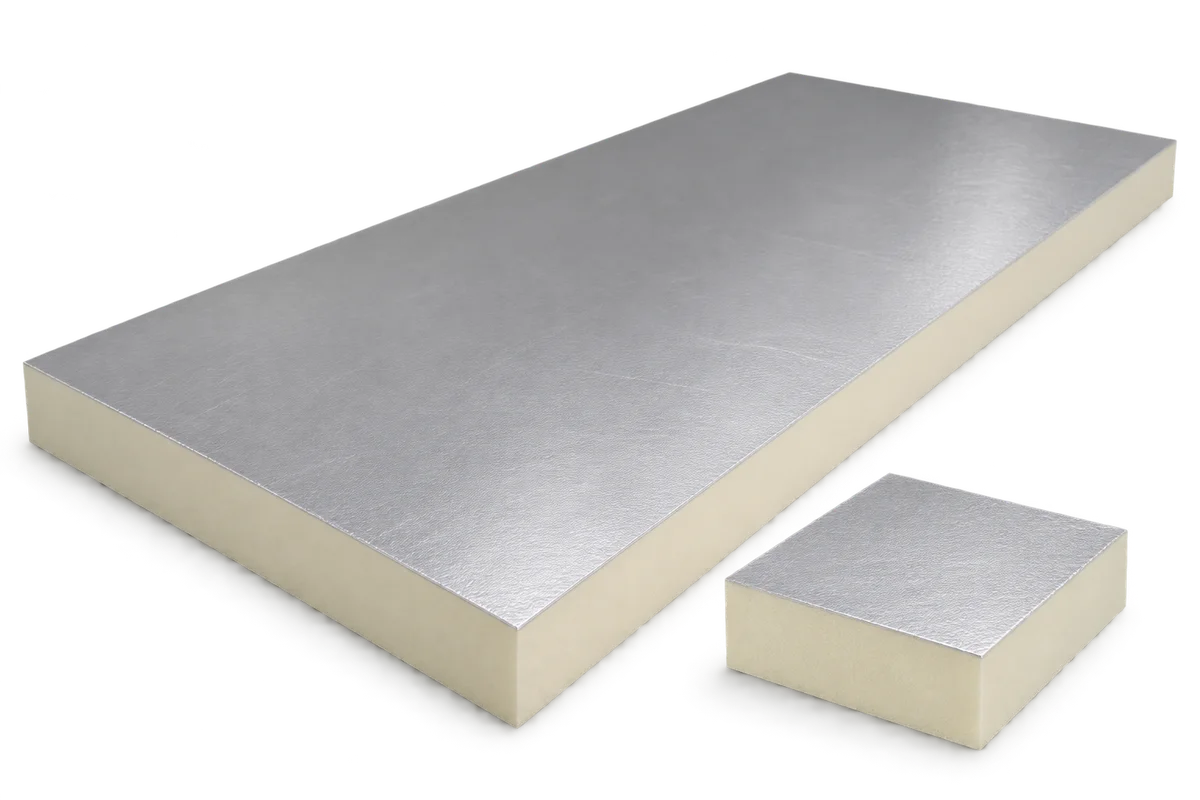
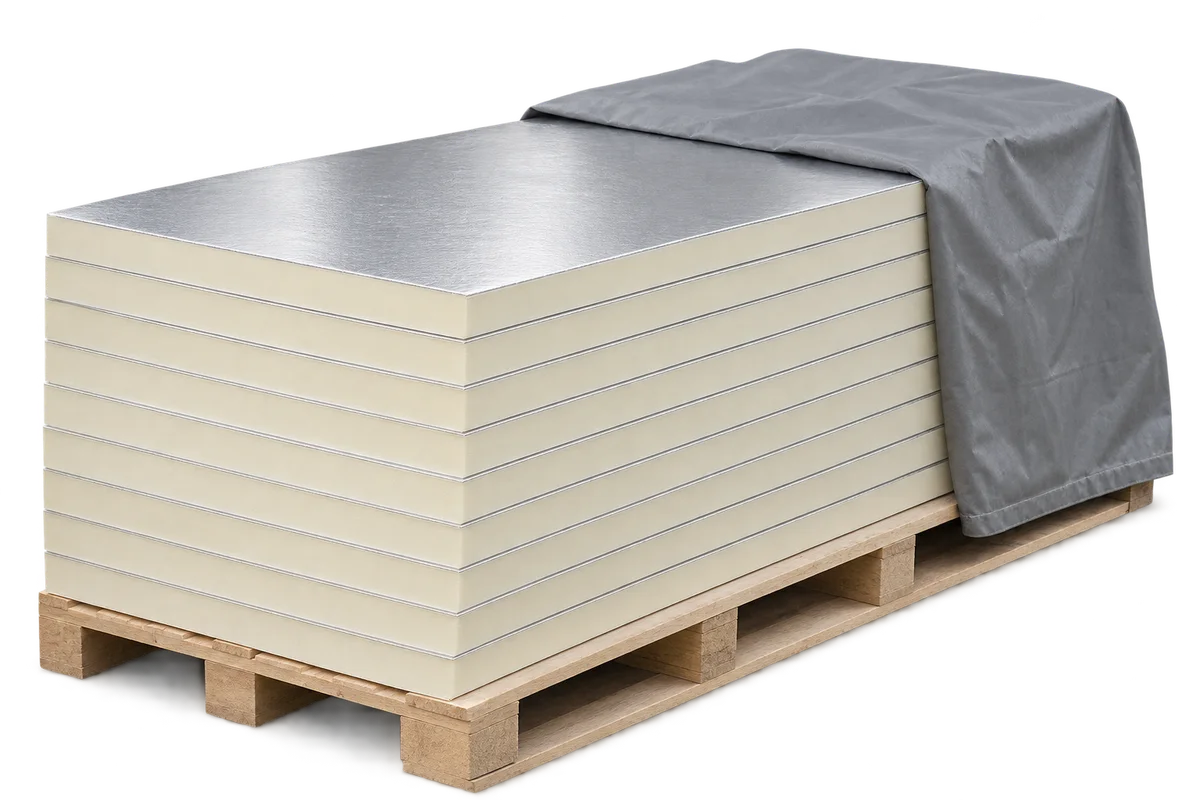
The aluminium-laminate PIR board in this example has a facing made of aluminium, paper and polyethylene. These layers are thin and have no structural sheet-metal function. The manufacturer declares thermal conductivity λD = 0.022 W/(m·K) for thicknesses from 20 to 250 mm and specifies that the boards are non-load-bearing. The figures are given in the technical data sheet for this variant.
Record the full facing designation before ordering. A photograph of a silver surface tells you little about suitability beneath render, roofing or another finish. Describe the substrate and the layer that will sit directly above the insulation so suppliers can quote comparable systems.
PIR under render needs a compatible system
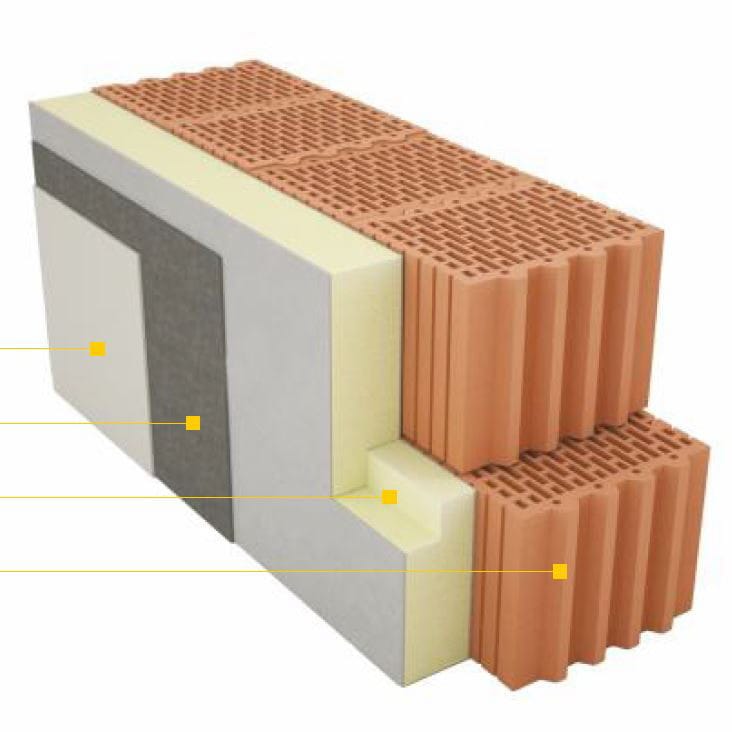
Rendered insulation systems require a board approved for the build-up and matching system components. For the render-grade PIR board considered here, the declared conductivity changes with thickness. It is 0.027 W/(m·K) below 80 mm, 0.026 at 80–119 mm and 0.025 from 120 mm. Use its own data sheet and the ETICS instructions when specifying this board. Values for the aluminium-faced board belong to that product.
Ask for a compatible combination of insulation, adhesive and render, together with its application documents. Give the installer the system name before ordering so they can check fixings, substrate preparation and details around openings.
Assess thickness within the whole build-up
Thermal conductivity λ describes the material, thermal resistance R an individual layer, and thermal transmittance U the complete building element. Whether 10 cm is sufficient depends on the other layers, the use of the building and the design target. A roof or wall section is a better starting point than thickness alone.
Check loads and moisture conditions separately. Compressive stress measured at a specified deformation is not an allowable floor load. A fire classification for a complete roof applies to the tested assembly. Obtain the data for your construction from the documents for the chosen system.
Comparing square-metre and pack prices
Page 4 of the manufacturer’s price list effective 27 October 2026 illustrates the calculation. A pack contains twelve 50 mm boards measuring 1200 × 600 mm, covering 8.64 m². The list prices were PLN 57.00 excluding VAT or PLN 70.11 including VAT per m², and PLN 492.48 excluding VAT or PLN 605.75 including VAT per pack. These historical figures illustrate the manufacturer’s pricing. For comparison, at SteelProfil’s exchange rate on 12 November 2026 (PLN 1 = EUR 0.23172339), these prices work out to €13.21 excluding VAT or €16.25 including VAT per m², and €114.12 excluding VAT or €140.37 including VAT per pack.
Compare offers in the same unit. Divide the pack price by the area and then calculate how many whole packs the job requires. A pack of 100 mm boards may cover a different area from one of 50 mm boards. Note the effective coverage, edge profile and delivery terms. Rounding up to full packs can change the total considerably.
Board size, delivery and storage
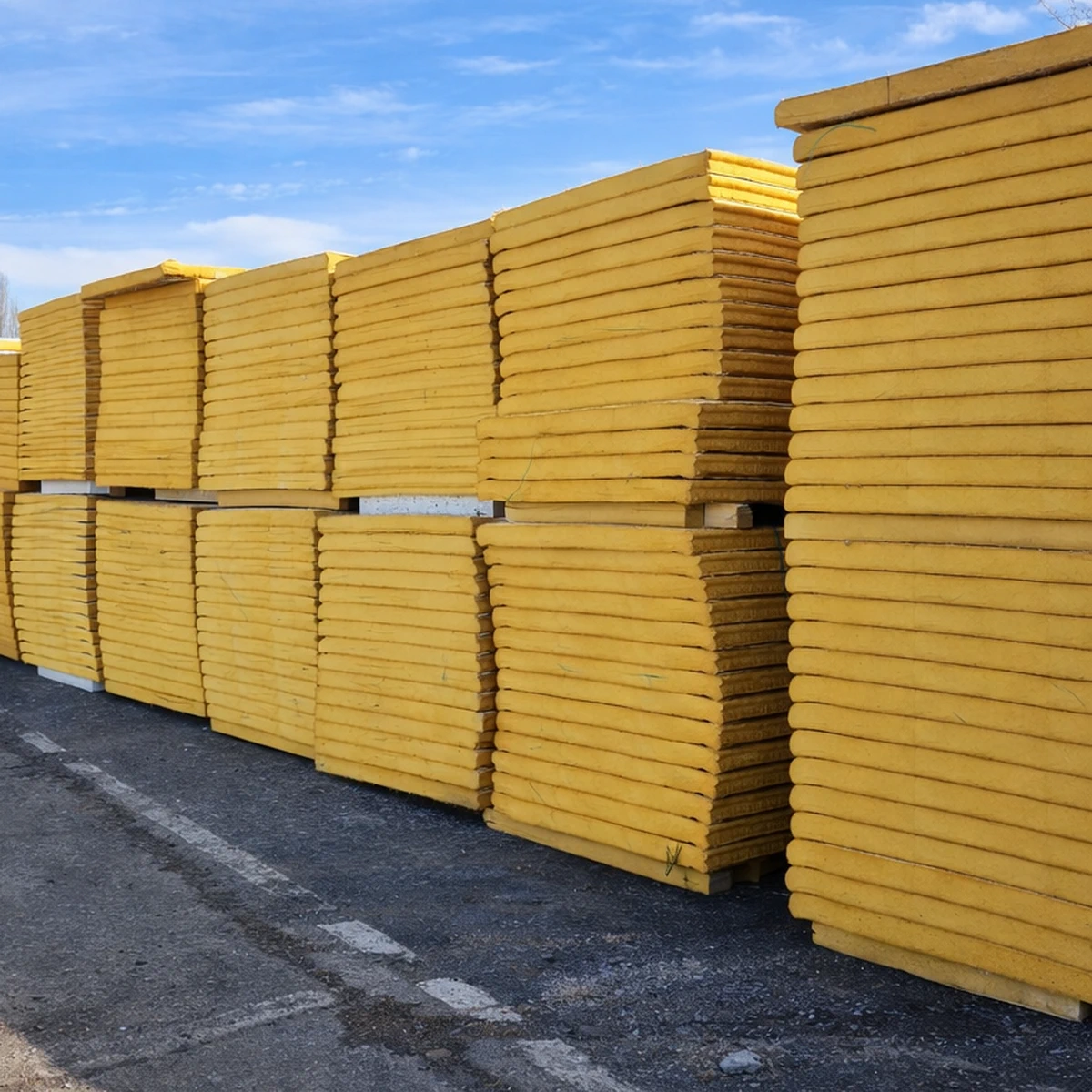
For a small room, check access, expected cuts and storage space. For a large roof, draw up a laying plan and a delivery sequence. Use the effective board size and plan protection against moisture in line with the manufacturer’s storage instructions.
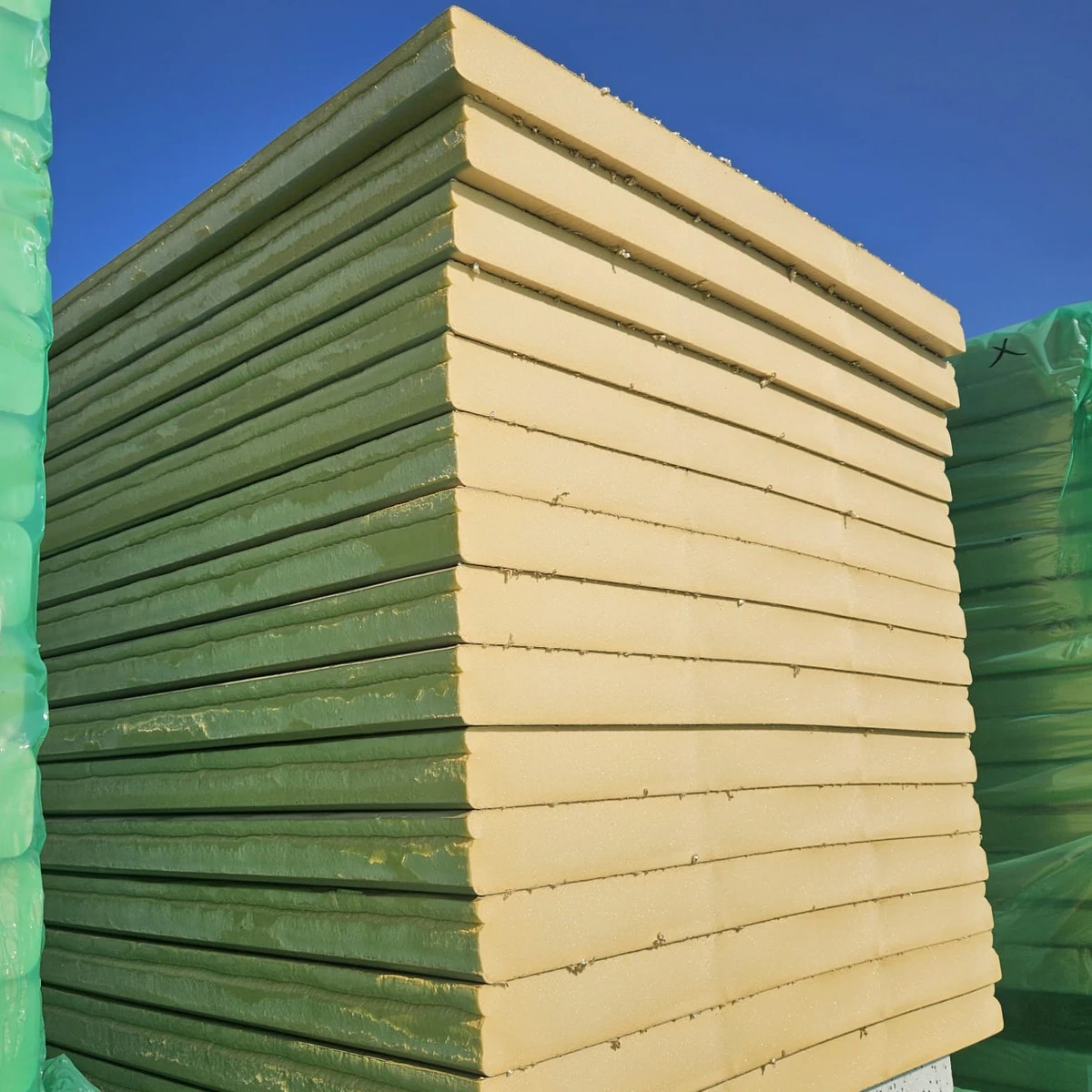
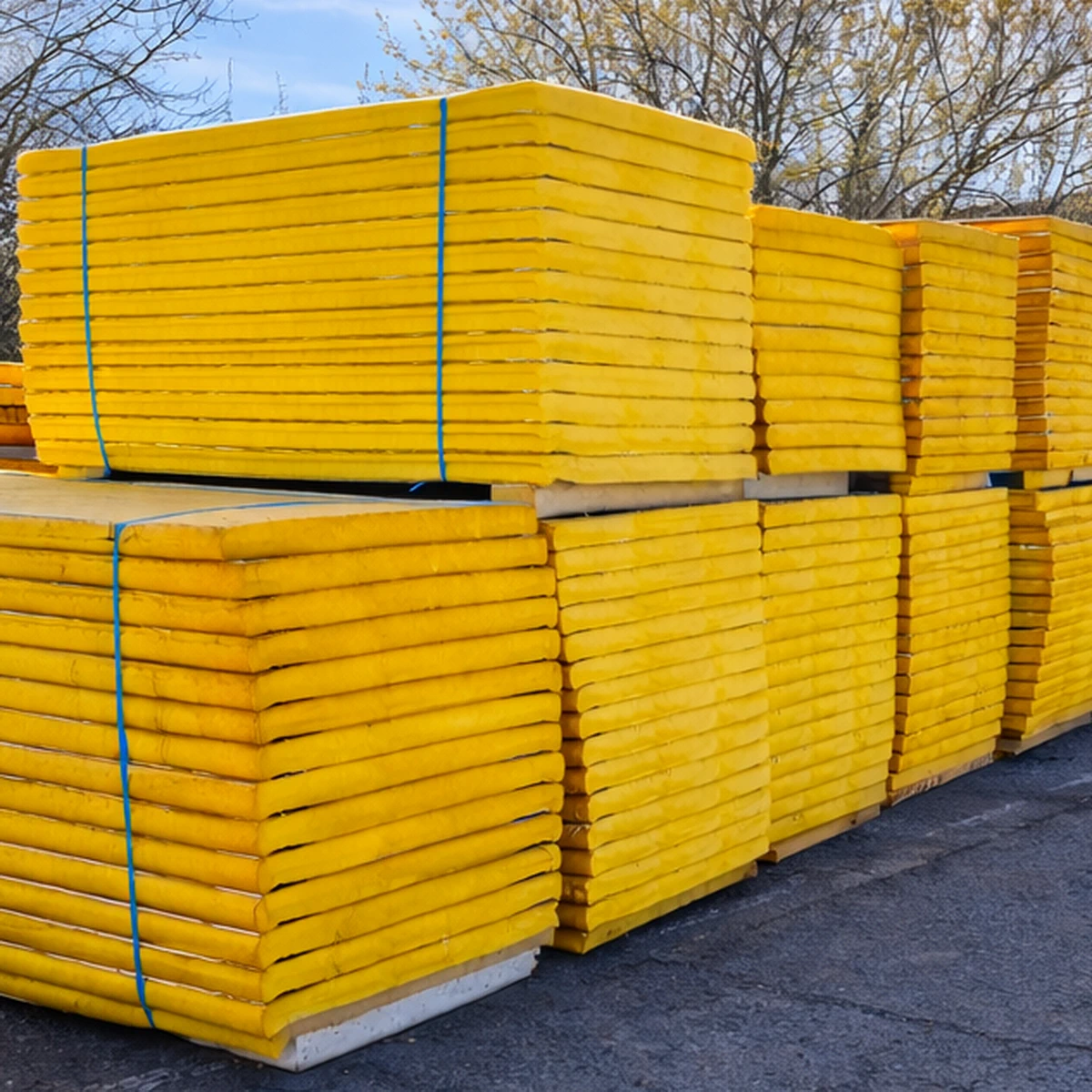
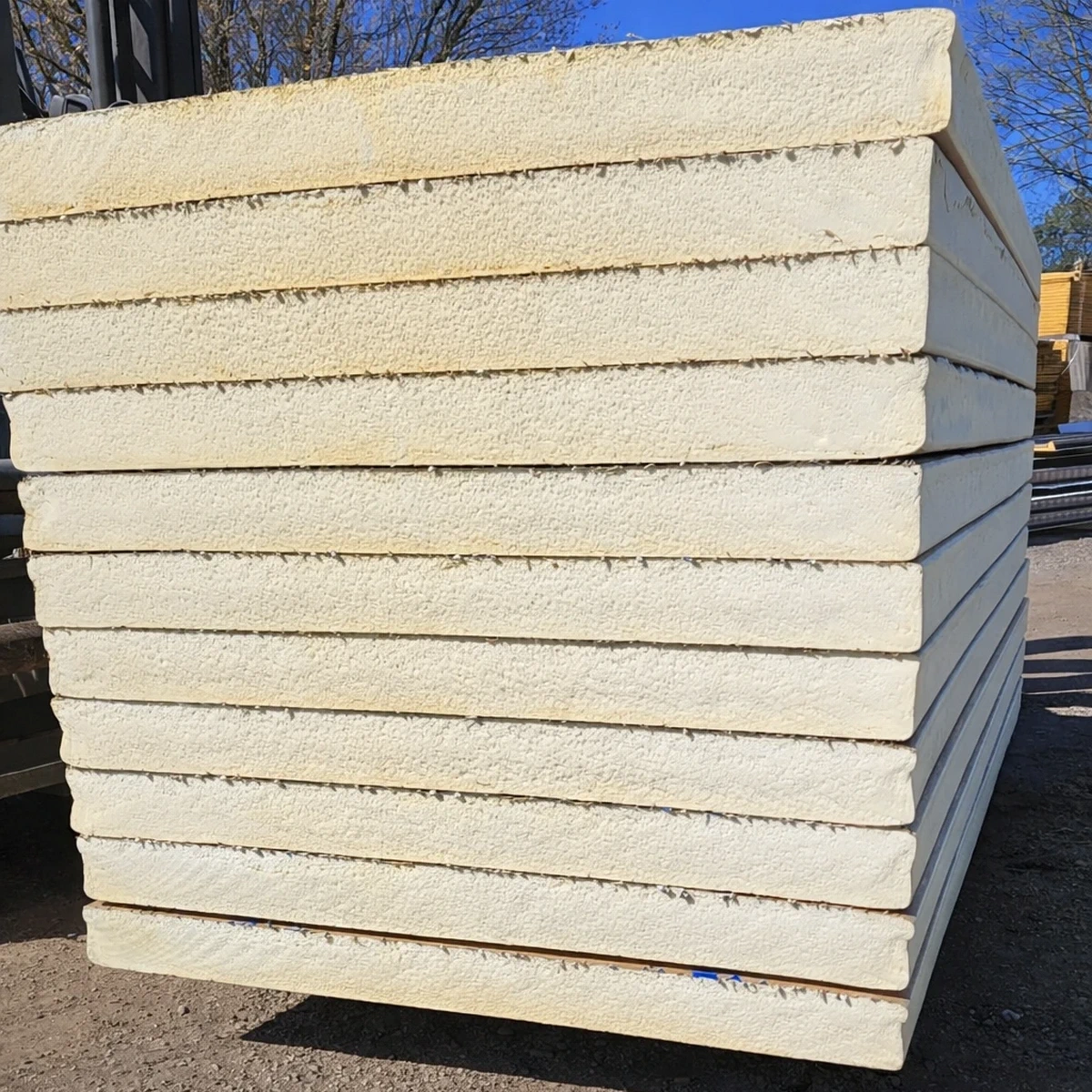
On delivery, match the labels to the order and check board type, thickness, number of packs and dimensions. For outlet stock, ask for a condition report and photographs of the edges and facings of the specific batch. Damage may affect performance. Establish the documentation and conditions of use before payment, particularly where specified properties are essential.
For pieces cut from larger boards, confirm the actual size supplied and which factory edges remain. A nominal designation is no substitute for the measurements of the piece delivered.
What to include in a PIR insulation enquiry
Specify the application, preferred thickness or design requirement, area, board size, facing, work schedule and delivery location. If the design specifies a system, give its full name. Browse the insulation range or get a free quote. With these details, the price will cover a clearly specified set of materials.

Free quote
What to include in your enquiry
Tell us how you plan to use the material, the dimensions and the quantity you need. Include the thickness, grade or variant name, along with the delivery town or your preferred collection branch. For a specific product, add its name or a link to the product page. We will reply to the email address you provide to discuss availability and the terms of your order.
Read next
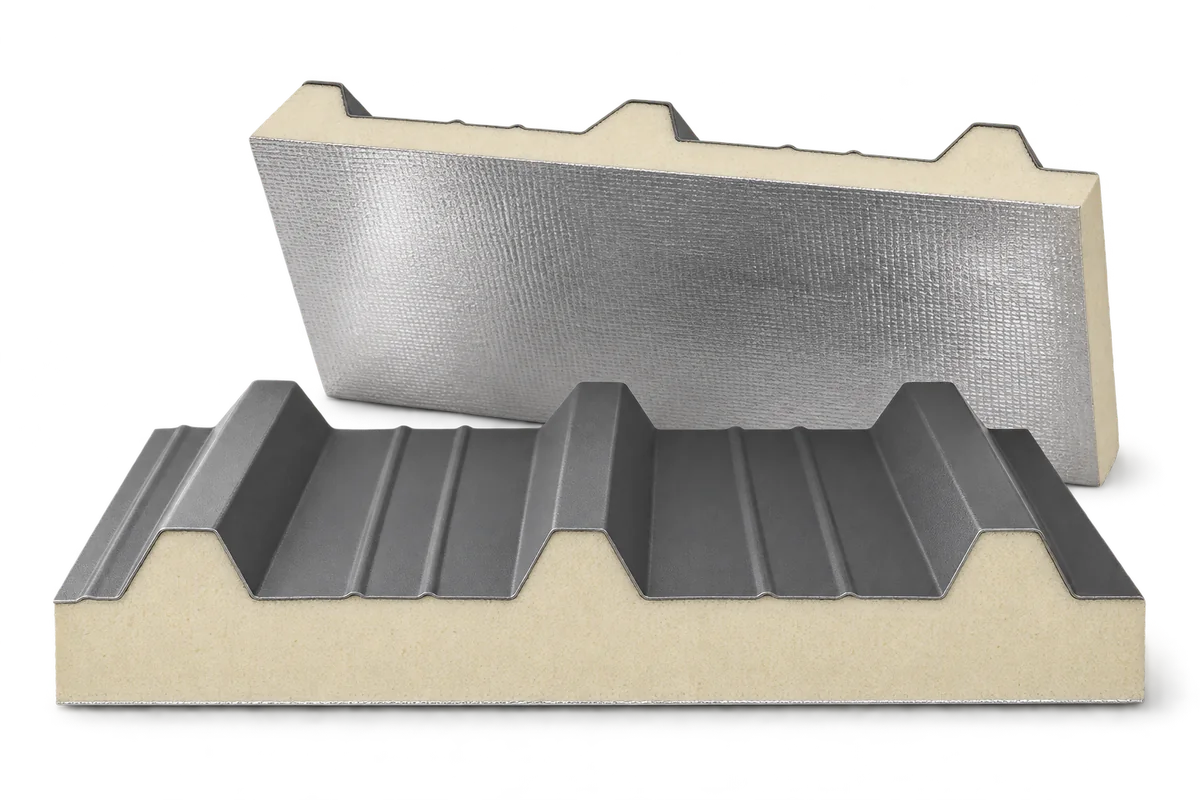
Renovating an old industrial building need not mean replacing it. Sandwich panels can provide a new outer skin and insulate the walls…
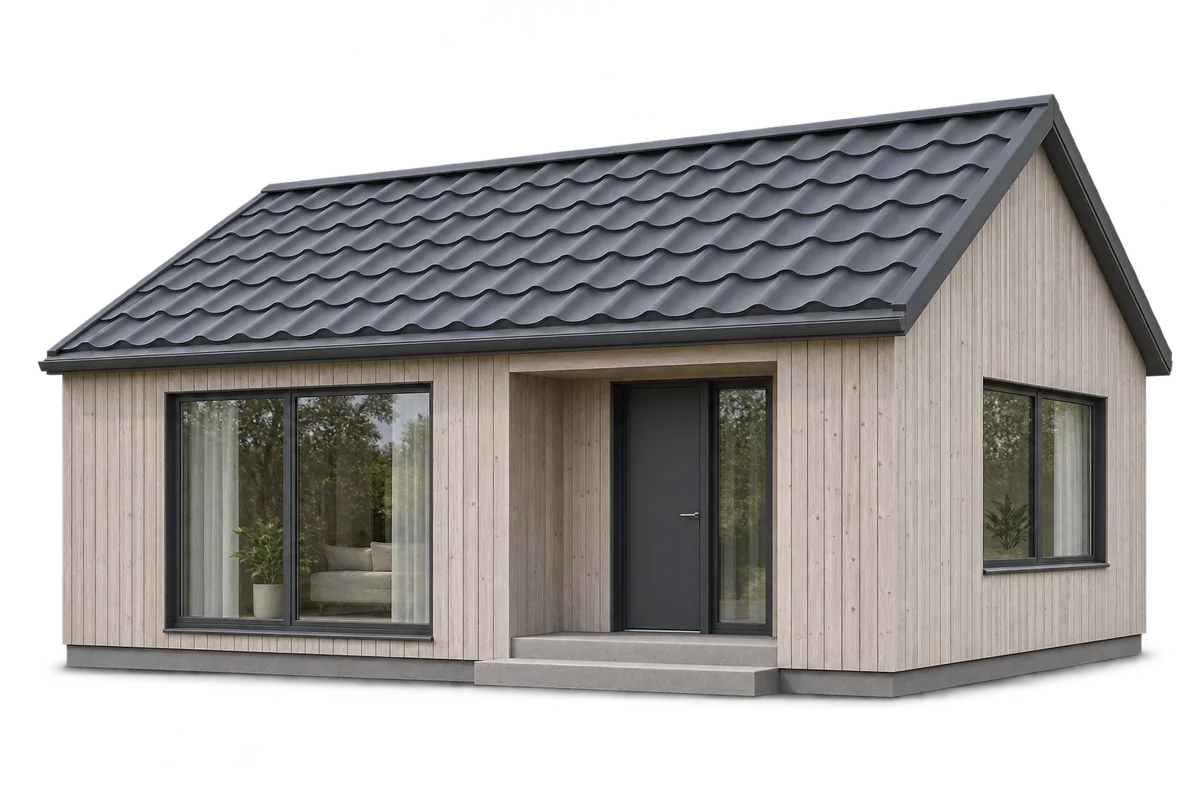
A timber house for year-round use must meet the requirements for a dwelling. In Poland, using timber does not in itself determine…
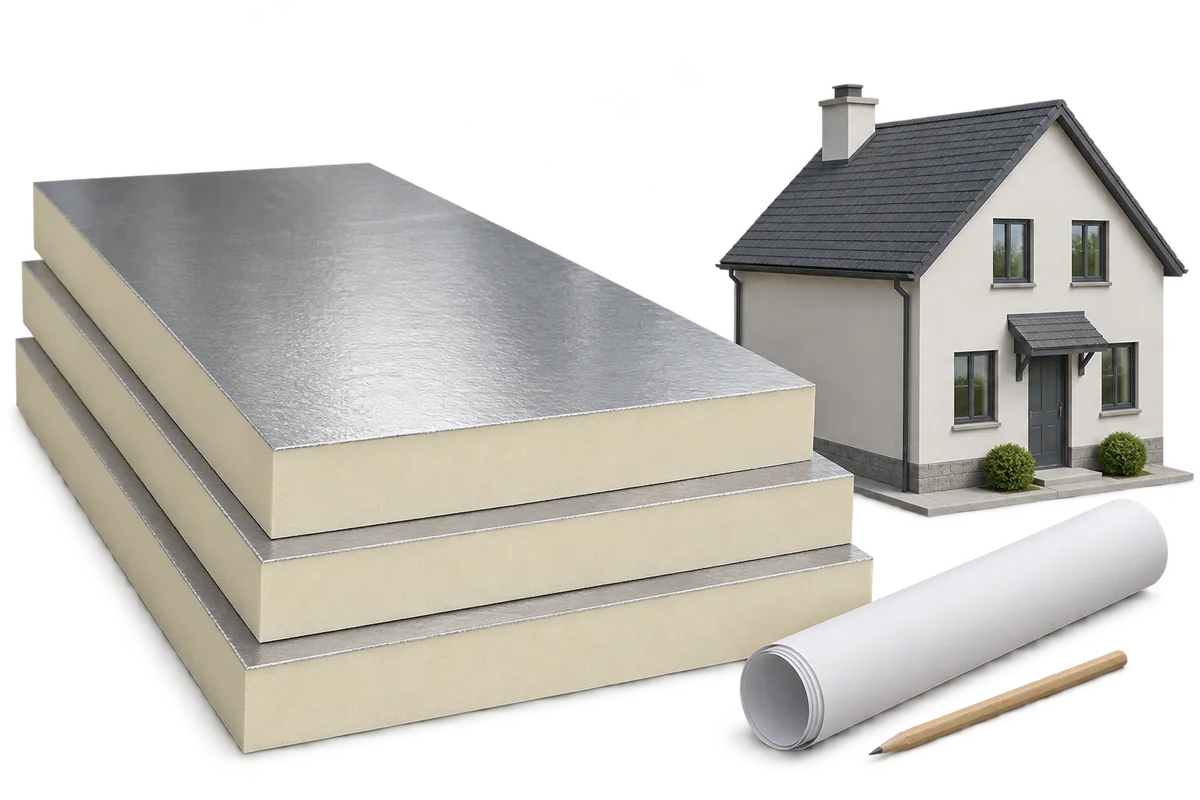
An energy retrofit works best when the roof, wall and floor insulation is planned together with windows, heating and ventilation. PIR can…
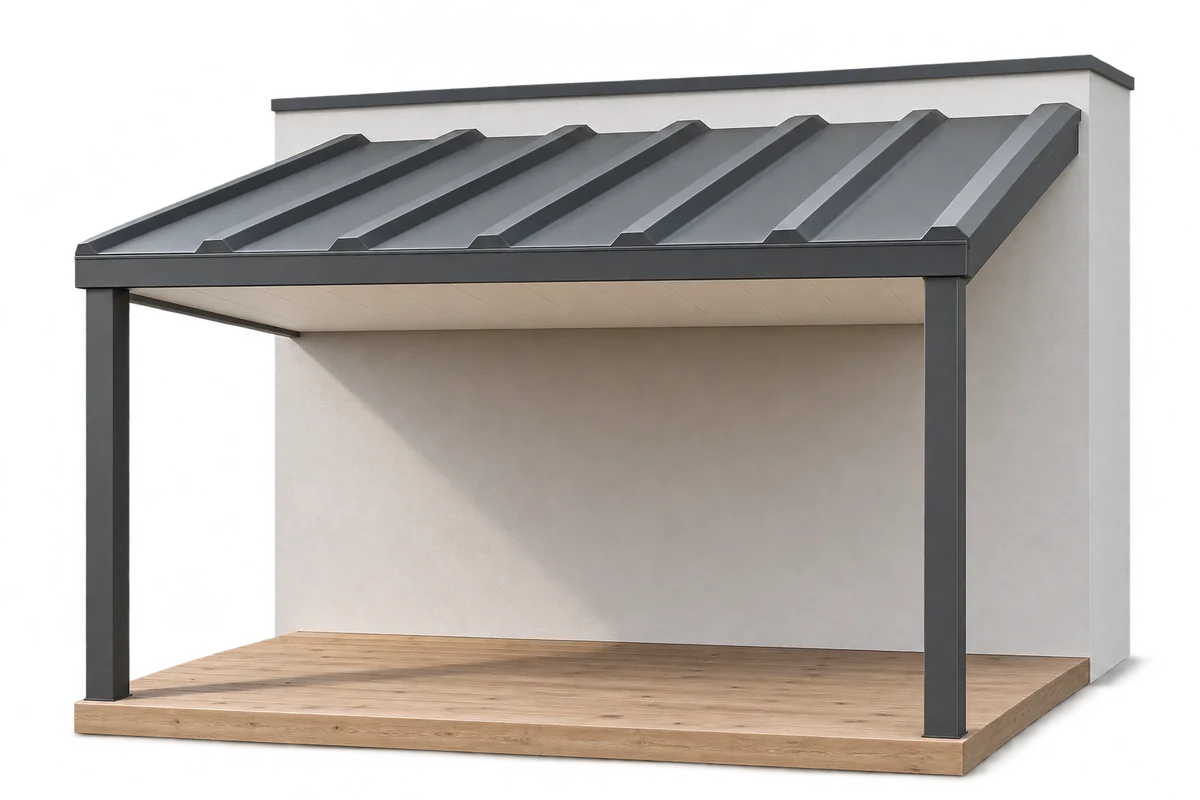
A canopy shelters the people on a terrace from rain and sun. If there is a heated room below, the terrace floor…
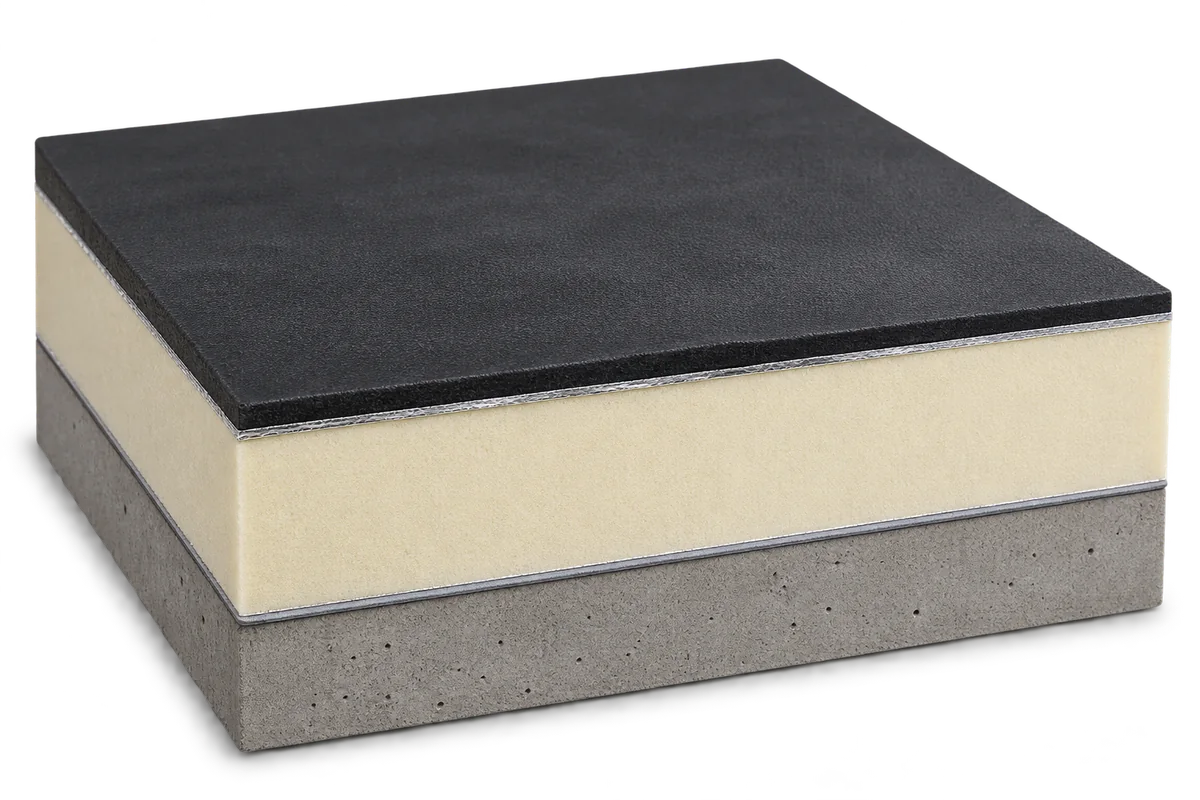
Choose the waterproofing and insulation for a flat roof together. The deck, layer order, fixing method and intended use determine which combinations…
The distance from the roof hatch to an air handling unit matters before the roofing is ordered. A technician needs to reach…
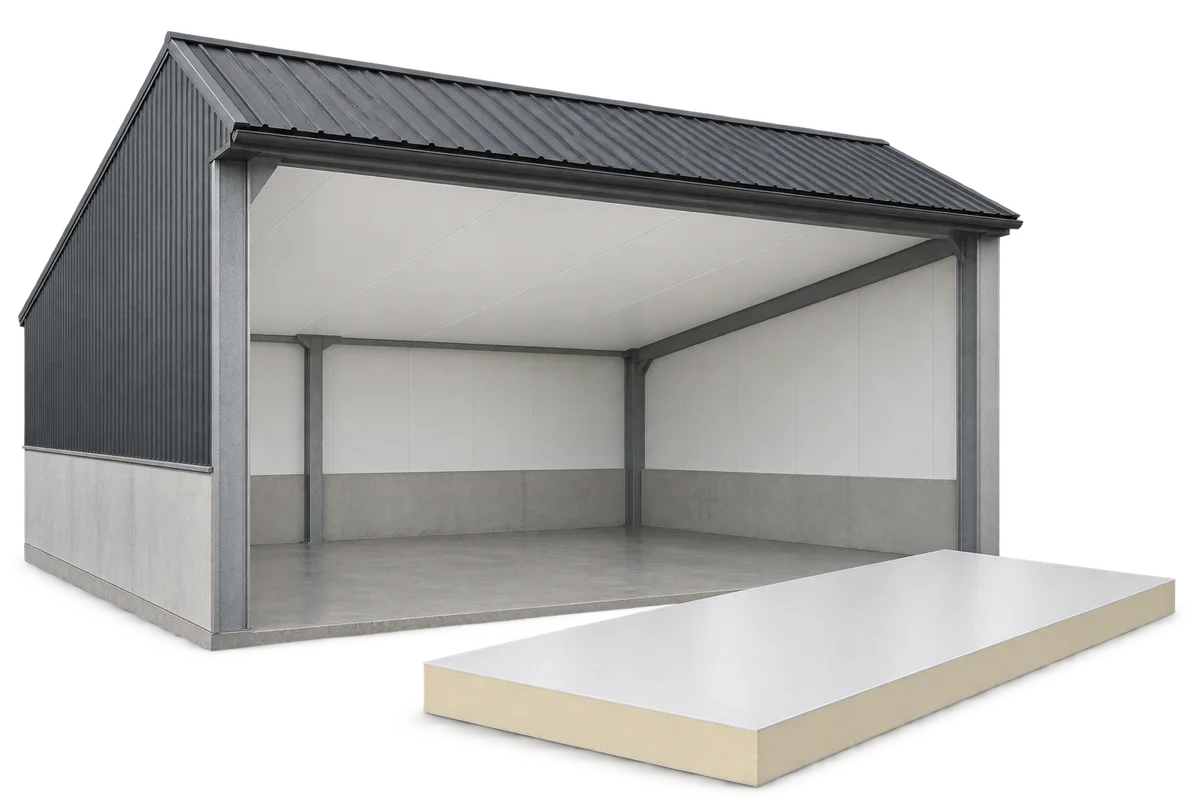
An internal ceiling can separate a heated or climate-controlled room from the roof void. In a cattle shed or warehouse, its appearance…
At a house viewing, the seller shows an invoice for PIR boards and photographs of a renovation. To connect these records to…
