






Which trapezoidal steel sheet suits your roof?
Roof coverings
To choose between T18, T35 and structural decking, start with the roof drawing. Mark the pitch, support spacing, slope length and any end laps. Ask the supplier for the exact profile section and its load table in the proposed steel thickness. Two sheets sold under the same nominal depth can have different cover widths and may not fit the same flashings. Decide separately how to protect the surfaces and manage condensation. A sheet suitable for an open shelter may need a different coating or an entirely different insulated build-up above a heated workshop.
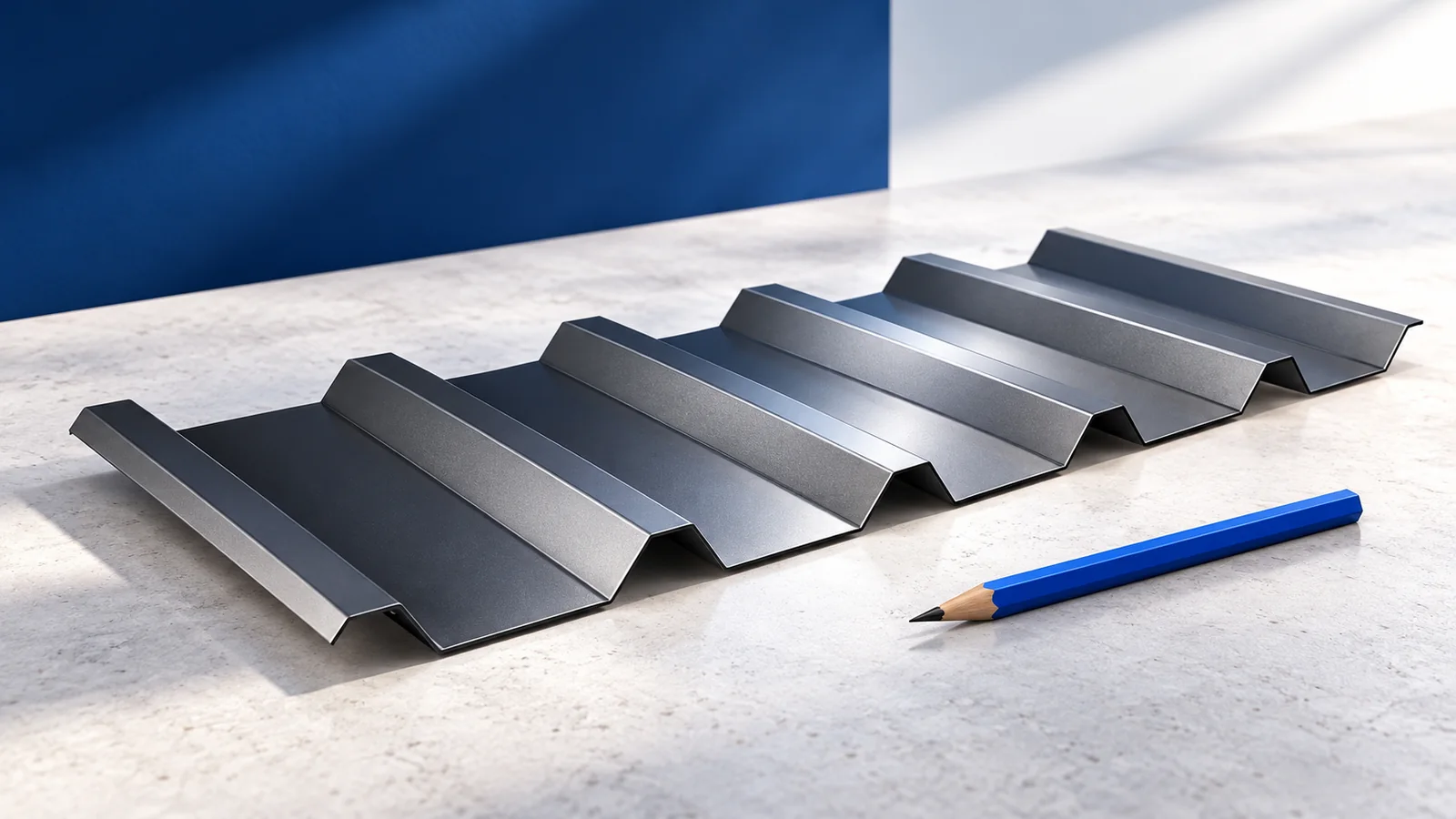
What does T18 or T35 tell you?
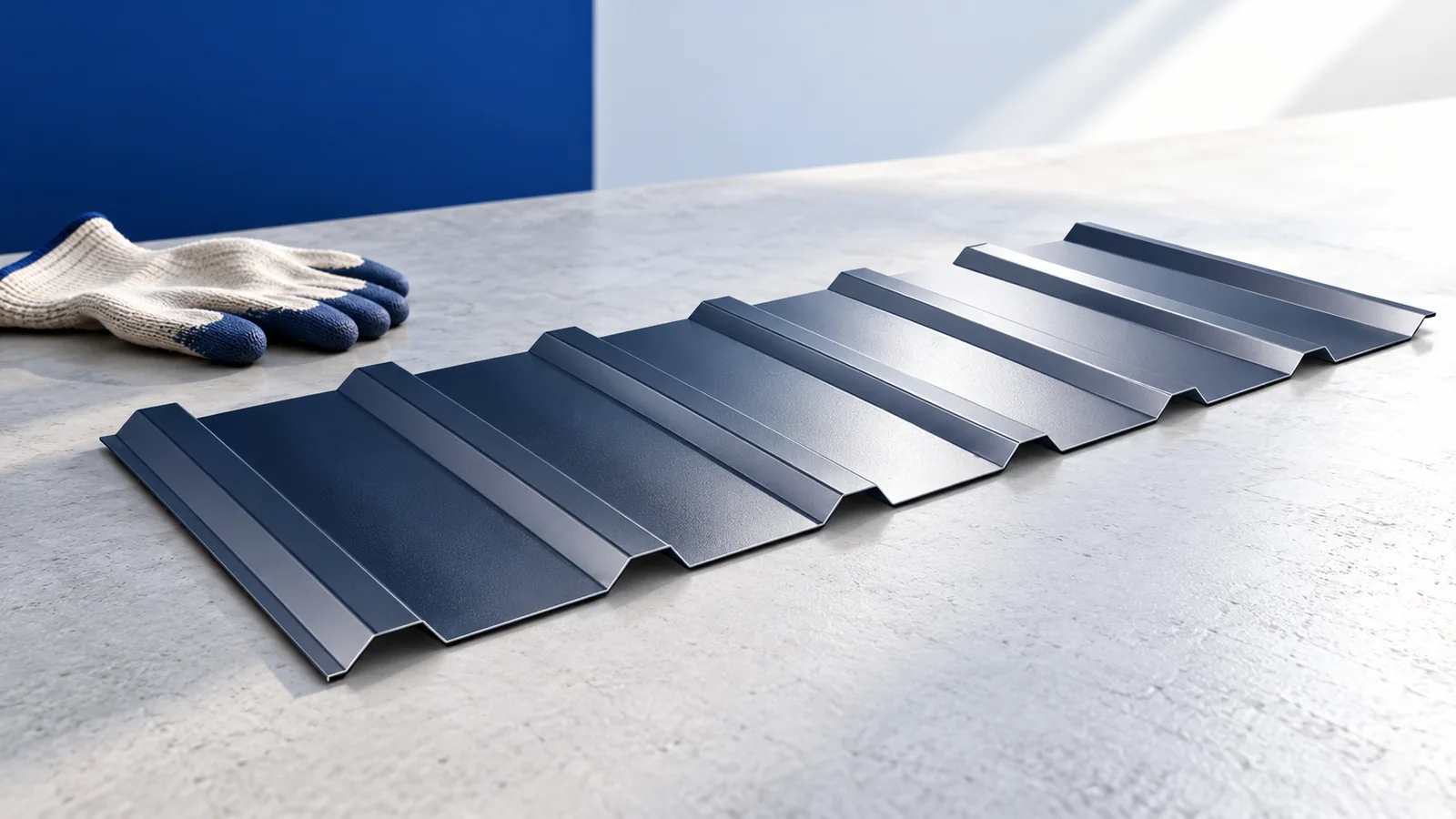
The designation refers to profile depth, not the entire sheet geometry. Rib widths and cover widths can vary between suppliers, changing the properties of the cross-section. Two sheets with similar designations need not share a load table or fit the same flashings.
Identify the precise product variant before ordering. Check the weather face, laying orientation and joint detail. A trapezoidal sheet sold for wall cladding is not automatically suitable as a roof sheet in any orientation. Use the manufacturer’s declared applications and installation details.
When is a comparison between T18 and T35 useful?
T18 may be suitable if the supports and design loads are within its stated limits. T35 has deeper ribs and a different cross-section. This can help in some arrangements, but the designation alone does not permit wider batten or purlin spacing. Check the data for the proposed assembly.
Compare like steel thicknesses, grades and support conditions. A thinner T35 is not necessarily better than a thicker T18 for the criterion in question. Read the deflection limit and number of spans in the table. If demands are higher, ask the designer to consider a structural deck profile.
How do pitch and slope length affect the choice?
Look up the minimum pitch for the exact sheet and joint arrangement. A single length running to the eaves may have a different permitted pitch from sheets joined by an end lap. There is no single minimum that follows from the name T18 or T35.
The slope length affects both runoff and handling. Long sheets reduce the number of joints but require careful lifting. Shorter sheets are easier to transport; their end laps need suitable support and sealing. Consider how the covering will drain and how it can actually be installed on the site.
How should steel thickness and coating be chosen?
Steel core thickness affects weight, stiffness and load capacity. Substituting thinner steel may require closer support spacing. Check the metallic protection and the organic coating as separate specifications. Not every combination is suitable for every exposure.
Check corrosion protection particularly carefully on coastal, industrial or humid sites, including the reverse-face coating. A matt finish does not by itself last longer than a gloss finish. Compare declared performance and warranty coverage, then view the colour sample in daylight.
Do you need anti-condensation fleece or insulation?
Moisture can condense on the underside of metal above an unheated space. An anti-condensation fleece can retain some droplets until conditions allow them to dry. It does not prevent condensation from forming and is not a substitute for insulation or for the other necessary roof layers.
Above heated accommodation or a workshop, design the insulation, vapour control and airtight layer together. Compare a built-up roof with an insulated roof sandwich panel on the basis of the functions each provides. Adding fleece to an uninsulated sheet does not turn it into an insulated roof.
What information makes a quotation useful?
Supply slope dimensions, pitch, site location, support spacing and building use. Mark openings, chimneys and planned equipment. Ask for the full sheet specification and price per square metre of effective cover. Include flashings, screws and delivery when comparing T18 with T35.
Check whether storage and installation instructions are included. Even the right sheet still needs compatible fasteners, correctly fitted flashings and clear drainage. The deepest profile or the most expensive finish is not necessarily appropriate; the specification should match the roof and its exposure.
Recalculate the sheet count if the cover width changes. A difference of a few centimetres per sheet can change the final cut and the quantity ordered across a slope. Do not carry a piece count over from a quotation for a different profile. Exact cross-section dimensions are as important to the estimate as price or colour.

Free quote
What to include in your enquiry
Tell us how you plan to use the material, the dimensions and the quantity you need. Include the thickness, grade or variant name, along with the delivery town or your preferred collection branch. For a specific product, add its name or a link to the product page. We will reply to the email address you provide to discuss availability and the terms of your order.

Read next
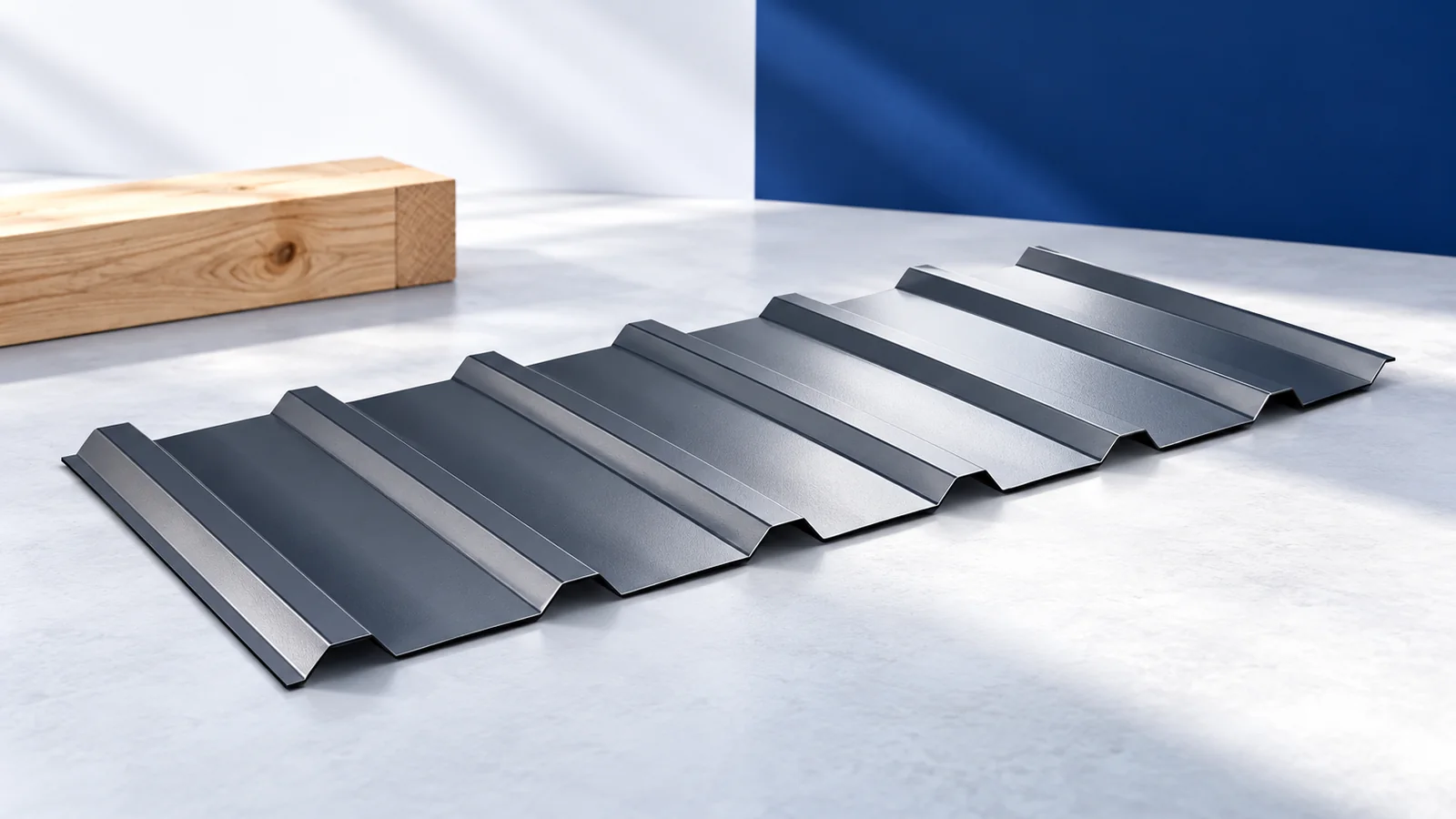
A T18 profile gives a wall a finer pattern; the deeper ribs of T35 cast stronger shadows. View a sample outdoors beside…
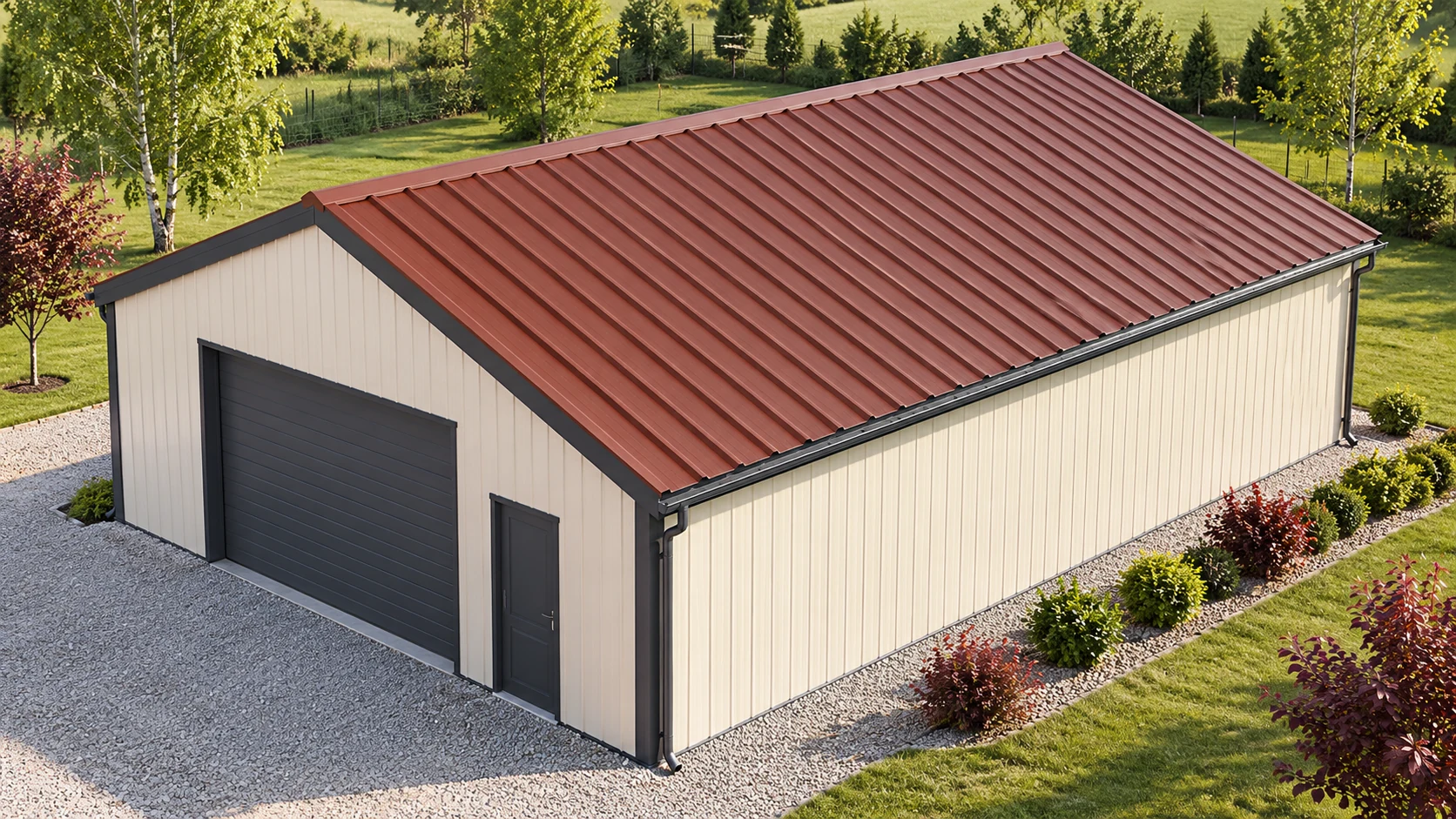
The cost of covering 200 m² depends on how many whole sheets you order. Allow for flashings, fasteners, delivery and installation as…
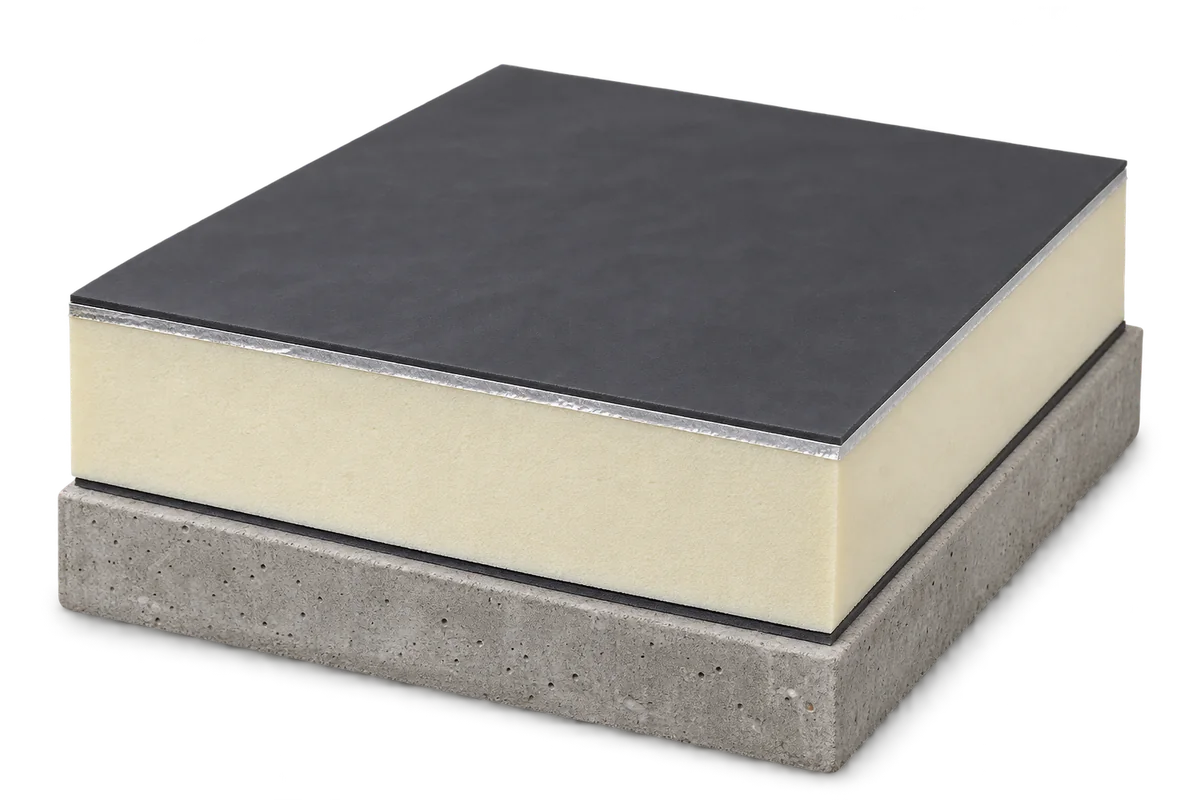
A flat roof consists of several layers that work together. The structure carries the loads, insulation reduces heat loss and waterproofing keeps…
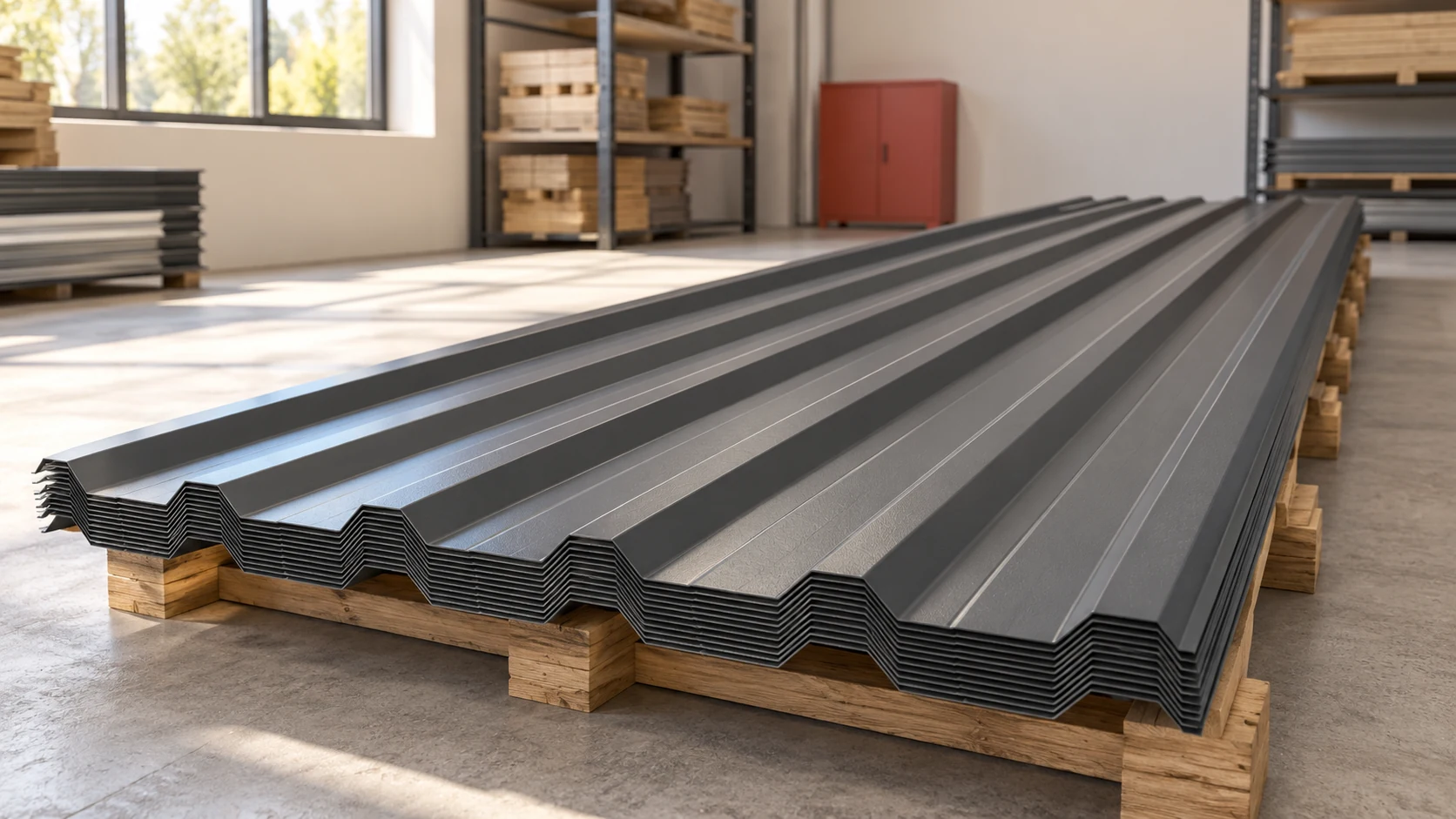
A price per square metre is not enough to select trapezoidal steel sheet. Comparable offers identify the profile, thickness, coating, dimensions and…
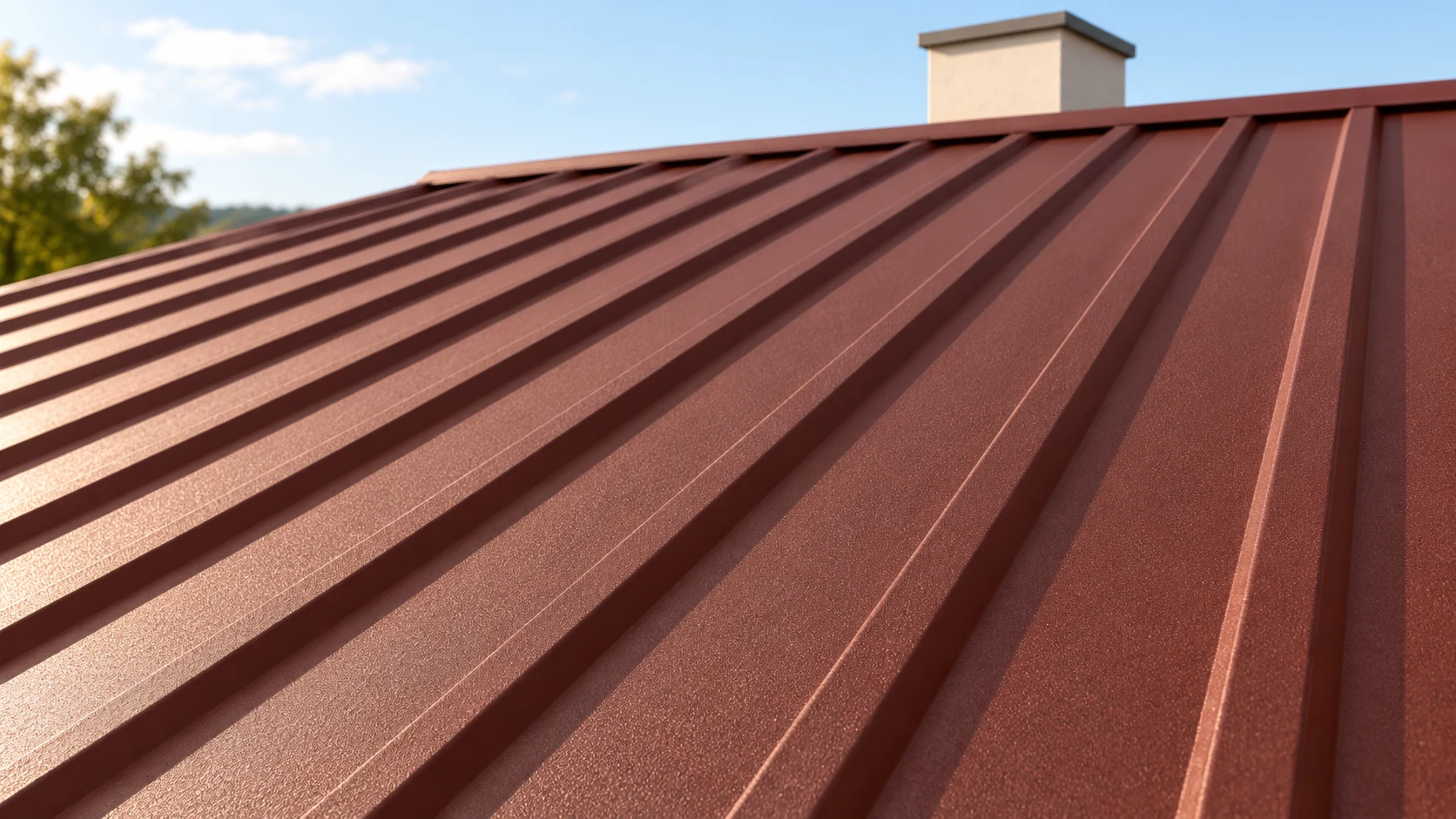
The junction between a chimney and a metal roof acts as a small drainage system. It collects water upslope, directs it past…
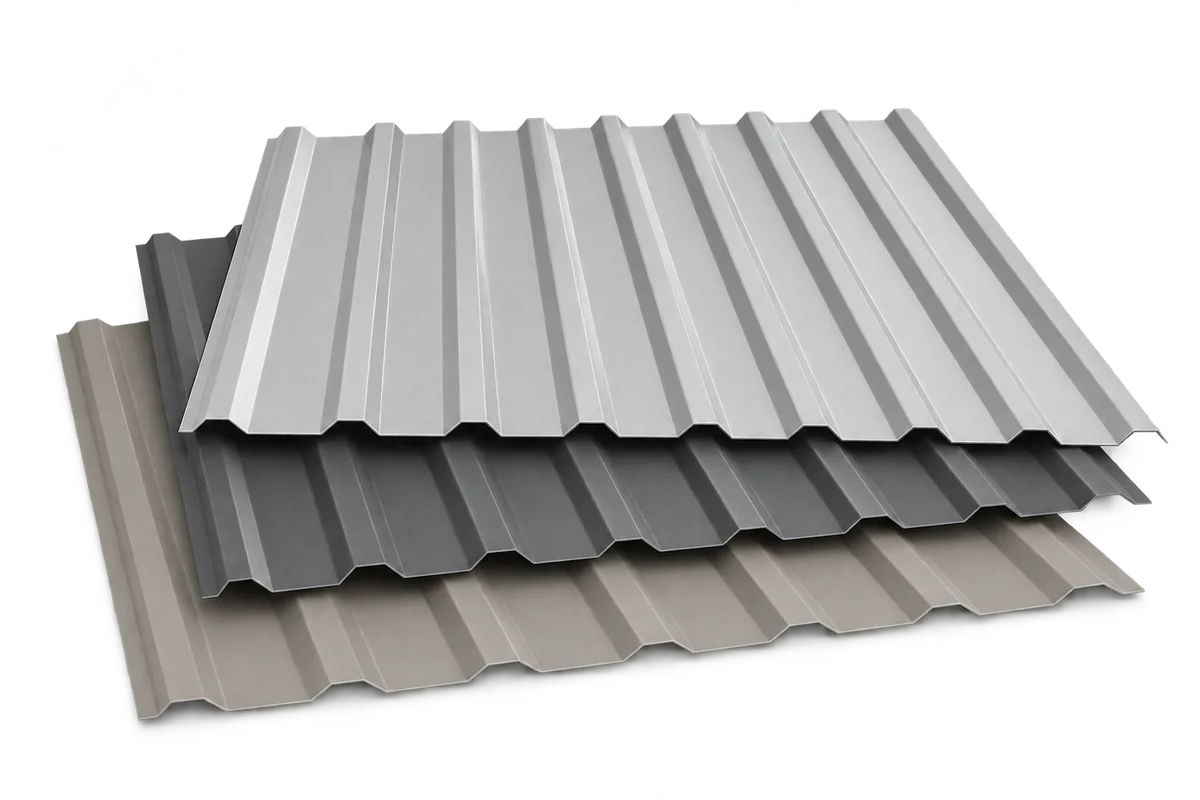
Trapezoidal steel sheets can quickly enclose a roof or facade once the supporting structure is ready. The sheets are lightweight, come in…
Draw a section from the wall to the fascia before selecting soffit panels. Show the air inlet, framing, trims and any lights…
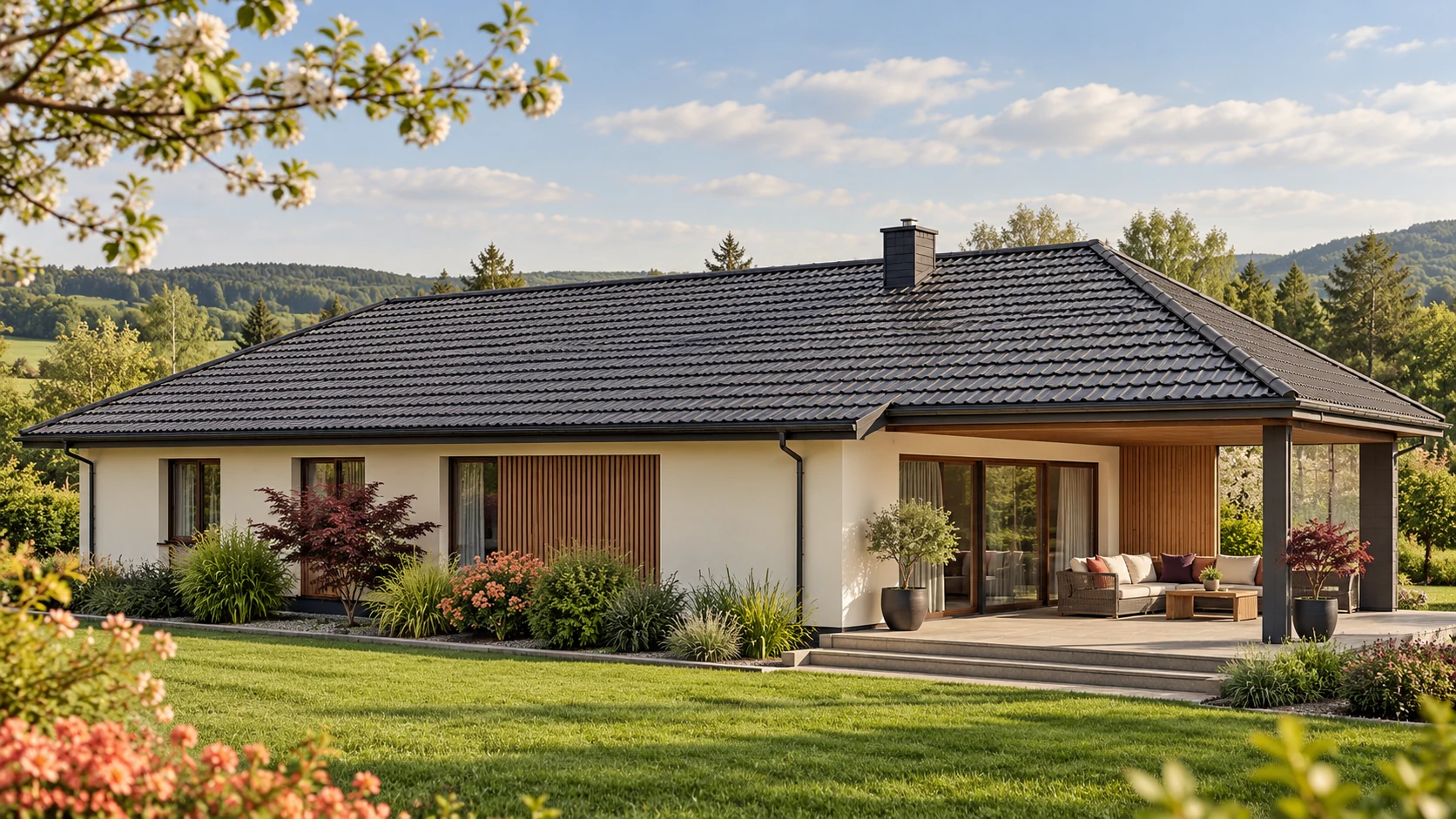
Both profiles can work on a house. Start with the roof section, slope layout, pitch and supporting structure before choosing the appearance.…
