






What should you check on a metal roof after winter?
Renovation and maintenance
Inspect a metal roof after winter from the ground and, where safely accessible, from the loft. Compare the eaves, gutters and sheet edges with earlier photographs. Note where water marks appear and whether they follow rain, frost or a thaw: condensation can leave stains much like a leak. A roofer can use those observations to check flashings, fixings and penetrations without disturbing sound joints. Treat loose parts above an entrance, a visibly sagging slope or an active leak as priorities; leave access onto the roof to a suitably equipped professional.
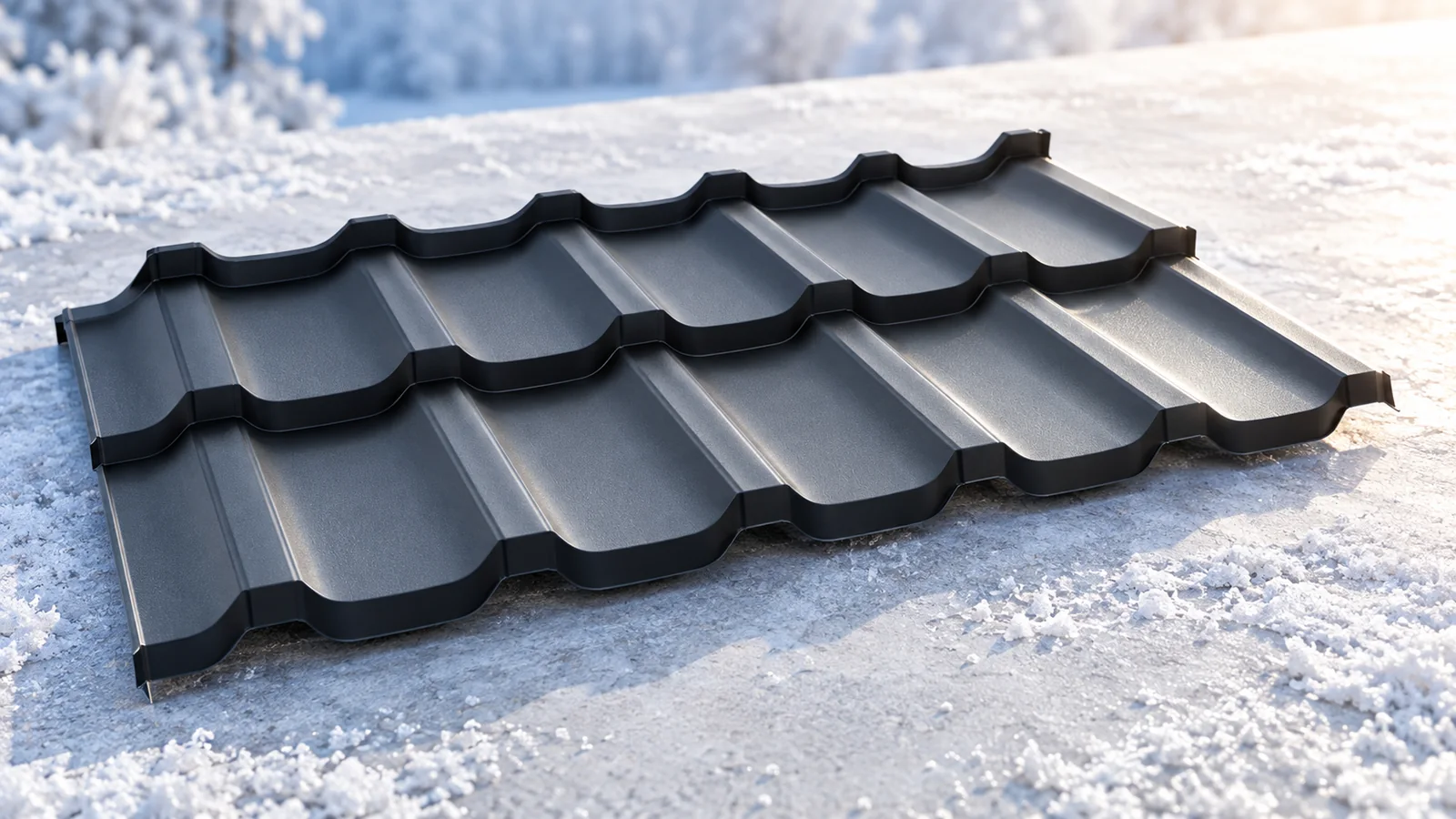
What can you see without going onto the roof?
Walk around the building at ground level. Look for crooked flashings, lifted sheet corners and uneven gutter lines. Streaks below the eaves may indicate an overflowing gutter or a leaking outlet. Photos taken from the same positions before winter make changes easier to see.
Ground-level checks cannot reveal every connection. Do not climb a ladder with a camera to make up for that limitation. Wet metal and remaining ice are slippery. If a slope sags, the frame looks damaged or a large part is loose, keep people away and arrange a professional assessment.
How should gutters and outlets be checked?
Leaves, twigs and sediment can block meltwater. Check that the gutters, hoppers and downpipes provide a continuous route away from the building. Water pooling beside one bracket may indicate a bent gutter or a change in its fall.
Avoid damaging the coating during cleaning. Do not chip off ice with a sharp tool or use a gutter to support a person’s weight. On roofs with parapets, include roof outlets and emergency overflows: the overflow route can prevent excessive ponding if the main outlet is blocked.
Where is damage most likely to show?
Inspect valleys, ridges, verge trims and chimney flashings. Sliding snow and ice can press against protruding details, bending metal or loosening its fixing. Include vent terminals and brackets supporting equipment in the inspection.
Inspect screws together with their washers and the sheet around the hole. Do not tighten every screw as a precaution: excessive pressure distorts seals. An elongated hole needs a suitable repair. Smearing sealant over a moving joint will not fix it.
Does a stain in the loft mean the roof leaks?
Compare moisture marks with recent weather. Water appearing after rainfall may indicate a leak, while moisture during frost or thaw can come from condensation. Internal airtightness, ventilation and insulation continuity all matter. Both causes can occur together.
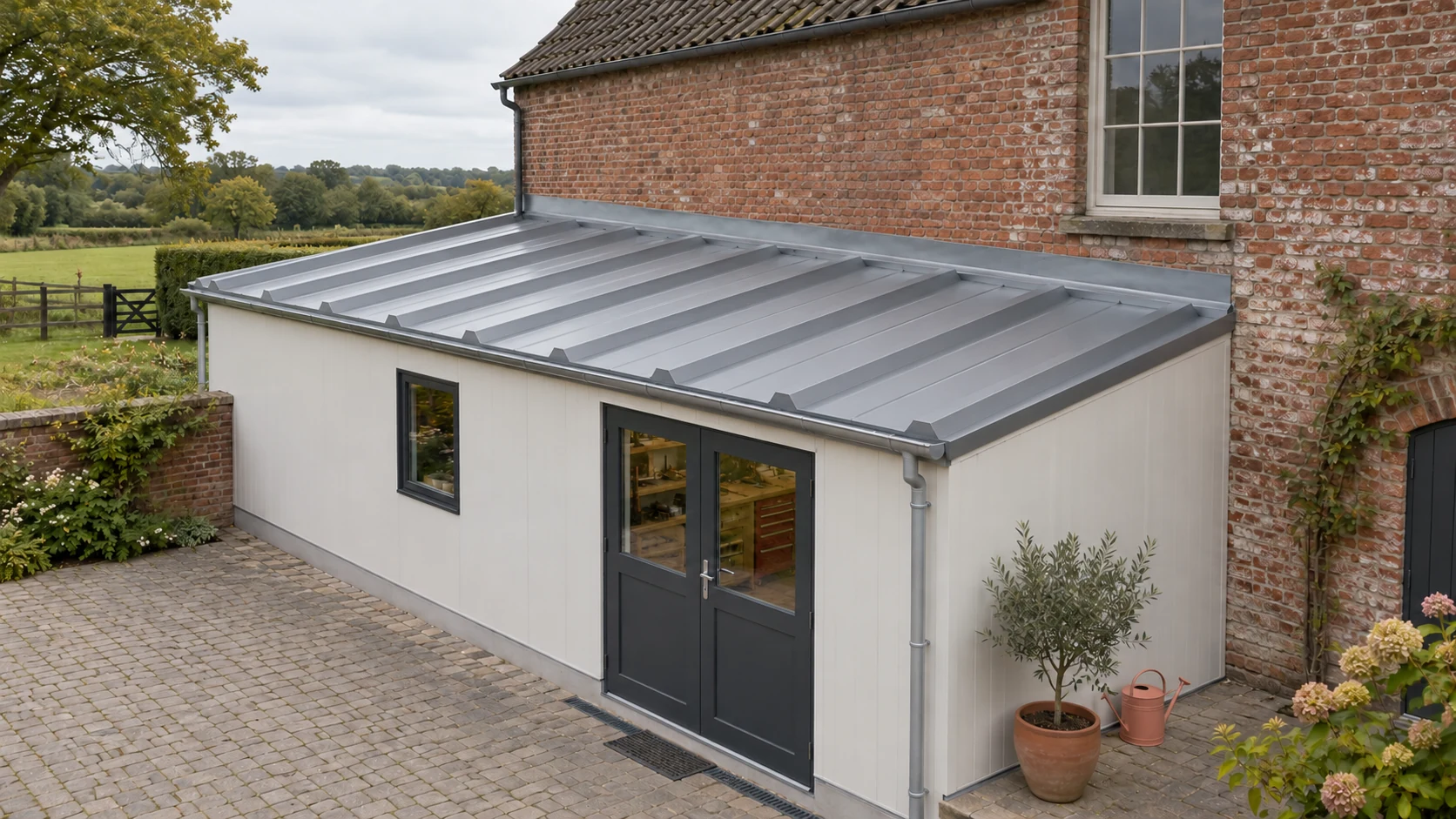
Look around service penetrations, roof windows and wall junctions. Do not cover a wet patch with fresh insulation. Locate the source, dry the affected layers and assess their condition first. On a heated garage clad in sandwich panels, check panel joints and the roof-to-wall junction too.
How can you distinguish dirt from coating damage?
Deposits, bits of leaves and marks from metal swarf can remain after winter. Distinguish dirt from corrosion or paint damage. Rust around a foreign metal particle need not mean that the sheet has perforated, but the cause must be removed. Inspect cut edges and old repairs closely.
Choose a cleaner compatible with the finish. Harsh chemicals, stiff brushes and a strong jet directed under a lap may cause further damage. Prepare the substrate before local touch-ups. Check the old coating’s adhesion before repainting a large area.
What needs checking around rooftop installations?
Check accessible areas around aerials, solar panels and cables. Winter wind and snow can load their brackets. Look for rubbing against the sheet or a cable obstructing drainage. Have someone familiar with the system check connections without undoing brackets unnecessarily.
If equipment was added after the roof was built, find the installation records. A new damp patch may relate to a penetration, but confirm this by inspection. Compare pre-winter photographs to see whether any part has moved.
How do you turn inspection findings into a repair plan?
List areas needing cleaning, sealing or replacement. For each, record the cause if known and the work required. Pair a close-up with an overall view so the roofer can locate the defect. Note the inspection date and previous repairs.
Deal promptly with hazards to people and active leaks. Other work can often be combined with scheduled maintenance. Set inspection intervals according to the manufacturer’s instructions, local exposure and repair history. A roof under trees or near a pollution source may need more frequent checks than one in open terrain.

Free quote
What to include in your enquiry
Tell us how you plan to use the material, the dimensions and the quantity you need. Include the thickness, grade or variant name, along with the delivery town or your preferred collection branch. For a specific product, add its name or a link to the product page. We will reply to the email address you provide to discuss availability and the terms of your order.
Read next
A thicker sheet can alter the load capacity and stiffness of a roof covering. Whether you can increase the support spacing also…
A roofing schedule starts with the supports and ends with a roof that sheds rain. Between those points, a housebuilder needs dates…
A wall plate forms the bearing between the rafters and the supporting wall in many timber roofs. Its size, joints and anchors…
PIR sandwich panels are factory-bonded elements with an insulating core and metal facings. They are made for walls, roofs and specialist enclosures…
When water appears inside a building, keep clear of wet electrics and sagging ceilings. Photograph the first signs from a safe position…
The cost of covering 200 m² depends on how many whole sheets you order. Allow for flashings, fasteners, delivery and installation as…
An extension roof needs a junction that keeps rain out while allowing for movement between the existing building and the new frame.…
A single panel running from ridge to eaves can eliminate an end lap and the support and sealing detail it would otherwise…
