






How can you remove moss and green growth from tile-effect steel roofing safely?
Roof care and repairs
Look at where the green patch ends. If one strip below a tree or beside a flashing stays damp after the rest of the roof has dried, cleaning alone may bring only short-lived results. Identify the deposit, check which cleaning methods the sheet manufacturer allows for the coating, and plan where debris and rinse water will go. A stiff brush can damage the finish that protects the steel. Before anyone starts, arrange safe access: a wet, mossy roof is particularly slippery. Once the surface is clean, inspect the exposed coating and check the outlets again.
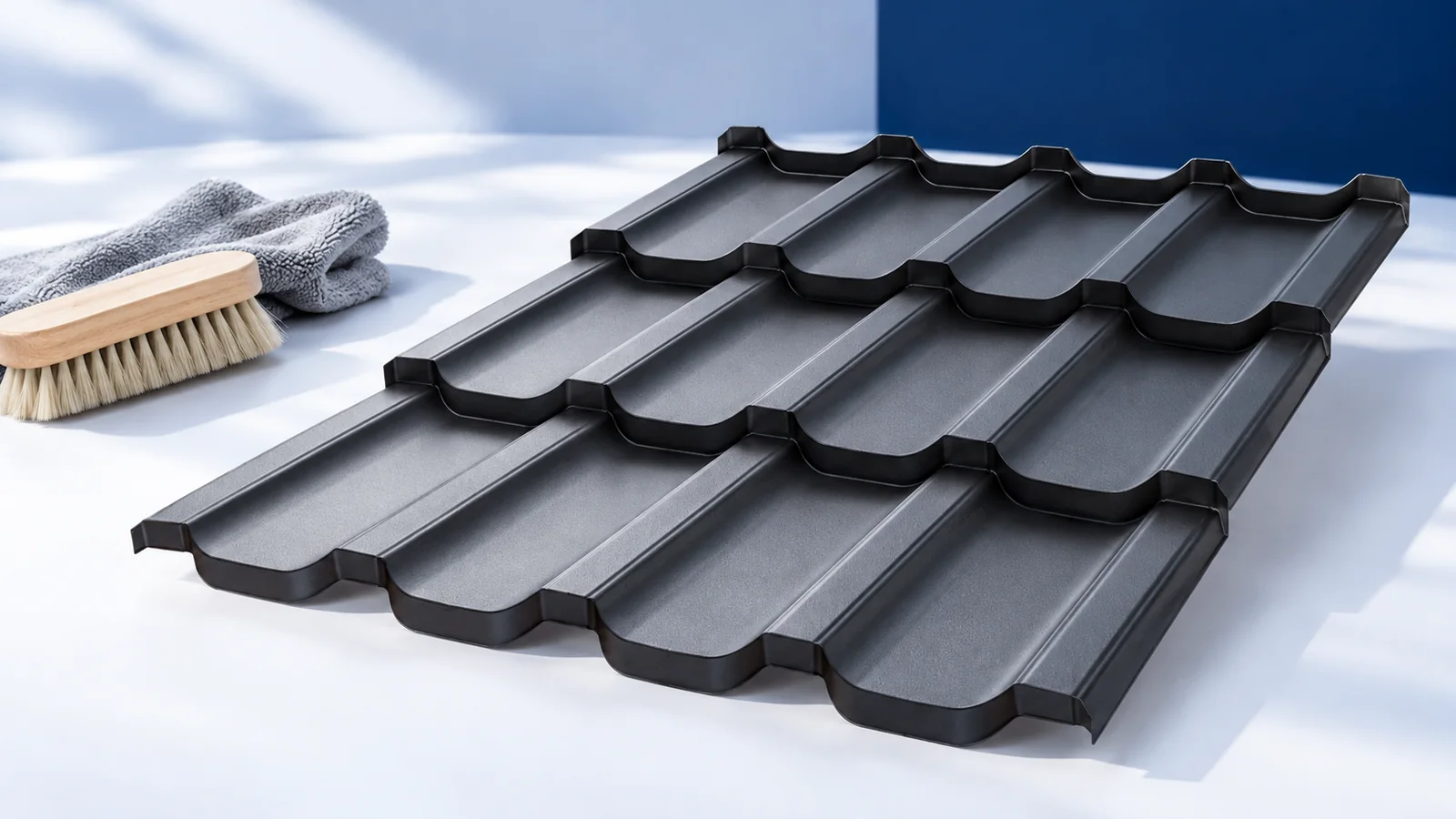
Why does growth affect only part of the roof?
Shade and persistent moisture favour growth. Trees, fallen leaves and local deposits influence where it appears. Not every green patch is moss: it may be another organism or simply dirt. Identifying it helps you choose the gentlest effective cleaning method.
Look around valleys, flashings and roof-mounted equipment. If runoff is slow, the growth may return. A patch of moss does not mean the entire roof is worn out. Photograph it before cleaning, then compare the coating underneath with neighbouring areas.
Can you brush or scrape moss off?
A rigid scraper, wire brush or abrasive pad can scratch the finish. Do not use these as routine tools on coated tile-effect sheets. Lift loose debris with soft implements, following a method approved for the material. The aim is to clear the surface while keeping its protective layers intact.
If growth is firmly attached, do not simply press harder. An approved cleaning agent or a specialist service may be needed. Trial the method on a small, inconspicuous area representative of the roof. Inspect the cleaned finish and assess any damage before applying touch-up paint or another treatment.
Which cleaner suits the coating?
Check that the cleaner is suitable for coated steel and for this particular finish. Its instructions should specify dilution, contact time and rinsing. Advice for cleaning concrete or clay tiles does not automatically apply to steel: the same product may affect the surfaces differently.
Do not mix products or use household blends whose effect on the finish is unknown. Follow instructions for protecting nearby surfaces and managing runoff. For products intended to control growth, observe the conditions on the label. A stronger solution does not necessarily clean more effectively.
Is pressure washing suitable?
Use a pressure washer only if permitted for the surface and detail being cleaned. There is no single safe pressure for every tile-effect sheet. An excessive jet can damage the coating or drive water under laps. Nozzle distance, spray direction and the condition of the sheets all matter.
Never direct the jet beneath flashings, seals or ventilation fittings. Take particular care around chimneys and roof windows. Inspect an unfamiliar roof before washing it. Water forced into a joint at an unnatural angle is not a meaningful test of its resistance to rain.
How do you prepare safe access and protect the surroundings?
Wet sheet metal is slippery and growth further reduces grip. An unsecured ladder is not a suitable workplace for cleaning an entire slope. Plan access, fall protection and movement across the roof. The contractor should know where and how the particular covering can be walked on safely.
Protect plants, façades and fittings that might come into contact with the cleaner. Check the gutters before rinsing so detached material cannot clog the outlets. Work only in weather suitable for the product and for safe handling of water. Strong winds can carry spray beyond the work area.
How can you limit regrowth?
Remove leaves and other moisture-trapping debris. Keep an eye on valleys and gutters. If branches touch the roofing, consider appropriate pruning for the tree and the site. Even thorough cleaning will not permanently remove the effects of persistent shade.
Growth that keeps returning to one spot may indicate poor drainage. Check the shape of nearby flashings and look for surface damage. Do not add metal strips or other accessories without checking compatibility: contact between dissimilar metals and water draining from them can affect the protective finish.
What should you check after cleaning?
Inspect the coating, joints and areas previously hidden by growth. Check that outlets are clear and the façade has not been affected. Remove cleaning residues as instructed. Record the product name and date so the next inspection can show how long the result lasted.
If you find scratches, peeling or corrosion, match the repair to the actual damage. There is no need to repaint the entire roof after every wash. A clean, sound finish may only need periodic checks. Cleaning should reveal its condition and improve its appearance without sacrificing the protection already in place.

Free quote
What to include in your enquiry
Tell us how you plan to use the material, the dimensions and the quantity you need. Include the thickness, grade or variant name, along with the delivery town or your preferred collection branch. For a specific product, add its name or a link to the product page. We will reply to the email address you provide to discuss availability and the terms of your order.
Read next
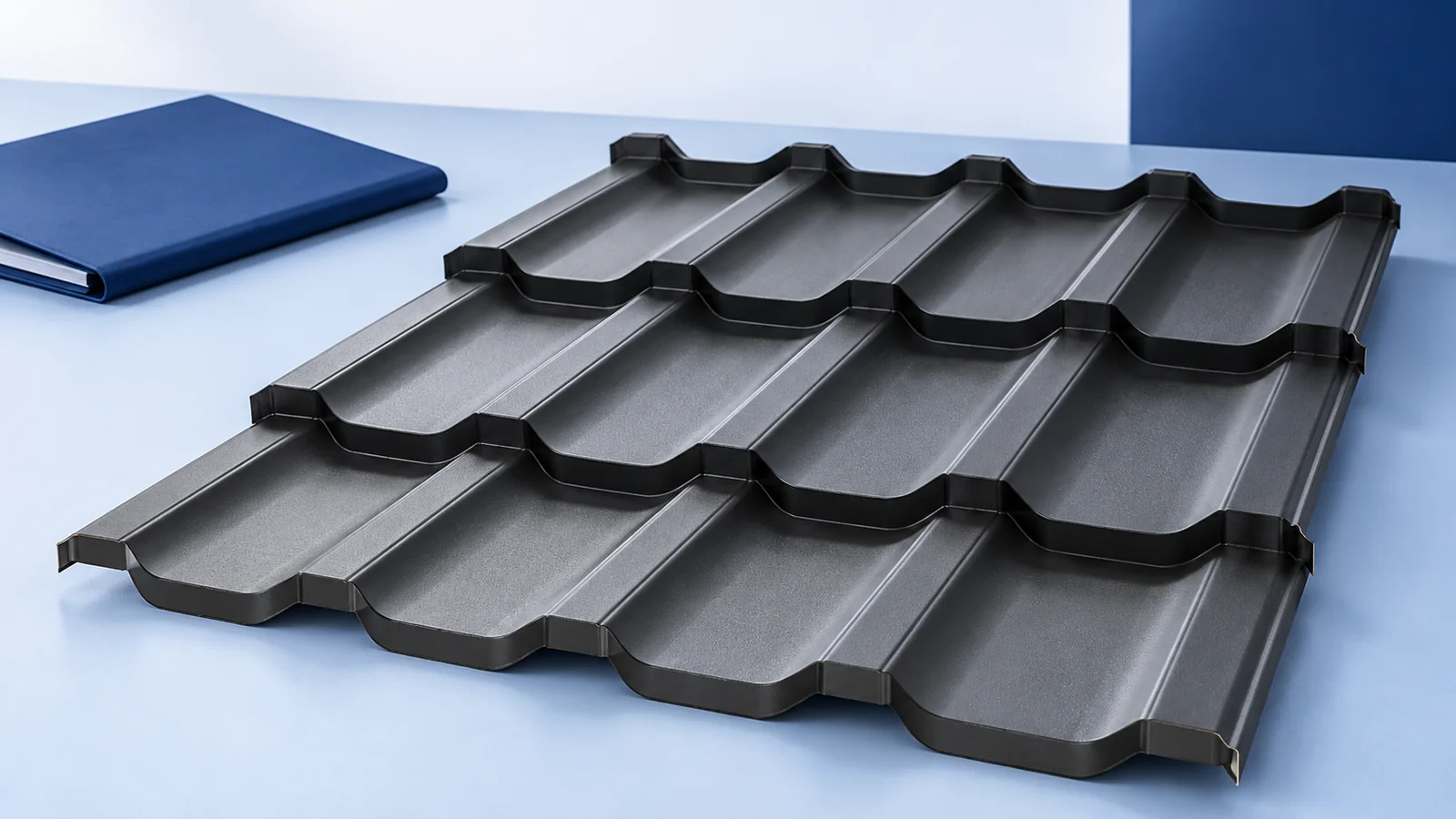
Choose between matt and gloss by comparing two named coating systems on the same roof profile. The surface finish affects reflections, while…
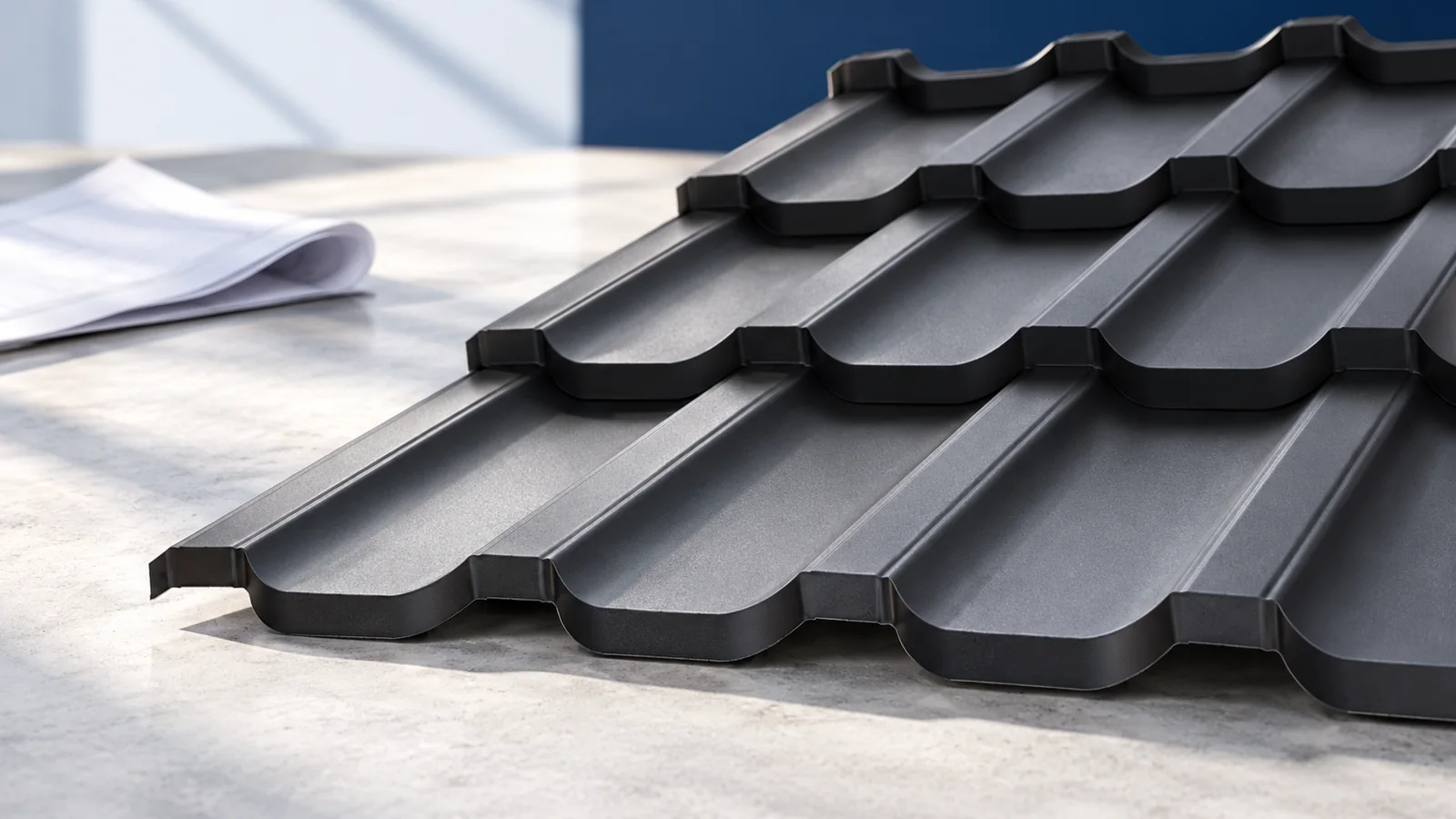
Sketch each roof slope before choosing between small tile-effect panels and cut-to-length sheets. On a rectangular slope, a long sheet can cover…
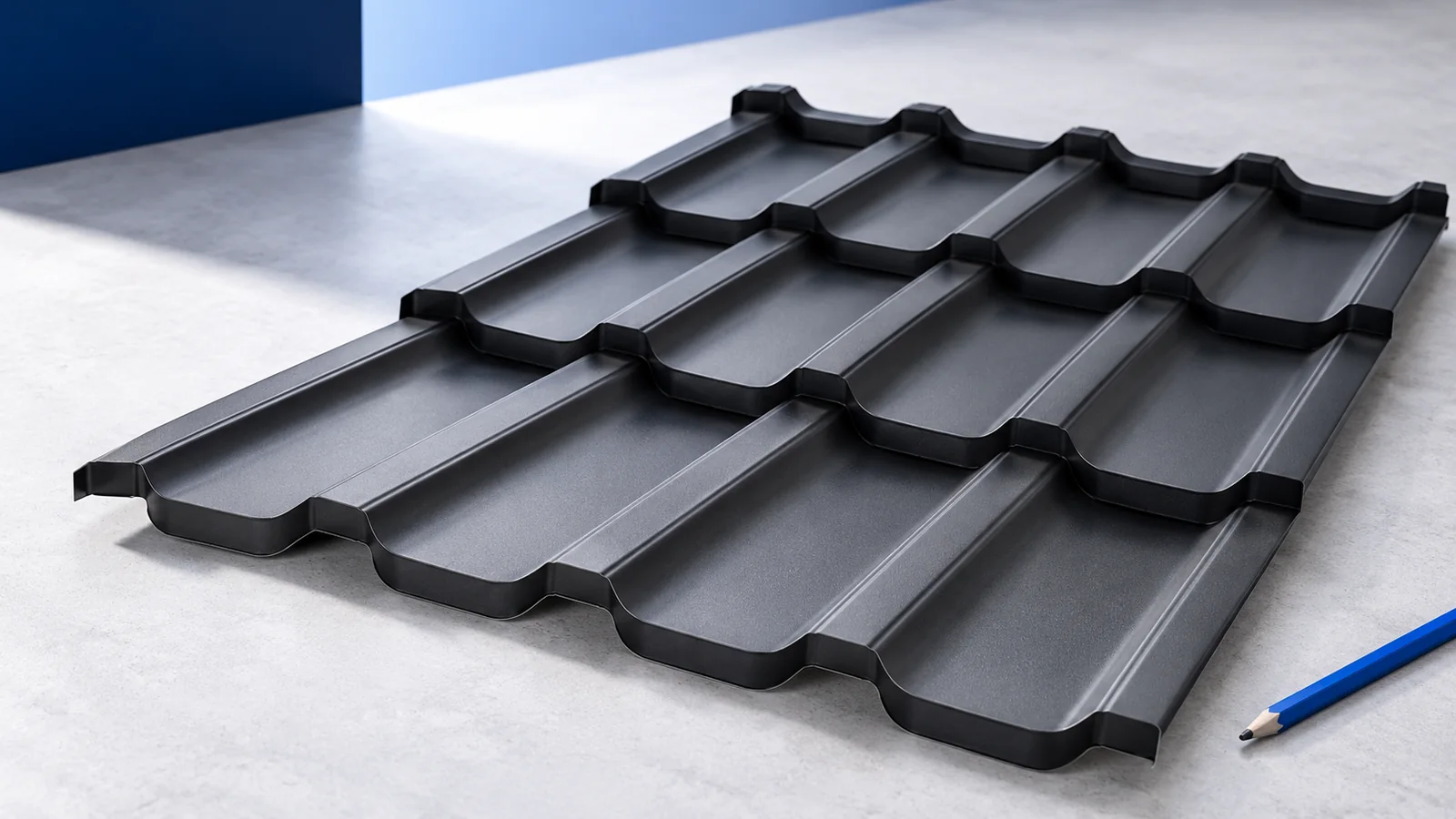
Before choosing a tile pattern, give each supplier the same measured drawing. Ask them to show which profile suits the pitch, which…
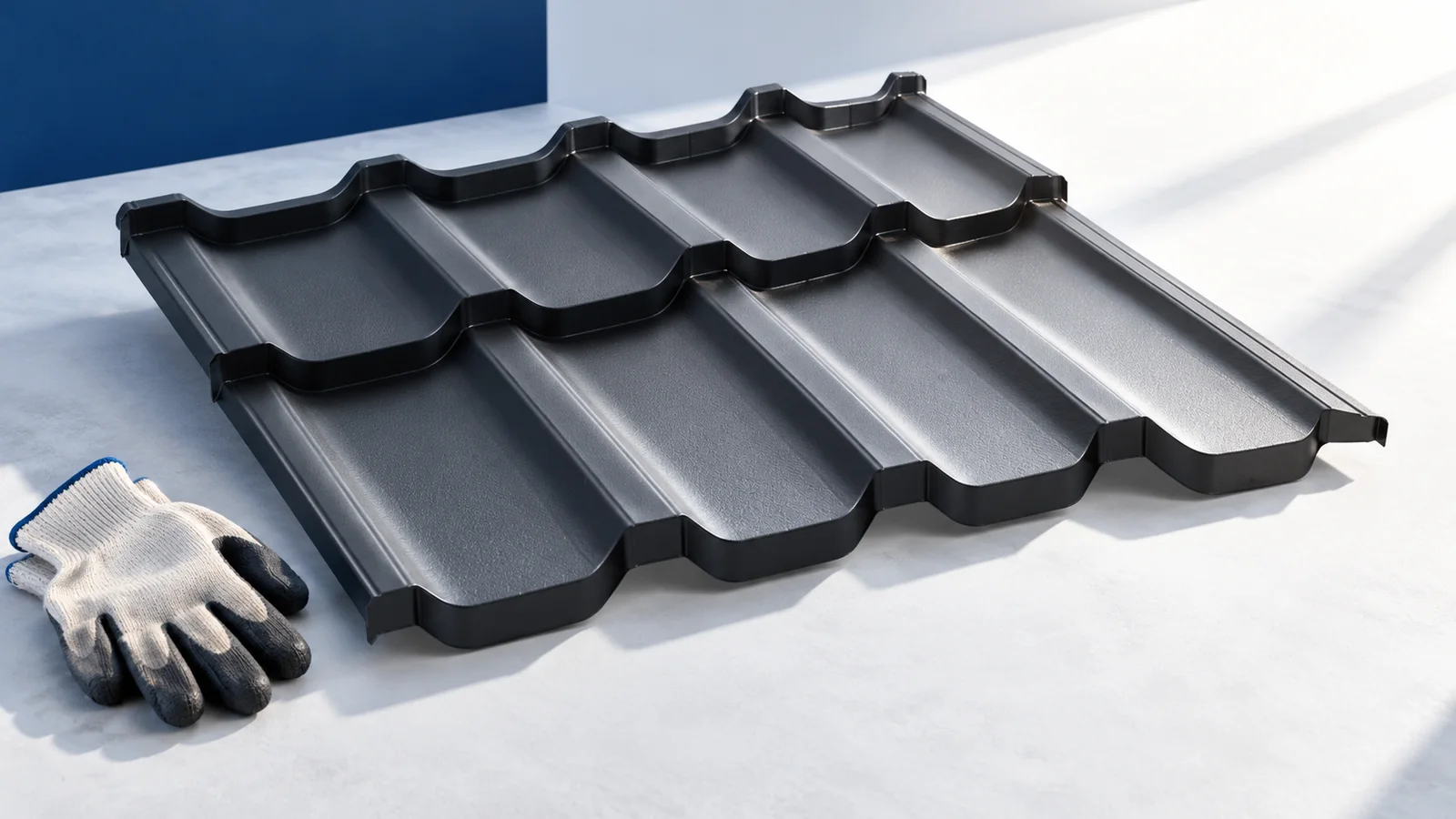
Choose the replacement roof for the building's future use. An unheated outbuilding may need a simple trapezoidal steel covering; a house may…
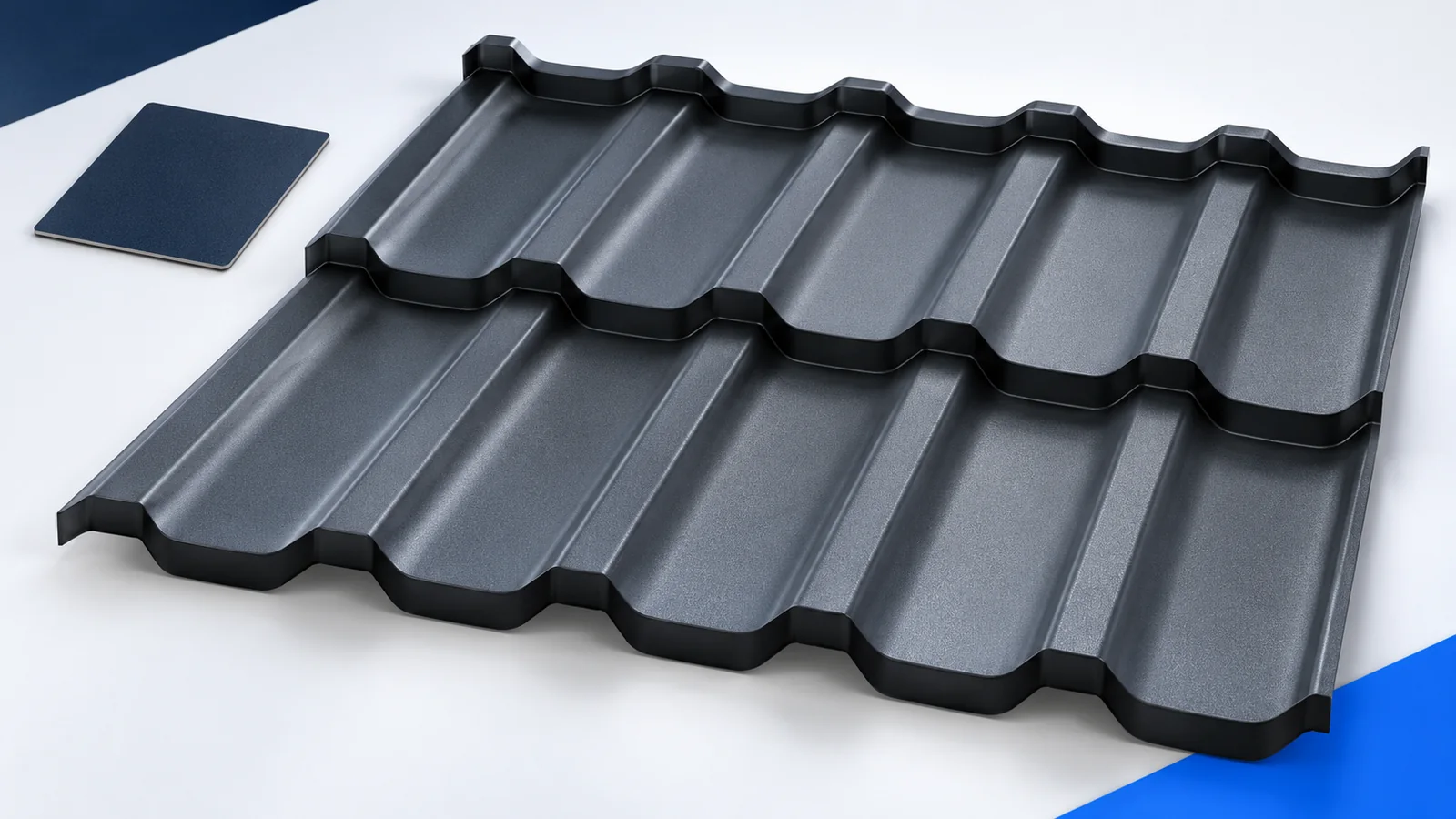
Compare tile-effect steel sheets by the square metre of roof they actually cover. For example, a Polish price list effective from 28…
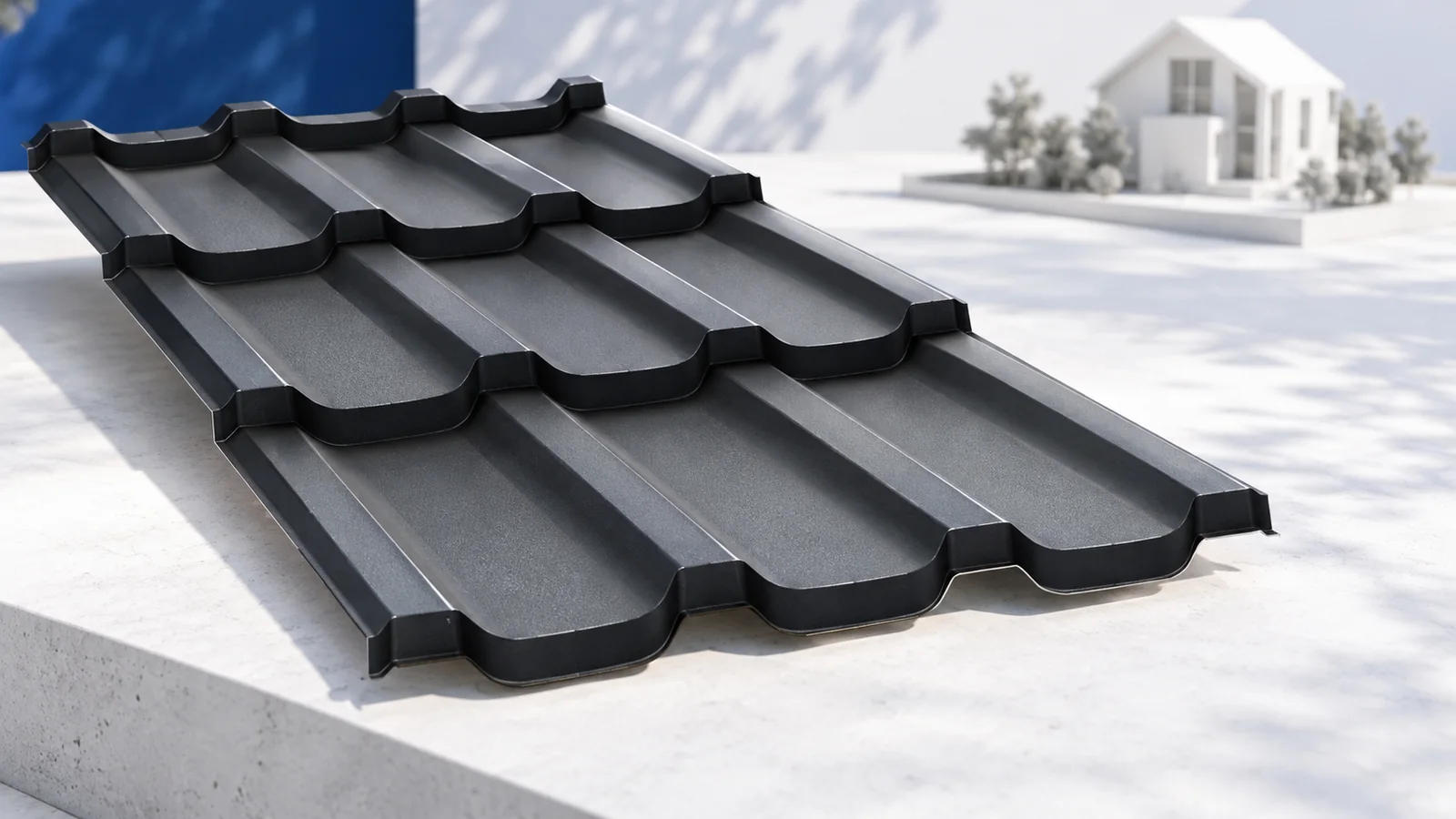
Modular tile-effect roofing uses short, repeatable steel sheets. On a site with narrow access or a roof broken up by dormers and…
Start with what happens inside the garage. A wet car brings moisture into an unheated building; a workshop heated through winter also…
The first course of tile-effect roofing sets the alignment of every sheet above it. Before laying it, check the eaves line, diagonals,…
