Coatings for metal flashings: matching the finish to indoor and outdoor exposure
Sheet metal flashings
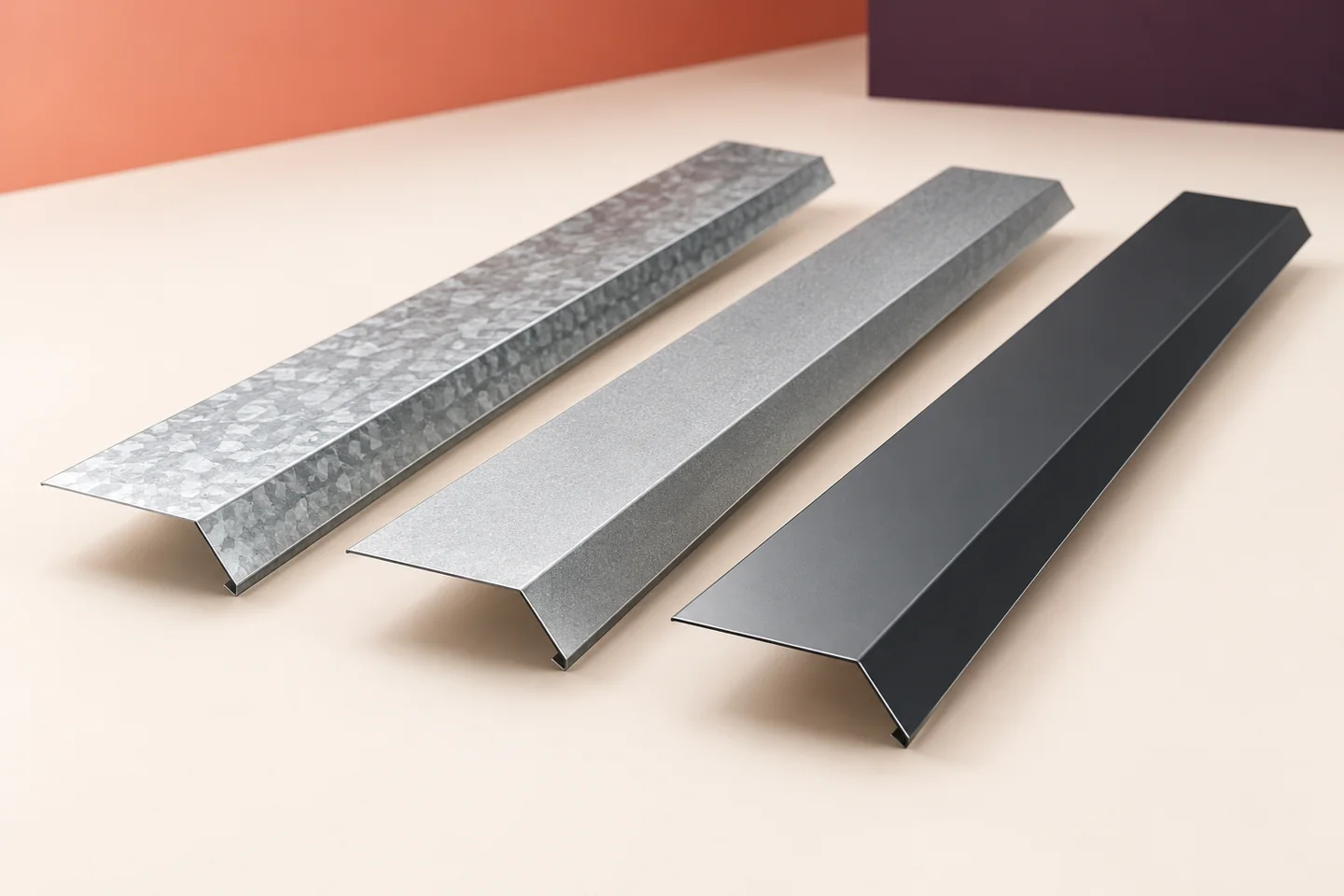
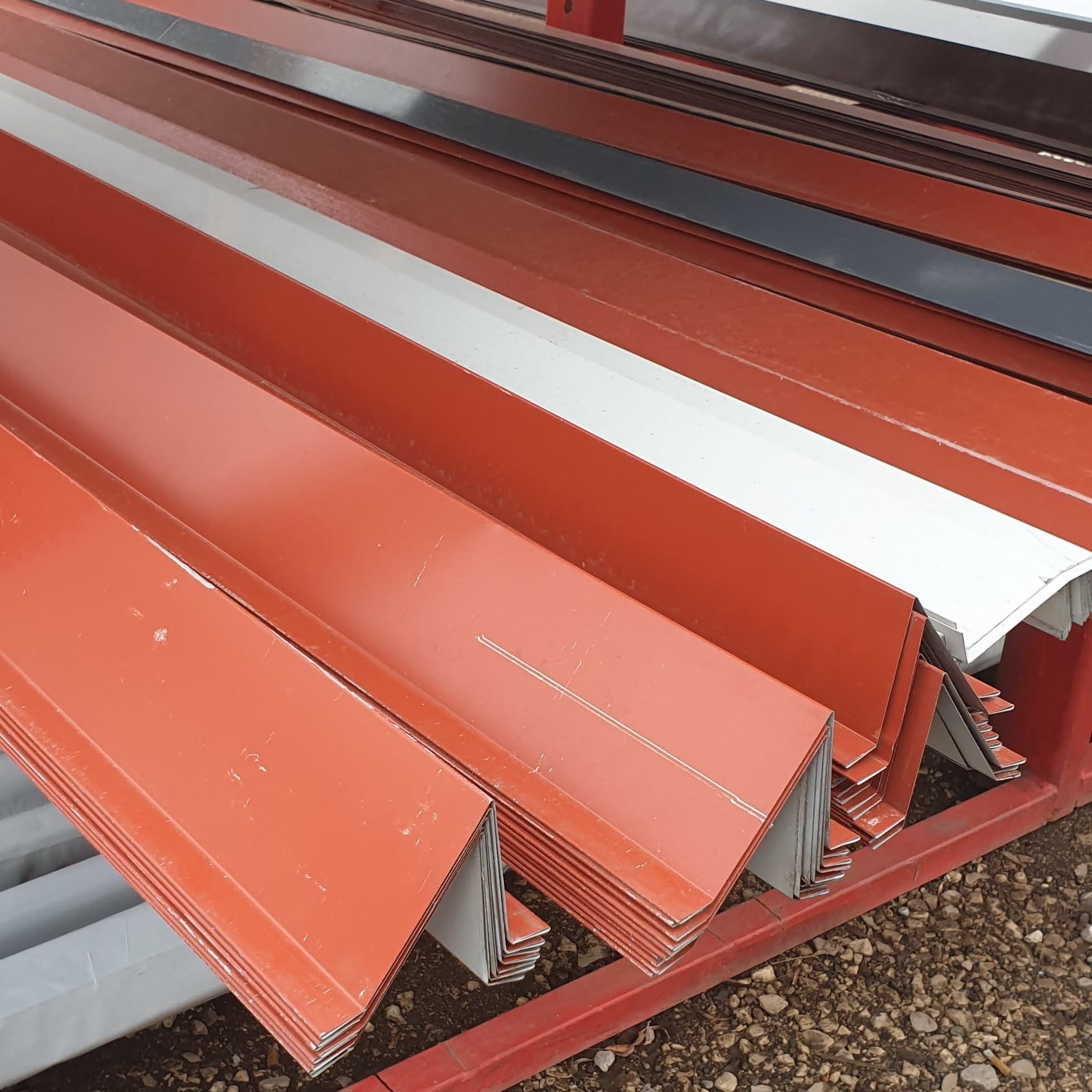
Specify each flashing by where it will be installed and what reaches each face. A façade trim is exposed to sunlight, rain and local pollutants. A trim beside an indoor wet process may instead be exposed to steam, deposits and cleaning chemicals. Neither the colour of the sandwich panel nor the description “for industrial buildings” identifies a suitable coating. Record the conditions in each zone, check the metallic protection and organic finish where applicable, and identify which face will be exposed after folding. Include less visible parts, such as plinth trims and the backs of folded returns.
In this guide
Describe exposure zone by zone
Include parts that are easy to overlook in the exposure schedule. Starter profiles at the plinth, internal corner trims and flashings around openings may face conditions unlike those at a roof ridge. Describe how each area is used rather than relying on a generic building description.
Separate metallic protection from the organic finish
Galvanised sheet has a zinc coating; aluminium-zinc-coated sheet has a metallic coating containing both metals. Colour-coated flashings also have organic layers. Distinguish the steel substrate, metallic protection and outer finish. A colour designation tells you nothing about the thickness or composition of those layers.
A data sheet may give sheet thickness in millimetres, organic coating thickness in micrometres and metallic coating mass per unit area. These are three different quantities. Label each value and its unit in the specification so that quotations can be compared on the same basis.
Match more than the colour of the panel
Check materials at the points where they meet. Verge trims and gutter aprons receive runoff from the roof; corner trims and wall covers may touch sealants or the underlying substrate. Compatibility at these contacts matters even when the visible faces look the same.
A shared colour number does not guarantee matching gloss or texture. Differences can be conspicuous on broad flashings across a large façade. Compare physical panel and sheet samples. If the order is split into phases, retain the finish specification and the earlier batch details.
Check which face will be exposed after folding
Once folded, the reverse face may look into the building or be visible from below. Its properties need not match the decorative face. Mark the orientation on the folding drawing. Reversing a complex section can expose the wrong protective finish as well as the wrong colour.
This matters particularly where opposite faces see different environments. Mark both sides of bespoke flashings unambiguously. Assess chimney flashings and trims at service penetrations individually; a coating suitable for a straightforward façade corner may not suit these locations.

Protect the coating during fabrication and installation
Incorrect cutting or folding can damage a coating that was well chosen for its exposure. Use tools and bend radii suited to the sheet. Do not drag long sections across sharp edges. Inspect adjacent panels too: swarf and scratches may mark them even if the flashing looks intact.
Use an approved cutting method for coated sheet. Abrasive cutting generates heat and hot particles that can harm the protection. Clear waste and swarf after installation. Follow the coating supplier’s instructions for local repairs: applying an arbitrary paint does not restore the original protective system.
Plan cleaning and inspection for actual use
Include flashings and dirt traps in the maintenance plan. Use cleaning products compatible with the surface and keep to their specified concentrations. Increasing the strength to speed up cleaning may also affect neighbouring joints and seals differently from the coated steel.
Retain the material documentation and a record of repairs. Reassess exposure if the building use changes. The service life of the finish depends on fabrication, installation and maintenance suited to that use; choosing a coating does not make the flashing maintenance-free.
Questions and answers
Can one coating be used throughout a building?
Yes, if it suits every intended exposure, including the cleaning regime. Assess the indoor and outdoor zones before specifying it throughout.
Does thicker steel sheet give better corrosion protection?
Substrate thickness and surface protection are different properties. Check both as well as the geometry and conditions of use.
Does aluminium-zinc identify a structural steel grade?
No. It describes the metallic coating. Read the steel grade and other properties from the specification for the actual sheet.

Free quote
What to include in your enquiry
Tell us how you plan to use the material, the dimensions and the quantity you need. Include the thickness, grade or variant name, along with the delivery town or your preferred collection branch. For a specific product, add its name or a link to the product page. We will reply to the email address you provide to discuss availability and the terms of your order.
Read next
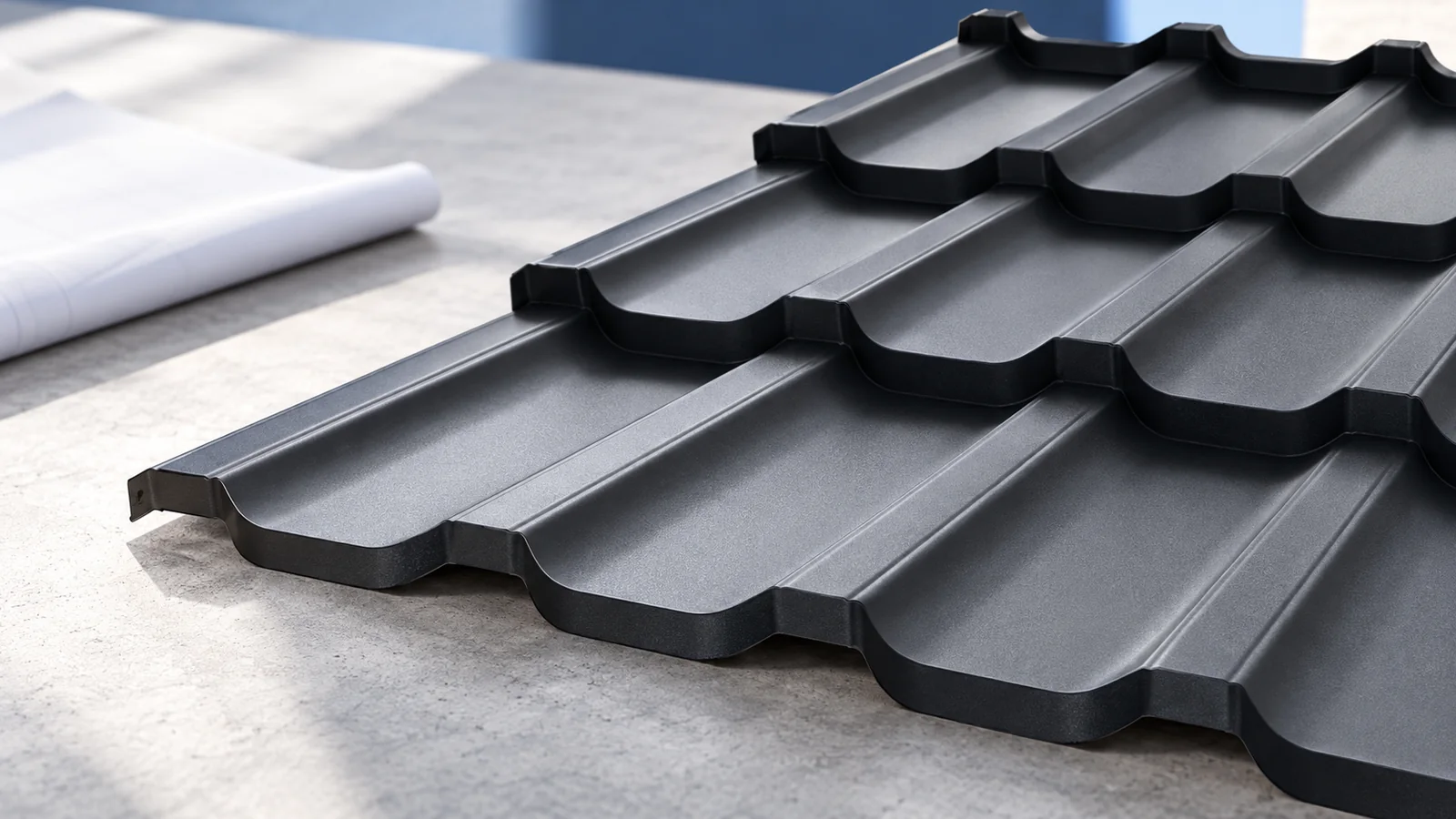
On a roof with dormers, hips and short slopes, a small tile-effect steel module can be easier to position than a long…
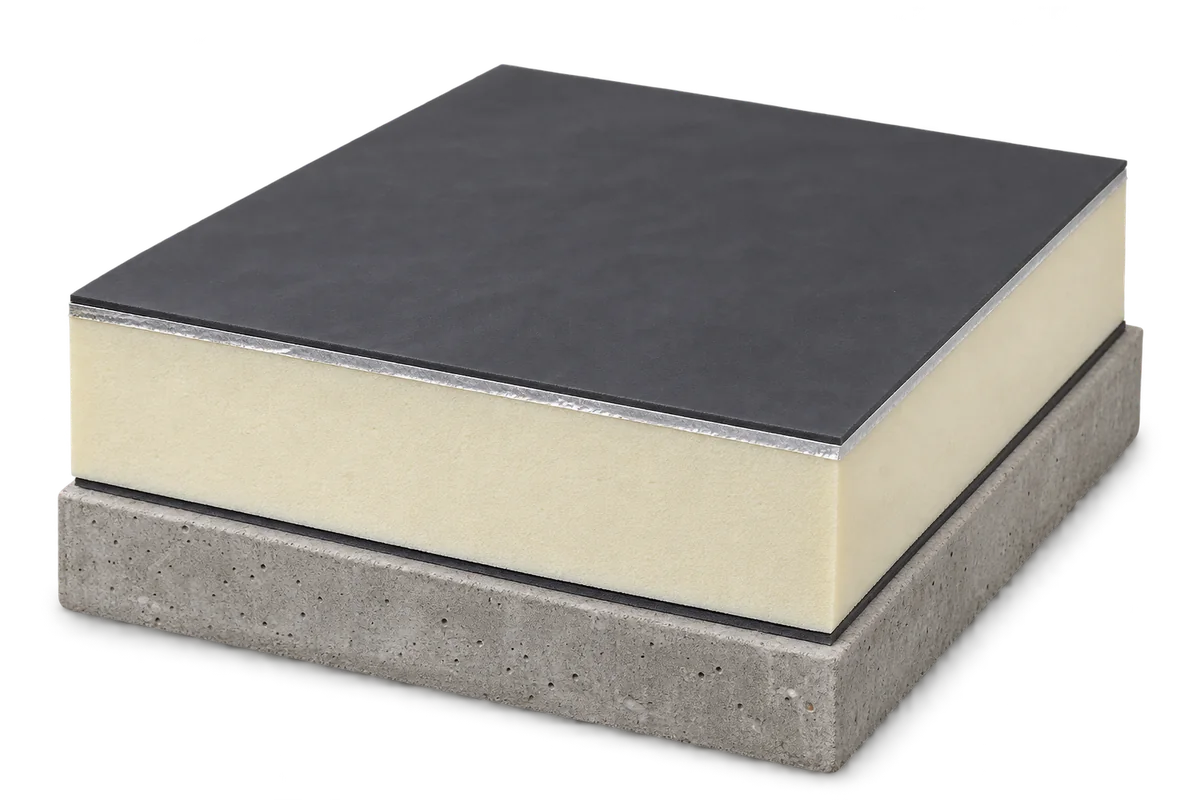
A flat roof consists of several layers that work together. The structure carries the loads, insulation reduces heat loss and waterproofing keeps…
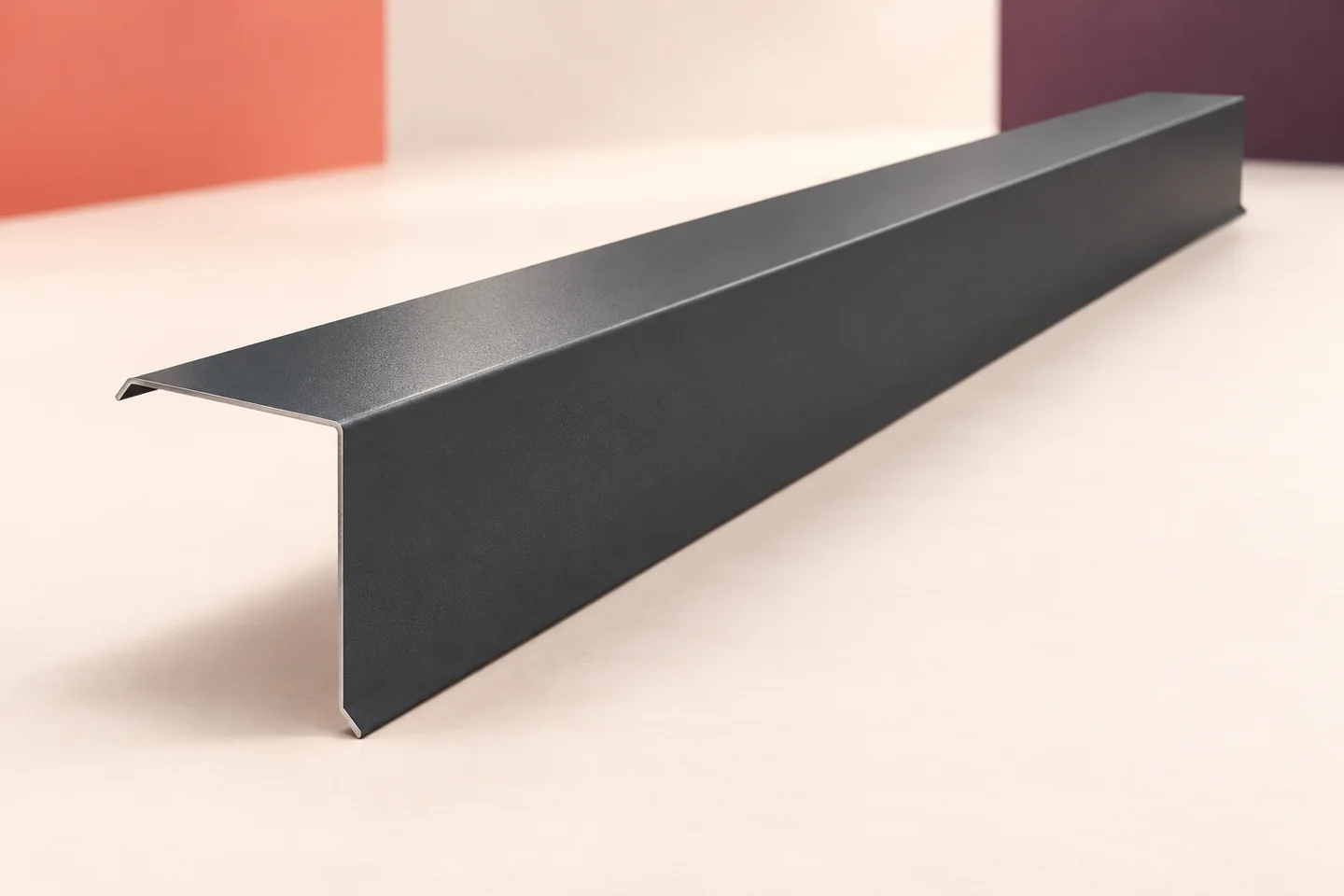
A verge flashing covers the side edge of a sandwich panel roof and helps keep rain out of the roof-to-wall junction. Its…
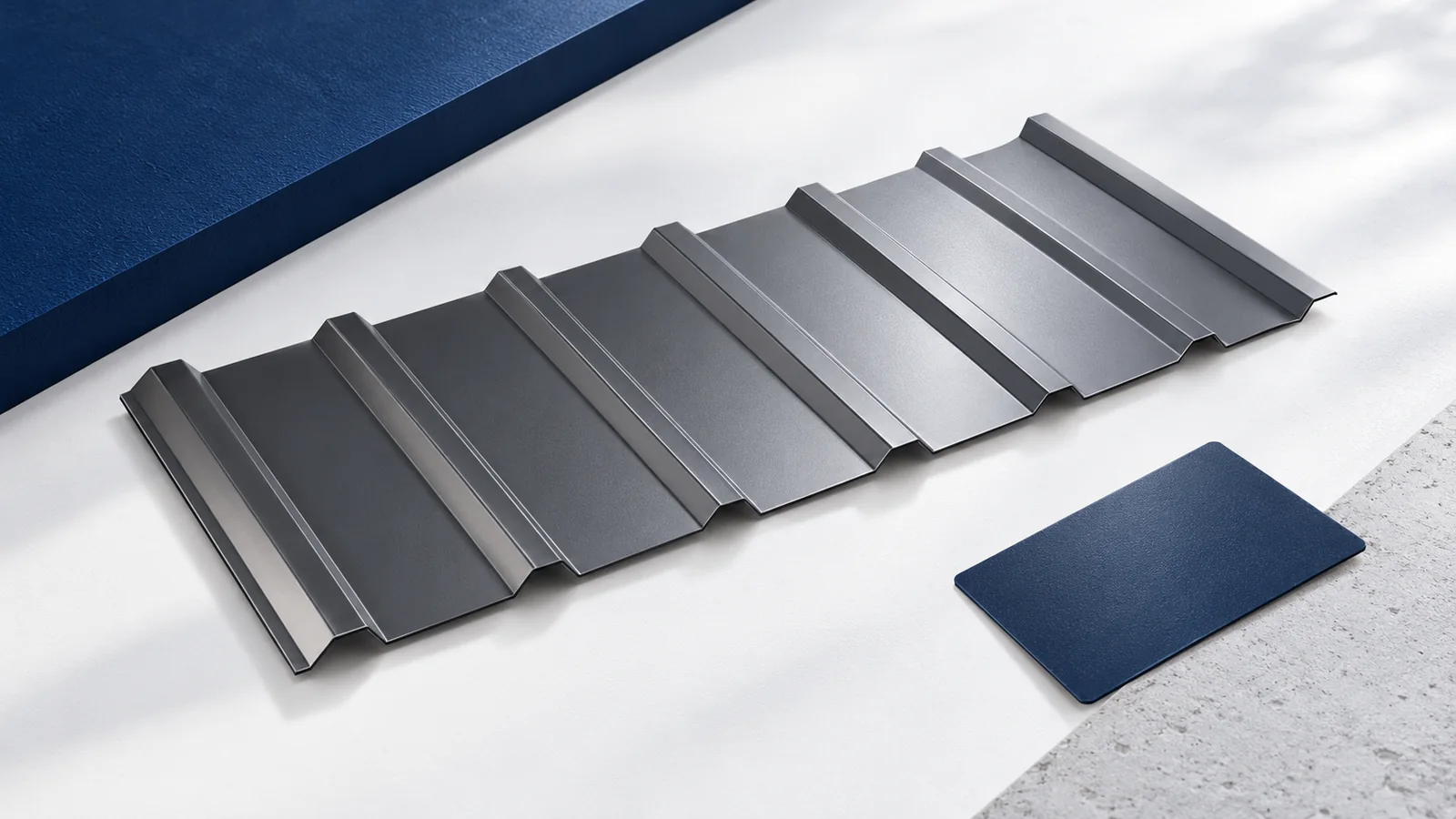
Compare steel roofing finishes in the conditions they will face on your building. Note exposure to salt, industrial deposits and moisture on…
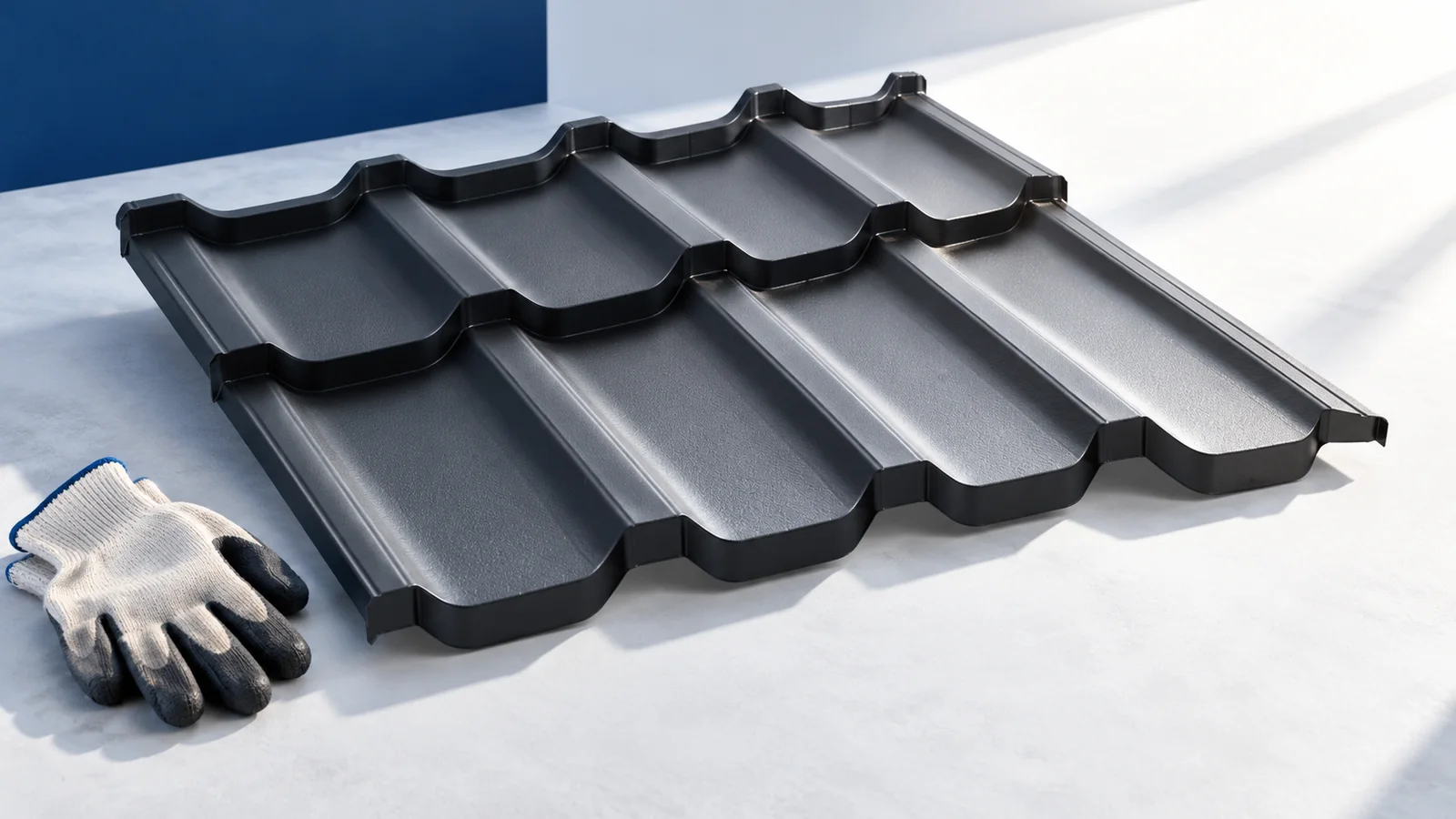
Choose the replacement roof for the building's future use. An unheated outbuilding may need a simple trapezoidal steel covering; a house may…
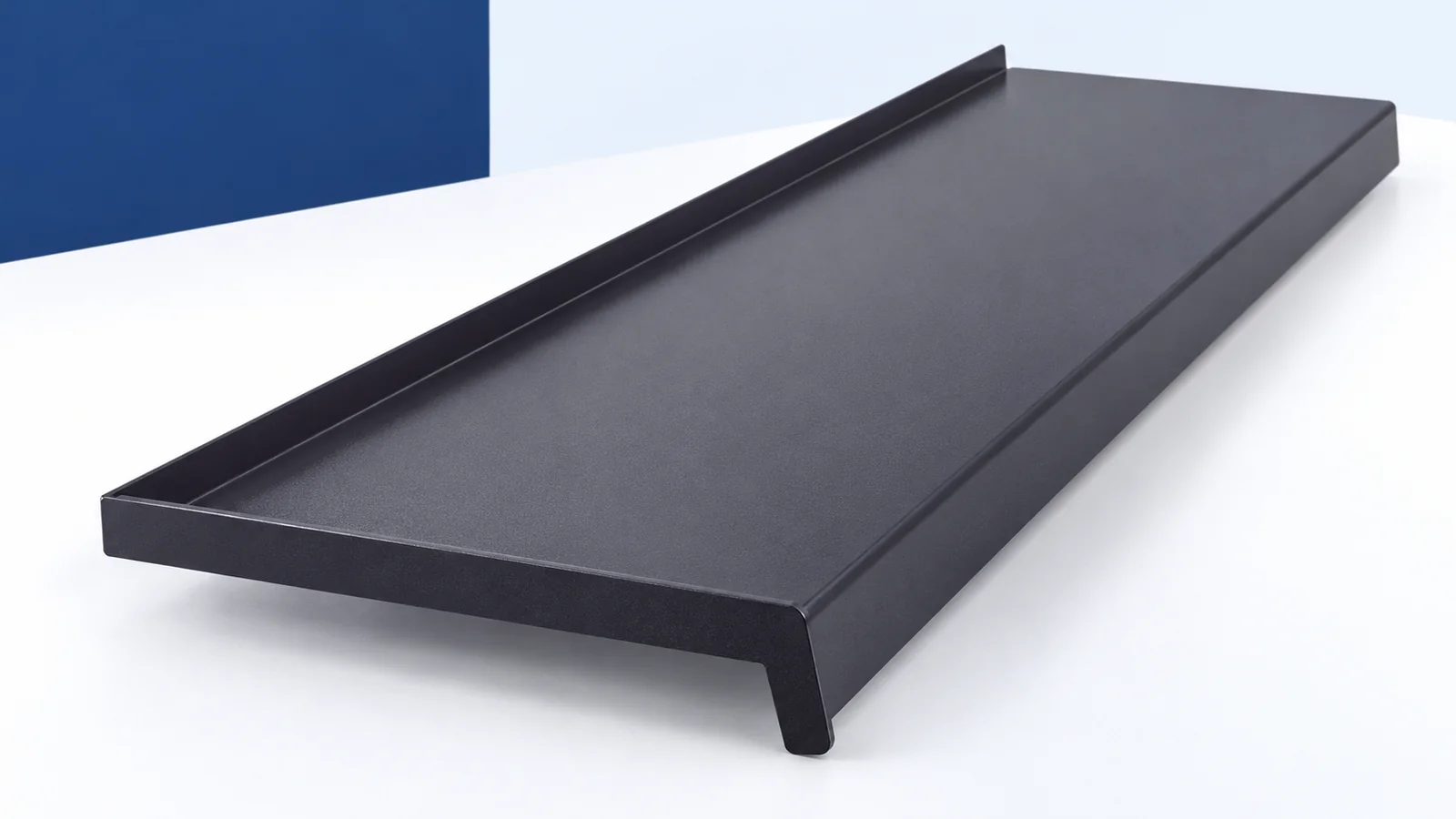
An external steel window sill is light to handle, can be folded to suit the opening and comes with a factory finish…

Order cut-to-length tile-profile sheets from a schedule of roof slopes, not a single area quoted over the phone. You need strip lengths,…
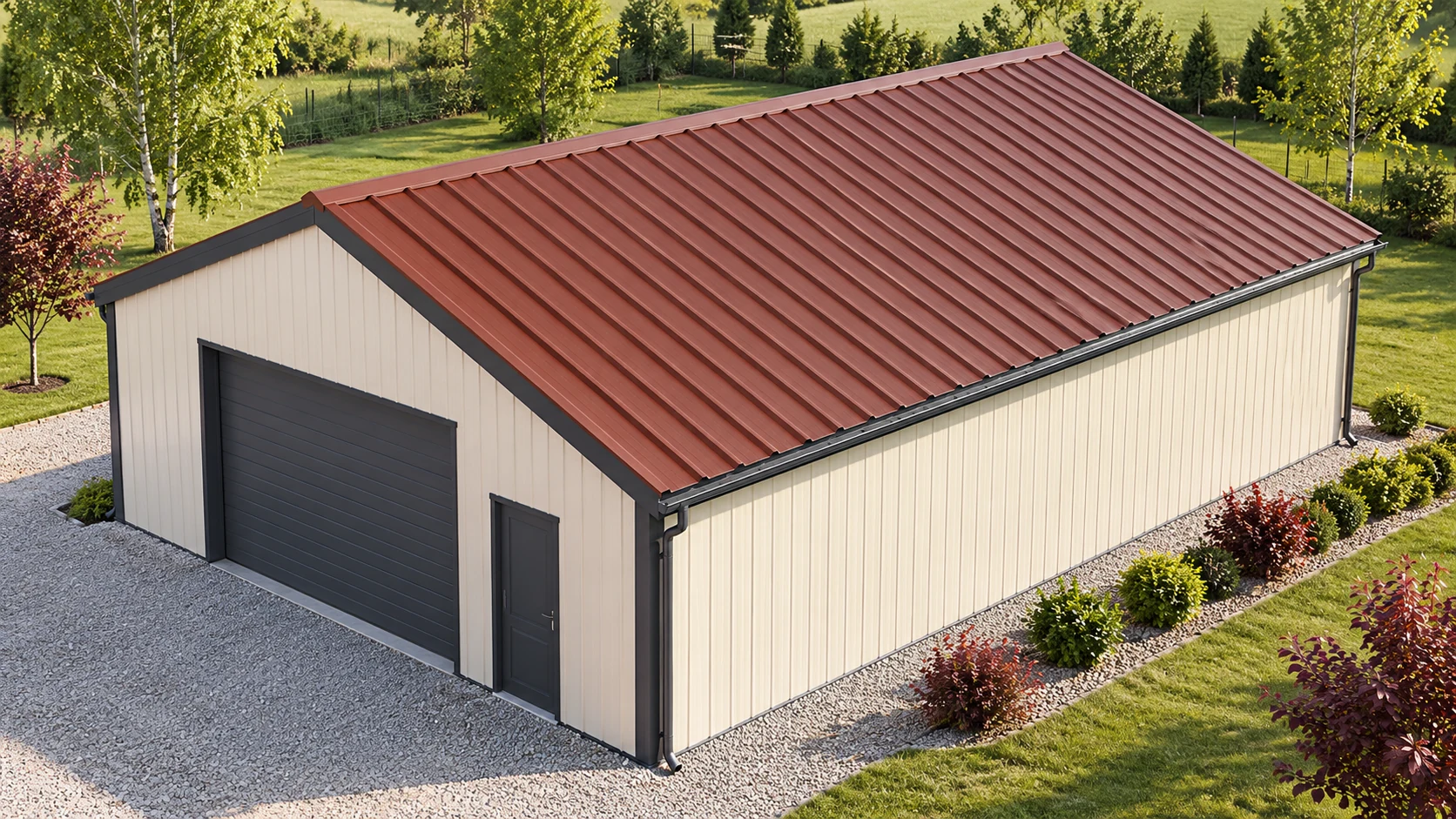
The cost of covering 200 m² depends on how many whole sheets you order. Allow for flashings, fasteners, delivery and installation as…