Valleys and internal gutters on industrial roofs: detailing the drainage path
Sheet metal flashings
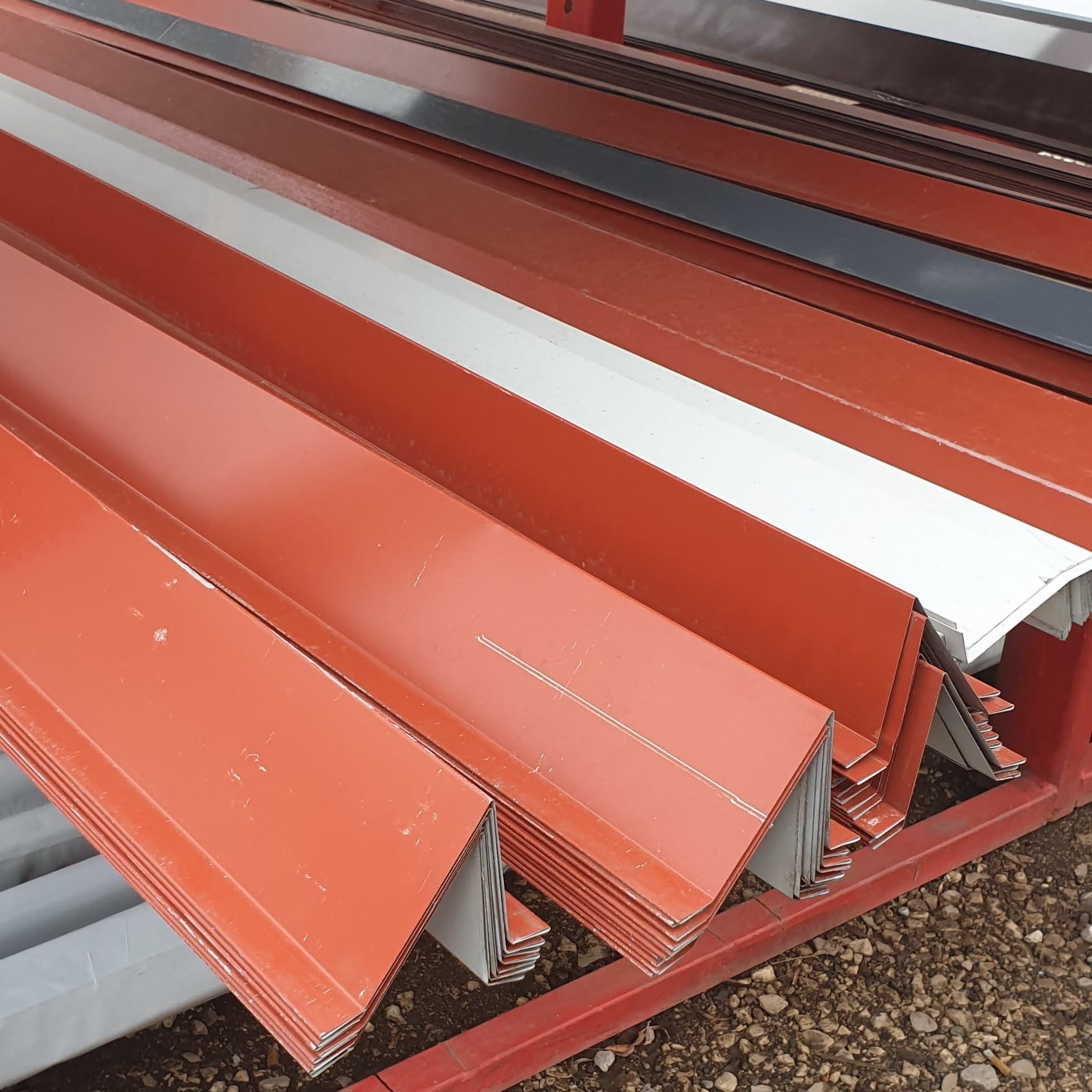
Size a roof valley or internal gutter for the water that reaches it, not simply for its length or the width of sheet available. On a multi-slope roof, several catchments can drain to the same outlet. Mark their areas, slopes and discharge points before selecting the channel section. Detail how the cut sandwich panels are supported and closed, how water enters the channel, and how its joints accommodate movement. An internal gutter may need its own support, insulation and sealing system. Leave access for inspection and cleaning: an obstructed outlet can defeat an otherwise adequate section.

In this guide
Map the contributing roof area
Draw flow arrows and collection points on the roof plan. This highlights where a conventional flashing cannot handle the incoming water. A bespoke folding may be part of the answer, but neither the blank width nor the finished width establishes hydraulic capacity on its own.
Detail the cut panel edge
At the valley, the profiled outer facing and the core of the roof panel terminate. A flat strip slipped under a cut panel does not by itself close that edge. Draw the closure, the seals and the transition that takes water off the facing into the valley.
Provide the bearing and fixing points required by the panel. Do not treat a thin sheet metal channel as a structural support for its cut edge. If the shape of the roof calls for extra framing, identify it in the design before installation rather than assigning the load to the flashing on site.
Shape the channel for the intended flow
The valley should carry water downslope without pockets or raised obstructions. Coordinate the side upstands with the ends of the roof panels. Set their heights and clearances by the detail, not by the desired appearance of the visible gap. Excessive panel overhang can restrict both discharge and cleaning access.
An internal gutter may differ considerably from a valley flashing at the junction of two slopes. It may have separate supports, insulation and a dedicated sealing arrangement. Do not copy a small-roof detail without assessment. Identify each drainage type on the drawings and in the supply and installation schedules.
Allow for movement at joints
Long lengths of sheet expand and contract with temperature. Design the joints for this movement as well as the direction of flow. Rigidly sealing every junction is not a general solution. Take laps, seals and any movement breaks from the applicable technical detail.
Locate fixings so that they do not make unplanned holes where water collects. Do not replace missing brackets with extra screws through the channel base. Choose the fasteners for the support and structure, and check their positions before adjoining panels or flashings cover them.

Choose a material for prolonged wetting and dirt
Valleys and internal gutters may stay wet longer than the adjacent roof surface. Specify a coating for that exposure. Zinc-coated, aluminium-zinc-coated and colour-coated steels provide different protection. A sheet listed in a price catalogue is not necessarily suitable for every drainage channel.
Check compatibility with the seals and neighbouring materials. Nearby chimney flashings or service penetrations may affect the deposits washed into the channel. Ridge caps, verge trims and wall starter sections face different exposures. Specify material for each location instead of assigning one finish to every folded component.
Check the outlets and maintenance access
Before handover, clear offcuts, swarf and excess sealant. Check the panel transitions, end details and outlets. The gutter apron and downstream drainage must receive the flow from the valley. A tidy-looking roof does not establish that water has an unobstructed route to discharge.
Record how maintenance staff can reach the channel for cleaning. A blockage can impair even a correctly sized gutter. Include coating and seal condition in inspections. Identify the components on the building drawings so staff can find, inspect and service the right section.
Questions and answers
Are a roof valley and an internal gutter the same thing?
Not necessarily. Their structure, insulation, support and means of discharge may differ. Identify the intended type in the design.
Is valley width determined only by the panel thickness?
No. Roof layout, contributing catchment and discharge arrangement also matter. Panel thickness affects the connection, not the entire drainage design.
Can the flashing support the edge of the panel?
Only where that structural function has been designed and checked. A thin cover or valley gutter is not automatically a supporting member.

Free quote
What to include in your enquiry
Tell us how you plan to use the material, the dimensions and the quantity you need. Include the thickness, grade or variant name, along with the delivery town or your preferred collection branch. For a specific product, add its name or a link to the product page. We will reply to the email address you provide to discuss availability and the terms of your order.
Read next
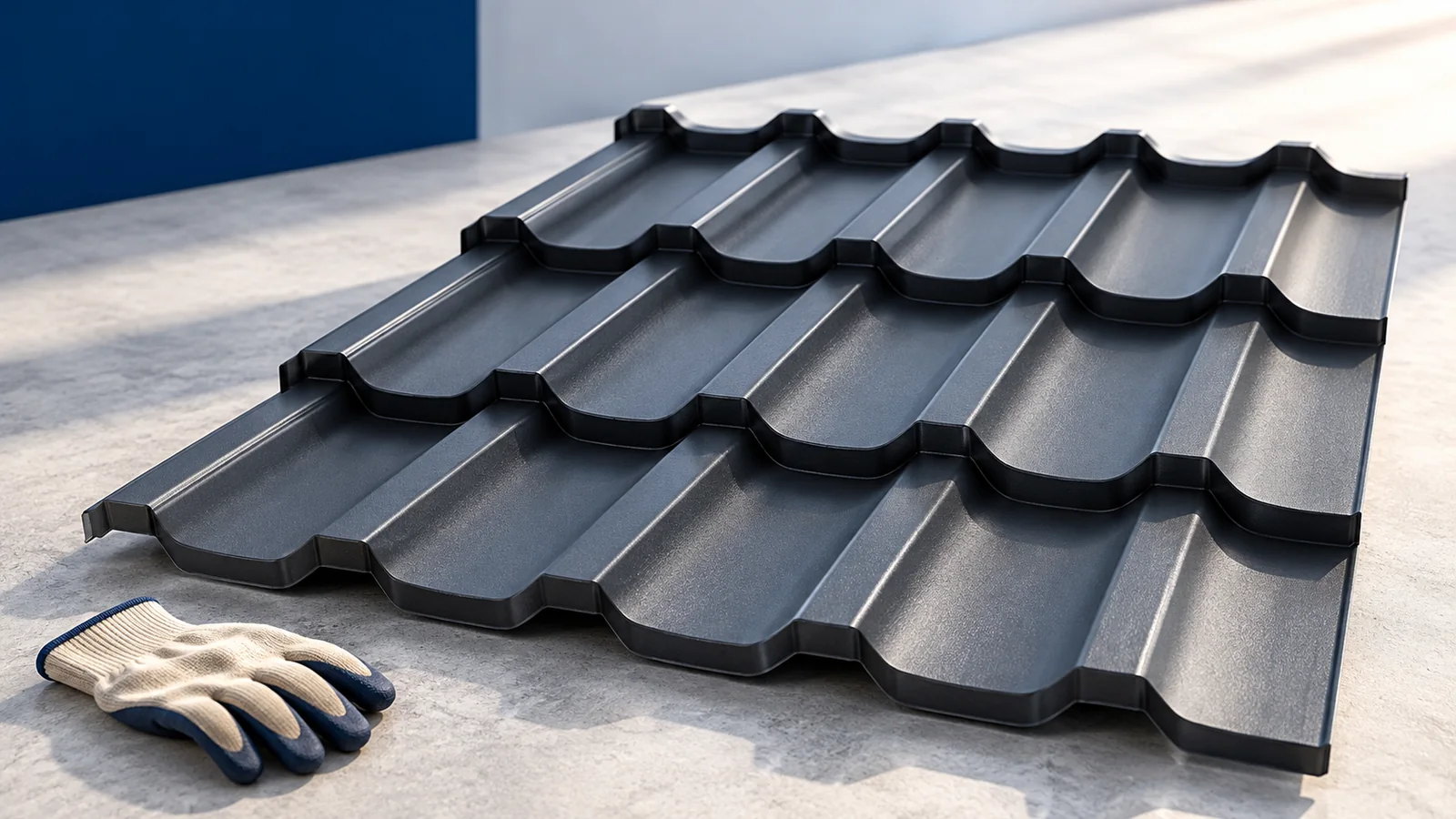
Metal roof tiles need supports set out for their profile. Bitumen shingles need a smooth, sufficiently rigid continuous deck. On a renovation,…
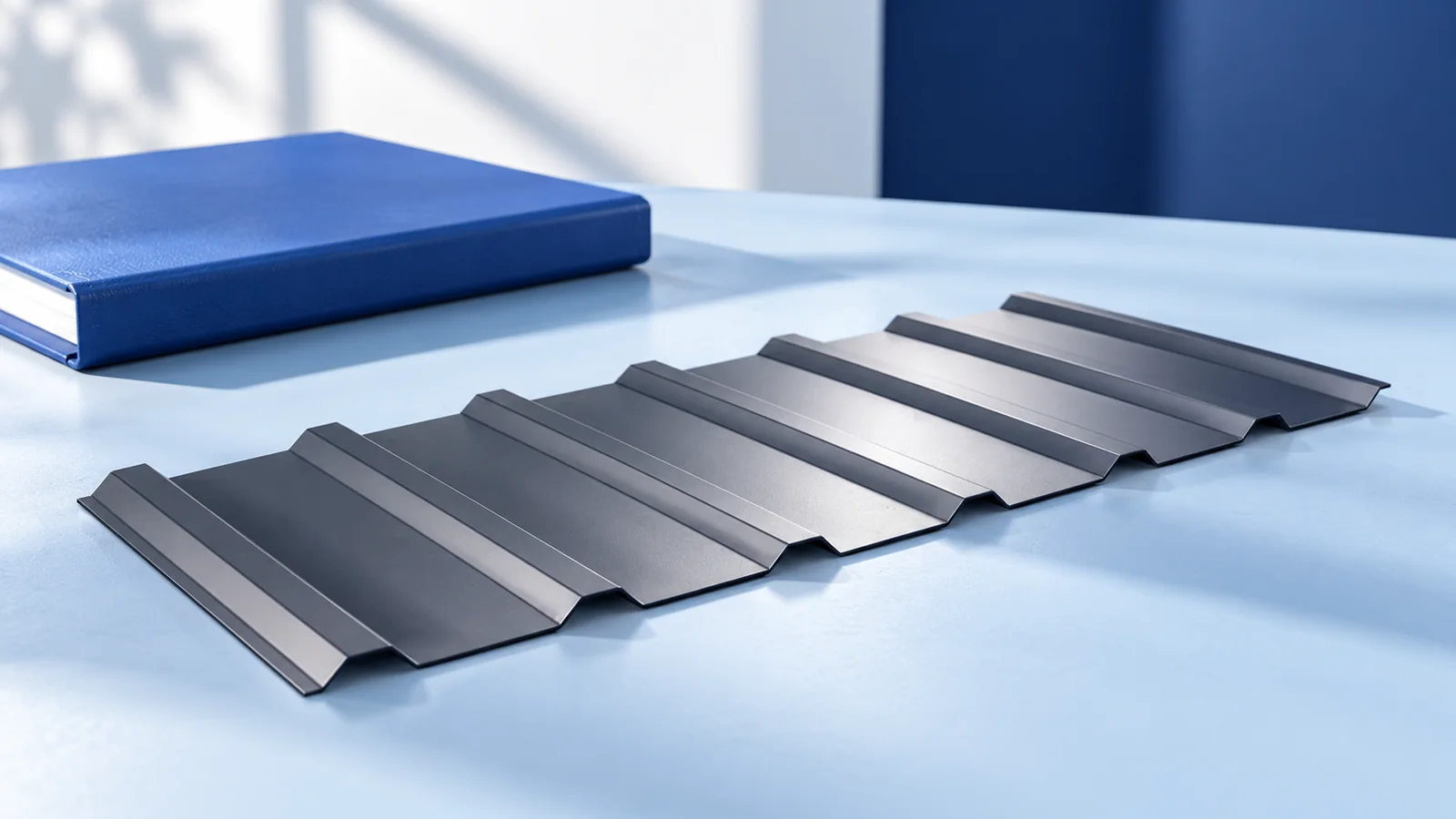
Give every supplier the same roof drawing and ask what it costs to deliver a finished, weathertight roof. A price per square…
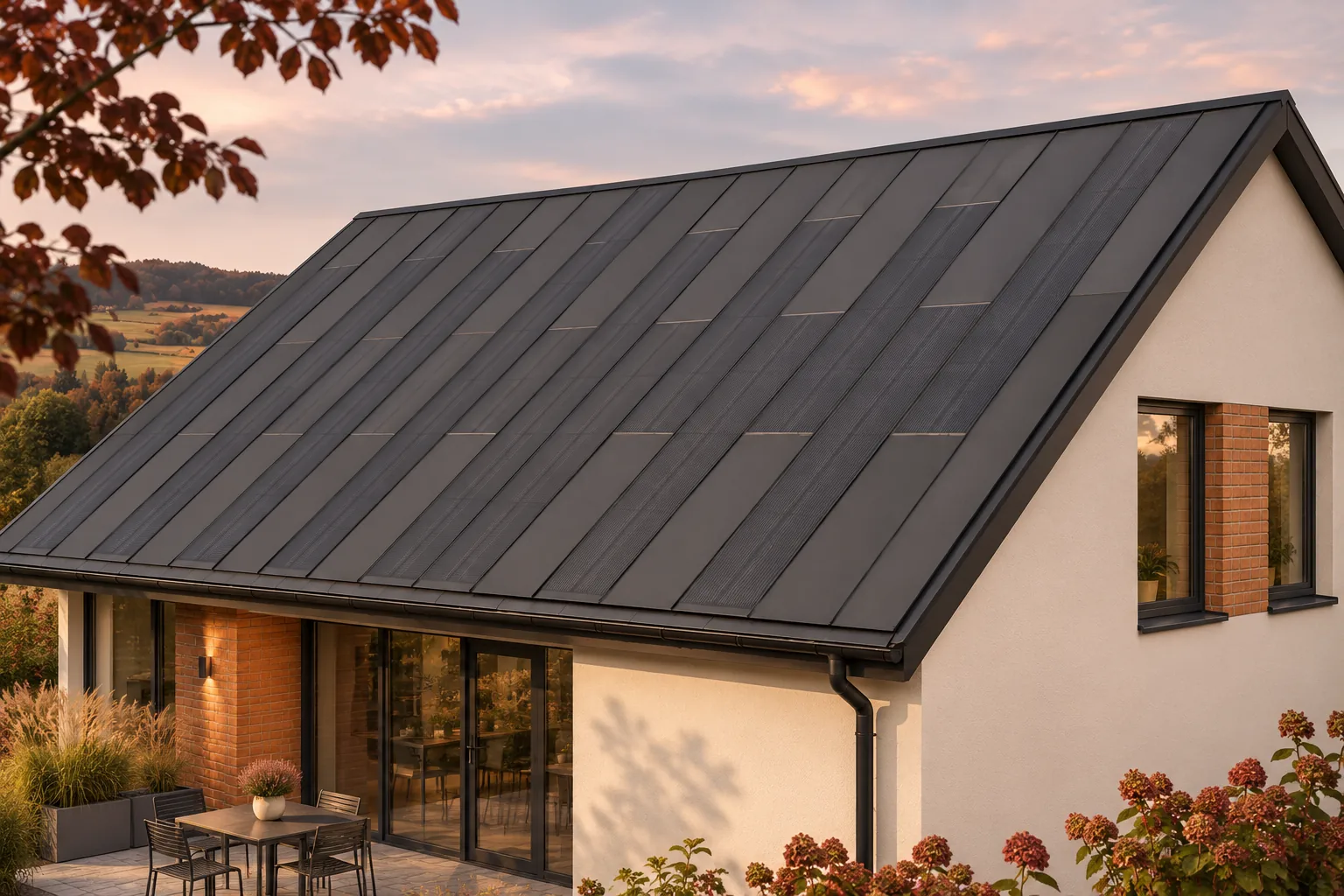
An insulated sandwich panel and an integrated photovoltaic roofing panel are not interchangeable. They perform different tasks, require different supports and insulation…
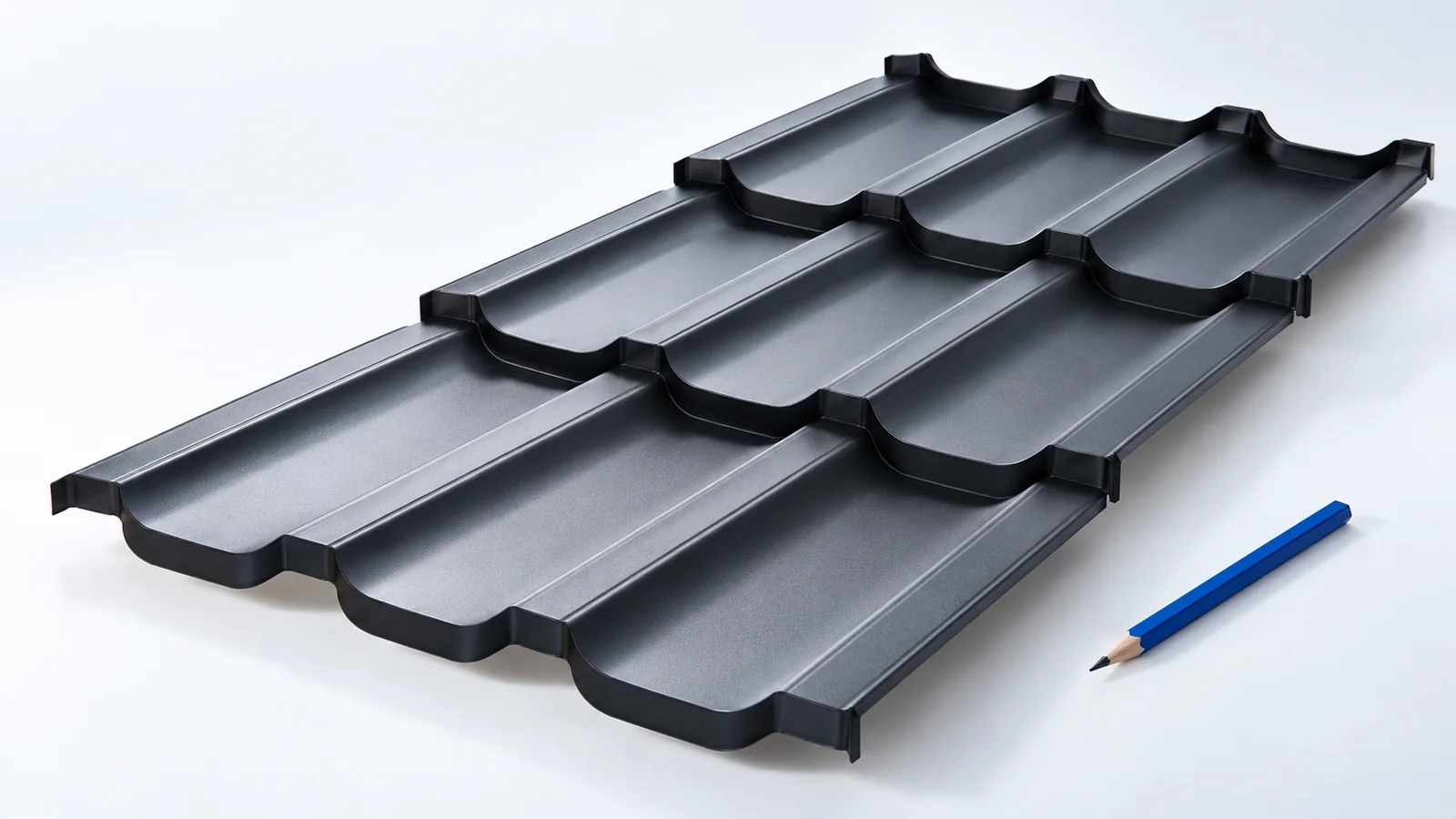
Recyclability tells you what might happen to a steel sheet after removal, not the environmental impact of the roof over its life.…
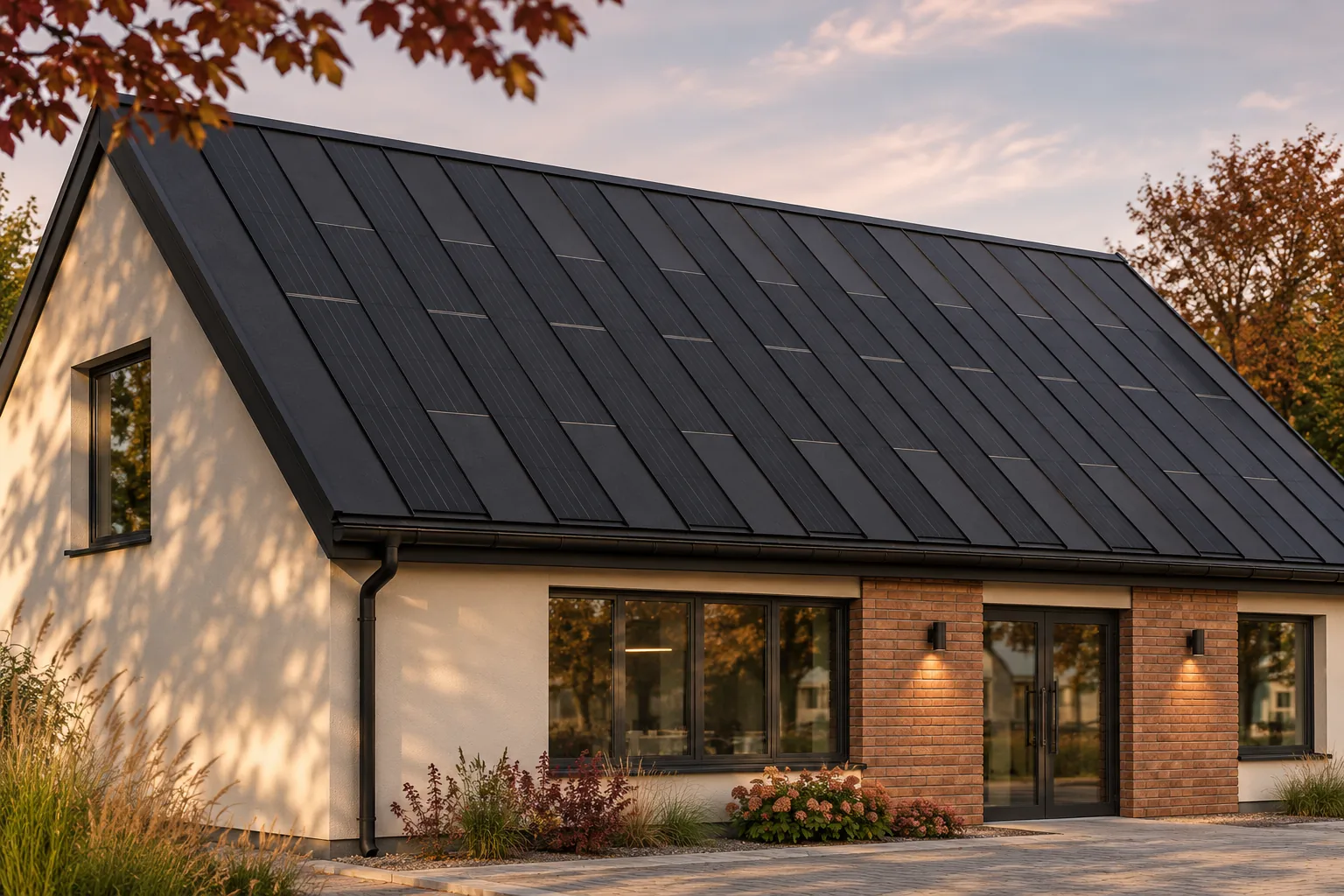
A solar roof budget covers much more than the panels. Allow for preparing the building, installing the covering, electrical equipment, labour and…
Before deciding to repaint a metal roof, find out what changed. Surface deposits may wash off, a streak below a fixing may…
Take a sample of the profiled roof sheet outside and view it at the planned pitch beside the façade finish, window frame…
Roof battens support the covering and give its fixings a secure hold. For tile-effect steel sheets, the position of each batten must…