How much roof flashing should you order?
Metal roofing
At a glance
The roof area alone tells you little about how many flashings to order. Mark each eaves, verge, ridge and valley on the roof plan, then add wall abutments, chimneys and other penetrations. Measure along each actual edge: the horizontal projection of a sloping verge is too short. Give each run a reference and mark corners and ends separately. Against each reference, list the cross-section, length and number of pieces. The same list will help you compare quotations and check the delivery before work starts.
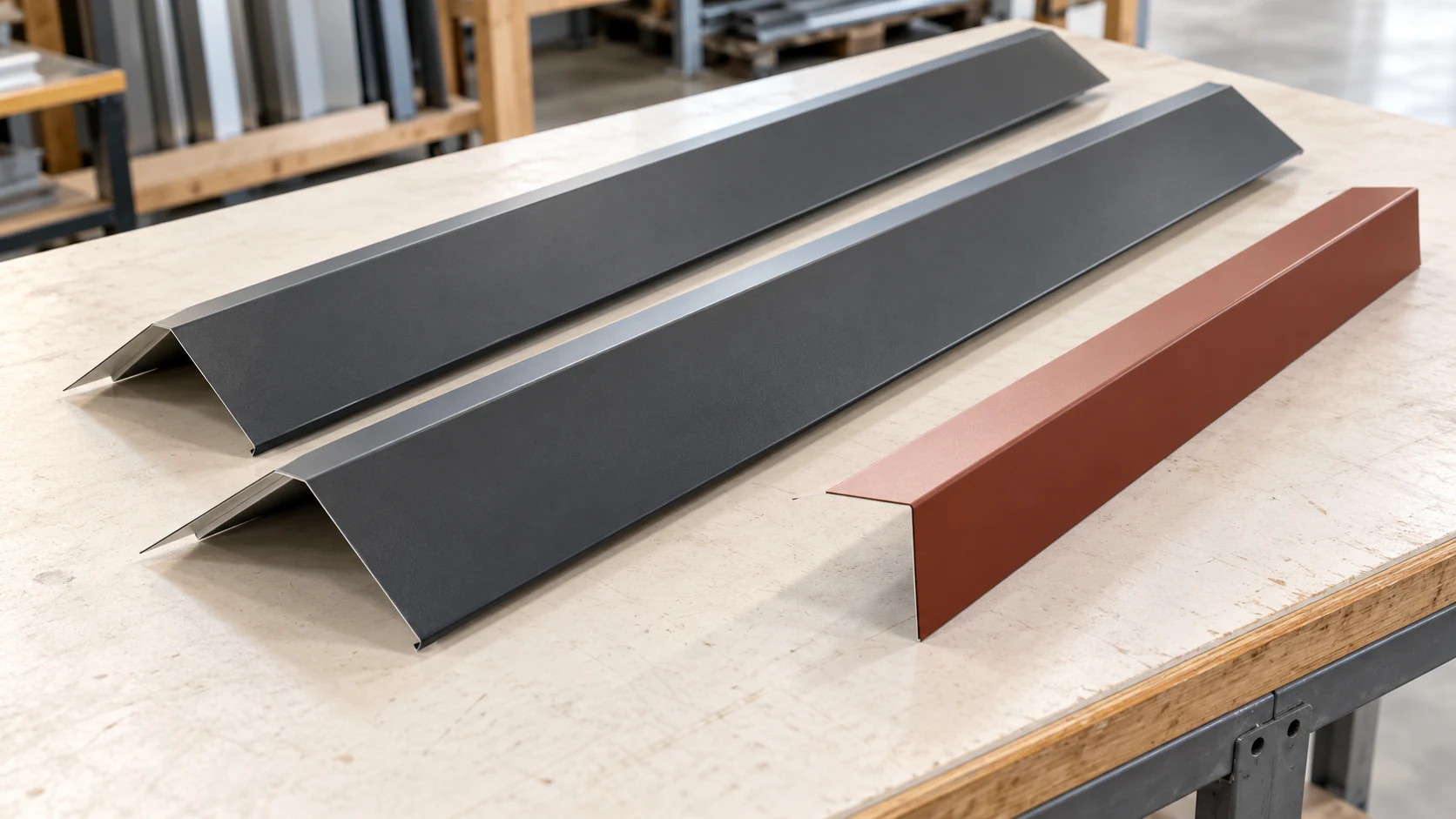
Mark every edge and junction on the plan
A dimensioned sketch is usually enough for a simple building. For a complex roof, use the drawings and check the measurements on site. Two pieces can look alike yet have different bend angles or a coating on opposite faces. An identical description on the invoice does not make them interchangeable.
Identify the function of each eaves detail
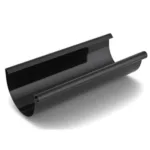
The eaves flashing directs water from the roof into the gutter. A separate piece may protect the fascia. The detail must also show how the underlay ends and, where required, where air enters the ventilation space. Order the parts shown in that particular eaves section.
Check how the parts fit together before adding them to the order. Closing the eaves too tightly can restrict ventilation; a wrongly turned edge can send water behind the gutter. Agree the joint detail with the roofer before specifying lengths and blank widths.
Calculate coverage after allowing for overlaps
For example, take 2 m lengths and assume a 0.10 m overlap solely for this calculation. The first piece covers 2 m; each additional piece adds 1.90 m. Five pieces cover 9.60 m. That is enough for a 9.40 m run before end details are taken into account.
Dividing 9.40 by 2 ignores the joints. Use the overlap specified for your own roof detail. Some locations also need folded edges, expansion joints or extra pieces. Never reduce a required overlap to make the final piece reach.
List verges and valleys separately
A verge flashing protects the side of the roof covering and helps secure its edge against wind. A valley carries water from two roof slopes. These functions call for different sections and fixings. Keep the designed drainage channel in the valley clear.
List each run separately and mark left- or right-handed parts where the profile is asymmetric. Check how each valley meets the eaves. Two short valleys may need more end pieces than one long valley with the same total length.

Draw the section and mark the exposed face
Blank width is the width of the flat strip before folding, not the visible width of the finished flashing. Dimension each leg, bend angle and hem on the sketch. On a custom order, mark which face is coated.
If you use an old flashing as a pattern, check for distortion. Do not reproduce a bend caused by removal. The replacement must fit the current roof build-up; different insulation thickness or a repositioned gutter may require a revised section even if the roof looks much as before.
Include fixings and joint materials
The order is not complete until it includes the specified fasteners, seals and accessories. Colour alone is no guide. Select them for the supporting material, the thermal movement required and the water exposure at the joint.
Check that adjoining materials are compatible: some combinations of metals promote corrosion. Agree how cut edges will be protected. Send the approved drawing and reference list with the delivery so that the crew can sort pieces by location as they unload them.
Check the delivery before laying the sheets
Count the pieces, match their sections against the list and inspect the coating and long edges. Watch for similar-looking parts intended for opposite sides of the roof. Discovering a mismatch now leaves time to clarify the order or obtain the missing part.
Store the pieces so that they cannot slide against each other. Swarf and sharp edges can damage the adjacent coating. Keep the schedule with the handover documents: years later it will identify the section to reorder, while the colour alone will not.
Questions and answers
Should every flashing have the same allowance?
No. Overlaps and end details depend on the location and system. Establish the detail first, then calculate whole pieces.
Can a supplier reproduce a flashing from its name alone?
A supplier may be able to identify a standard system part. A custom flashing needs a legible, dimensioned section with the coated face marked.

Free quote
What to include in your enquiry
Tell us how you plan to use the material, the dimensions and the quantity you need. Include the thickness, grade or variant name, along with the delivery town or your preferred collection branch. For a specific product, add its name or a link to the product page. We will reply to the email address you provide to discuss availability and the terms of your order.
Read next
A panel fixing must suit the panel, support and expected loads. Wool thickness alone is not enough to select a screw. Check…
PIR sandwich panels are factory-bonded elements with an insulating core and metal facings. They are made for walls, roofs and specialist enclosures…
A roof estimate starts with slope dimensions and ends with the weatherproof details. Distinguish the area to be covered from the quantity…
Wall panels and their junctions with the roof need an agreed installation sequence. Identify the work that must be inspected before the…
A wall plate forms the bearing between the rafters and the supporting wall in many timber roofs. Its size, joints and anchors…
A good installation plan for T18 or T35 starts at the eaves, before the first sheet goes up. Check the diagonals of…
A metal roof can carry a photovoltaic array when the mounting system suits the particular roof and the structure can take the…
To work out how many screws to buy, start with the fixing layout for the building. It shows the panel joints, supports…