






How to plan a safe roof covering replacement
Renovation and maintenance
Before a crew strips the roof, agree who will inspect the structure, how much can be opened in a day and how the building will be kept dry overnight. Suspected asbestos changes the order of work: leave the material undisturbed and arrange specialist assessment. Check the formalities for the particular building and coordinate removal, repairs and delivery with the roofer. Allow for defects hidden under the old covering. Keep a record of inaccessible details during installation; at handover, these photographs are as useful as the product documents for future repairs.
What should be checked before stripping the roof?
Have the roof framing, supports, connections and roof geometry assessed. Look for deflection, signs of moisture, fungal decay or insect damage in the timber. Establish what was altered: an added chimney, removed support or new opening may have changed the load path. A lightweight replacement covering does not correct these changes.
Some defects only become apparent after stripping. Include a contingency in the estimate and agree who approves additional work. The contractor should know when to involve the structural designer. Allow enough flexibility in the closing date to repair damage before the new covering conceals it.
How do you establish the scope and the paperwork?
Describe the works precisely. Replacing the covering without altering the structure differs from raising the roof, adding a dormer or rebuilding the framing. Check the procedures applicable to the defined works and the building at its location. Heritage protection and local planning restrictions may also matter.
A neighbour’s renovation is not a reliable precedent if the work was different. Where there is doubt, give the designer or responsible authority a description and drawing of the changes. Settle the paperwork before committing to sheets cut to fixed dimensions.
How will the house be protected during the work?
The work plan should limit the area opened each day. Have temporary weather protection ready and agree how it will be secured against wind. A loose tarpaulin is not adequate. Pay particular attention to ceilings, building services and occupied rooms below the work.
Designate storage areas and keep people who are not working on the roof clear of the danger zone. Even a dropped screw or piece of flashing can injure someone. Lower and remove waste in a controlled way; keep exits, access routes and the delivery area clear of old materials.
What changes if asbestos may be present?
If asbestos is suspected, stop disturbing the material and have it identified. Never cut or break sheets to fit a container. Arrange for a qualified specialist to handle removal, packaging, transport and handover of the waste. Obtain the documentation confirming completion and proper transfer of the waste.
Check any grant conditions before work starts: a scheme covering asbestos removal may not fund new roofing. Coordinate the specialist’s removal date with the roofer. Separate bookings without a shared schedule can leave the building unnecessarily exposed.
How should the sheets be delivered and installed?
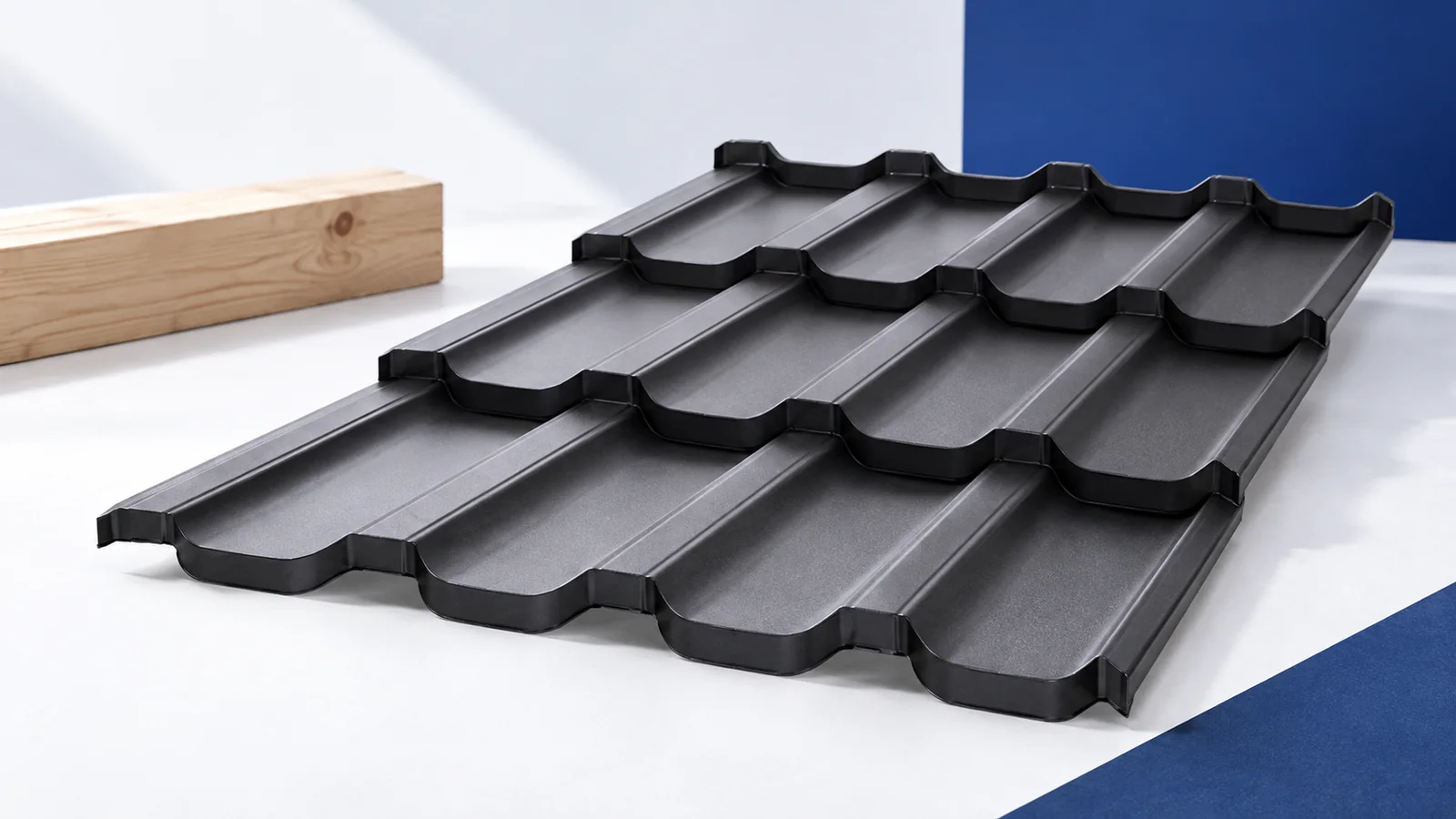
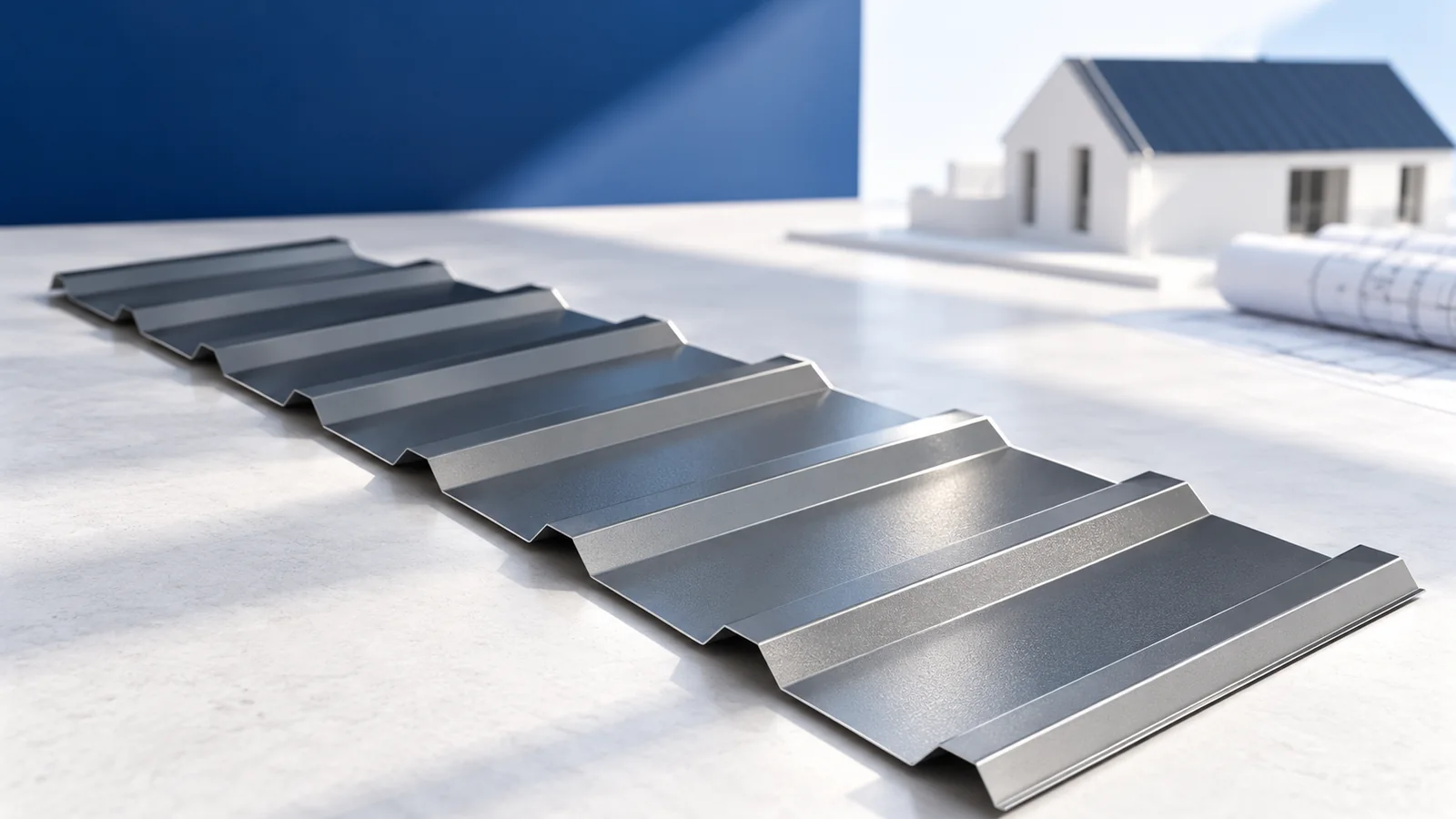
Choose lengths that fit the roof and can be transported and lifted safely. Cut-to-length tile-effect sheets can reduce joints; modular sheets are easier to carry on a cramped site. For T18 or T35 trapezoidal sheet, verify the load capacity and support spacing of the specified product. Similar appearance does not imply identical installation limits.
At delivery, check the order, sheet edges and protection around the packs. Store the sheets as instructed so moisture cannot collect between them. Use cutting tools that do not produce damaging heat and remove swarf promptly. Care during unloading prevents scratches before installation even starts.
How will the chimney and equipment be reached?
Plan roof access while the covering is being replaced. Inspection points need a safe route suited to the design and intended use. Fix access components into the specified supporting base, not just the thin outer skin. Coordinate their positions with the new sheet layout.
Retrofitting steps or brackets can mean reopening part of the roof. It is easier to provide support while the layers are exposed. Mark future equipment locations and cable penetrations as well; this reduces the risk of improvised holes in the finished covering.
What should you check at handover?
Check the covering, flashings, ventilation, drainage and service penetrations at handover. Confirm that protective film and scraps have been removed. Ask for photographs of details that will be hard to reach, and record how to report defects and which work the contract covers.
Keep invoices, product documents and maintenance instructions. Record the profile, coating and colour codes so a repair part can be matched. The job ends with a roof ready for use and a tidy site; fastening the last sheet is only one step towards handover.
After the first heavy rain, check the loft and any outlets you can inspect safely. If you find damp, report it promptly with the location and weather conditions. Identifying a small fault early can prevent more extensive damage.

Free quote
What to include in your enquiry
Tell us how you plan to use the material, the dimensions and the quantity you need. Include the thickness, grade or variant name, along with the delivery town or your preferred collection branch. For a specific product, add its name or a link to the product page. We will reply to the email address you provide to discuss availability and the terms of your order.
Read next
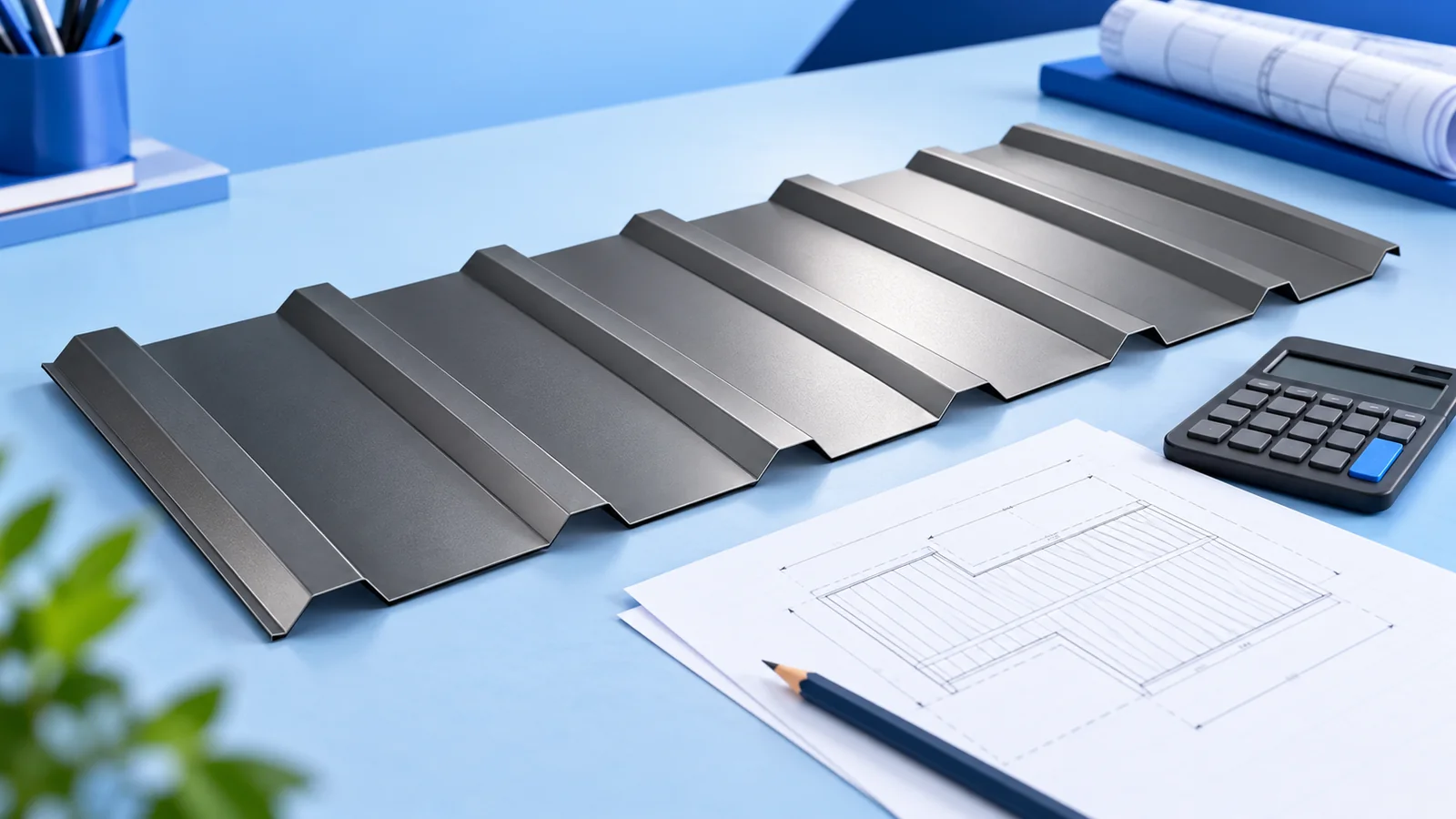
To budget for a roof, start with the sloping area on the drawings and work out how many sheets the layout requires.…
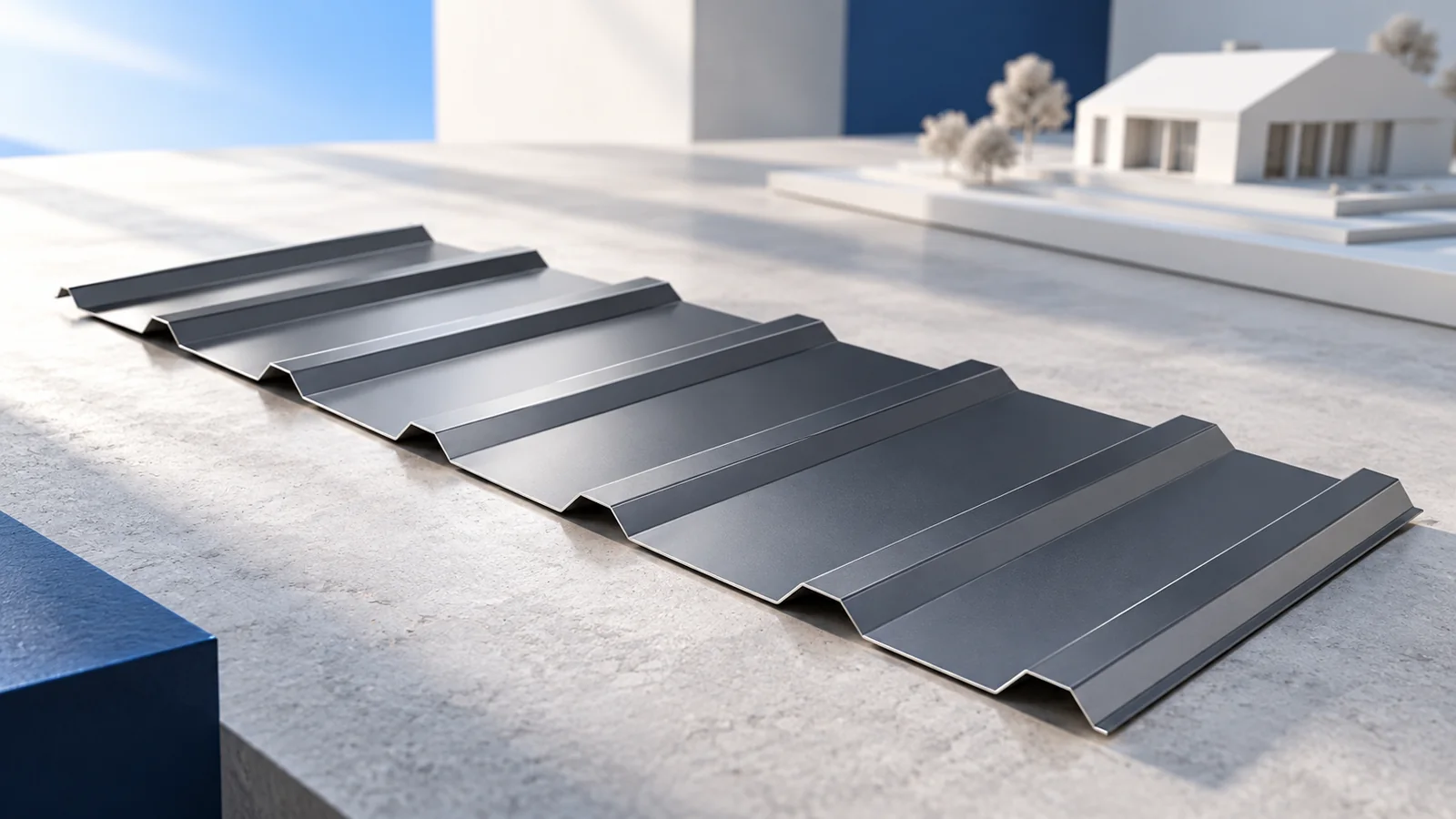
A practical roofing course gives installers a chance to set out a slope, form a flashing and check a fixing while the…
Roof and wall panels enclose the same building but serve different purposes. A single specification can coordinate the drawings, quantities, details and…
The cheapest sheet may not give you the lowest roof cost. Waste, supports, flashings and installation all affect the total. Define what…

Stock roof panels are available in specific lengths and quantities. Before reserving a batch, measure the slope from the ridge detail to…
Two roofers can quote different prices per square metre for the same slope because they are pricing different work. One may include…
Metal roof tiles suit a new roof when the permitted pitch, supporting layers and installation method match the design. Before comparing prices,…
Ask a prospective roofer to walk you through one difficult junction on your roof. How will water pass the chimney, which layers…
