






How should mineral wool panel thickness match building use?
Mineral wool panels
At a glance
Choose wall panel thickness for the complete partition or envelope. Temperatures, fire protection, support spacing and room for detailing all matter. A range from 60 to 200 mm is not a simple scale of quality. Check each variant against use conditions and the data for its system. Record room operating temperatures and heating hours. Does the wall separate indoors from outdoors, or two internal rooms? Stored goods may set the temperature in a warehouse; a production process may set it in a factory. Occasional human occupancy alone is not a basis for the choice.
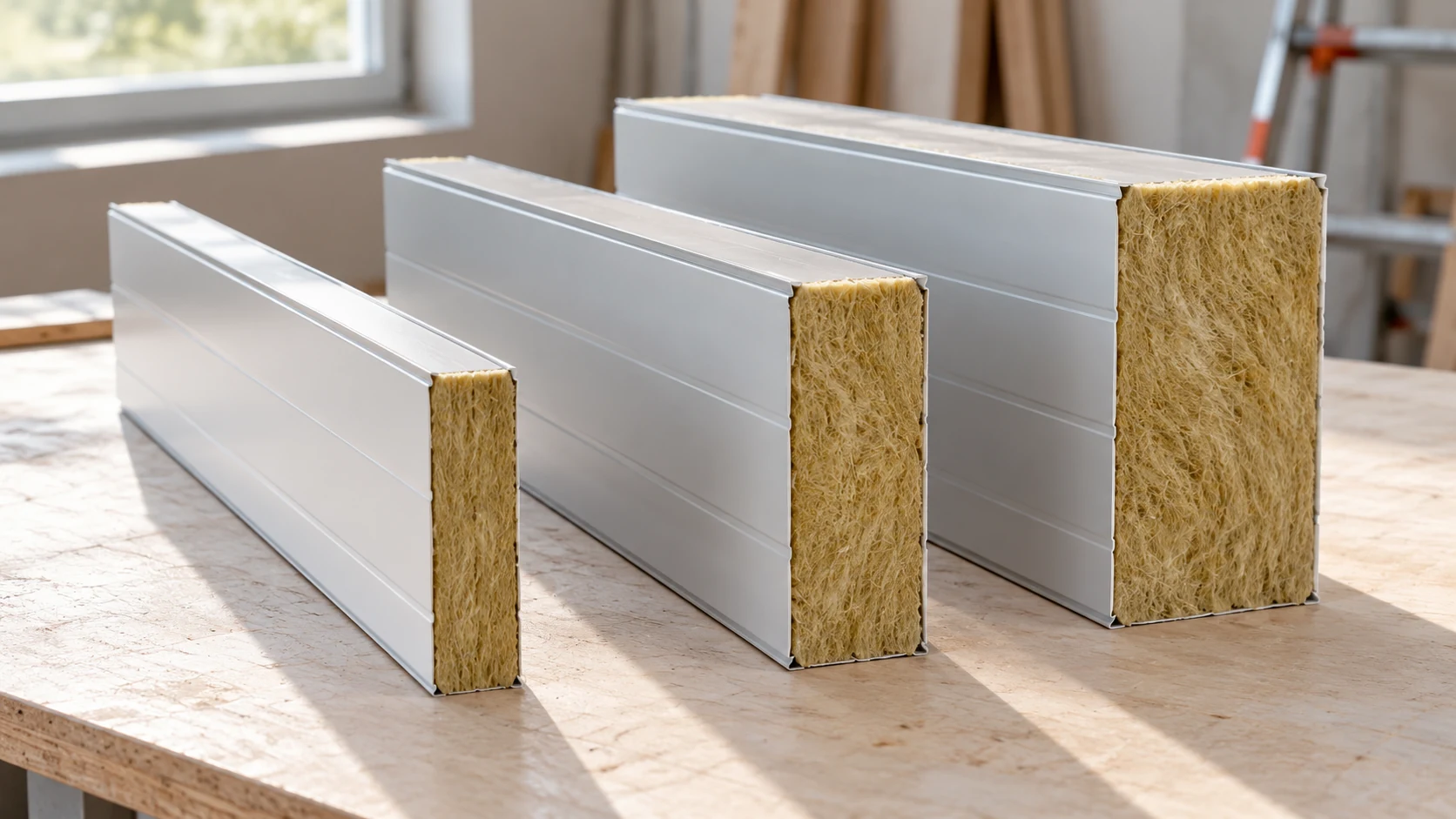
Describe temperatures on both sides
Include humidity and door opening patterns. Air exchange can strongly affect the heat balance. For a wall between zones, describe conditions on each side. Only then can you estimate the benefit of greater thickness and whether it tackles the actual problem.
List the essential requirements
List the design requirements, such as U-value, fire resistance, sound insulation and permissible deflection. Verify each for the intended configuration. A thermally suitable panel may not suit the proposed support spacing or type of separation.
Do not increase thickness in place of checking documents. A thicker core will not protect an unsuitable coating in an aggressive environment or rectify a poorly detailed penetration. Check properties together to rule out variants that excel in only one column.
Compare thickness ranges
Consider thin panels where thermal demands are modest and other requirements are met. Intermediate thicknesses offer a different balance of insulation and weight. Thicker panels may be needed for a lower U-value or a specific classified arrangement. None of these groups has one universal use.
In one mineral wool range, U-values are 0.46 at 80 mm, 0.31 at 120 mm and 0.21 W/(m²K) at 180 mm. This shows the trend within that range. For selection, use the actual product data rather than a general chart assigning one thickness to every type of building.
Check the frame and junction details
Extra thickness changes weight, fastener lengths and flashing dimensions. Check reveals, the façade line at the plinth and the roof junction. In existing buildings, a few centimetres can interfere with door gear or services; these allowances are easier to make in a new design.
Compare available panel lengths and colour restrictions. Do not assume that all thicknesses fit the same rail spacing. The structural designer needs the exact configuration, span arrangement and loads. A table for different facings or a different core is insufficient evidence.
Where different wall thicknesses meet, draw the corner. Different cross-sections need compatible insulation terminations and flashings. Leaving this to the installer can change the parts list and the overall cost late in the job.
Allow for a planned change of use
Could a warehouse become a heated workshop or a production area? That can change thermal, ventilation, acoustic and fire requirements. The thickest panel need not be bought now, but compare the initial option with the cost of a later rebuild.
Make future scenarios specific. “Just in case” is not enough to justify an arbitrary premium. Record expected temperature, use and timing. If plans are uncertain, present two options and their consequences so the owner can decide on an explicit basis.
Record the selection in one specification
Specify core type, thickness, facings, coatings, cover width and required performance. Include installation direction and supports. For a fire-resisting wall, identify the applicable construction conditions. Suppliers can then quote on the same assumptions.
Compare the full cost difference, including junctions and installation equipment as well as panels. Check that lead times fit the programme. Thickness is one part of selecting a complete enclosure that can actually be built on schedule.
Questions and answers
Is the thinnest panel always enough for an unheated hall?
No. Structural, fire and other design requirements still apply. Humidity, stored goods and future use matter as well; absence of heating does not settle the selection.
Can the thickness change after the frame has been ordered?
Sometimes, after checking weight, capacity, fixings and junctions. Reassess flashing widths and window and door positions. It is more than a change to one number on an order.

Free quote
What to include in your enquiry
Tell us how you plan to use the material, the dimensions and the quantity you need. Include the thickness, grade or variant name, along with the delivery town or your preferred collection branch. For a specific product, add its name or a link to the product page. We will reply to the email address you provide to discuss availability and the terms of your order.
Read next
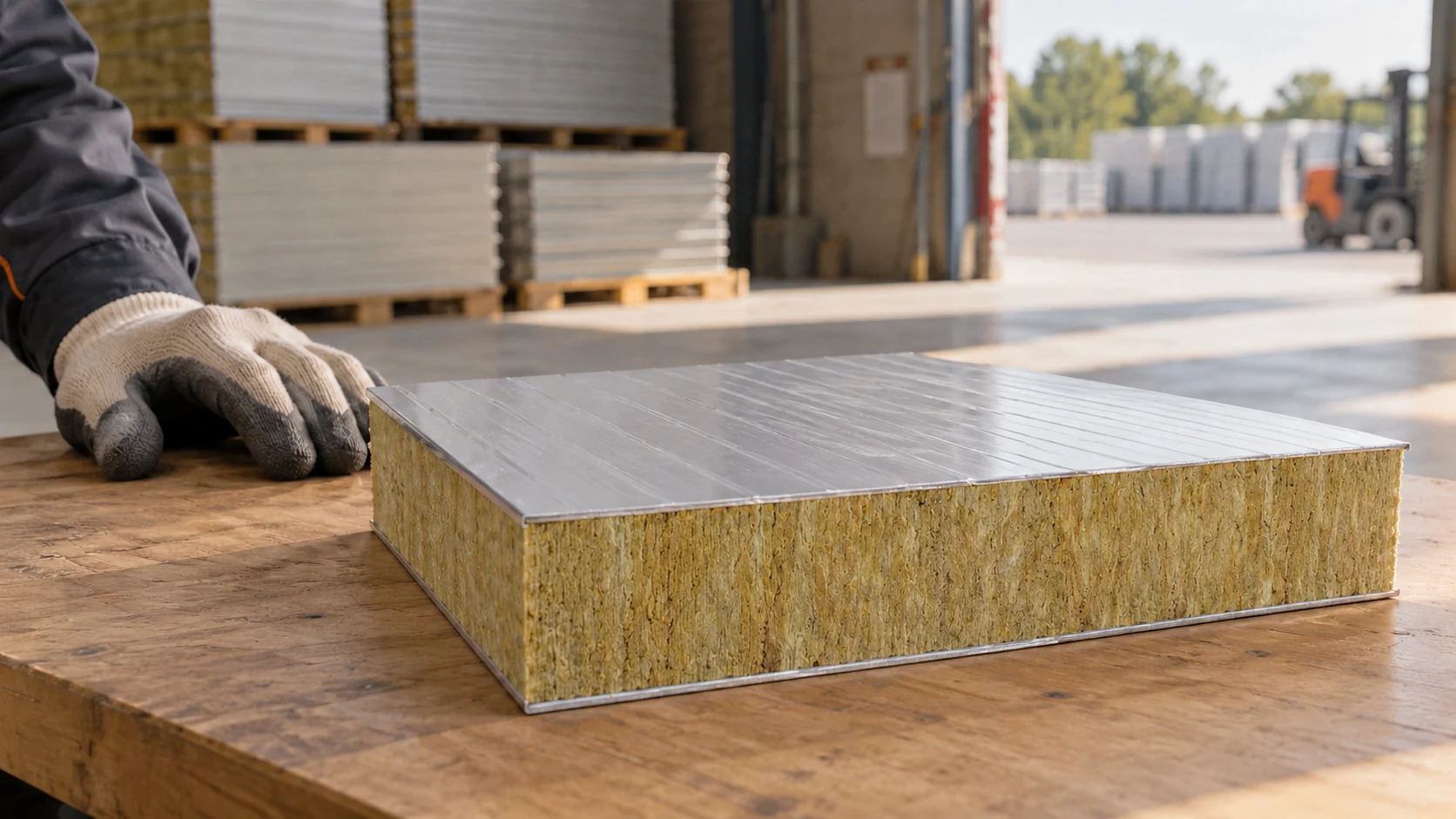
A thickness of 100 mm does not define a mineral wool wall panel. Two products can differ in weight, U-value and cover…
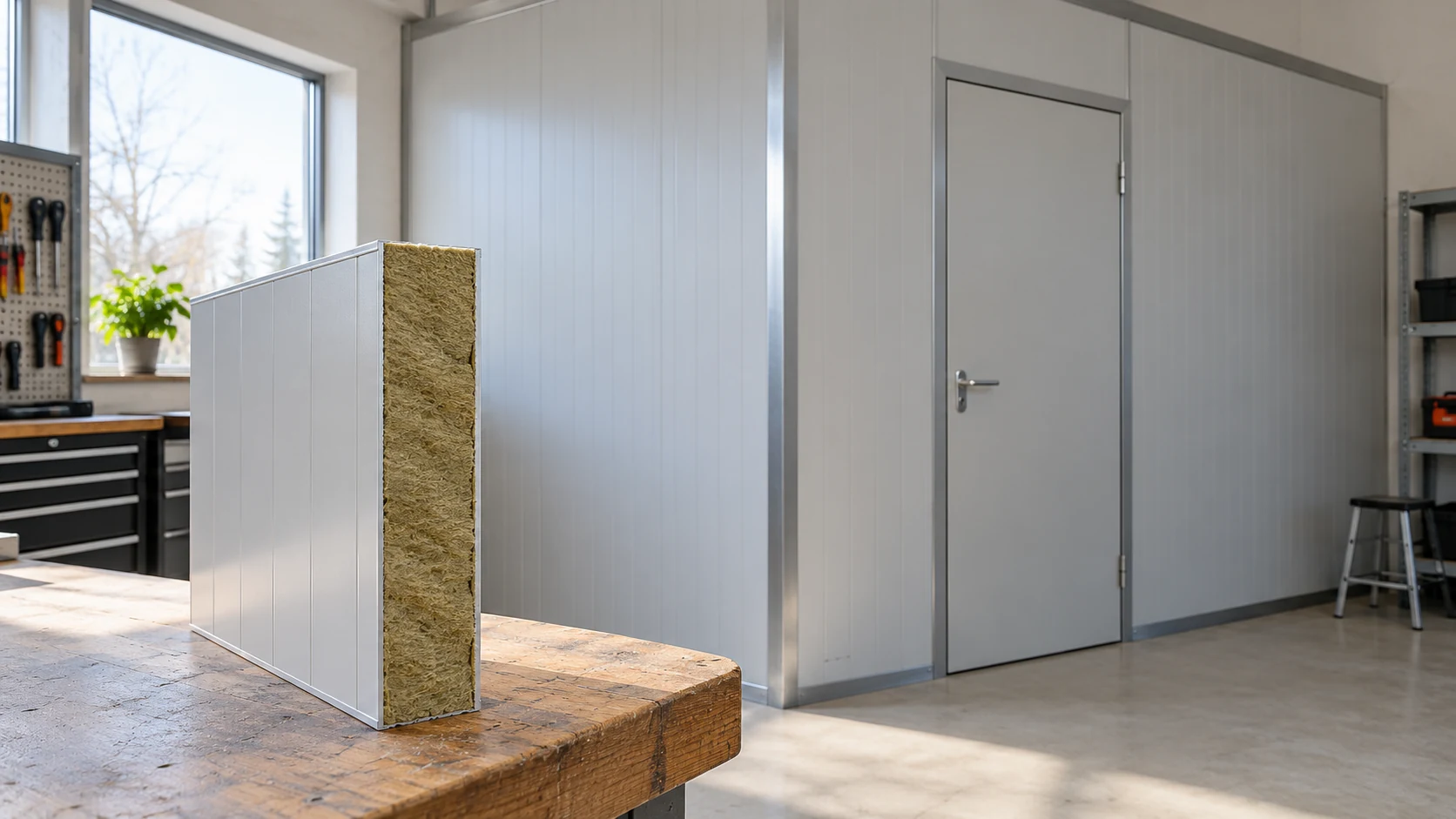
Choose a thin mineral wool panel for what the partition has to do, not simply for the floor space it saves. Even…
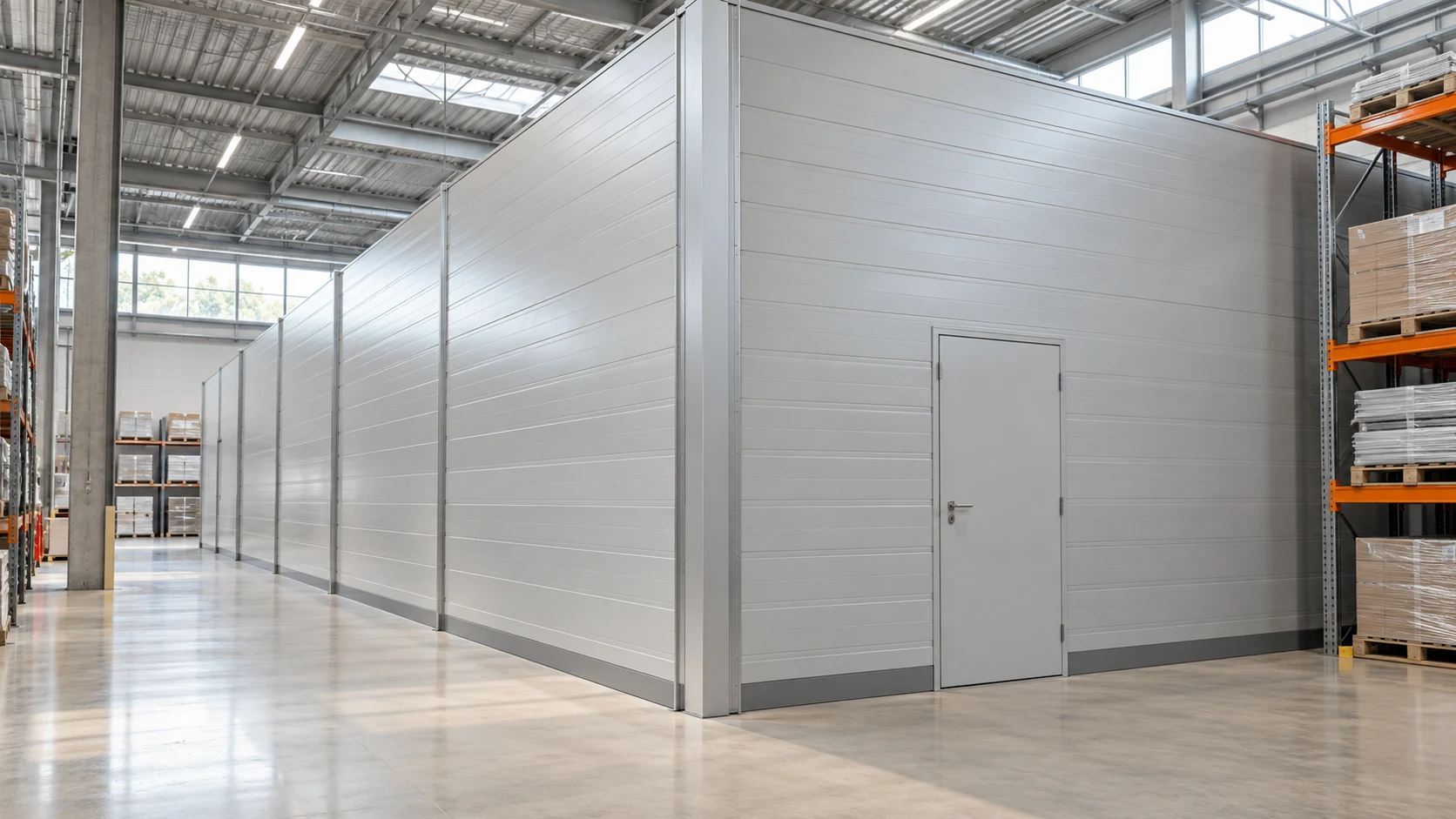
A mineral wool wall panel can form an external enclosure or an internal partition. Choose it where the properties of a specific…
The panel price per square metre is only one part of a wall budget. Include flashings, seals, fixings, transport, equipment hire and…
Trace the boundary of the heated rooms on a section through the building. For an unheated loft it may run across the…
A mineral wool core alone cannot guarantee a quiet hall. First locate the source and the point that needs protection: a machine…
A panel fixing must suit the panel, support and expected loads. Wool thickness alone is not enough to select a screw. Check…
A mineral wool wall project runs more smoothly when each decision produces a usable document or drawing. Describe the building’s operation, then…
