






How do standard and reinforced mineral wool panels differ?
Mineral wool panels
At a glance
One mineral wool panel range may include standard, lighter or differently fire-rated variants. Their names do not tell you what changed. Compare the core, facings, joint and conditions of use before deciding whether a premium is justified for your wall. “Reinforced” can refer to the core, profile, fixing or joint detail. It does not mean the panel is better insulated, lighter and stronger all at once. Ask the supplier to identify the specific differences between the two offers and provide data for the configurations that would actually be delivered.
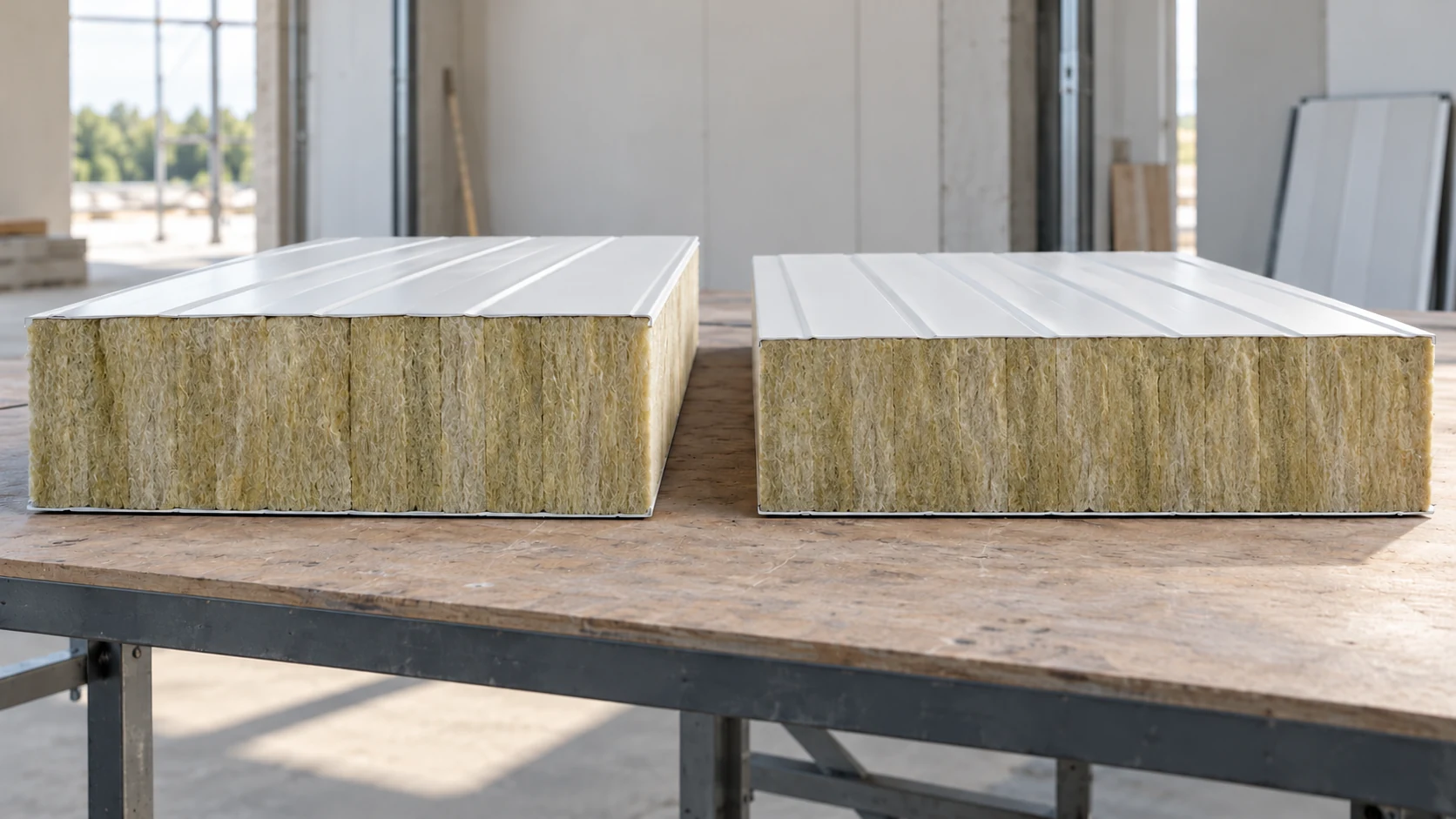
A variant name is not a performance figure
List thickness, weight, U-value, facings and required mechanical and fire performance. Mark missing data as unknown. Do not infer a value from the name; fair comparison depends on knowing what each data set covers.
Check that the figures apply to the proposed coatings and sheets. A sales description may combine advantages of several variants that cannot be ordered together. Ask for one consistent specification for each offer so the comparison can be checked.
Check what changed in the core
Wool density or lamella orientation may differ; some cores combine two densities. This affects the weight and behaviour of the composite panel. Core construction alone cannot predict load capacity. Use results and tables for the variant concerned.
For example, two 100 mm panels with 0.5/0.5 mm facings and different core densities weigh 16.6 and 18.1 kg/m². Their respective U-values can be 0.38 and 0.39 W/(m²K). The heavier option need not insulate better. Read each figure separately.
Compare joints and accessories
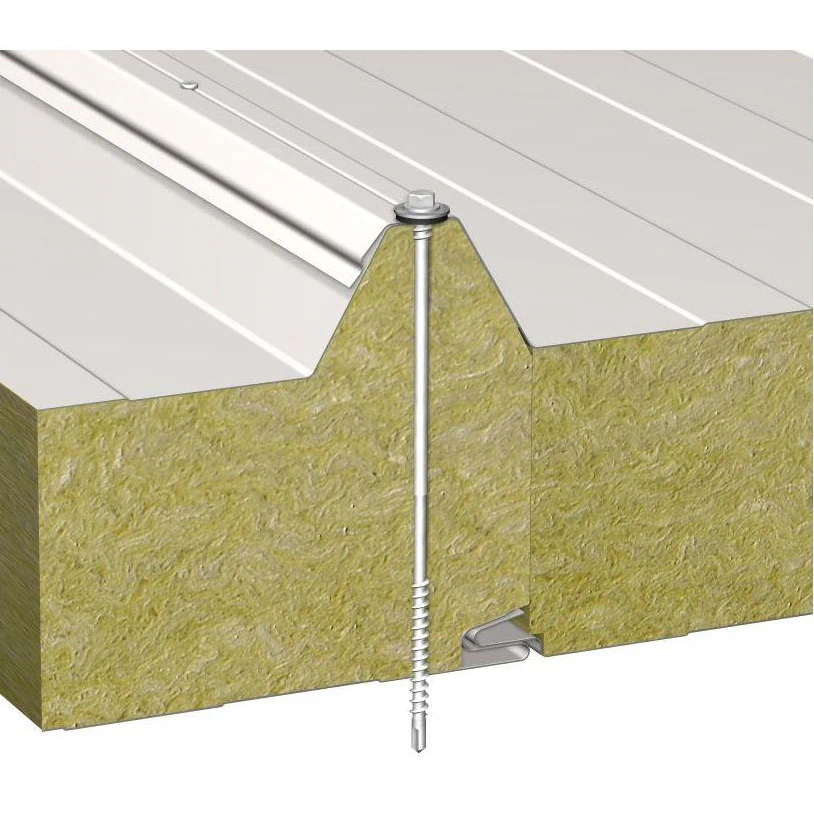
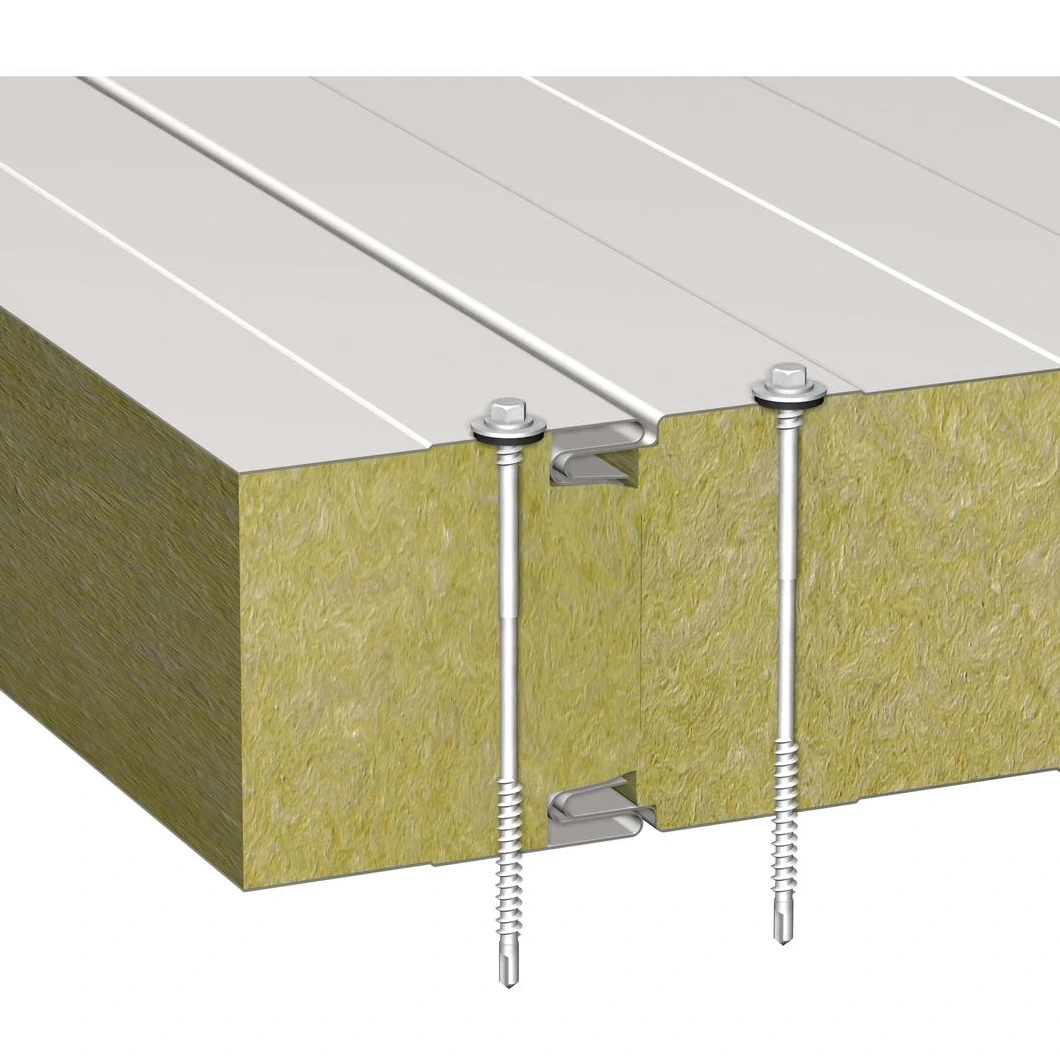
Variants for specific uses can have different seals and joint details. Check which parts are fitted at the factory and which are installed on site. A component hidden from view on the finished façade may be essential to the wall’s performance.
Do not transfer a detail between variants without confirmation. Similar appearance proves neither matching geometry nor compliance with the same classification. This also applies where different cores meet on one building. Verify system compatibility rather than forcing edges together on site.
Establish the fire resistance needed
Read the design requirement first, then determine which panel and arrangement meets it. At the same thickness, variants may differ in class, permitted span or installation direction. A catalogue maximum is not a universal rating for the entire range.
If the standard option meets the need, a higher figure in another sheet does not itself bring a benefit. If it falls short, lower cost cannot justify substitution. Include opening, support and junction details before deciding whether the complete solution suits the wall.
Allow for installation differences
Weight affects transport and lifting equipment; the joint affects erection sequence. Check available lengths and cover width. Concealed fixings can require a different end detail from through-fixings. Switching products may therefore change the flashing schedule.
Check accessory availability and the option to reorder replacement parts. At delivery, make sure the joint components are included. One small missing component can prevent correct installation even if it would not be visible from a distance. Compare prices for the complete kit.
Specify properties instead of a trade label
Specify core construction, facings, thermal properties and fire requirements. State the installation conditions and details covered by the documents. A trade name identifies a product in an order but does not replace a description of the required properties.
Assess every substitution against the same list, including properties that were not the original reason for the choice. A cheaper, lighter variant may be suitable if it meets every requirement. An extended classification is useful where the project actually needs its extra scope.
Questions and answers
Does a reinforced variant allow fewer wall rails?
The name does not establish that. Removing supports requires renewed checks of capacity, deflection and fixings for the actual loads. Use the tables for the selected configuration.
Can another variant replace the standard panel without revising the design?
Check all relevant properties and application conditions first. Equal thickness does not guarantee equivalent weight, joint geometry, fixings, performance or details.

Free quote
What to include in your enquiry
Tell us how you plan to use the material, the dimensions and the quantity you need. Include the thickness, grade or variant name, along with the delivery town or your preferred collection branch. For a specific product, add its name or a link to the product page. We will reply to the email address you provide to discuss availability and the terms of your order.
Read next
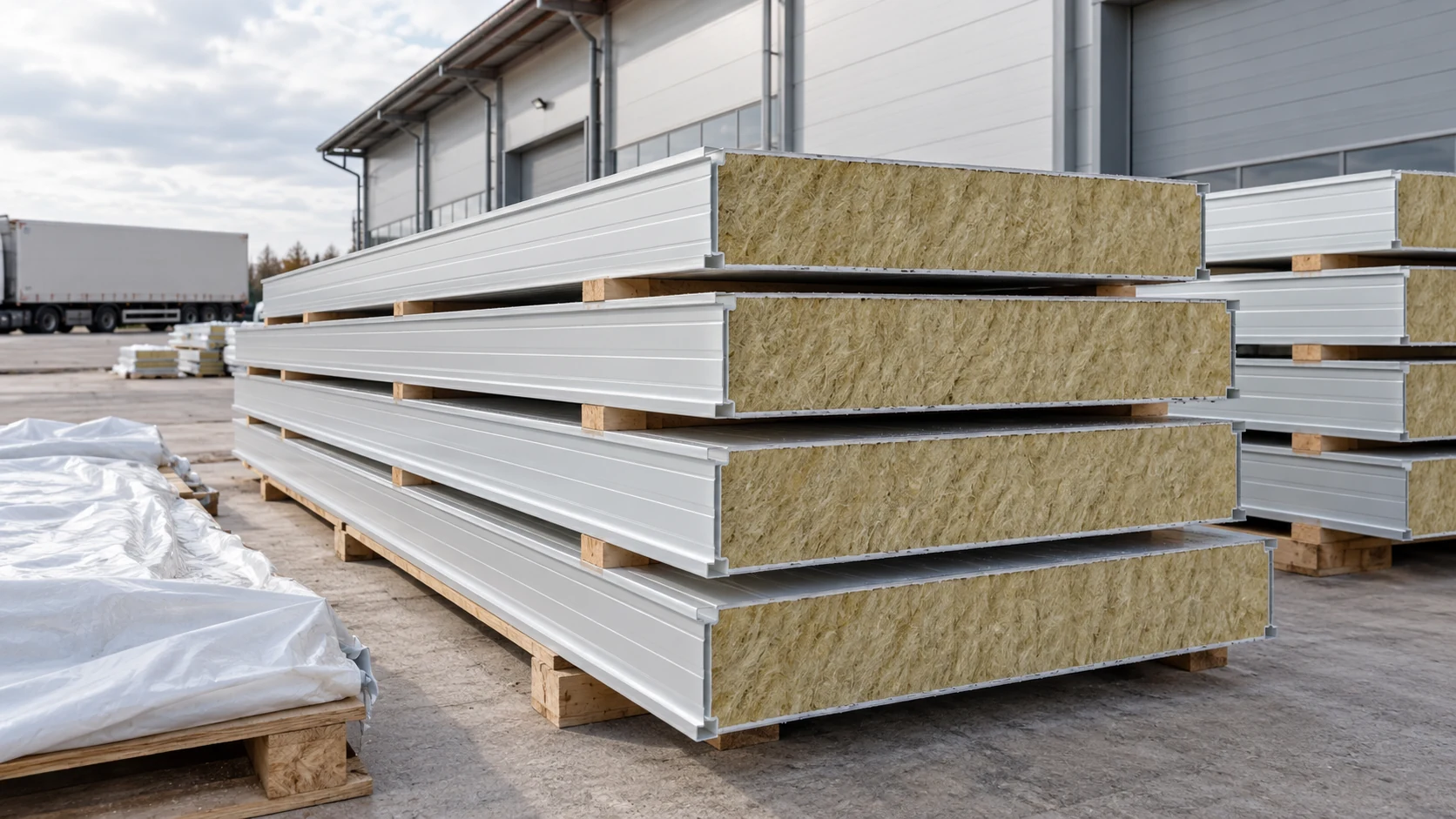
Before booking transport or lifting equipment, find the weight of each panel and each pack. A figure in kilograms per square metre…
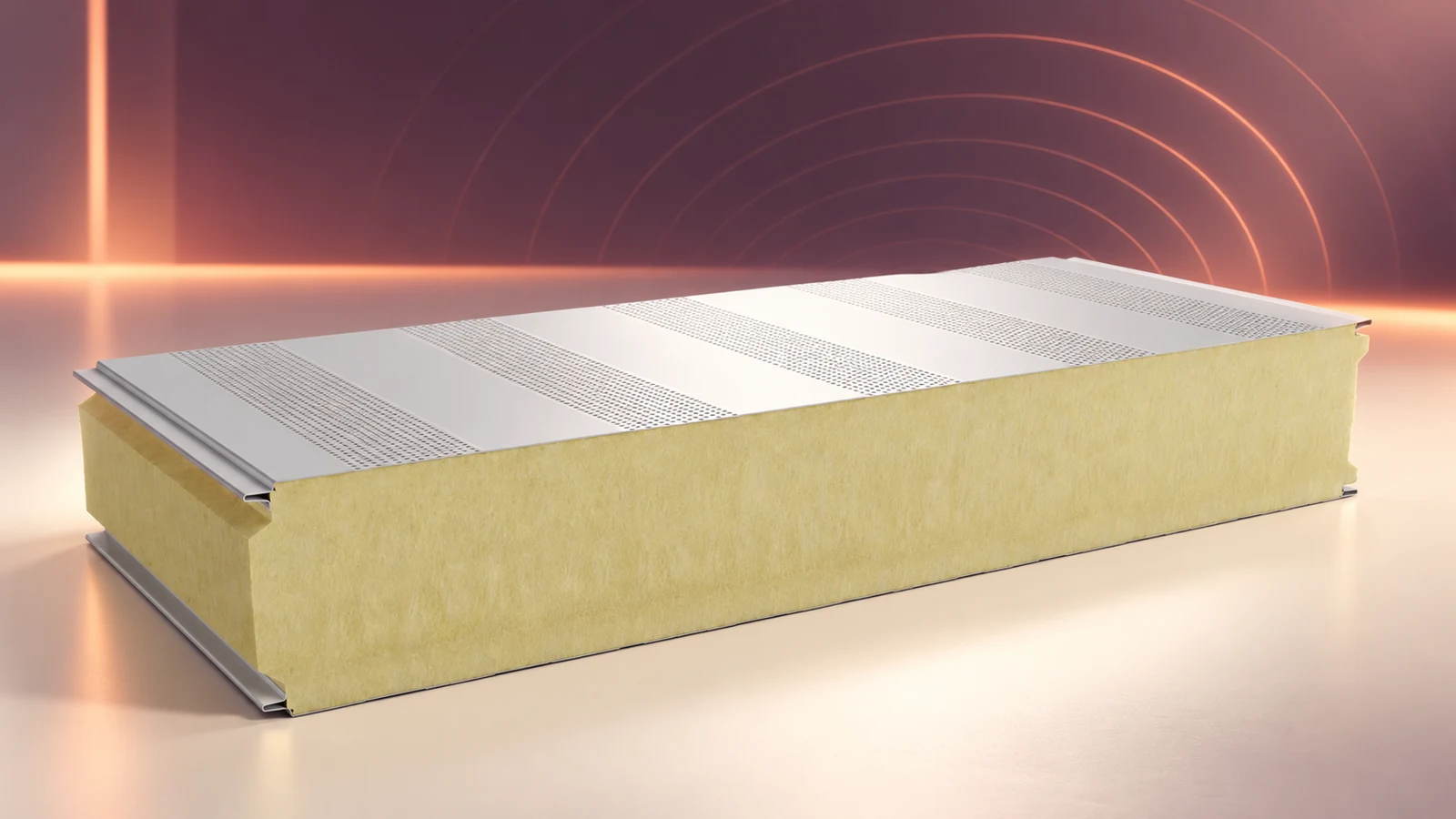
A mineral wool acoustic sandwich panel can enclose a building and absorb sound on its inner face. A perforated facing distinguishes this…
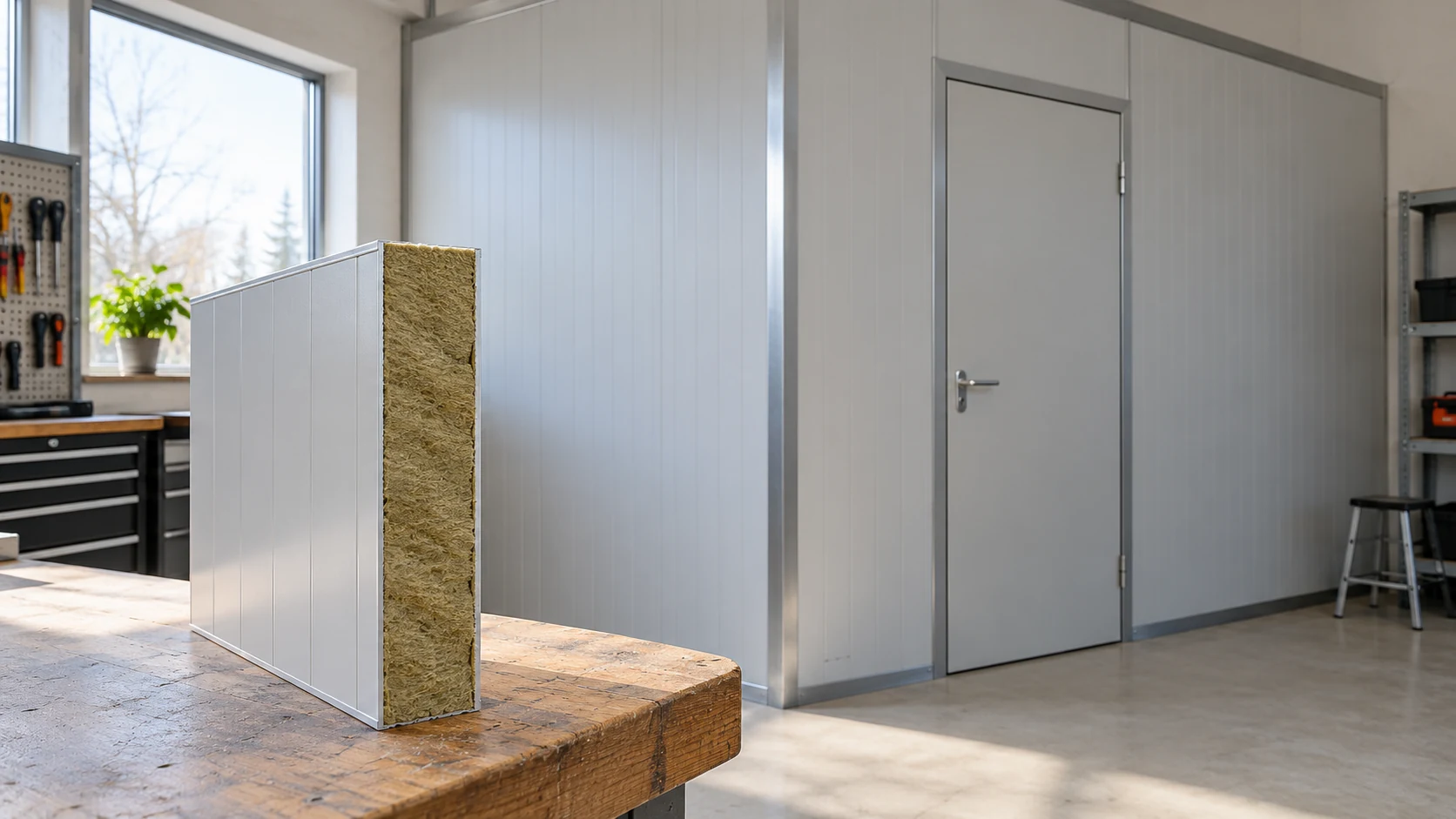
Choose a thin mineral wool panel for what the partition has to do, not simply for the floor space it saves. Even…
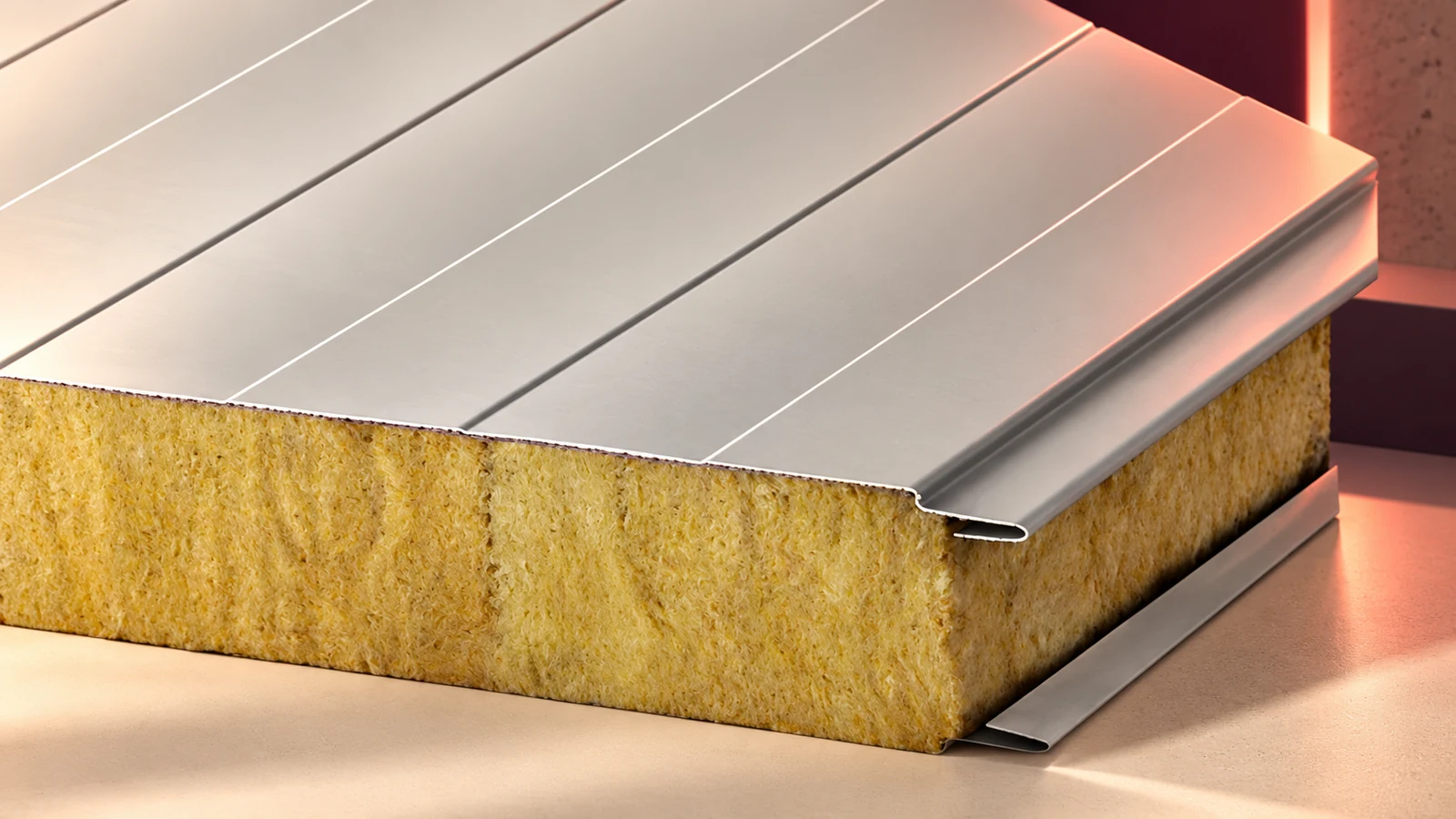
Mineral wool sandwich panels have metal facings bonded to an insulating core. They are used for walls and roofs. Each model needs…
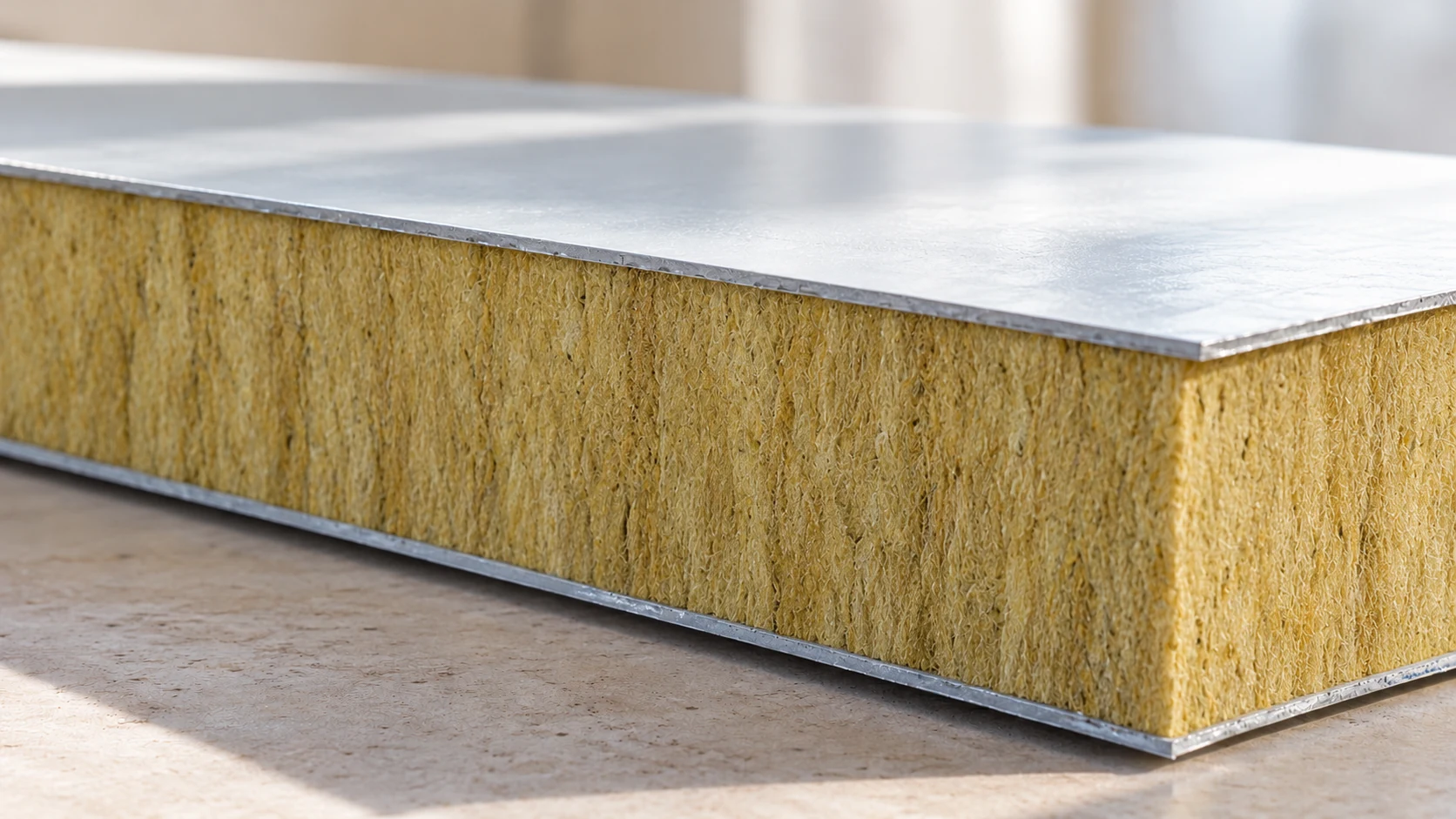
A2-s1,d0 describes the reaction to fire of the finished panel. It is not the wall’s EI fire resistance rating. The mineral wool…
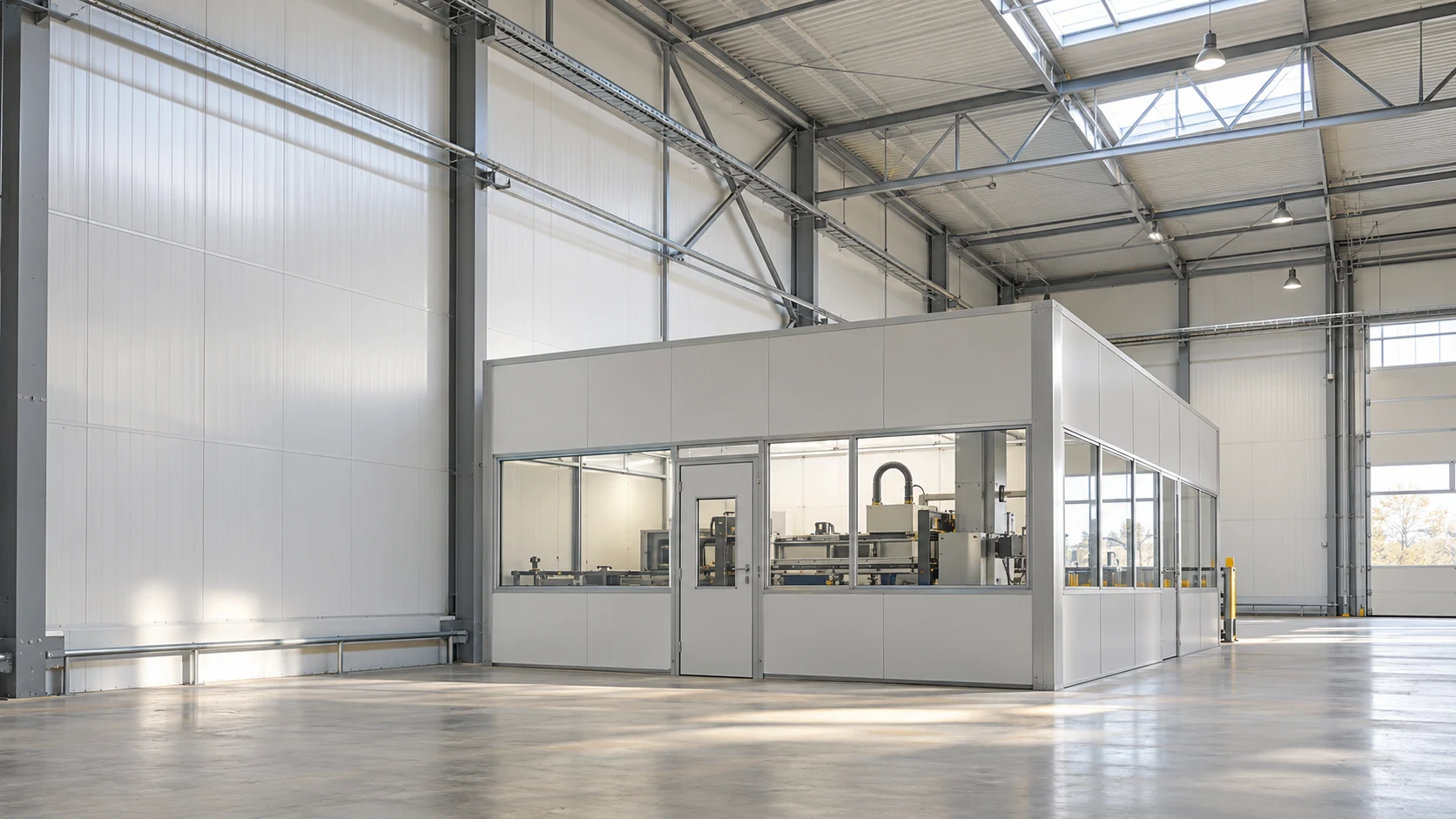
A mineral wool core alone cannot guarantee a quiet hall. First locate the source and the point that needs protection: a machine…
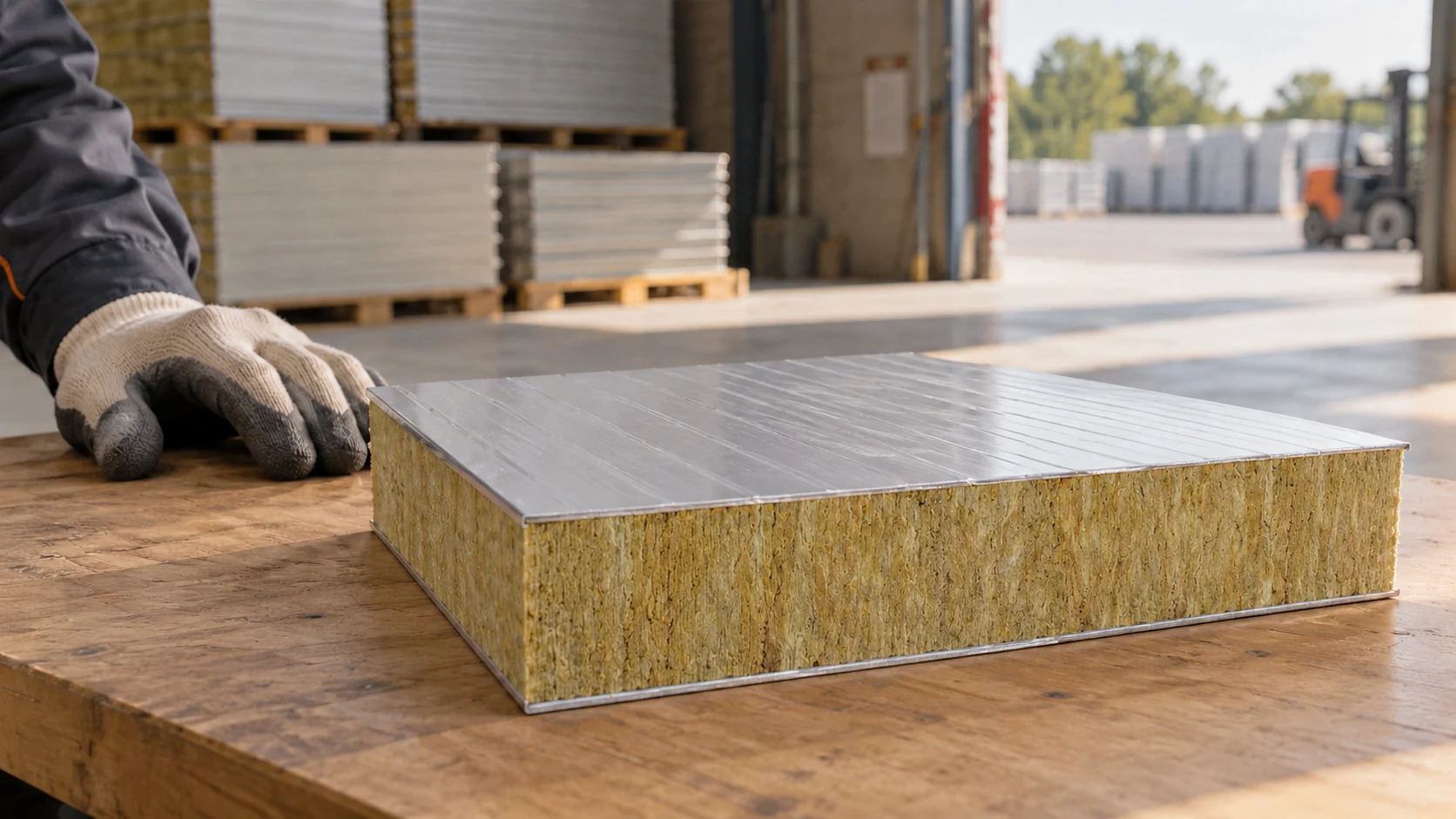
A thickness of 100 mm does not define a mineral wool wall panel. Two products can differ in weight, U-value and cover…

There is no single service life in years for a mineral wool panel wall. A sheltered warehouse, a vehicle wash and a…
