






How to convert EPS thickness to an equivalent PIR thickness
PIR insulation
At a glance
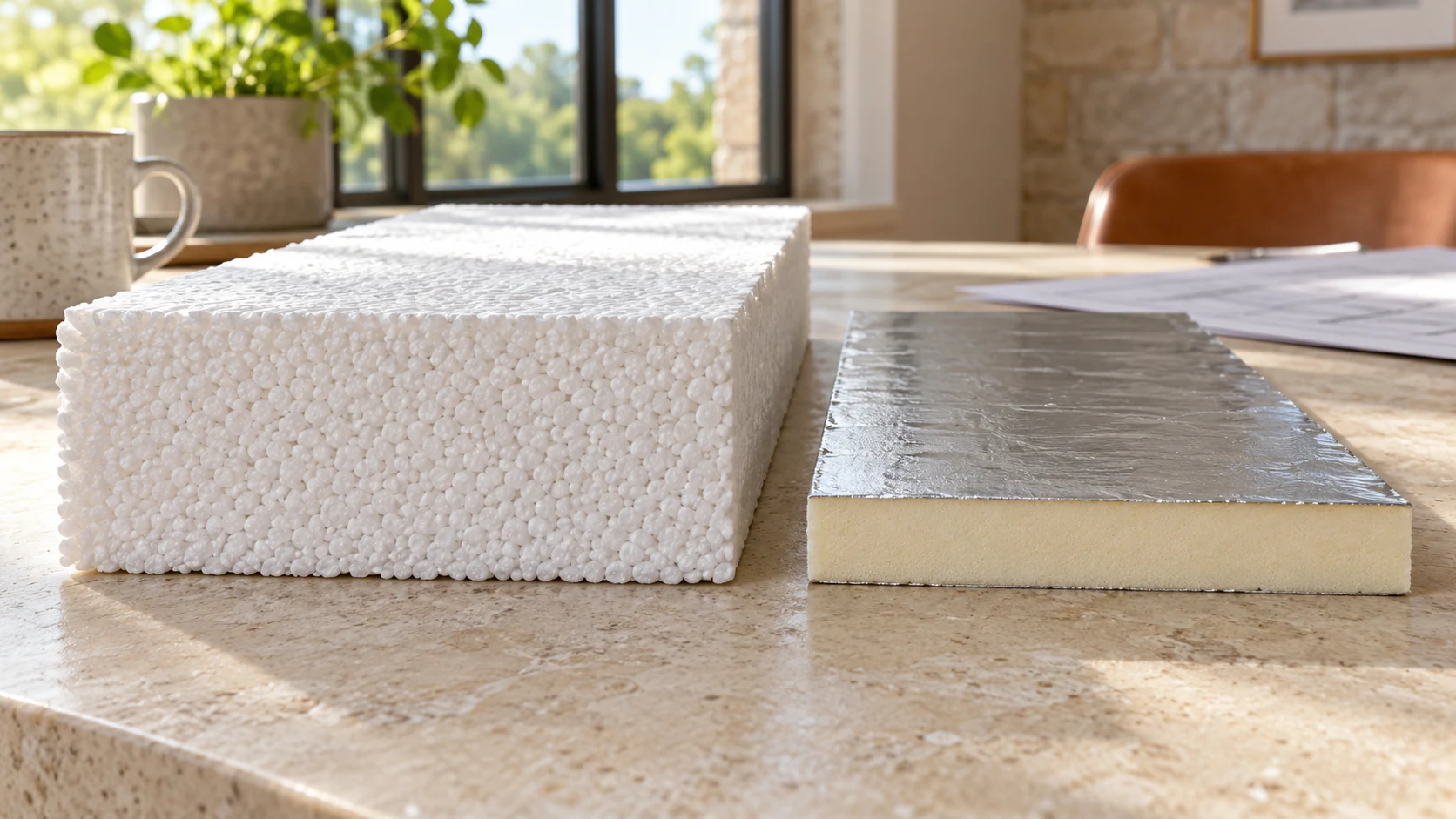
Start with thermal resistance, R, to compare two layers performing the same job. The result depends on the conductivity of the specific product, not simply on whether it is EPS or PIR. For a homogeneous layer, R = d/λ: enter thickness in metres and the conductivity of the chosen product. Under the same conditions, a higher resistance means less heat passes through the layer. Then check which thicknesses are available, whether the facing suits the application and what the change means for the complete wall and its junctions. Thickness alone does not describe insulating performance.
Choose a common basis for comparison
Do not compare the U-value quoted for a board with that of a finished wall. The former may assume particular surface resistances; the latter includes additional layers. For a material substitution, compare insulation R-values first, then calculate the whole assembly.
Convert 18 cm of EPS step by step
For 180 mm EPS with λ = 0.036 W/(mK), R = 0.18/0.036 = 5.00 m²K/W. Aluminium-faced PIR with a declared λ of 0.022 W/(mK) theoretically gives the same resistance at 0.11 m, or 110 mm. The result applies to these two specified conductivities.
If the range does not include 110 mm, choose an available thickness and check its declared data. Rounding down reduces resistance; rounding up changes the junction dimensions. Do not conceal the difference by rounding the values heavily. The order must describe the board that will actually be delivered.
At λ = 0.031 W/(mK), the same 180 mm of EPS has R of about 5.81 m²K/W. The theoretical equivalent in PIR at λ = 0.022 W/(mK) would be about 128 mm. Recalculate whenever the EPS grade changes.
Calculate render carrier boards separately
Foil-faced PIR is not automatically a substitute for a board beneath façade render. Boards for external thermal insulation composite systems may have different conductivity. A 120 mm board at 0.026 W/(mK), for instance, gives R of about 4.62 m²K/W, below the 5.00 used for the EPS comparison.
If the next available render carrier board is 140 mm thick with a declared λ of 0.025 W/(mK), its R is 5.60 m²K/W. Check the documentation before assigning one conductivity to both thicknesses. The claim that PIR is always half as thick is not a design rule.
| Example product | Thickness | Conductivity W/(mK) | R m²K/W |
|---|---|---|---|
| EPS | 180 mm | 0.036 | 5.00 |
| Aluminium-faced PIR | 110 mm | 0.022 | 5.00 |
| PIR for rendered façades | 140 mm | 0.025 | 5.60 |
Return to the U-value of the complete wall
Suppose the other layers and surface resistances together give R = 1.20 m²K/W. Adding insulation with R = 5.00 gives a simplified U-value of 1/6.20, or about 0.161 W/(m²K). Equal insulation resistance therefore gives a similar U-value across the wall area if the other assumptions stay the same.
The finished wall also contains fixings, gaps and non-uniform areas. Assess thermal bridges at windows, floors and the plinth separately. When moving insulation from outside to inside, matching R is not enough: masonry temperatures and drying conditions change, so a moisture assessment is needed.
Identify where a thinner layer helps
A thinner layer may help at a reveal, preserve passage width or fit beneath short eaves. Quantify the benefit. Reducing the complete internal lining by 4 cm along a 5 m wall gains about 0.20 m² of floor space. That is a geometric result, not a financial appraisal.
Framing and protective lining may reduce the saving in thickness. Check board edges, fixings and whether the insulation can reach the window frame. A thin board fitted with gaps may perform worse than a thicker, well-fitted assembly. Compare junctions from the outset.
Compare the cost of the finished assemblies
Prepare two estimates with the same scope. Include purchased quantities, waste, finishes, fixings, labour and alterations to sills or flashings. A price per cubic metre of EPS cannot be compared directly with a price per square metre of PIR. Convert to the required thickness first.
Assess fire, mechanical and moisture requirements separately. Matching R does not make these properties identical. Compare costs only for options suitable for the intended application. Specify the product, thickness and system in the final selection, rather than relying on a generic conversion factor.
Questions and answers
How much PIR replaces 18 cm of EPS at λ = 0.036?
On thermal resistance alone, 11 cm of PIR at λ = 0.022 gives the same value. Check the available board, its facing and the complete construction before substituting.
Does equal thermal resistance make the materials interchangeable?
No. Check installation, mechanical properties, fire requirements, moisture behaviour and compatibility with the finish. R describes resistance to heat conduction only.

Free quote
What to include in your enquiry
Tell us how you plan to use the material, the dimensions and the quantity you need. Include the thickness, grade or variant name, along with the delivery town or your preferred collection branch. For a specific product, add its name or a link to the product page. We will reply to the email address you provide to discuss availability and the terms of your order.
Read next
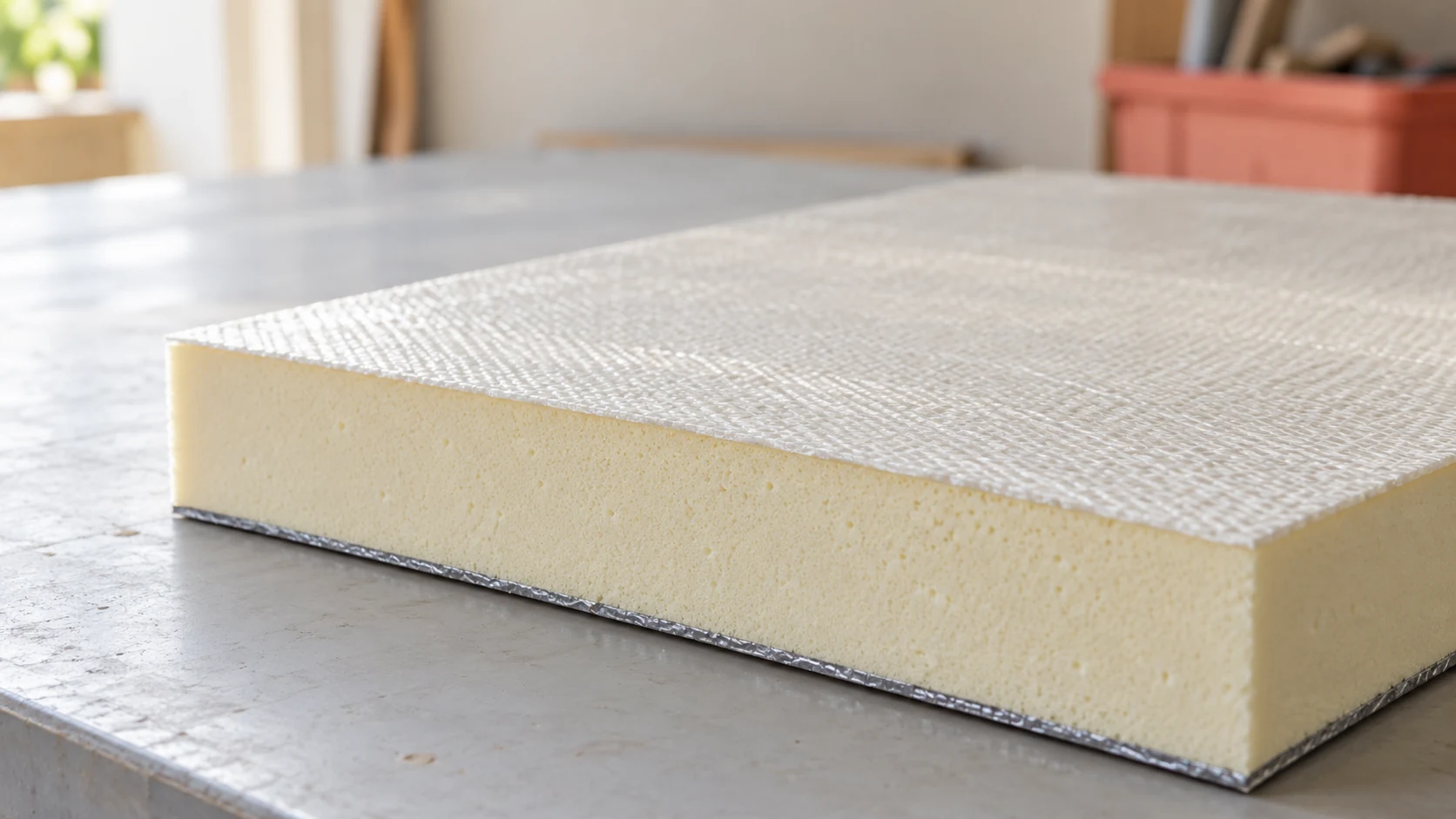
Glass-reinforced resin can form the inner facing of a PIR panel. It changes how that side of the enclosure is protected and…
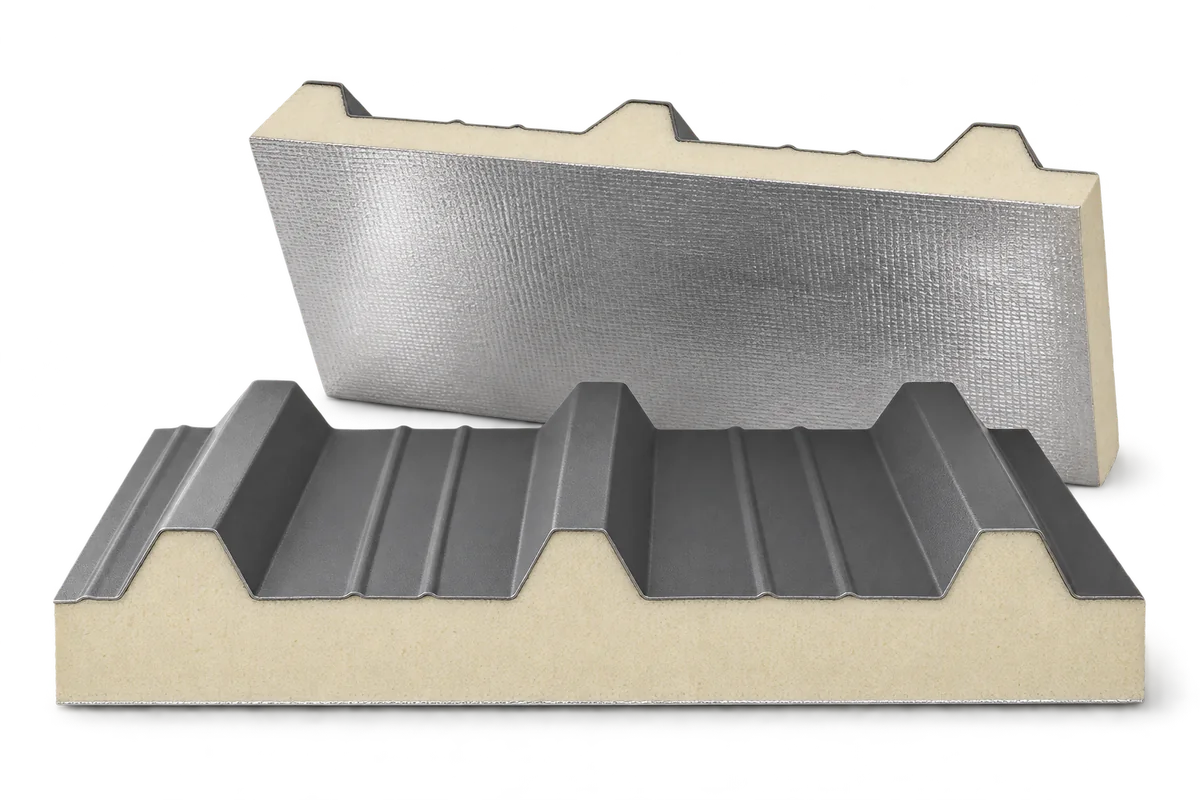
Renovating an old industrial building need not mean replacing it. Sandwich panels can provide a new outer skin and insulate the walls…
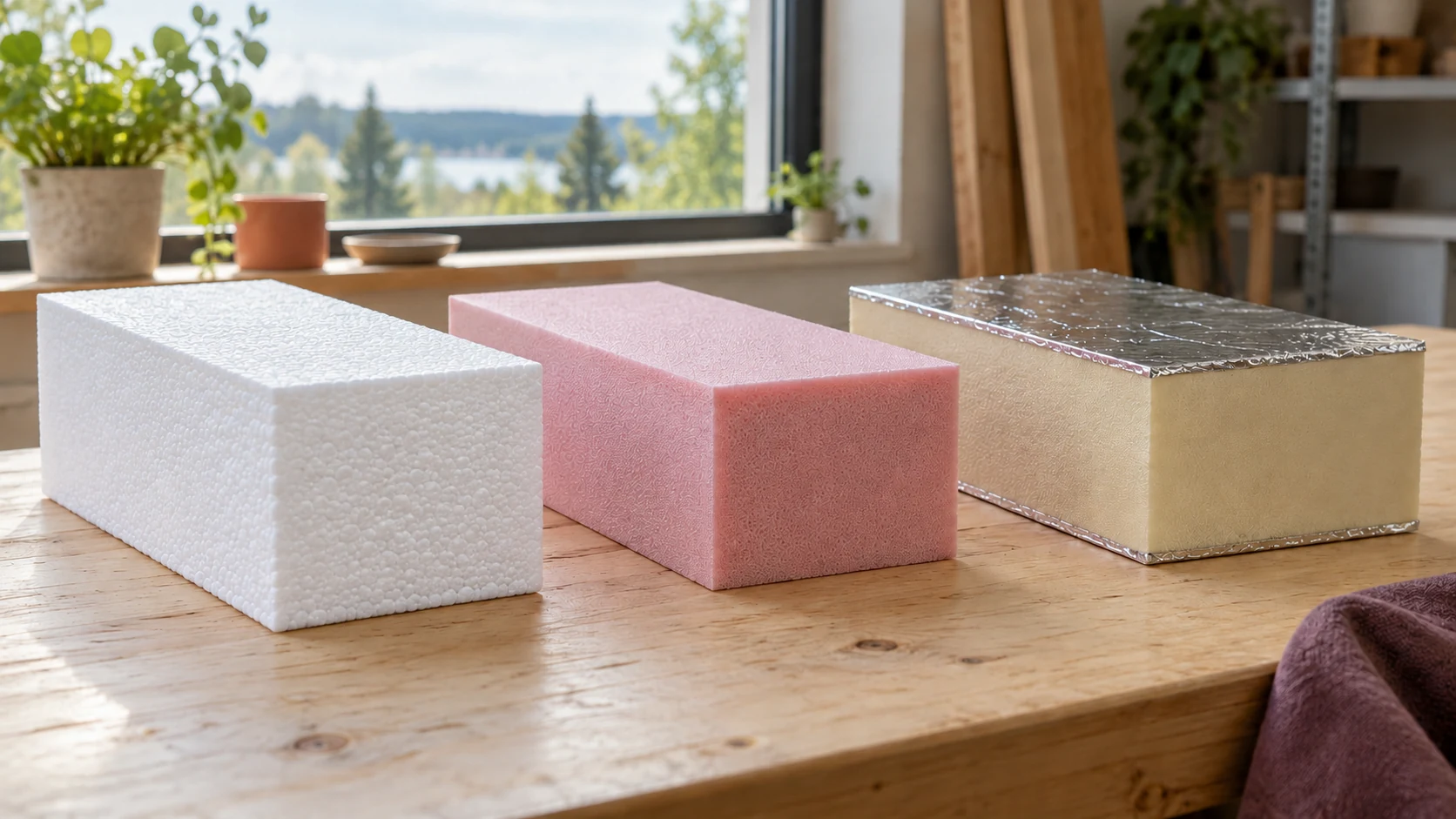
A single building may need several types of insulation. Compare EPS, XPS and PIR for a specific wall, floor or roof rather…
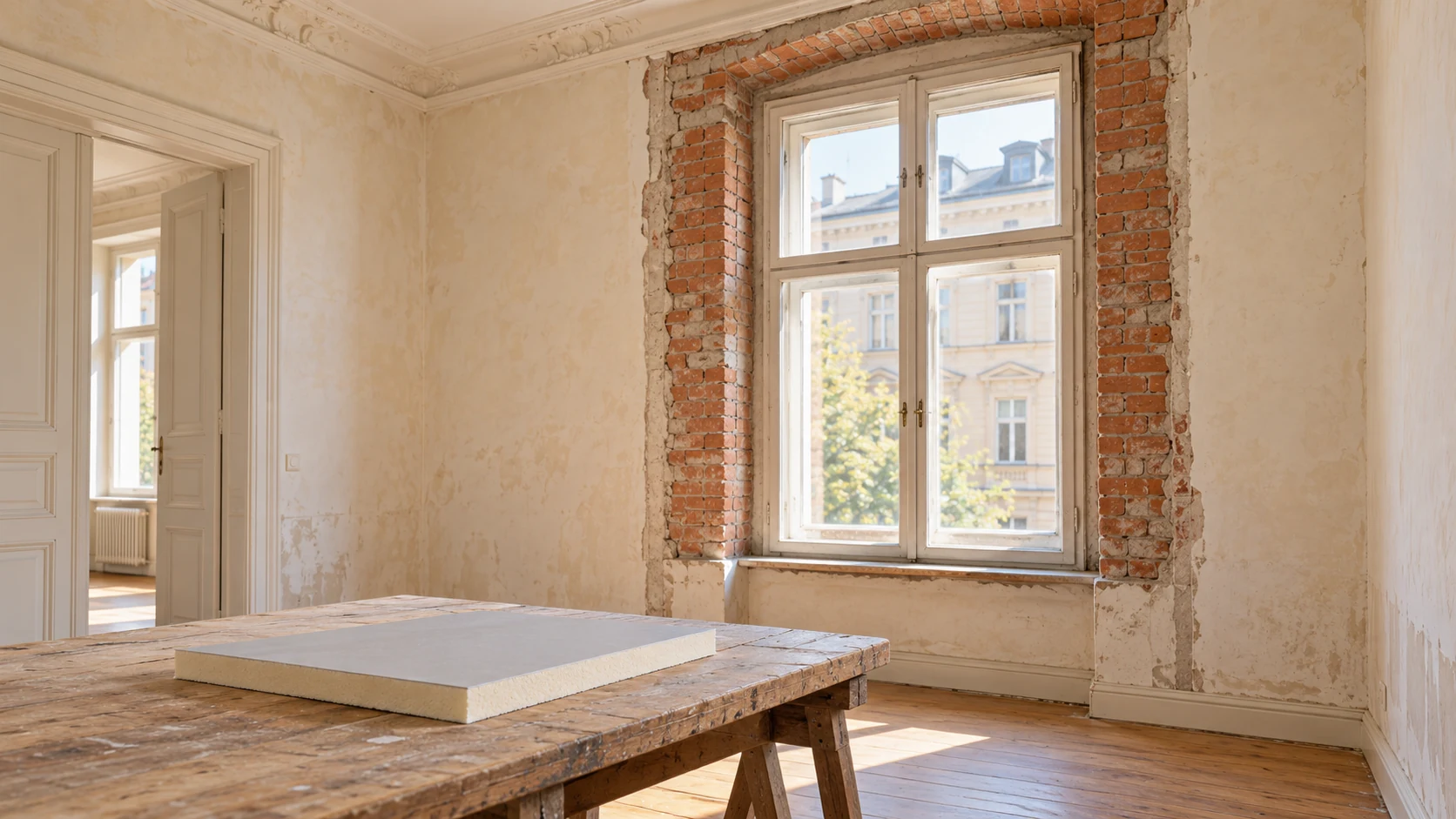
When a historic façade must be preserved, internal insulation may be an option. First establish how the walls and floors are built.…
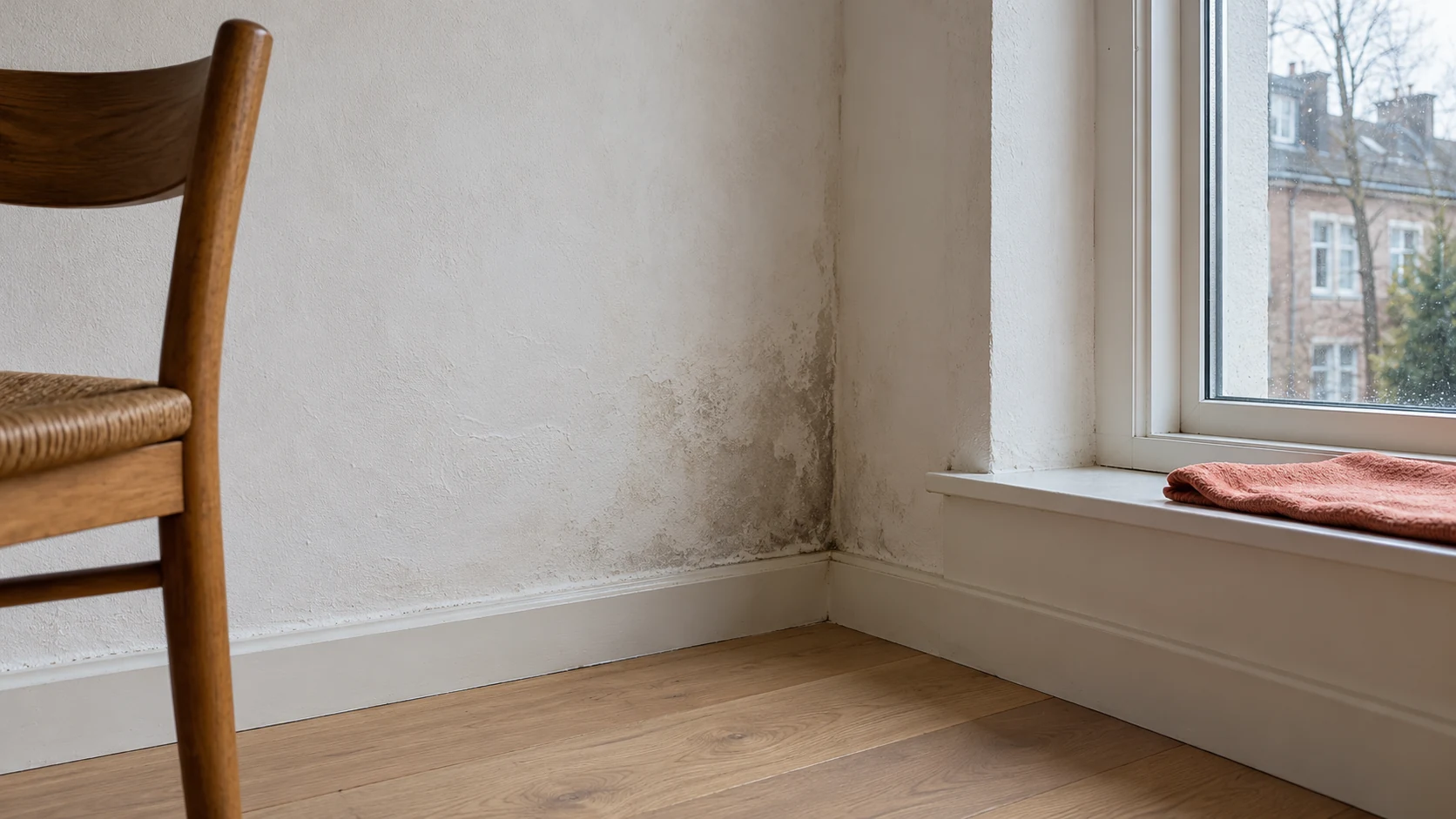
A cold surface, poor ventilation, rain penetrating the façade and a leaking pipe can leave similar marks. Several causes can coexist. Before…
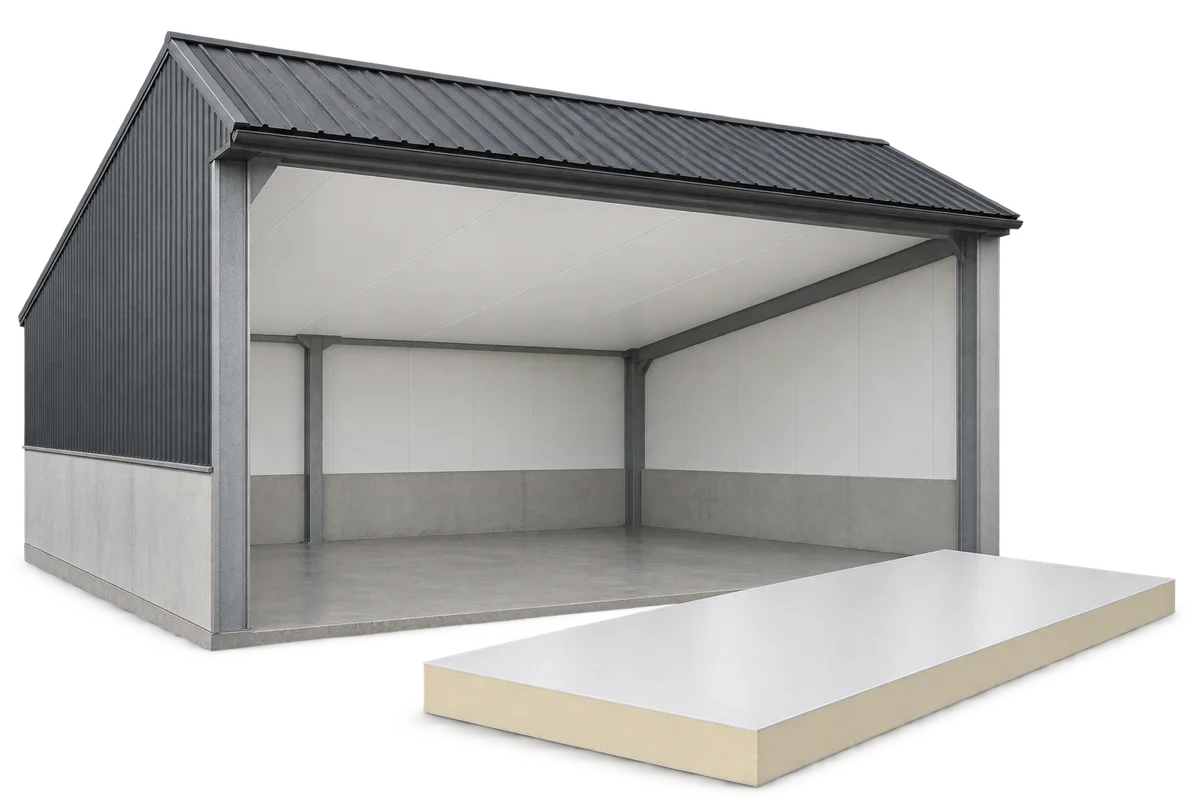
An internal ceiling can separate a heated or climate-controlled room from the roof void. In a cattle shed or warehouse, its appearance…
A timber house for year-round use must meet the requirements for a dwelling. In Poland, using timber does not in itself determine…
A loft fit-out starts well before the first plasterboard goes up. Inspect the roof, plan the insulation and establish how the layers…
