






Clay tiles or tile-effect metal roofing: which suits your house?
Costs and planning
Before comparing colours, find out which coverings suit the pitch and the roof structure. Clay tiles and tile-effect steel sheets differ in weight, unit size and how they are repaired. On a straightforward slope, long steel sheets can reduce end laps; around valleys and dormers, smaller pieces can be easier to set out. If the loft will be occupied, compare the insulation, linings and ventilation as well as the outer covering. Ask for two quotations based on the same roof drawing, including access, accessories, cutting waste and any repairs to the existing structure.
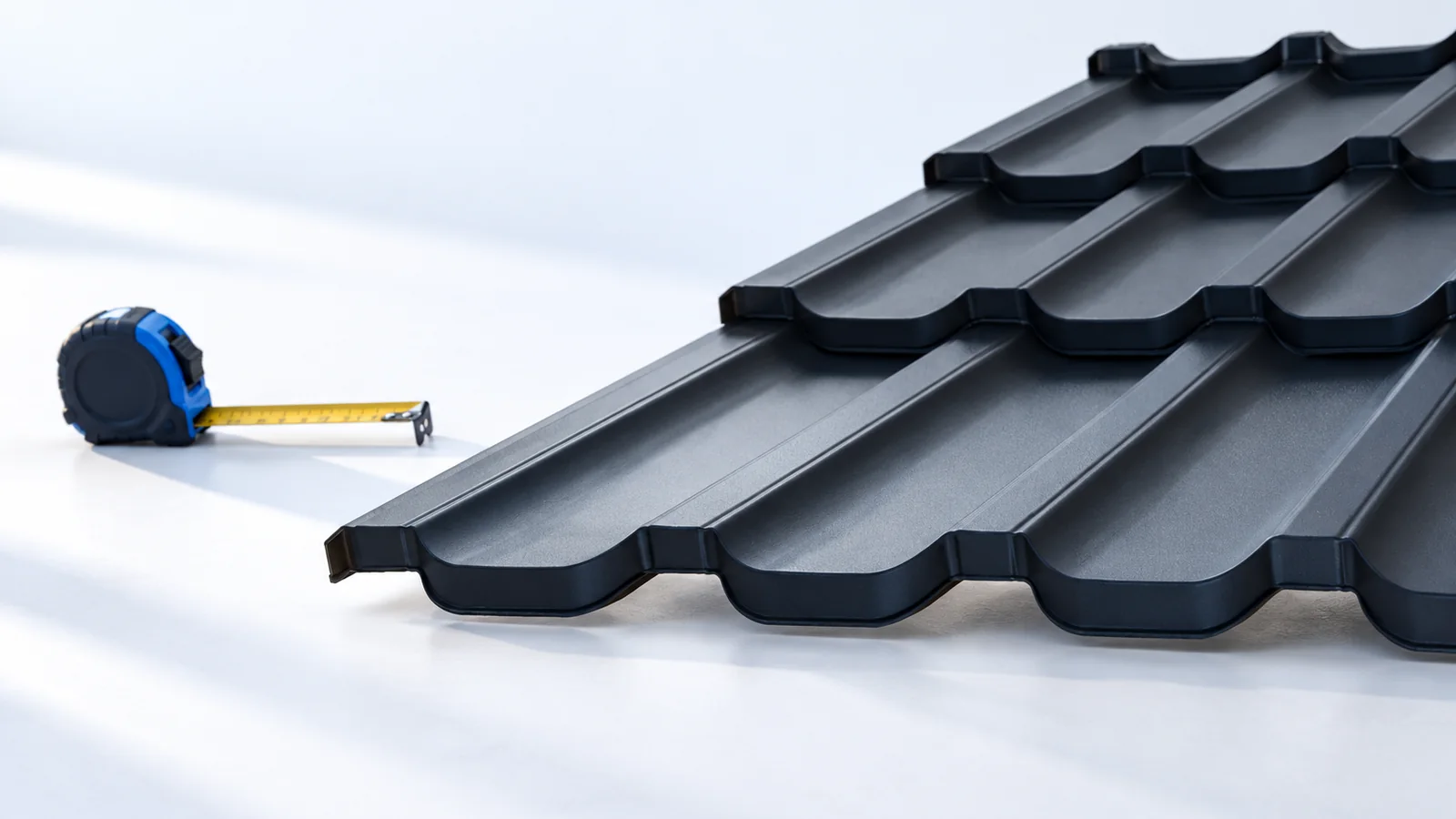
How does the covering weight affect the choice?
Tile-effect steel sheets generally weigh considerably less than clay tiles. That may help when replacing the covering on an existing roof. Have the timber, bearings and connections inspected first. A lightweight covering cannot repair damage left by earlier leaks.
In a new building the structure is designed for the chosen assembly, with snow and wind loads also affecting member sizes. Lighter sheets alone do not guarantee a fixed saving on timber. Compare two properly designed options, including the substrate, insulation and roof equipment.
What difference does the roof shape make?
On a simple slope, cut-to-length sheets can reduce transverse joints, although long lengths need careful handling. Modules can be easier to place on short or intersecting slopes. Whether offcuts can be reused depends on the profile and lap direction; do not apply one waste factor to every roof.
Small clay tiles are easier to set out across a complex roof, but they too require cutting and suitable fixings. With either material, check the permitted pitch and the junctions around chimneys and roof windows. On a roof with different pitches, verify every section separately.
How do you compare noise and loft comfort?
Rain may be more audible beneath an uninsulated metal sheet than beneath a heavier covering. In an occupied loft the sound heard indoors depends on the complete construction: insulation, airtightness, linings and fixings all matter. Tapping a sheet and a tile is no test of the finished room.
Neither covering provides the required thermal insulation on its own. Roof windows, shading and ventilation also affect summer temperatures. PIR can provide a given thermal resistance in a relatively thin layer. Mineral wool offers different acoustic and fire performance. Select the layers for the whole roof assembly.
What affects appearance and service life?
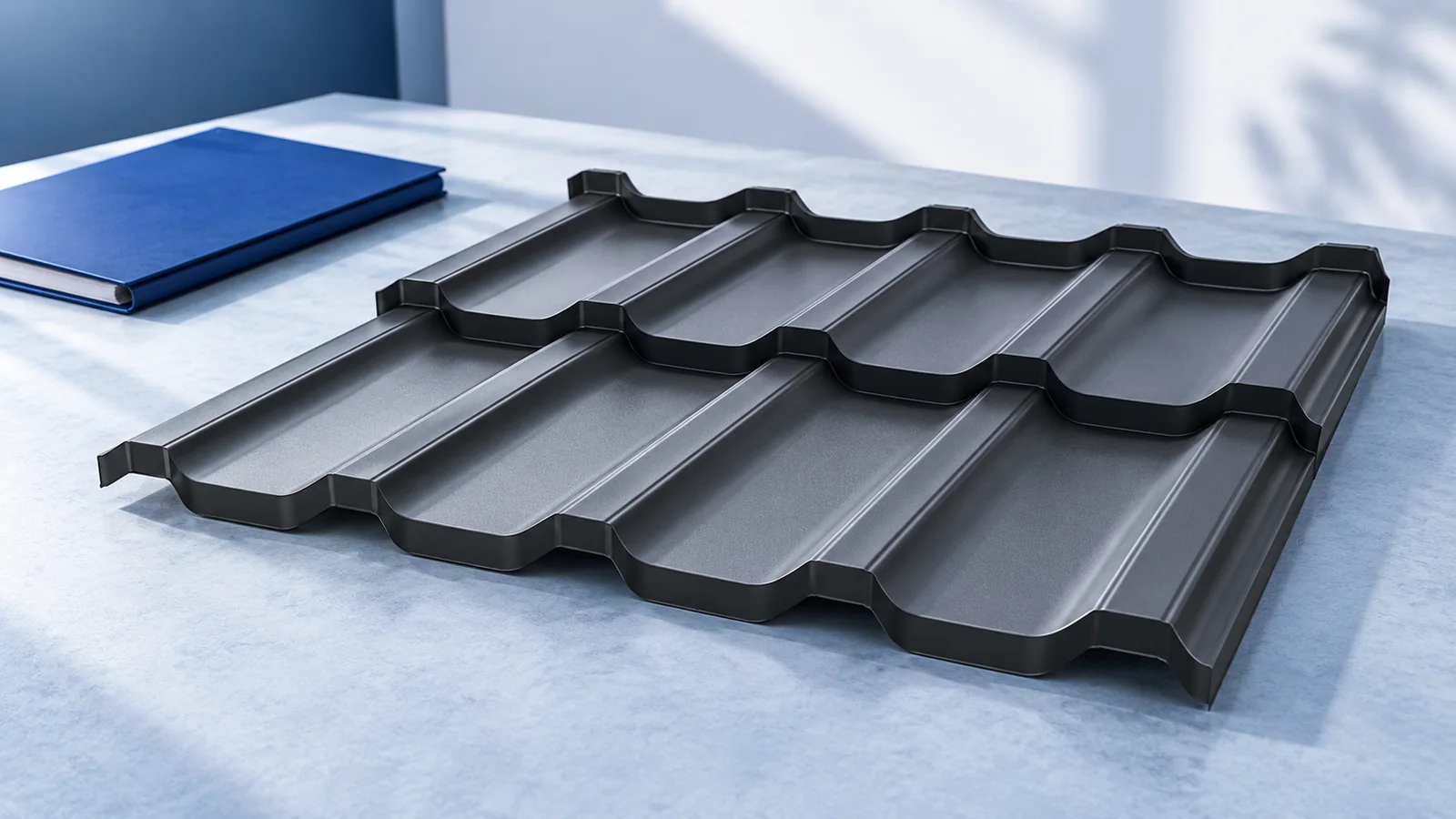
Metal tile sheets come in different colours, textures and shapes. Match the coating to its exposure; a matt finish is not automatically more durable than gloss. Clay tiles also come in different colours and finishes. Inspect samples outdoors, where the light is closer to that on a whole roof.
Compare what warranties cover and their conditions rather than ranking products by the number of years. Both roofs need sound flashing details and inspections. Replacing a single tile differs from repairing a large sheet; access and the condition of the underlying layers also affect the bill.
How do you calculate the total cost?
Include the covering, cutting waste, accessories and labour. For clay tiles, count special fittings and fixings. For metal, check the price per square metre of effective cover, steel thickness and coating. Two quotations expressed per square metre of roof can include very different work.
Add delivery, unloading and preparation of the substrate. For reroofing, include stripping and repairs. If one contractor reuses existing components and the other replaces them, clarify which is appropriate. A lower total may simply leave necessary work unpriced.
Which option makes sense for your house?
Metal sheets may suit a project where low weight and efficient handling matter. Clay tiles may suit the character of the house or the owner’s preference for replacing individual pieces. First rule out coverings incompatible with the pitch, structure or project requirements.
Give suppliers a roof plan, structural details and a description of the loft use. Obtain complete quotations on comparable terms. Weigh appearance and cost alongside the technical requirements. A weathertight roof ultimately depends on suitable materials, properly designed junctions and careful installation.
Check any site-specific or project conditions before choosing the appearance. The roof shape or colour may already be specified. On a refurbishment, consider adjacent buildings and retained flashings so that the technically suitable material also matches the approved design.

Free quote
What to include in your enquiry
Tell us how you plan to use the material, the dimensions and the quantity you need. Include the thickness, grade or variant name, along with the delivery town or your preferred collection branch. For a specific product, add its name or a link to the product page. We will reply to the email address you provide to discuss availability and the terms of your order.
Read next
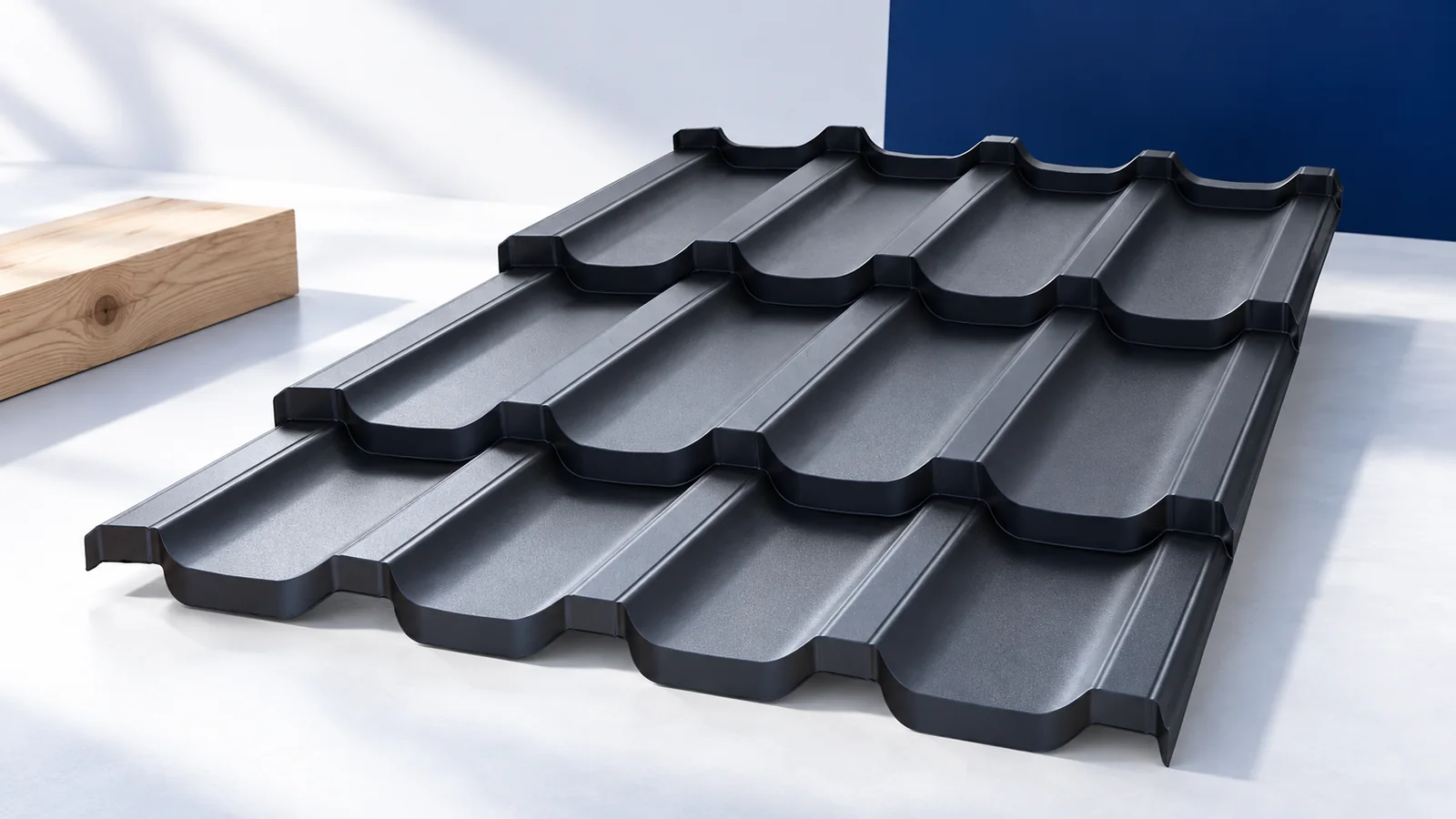
Mark the pitch, valleys and sheet lengths on a roof plan before comparing finishes. Tile-effect sheets reproduce the rhythm of courses of…
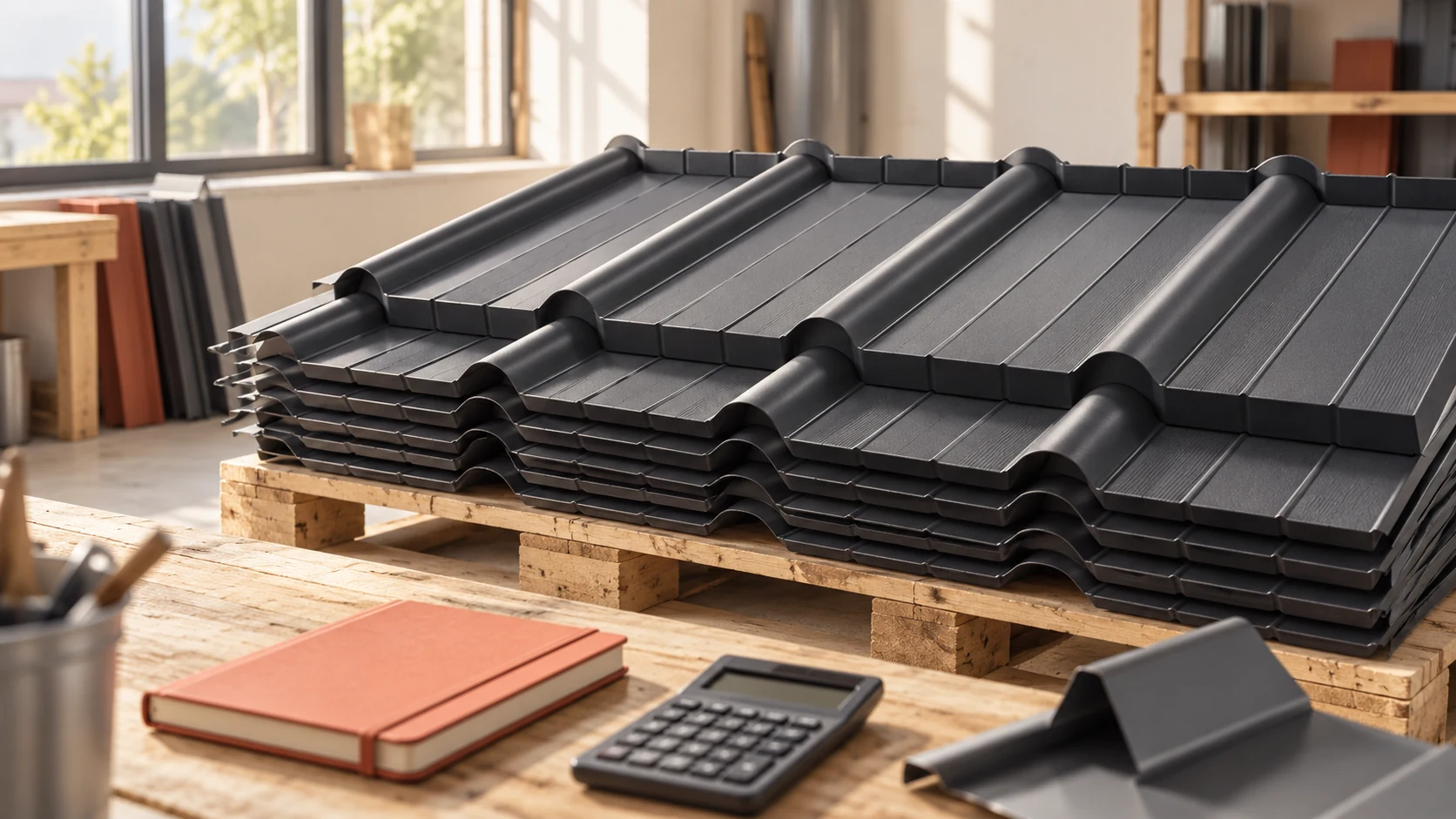
To compare prices, establish which square metre the supplier charges for, how much material the roof needs and what is included. Coating,…
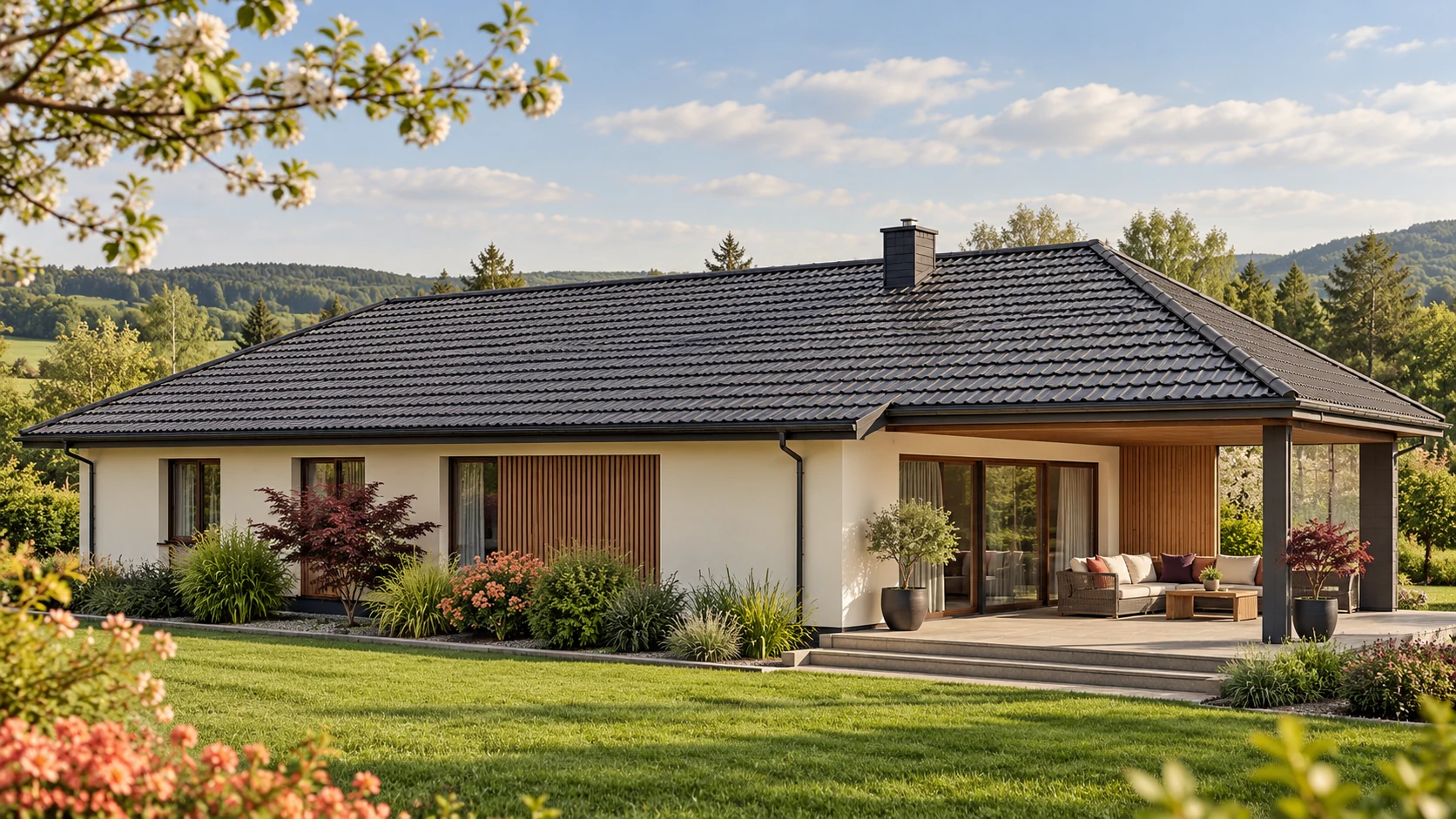
Both profiles can work on a house. Start with the roof section, slope layout, pitch and supporting structure before choosing the appearance.…
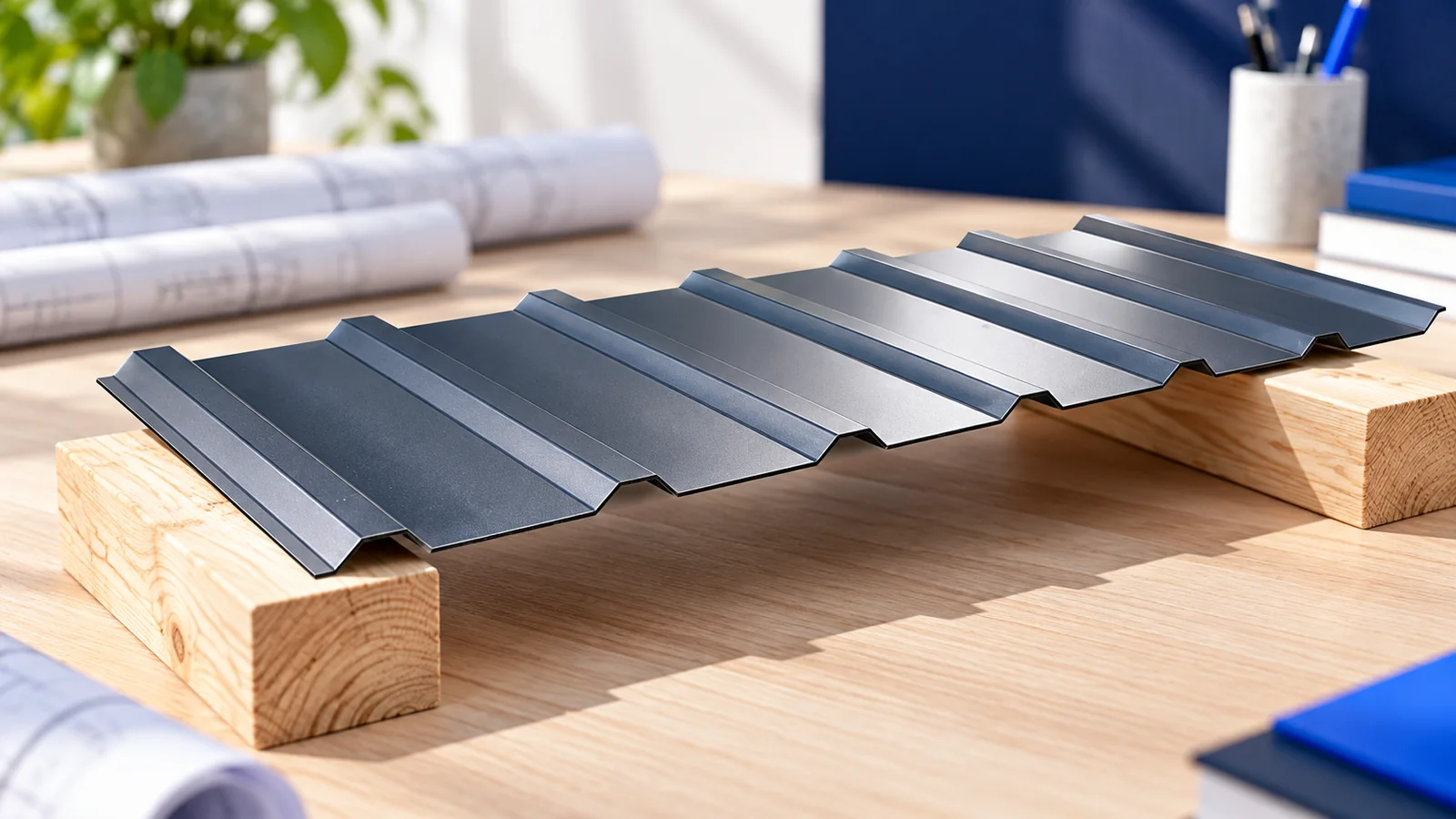
Roof battens support the covering and give its fixings a secure hold. For tile-effect steel sheets, the position of each batten must…
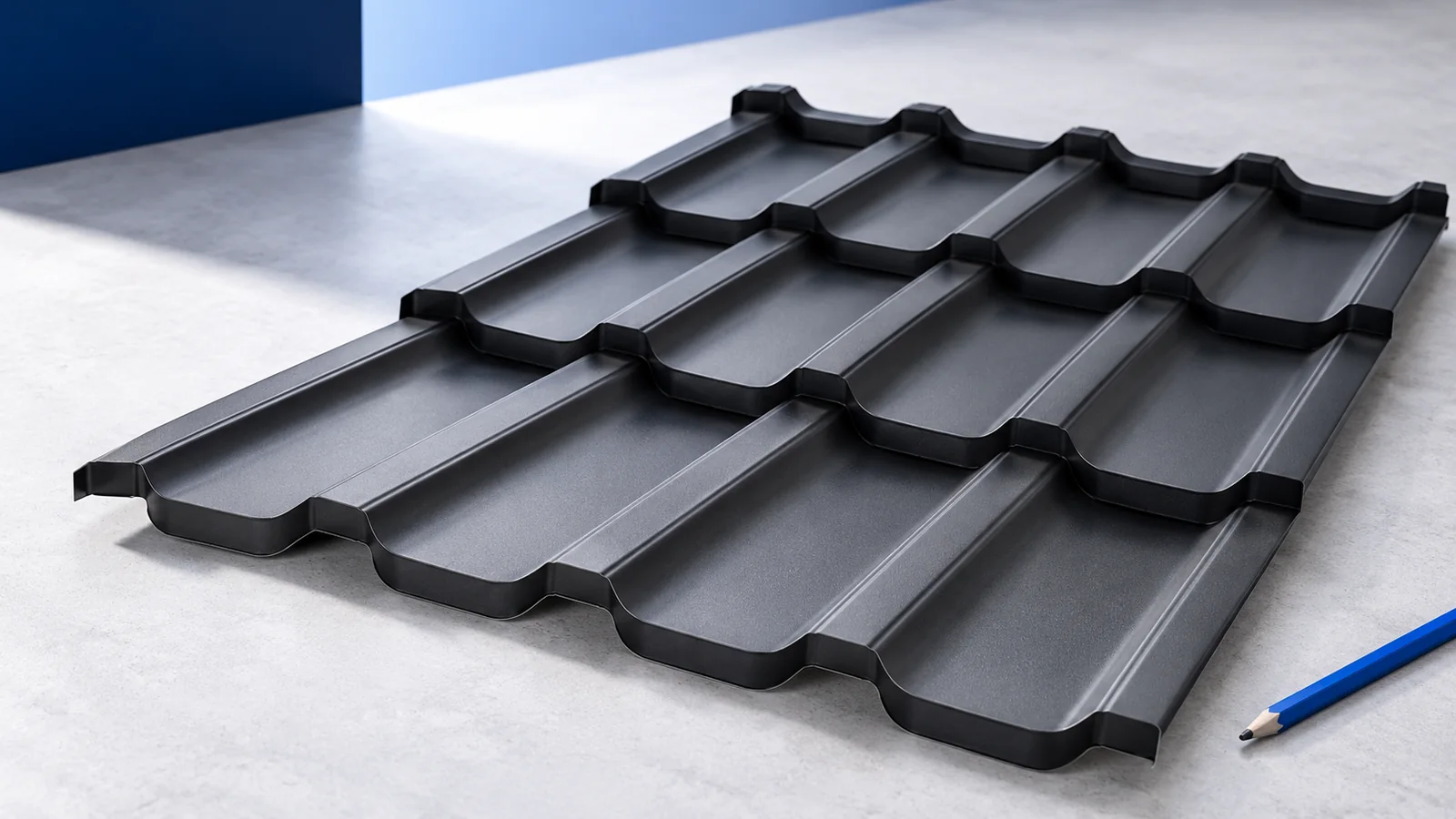
Before choosing a tile pattern, give each supplier the same measured drawing. Ask them to show which profile suits the pitch, which…
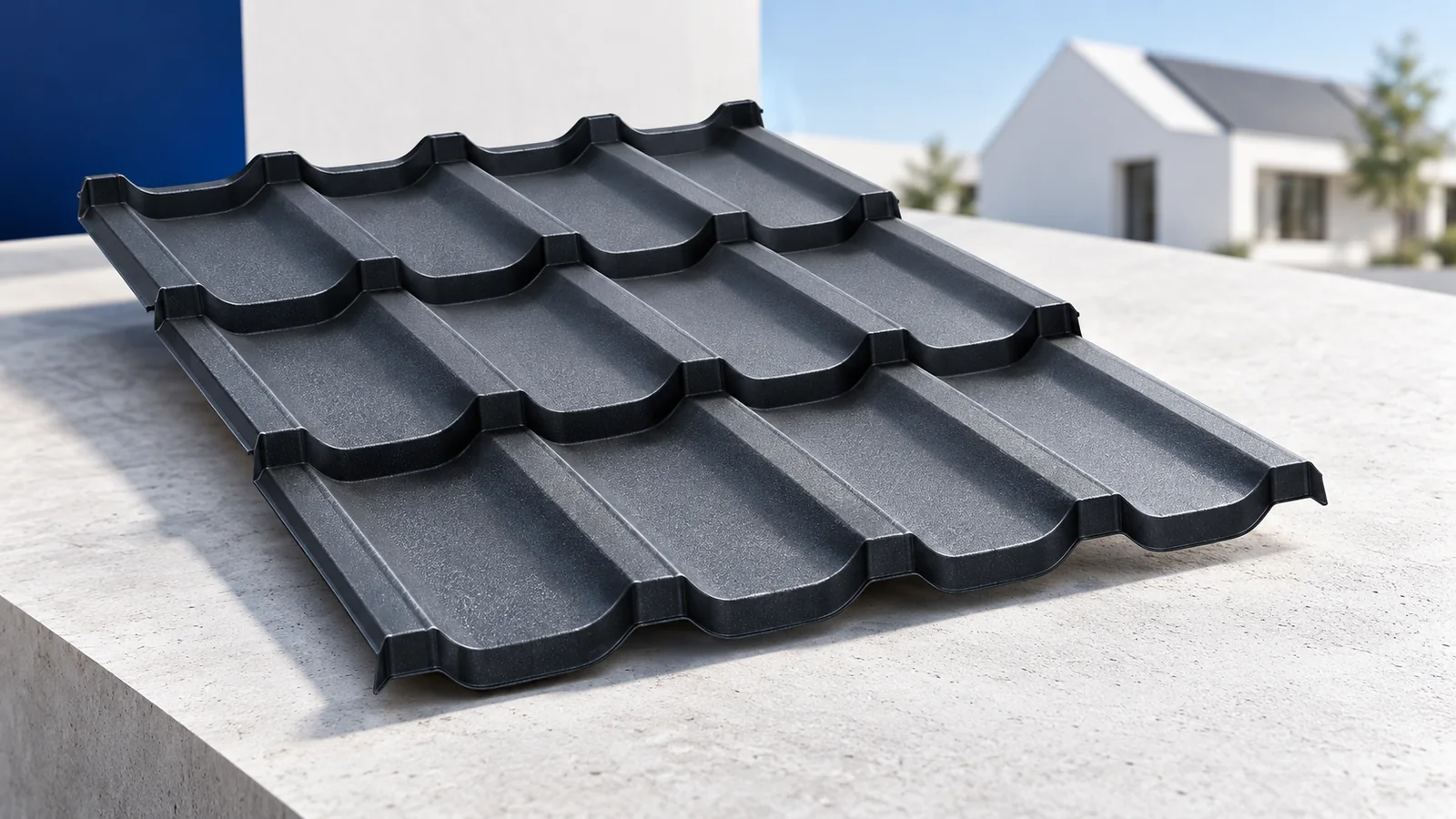
Two modular roof sheets can share a colour code and still perform differently. Before choosing matt or gloss, identify the steel core,…
Plan the delivery around the laying date and prepare a dry, ventilated storage area before the lorry arrives. Check that the supports…
Ask the roofer to explain one difficult junction on your drawings and show an example from a comparable job. This gives you…
