






Choosing a protective coating for steel roofing
Roof coverings
Compare steel roofing finishes in the conditions they will face on your building. Note exposure to salt, industrial deposits and moisture on the underside of the sheet. Then ask for the steel thickness, metallic coating and organic finish for each option. A thicker paint layer is only one difference between products: the coating chemistry and the surfaces it protects matter too. Read the warranty for colour retention separately from the warranty against perforation. Compare prices for the same profile and effective cover, and view a physical colour sample outdoors.
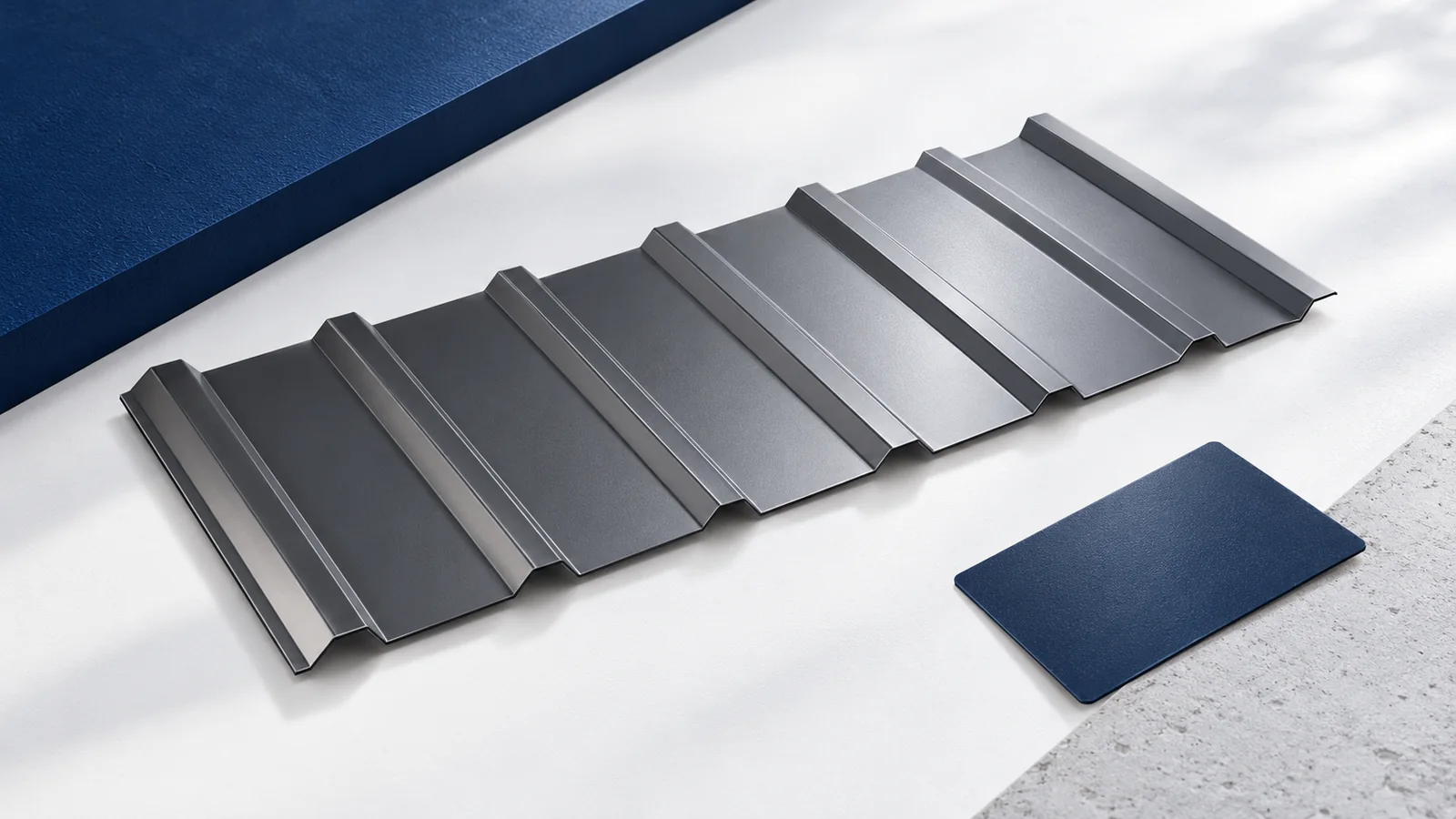
What protects the steel on each side?
A metallic coating protects the steel substrate against corrosion. The organic coating gives the outer face its colour and provides additional surface protection. Surface preparation and intermediate layers are part of the coating system. The reverse face may have a different finish.
The description “coated steel” does not identify a roofing specification. Ask for the substrate thickness, the metallic coating and the finish on each face. Check where the manufacturer permits the product to be used, particularly near the coast or in polluted air.
Is a thicker coating always better?
Organic coating thickness is usually stated in micrometres. Catalogue examples include a 25 µm polyester finish, a 35 µm matt finish and a 55 µm polyurethane finish. These values describe particular products; the name of the finish alone does not specify its thickness.
Compare composition, adhesion, resistance to sunlight and the way the layers work together. Use the technical data sheets for the exact finishes under consideration. A thicker paint film does not increase the thickness of the underlying steel.
Which site conditions affect the choice?
Map exposure around the roof. A sheltered edge may collect deposits because rain rarely washes it, even when the main slope stays clean. Distance from a factory or the coast is useful background but does not describe every surface on the building.
Choose a system approved for the exposure and read the warranty exclusions. In agricultural buildings, moisture and substances in the indoor air can attack the underside. An exterior finish alone cannot protect the opposite face from those conditions.
How do you assess colour retention and gloss?
A change in colour or gloss need not mean the roof leaks. Conversely, a long warranty against perforation does not necessarily cover fading for the same period. Look for separate conditions for appearance and corrosion damage.
View a sample in daylight alongside the wall and flashing materials. Matt finishes soften reflections but do not eliminate them. When ordering additional sheets, compare production batches as well as colour codes: adjacent sheets can look different despite carrying the same code.
What accounts for the price difference?
A premium can reflect a different protective system, surface appearance or warranty. To isolate the cost of the finish, ask for both prices for the same profile, steel thickness and sheet length.
A price list dated 28 October 2026 gives an example for T18 with 0.5 mm steel. Per square metre of effective cover, the converted prices were approximately €10.36 for 25 µm polyester and €16.27 for 55 µm polyurethane, both including 23% Polish VAT. These are historical catalogue prices for those two finishes, not a current shop offer.
How can a coating be damaged on site?
Avoid dragging one sheet over another. Hot swarf can damage nearby surfaces, and trapped water can attack sheets still in the delivery pack. Use the cutting tools prescribed for the product and protect the coating during lifting and storage.
Choose compatible fasteners and seals. Clean the finish only with products approved for it. If bare metal or damaged paint is visible, assess the defect and follow the manufacturer’s repair procedure. A patch of ordinary paint may neither match the colour nor restore protection.
What belongs in the order specification?
Specify the profile, steel thickness, exact coating and its parameters, colour and coated face. Keep the warranty and the storage and maintenance instructions with the quotation. These documents make it possible to check what will be delivered.
Select a finish for the building’s exposure and expected use. A price premium makes sense when you can identify the relevant performance or warranty benefit in writing. Once specified, even the right finish still depends on undamaged sheets and carefully made roof details.

Free quote
What to include in your enquiry
Tell us how you plan to use the material, the dimensions and the quantity you need. Include the thickness, grade or variant name, along with the delivery town or your preferred collection branch. For a specific product, add its name or a link to the product page. We will reply to the email address you provide to discuss availability and the terms of your order.
Read next
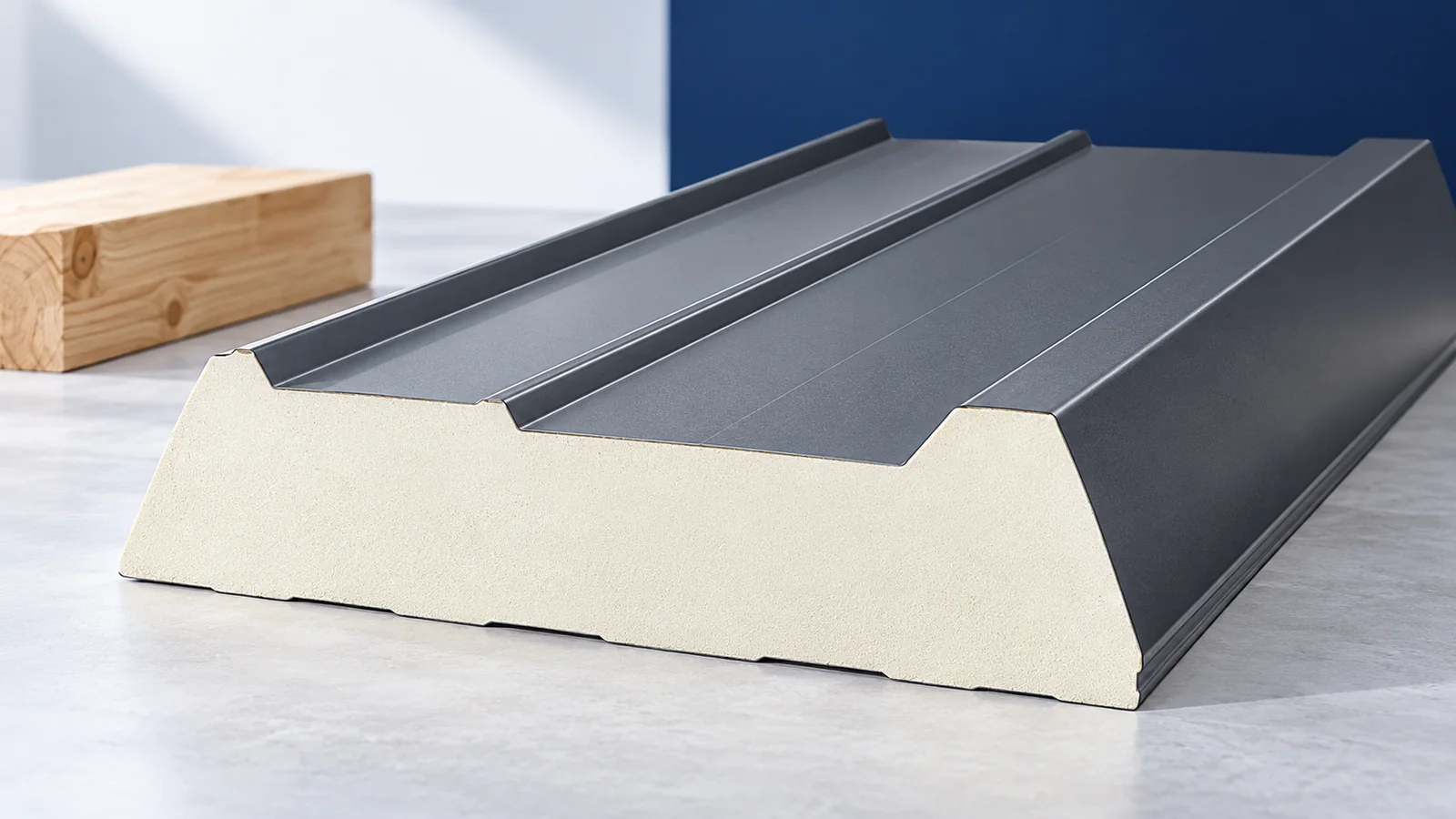
Plan the joints before ordering roof sandwich panels. Show the supports, laying direction, end laps, rooflights and penetrations on the layout drawing.…
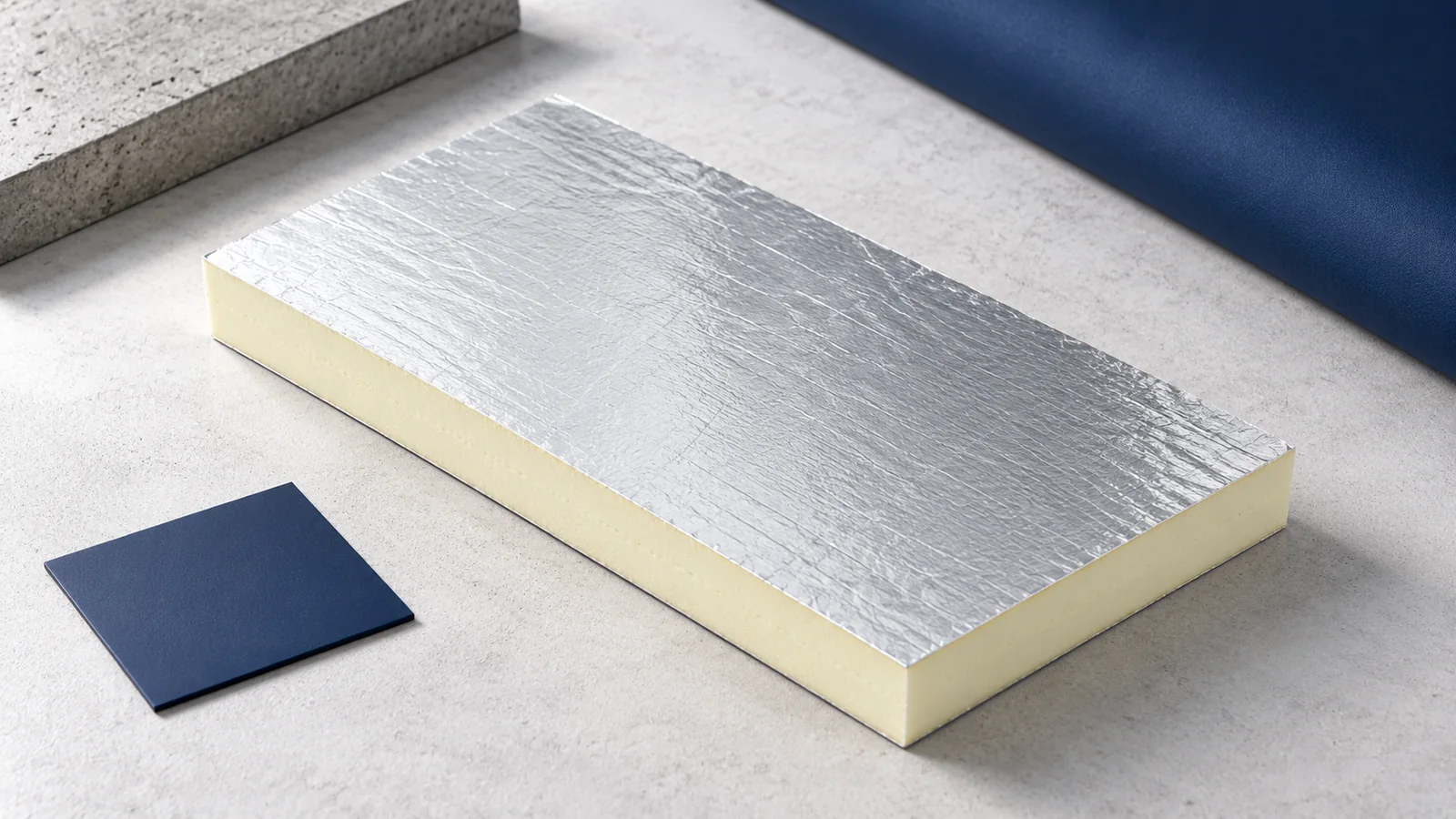
Trace the wall insulation up to the eaves on a section through the roof. At the wall plate it needs to meet…
A leaking chimney flashing can often be repaired while the surrounding roof covering still has years of service left. The decision changes…
When water appears inside a building, keep clear of wet electrics and sagging ceilings. Photograph the first signs from a safe position…
Anchoring a wall plate starts with two drawings: the section through the concrete ring beam and the plan showing the rafters. Together…
A row of rooflights creates two different tasks for a crew laying Utherm Roof LE on a hall roof. Board size affects…
Replacing a roof covering with an integrated photovoltaic roof can disrupt a business. How much depends on the building, the work involved…
A bed may fit beneath the eaves even when there is too little headroom to stand up beside it. Draw a section…
