Comparing integrated solar roof proposals for commercial premises
Roofing and energy
One quotation may cover a finished solar roof with all electrical work, while another covers modules and only part of the installation. The proposed capacity, roof area and servicing arrangements may differ too. Give every bidder the same roof dimensions, structural information, photographs of the surroundings and description of how the premises are used. Include electricity demand, opening hours, customer movements and site access. Check technical suitability and what the contractor will deliver before comparing prices. A rate per square metre tells you little unless you know which roof area it covers and what the building owner will receive at handover.
In this guide
What should each bidder receive?
Ask each bidder to record any assumptions about site conditions. You can then see whether differences in price reflect different allowances for construction work.
Specify the condition you expect at handover: a complete covering, an operating electrical installation, documentation and acceptance checks. Request separate prices for options such as battery storage or a charging point. This lets you compare the basic roof proposals first and then assess what each addition would provide.
How can you tell whether the roof is building-integrated?
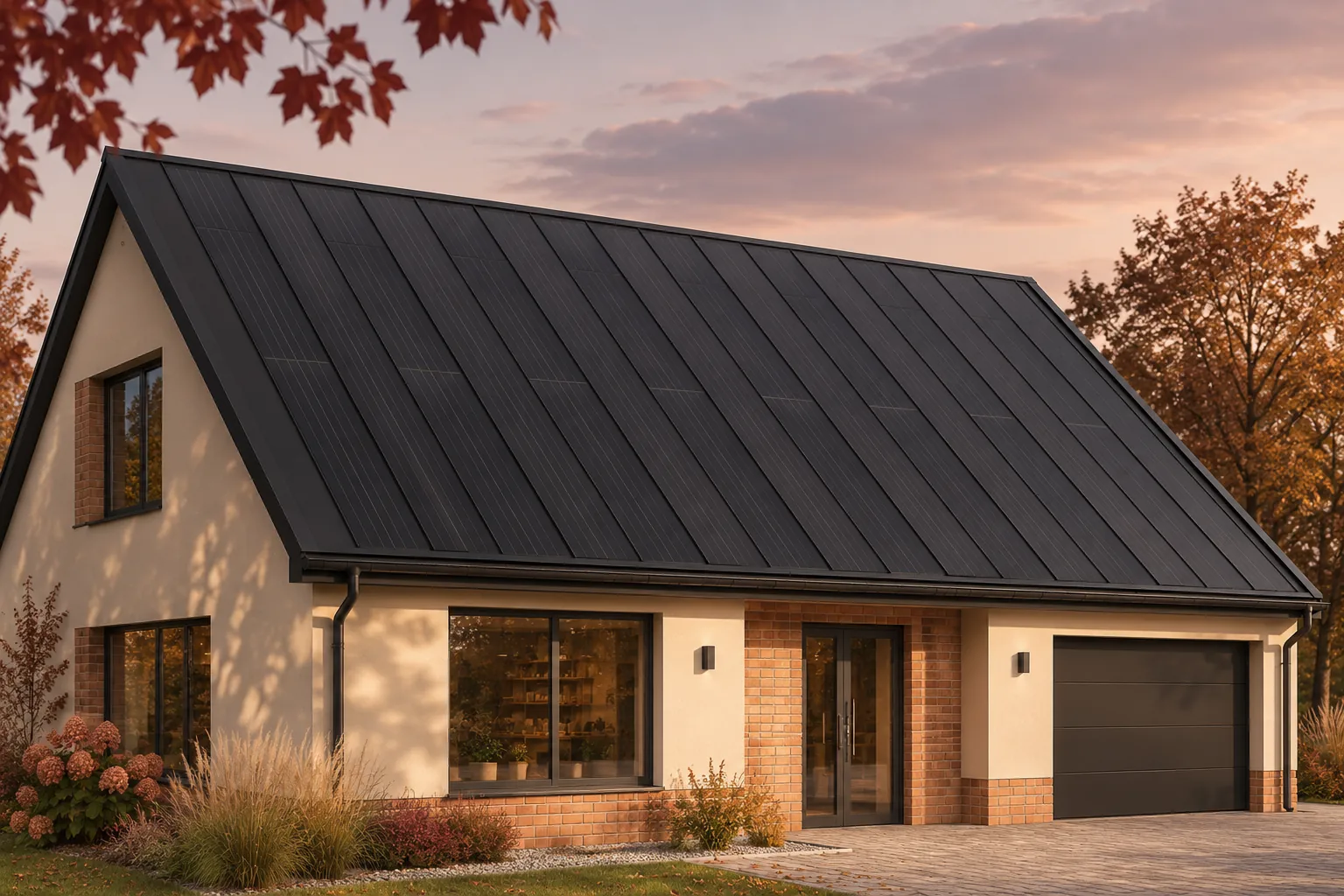
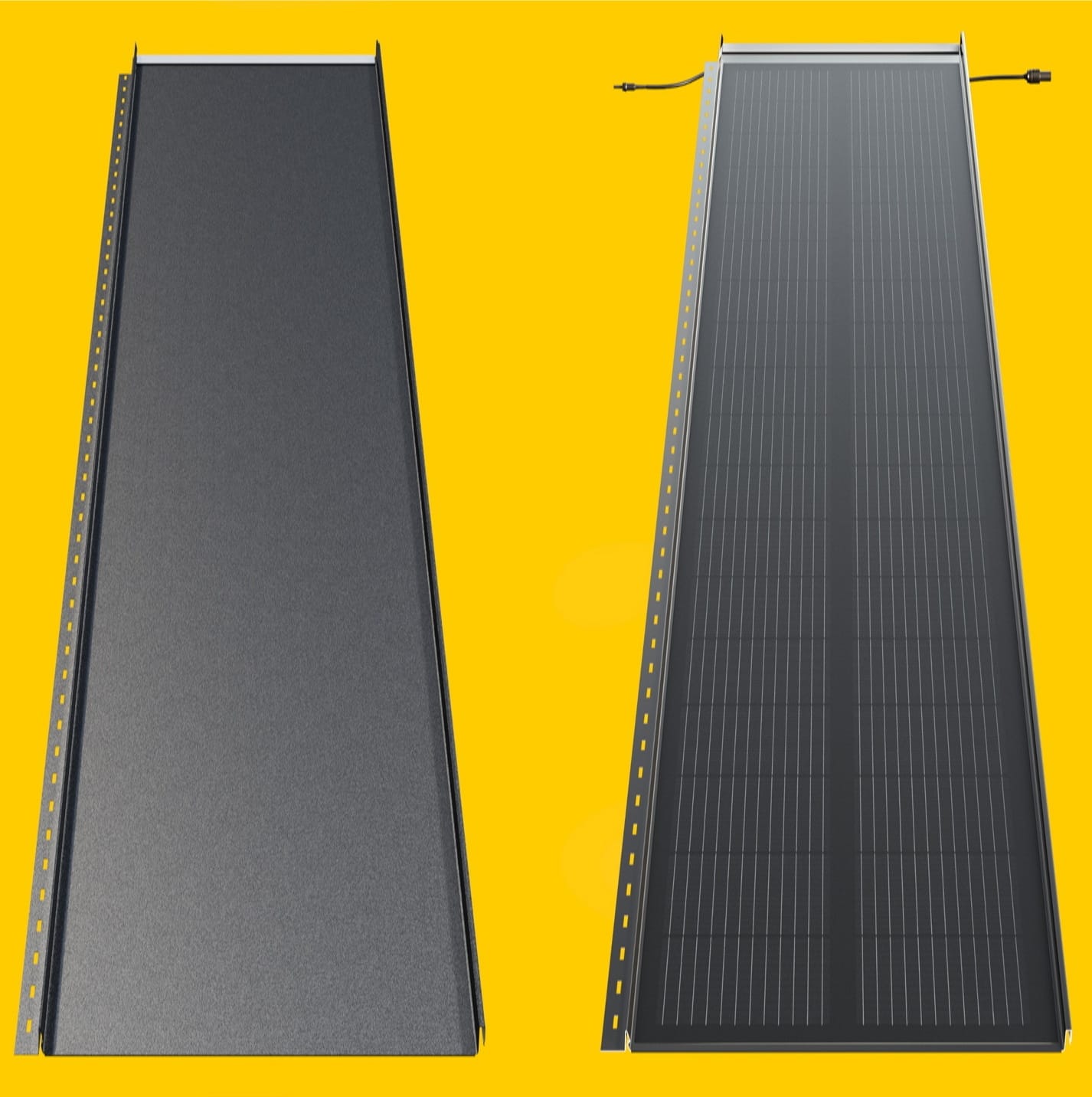
Ask for a cross-section and an explanation of what each component does. In a BIPV roof, the system forms the covering within the active area. A roof-mounted array sits over a complete covering. The two arrangements require different materials, even if both quotations describe a solar roof.
Find out whether the offer includes steel roofing panels with factory-integrated solar cells or modules on a proprietary support system that replaces part of the covering. This affects junction details, ventilation and repair methods. Use those differences to judge suitability for the particular building.
What evidence establishes technical suitability?
Check permitted roof pitches, the required layers and the support arrangement. The structural engineer needs the weight of the entire assembly. Include any requirements arising from the building’s use and equipment. Ask the bidder to document suitability for the roof in question.
Read safety documentation in the context of what was actually assessed. A classification for one component or tested assembly applies within its stated scope. Ask the contractor to identify the tested construction and show how it relates to the proposed roof layers. Resolve any differences before placing the order.
How should you compare generation forecasts?
Compare forecasts for the same site and surroundings. Check the allowance for shade, orientation, temperature and system losses. Request monthly figures and the assumptions for on-site consumption. Even a high annual yield leaves open how much electricity coincides with business hours.
The largest array may extend onto less favourable areas or generate more surplus. Ask why the active fields are in the proposed positions. Passive panels are part of an integrated covering and may make sense where the additional yield would be too small to justify the cost.
How do installation and servicing arrangements differ?
Identify who will deliver the roof and the electrical installation and who coordinates the two. Agree on inspections before concealment and on the as-built records. Ask for experience with this particular roof system, including its flashings. Installing conventional PV modules calls for different skills from completing an active, weathertight covering.
Check how to report a fault, obtain parts and remove a damaged element. Distinguish the output warranty from cover for the product and workmanship. Have the bidder explain how repairs would be carried out while the premises are occupied so the business can judge the likely disruption.
How do you choose between the remaining offers?
Set aside proposals with unresolved technical issues or unclear scope. Compare the others in a single table covering total cost, electricity used on site, appearance and maintenance. This makes it easier to identify what a higher price buys and whether the difference matters for your premises.
Where the building already needs a new covering, an integrated roof can combine the roofing work with generation and give the slope a uniform finish. Check the drawings and scope of supply to establish which offers actually deliver those benefits.
Solar roofing manufacturers and brands include Dyaqua, Solarstone, MDM NT (MyRoof), SunRoof, Nelskamp, Wienerberger Wevolt, Electrotile, LUMA Solar, SolRoof and ML System.

Free quote
What to include in your enquiry
Tell us how you plan to use the material, the dimensions and the quantity you need. Include the thickness, grade or variant name, along with the delivery town or your preferred collection branch. For a specific product, add its name or a link to the product page. We will reply to the email address you provide to discuss availability and the terms of your order.
Read next
An insulated sandwich panel and an integrated photovoltaic roofing panel are not interchangeable. They perform different tasks, require different supports and insulation…
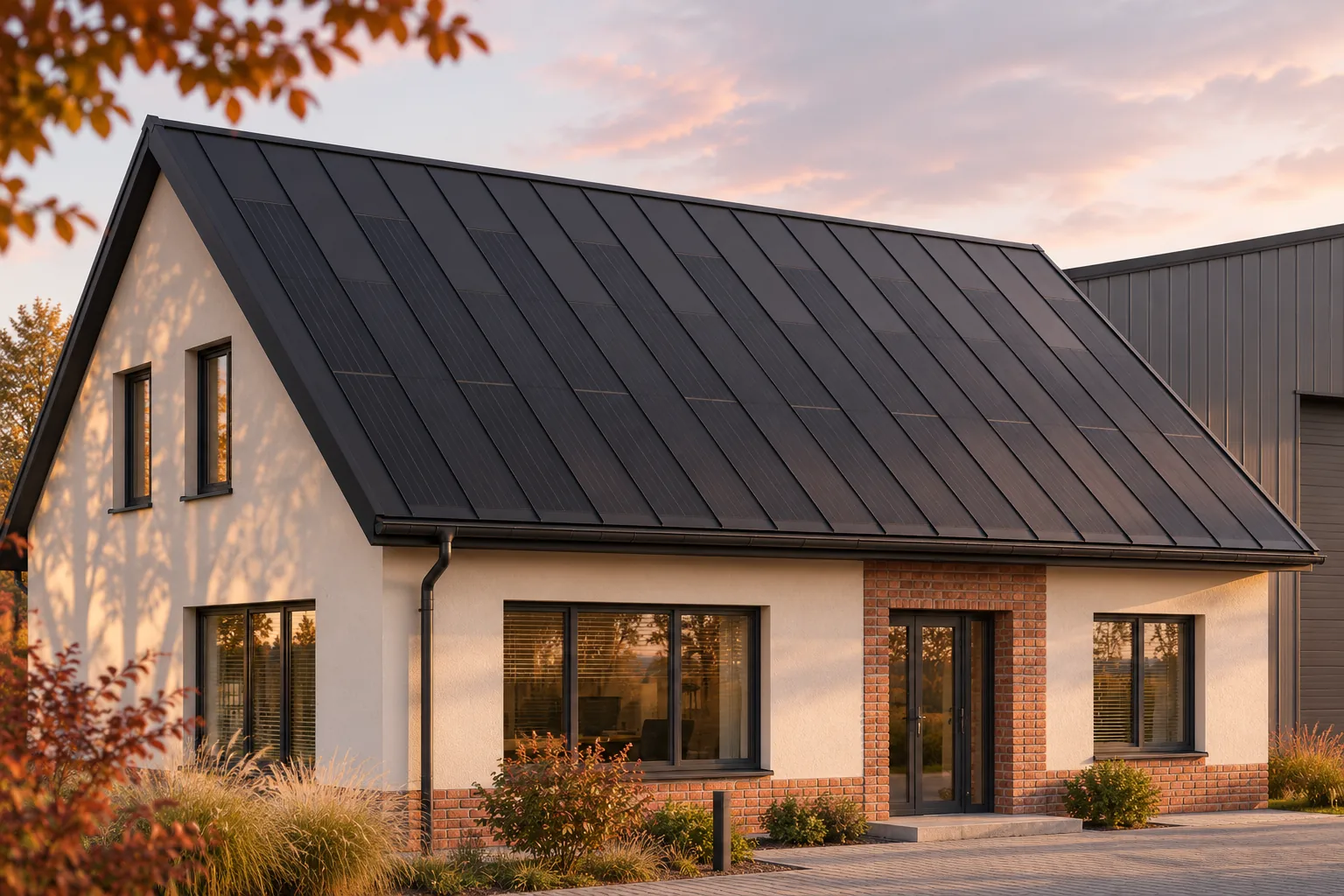
An office wing beside a production hall may be a good candidate for an integrated solar roof. Its roof can have a…
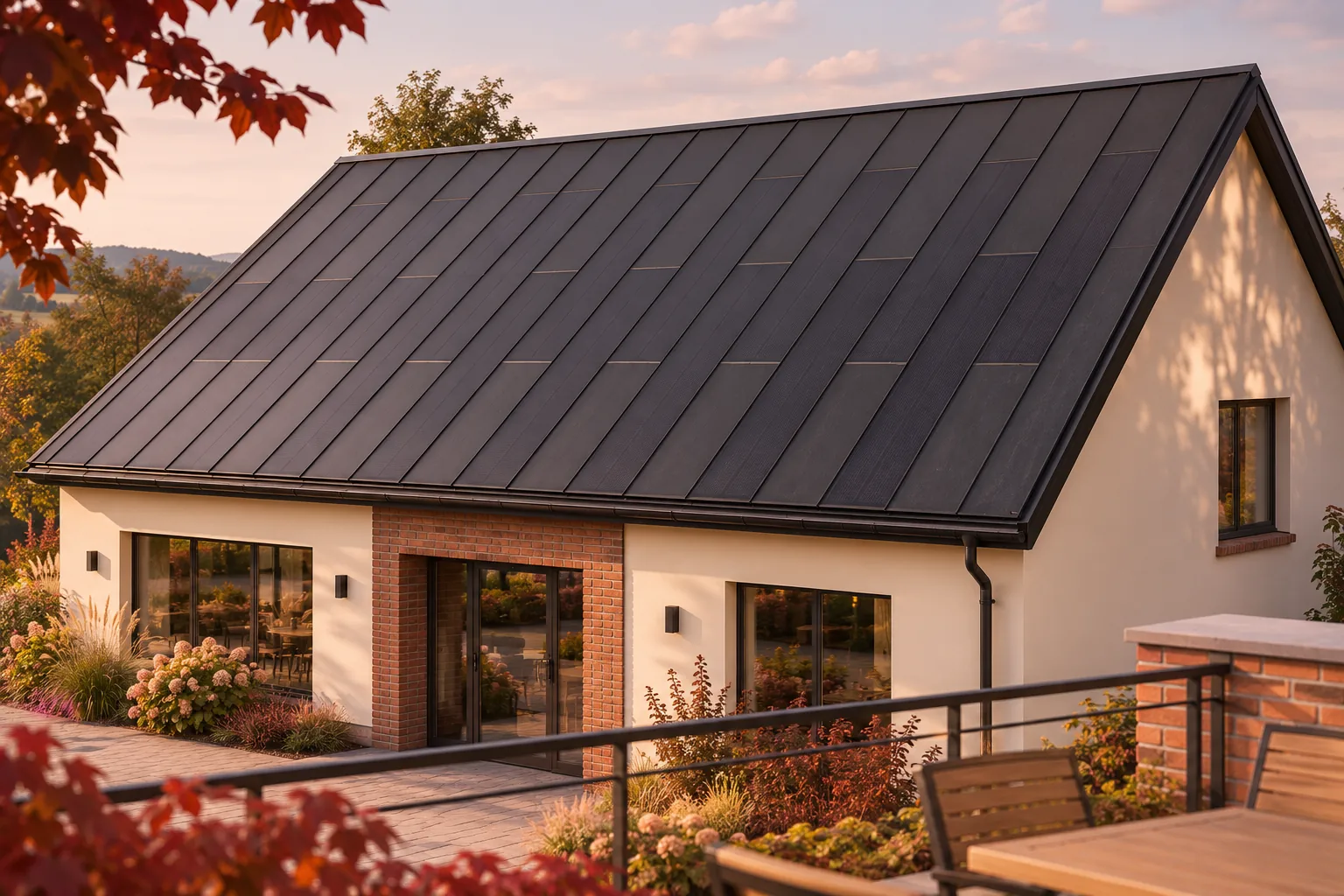
A building-integrated photovoltaic roof provides both a weatherproof covering and electricity. To assess the extra investment in generation, establish which roof the…
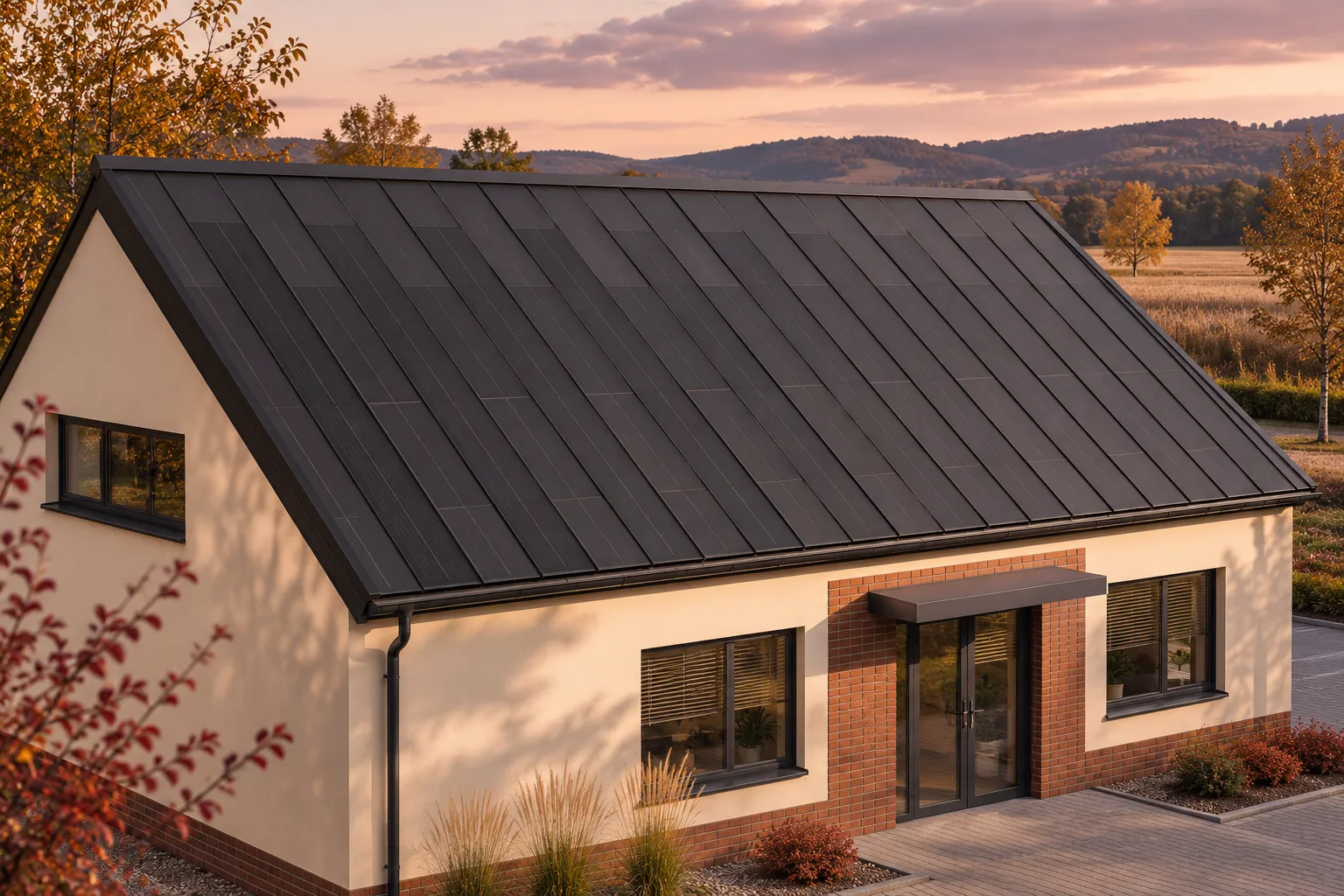
For a business, a roof repair costs more than parts and labour if it also stops deliveries or production. An integrated photovoltaic…
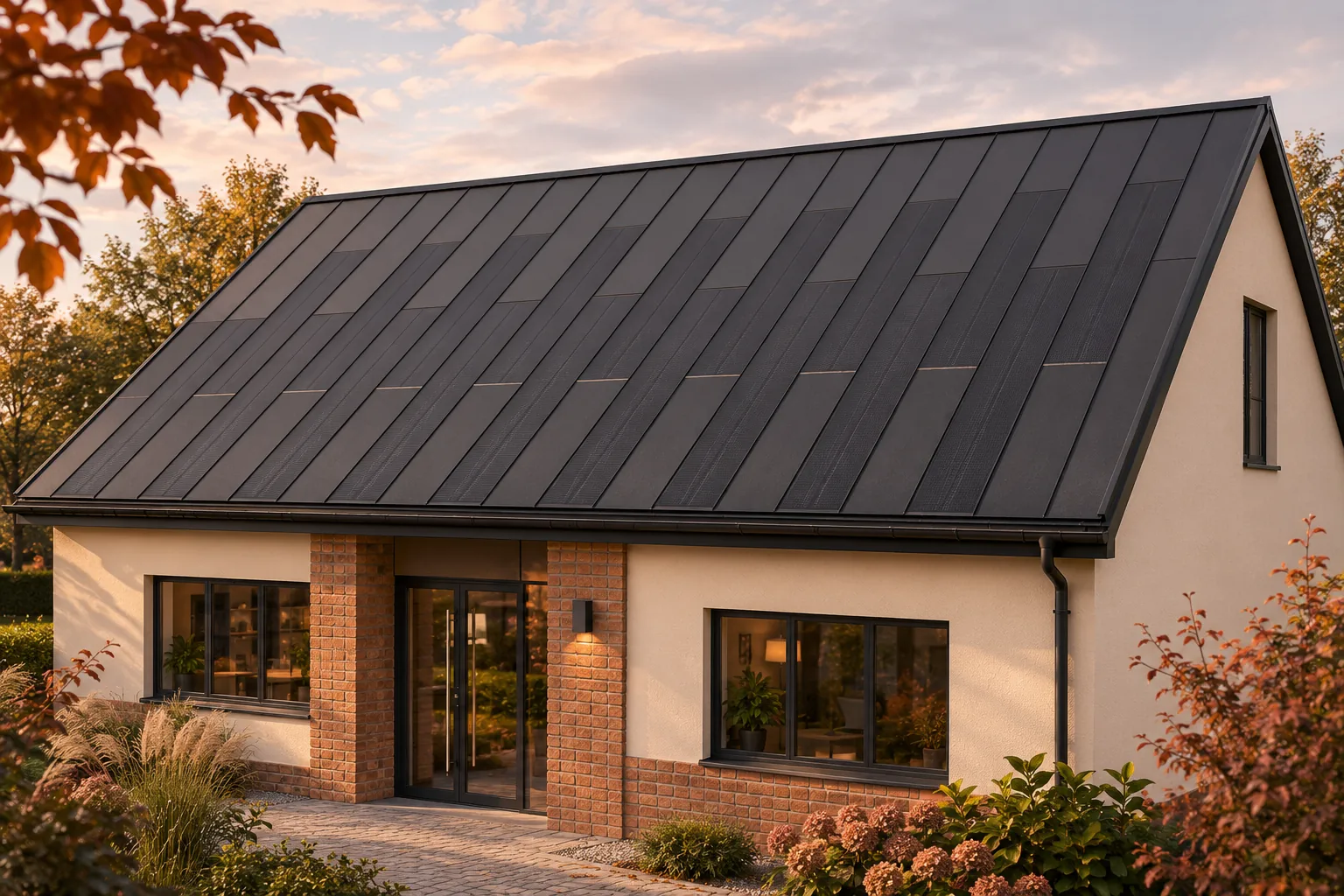
A business planning to renew its roof covering can compare building-integrated photovoltaics (BIPV) with a new covering that carries conventional solar modules.…
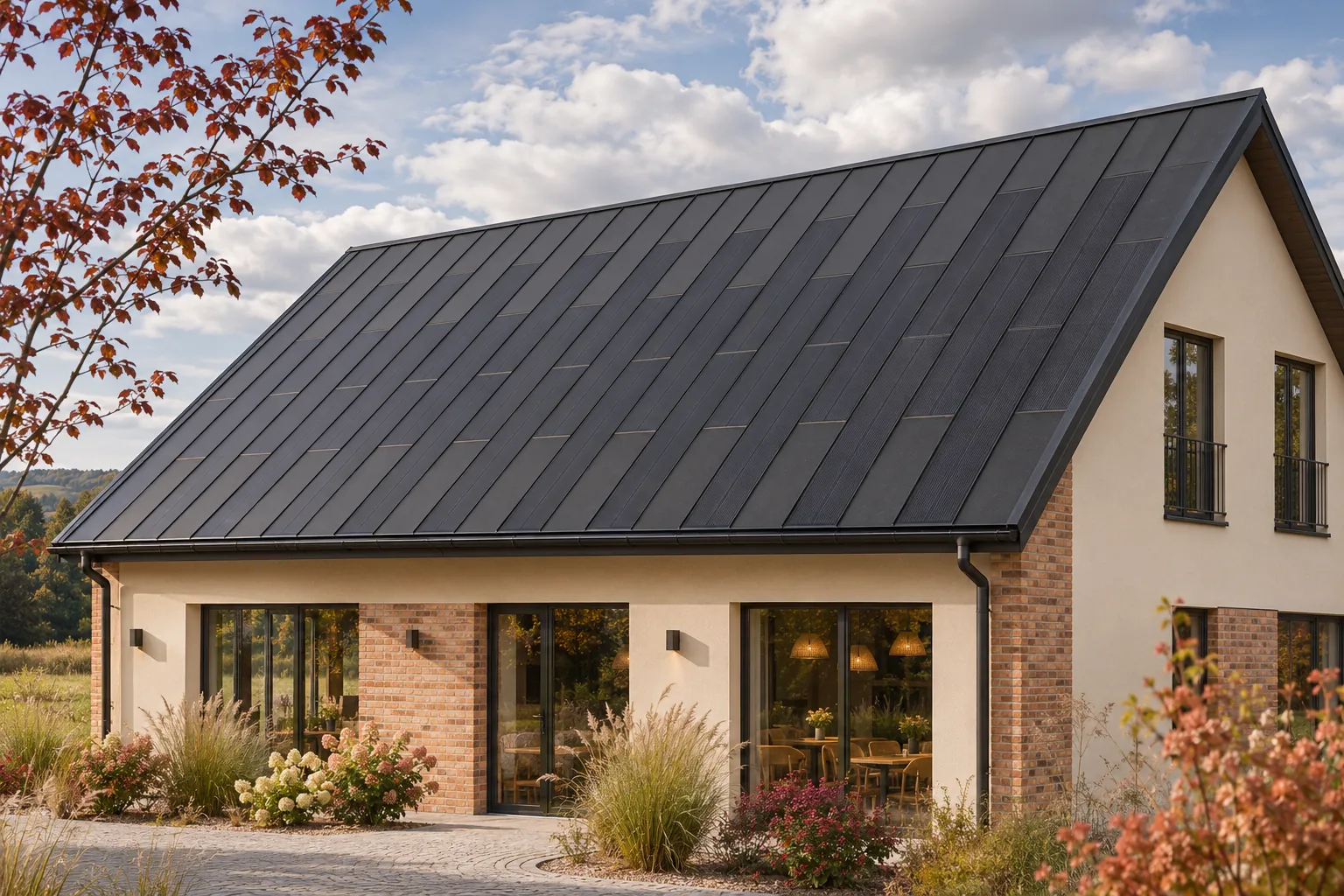
A guest house needs a roof that suits its setting and allows staff to run the property day to day. Building-integrated photovoltaics…
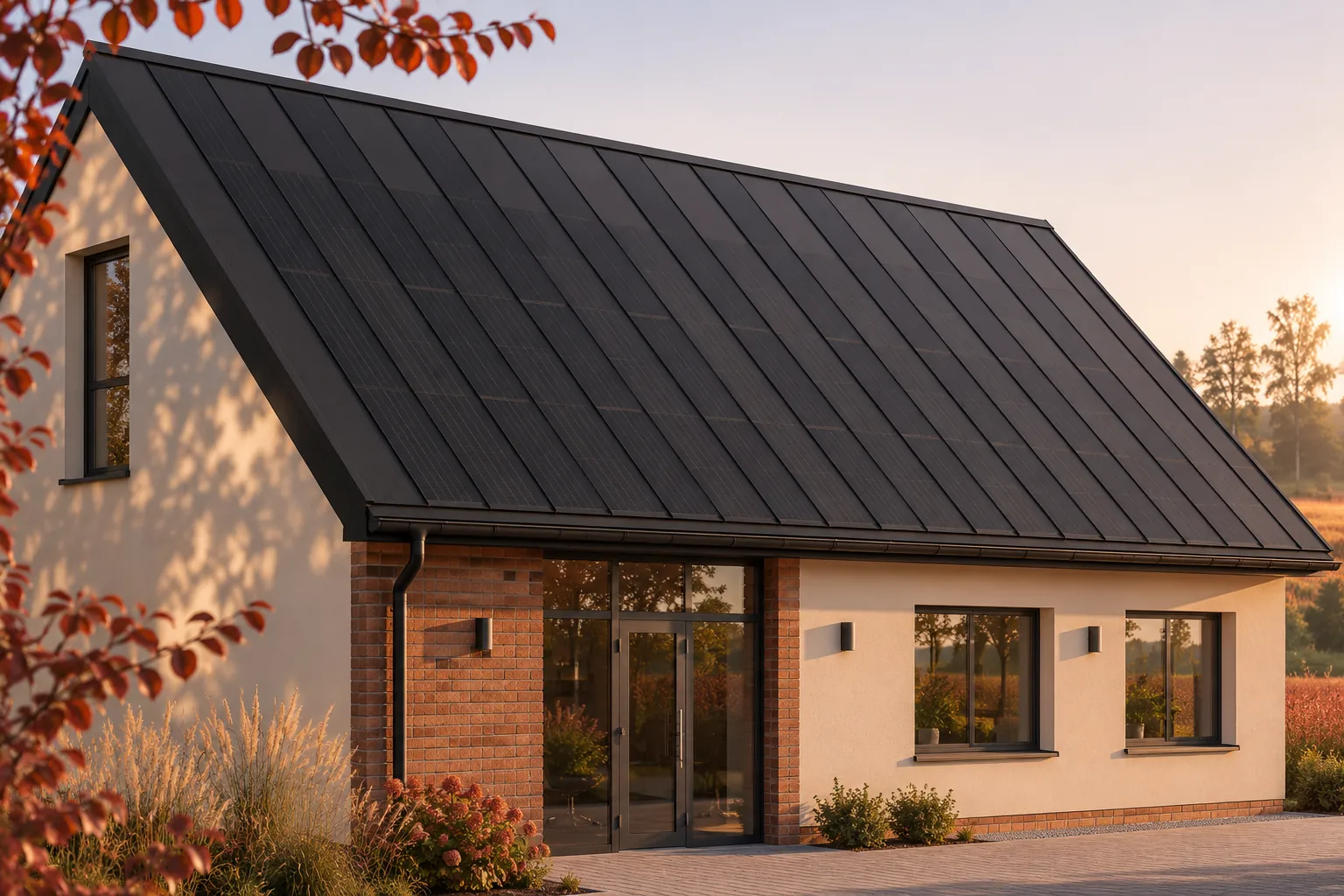
A business that operates during daylight hours may be able to use much of the electricity from a solar roof as it…
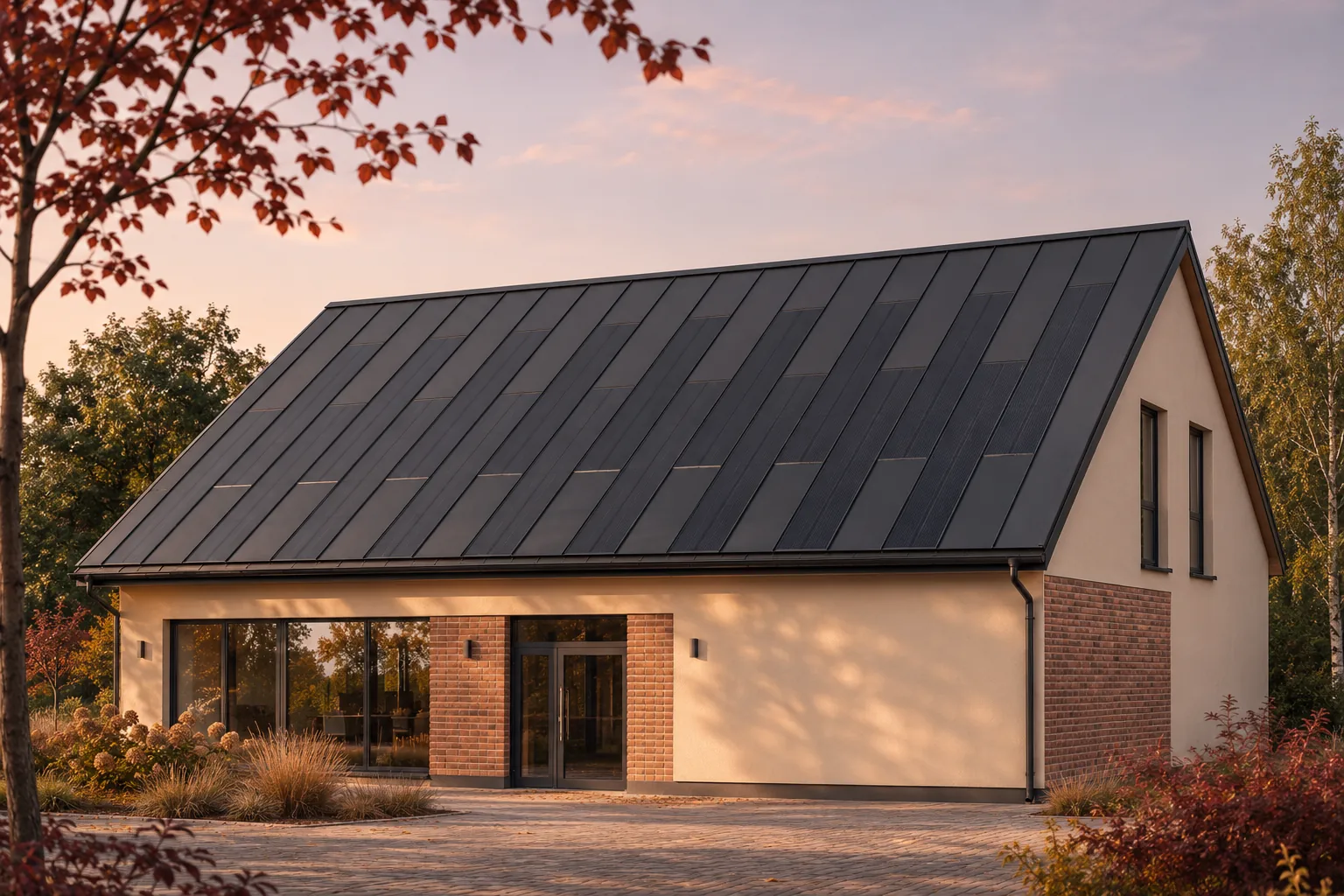
Start a commercial solar roof brief with the building, its electricity demand and the way the site operates. Say why the roof…