






What are the trade-offs when choosing mineral wool panels?
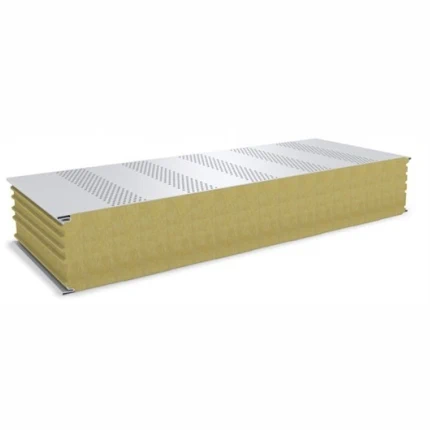
Mineral wool panels
At a glance
Mineral wool panels combine finished facings, insulation and defined fire performance. Choosing them affects wall thickness, weight and installation, so consider all three together. A system that suits a separate production area may not suit the entire warehouse. A non-combustible core is useful, but the finished panel has its own reaction-to-fire classification, and the wall achieves its fire resistance only under specified conditions. Choose a system that meets the project requirements and check its limits on support spacing, fixings and openings before deciding how much of the building to enclose with it.
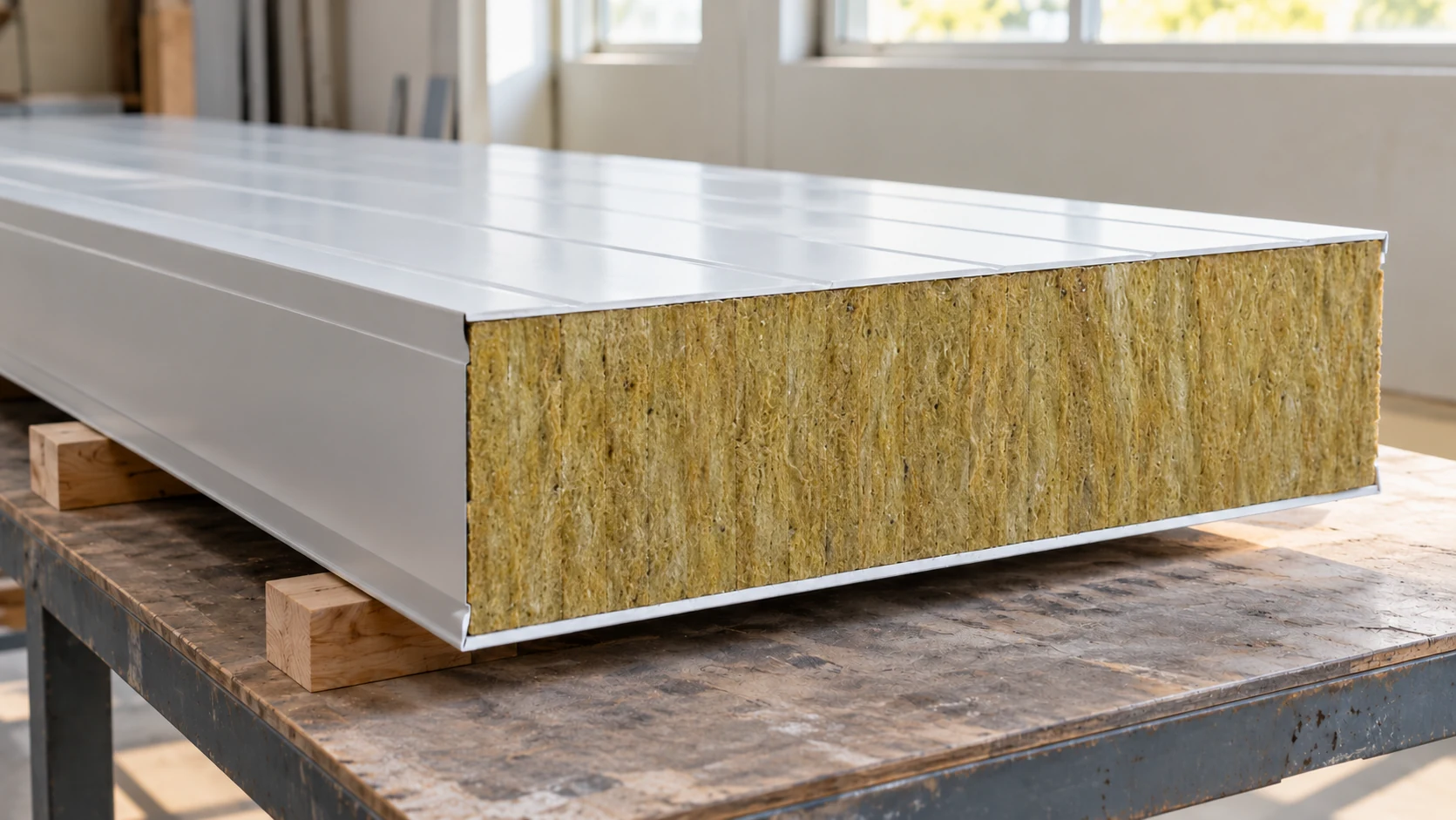
Where the fire performance applies
Start with the performance the design calls for. If it requires an EI rating, choose a panel and installation arrangement for which that rating is documented. A higher catalogue value may add cost or limit available lengths without improving how the building functions.
Allow space for a thicker wall
Compare core options at similar panel U-values as well as at equal thickness. In one mineral wool range, the 150 mm version has a U-value of about 0.25 W/(m²K) and the 200 mm version about 0.19 W/(m²K). These figures describe that range, not every panel of those thicknesses.
Allow for the extra centimetres at reveals, plinths and roof junctions. In a refurbishment they can change flashing depths and the façade position relative to a vehicle door. Check sections through these points: savings across the wall can disappear in expensive edge alterations.
Plan handling around panel weight
Wool can make an element heavier than a comparable foam panel. Even wool panels differ: examples with 100 mm thickness and 0.5/0.5 mm facings weigh 16.6 or 18.1 kg/m². This reflects their construction; the lighter unit is not necessarily inferior.
Weight affects the lifting equipment, lifting method and unloading area. A long panel can be hard to manoeuvre even within the machine’s nominal capacity. Account for reach, lifting attachments and site conditions. In a refurbishment, check the spare capacity of the existing structure too.
Distinguish two acoustic objectives
Wool can be useful in acoustic design, but identify the task. Sound insulation limits transmission through a wall. Absorption reduces the sound reflected back into the room. These are different functions: a continuous steel facing does not automatically act as a sound absorber.
Where machinery is noisy, assess the vehicle door, ventilation openings and vibration transmitted through the structure. Improving only the panel may have little effect if noise travels mainly by another route. Base the choice on the identified source and tested assembly data.
Close exposed edges and openings
A factory-bonded element simplifies enclosure work if the details are ready. Protect exposed cross-sections and seal panel ends, cuts and openings. Assess a damp or crushed core before concealing the affected area behind a flashing.
Replacing one panel later may be difficult, depending on the layout, fixing method and access. Before purchase, check how damage at a corner or vehicle door could be repaired. Impact guards on vehicle routes can reduce the risk of having to dismantle the wall.
Work through an industrial building example
Consider a project that encloses a plant room and replaces a warehouse façade. Fire resistance may govern the plant room partition, while heating, coating and weight also matter on the façade. Specifying one core throughout still requires checking each wall separately.
Compare two designs against the same requirements, including the structure, panels, details and equipment costs. This shows the real trade-off. Mineral wool makes sense where its properties fit and the project can accommodate the extra thickness and installation needs.
Record the owner’s operational priority too: commissioning date, limited downtime or future replacement of one section. Solutions with similar material costs can affect the plant quite differently. Discuss that difference with the contractor before placing the order.
Questions and answers
Is a lighter mineral wool panel less durable?
Weight alone does not tell you. Compare the construction, mechanical properties, coatings and intended use. A lighter panel may have a different core density or different facings.
Will mineral wool always improve the acoustics inside a hall?
It depends on the noise source and transmission path. Reducing reverberation requires appropriate absorbing surfaces. For sound insulation between zones, assess the whole partition, including its openings.

Free quote
What to include in your enquiry
Tell us how you plan to use the material, the dimensions and the quantity you need. Include the thickness, grade or variant name, along with the delivery town or your preferred collection branch. For a specific product, add its name or a link to the product page. We will reply to the email address you provide to discuss availability and the terms of your order.
Read next
A gable roof has two slopes that meet at the ridge. This simple shape makes the roof covering easier to lay out…
Before altering an old house, describe the proposed work and assess the building’s condition. This gives the designer a basis for deciding…
Concealed rainwater drainage needs coordination with the façade before finishes hide the connections. Inspecting the completed wall cannot replace checking parts that…
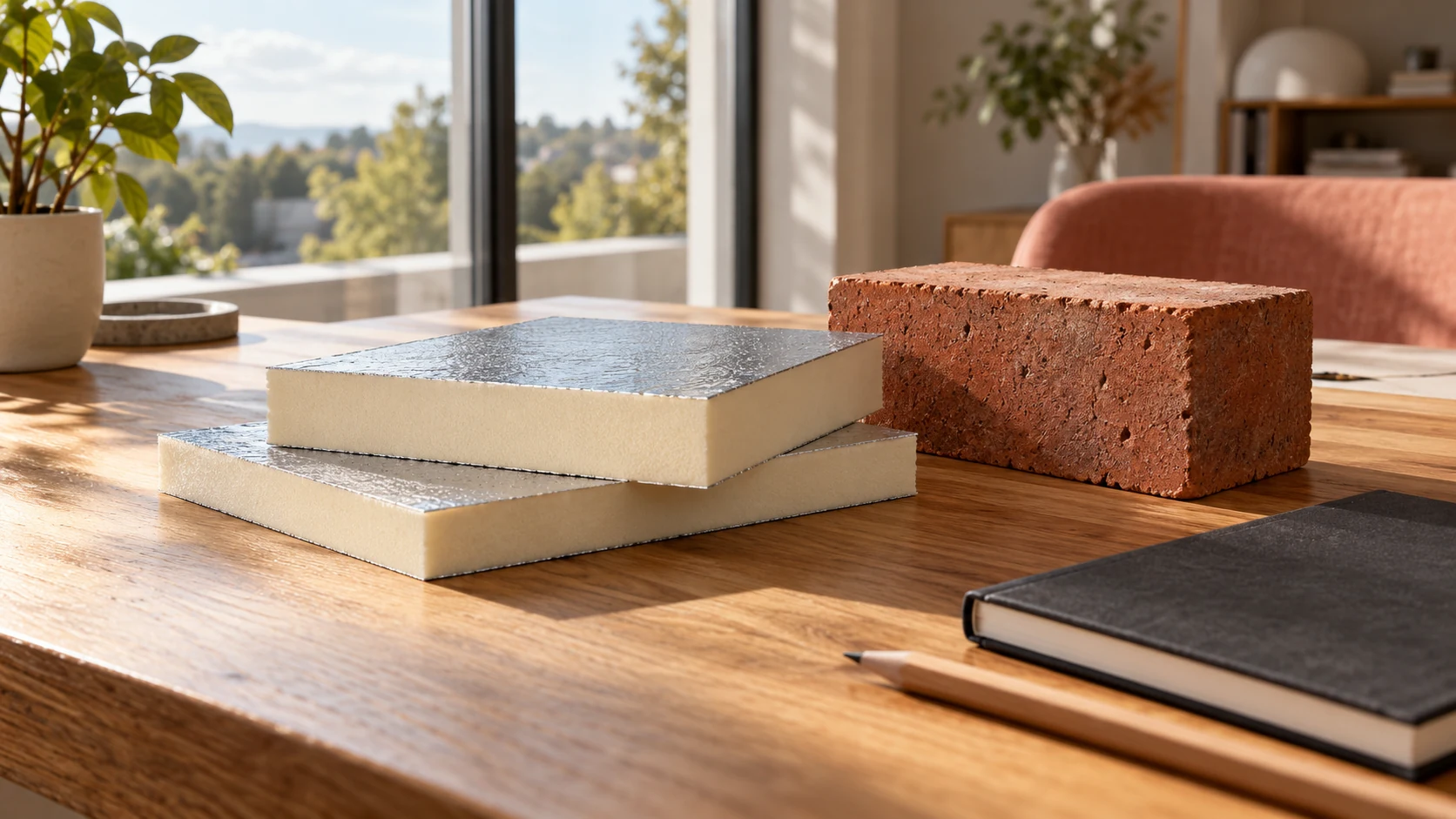
A calculator result is useful only when you know what was modelled. The same wall can give a different result if indoor…
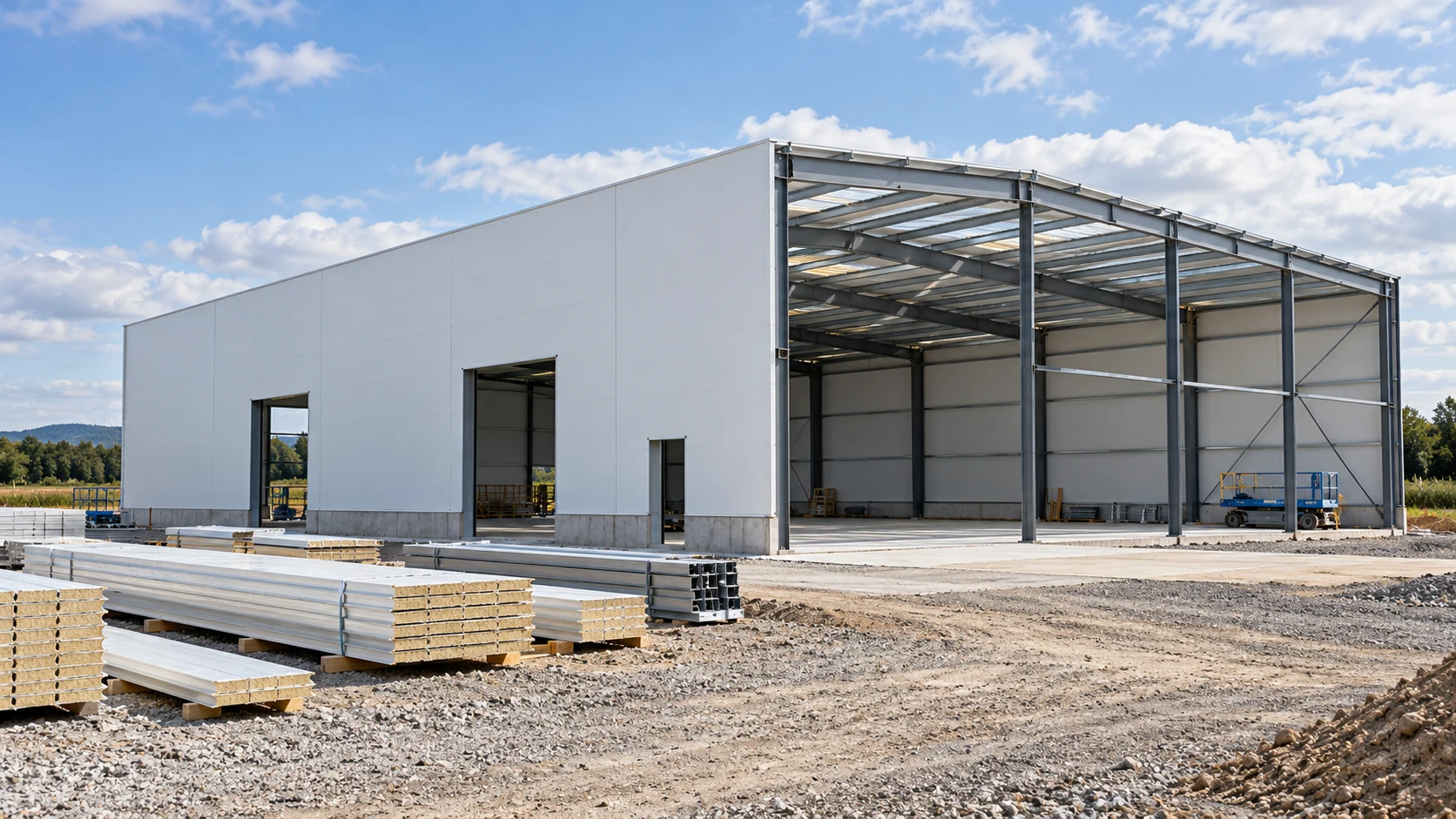
The total price of a building tells you little about when you will need the money. Budget separately for site preparation, the…
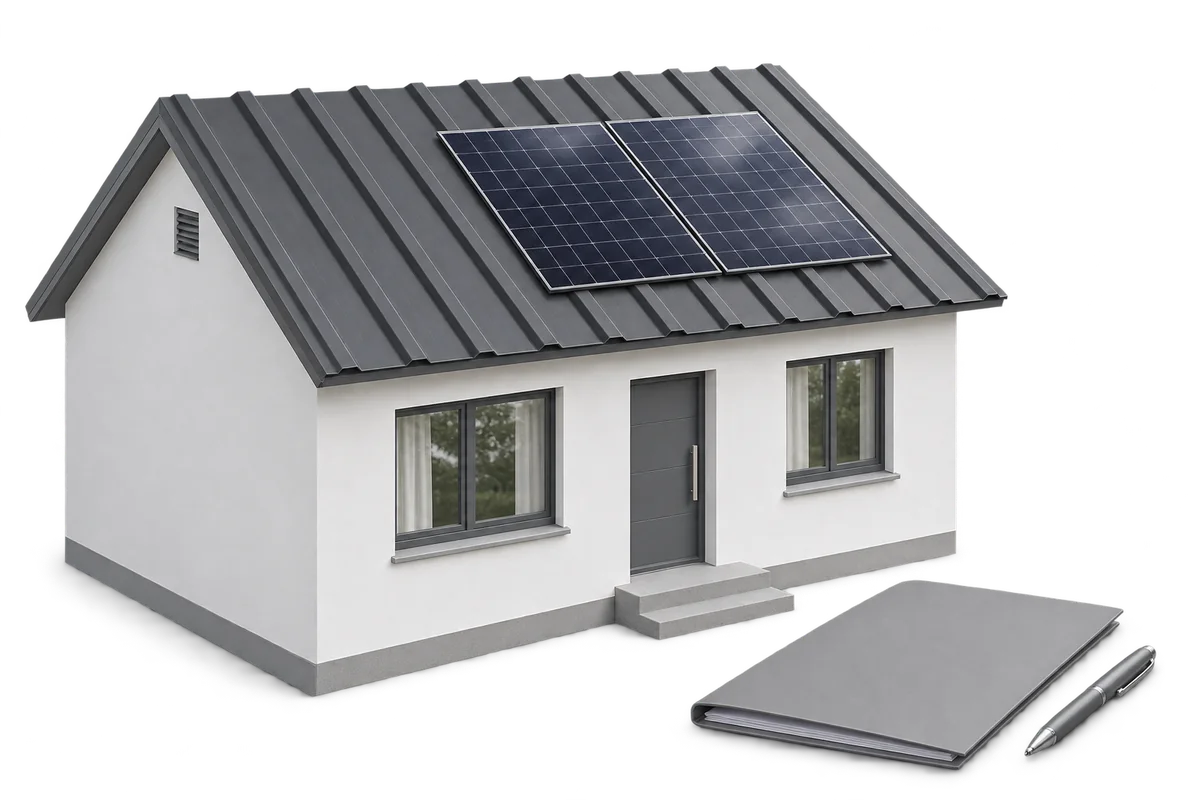
Installing solar panels does not necessarily invalidate a roof covering warranty. Whether the warranty continues to apply depends on the provider's terms,…
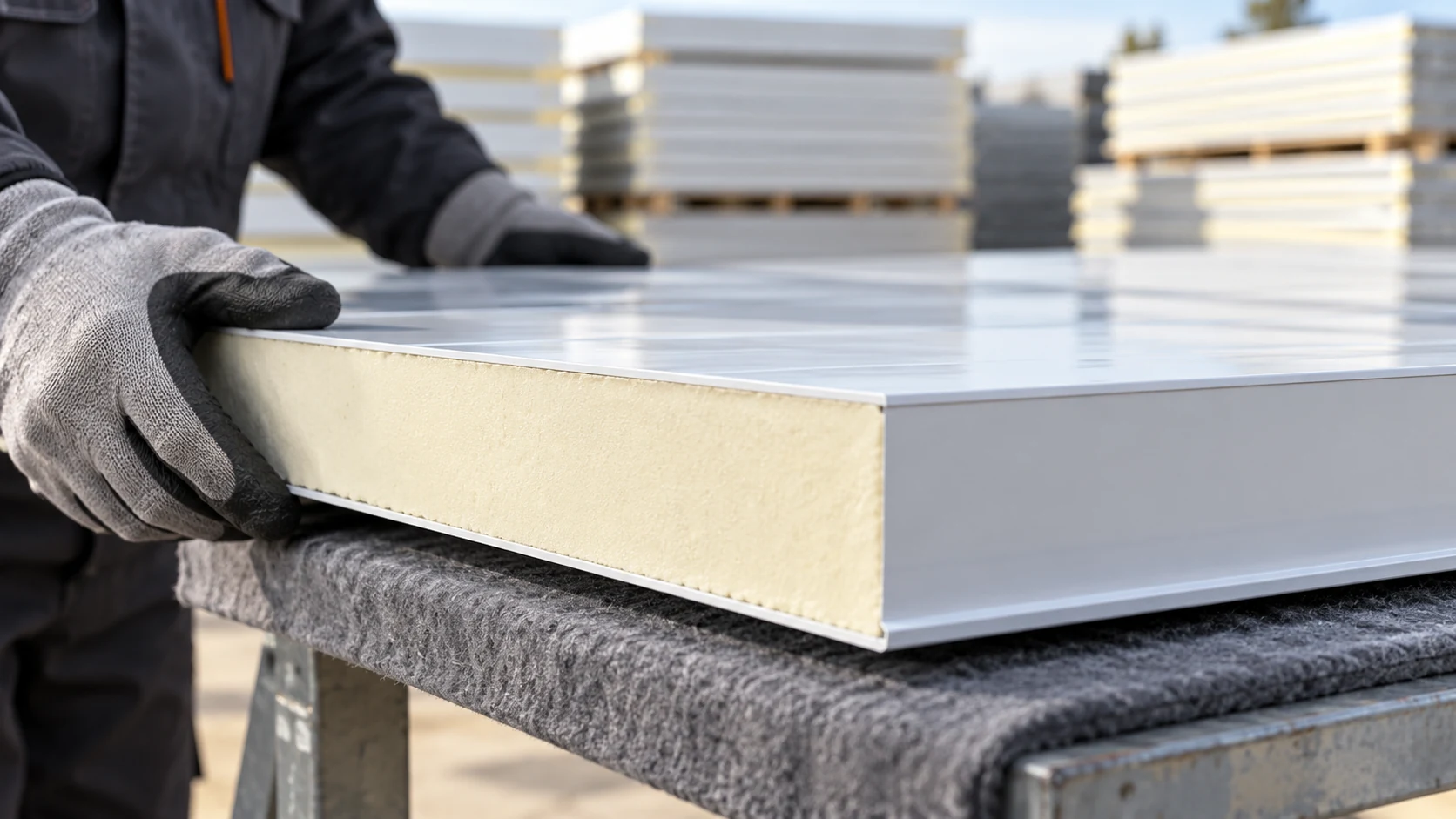
A sandwich panel price refers to a particular product and unit of sale. Check whether the quote is for a square metre…
T35 identifies a family of trapezoidal sheets with ribs about 35 mm deep. The depth is useful when comparing profiles, but a…
