






When should a sandwich panel have a mineral wool or PIR core?
Choosing sandwich panels
At a glance
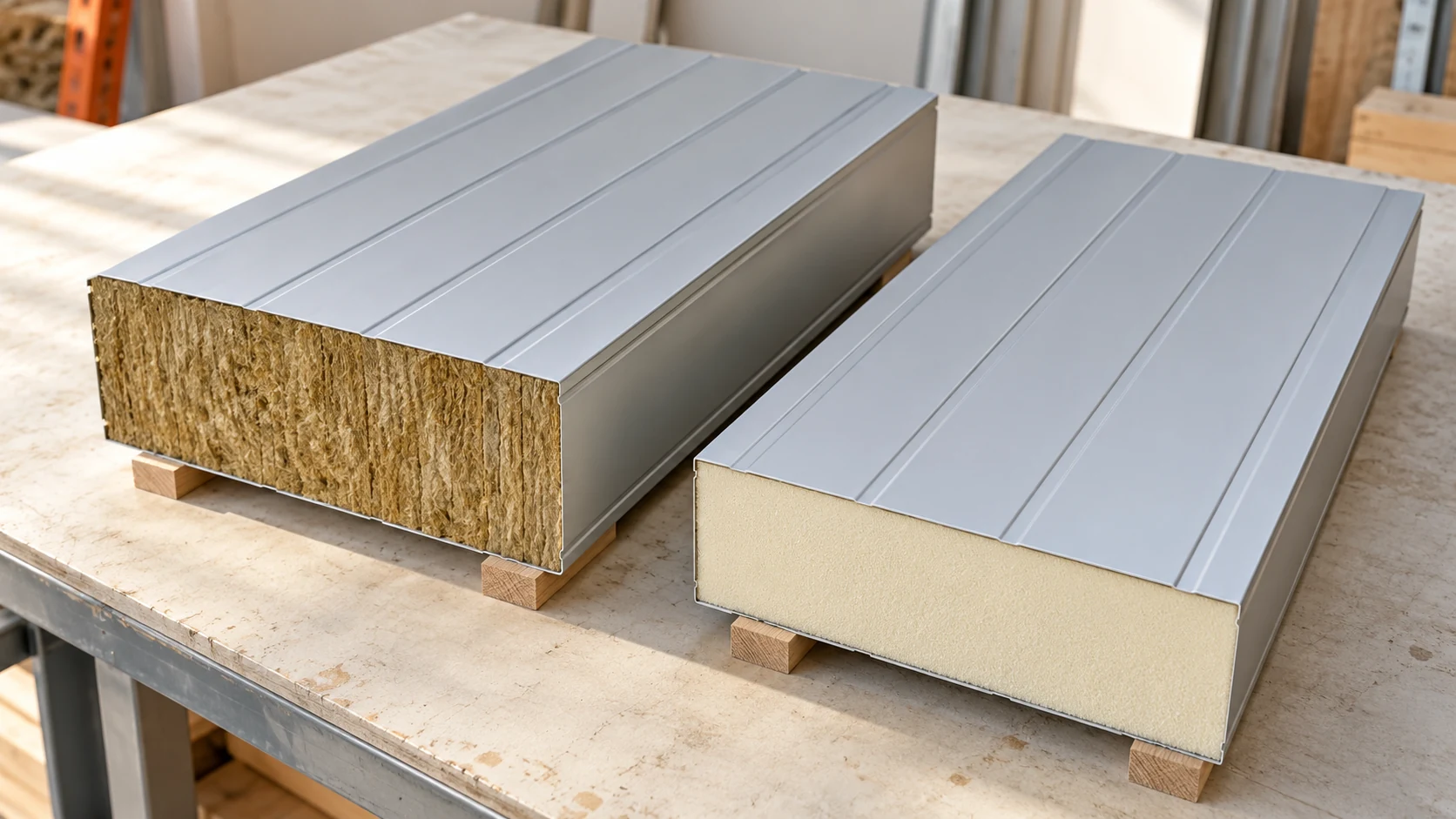
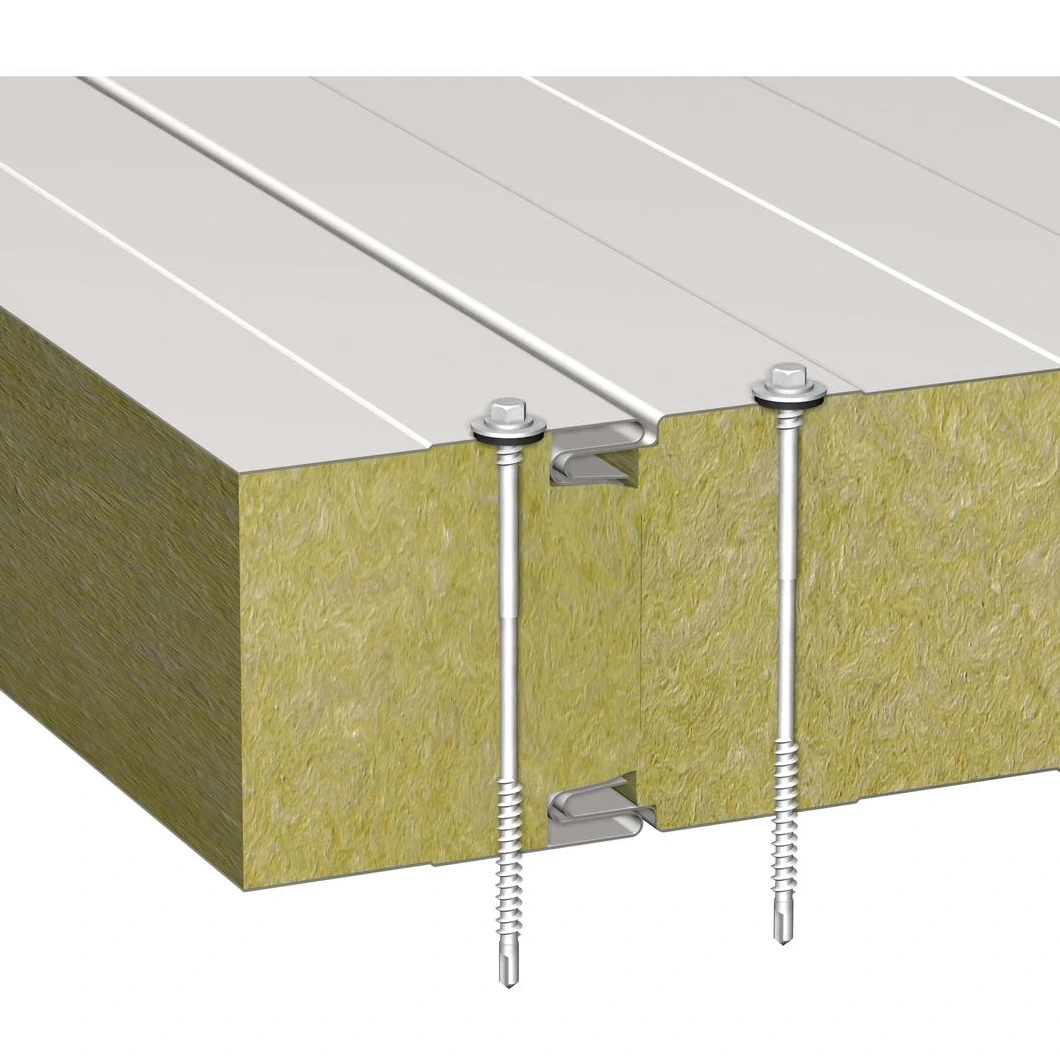
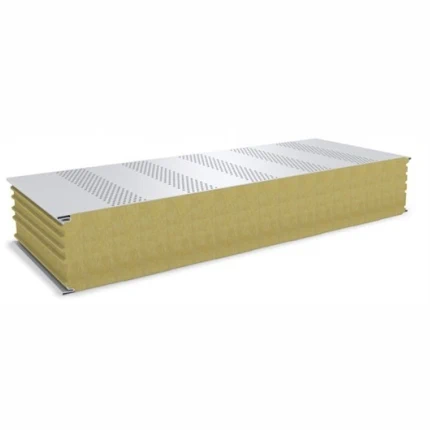
Choose the core for the job the wall or roof must do. Mineral wool and PIR offer different combinations of insulation, weight and fire performance. A heated warehouse, staff area and plant room may need different solutions within one building. Record temperature, humidity, fire requirements and noise in each zone. Mark partitions that must provide separation and distinguish the duties of external and internal walls. Compare the suitable panels zone by zone, then design the junctions between them. This also shows where using a single system throughout would meet the brief.
Identify the needs of each zone
In one area a slim wall at a given U-value may be important, while elsewhere the scope of the fire classification may govern. Identifying these needs avoids choosing a core on a single advantage or an overall material ranking.
Compare panels at similar U-values
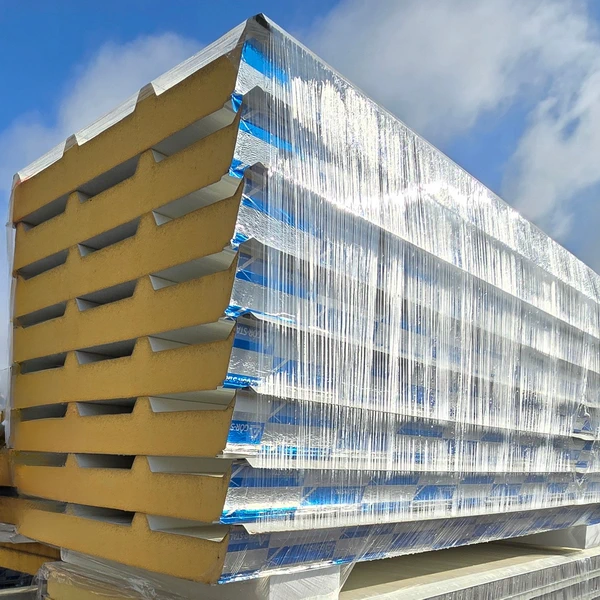
Equal thickness does not necessarily mean equal thermal performance or comparable cost. One 100 mm PIR wall panel has U = 0.22 W/(m²K). In a particular mineral wool range, a 180 mm panel reaches a similar 0.21 W/(m²K). These figures apply to the products compared.
Thickness affects reveals, flashings and the façade line. Check available space in refurbishment. Consider the thermal data alongside load capacity, fire requirements and other conditions before choosing the slimmer option.
Check the fire requirements
Wool and PIR panels have product-specific reaction-to-fire classes and fire-resistance classifications for defined assemblies. A non-combustible mineral core is significant, but the wall needs its own assessment. Evaluate PIR as part of the specified product and assembly too. The insulation name alone cannot establish suitability.
Check the required class, orientation, span and joint details. A lower U-value cannot compensate for a missed fire requirement. Compare cost and installation once both options satisfy all requirements. Wall test results cannot simply be applied to roofs or vice versa.
Allow for weight and installation
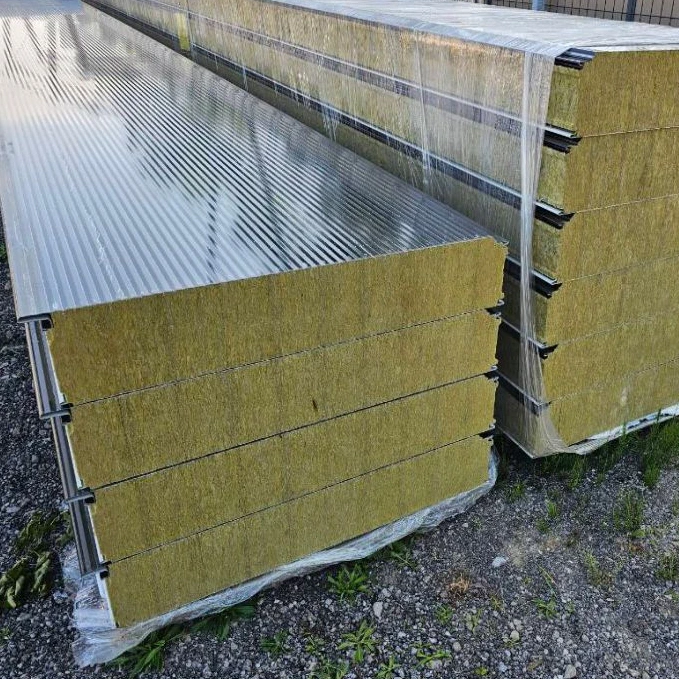
In this example the 100 mm PIR panel with 0.5/0.5 mm steel faces weighs about 12.3 kg/m². The 180 mm wool panel with the same facing thicknesses weighs 23.9 kg/m². Both core type and thickness contribute to the difference. Other products will have different weight ratios.
Use the weights to plan transport, lifting and structural loading. Panel length and site access matter too. For an existing hall, verify capacity for the replacement envelope. The appearance of the columns or weight of the old cladding cannot establish the structural reserve.
Assess acoustics and indoor exposure
Use acoustic data for the actual assembly. A wool core alone will not remedy reverberation or noise through an open door. Determine whether the aim is to limit transmission, absorb sound or reduce vibration, then select the partition and any additional treatments.
For either core type, select facing finishes for humidity, chemicals and cleaning. Water-washed rooms require suitable joints and edges. Consider access for inspection and repair. Operating conditions may affect lifetime cost more than a small difference in panel price.
Detail the junction between core types
Different cores can be used in one building if their interface is designed. Check geometry, insulation continuity, sealing and any fire separation function. Matching colour or similar thickness does not guarantee that joint profiles engage or give the required performance.
Price each zone with its transition details, separate orders, transport and installation sequence. The final design may use one or two core types. It should define a complete enclosure whose performance can be demonstrated and inspected at handover.
Agree the appearance at system changes with the user. Different profiles can reflect light differently even in the same nominal colour. Samples and a corner drawing help predict the finished result. Coordinate the technical solution with the visible façade layout.
Questions and answers
Is PIR always cheaper than mineral wool?
There is no fixed price relationship. Compare products meeting the same requirements and include structure, details, transport and fitting. Price per square metre at equal thickness can be misleading.
Can panels with different cores meet in the same wall?
Yes, with a compatible, properly designed junction. Confirm geometry and performance at the interface, especially where it forms part of a fire separation.

Free quote
What to include in your enquiry
Tell us how you plan to use the material, the dimensions and the quantity you need. Include the thickness, grade or variant name, along with the delivery town or your preferred collection branch. For a specific product, add its name or a link to the product page. We will reply to the email address you provide to discuss availability and the terms of your order.

Read next
A livestock building, food store or workshop needs a roof that keeps rain out and limits heat transfer. The underside may also…
Intermittent use makes warm-up time, moisture on arrival and running costs between visits especially important. It calls for a different plan from…
A damp basement should not be assessed in the same way as a heated upstairs room. In summer, warm air entering a…
Aerated concrete masonry and PIR can make a well-insulated wall when the board, render system and fixings are selected together. Aluminium-faced PIR…
When a historic façade must be preserved, internal insulation may be an option. First establish how the walls and floors are built.…
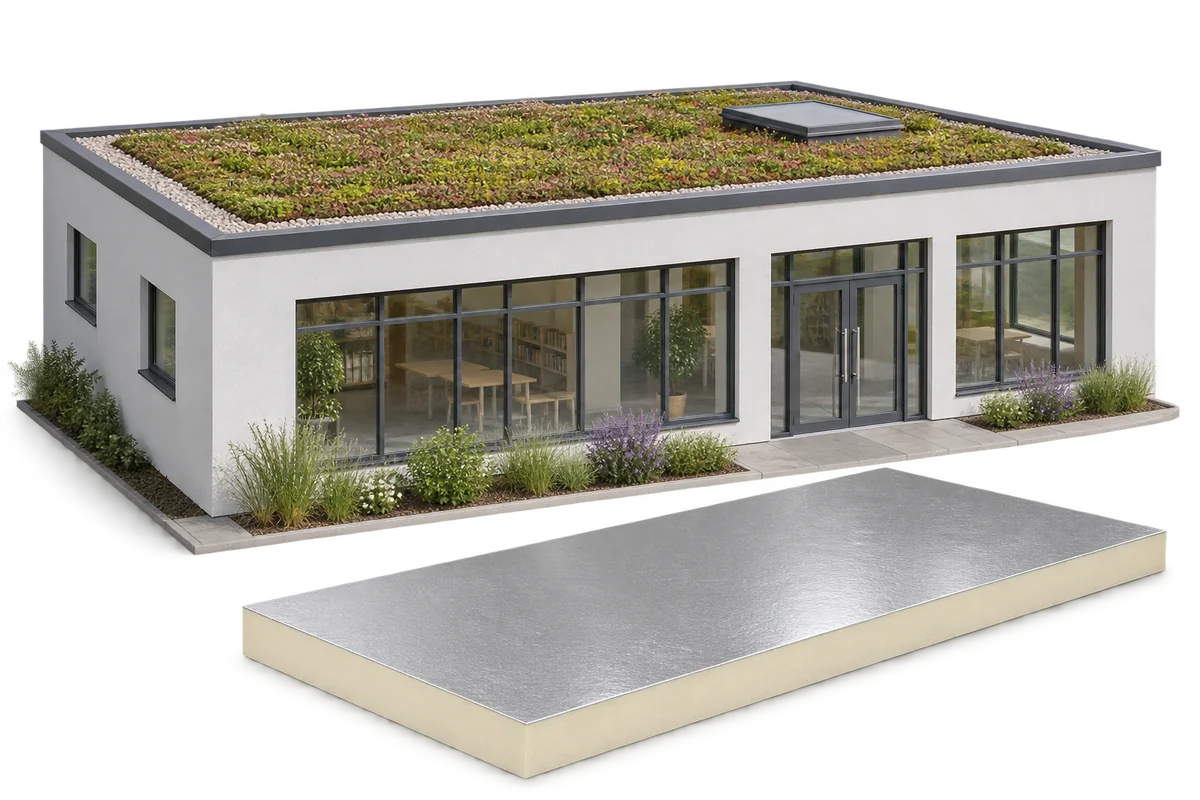
A green roof can form part of a nursery retrofit. The structure must support the full build-up and the insulation must be…
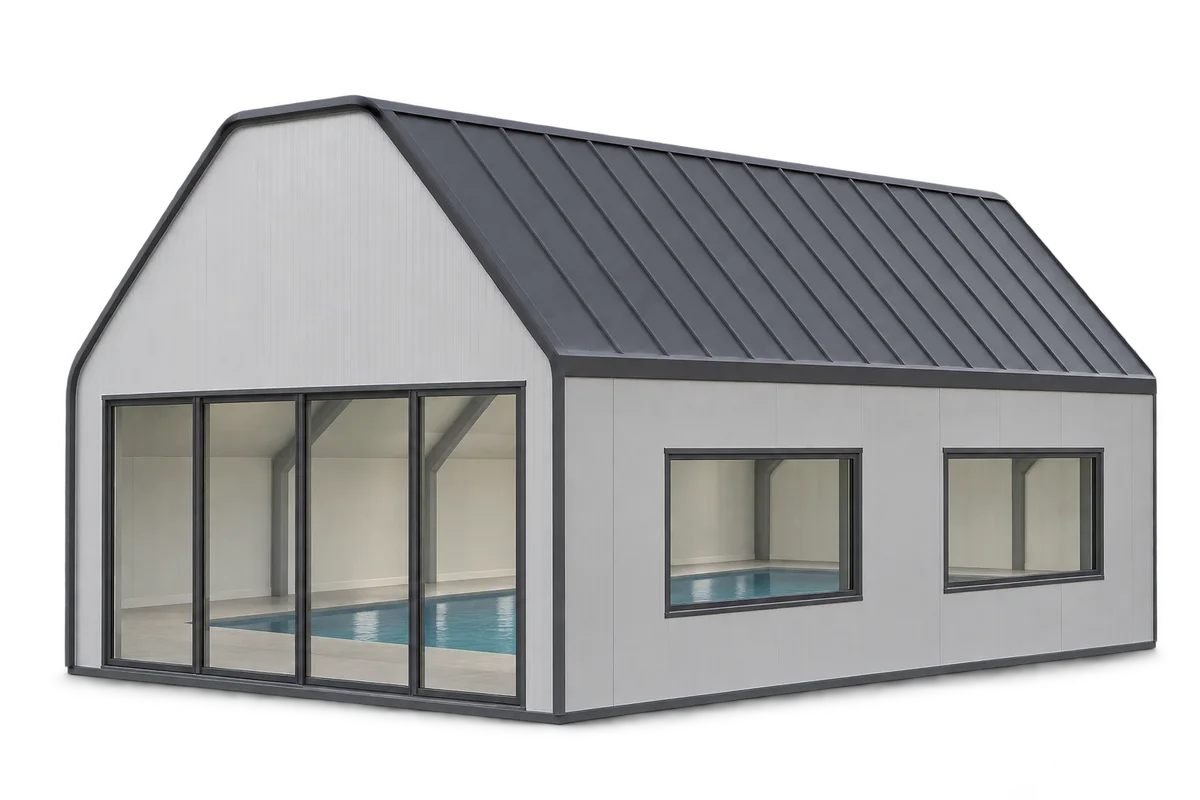
A roof over a heated pool has to withstand warm, humid air and the chemicals used to treat the water. Specify the…
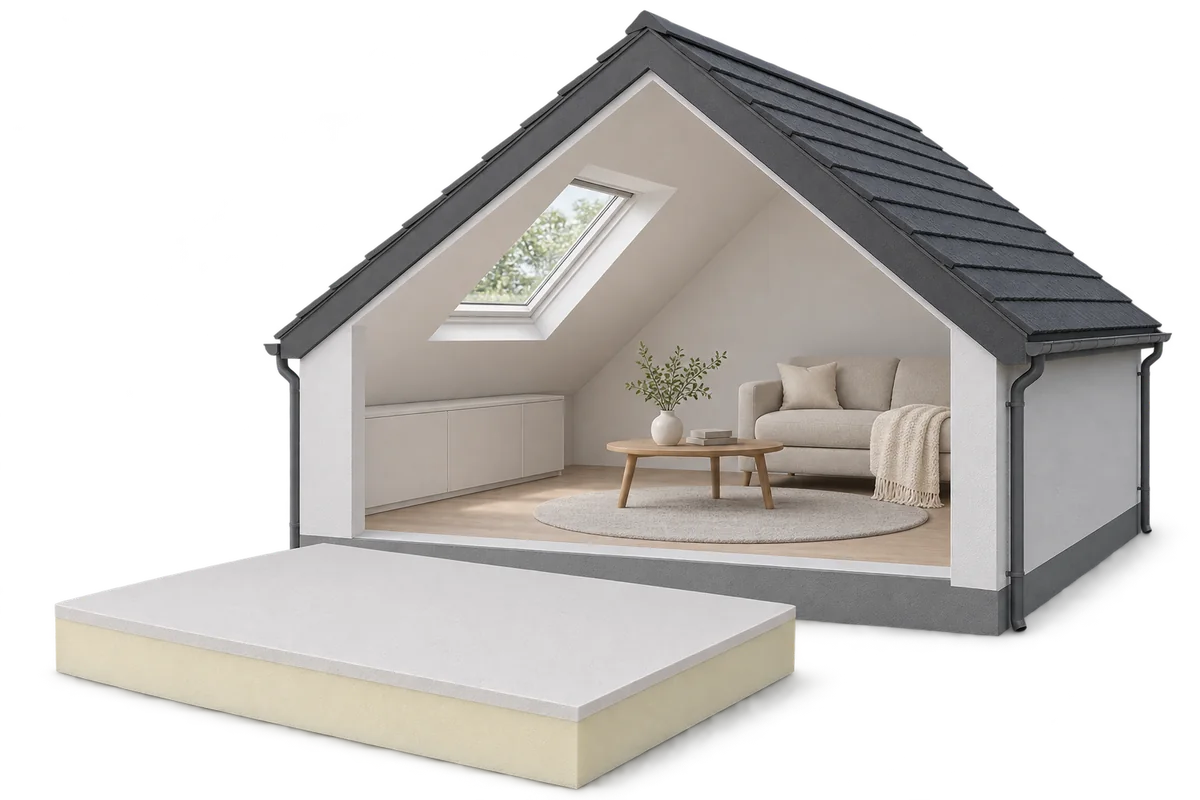
Insulating a loft from the inside can make it more comfortable without taking the roof covering off. PIR bonded to plasterboard provides…
