






How does practical training improve a roofer’s work?
Construction and installation
A practical roofing course gives installers a chance to set out a slope, form a flashing and check a fixing while the detail is still visible. The exercises should use the kinds of sheet or sandwich panel the crew will actually handle. A roofer laying modular metal tiles needs to spot a row drifting out of line, while someone lifting long panels needs to protect the crew and the panel edges. For a client choosing a contractor, a useful question is how a lesson from the course would apply to a particular valley, eaves detail or joint on the proposed roof.
Why keep learning after gaining experience?
Products with similar names can have different interlocks, fixing positions and installation tolerances. Accessories and instructions also change. A method learned on one profile may need adapting for the next, so a roofer needs to be able to read the drawings for the product in hand.
Training lets installers compare their own methods with the product requirements. Understanding where water runs, how metal moves with temperature and how a fastener works makes it easier to spot a mistake. Ask the instructor to explain the reason behind the sequence as the group works through it.
How can you recognise a practical course?
Look for exercises in preparing the substrate, taking measurements and forming details. Laying a few sheets on a flat mock-up covers only part of the job. Eaves, ridges, valleys, chimneys and service penetrations show whether the layers and flashings will work together.
Participants should make the joint themselves and get feedback. Seeing what happens to a sealing washer when a screw is tightened incorrectly makes the fault easier to recognise later. A current installation manual to take back to site is also useful.
What should a course cover for metal roof tiles?
Start with measuring the slope, aligning the eaves and setting the specified batten gauge. With small modules, check that deviations do not accumulate from row to row. Long sheets cut to length need careful handling and lifting. Bending a sheet can make the laps difficult to close even when the finish shows no scratches.
Practise cutting the sheets and touching up damaged finishes. Distinguish screws that fix the covering to its support from fasteners that stitch the lap. The profile determines where each goes. Check the fixing pattern for the particular metal tile system being installed.
What matters for T18, T35 and sandwich panels?
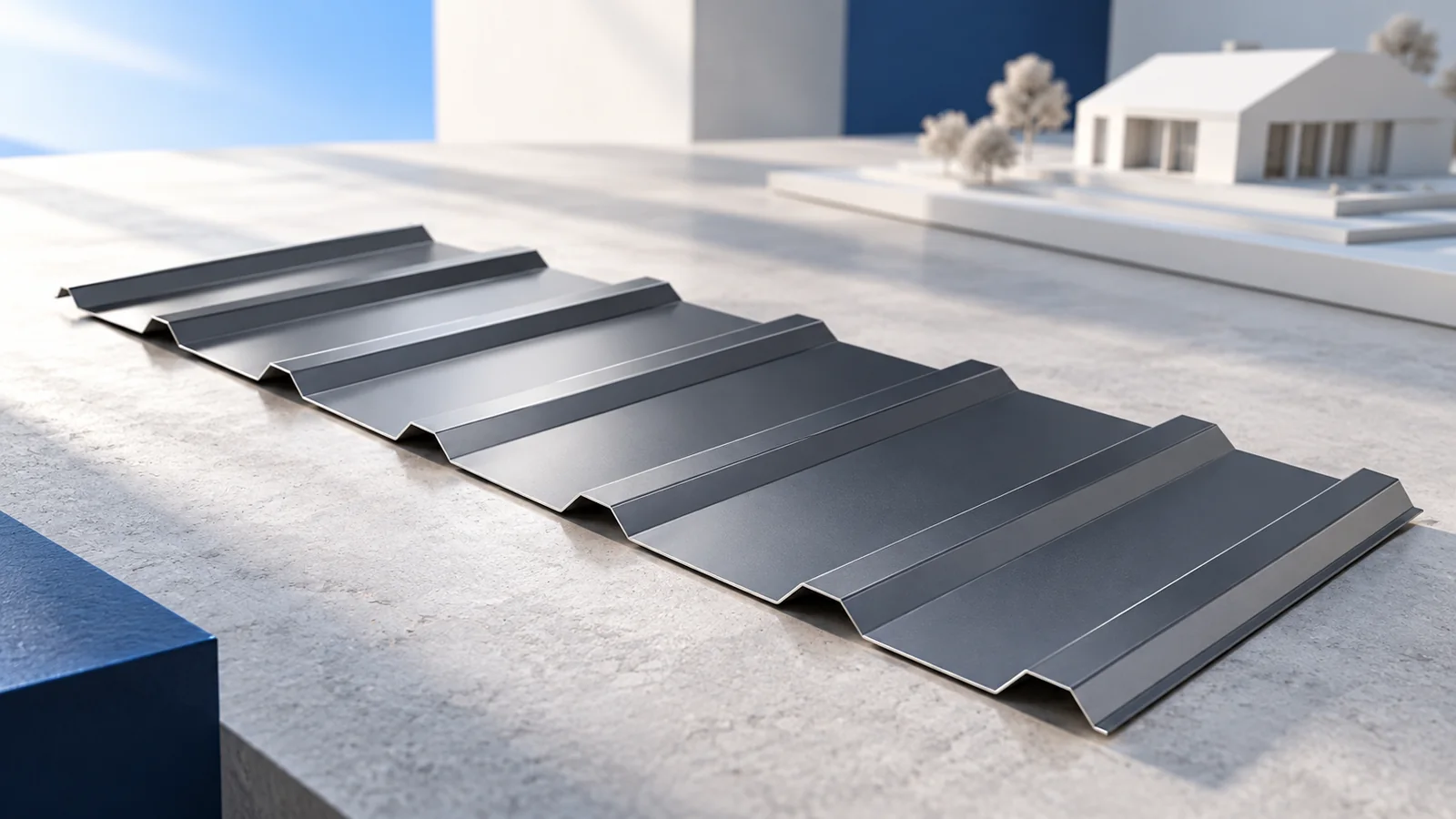
For trapezoidal sheet, practise reading the cover width, cross-section and load tables. The installer needs to know which design decisions must be settled, including support spacing, steel thickness and number of spans. The designation T35 alone cannot define the fixing layout.
Sandwich panel exercises should cover engaging the joints, positioning seals and lifting long units without damaging their facings. Roof and wall panels have different uses. The instructor should explain when a product is suitable for the detail and when a different panel is required.
Where does site safety fit into the training?
Practise setting up the work area, bringing materials onto the roof and protecting the crew against falls. Sheet edges are sharp and large sheets catch the wind. Plan handling so that people are protected and the profile retains its shape. Use enough people for the agreed method.
The decision to stop work also deserves practice. Wet surfaces, strong wind and ice alter the risk. Select protection for the actual workplace and give the crew hands-on experience with the equipment they will use there.
Should a client ask about training?
Ask what the course covered and when the roofer attended. Product knowledge is one part of the assessment. Look at completed jobs, how the contractor organises the work and how the crew resolves problems. An attendance certificate documents participation.
Discuss a detail from your own drawings, such as a valley, the sheet layout or ventilation. The roofer should be able to identify the relevant instruction and explain when a measurement or design clarification is needed before giving an answer.
How can the crew apply what it learns on site?
After training, draw up a short crew checklist for delivery inspection, storage, the substrate, fixings and final cleaning. Agreed checks help several installers maintain consistent workmanship. Photograph key details before covering them so that the sequence can be reviewed.
Apply each lesson to the current documentation for the product ordered and to the project design. Combining practice with the instructions and checking the crew’s own work reduces rework and gives the client a clearer record at handover.

Free quote
What to include in your enquiry
Tell us how you plan to use the material, the dimensions and the quantity you need. Include the thickness, grade or variant name, along with the delivery town or your preferred collection branch. For a specific product, add its name or a link to the product page. We will reply to the email address you provide to discuss availability and the terms of your order.
Read next
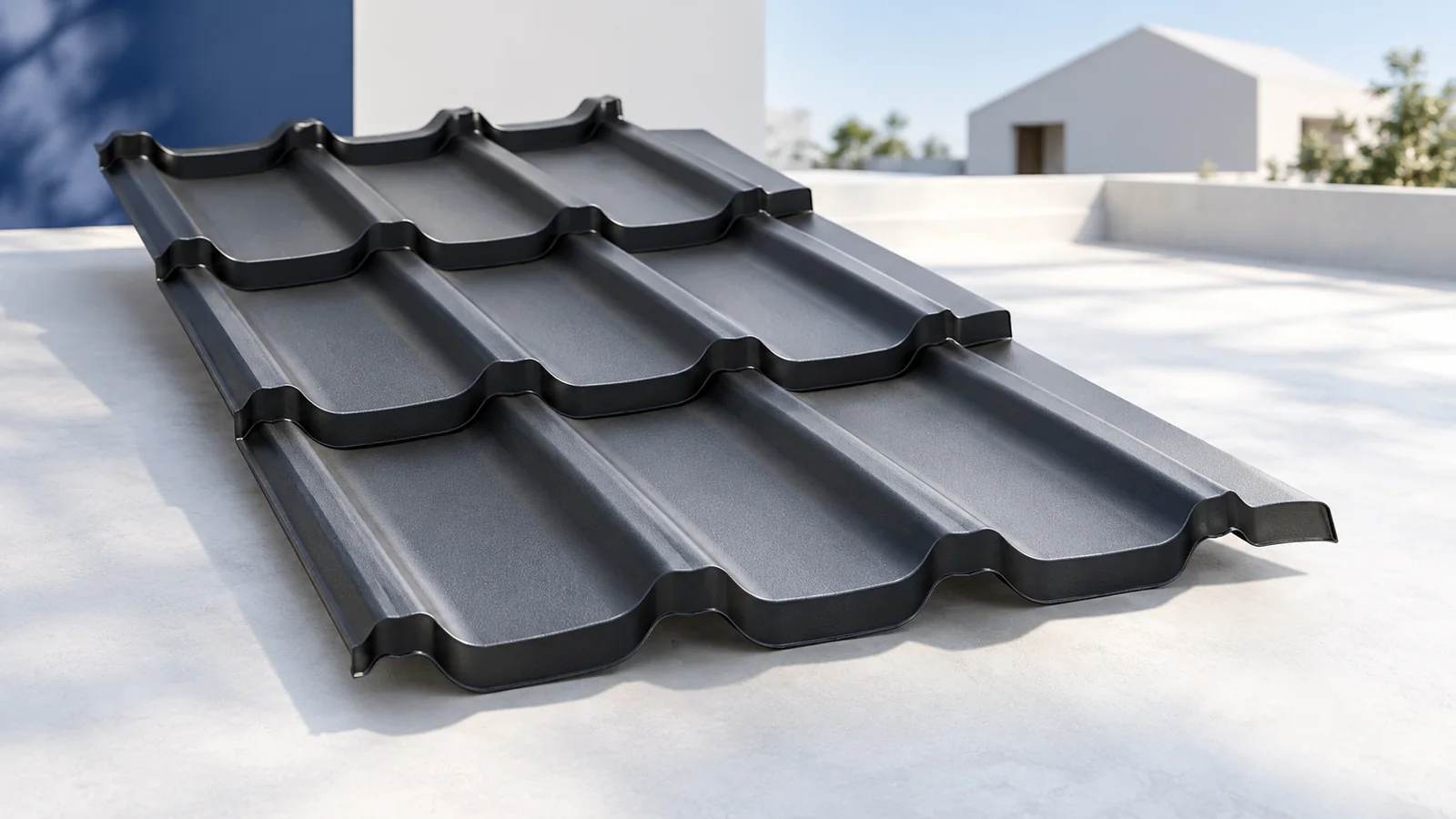
To compare tile-effect roofing sheets, start with the steel thickness, the metallic protection beneath the paint and the finish on the exposed…

To select gutters for a metal roof, mark the area draining to each outlet on a roof plan. A valley may concentrate…
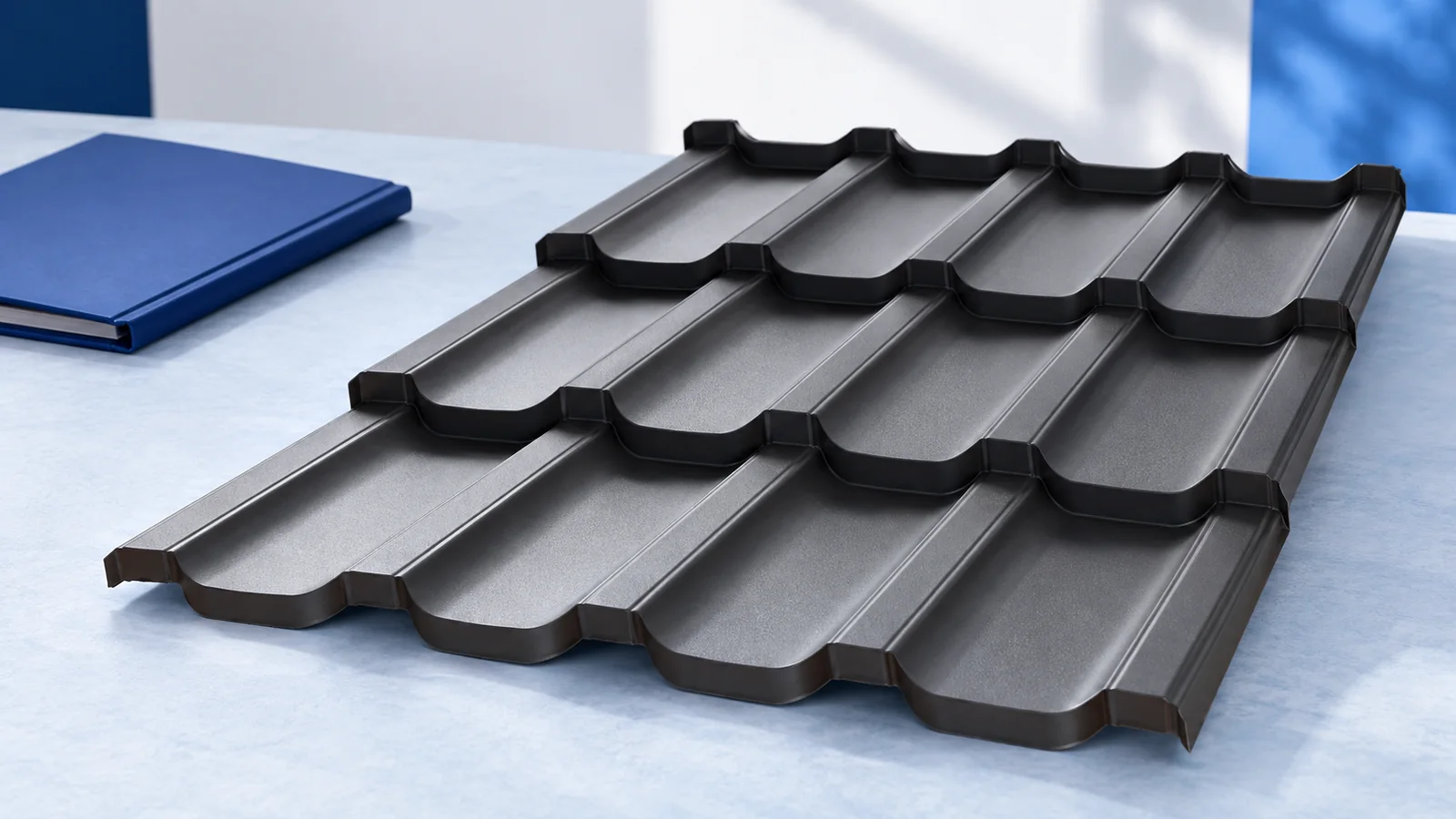
A single-module metal roofing sheet covers one course of the tile pattern down the slope. It can still be several tile widths…
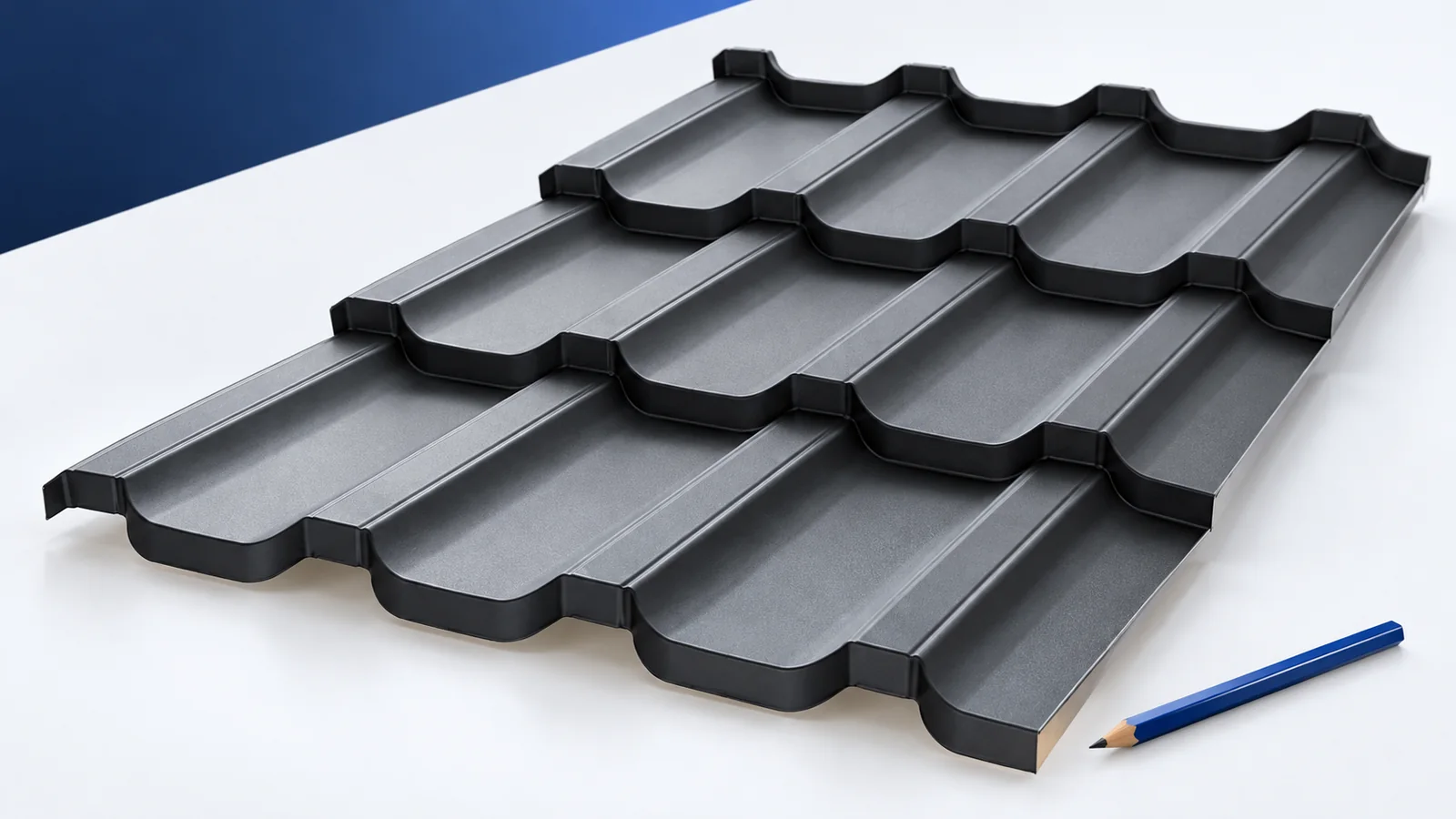
The choice between one-course and two-course metal roofing sheets starts with a scale drawing of the roof. Mark the valleys, hips and…
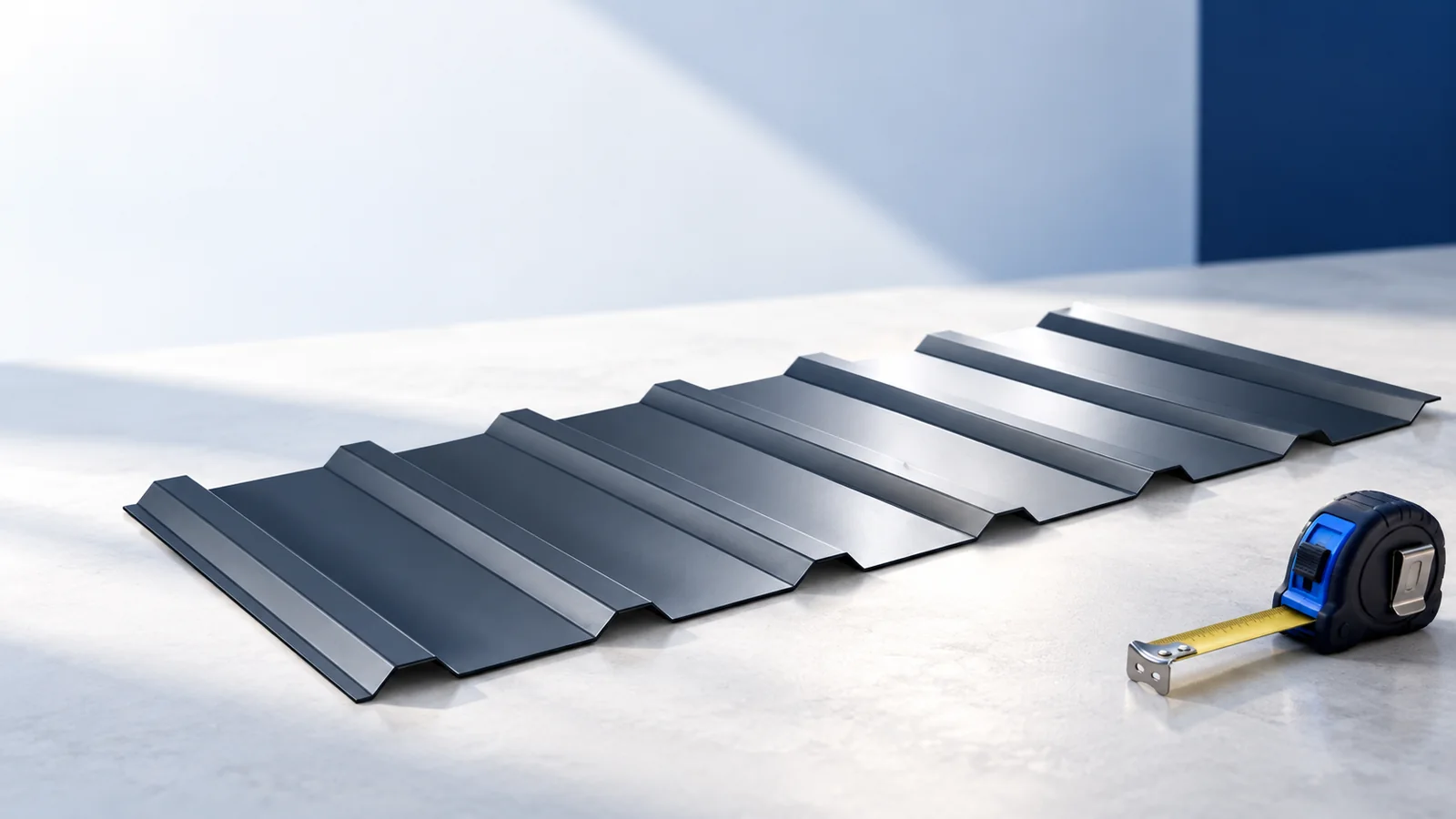
On a gable roof, measure each slope from eaves to ridge and mark the windows and chimneys before comparing materials. Cut-to-length tile-effect…
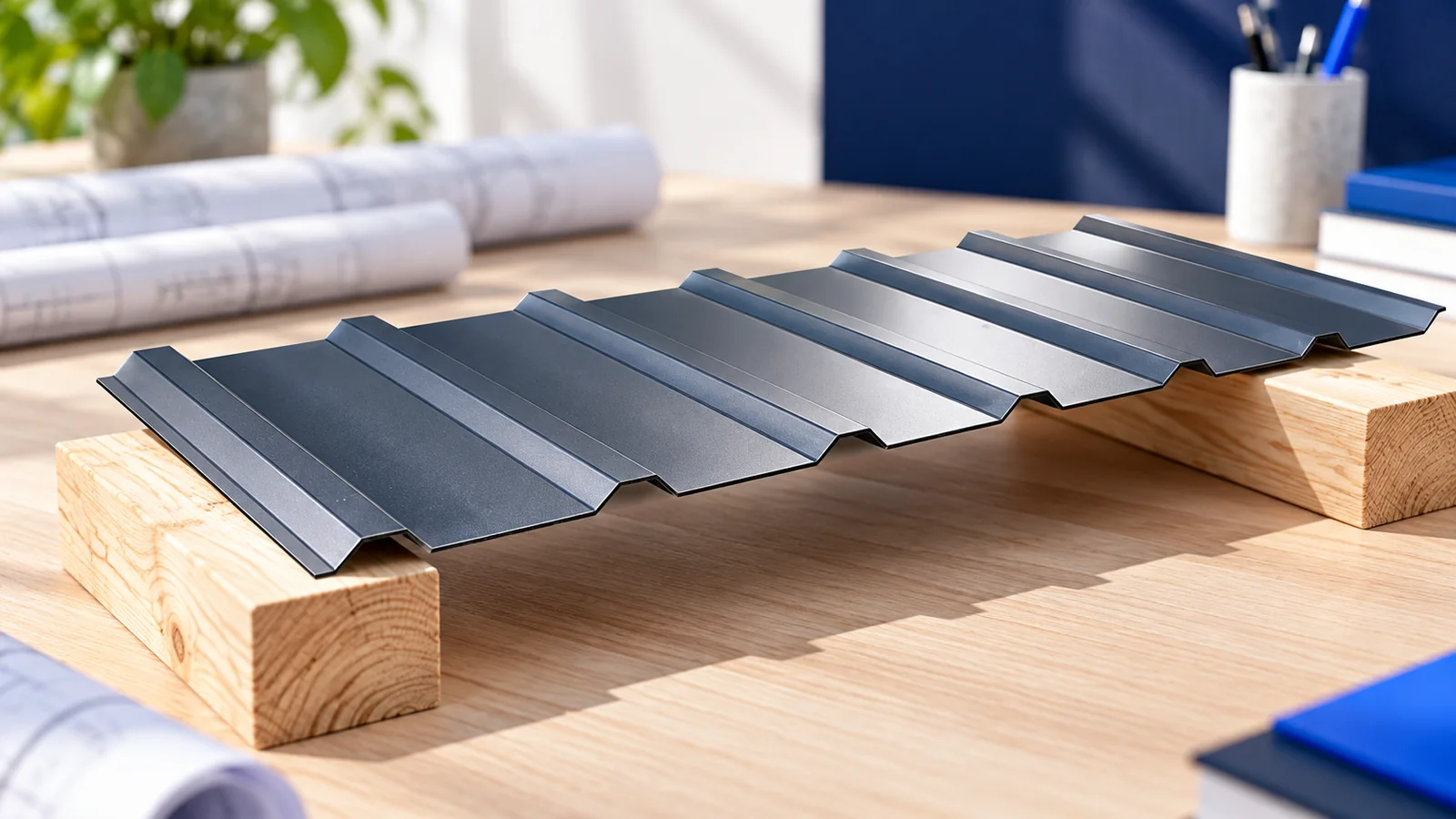
Roof battens support the covering and give its fixings a secure hold. For tile-effect steel sheets, the position of each batten must…
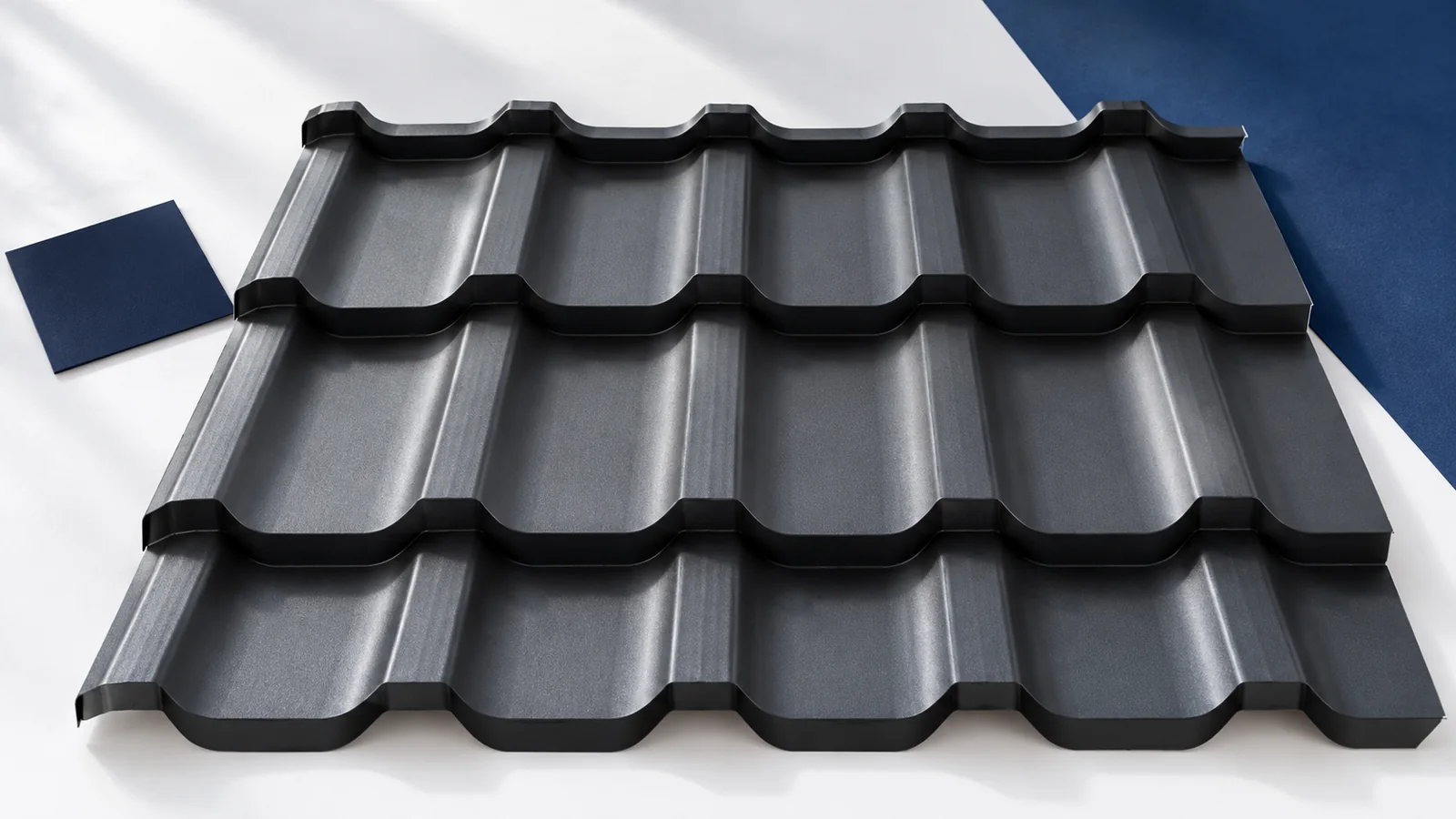
The first course of tile-effect roofing sets the alignment of every sheet above it. Before laying it, check the eaves line, diagonals,…

When replacing a roof, start with the existing building. The price of sheets or tiles accounts for only part of the work.…
