Metal roof tiles or bitumen shingles: which covering suits your roof?
Roof coverings
Metal roof tiles need supports set out for their profile. Bitumen shingles need a smooth, sufficiently rigid continuous deck. On a renovation, the condition of the existing battens or decking can therefore change which option costs less. Check the permitted pitch, draw up a cutting plan and compare the weight and cost of both complete roof assemblies. Include the eaves, valleys and chimney flashings. For a living space below the roof, assess sound from rain, summer heat and moisture using the full build-up proposed for that space.
Can both coverings be used on the same slope?
Check the permitted pitch for the exact product. Minimum pitches differ between metal tile profiles and between shingle systems. Slope length and the layers required underneath also matter. Use the instructions for the selected model.
In a renovation, inspect the frame and existing substrate. A sound continuous deck changes the calculation compared with building one from scratch. Existing battens laid out for profiled sheet also have a value, and altering them costs money. Compare the full roof assemblies.
What support does each material need?
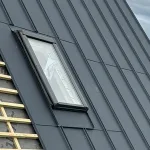
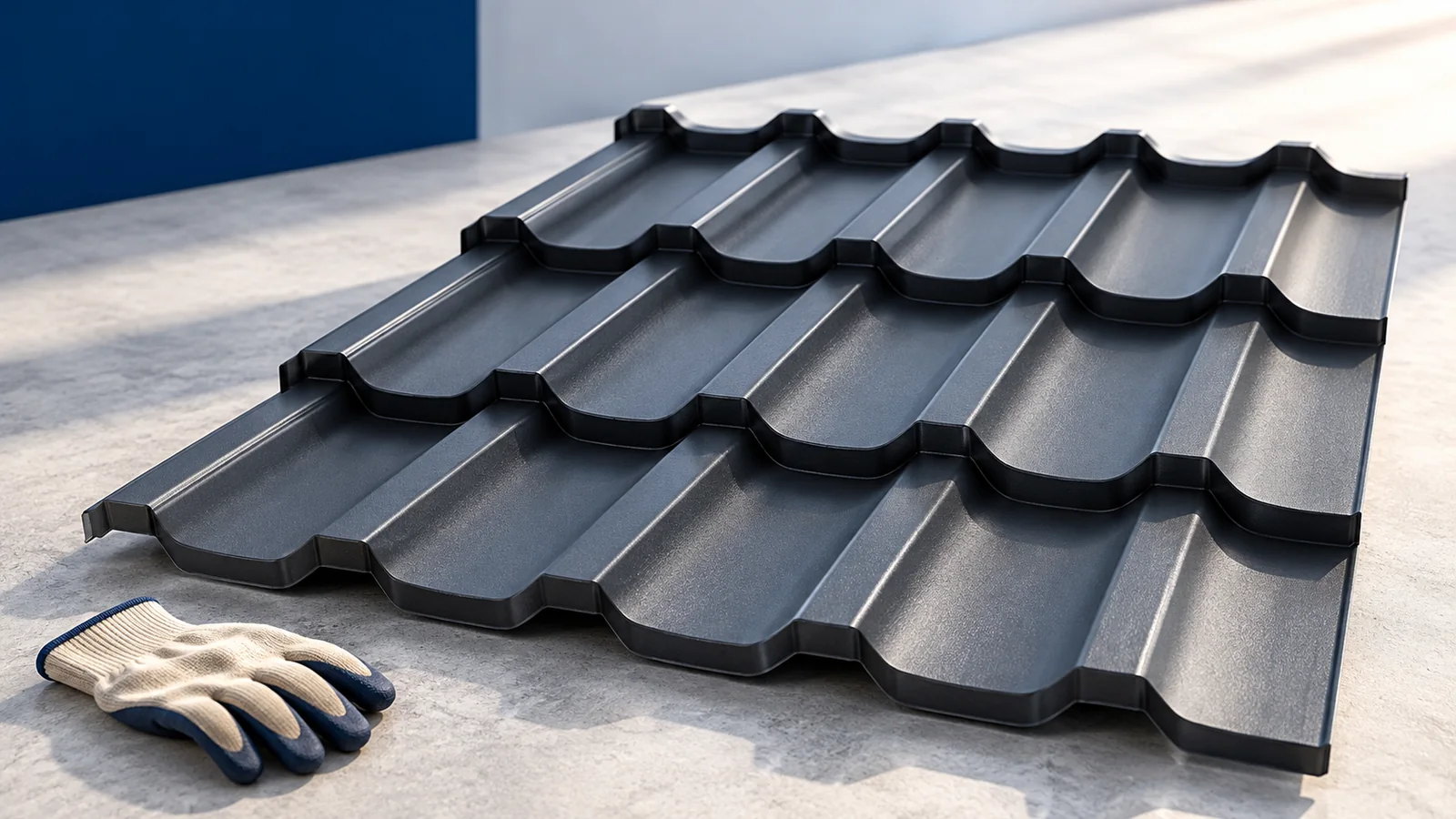
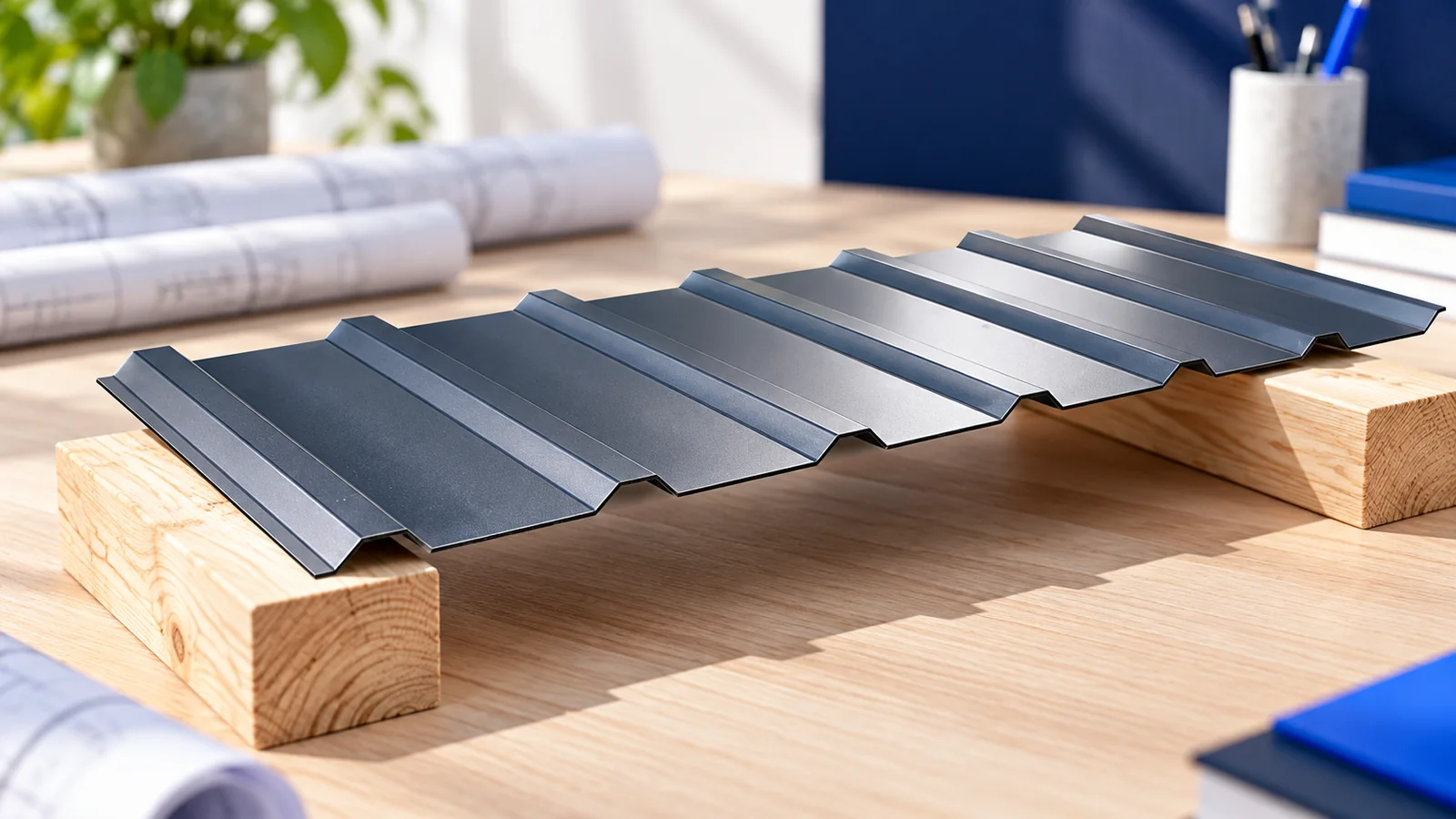
Metal tile sheets are fixed to supports spaced to suit the profile instructions. A typical pitched roof includes battens, counterbattens and an underlay. Eaves, ridge and junctions must allow water to drain and air to circulate. The layers under the sheet vary with the design.
Bitumen shingles are laid on a flat, sufficiently rigid deck. Select the boards or panels, underlay and fasteners for the manufacturer’s system. Include the deck in the cost estimate since the price of providing it can determine which option is cheaper overall.
What matters on a complex roof?
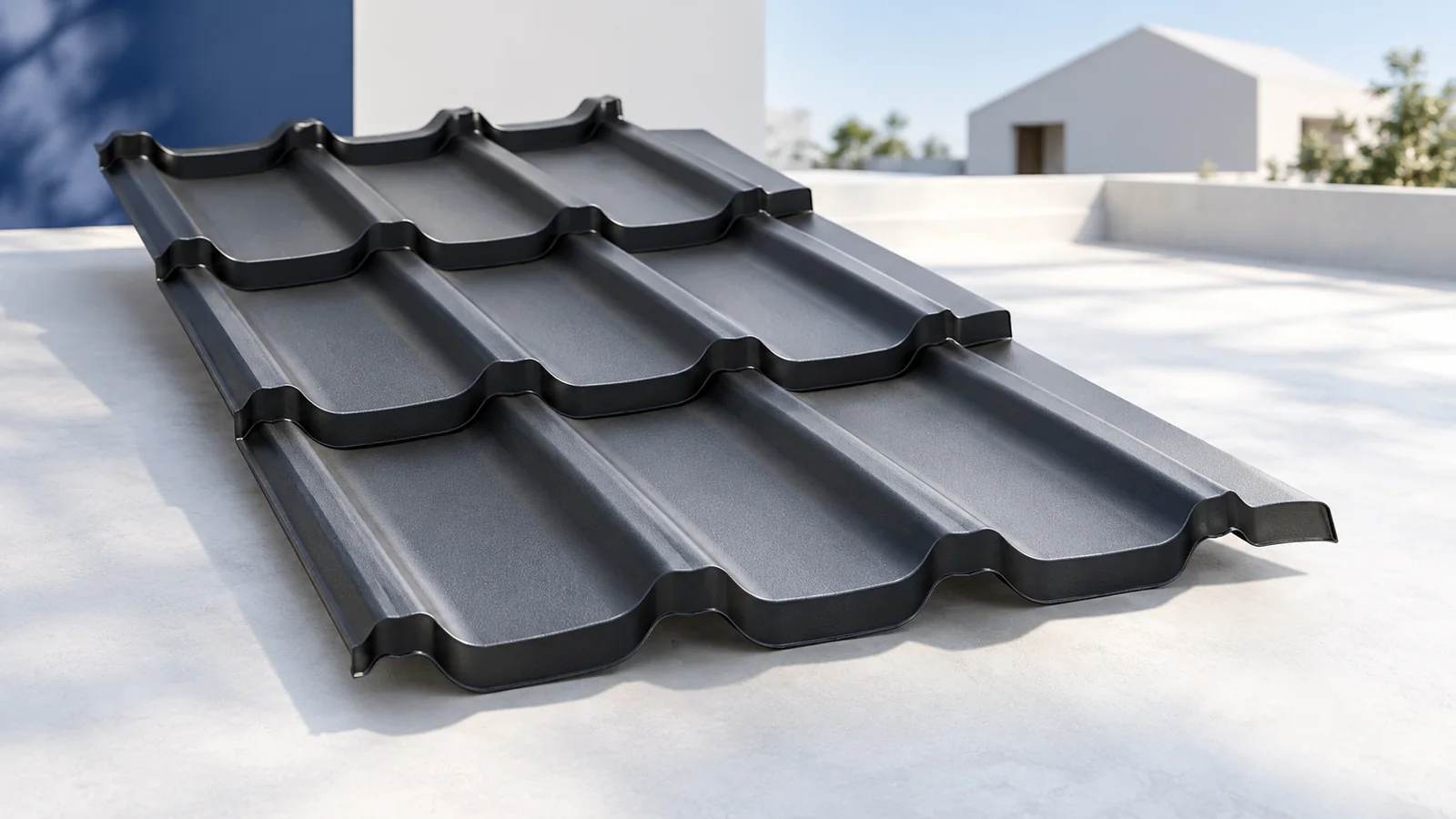
Small shingle units can follow complex roof geometry, but valleys and flashings still need careful detailing. Metal tiles offer a choice of formats. Long sheets cut to length are efficient on simple slopes. Short modules can be easier to handle around hips and dormers.
Allow for waste for both coverings. Laying direction, pattern and joint positions limit where an offcut can be reused. A cutting plan for the actual roof gives a more realistic material quantity than a general assurance of low waste.
How do you compare weights and structural requirements?
Compare the dead loads of the complete systems, including deck, battens, insulation and internal finishes. Lightweight components can require additional layers. For renovation, add up the mass of each proposed build-up before assessing the effect on the frame.
The structure must also resist snow and wind. Keep the required supports when changing the covering. If the capacity is uncertain, ask the designer to assess it before ordering. Strengthening the frame later can cost more than the difference between the coverings.
What about rain noise and summer heat in the loft?
Rain noise indoors depends on substrate stiffness, insulation, air tightness and the interior lining as well as the outer covering. A loose sheet sounds different from a finished roof. Compare complete assemblies for the living spaces they will enclose.
Surface colour affects summer heating, alongside insulation and ventilation. PIR boards can provide useful thermal resistance where space is limited. Assess acoustic performance separately, and check heat and moisture behaviour for the assembly as a whole.
How can you compare the costs fairly?
For each option add covering, substrate, additional layers, flashings and installation. Compare metal tile prices per square metre of effective cover. In the example catalogue dated 28 October 2026, cut-to-length sheets with 25 µm polyester come to about €11.22 per m² of cover including 23% Polish VAT, converted at the rate used on 12 November 2026. This covers the material only.
Obtain prices for the same scope and realistic waste for both options. Include transport, unloading and stripping the old covering where needed. Two roofs of equal area can favour different materials if one is simple and the other has many intersections.
When is each option a sensible choice?
Metal tile sheets are suitable where the structure, desired appearance and installation access allow them. Choose between long sheets and modules to suit handling on site. Shingles can be practical where a suitable deck exists or is planned and the junctions are well detailed. Use a crew experienced in the chosen covering.
Look at completed roofs after several seasons, read the warranty conditions and establish the maintenance needs. Ask the contractor to explain a valley, eaves or chimney detail on your own roof. Choose the solution that fits both the drawings and the complete estimate.

Free quote
What to include in your enquiry
Tell us how you plan to use the material, the dimensions and the quantity you need. Include the thickness, grade or variant name, along with the delivery town or your preferred collection branch. For a specific product, add its name or a link to the product page. We will reply to the email address you provide to discuss availability and the terms of your order.
Read next
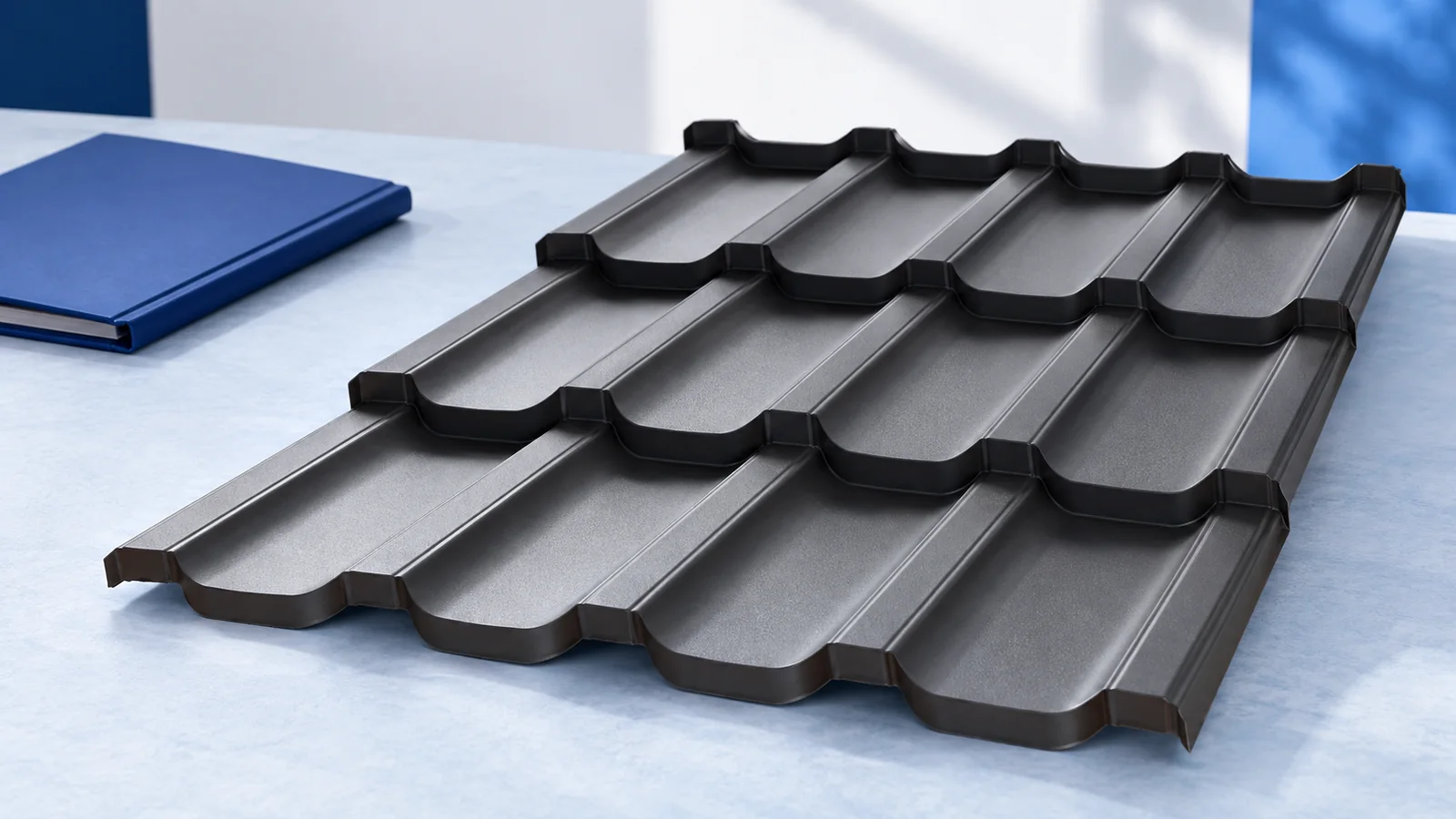
A single-module metal roofing sheet covers one course of the tile pattern down the slope. It can still be several tile widths…
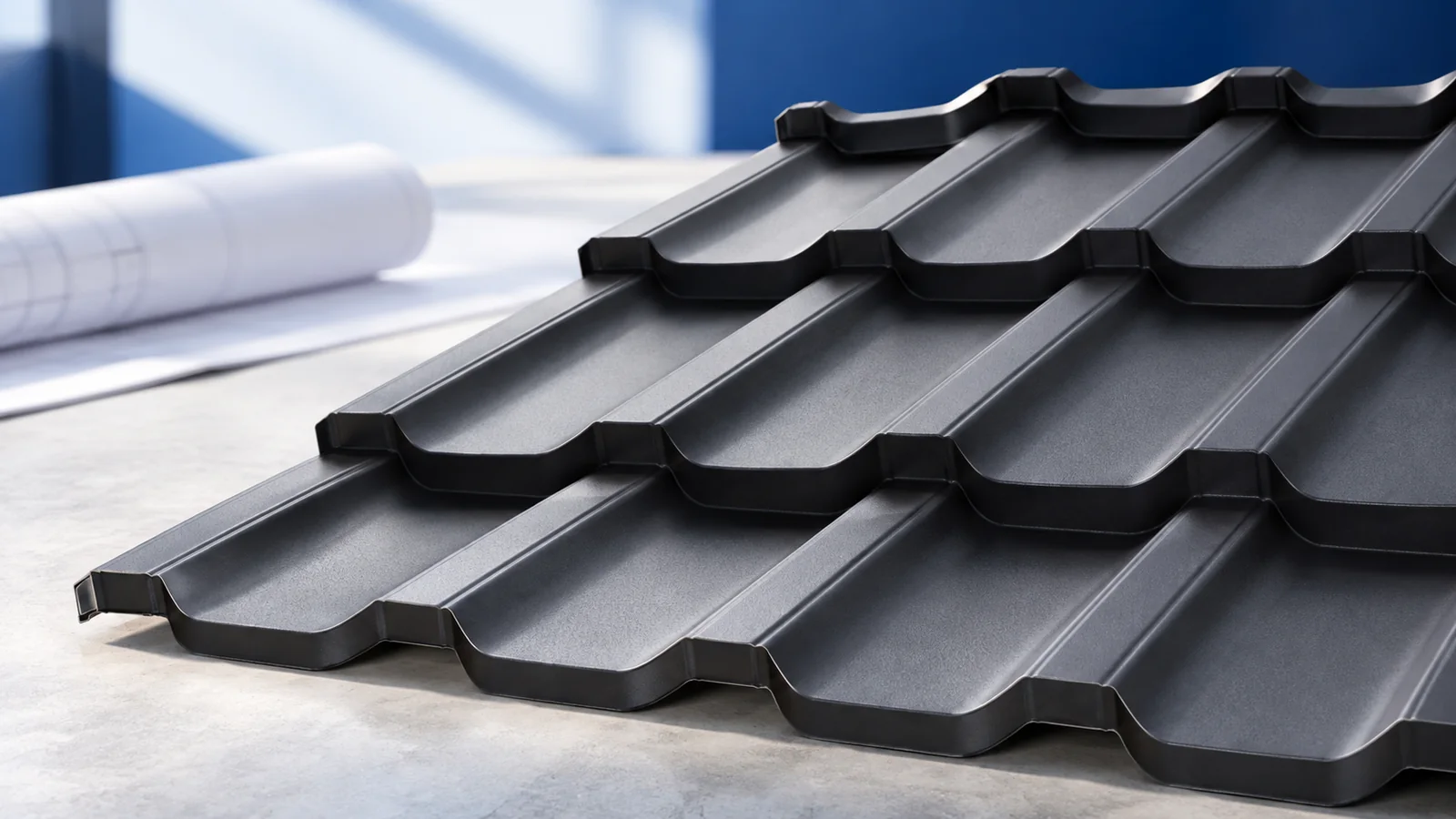
The frame, pitch and shape of a house roof determine which coverings you can consider. Cut-to-length metal tile sheets suit straightforward runs.…
To select gutters for a metal roof, mark the area draining to each outlet on a roof plan. A valley may concentrate…
Metal roof tiles suit a new roof when the permitted pitch, supporting layers and installation method match the design. Before comparing prices,…
The choice between one-course and two-course metal roofing sheets starts with a scale drawing of the roof. Mark the valleys, hips and…
Colour is only one feature of a tile-profile roofing sheet. Under the finish is a steel core with protective layers, each serving…
Roof battens support the covering and give its fixings a secure hold. For tile-effect steel sheets, the position of each batten must…
To compare tile-effect roofing sheets, start with the steel thickness, the metallic protection beneath the paint and the finish on the exposed…