






How do you plan safe snow removal from a metal roof?
Renovation and maintenance
Plan for snow before the roof disappears under it. Give the contractor a drawing showing rooflights, changes in level, drainage outlets and areas with restricted load capacity. Decide how people below will be kept clear. Snow depth alone is not a reliable trigger: a drift beside a parapet, wet snow and ice can load the roof very differently from an even layer of fresh snow. Have a competent person assess the roof and the need for removal. If the structure sags or makes unusual noises, stay off it and keep people away from the affected area.
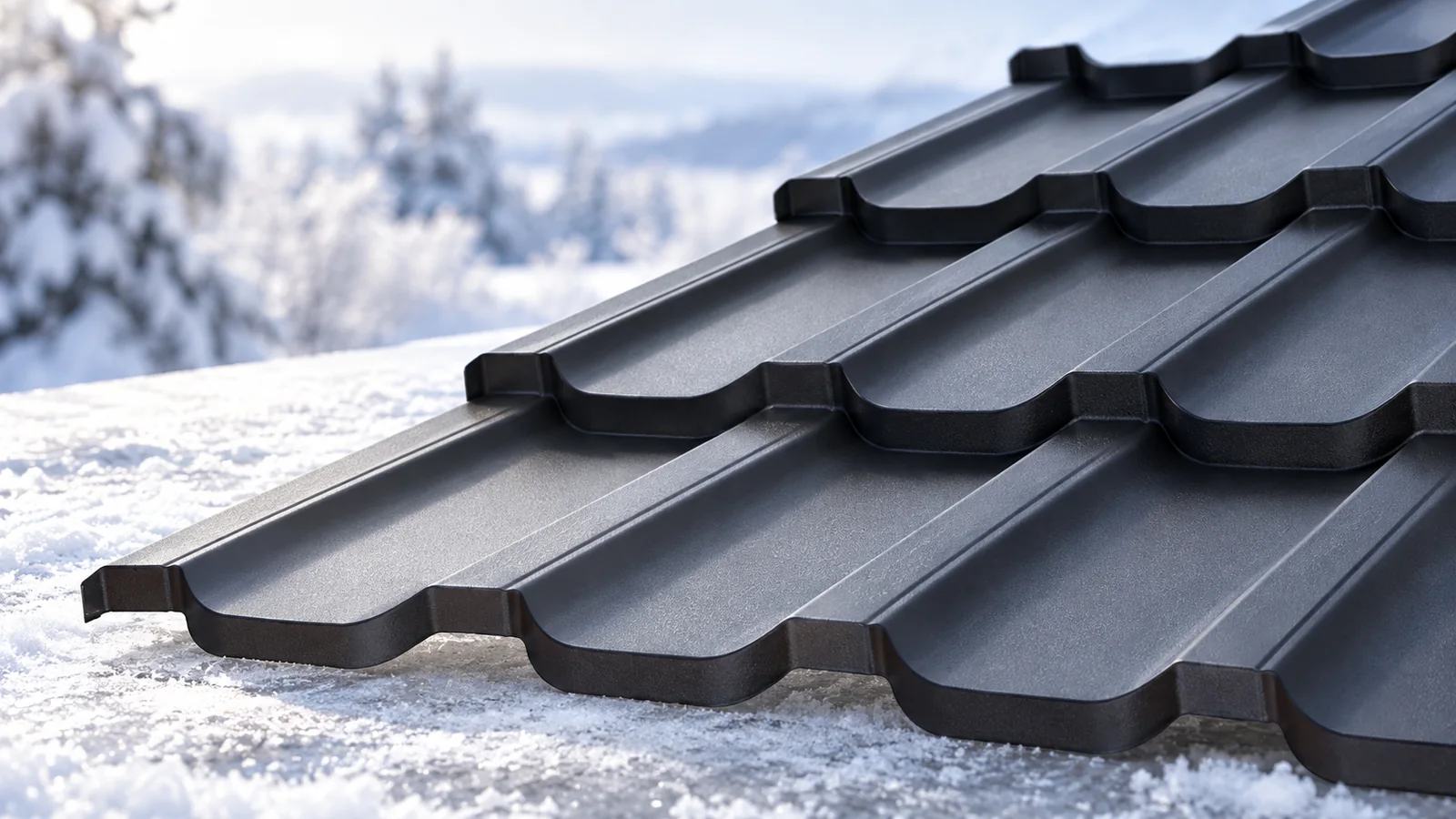
Why is snow depth not enough to assess the load?
Fresh powder, wet snow and ice differ in density. Equal depths can therefore impose very different loads, especially when snow takes up water during a thaw. Snow is also unevenly distributed on complex roofs. Drifts can form at parapets, rooftop structures and higher sections of a building.
There is no safe universal depth in centimetres. Assess the roof against its design and present condition. If there is visible sagging, unusual structural noise or doors suddenly jam, do not go onto the roof. Keep people out of the area below and arrange an urgent assessment; call the emergency services if there is immediate danger.
Who should carry out the work?
A competent crew needs suitable equipment, fall protection and a planned method for slippery steel surfaces. A ladder alone does not prevent falls. The crew must know where approved anchor points, rooflights and areas of limited capacity are. Snow can conceal fragile elements and even the roof edge.
Agree access and the removal plan before starting. Keep bystanders out of the drop zone, including entrances, pavements and car parks at the eaves. Coordinate work on commercial premises with deliveries and operating hours. Barrier tape alone may not prevent people entering the area.
How can the metal and its coating be protected?
Use tools that cannot scratch or cut the finish and follow the covering manufacturer’s instructions. Plastic or rubber edges may be specified. Scraping with a metal shovel can breach the coating and start corrosion. Avoid striking fixings, flashings or projecting equipment.
Do not try to scrape the roof down to perfectly bare metal. Protect the covering and its joints. Do not chip ice off with sharp tools. Use de-icers only if their compatibility with the roof materials is confirmed. A driveway product may be unsuitable for coated steel.
Why does the sequence of removal matter?
Clearing a large load from just one section redistributes the loading and may be unsafe for some structures. A competent person should specify a sequence suited to the roof geometry and supports. Do not stockpile snow on one spot or push it onto a lower roof without confirming that roof’s capacity.
On sandwich panel roofs, observe permitted loads and designated access arrangements. The insulating core does not make the panel suitable for unrestricted point loads. Identify rooflights, penetrations and openings before work starts. Incomplete documentation calls for particular care.
What about gutters and snow guards?
Snow sliding down metal sheets can load gutters and brackets. Snow guards help control sliding only if correctly positioned and fixed to suitable structural members. A single improvised bracket is not a designed protection system over an entrance or footpath.
Gutters and outlets must carry away meltwater. Never use them to support tools or a worker’s weight. Secure the area below before removing icicles. If ice repeatedly forms in the same place, investigate heat escaping from the building and possible drainage defects.
What information does the snow removal contractor need?
Provide a roof plan, available design load figures and equipment locations. Mark rooflights and other areas that are not walking surfaces; they can be invisible under snow. Agree safe access and the area designated to receive snow.
Keep photographs taken when the roof is clear. They help the crew identify details but do not establish the roof’s current condition. Deformation or other signs of danger require urgent assessment by qualified personnel and, where necessary, the emergency services.
What should be checked afterwards?
Inspect flashings, coating and fixings where work took place. A small finish defect is easier to repair before corrosion spreads. Check that tools have been removed and drains are clear. Before-and-after photographs provide a record for future winters.
Keep a winter maintenance plan and contact details for a contractor. For large roofs, agree how snow loads will be monitored and inspections recorded. Base decisions on weather and structural condition; waiting for a leak may mean acting too late.
If the roof needs clearing unusually often, review drift locations and drainage against the original design. Investigating the recurring cause may reduce future interventions, costs and the risk of damaging the covering.

Free quote
What to include in your enquiry
Tell us how you plan to use the material, the dimensions and the quantity you need. Include the thickness, grade or variant name, along with the delivery town or your preferred collection branch. For a specific product, add its name or a link to the product page. We will reply to the email address you provide to discuss availability and the terms of your order.
Read next
A practical roofing course gives installers a chance to set out a slope, form a flashing and check a fixing while the…
Sheet format affects how a roof is delivered and installed. A long sheet can cover an uninterrupted strip of slope, whereas small…
A metal roof can carry a photovoltaic array when the mounting system suits the particular roof and the structure can take the…
A price per square metre is not enough to select trapezoidal steel sheet. Comparable offers identify the profile, thickness, coating, dimensions and…
A T18 or T35 profile designation describes the shape of a sheet. To judge how long it may last, look at the…

Order cut-to-length tile-profile sheets from a schedule of roof slopes, not a single area quoted over the phone. You need strip lengths,…
A roof with several intersecting slopes can follow the wings of a house and shape the rooms beneath. Before choosing the covering,…
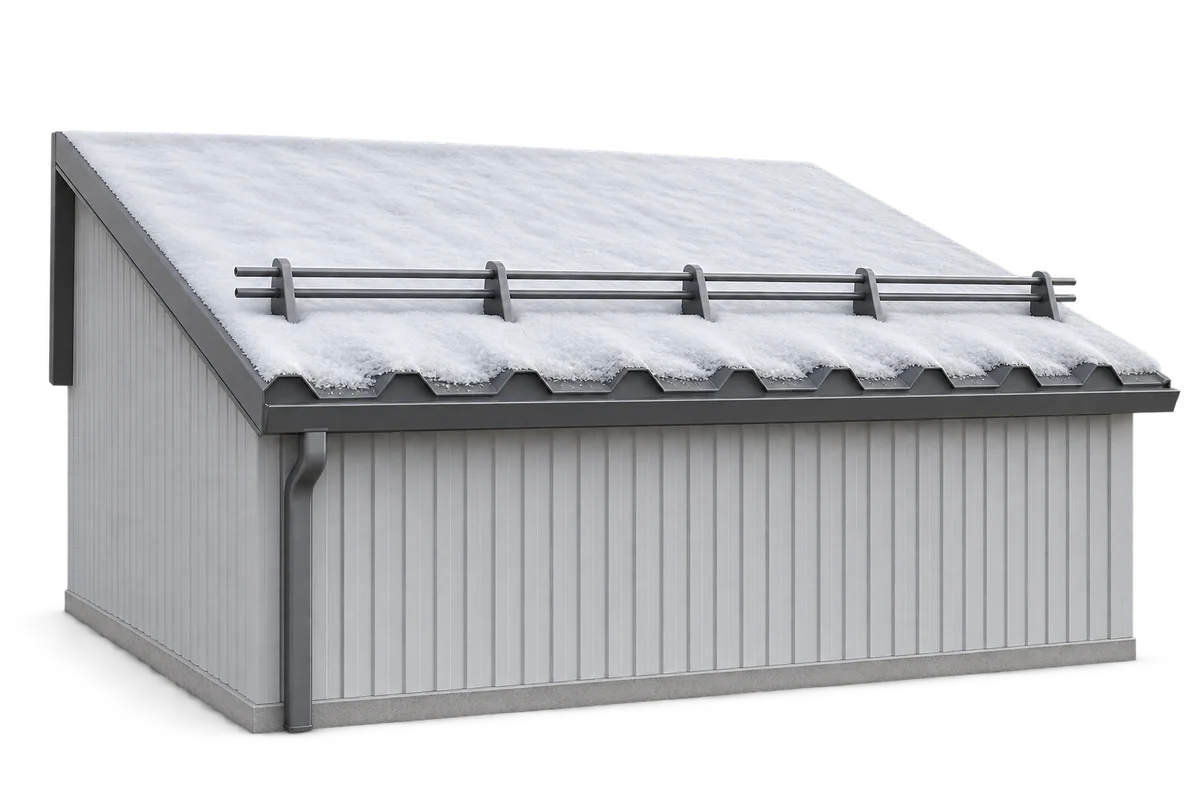
Snow depth alone does not tell you when a roof needs clearing. What matters is the weight and distribution of the snow…
