






Ridge details for sandwich panel roofs: capping, insulation and seals
Sheet metal flashings
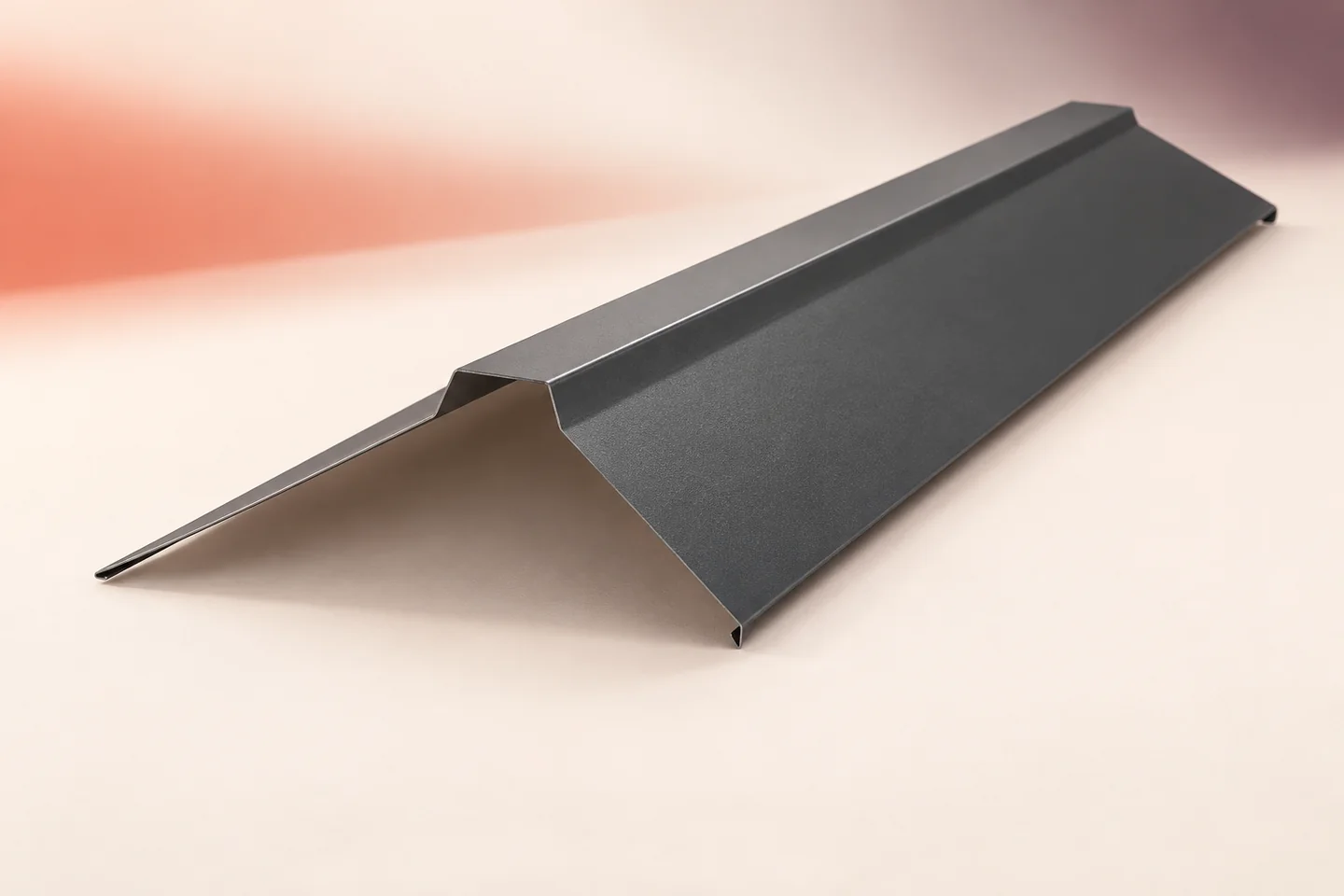
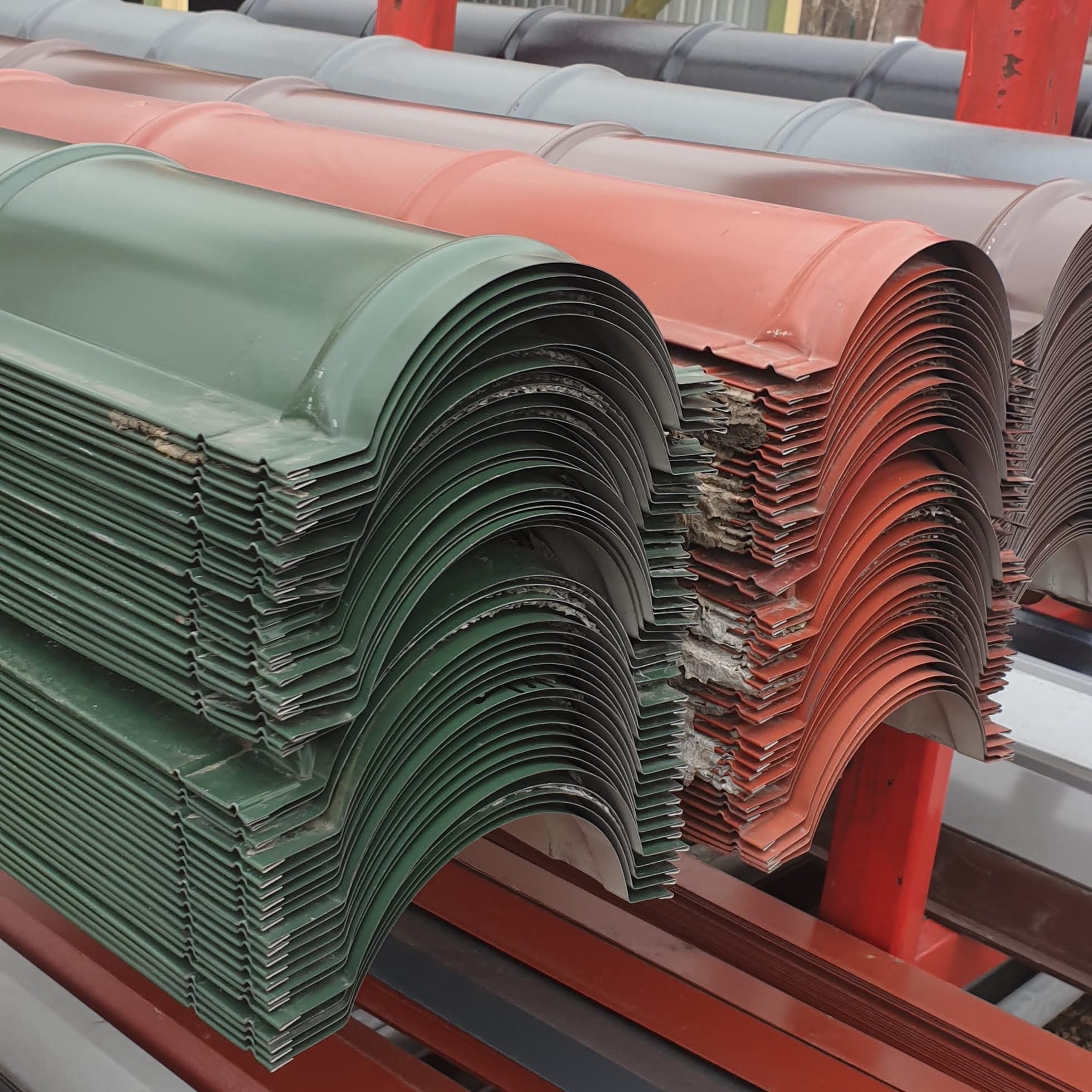
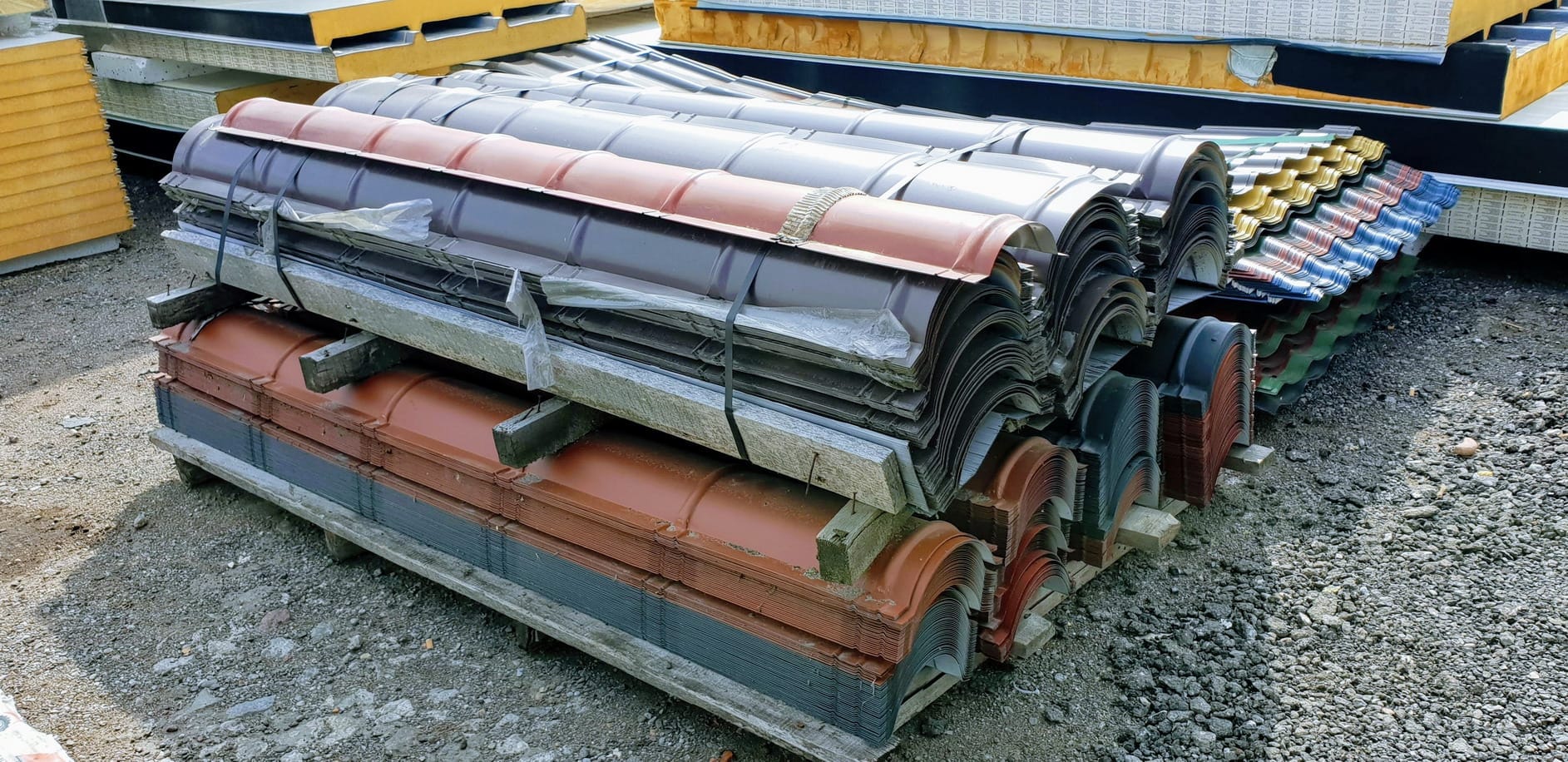
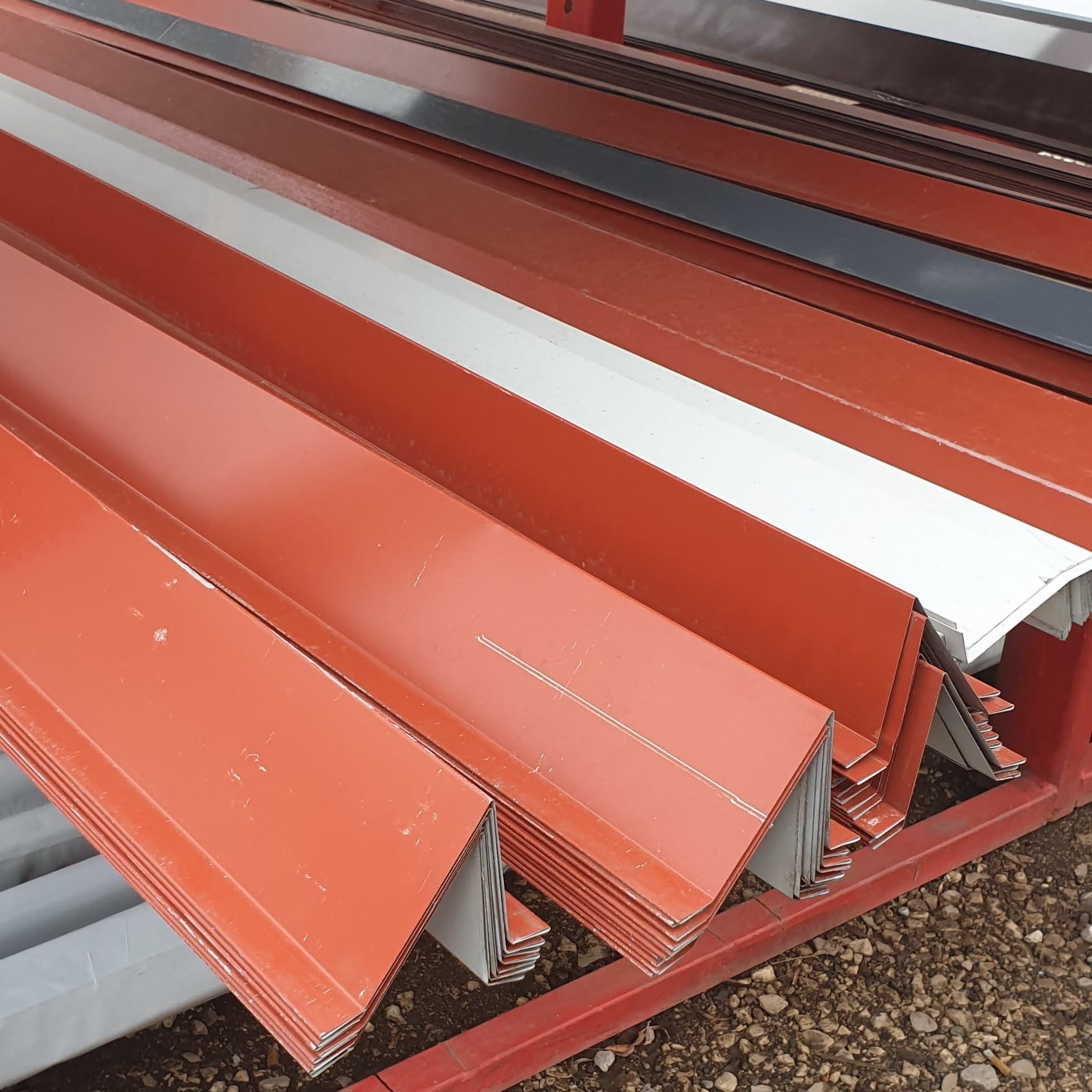
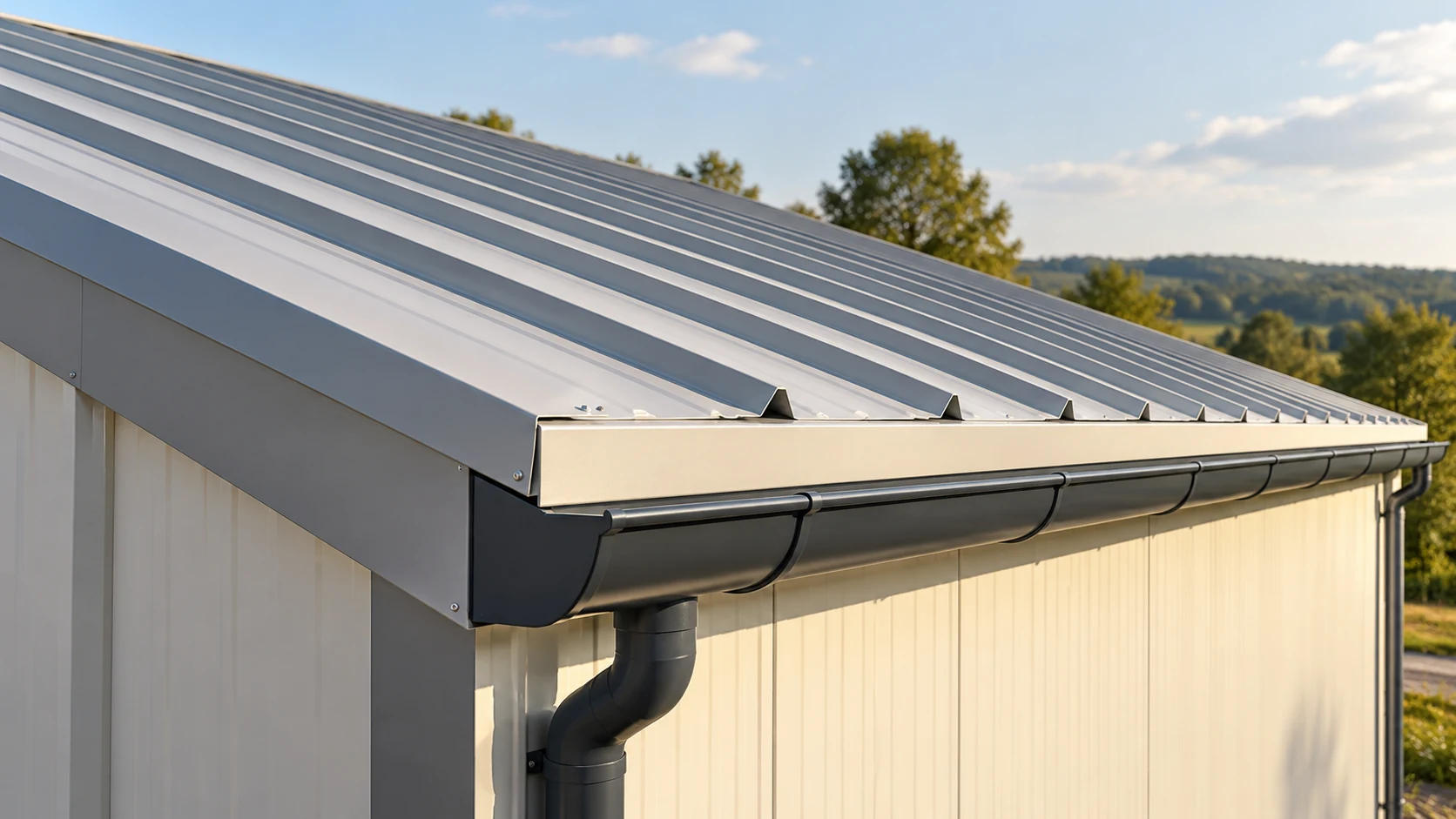
The outer ridge cap sheds rain where the two roof slopes meet. It does not insulate the joint or seal it on the inside. Detail the panel ends, the infill between the cores and the line of each seal before fitting the cap. Its angle must suit the roof pitch, and its wings must cover the junction over the profiled outer facings. The system may also require closures beneath the cap and a separate internal ridge flashing. Check these concealed parts while the joint is still open; a straight line of capping tells you little about what lies beneath.
In this guide
What the outer ridge cap does
The ridge drawing should show the actual panel thickness, support positions and ends of both facings. Use this section to select the cap and the components beneath it. A generic sketch that does not identify the panel type leaves critical questions open, particularly where parts will be inaccessible once the roof is finished.
Match the cap to the roof pitch
A different pitch changes the angle between the two wings of the cap and how they sit on the roof. Their width must provide the specified cover on each side of the joint. Neither a photograph of another building nor the desired appearance gives that dimension.
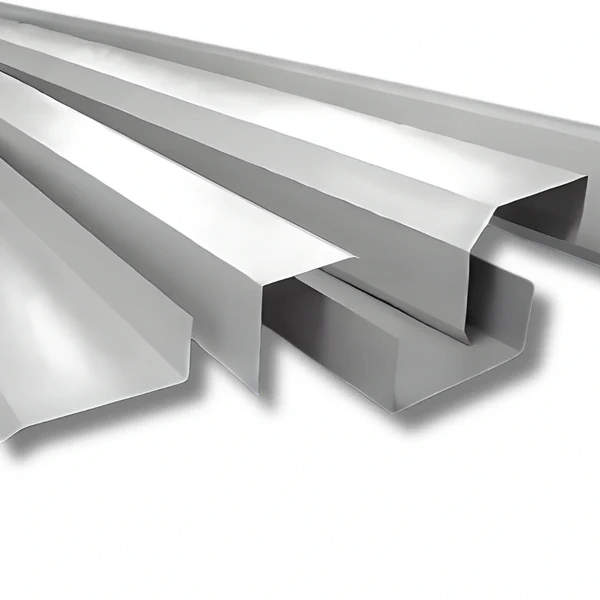
Changes in roof geometry may call for purpose-made flashings. Dimension the folded section and mark the weather face on the drawing. Forcing a narrow ridge cap open on site can damage its coating and shift the fixing line. Resolve the mismatch before folding the metal.
Check the continuity of the insulation
Where the panel cores stop, install the infill specified for the ridge. The outer sheet cannot replace that insulation. A void or an unsuitable filler changes the performance of the junction. Check both the specified material and its position against the roof design and the panel system documentation.
Do not copy a ventilated ridge detail from a single-skin roof onto a sandwich panel roof. Beneath the cap, a sandwich panel meets different layers from those in a roof with battens and an underlay. Check the specified build-up before opening a gap or sealing one shut.
Trace each seal through the joint
The junction must keep out rain and maintain the required seal on the room side. Select sealing materials for the substrate, location and expected movement. Specifying only “silicone” leaves those questions unanswered: a sealant must be compatible with the coating and the conditions inside the building.
Mark each run of tape or sealant on the section so installers can follow it and inspectors can check it before it is covered. Fix the ridge cap at the points shown in the detail, not just where it is convenient to work from above. The panels themselves still need their specified fixings to the supporting frame.

Match the finish to the rest of the envelope
Ridge caps and other flashings may be made from galvanised, aluminium-zinc-coated or colour-coated steel sheet. Consider exposure on both faces of the roof. The internal ridge trim may face conditions quite different from those acting on the outer cap, so select the materials for the complete assembly.
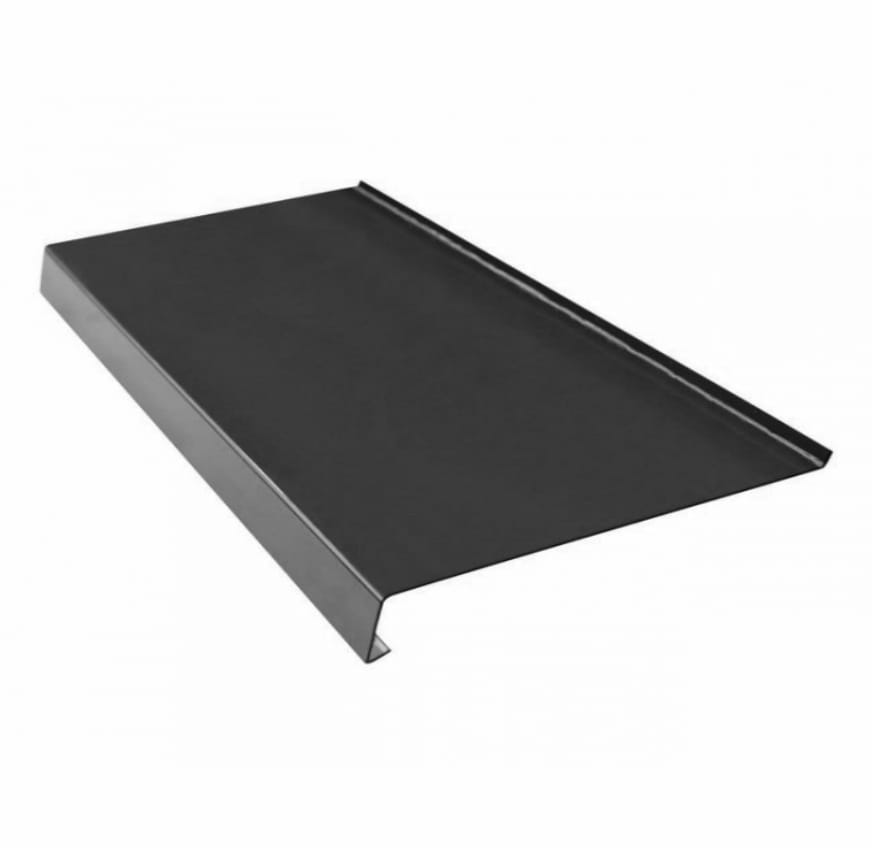
Specify texture and coating as well as the colour code. Verge trims, eaves flashings and chimney flashings can match visually while doing different jobs. Wall starter profiles belong to another detail again. A matching finish does not make these folded sections interchangeable.
Inspect the ridge before closing it
Check the panel ends, the position of the infill and the continuity of each seal before the outer cap goes on. Photographs at this stage record layers that will no longer be accessible. A straight and even ridge seen from outside does not establish that the hidden joint is sound.
Finish by checking laps, fixings, verge ends and the condition of the coating. Remove metal swarf and debris from the roof. Keep the component schedule with the building records so that a future inspector can identify and order a replacement for a particular stretch of ridge.
Questions and answers
Does the ridge cap insulate the panel joint?
The cap is a sheet metal cover. The performance of the ridge also depends on the panel ends, infill, seals and the way the joints are made.
Does every building need ventilation beneath the ridge cap?
There is no universal rule. For a sandwich panel roof, follow the ridge detail specified for the project and the particular roof system.
Can the internal ridge flashing replace the outer cap?
No. They sit on opposite faces of the joint and have different functions. The roof detail specifies which parts are needed and their shape.

Free quote
What to include in your enquiry
Tell us how you plan to use the material, the dimensions and the quantity you need. Include the thickness, grade or variant name, along with the delivery town or your preferred collection branch. For a specific product, add its name or a link to the product page. We will reply to the email address you provide to discuss availability and the terms of your order.
Read next
First establish whether the defect can be inspected from the ground or a protected working platform. If access to the roof is…
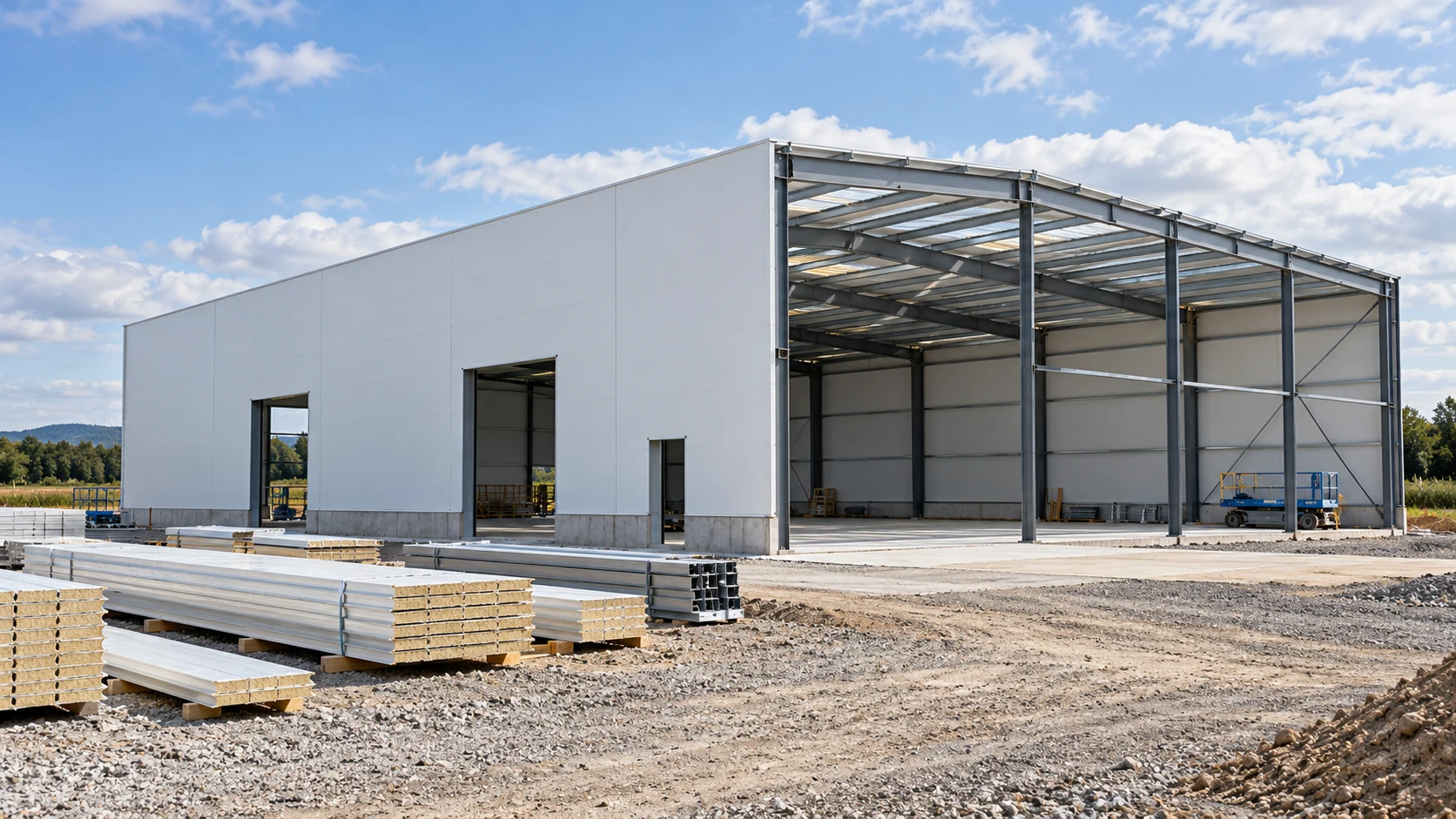
The total price of a building tells you little about when you will need the money. Budget separately for site preparation, the…
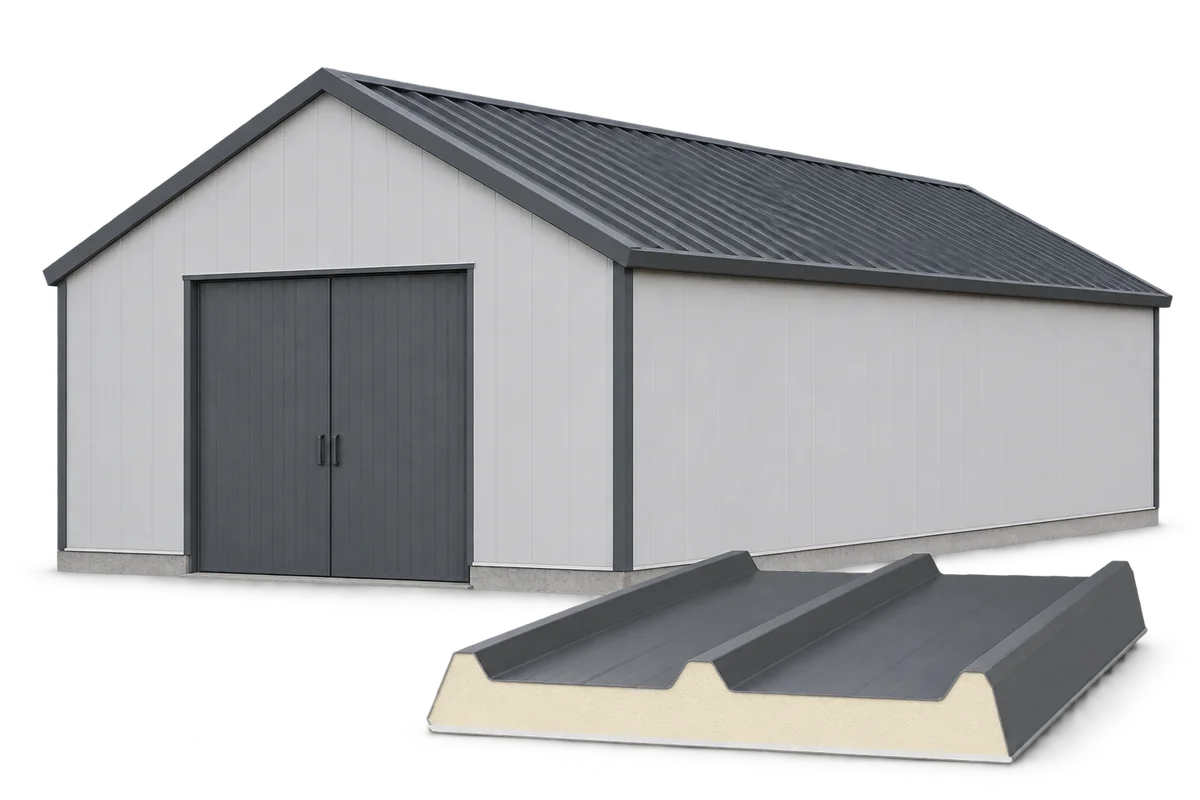
On the floor plan, mark the heated part of the workshop and trace the airflow through the produce store. That will help…
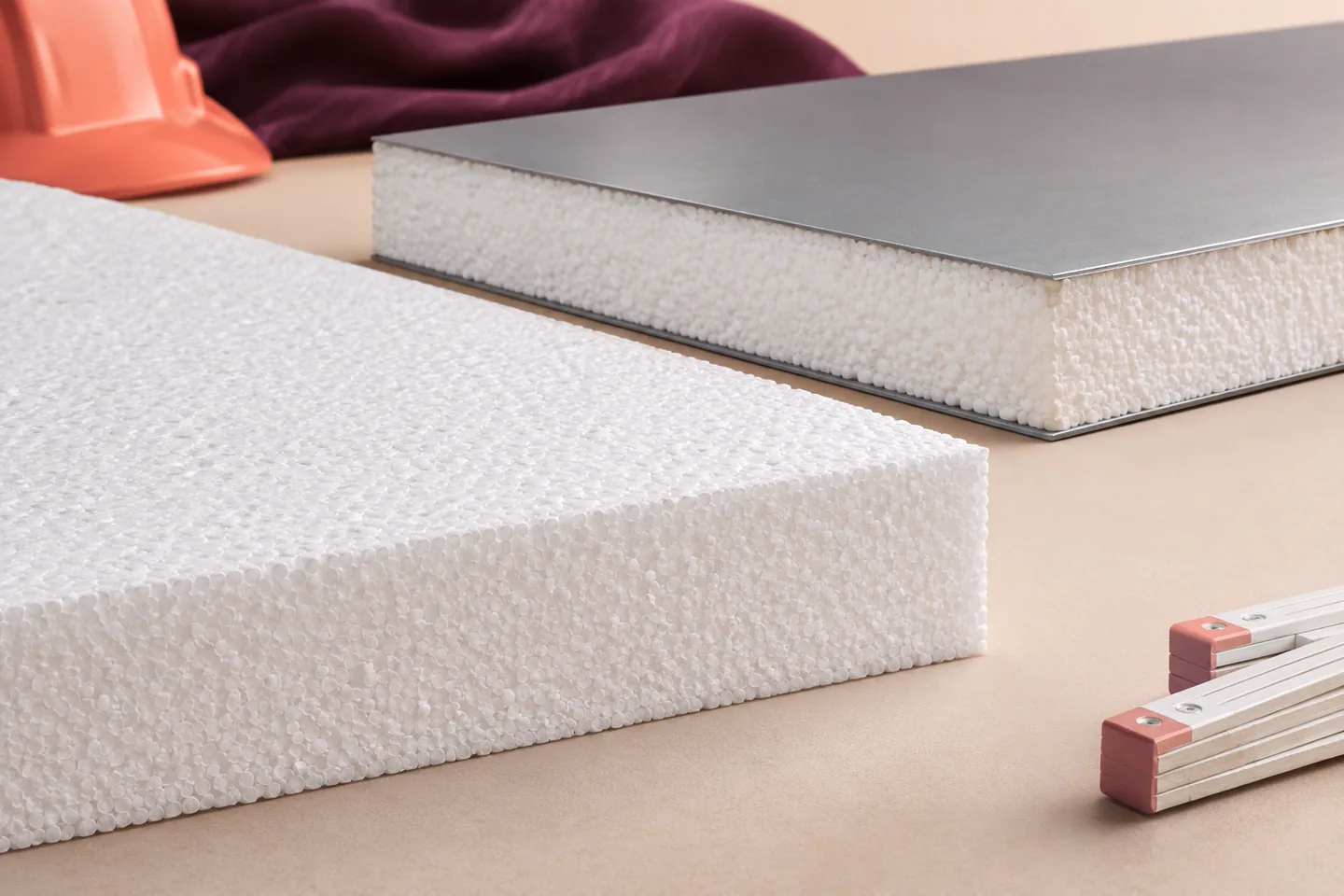
An EPS insulation board forms one layer of a wall, floor or roof. An EPS-core sandwich panel is a factory-bonded unit whose…
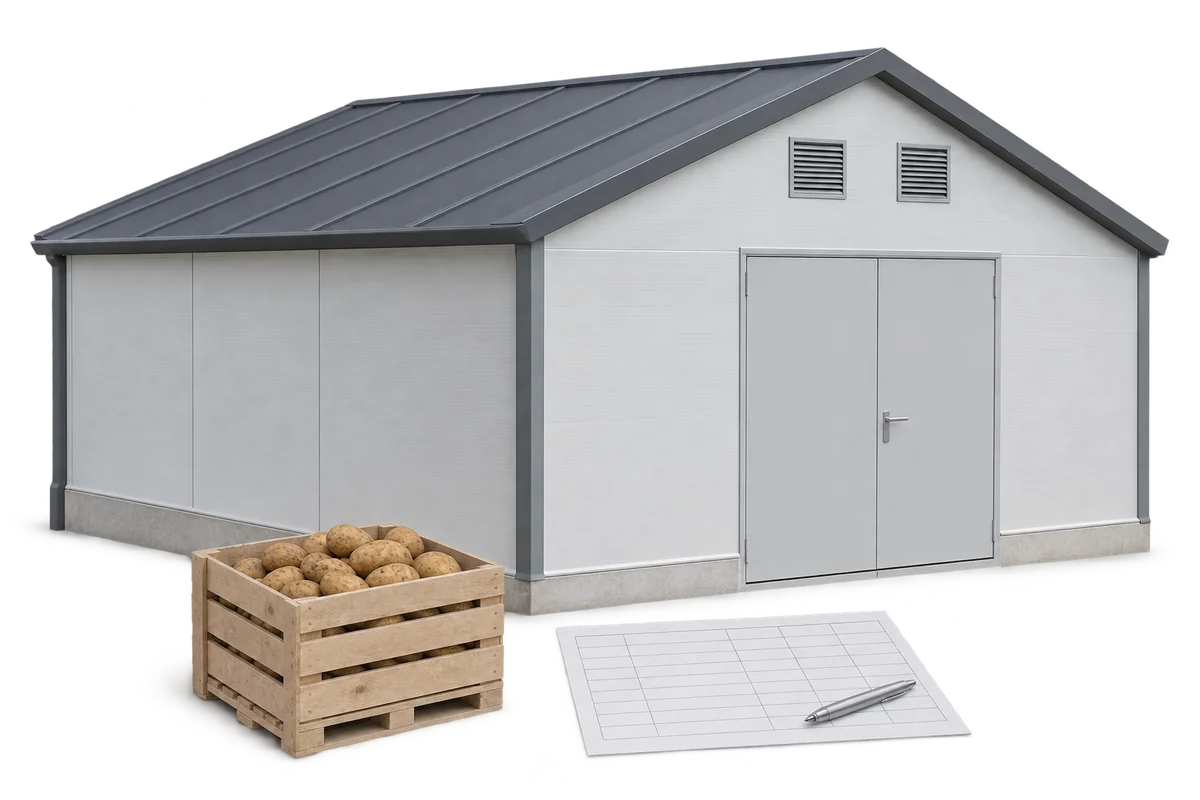
Harvest sets the deadline for work on a potato store. Allow time to assess the building, order materials, install them and test…
A roof estimate starts with slope dimensions and ends with the weatherproof details. Distinguish the area to be covered from the quantity…

In an industrial building clad with sandwich panels, XPS can insulate the floor, foundation walls and plinth where the selected grade suits…
In Polish, “płyta obornicka” is a common name for a sandwich panel used to enclose a building. A typical panel has two…
