






Choosing EPS insulation for a warehouse roof
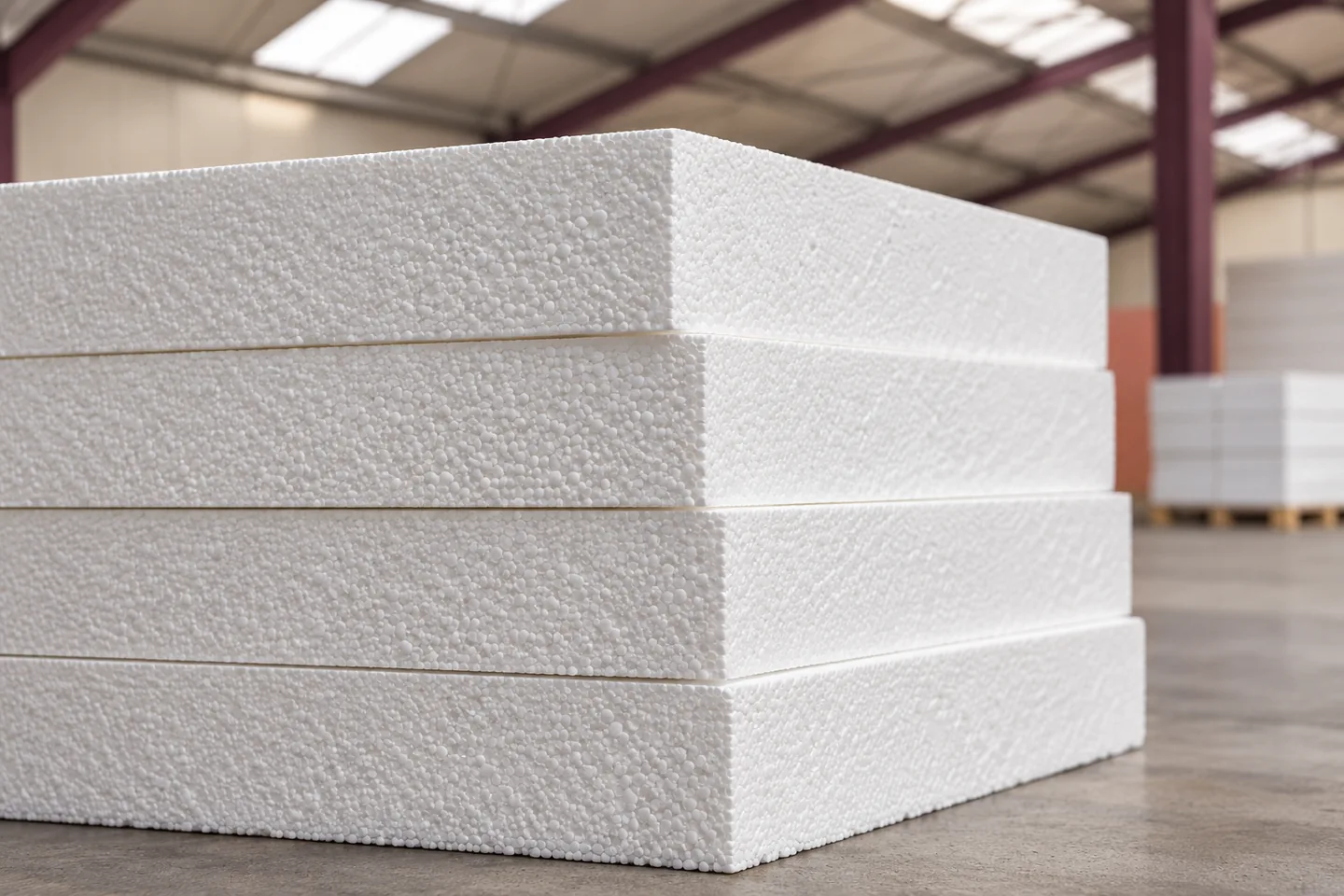
EPS and building insulation
Start with the position of the waterproofing. On a conventional flat roof, it covers the insulation. On an inverted roof, the insulation sits above it and must be suitable for that moisture exposure. For a warehouse, check thermal resistance, long-term deformation under equipment supports, and compatibility with the deck and roof covering. Snow, wind uplift and maintenance traffic also affect the specification. If ventilation equipment or solar panels are planned, show the support positions on the drawing. The load at an individual foot can be much greater than the roof-wide average suggests.
In this guide
Establish the roof build-up
In a conventional flat roof, the design may require a vapour control layer on the warm side. Select it for the construction and the actual use of the warehouse. For an inverted roof, specify insulation approved for exposure above the waterproofing. A general-purpose roof and floor board may be unsuitable. State the roof type in the enquiry so suppliers quote for comparable water absorption and durability requirements.
Calculate the required thermal resistance
Thermal conductivity λ is stated in W/(m·K). The resistance of a homogeneous layer is approximately R = d/λ, with thickness d in metres. For example, 0.20 m of EPS with λ = 0.036 W/(m·K) gives about 5.56 m²·K/W. This is the resistance of the insulation layer. Calculating the corrected roof U-value requires the full construction.
Include the other layers and applicable corrections in the roof calculation. With tapered insulation, the thickness at the centre of a roof area can be unrepresentative. Use the falls layout and thicknesses at the thinnest points. Maintain continuity around parapets, rooflights and equipment bases.
Check permanent and temporary loads
The EPS carries the weight of the roof layers and receives loads from snow and maintenance. Fixed equipment can apply local pressure for years. CS(10) denotes compressive stress at 10% deformation in a test. Include it in the assessment together with the data for sustained loading.
Use creep data or another selection method supported by the manufacturer. Under an equipment foot, the contact area and any load-spreading layers determine the local pressure. Dividing the weight of the installation by the entire warehouse area hides the peaks at the supports.
Match the boards to the deck and covering
Boards laid over concrete have different support conditions from boards laid on profiled steel decking. For a steel deck, check the unsupported widths, laying direction and permitted layer arrangement. Wind uplift affects roof fastening, particularly at corners and edges.
Check that the roof covering is compatible with EPS. Some membranes require a separating layer. Adhesives and primers must be compatible with polystyrene. If bitumen-faced EPS is specified, identify the facing and the approved method for applying the overlying layers. The facing alone does not determine which fixing methods are suitable.
Check the warehouse fire protection requirements
The goods stored and the storage arrangement may affect the warehouse fire protection requirements. Coordinate the insulation specification with the fire strategy. Reaction-to-fire class E for an EPS board describes a different property from the fire resistance of the complete roof and its classification for external fire exposure.
The classification for a roof assembly may specify the deck, thickness range, fasteners and permitted roof coverings. Check any component change against that scope. This applies to later installations too. A roof designed for occasional inspections needs a fresh assessment before extensive building services are added.
Specify what must accompany the boards
Specify the application, thickness, conductivity, required mechanical properties and dimensional tolerances. Density alone cannot supply these details. Agree board sizes, delivery sequence and storage protection. Inspect wet, distorted or badly damaged boards before deciding whether they can be enclosed in the roof.
EPS manufacturers include Paneltech, Genderka, Arsanit and Neotherm. Compare the documents for the exact grade quoted. At delivery, match the labels to the specification, inspect board condition and check that all documents are present. This establishes suitability for the warehouse roof more reliably than a generic roof-grade label.

Free quote
What to include in your enquiry
Tell us how you plan to use the material, the dimensions and the quantity you need. Include the thickness, grade or variant name, along with the delivery town or your preferred collection branch. For a specific product, add its name or a link to the product page. We will reply to the email address you provide to discuss availability and the terms of your order.
Read next
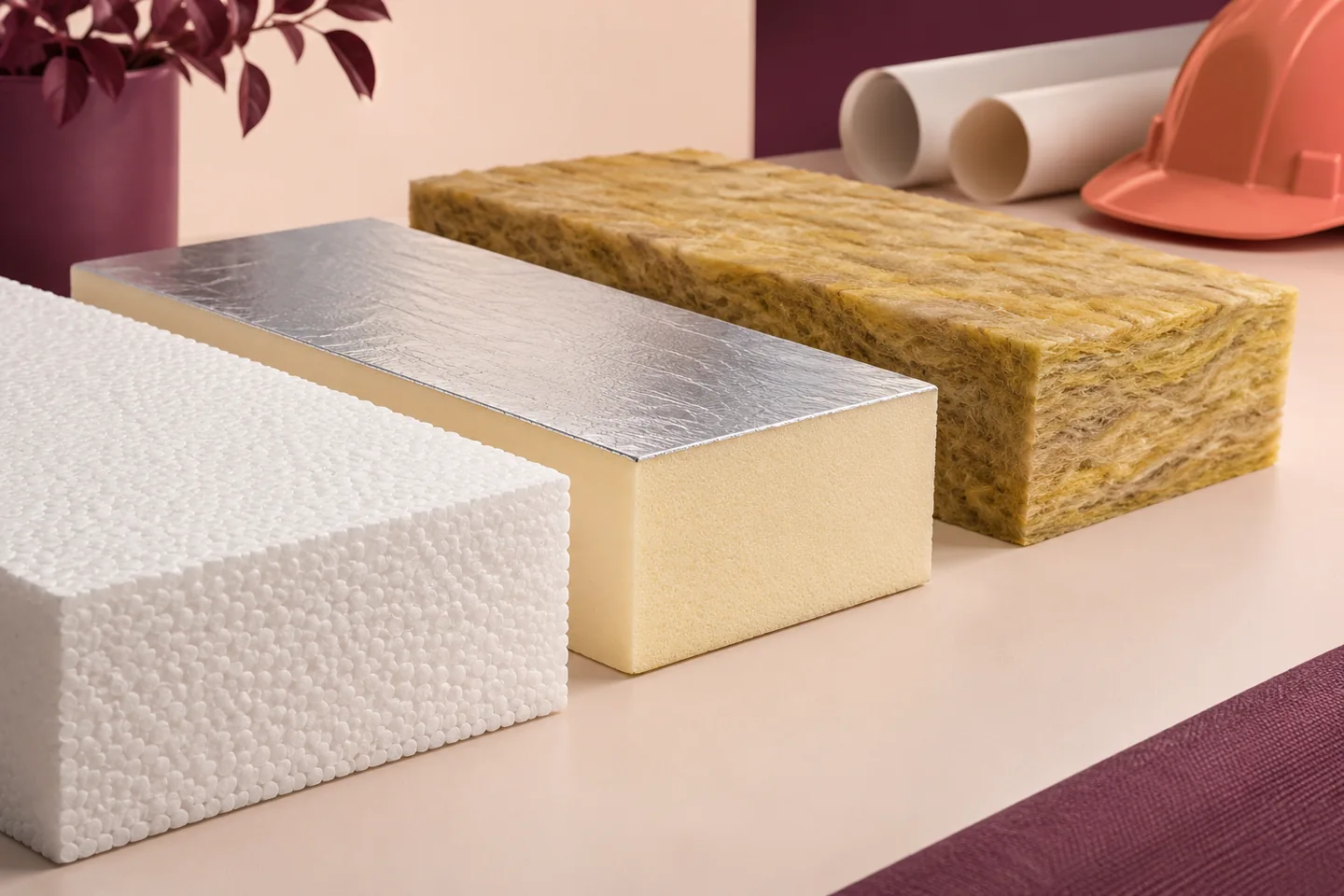
Choose insulation for each part of a commercial building by asking what the finished wall, floor or roof has to do. A…
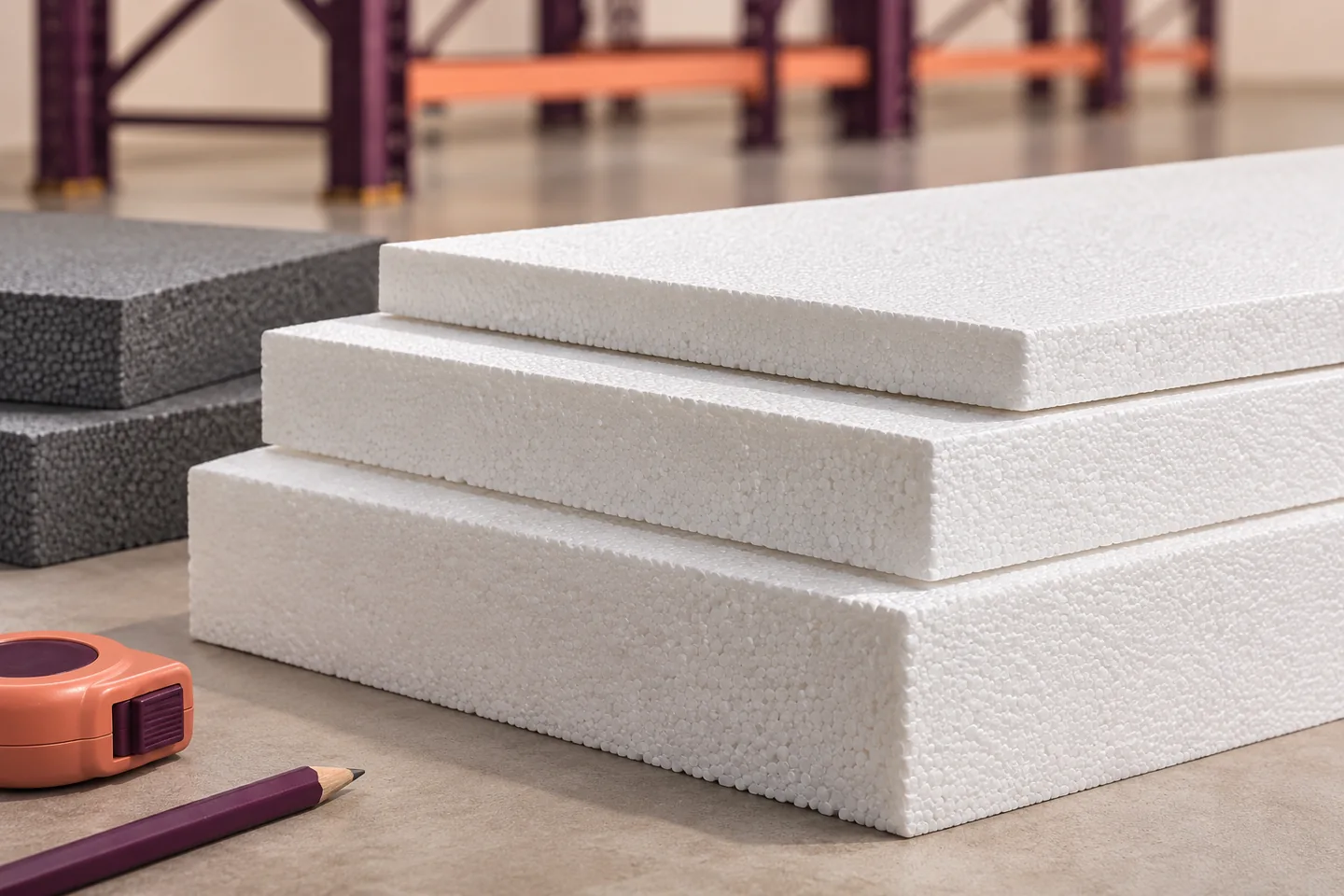
Design the EPS and concrete slab using the loads at individual rack feet. Ask the rack supplier for the maximum force at…
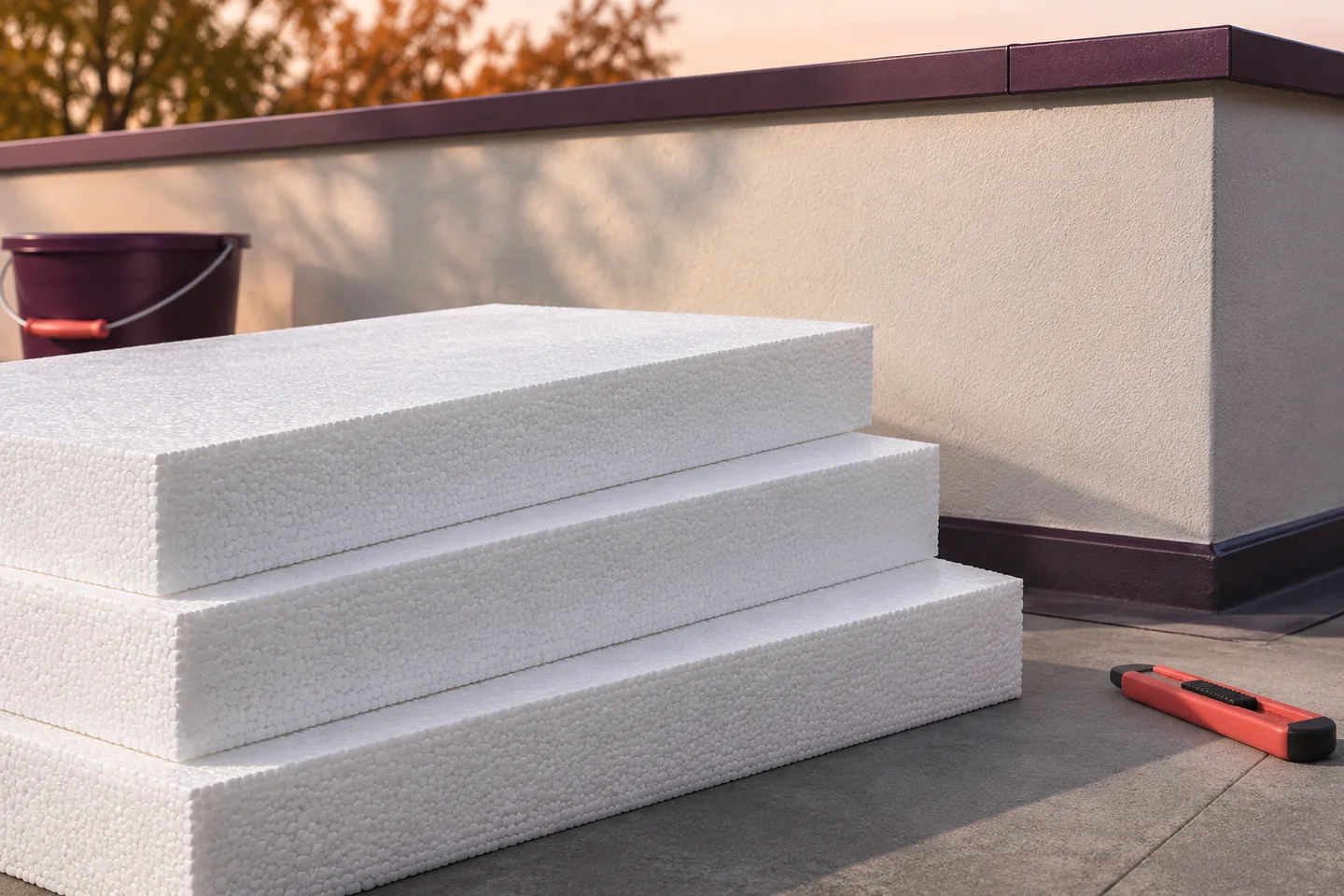
Follow the insulation line in a section through the roof edge. It must connect the EPS on the roof with the façade…
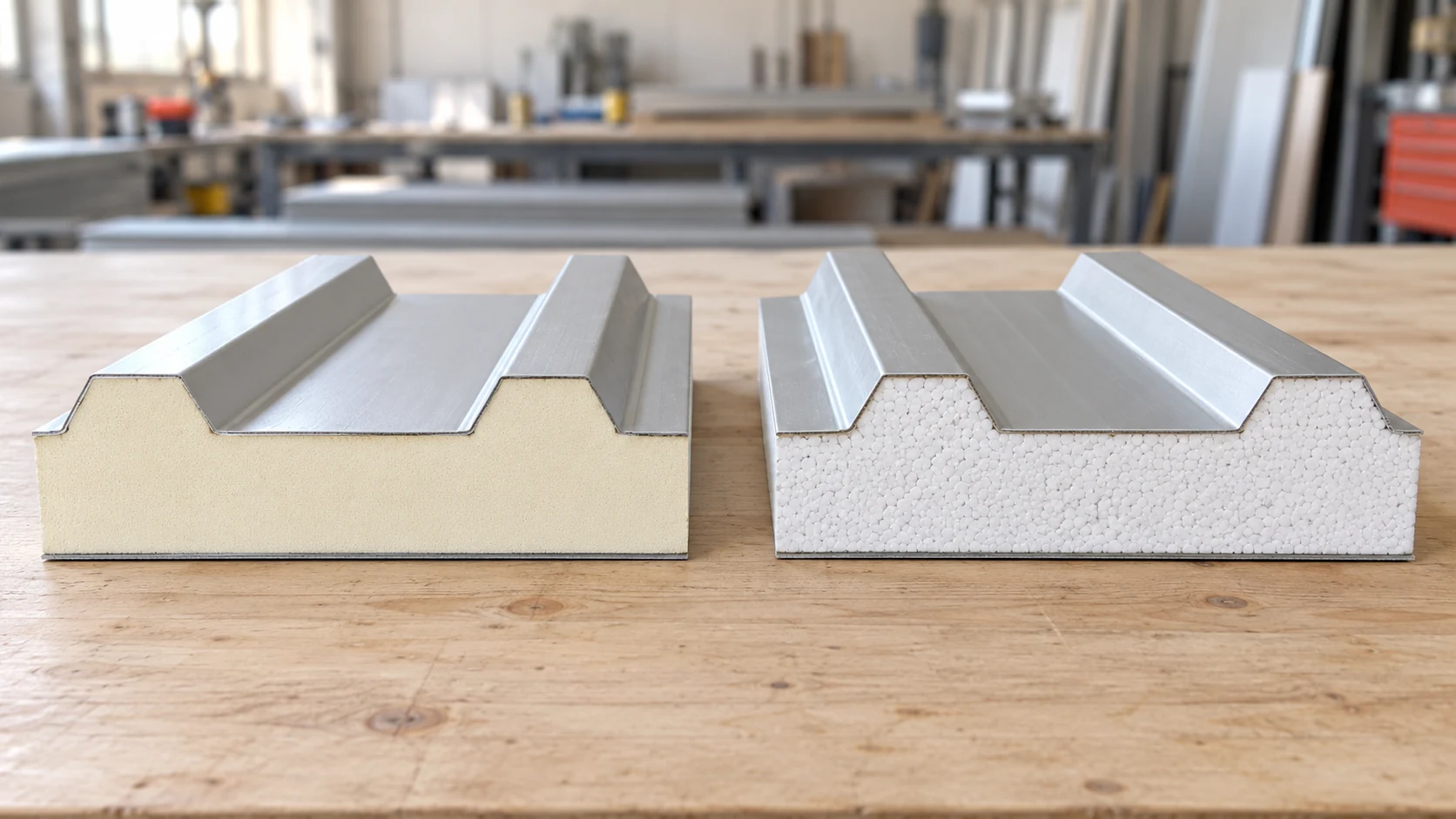
Compare PIR and EPS roof panels against the same design brief. Set the required U-value, loads, fire performance and exposure conditions, then…
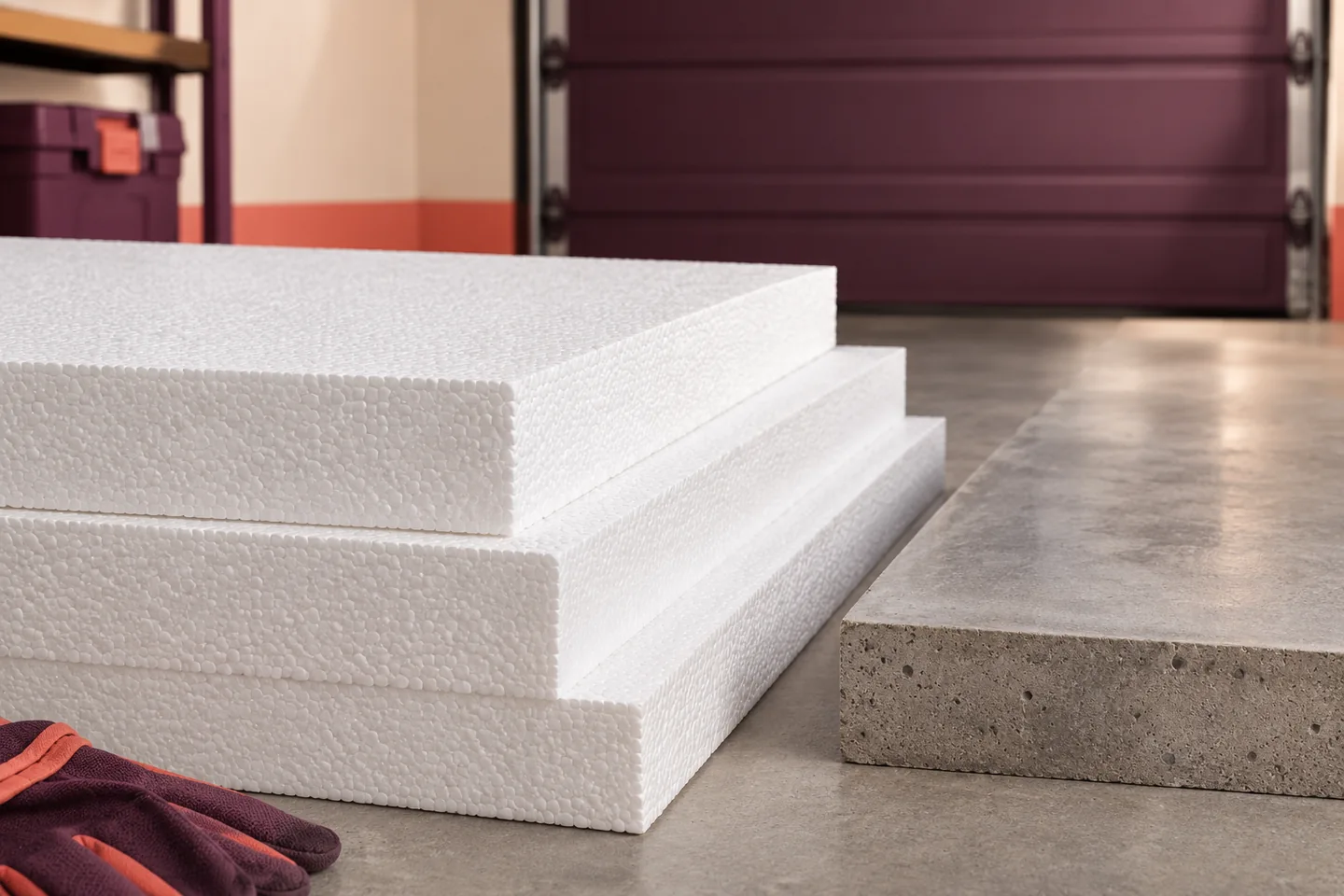
EPS 200 can be suitable beneath a garage floor if the slab and insulation are designed for the actual loads. A car…
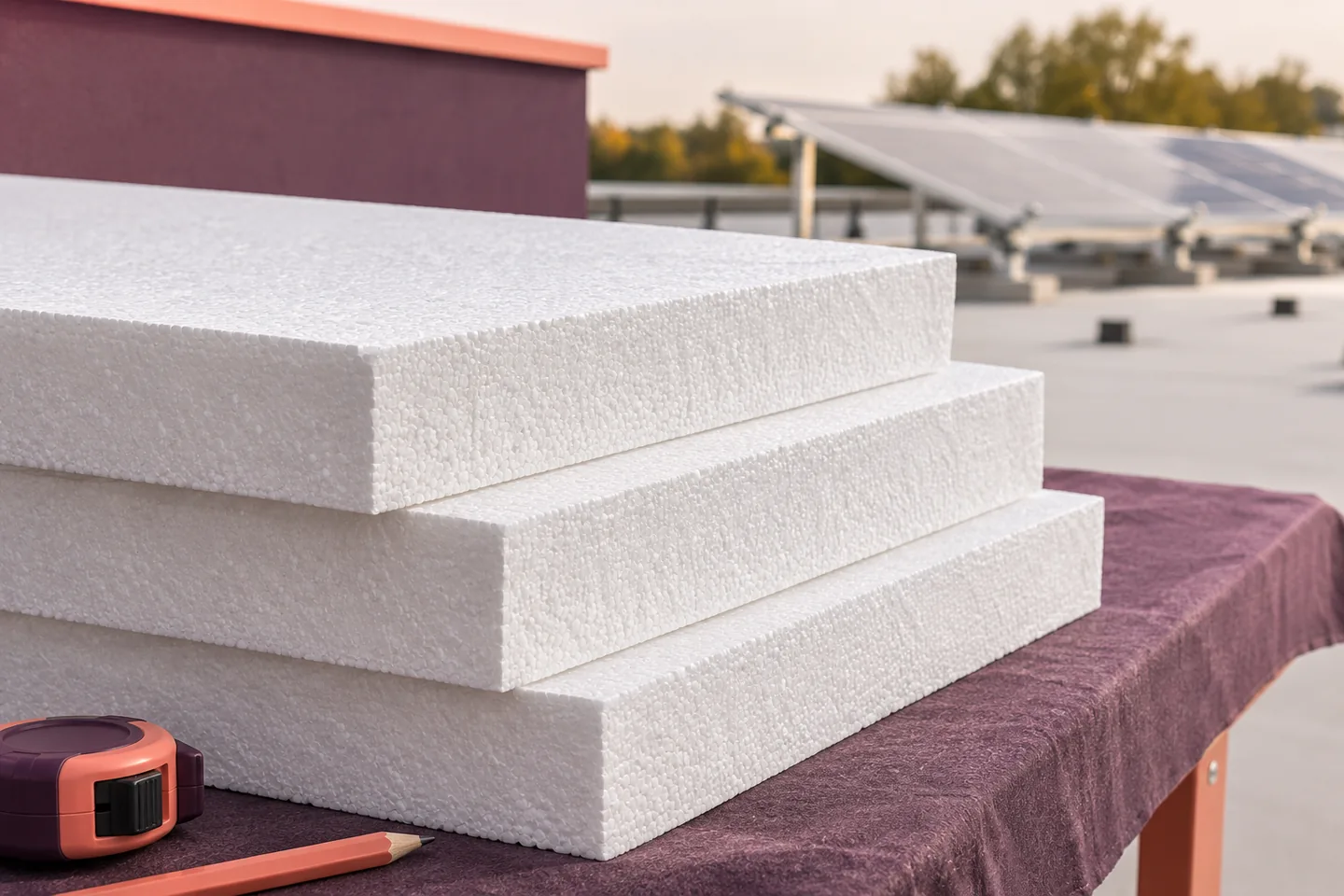
Before fitting solar panels to an existing EPS-insulated roof, identify what will carry each mounting foot. Record the roof structure, insulation grade…
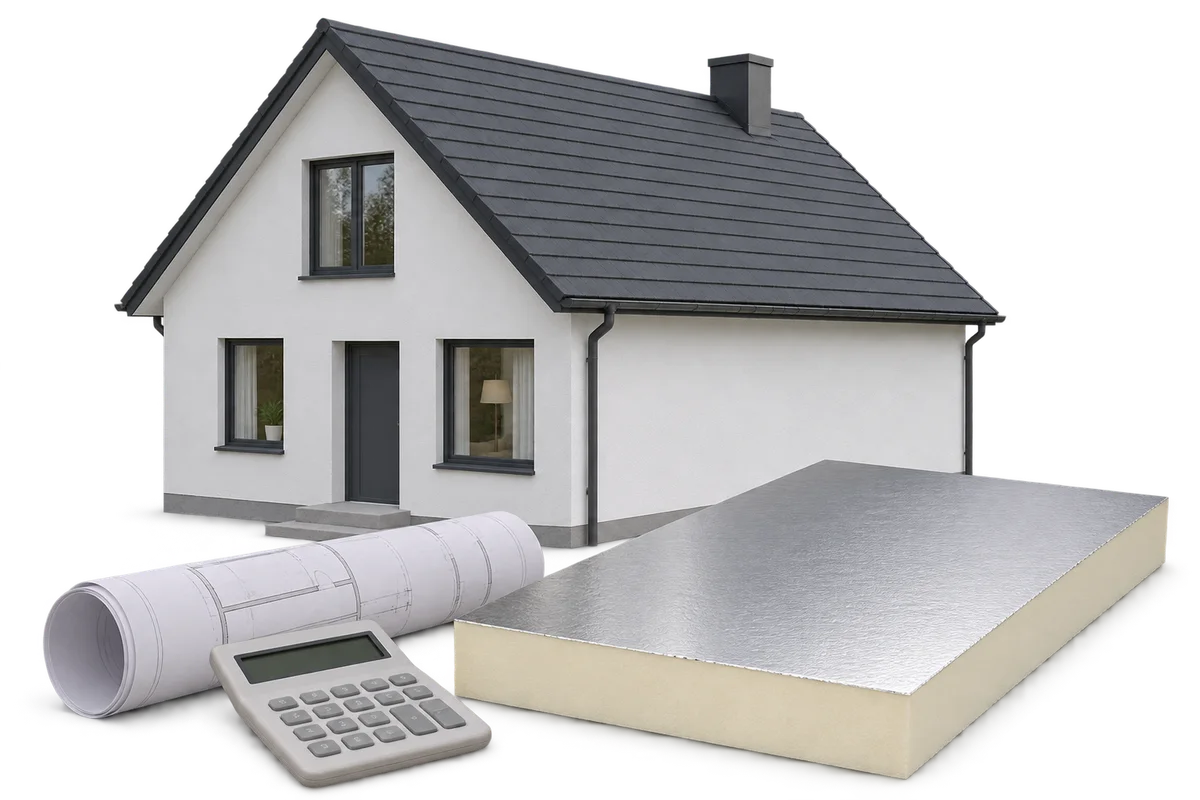
Assessing insulation costs need not stop at the installation invoice or a simple payback figure. Comparing solutions can also involve how the…
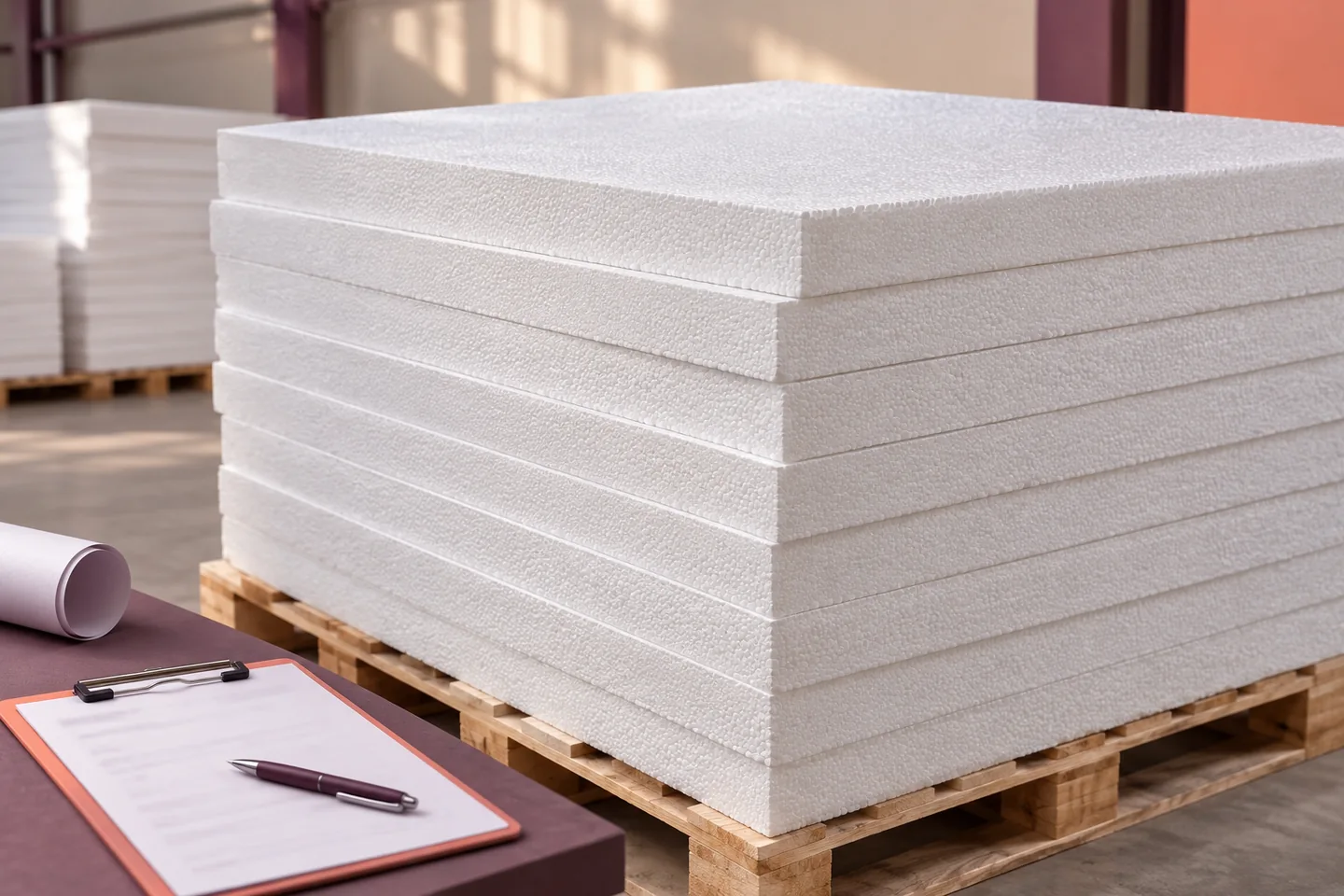
Give each use of expanded polystyrene its own order line, identified by the zone or grid reference on the drawings. Two boards…
