






How to compare conductivity, thermal resistance and U-values for PUR, PIR and EPS SIPs
Structural insulated panels and insulation
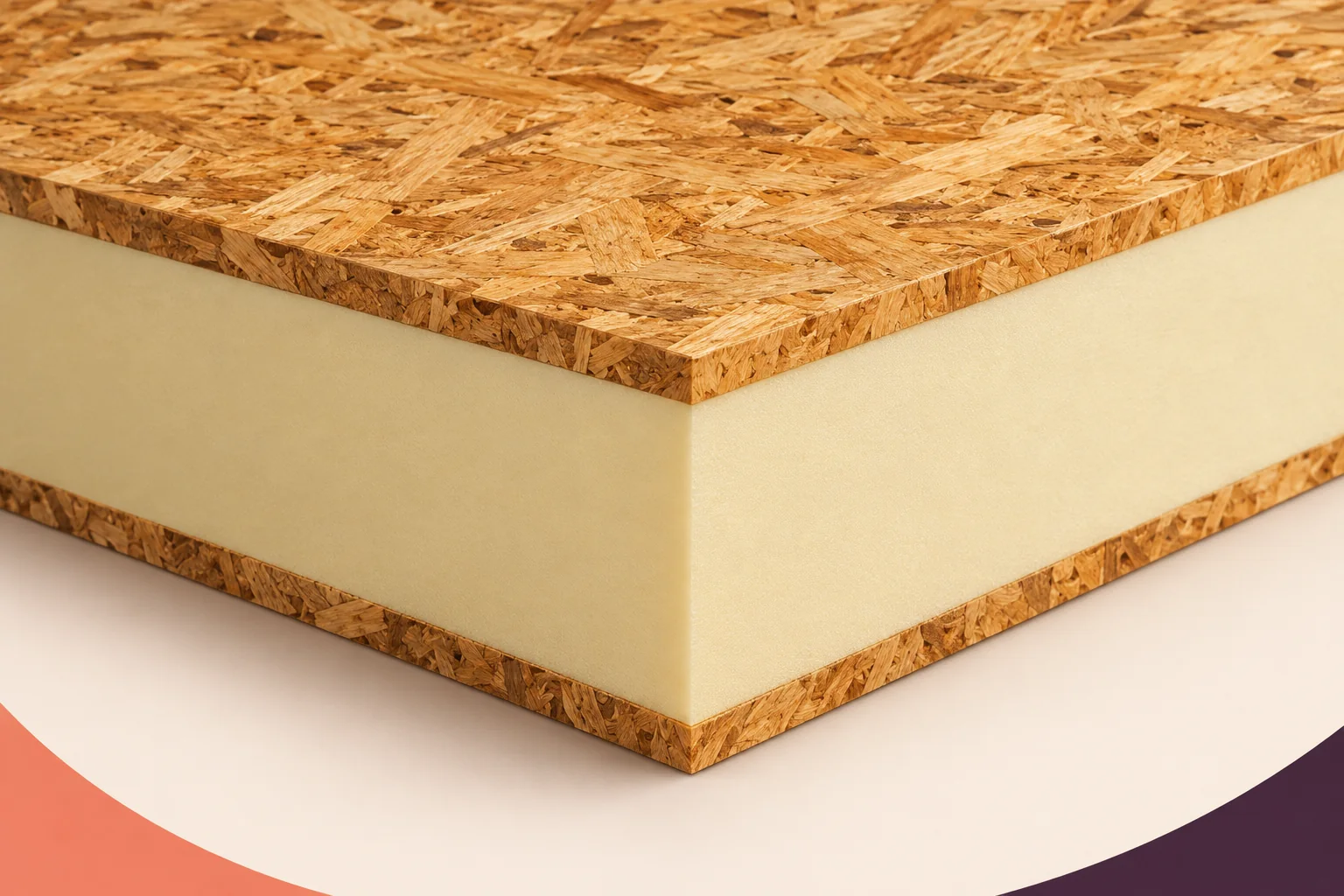
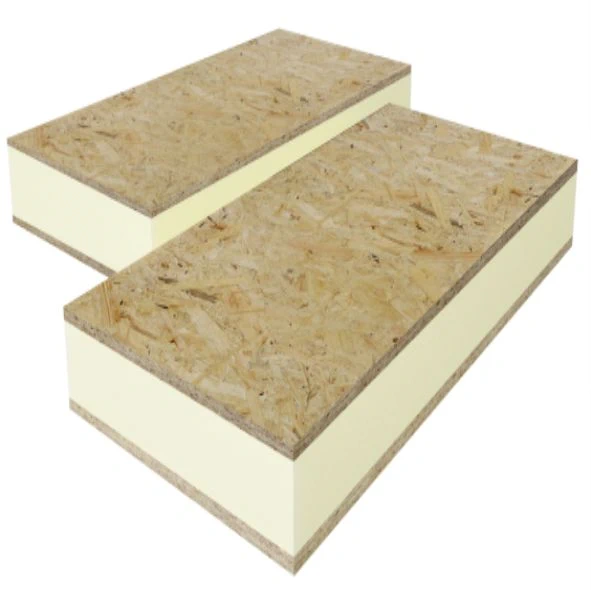
When comparing structural insulated panels, first identify what each quoted figure describes. Thermal conductivity, λ, belongs to a material. Thermal resistance, R, also depends on layer thickness. The U-value applies to a particular construction. For an OSB-faced SIP, use the foam or EPS thickness alone to calculate core resistance. A PUR or PIR core with lower declared conductivity can achieve the same resistance as a thicker EPS core. For complete walls, include facings and joint splines and compare figures calculated for the same part of the construction.
In this guide
What does SIP tell you about the core?
SIP describes a structural insulated panel. The product documents identify the facings, core and thermal conductivity of the actual configuration.
Record conductivity in W/(m·K) and check whether the figure is a declared value or a design value. Measure or obtain the core thickness separately. Including the OSB faces in the foam thickness would overstate the resistance of the insulation layer.
Read the conductivity of the material
Under the same conditions, a homogeneous layer with lower conductivity transmits less heat at the same thickness. A particular PUR or PIR core may therefore offer more resistance per millimetre than the EPS being compared. Load capacity, fire behaviour and sound insulation require their own data.
EPS and polyurethane foams both come in several grades. Compare two identified products using their respective values. If both walls must achieve the same thermal target, the main difference may be the insulation depth required. The finished section must also satisfy the structural design.
Include thickness when calculating resistance
For a homogeneous layer, use R = d/λ with thickness d in metres. For example, a 0.12 m core with an assumed conductivity of 0.022 W/(m·K) gives a resistance of about 5.45 m²·K/W. The result covers the core alone.
For comparison, take EPS at an assumed 0.036 W/(m·K). At 0.12 m its resistance is about 3.33 m²·K/W. To reach approximately 5.45 m²·K/W at that conductivity would require about 0.196 m of EPS. These are worked examples using stated assumptions. Substitute the figures declared for the products under consideration.
Use the full section for the U-value
In a simplified one-dimensional calculation, the U-value is the reciprocal of the total thermal resistance. Include all layers and the appropriate internal and external surface resistances. OSB, internal linings and any further layers contribute to the result. Taking the reciprocal of core resistance alone omits them.
Establish whether a figure covers the centre of the panel, a panel with repeating joints or a wall area including openings. These scopes can give different results. Compare like areas and calculation assumptions before selecting a wall thickness.
Account for heat flow at joints
SIP joints can contain timber, splines and fasteners. Corners, wall bases and reveals have different geometries again. Include these paths in the assessment of the envelope and the building’s heat balance. A joint may conduct more heat locally than the uninterrupted polyurethane core.
Ask for the joint details used in the calculation and compare them with the installation drawings. If the spline type or spacing changes, check whether the original calculation still applies. This gives the designer a figure tied to an identifiable construction.
Assess airtightness separately
In addition to heat conducted through layers, air can escape through joints and service penetrations. The conductivity of the foam does not quantify that loss. At design and handover, check the continuity of the air seals, window and door connections and the planned ventilation.
Heating bills also depend on envelope areas, climate, indoor temperature and system efficiency. SIPs with a polyurethane core can reduce energy demand, but the amount follows from the building calculation. A percentage difference in conductivity cannot be applied directly to the heating bill.
Put both options on the same basis
List the core material, core thickness, conductivity and remaining layers for each option. Record how the calculation treats joints and the area covered by the stated U-value. Add the load-bearing, fire and acoustic requirements alongside the thermal figures.
Where the specified PUR or PIR has lower conductivity, it can achieve high resistance within a shallower section. EPS with higher conductivity needs greater thickness for the same core resistance. Use the calculated thickness difference to assess the available space in the particular SIP design.

Free quote
What to include in your enquiry
Tell us how you plan to use the material, the dimensions and the quantity you need. Include the thickness, grade or variant name, along with the delivery town or your preferred collection branch. For a specific product, add its name or a link to the product page. We will reply to the email address you provide to discuss availability and the terms of your order.
Read next
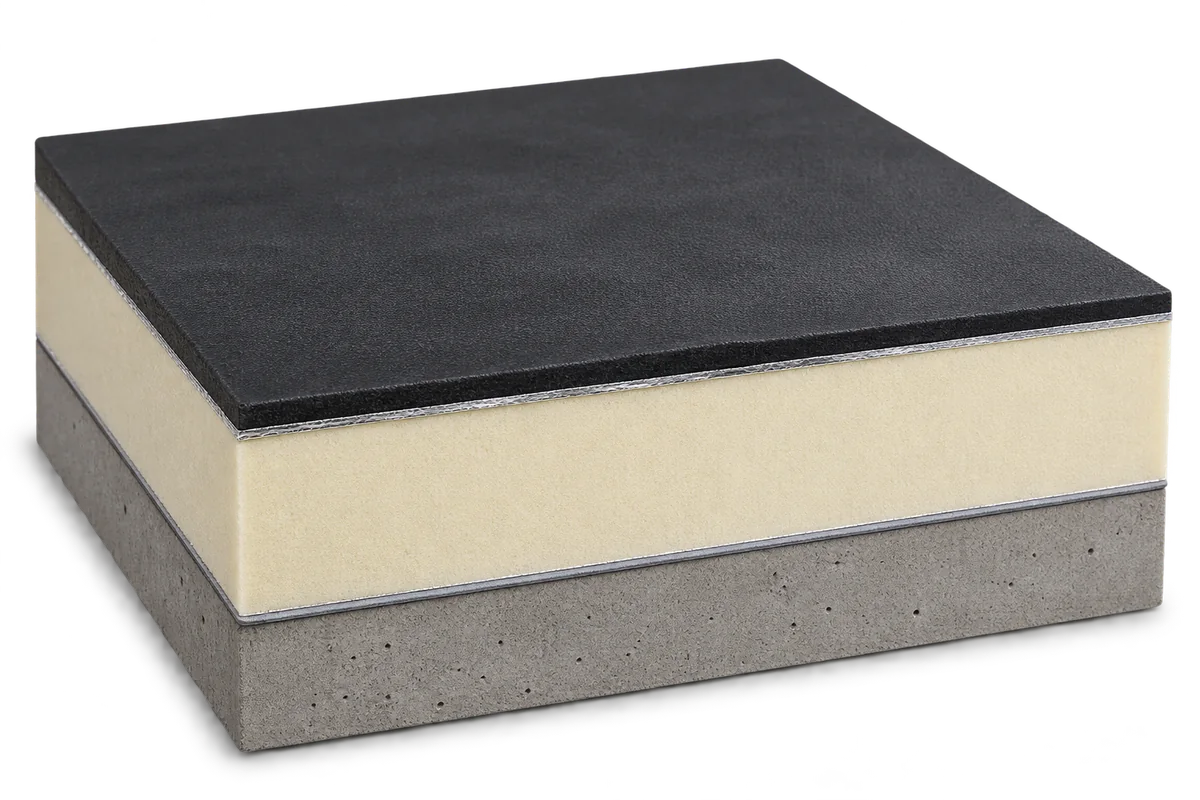
Choose the waterproofing and insulation for a flat roof together. The deck, layer order, fixing method and intended use determine which combinations…

For IKO enertherm ALU TG, choose the laying direction before cutting the first row. The tongue on one factory edge must slide…
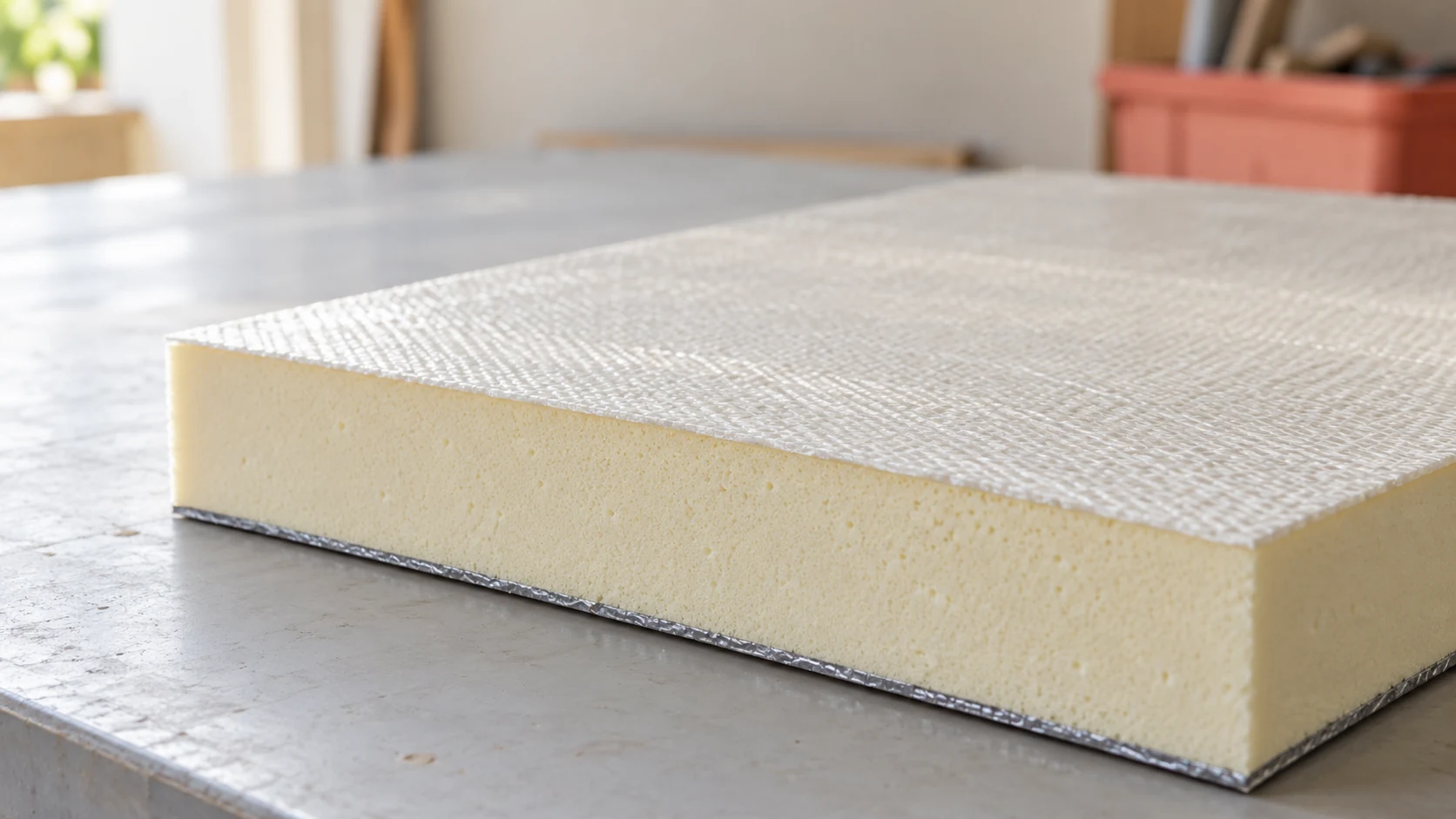
Glass-reinforced resin can form the inner facing of a PIR panel. It changes how that side of the enclosure is protected and…
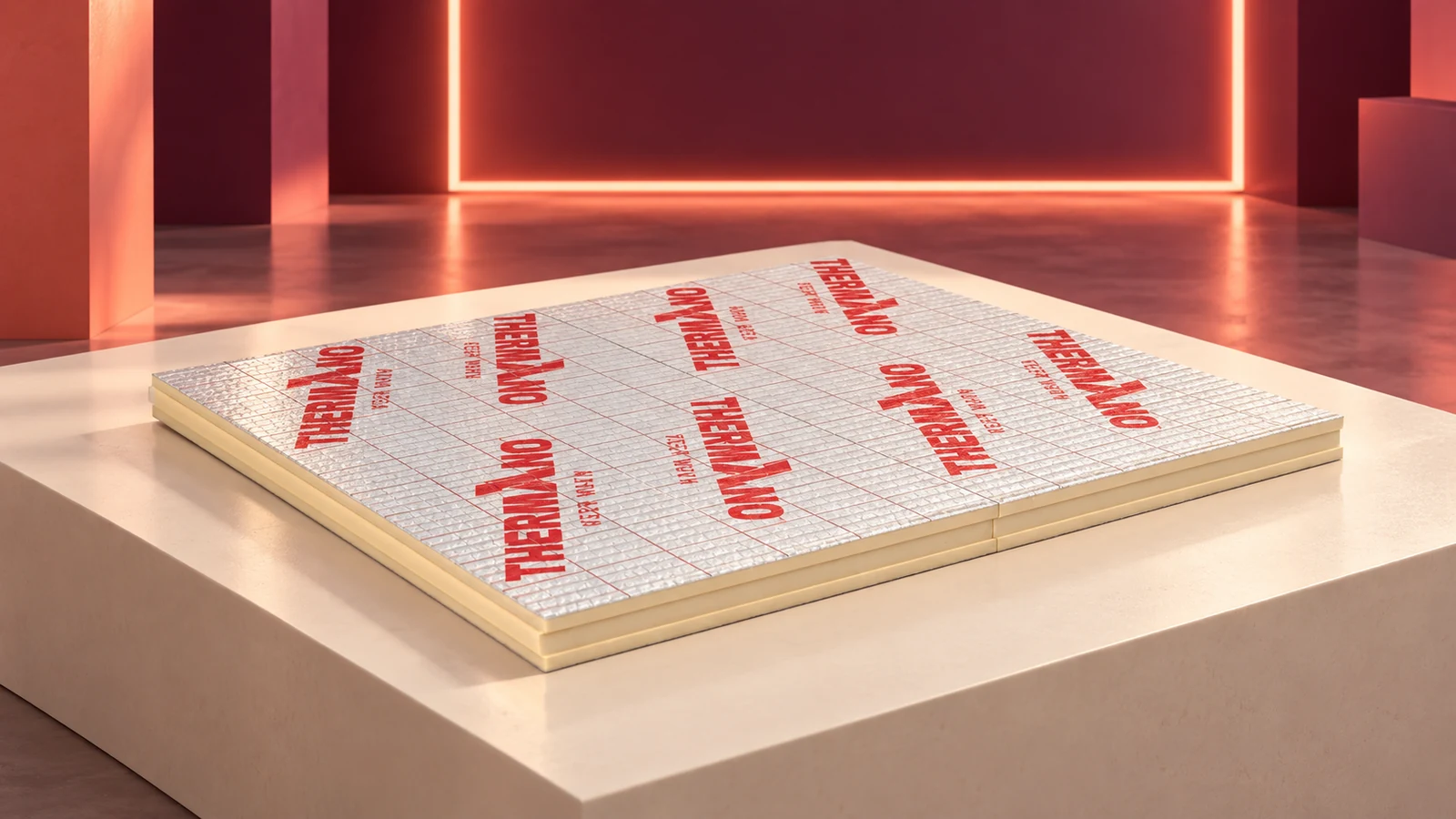
PIR insulation boards reduce heat flow through roofs, walls and floors. They have a rigid polyisocyanurate foam core but vary in their…
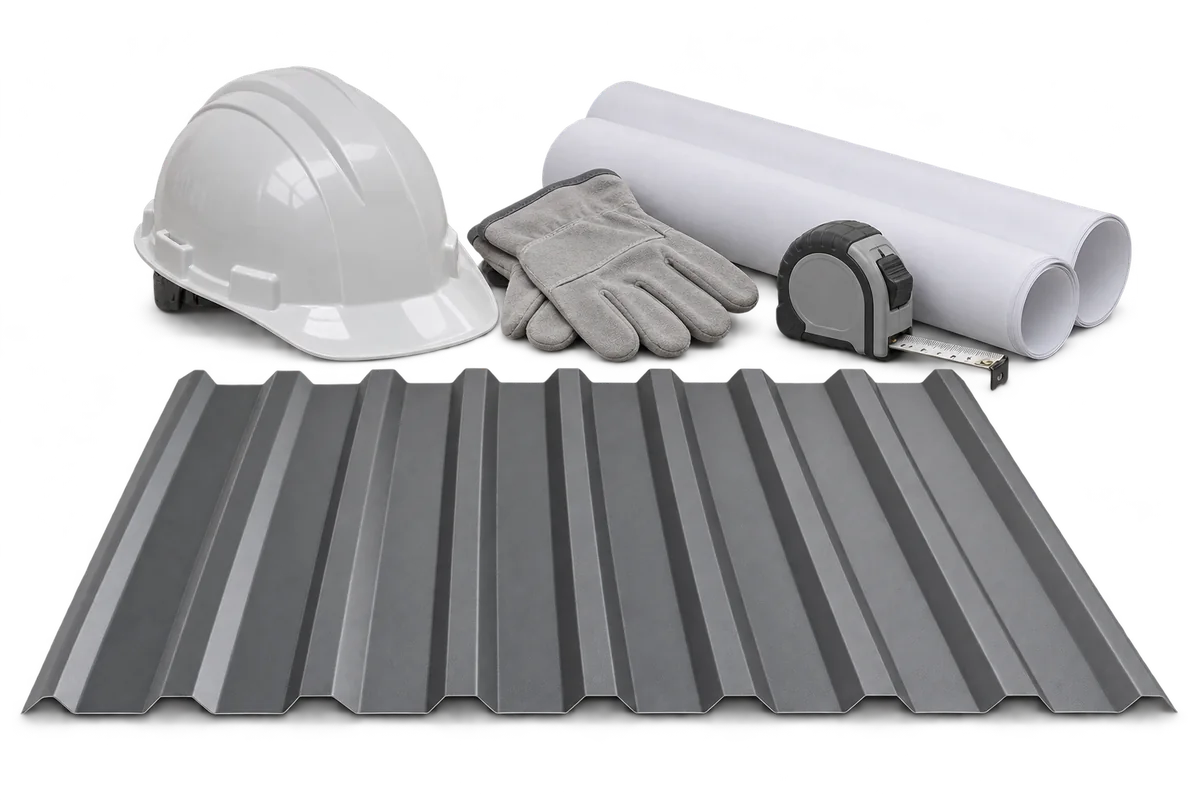
A good contractor can explain how they will build to your design, define exactly what their quote covers and show how each…
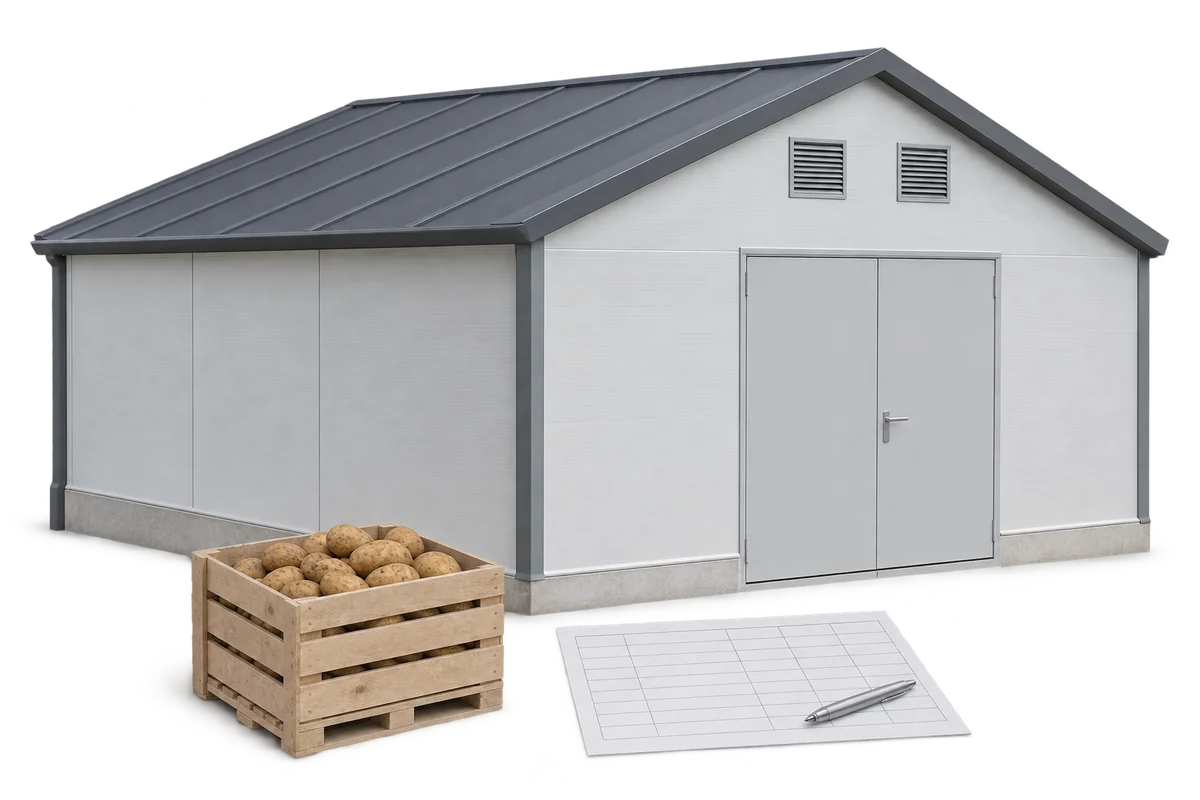
Harvest sets the deadline for work on a potato store. Allow time to assess the building, order materials, install them and test…
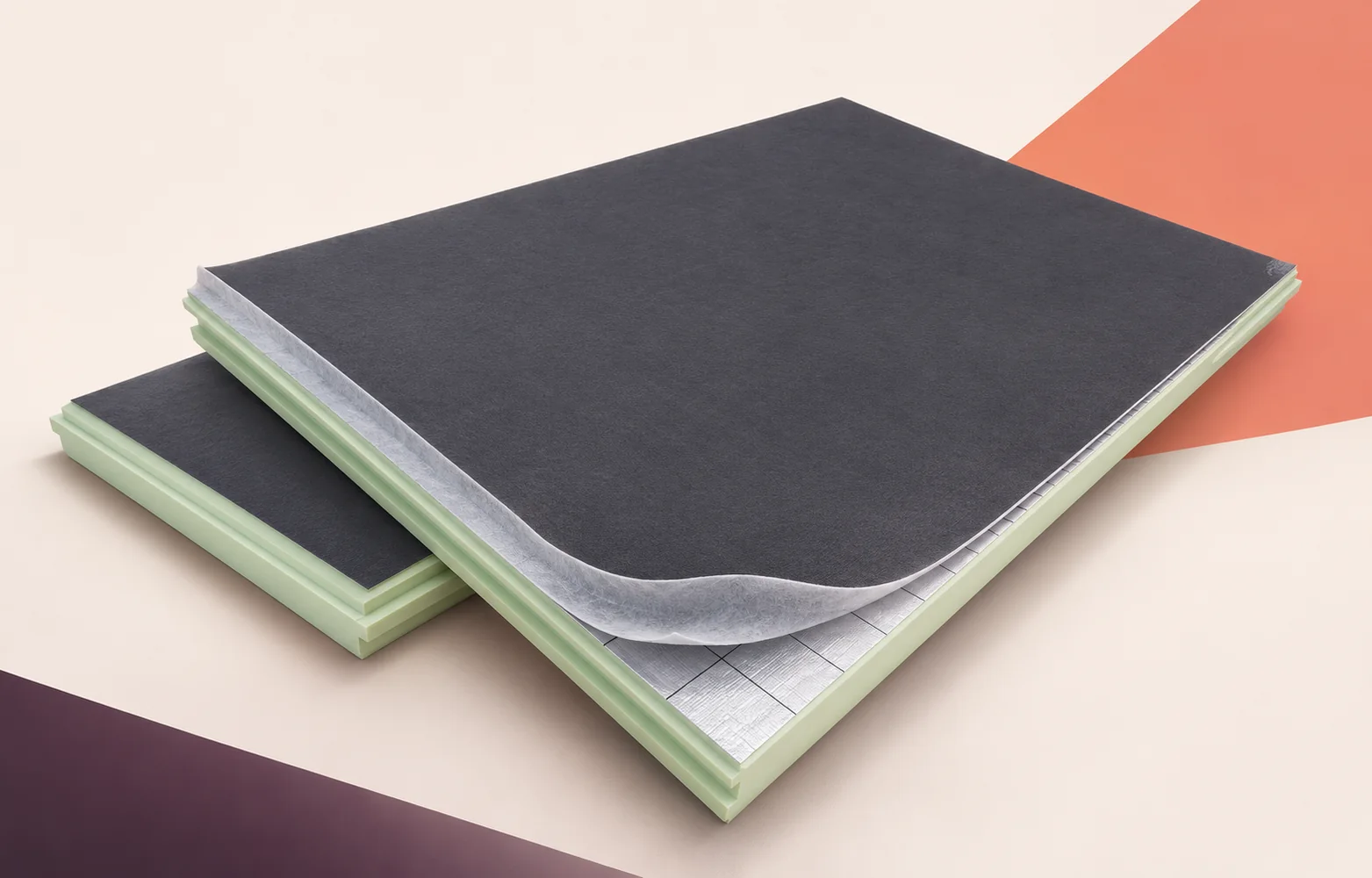
On a pitched roof with rows of roof windows, a Utherm Sarking LE Plus layout should show both the PIR board joints…
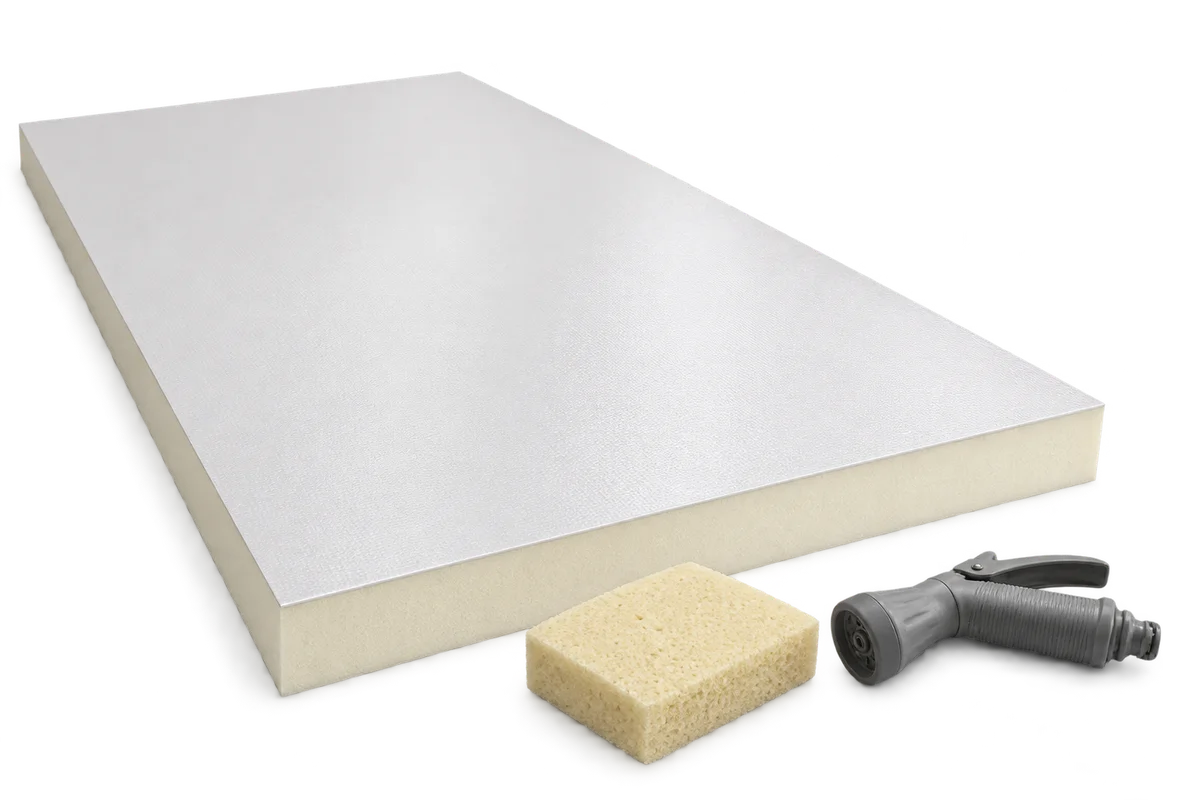
From the floor, a chip in a pale barn ceiling can look like a small stain. Before washing, mark the spots where…
