What lies beneath the colour of tile-profile steel roofing?
Metal roofing
At a glance
Colour is only one feature of a tile-profile roofing sheet. Under the finish is a steel core with protective layers, each serving a different purpose. Compare the steel grade and thickness, metallic corrosion protection and outer finish before relying on a colour name or the length of a warranty. The steel and the shape pressed into it determine the sheet’s basic mechanical behaviour. Flexing a loose panel by hand cannot tell you how stiff the finished roof will be: support spacing and the joints between installed sheets also matter.
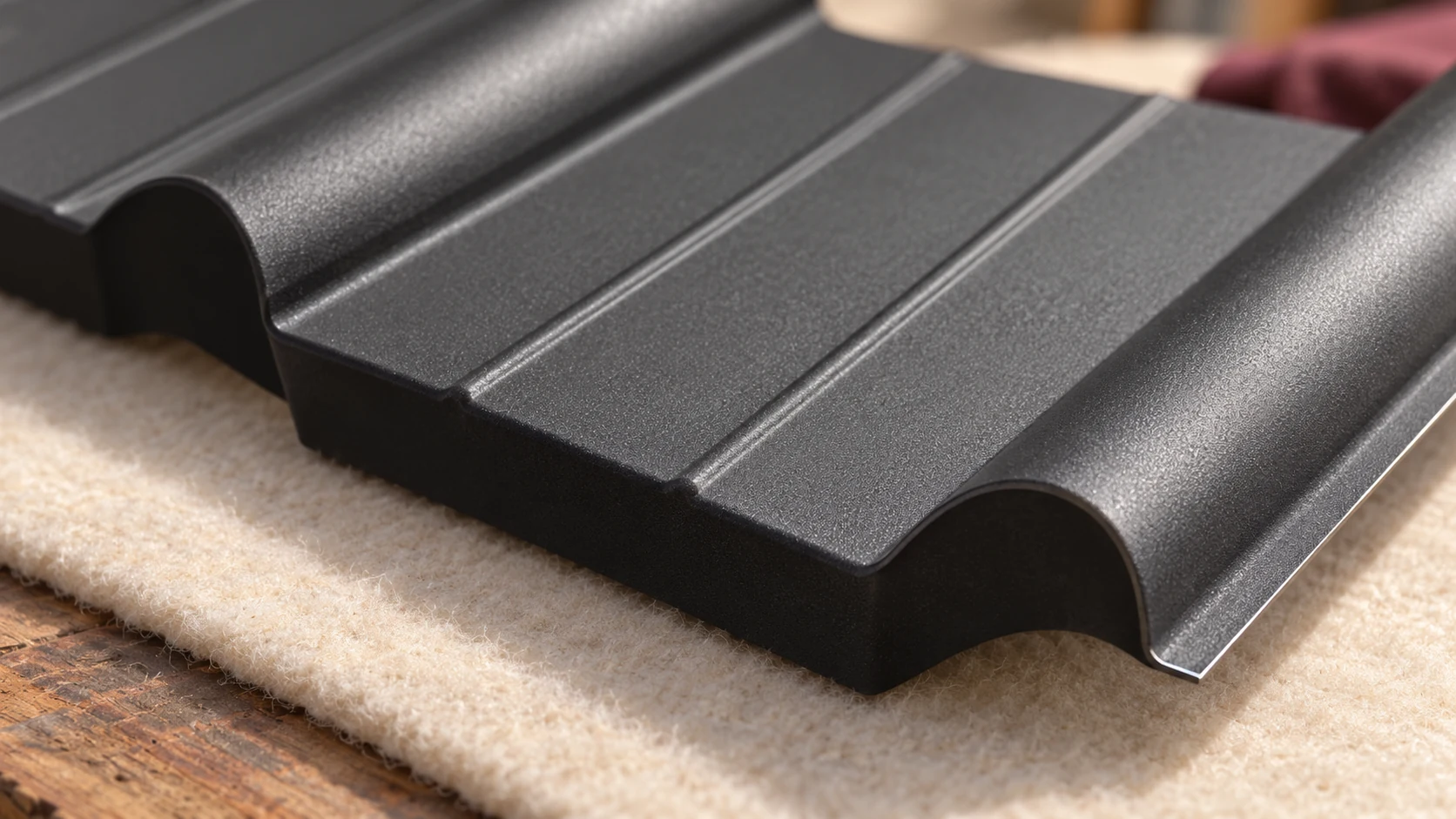
What does the steel core do?
Specify what the quoted thickness refers to. Protective layers should not obscure how much steel is present. Compare dimensions on the same basis and with the relevant tolerances. A basic calliper measurement at a random edge may not resolve a small difference reliably.
Ask which measuring method applies to the material. A reading that includes every coating cannot be compared directly with the nominal steel thickness alone.
How does the metallic coating protect the steel?
The steel receives a metallic coating, such as zinc or an alloy, to reduce corrosion of the substrate. Its type and quantity matter, but do not determine service life on their own. Other layers, edge finishing and the building’s exposure also count.
Read each value with its unit and description. Metallic coating mass in grams per square metre is not organic coating thickness in micrometres. These refer to different layers. Request one complete specification for the exact product rather than comparing selected figures from different versions.
What does the organic coating contribute?
The outer coating gives the sheet its colour and texture and helps protect it against the environment. Polyester and polyurethane finishes come in different formulations. Examples include 25, 35 or 50 micrometres, depending on the product. A higher number alone does not describe performance.
Check permitted exposure, resistance to sunlight and maintenance requirements. Gloss, matt and textured finishes reflect sunlight differently; they are not successive grades of quality. Match the documented finish to the building’s conditions rather than relying on a marketing name.
How does the profile affect sheet behaviour?
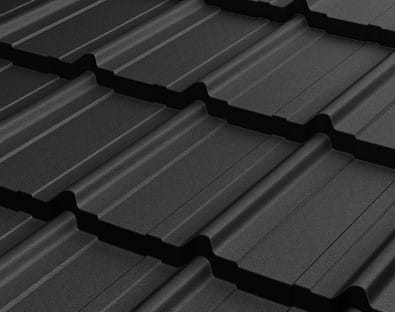
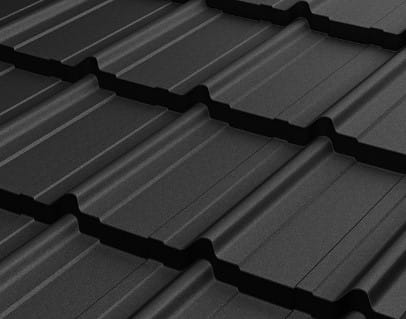
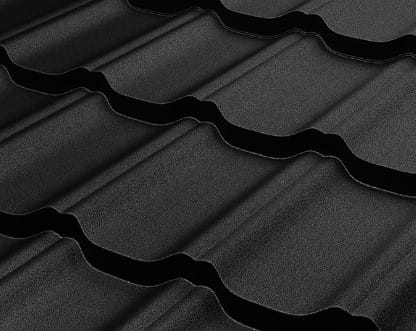
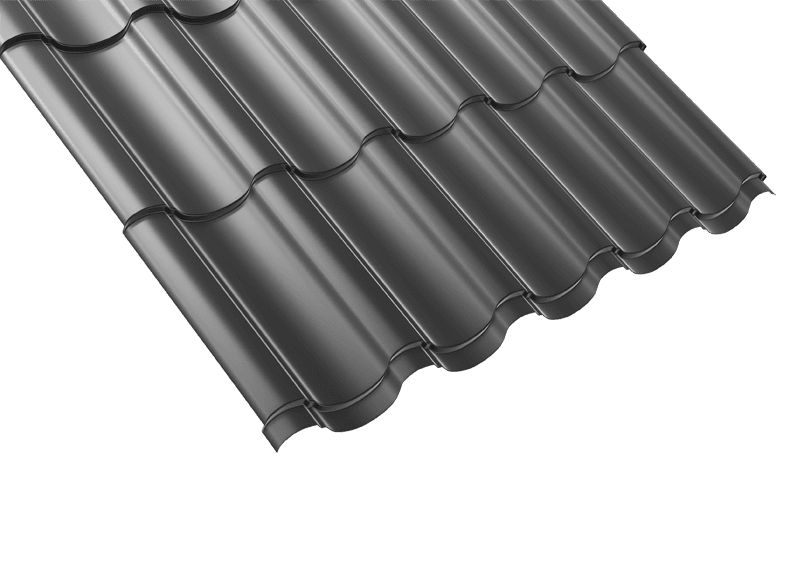
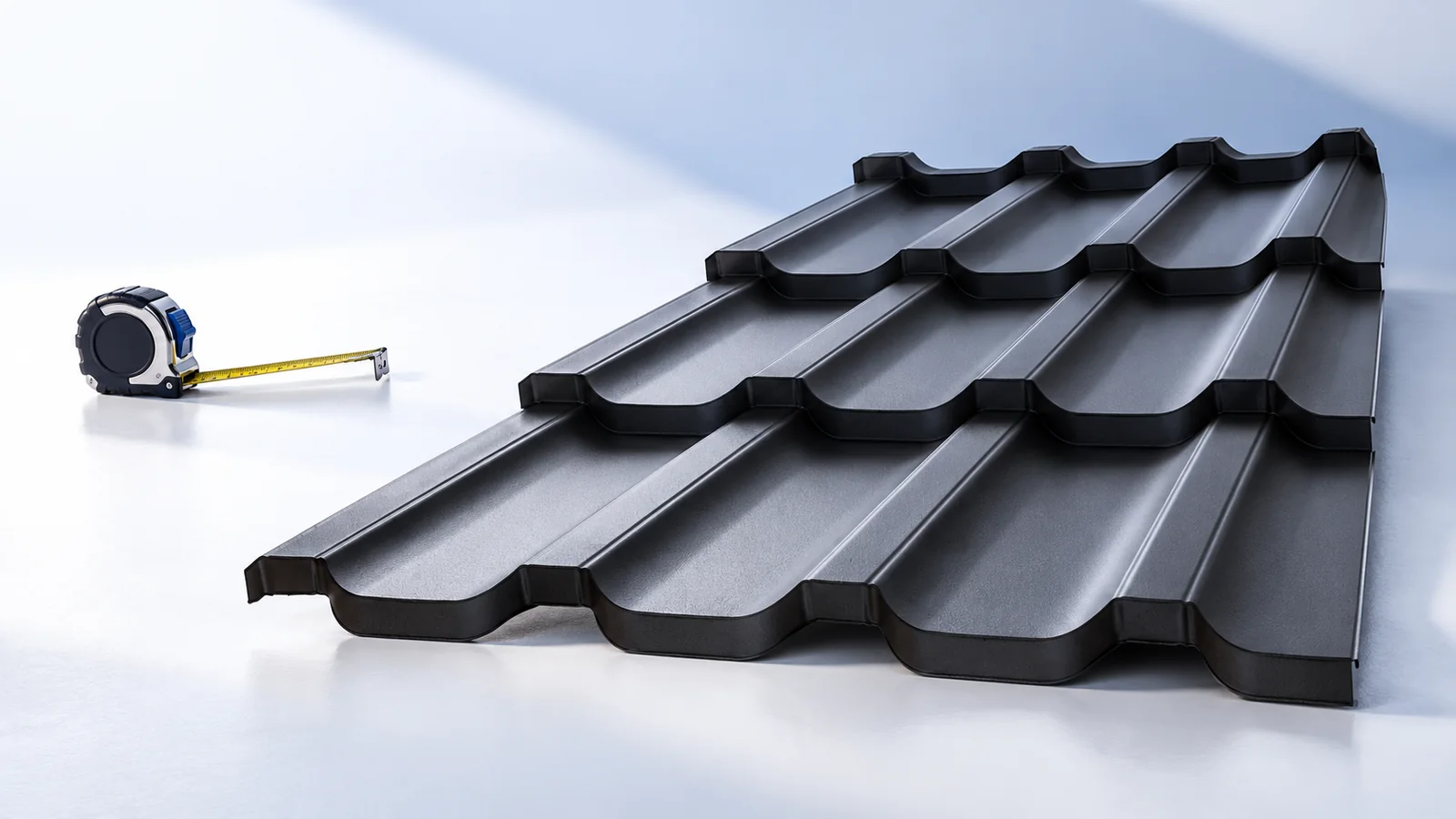
The tile pattern is formed in the sheet, not painted onto a flat surface. Ribs and transverse steps guide runoff and influence stiffness. Their arrangement also determines where sheets are supported and how they join. Matching colours do not make two profiles interchangeable.
Consider the cutting plan as well as appearance. Deep embossing can divide a slope into more pronounced visual fields; a short module may be easier to arrange around complex shapes. The effect depends on the actual roof plan. Review a sample and discuss installation.
What happens on the underside and at cut edges?
The reverse has its own protective finish, which need not match the decorative face. Its exposure depends partly on moisture beneath the roof. A well-designed build-up limits prolonged dampness but does not replace protection of the material itself.
Take care when cutting and drilling. Hot tools can damage the protection beside a cut; swarf left on the finish can leave rust marks. Use approved tools and remove debris as you go. Treat minor damage by the method specified for that coating.
How can you compare materials that look alike?
Compare five items side by side: steel grade, thickness, metallic protection, outer coating and permitted conditions of use. Then review tolerances, maintenance and warranty scope. Perforation corrosion, colour retention and gloss are different matters and may be covered differently.
Inspect a physical sample and agree how the delivery will be checked. Sliding sheets over one another can damage the finish before installation. Good specifications cannot undo poor storage. Consider transport, storage and handling on site alongside the material itself.
Questions and answers
Does thicker paint mean thicker steel?
No. The organic coating and steel core are separate layers. Their thicknesses are specified separately, usually in different units.
Is a matt finish always more durable than a glossy one?
Appearance alone cannot answer that. Check the properties and exposure limits of the exact coating. Matt describes a surface effect, not a complete durability rating.

Free quote
What to include in your enquiry
Tell us how you plan to use the material, the dimensions and the quantity you need. Include the thickness, grade or variant name, along with the delivery town or your preferred collection branch. For a specific product, add its name or a link to the product page. We will reply to the email address you provide to discuss availability and the terms of your order.
Read next
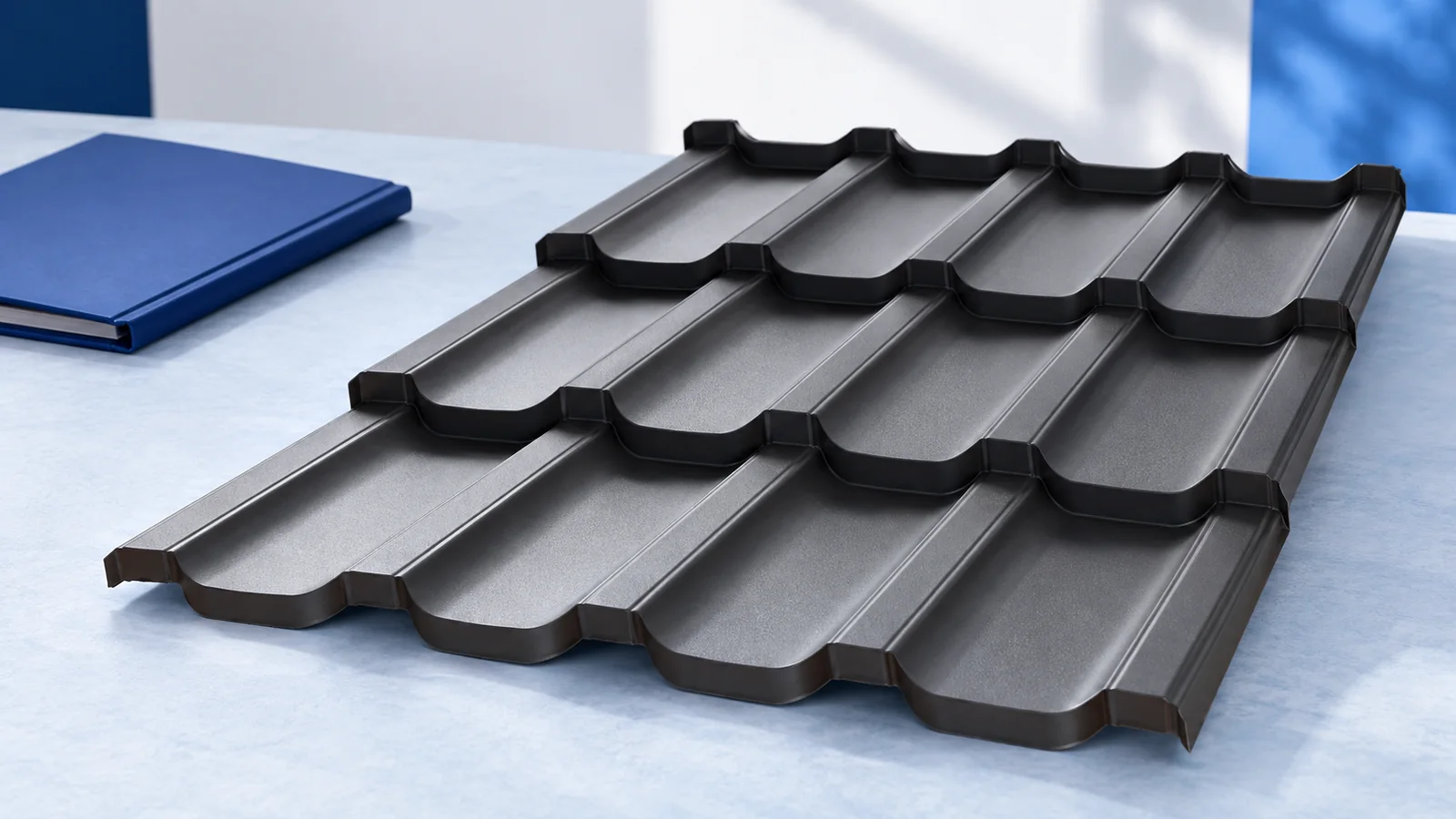
A single-module metal roofing sheet covers one course of the tile pattern down the slope. It can still be several tile widths…
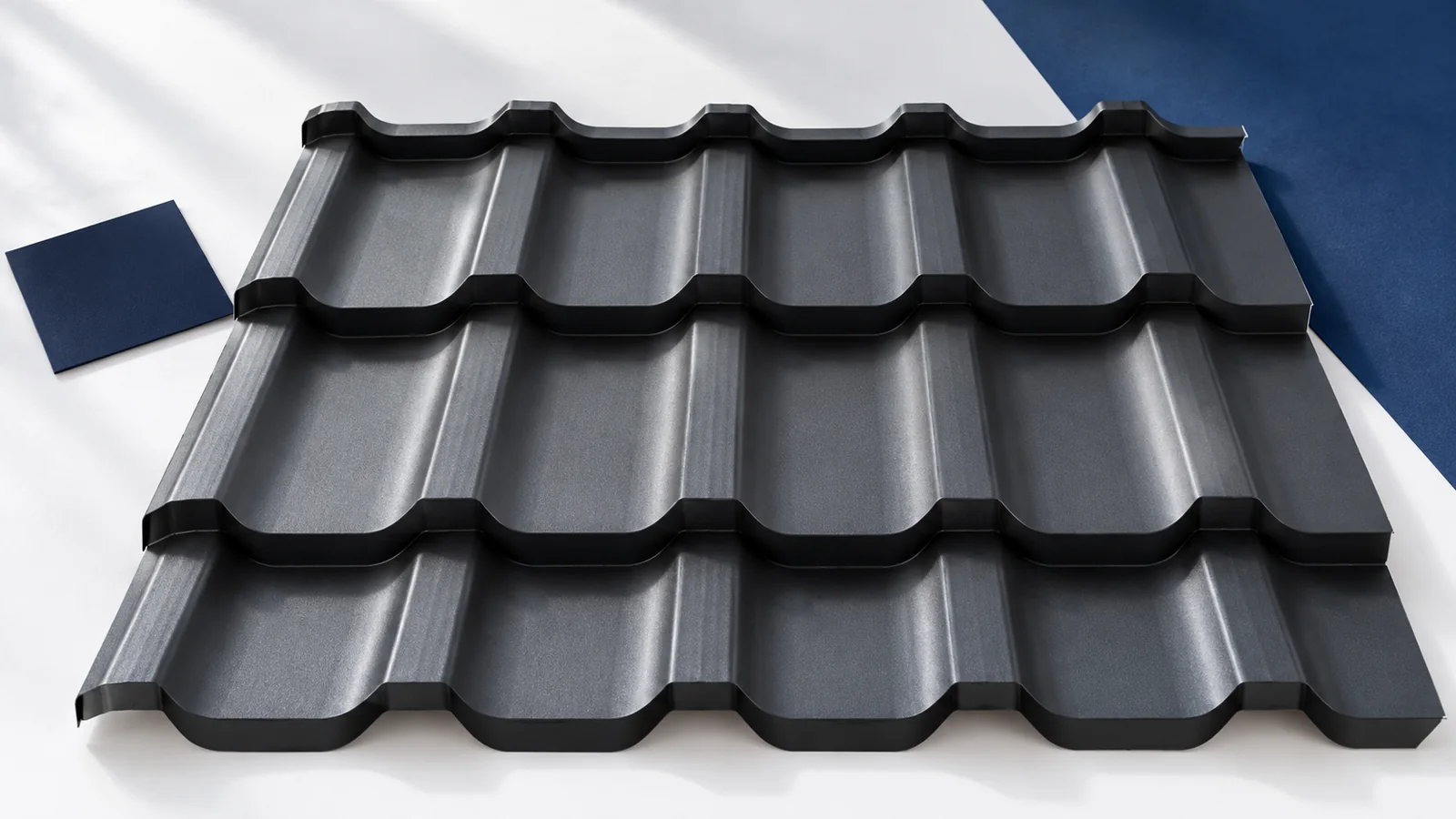
The first course of tile-effect roofing sets the alignment of every sheet above it. Before laying it, check the eaves line, diagonals,…
A roof with several intersecting slopes can follow the wings of a house and shape the rooms beneath. Before choosing the covering,…
Metal roof tiles suit a new roof when the permitted pitch, supporting layers and installation method match the design. Before comparing prices,…
To compare prices, establish which square metre the supplier charges for, how much material the roof needs and what is included. Coating,…
To select gutters for a metal roof, mark the area draining to each outlet on a roof plan. A valley may concentrate…
A practical roofing course gives installers a chance to set out a slope, form a flashing and check a fixing while the…
On a tiled metal roof, the eye follows the ribs and the steps between courses. A sheet that runs from eaves to…