






Where should you use EPS, XPS and PIR insulation in a building?
PIR insulation
At a glance
A single building may need several types of insulation. Compare EPS, XPS and PIR for a specific wall, floor or roof rather than choosing one material for the whole building. Record exposure to water, loads, available depth and the finish needed at each location, including areas in contact with the ground. Then shortlist products declared for those conditions and calculate the thickness of the complete assembly. A board suitable for a dry façade may be unsuitable under sustained floor loads. The product’s declared use matters more than the name of its material family.
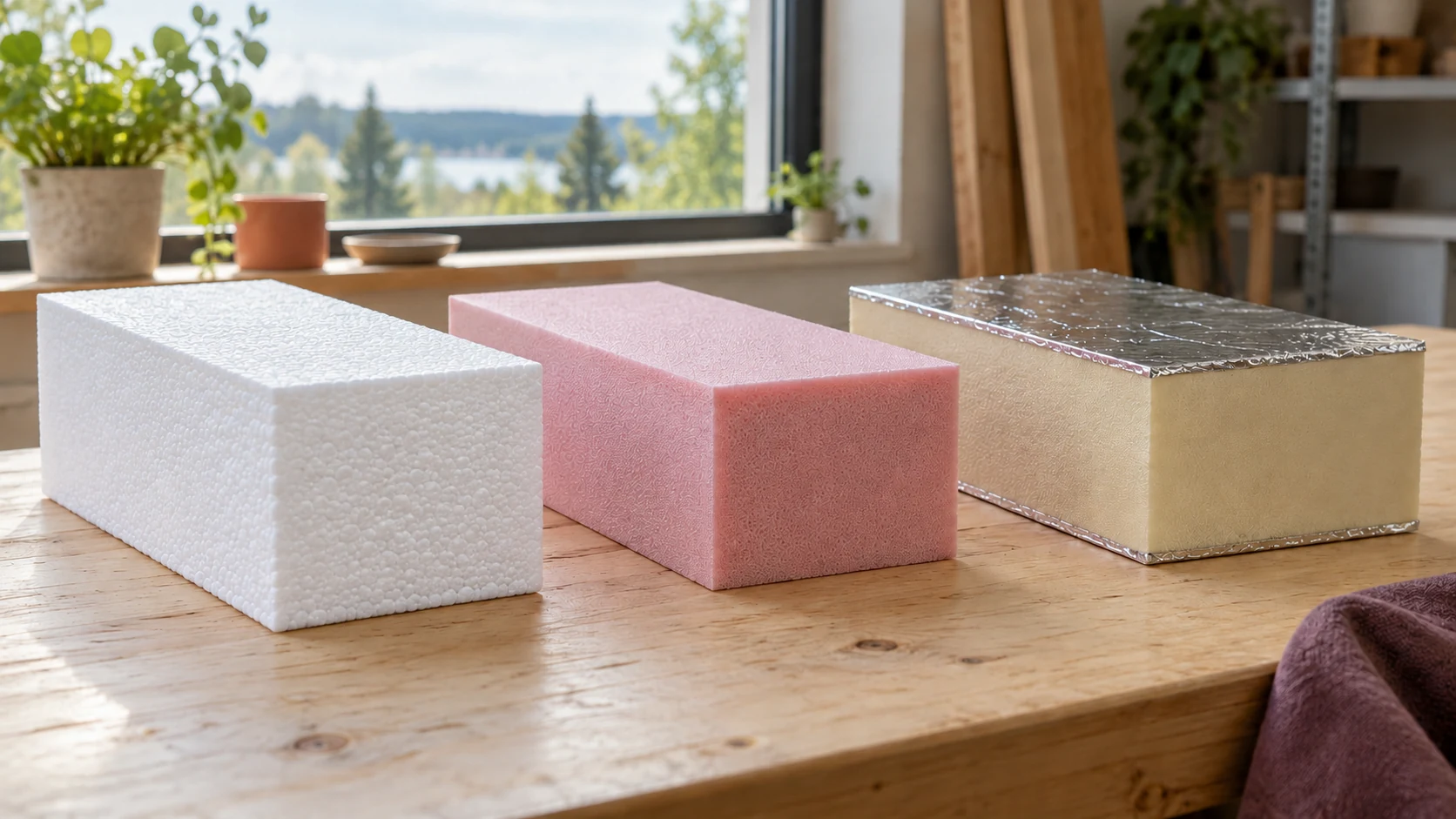
Map the insulation locations
Set a thermal target too. R = d/λ is useful for an initial comparison, but equal thermal resistance does not make products interchangeable: mechanical behaviour, fire performance and moisture properties may differ. Mapping each location helps exclude unsuitable offers early.
Distinguish insulation from waterproofing. Low water absorption does not make a board a substitute for a waterproofing layer with properly formed joints and penetrations. Specify the two functions separately.
Choose façade insulation as part of a system
On a rendered wall, insulation must be compatible with the adhesive, fixings, reinforcement and render. Façade systems use specific EPS grades. PIR needs a facing intended for rendering. A foil-faced board is not a substitute simply because it has lower thermal conductivity.
XPS may suit particular zones or systems; that does not extend its use to the whole façade. Check the board surface and system documentation. Around the plinth, assess water exposure and mechanical damage. Detail transitions between materials so insulation and finish remain continuous.
Check floor loads and build-up depth
Insulation beneath a screed carries loads over long periods. Check the mechanical data and the floor assembly. Compressive stress at 10% deformation is not an allowable service load; assess creep and concentrated loads as well.
PIR can save depth where a renovation leaves little room. Damp locations need boards intended for that exposure, including suitable XPS grades. EPS floor grades also vary. Allow for waterproofing, services and the load-distributing layer when choosing.
Start with the roof layer sequence
In a warm roof, insulation sits beneath the waterproofing. Properly designed PIR or EPS systems can work if fixings and roofing are compatible. Do not assume that every adhesive or high-temperature application is suitable; check the documentation for the particular system.
In an inverted roof, insulation lies above the membrane and is exposed to water. Use products approved for that arrangement, often specific XPS grades. Check ballast, drainage and structural loads. A price per pack does not reflect these differences.
Read each declared property in context
Thermal conductivity does not tell you how a board behaves under sustained load. Water absorption refers to a particular test, not roof watertightness. The material’s reaction-to-fire class does not establish the fire performance of the entire assembly. Each value answers a different question.
Record declared values for the chosen variant and thickness range. Check edge profiles, tolerances and the intended use of facings. A trade nickname may cover several products; specify the designation and properties to prevent substitutions.
Compare complete assembly costs
Price each suitable option in whole packs, allowing for cuts. Add fixings, seals, protective layers and labour. If thinner insulation avoids rebuilding a threshold or sill, show that saving separately so the reason for the cost difference is clear.
Include total depth, installation conditions and inspections in the comparison. A low-priced board may require expensive detailing; equally, a lower conductivity may offer little practical benefit where space is plentiful. Decide for each part of the building.
Questions and answers
Can one material insulate an entire house?
Sometimes, if suitable grades exist for each location. It is not a goal in itself: every assembly has its own water exposure, loads and finish requirements.
Is the board with the lowest thermal conductivity always the best buy?
No. Compare intended use, complete system cost and the practical value of saving depth. Conductivity describes only one aspect of the choice.

Free quote
What to include in your enquiry
Tell us how you plan to use the material, the dimensions and the quantity you need. Include the thickness, grade or variant name, along with the delivery town or your preferred collection branch. For a specific product, add its name or a link to the product page. We will reply to the email address you provide to discuss availability and the terms of your order.
Read next
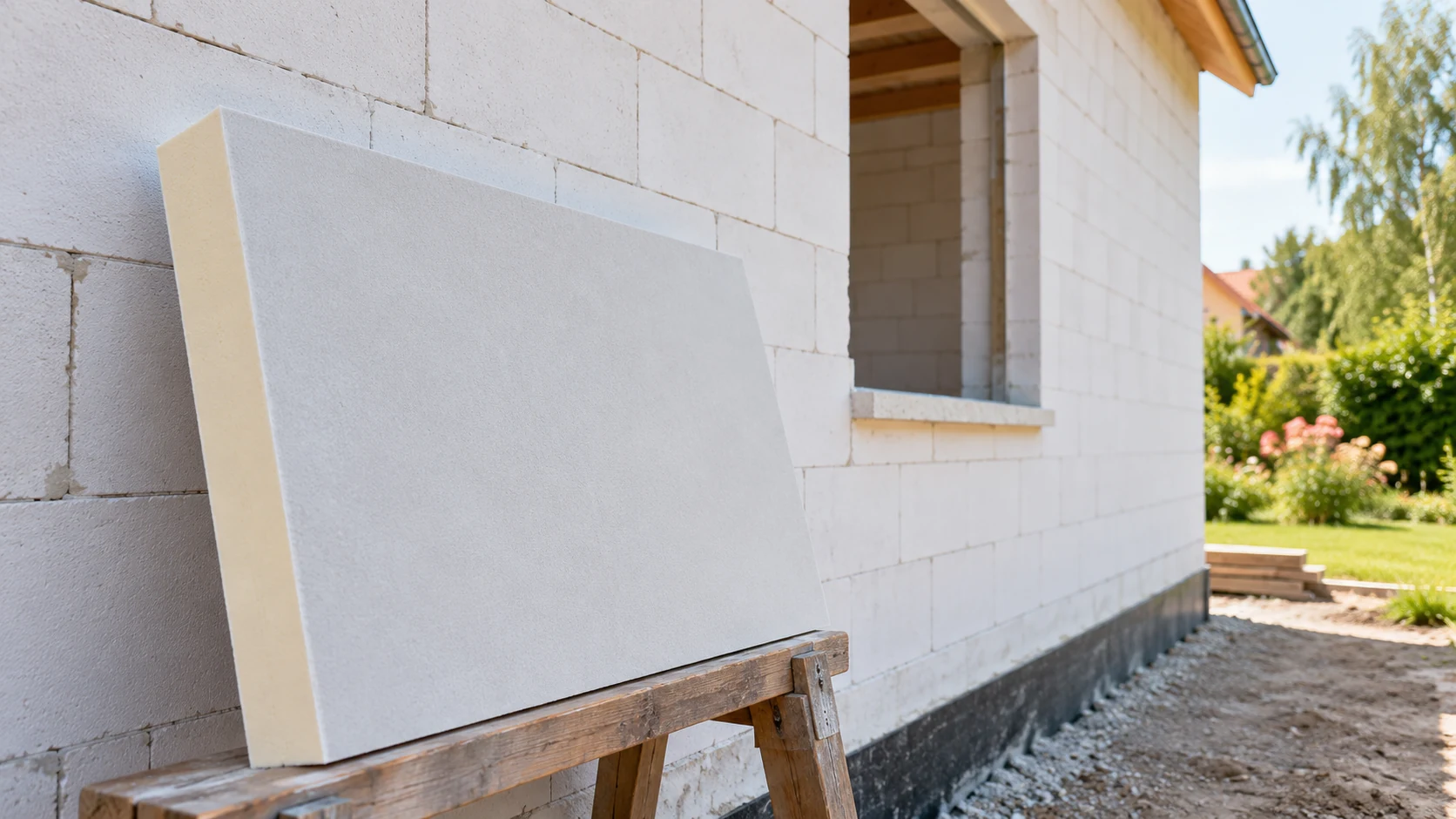
Aerated concrete masonry and PIR can make a well-insulated wall when the board, render system and fixings are selected together. Aluminium-faced PIR…
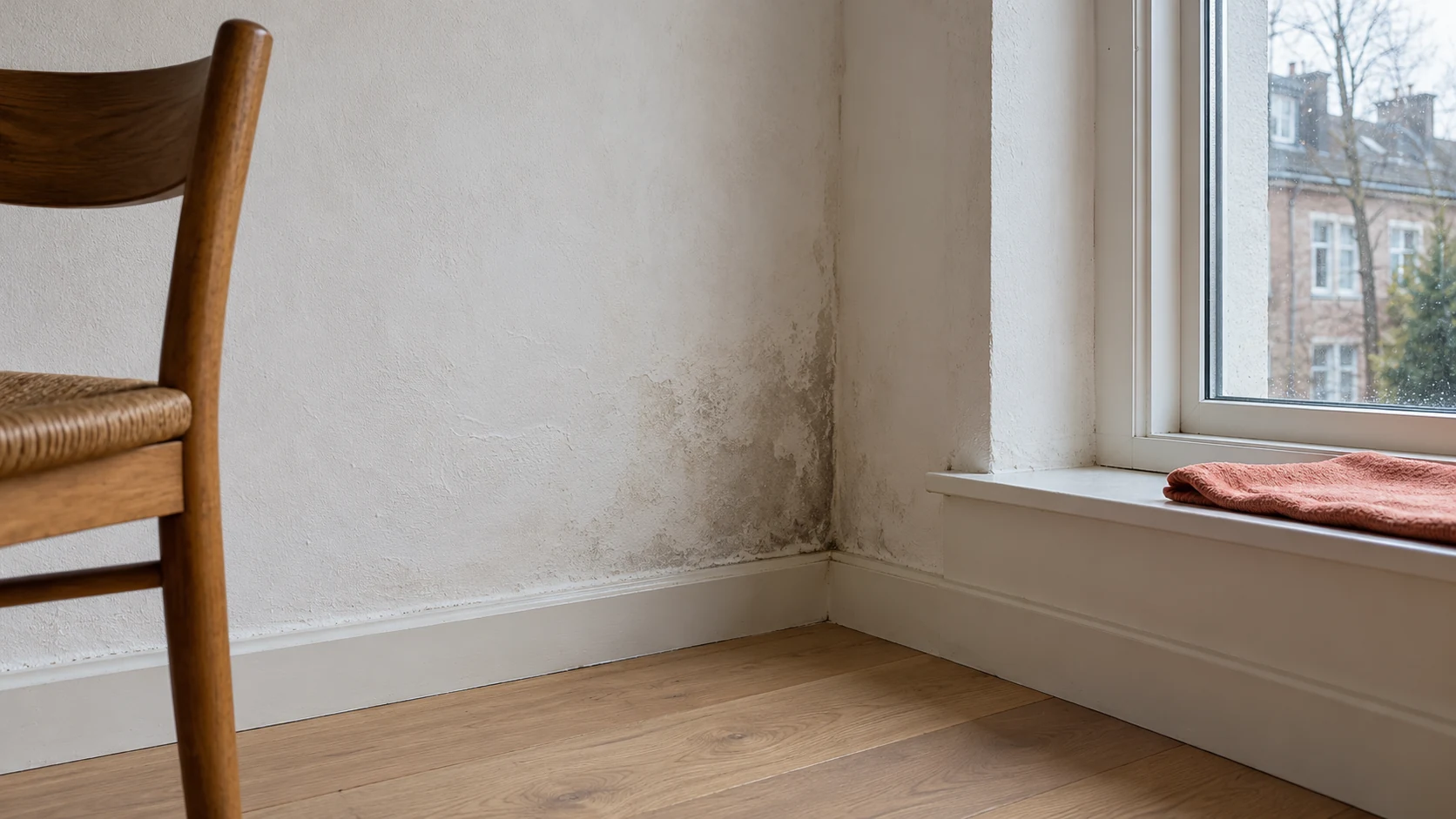
A cold surface, poor ventilation, rain penetrating the façade and a leaking pipe can leave similar marks. Several causes can coexist. Before…
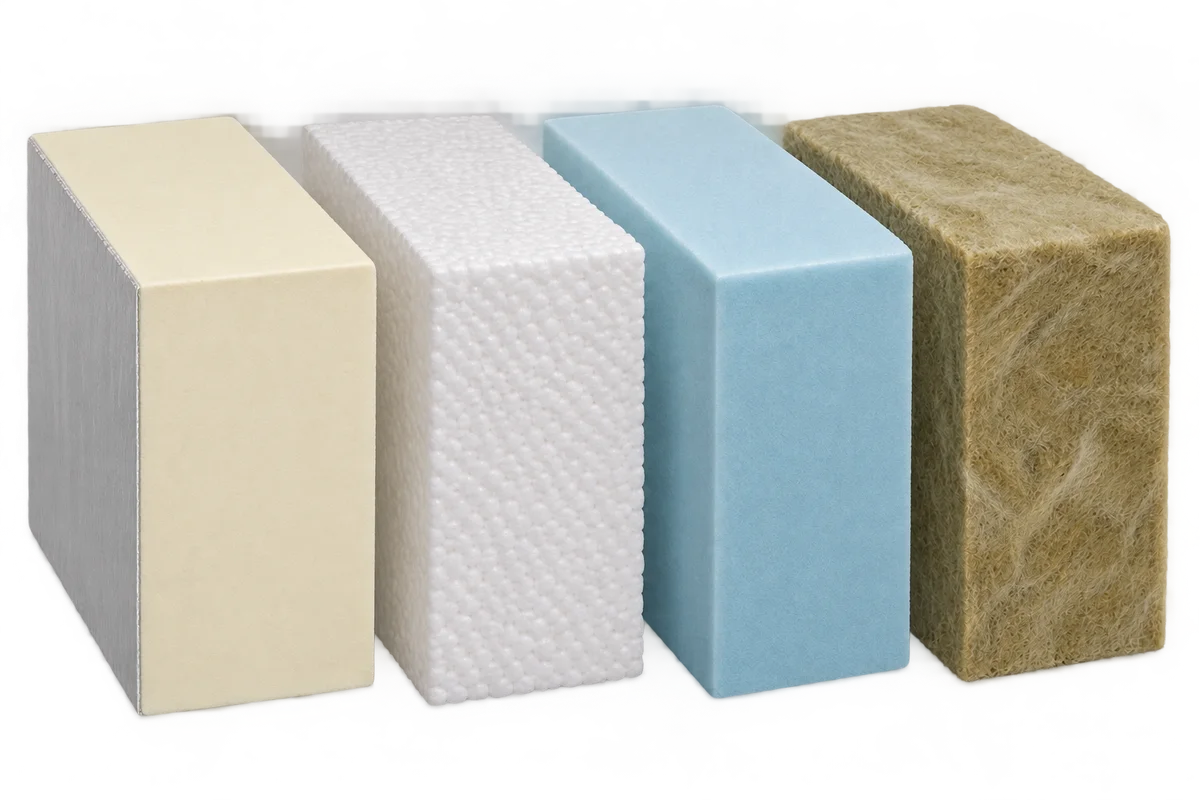
Different insulation materials can work together in one building element when each solves a specific problem. PIR can keep the build-up thin,…
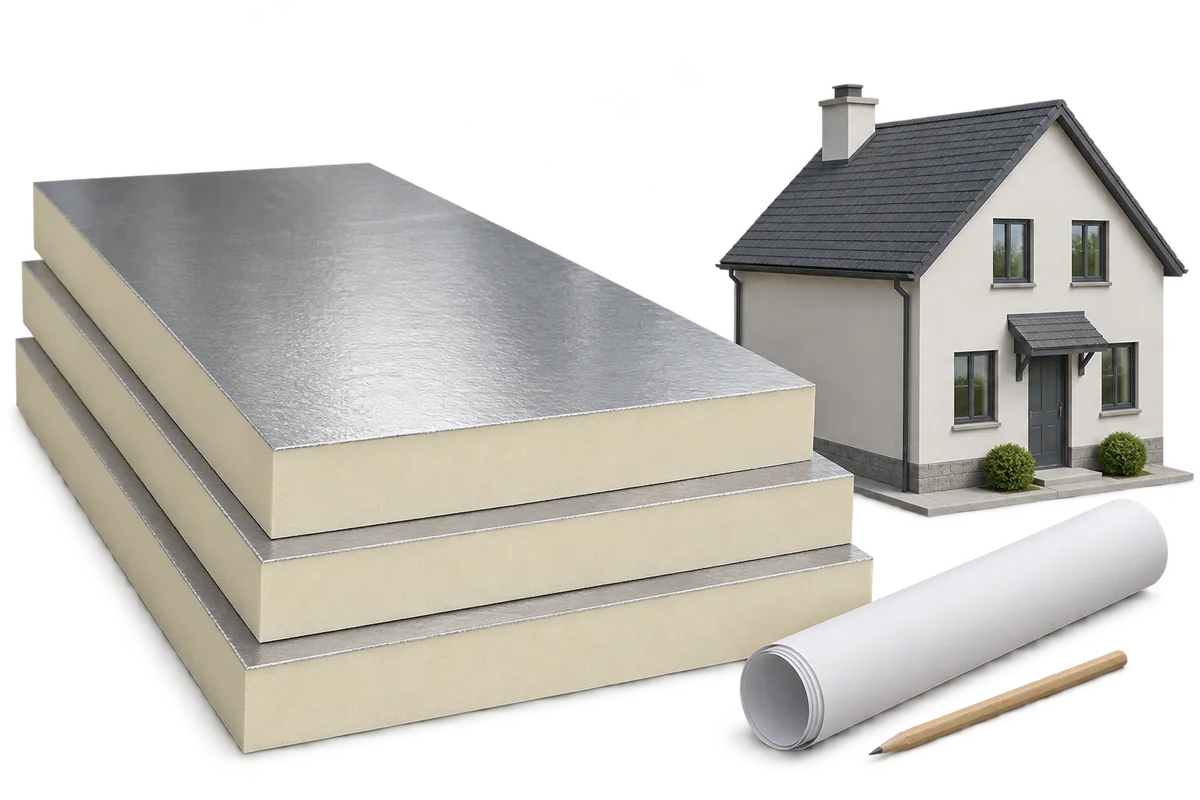
An energy retrofit works best when the roof, wall and floor insulation is planned together with windows, heating and ventilation. PIR can…
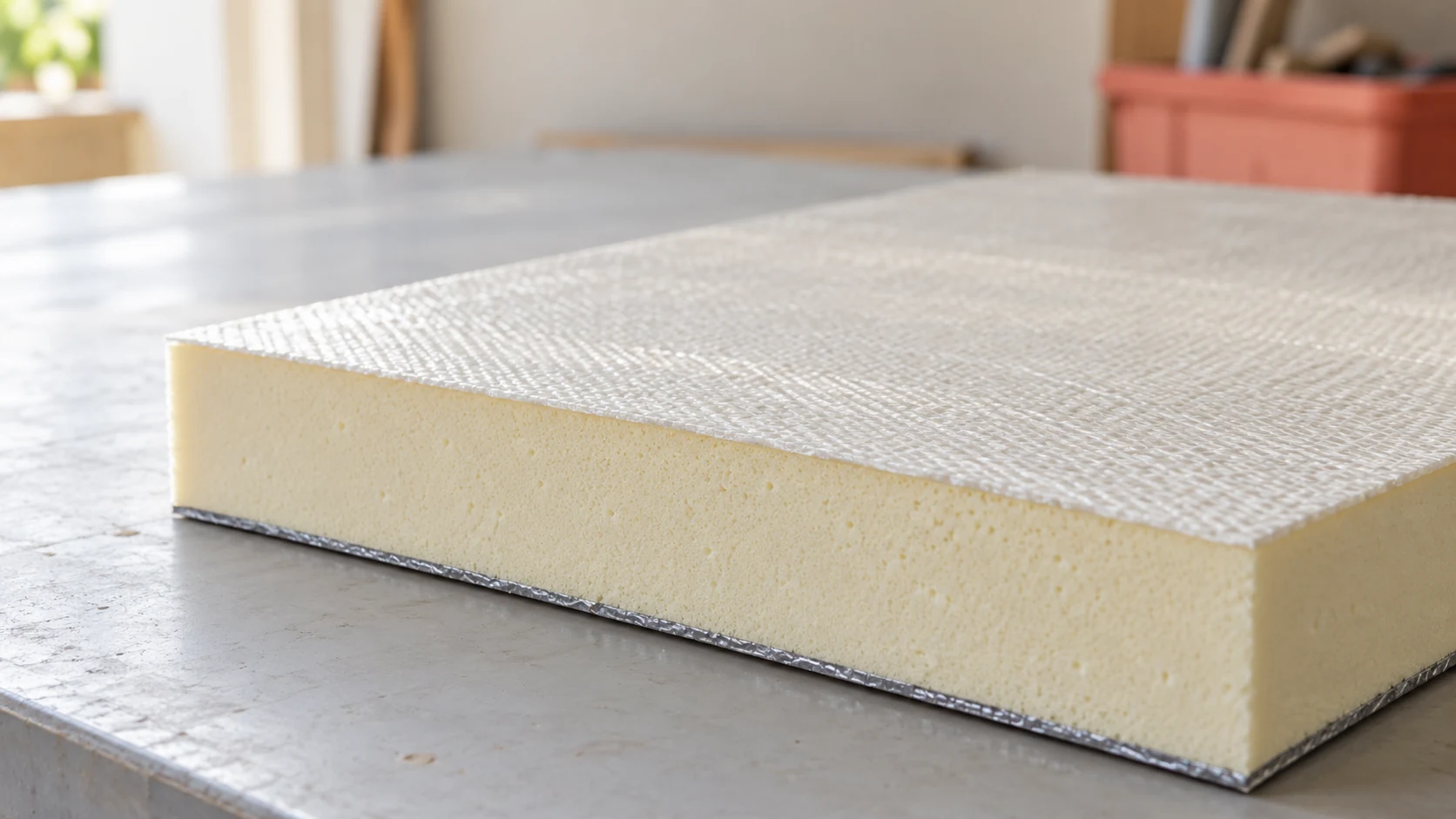
Glass-reinforced resin can form the inner facing of a PIR panel. It changes how that side of the enclosure is protected and…
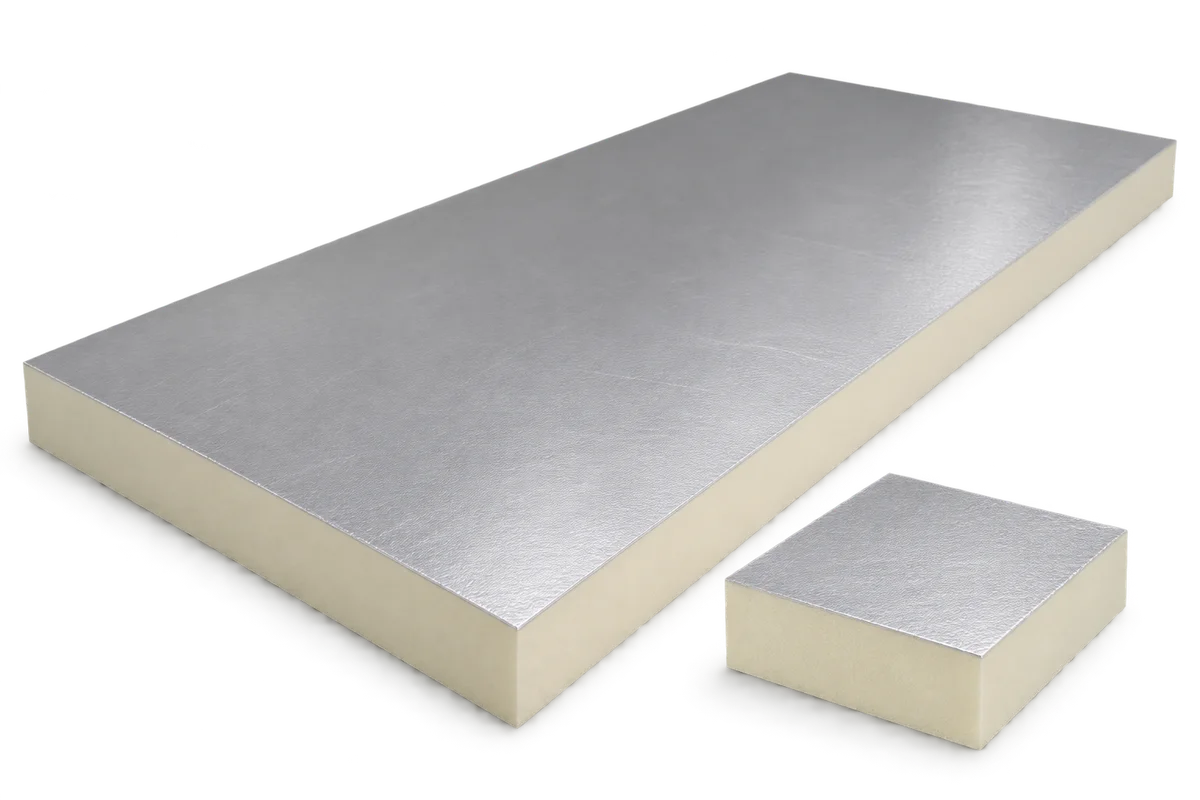
The distance from the roof hatch to an air handling unit matters before the roofing is ordered. A technician needs to reach…
PIR insulation can reduce heat loss through the treated building element, but it does not set the heating controls for you. After…
Start with thermal resistance, R, to compare two layers performing the same job. The result depends on the conductivity of the specific…
