






Which roofing option costs least once everything is included?
Costs and quotations
At a glance
The cheapest sheet may not give you the lowest roof cost. Waste, supports, flashings and installation all affect the total. Define what the building needs and compare complete options covering the same work. That shows whether a saving is real or comes from leaving something out. An open shelter roof must drain rainwater and carry its design loads. A heated workshop also needs thermal insulation, moisture control and airtightness. A low price for single-skin sheeting does not remove those requirements.
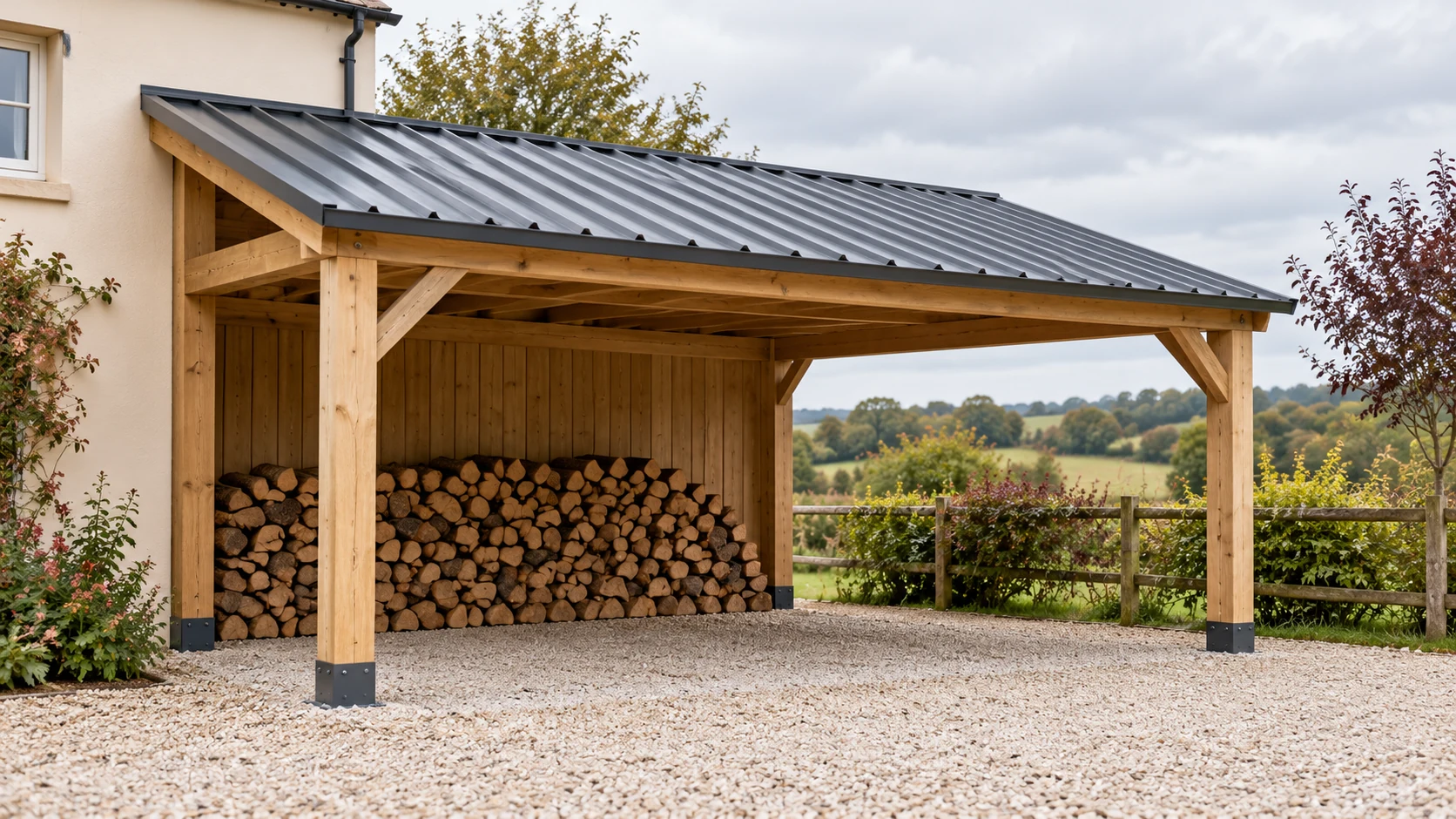
What must the roof do for this building?
Write down the functions the completed roof must provide. Consider use over the next few years. If a garage is soon to become a heated room, include that change in the design. Adding unplanned layers from below later can be harder and more expensive than designing the right build-up at the outset.
What must be the same in both estimates?
Use the same dimensions, loads and indoor conditions for both options. Compare covering, supports, underlying layers and finished junctions. If one estimate covers sheets alone and the other includes flashings, the difference between their totals tells you little.
For refurbishment include stripping, disposal and any structural repairs. Check the need for scaffolding, lifting equipment or additional safety measures. List these site-specific costs separately so you can see which actually change with the roof covering.
Can a higher unit price give a cheaper order?
A higher unit price can pay off through less waste or lower ancillary costs. In two hypothetical cutting lists, option A requires 108 m² at about €9.04 net per m², or €976.02. Option B requires 102 m² at about €9.96, or €1,016.34. On material alone, A saves €40.32. Euro totals use the unrounded converted rates.
With delivery at €173.79 for A and €115.86 for B, their net totals become €1,149.81 and €1,132.20. B is now €17.61 cheaper. The example shows how the ranking can change. These figures exclude accessories and labour and are not a quotation for a finished roof.
Where can you save without compromising the design?
Check the cutting plan and lengths first. Choosing a cover width suited to the slope can reduce edge cuts. Coordinated deliveries can avoid several small transport charges. An agreed detail is often cheaper to execute than a flashing improvised after the sheets have been laid.
Any increase in support spacing or reduction in fasteners requires a structural check. A basic coating still has to suit the exposure. A cheaper option is a saving only if it meets the building’s requirements throughout.
How do you allow for use and maintenance?
Provide access to areas that need inspection or cleaning, such as gutters, chimneys and equipment. Planning access during construction can reduce later costs. Adding fittings to a finished roof requires particular care with anchoring and sealing.
Check the coating maintenance requirements and availability of repair components. Sheet products have different service lives and future maintenance prices are uncertain. Compare access difficulties, unusual details and limited production runs to judge whether a small initial saving is worthwhile.
How do you choose a quote on a tight budget?
Distinguish functional requirements from appearance choices. Adequate supports, drainage and required roof layers belong in every compliant option. Colour, texture or pattern may allow several alternatives. Discuss those once the building’s technical requirements are clear.
Ask for the total and a clear list of exclusions. Compare all amounts consistently before or after VAT. Record the delivery date and method. Allow for identified risks, especially in refurbishment. Choose the lowest-cost option among complete designs that meet the requirements.
Update the drawings and material list after selecting the cheaper option. Give the installer the same version that was used for pricing.
Questions and answers
Is trapezoidal steel sheeting always the cheapest roof?
No. It can provide a simple covering, but supports, other layers, details and labour determine the result for the building.
Should I buy material early just because it is on offer?
Confirm quantities and specifications first. Wrong lengths, another delivery or unsuitable storage can cost more than the discount saves.

Free quote
What to include in your enquiry
Tell us how you plan to use the material, the dimensions and the quantity you need. Include the thickness, grade or variant name, along with the delivery town or your preferred collection branch. For a specific product, add its name or a link to the product page. We will reply to the email address you provide to discuss availability and the terms of your order.
Read next
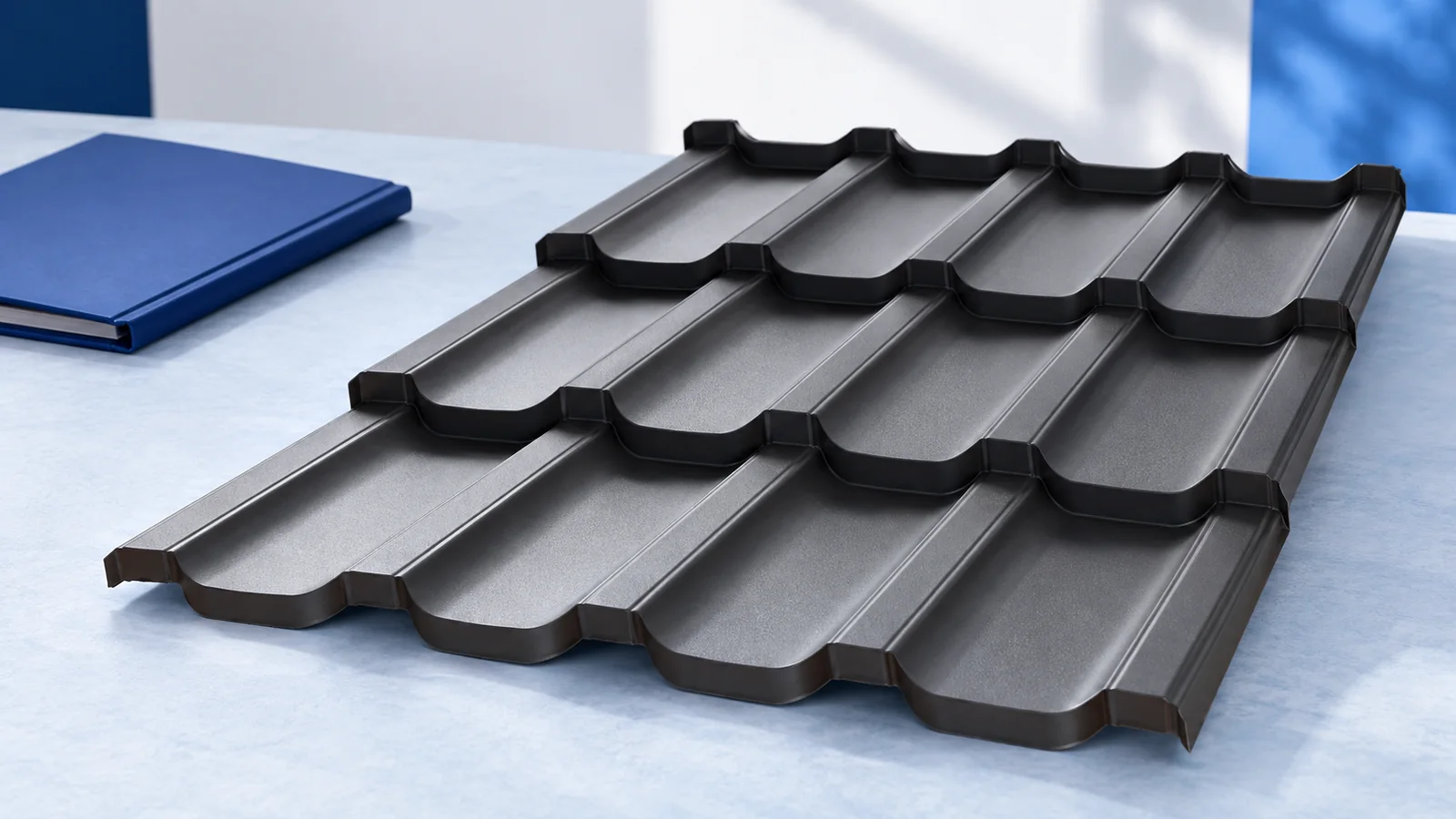
A single-module metal roofing sheet covers one course of the tile pattern down the slope. It can still be several tile widths…
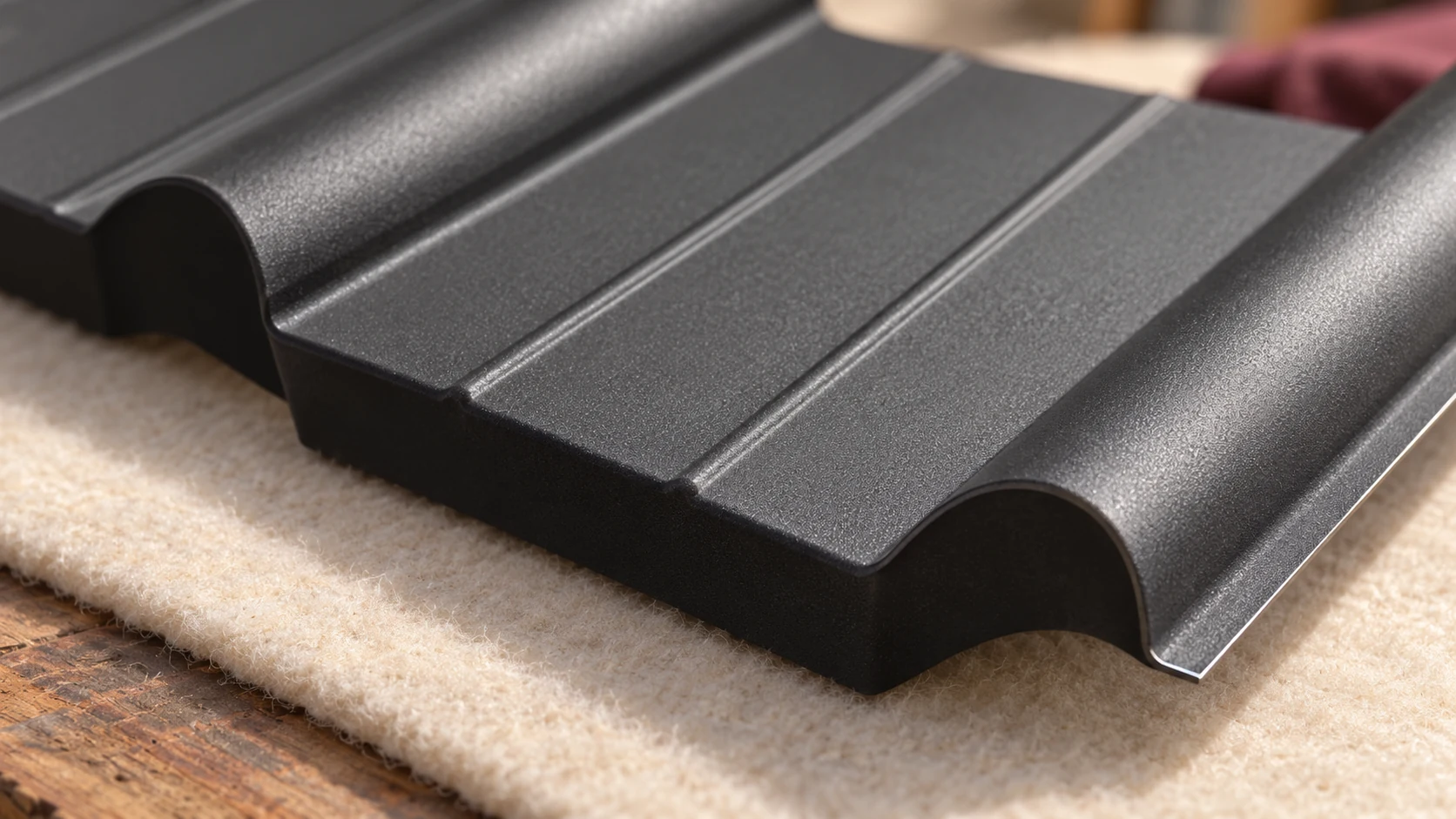
Colour is only one feature of a tile-profile roofing sheet. Under the finish is a steel core with protective layers, each serving…
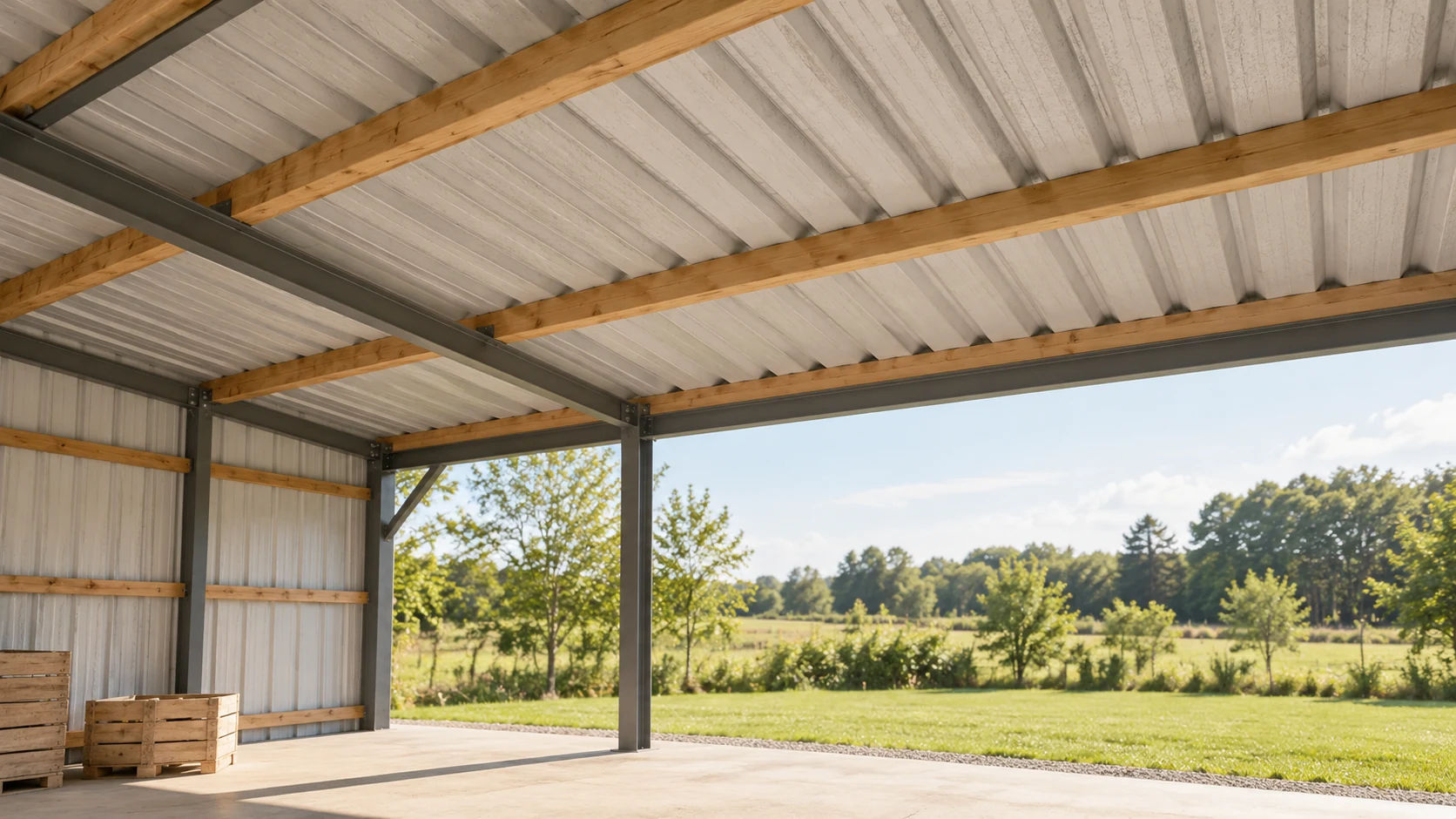
Fleece on the underside of a metal roof can reduce dripping when small amounts of condensation form. It stores moisture temporarily and…
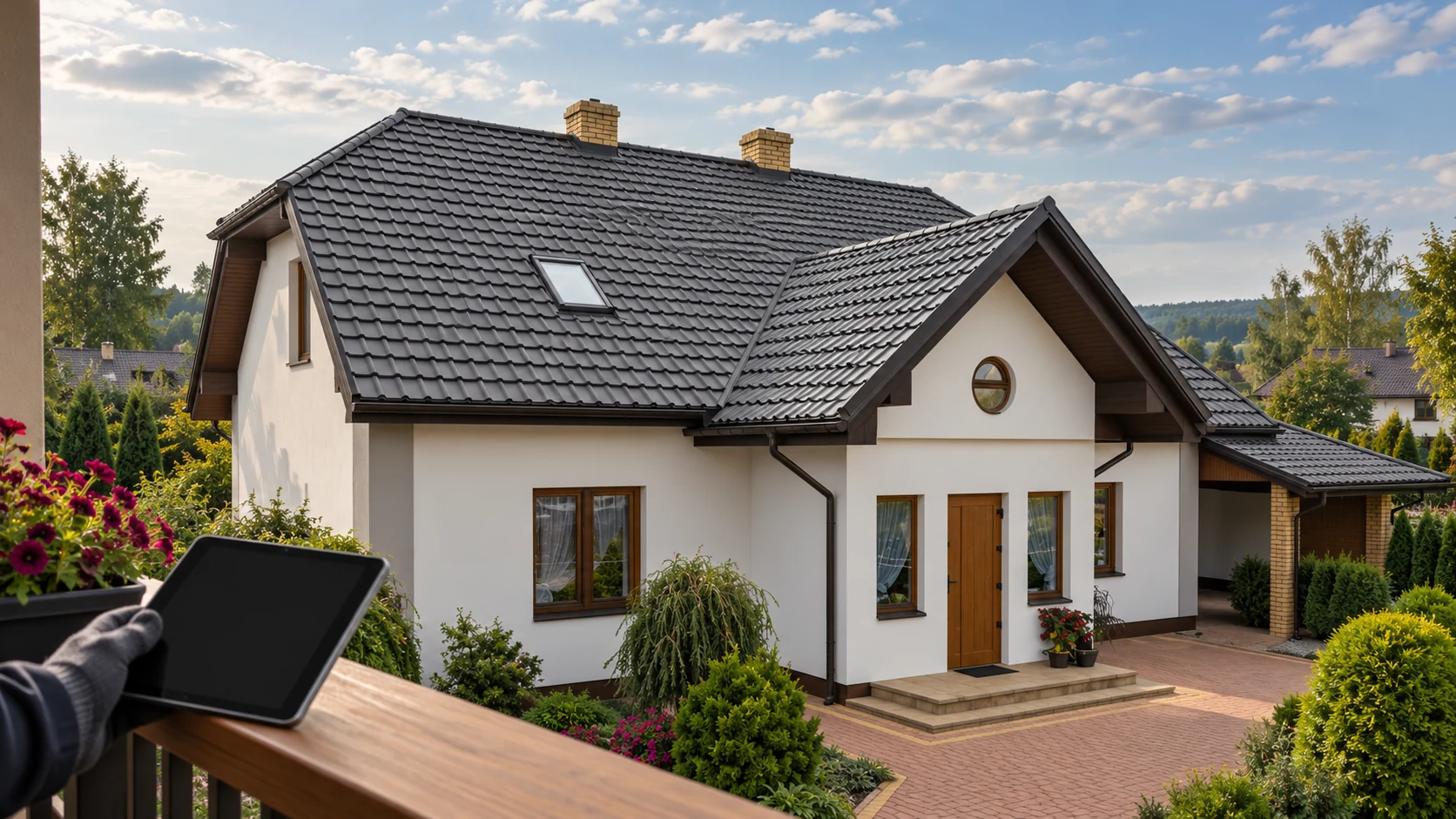
Order cut-to-length tile-profile sheets from a schedule of roof slopes, not a single area quoted over the phone. You need strip lengths,…
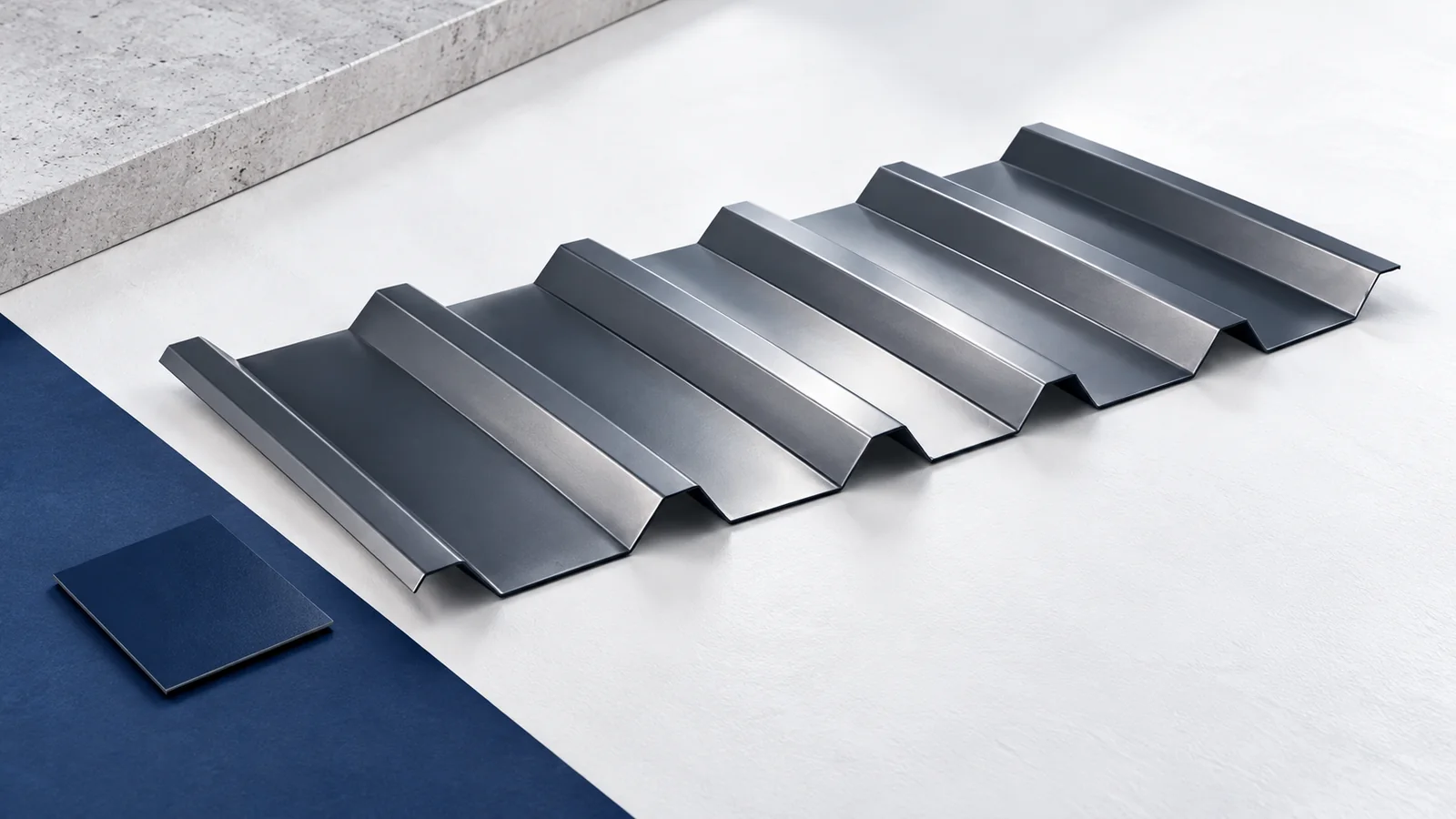
T35 identifies a family of trapezoidal sheets with ribs about 35 mm deep. The depth is useful when comparing profiles, but a…
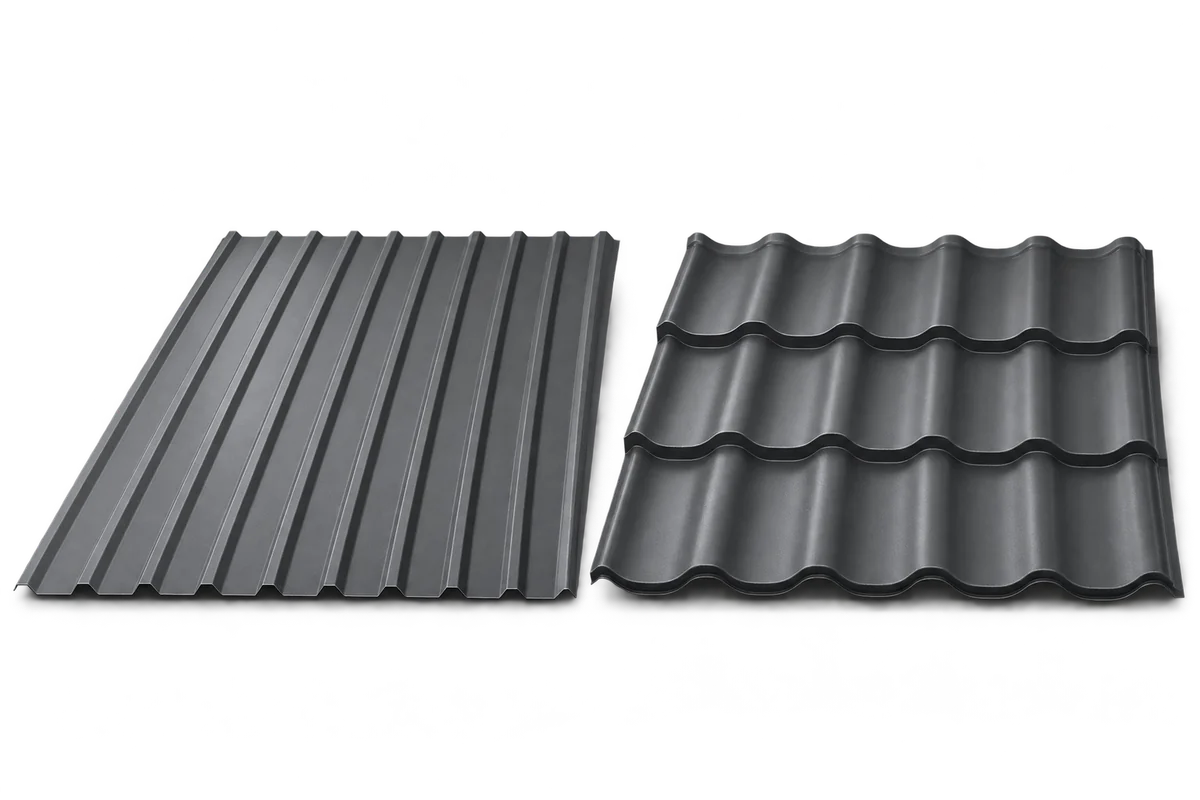
Metal roof tiles suit traditional houses, while trapezoidal sheets create a simpler roofline. Check the roof pitch, support spacing, protective coating and…
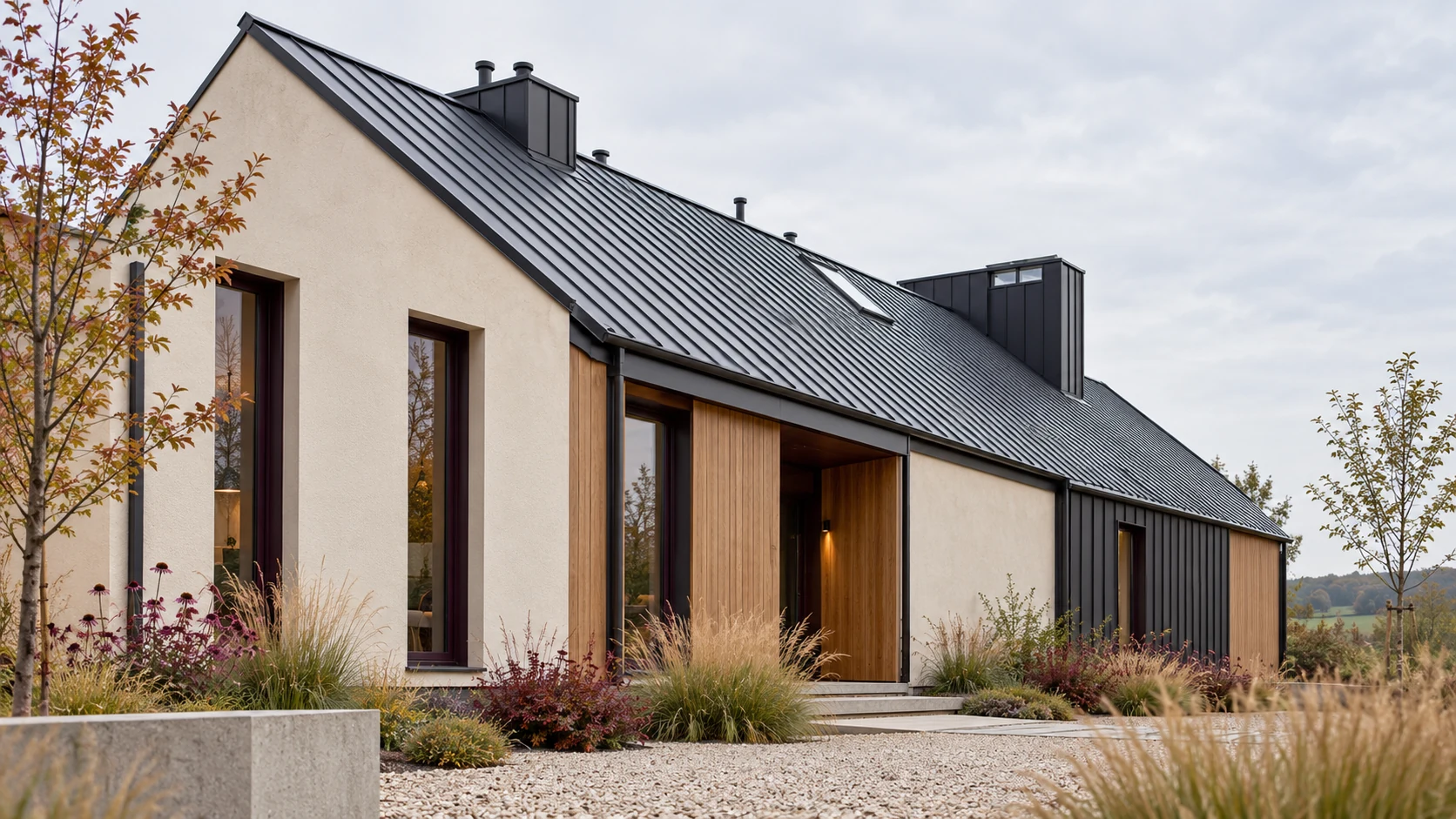
Similar vertical ribs on two roofs can conceal quite different joints. Snap-lock panels have factory-formed edges that engage with one another. In…
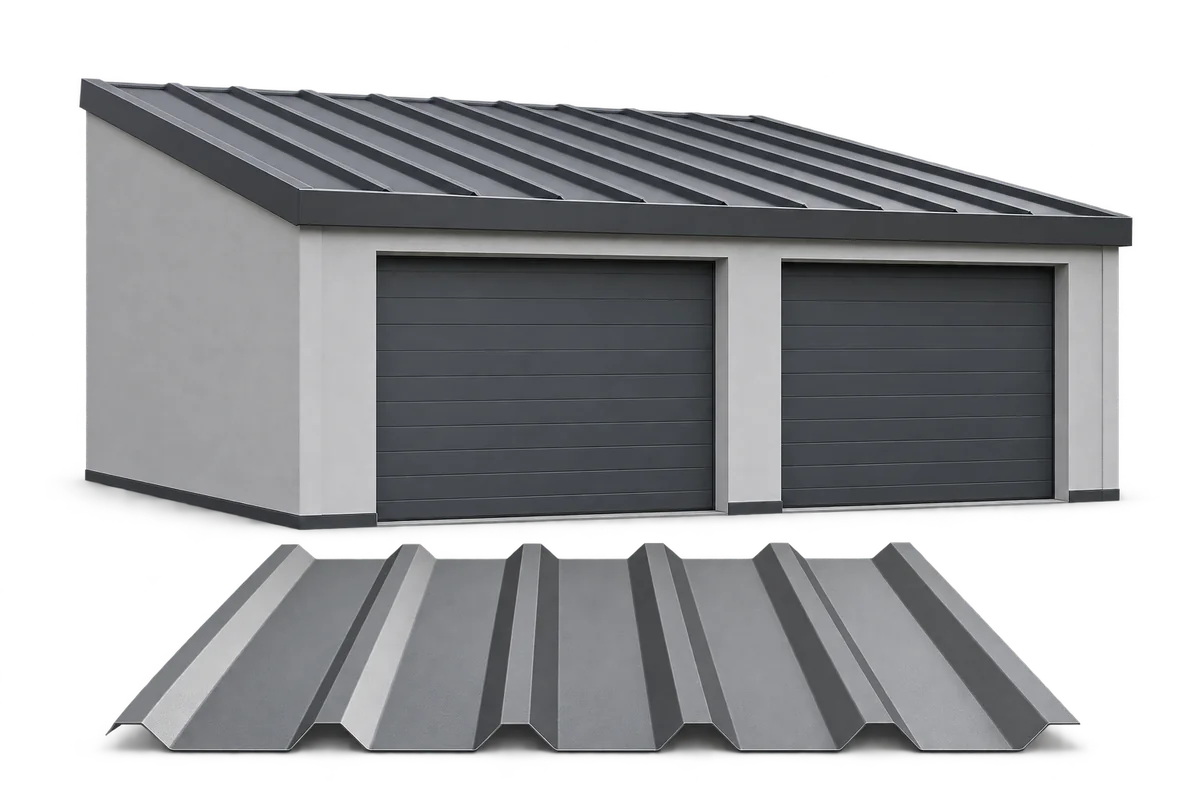
Trapezoidal steel sheets can cover a garage roof, clad its walls or screen the side of a carport. Choose the coating and…
