Panels · Sheet metal · Insulation · Accessories

What data should you enter in a PIR thickness calculator?

A calculator can compare insulation thicknesses quickly if the inputs describe the actual construction. Common errors involve the wrong board, inconsistent units and missing layers. Make a short record of the assembly and check one result by hand. This helps expose an apparently favourable answer based on the wrong assumptions. First decide whether you are calculating a wall, roof or floor. The direction of heat flow and the conditions on the other side affect the model. A ground-bearing floor requires different assumptions from an external wall. A box for entering conductivity does not by itself make a calculator suitable.
By |2026-11-12T20:15:19+01:0012 November 2026|PIR insulation|Comments Off on What data should you enter in a PIR thickness calculator?

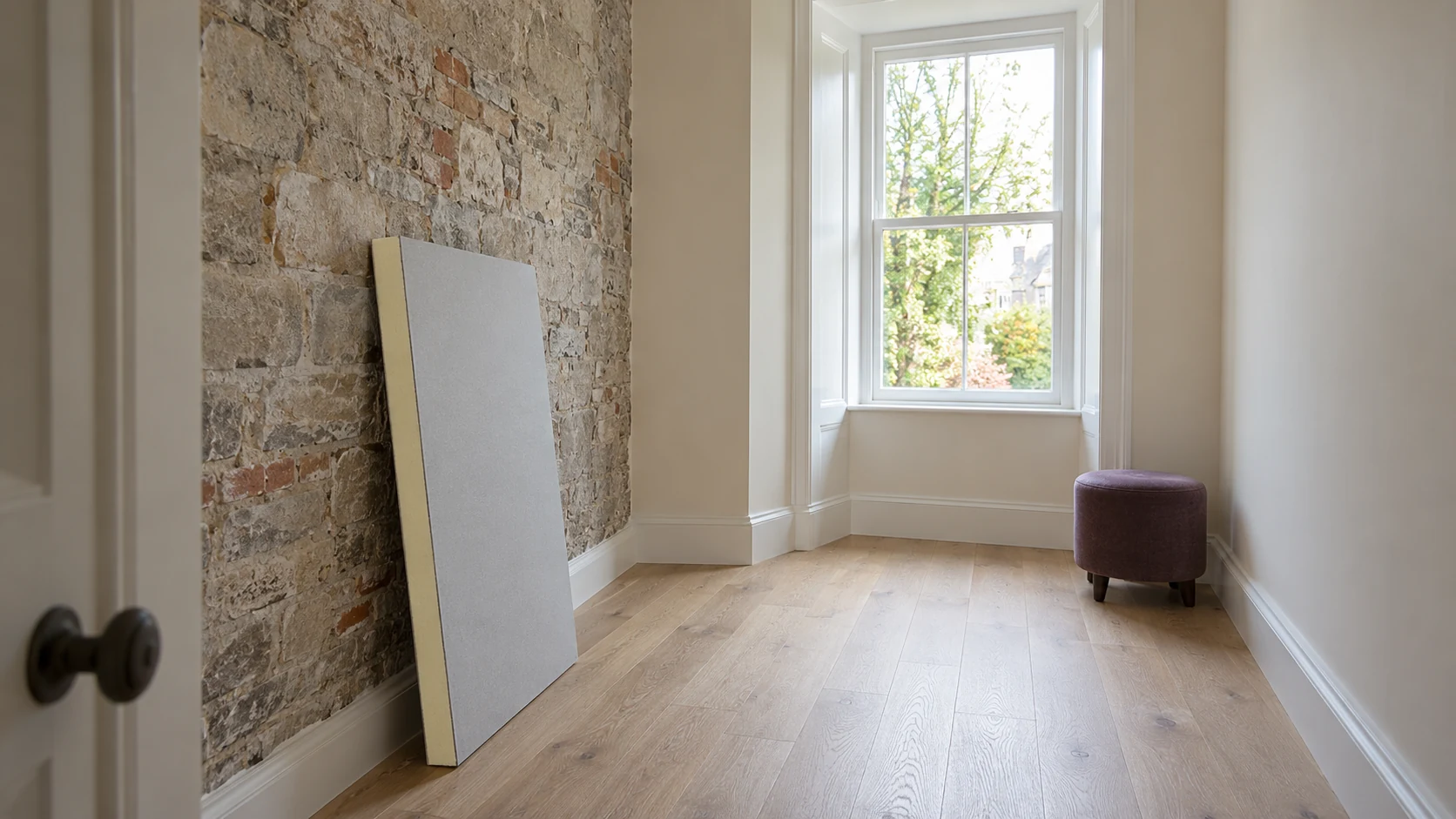
How to insulate a flat while preserving its historic façade

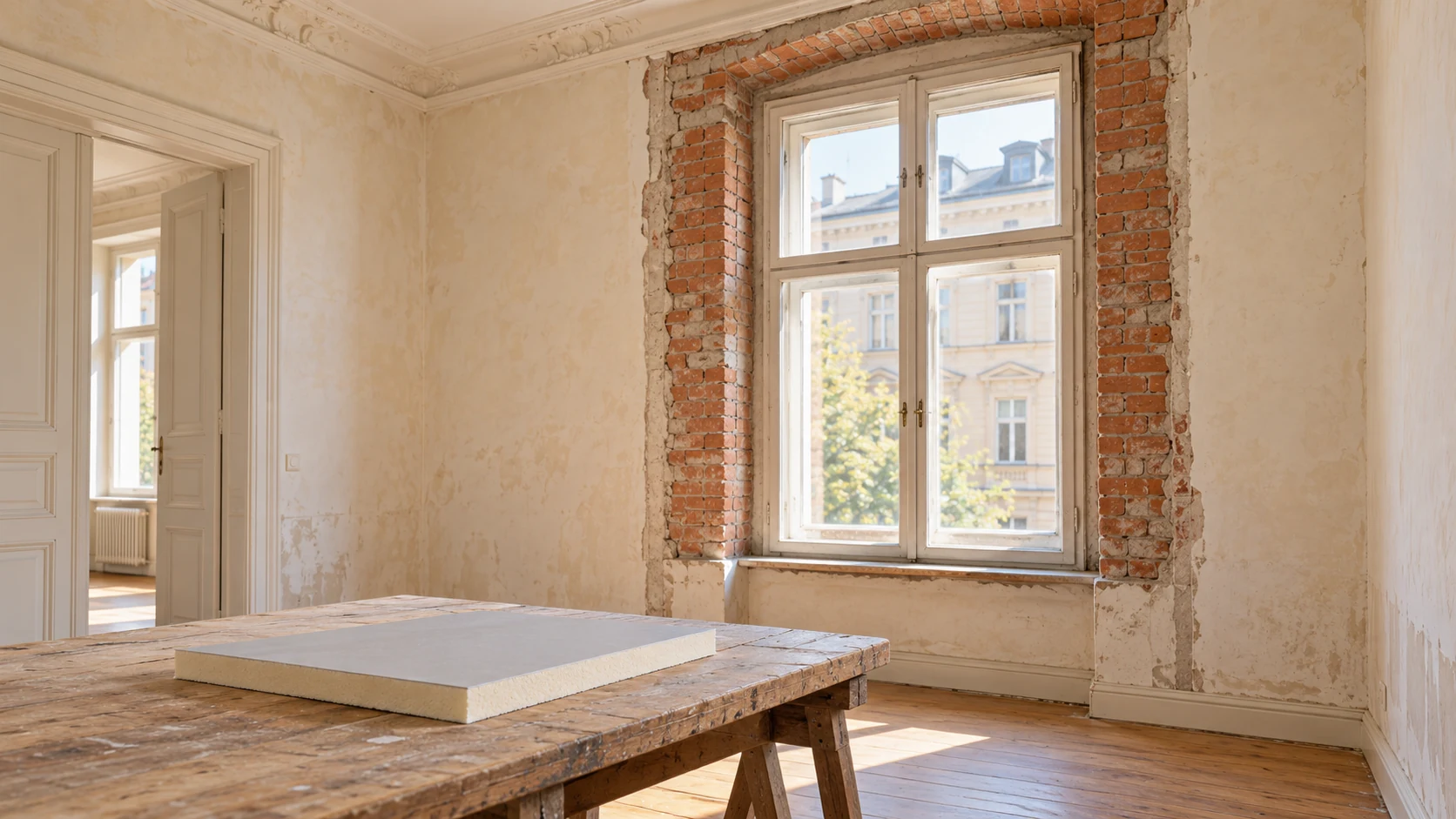
When a historic façade must be preserved, internal insulation may be an option. First establish how the walls and floors are built. Damp brickwork, embedded timber joists and deep window reveals cannot be assessed from PIR thickness alone. Check masonry type and thickness, mortar joints and previous repairs. Walls may vary even within a single storey. Look for damp, salt deposits and cracking. Fresh paint is no proof of a dry substrate. Before covering the wall, identify where water enters, how it can drain and whether the proposed assembly suits this particular flat.

By |2026-11-12T20:15:18+01:0012 November 2026|PIR insulation|Comments Off on How to insulate a flat while preserving its historic façade

How to plan internal insulation for a house built in the 1990s

Behind a uniform façade, a 1990s house may have several different wall constructions. Some rooms may already have been altered, and drawings do not always match what was built. Survey the whole house before insulating the first room, so its insulation can join the next stage properly. Gather drawings, construction photographs and records of alterations. Establish whether each wall is solid, has a cavity or already contains insulation. The year of construction alone will not tell you: brickwork, blocks, concrete ring beams and extensions built by different methods may all occur in one house.

By |2026-11-12T20:15:16+01:0012 November 2026|PIR insulation|Comments Off on How to plan internal insulation for a house built in the 1990s

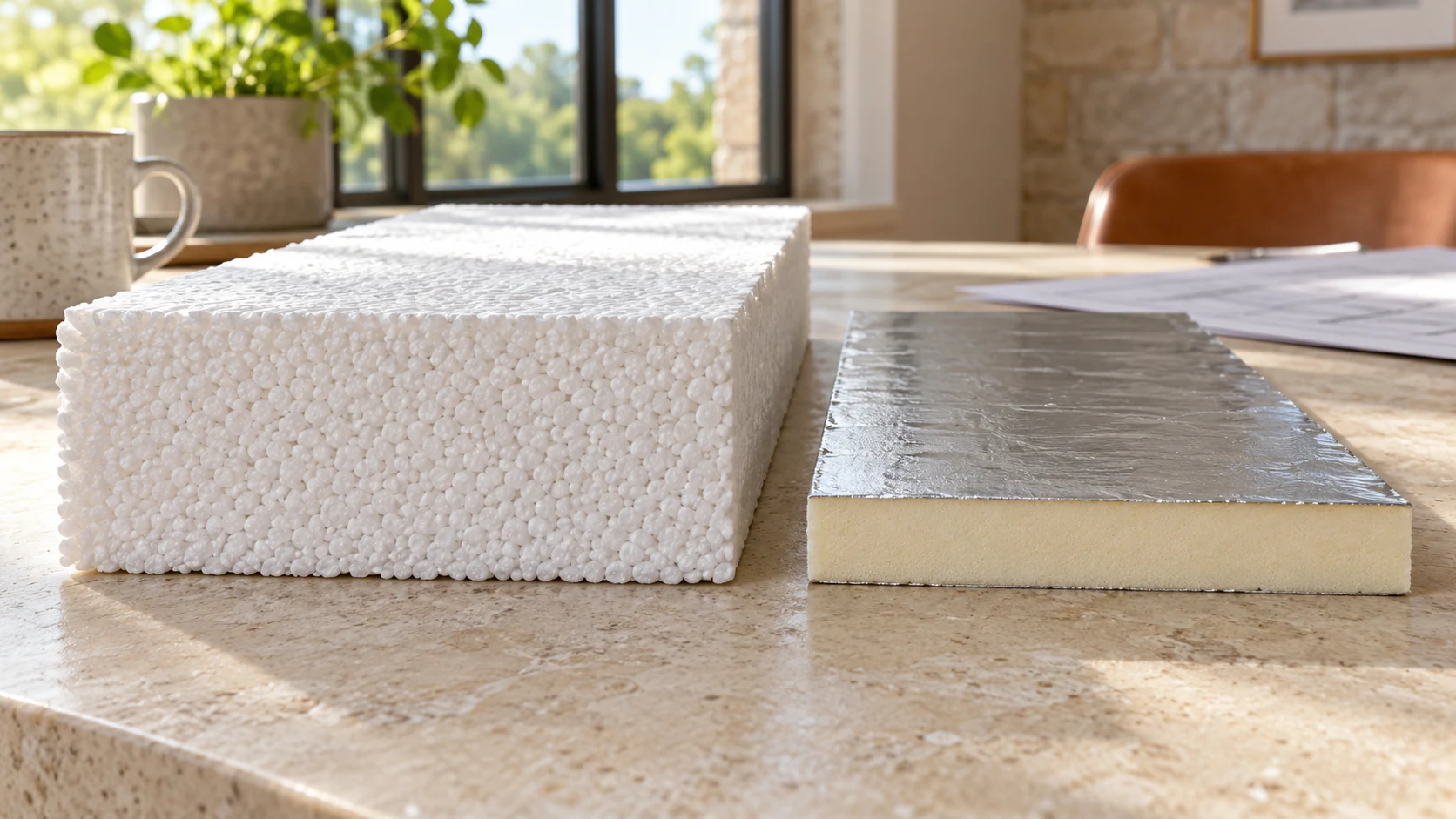
How to convert EPS thickness to an equivalent PIR thickness

Start with thermal resistance, R, to compare two layers performing the same job. The result depends on the conductivity of the specific product, not simply on whether it is EPS or PIR. For a homogeneous layer, R = d/λ: enter thickness in metres and the conductivity of the chosen product. Under the same conditions, a higher resistance means less heat passes through the layer. Then check which thicknesses are available, whether the facing suits the application and what the change means for the complete wall and its junctions. Thickness alone does not describe insulating performance.

By |2026-11-12T20:15:15+01:0012 November 2026|PIR insulation|Comments Off on How to convert EPS thickness to an equivalent PIR thickness

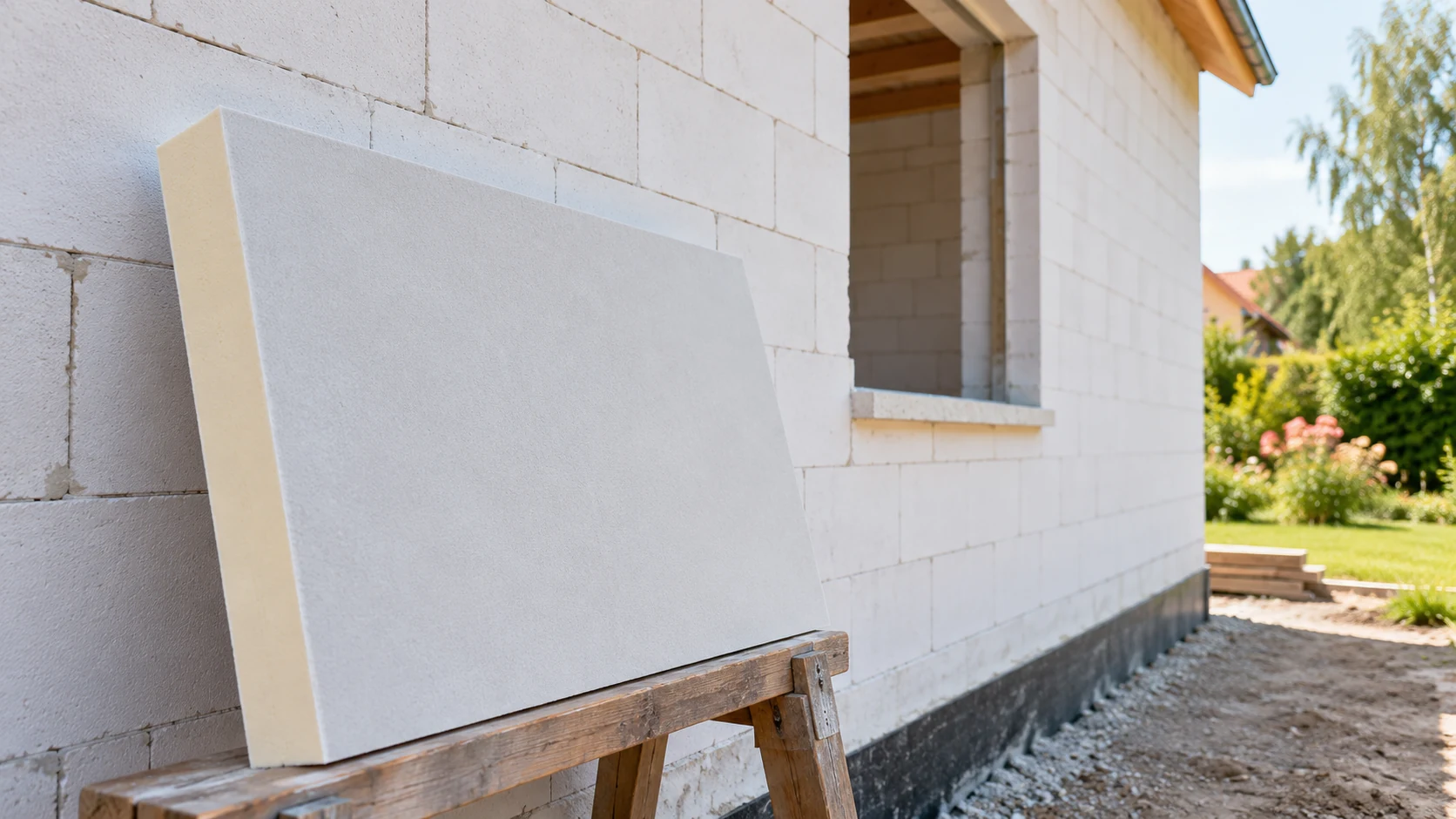
How to choose a PIR render carrier board for an aerated concrete wall

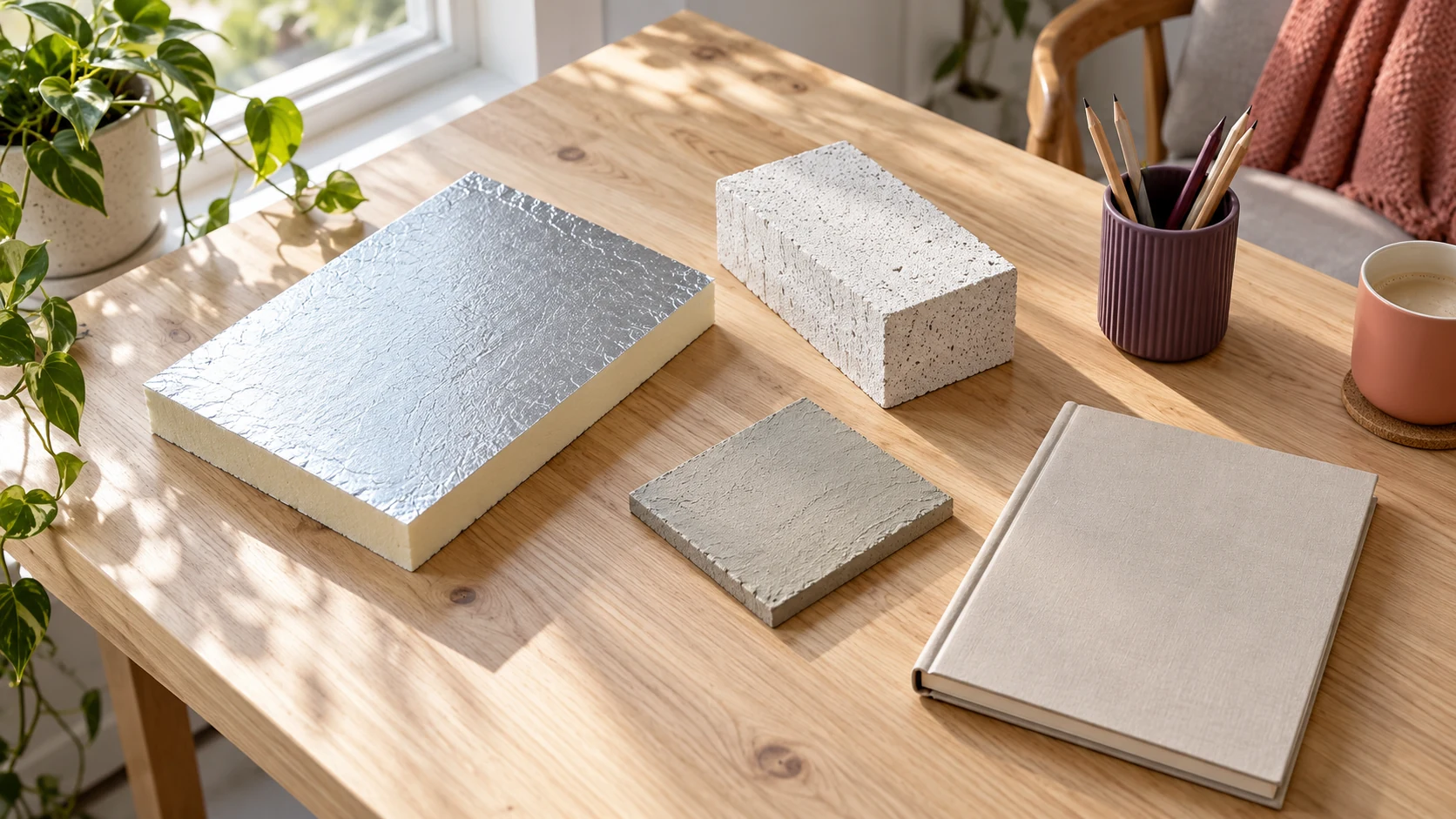
Aerated concrete masonry and PIR can make a well-insulated wall when the board, render system and fixings are selected together. Aluminium-faced PIR is not a substitute for every board intended to receive render. Before ordering, check the masonry properties, board facing, fixing substrate and details for shedding water. Aerated concrete blocks come in different densities and thicknesses. Establish the actual wall properties from records or inspection, including joints, moisture and existing finishes. In a new building, assess how construction moisture can dry out before covering the masonry with insulation.

By |2026-11-12T20:15:14+01:0012 November 2026|PIR insulation|Comments Off on How to choose a PIR render carrier board for an aerated concrete wall

How much room does internal insulation take up along a boundary wall?

When the façade cannot be made thicker, every centimetre inside the room counts. Allow for the fixings and finish as well as the PIR board. Window, ceiling and service junctions also need space. Measure the room in several places and record where the existing wall is out of plumb. Mark doors, radiators, sockets and furniture that will stay. Draw the finished wall face on the floor plan. You can then see whether a window will still open or a wardrobe will fit. Use the space available and the condition of the masonry to choose the assembly; the thinnest board in stock may not be suitable.

By |2026-11-12T20:15:12+01:0012 November 2026|PIR insulation|Comments Off on How much room does internal insulation take up along a boundary wall?

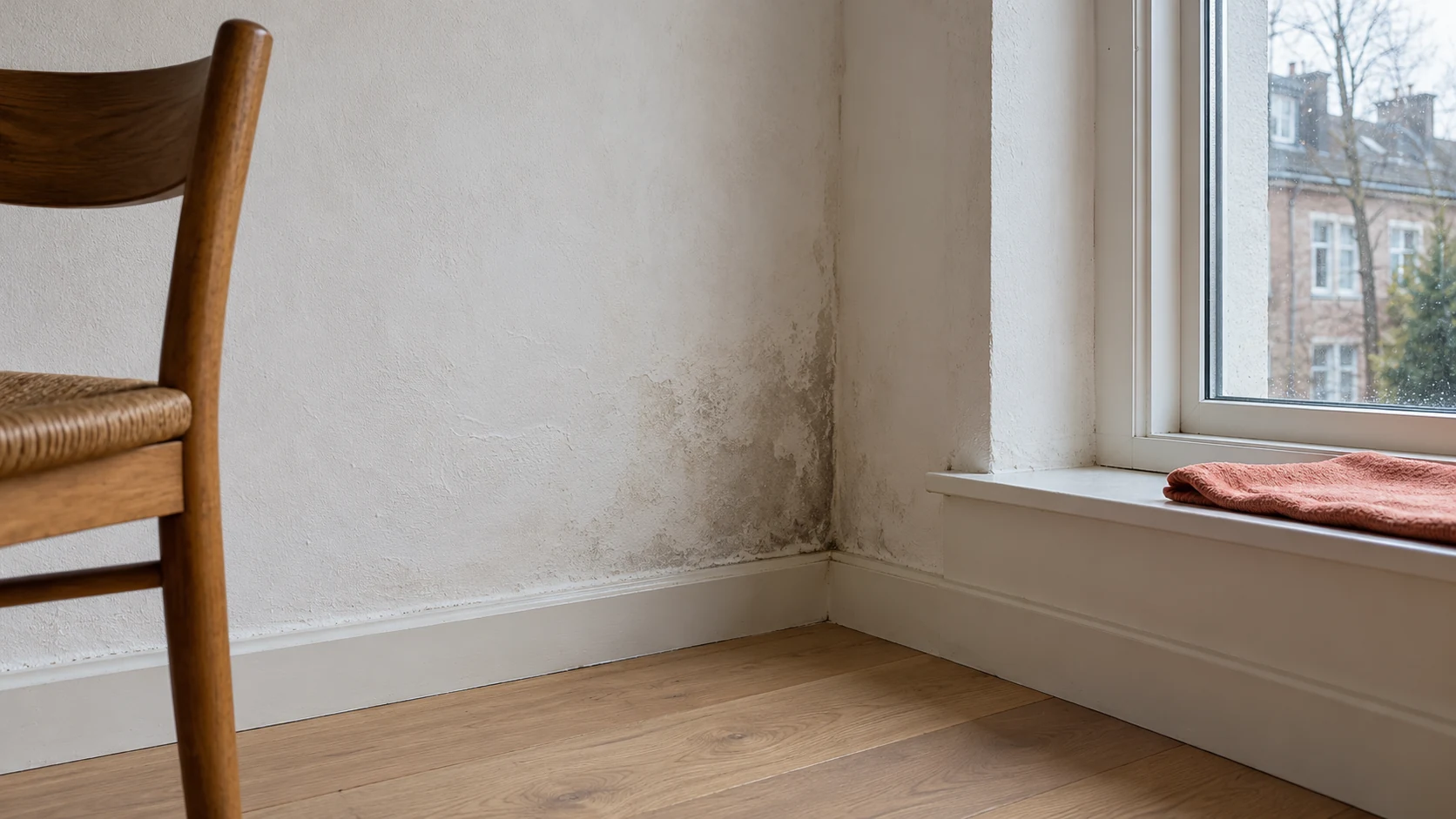
Why does a north-facing corner get damp even when the room is heated?

A cold surface, poor ventilation, rain penetrating the façade and a leaking pipe can leave similar marks. Several causes can coexist. Before ordering insulation, establish when and where the damp appears. Mark the stain on a sketch, noting its height and distance from the window, floor and ceiling. Take a dated photograph and repeat it after rain and after several dry days. Note whether the problem worsens after cooking, bathing or a long absence. This record helps distinguish weather effects from patterns of use. Insulation is useful only as part of a remedy that addresses the cause.

By |2026-11-12T20:15:11+01:0012 November 2026|PIR insulation|Comments Off on Why does a north-facing corner get damp even when the room is heated?

How to choose insulation for a hollow clay block wall

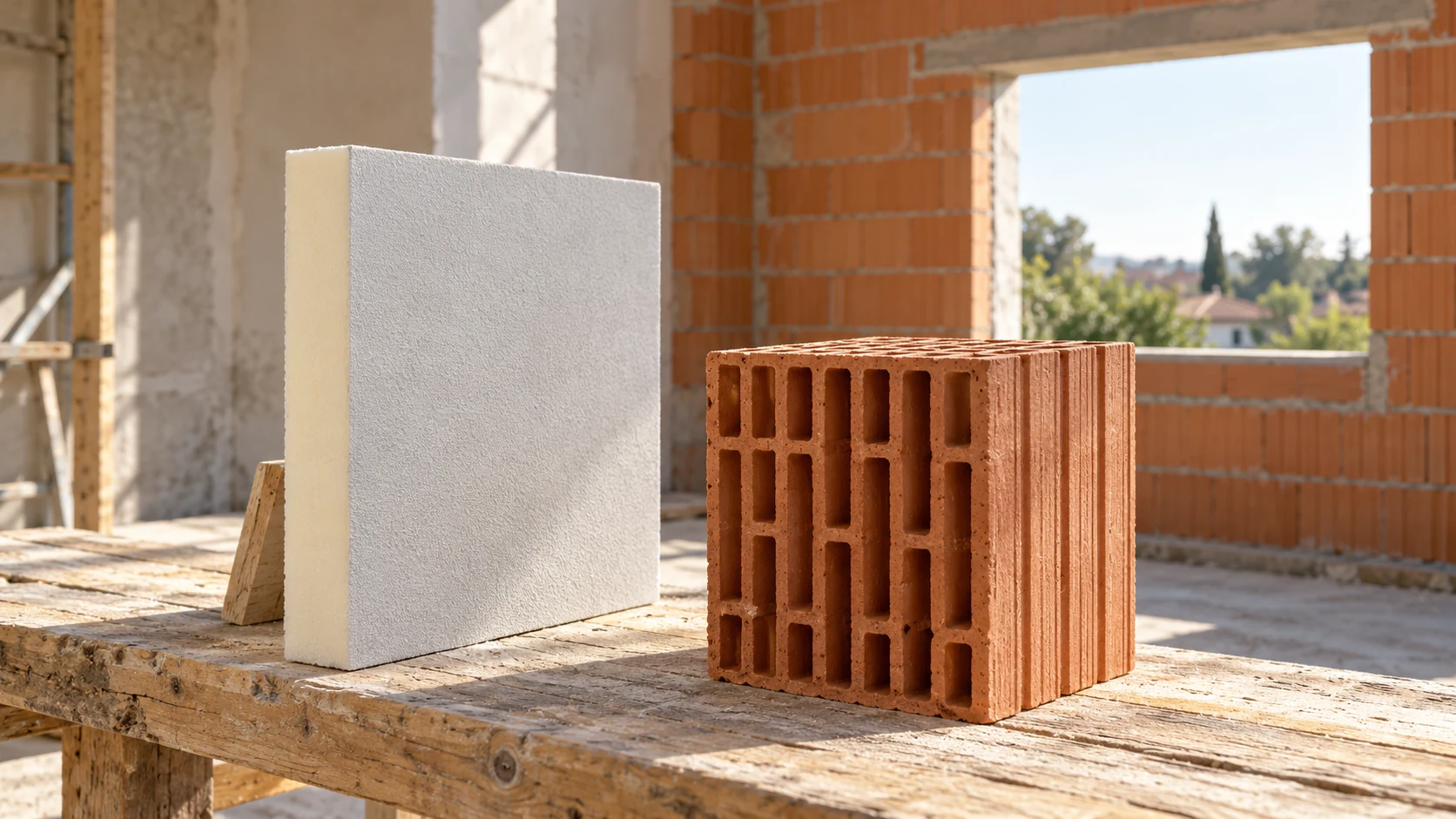
Block thickness alone cannot determine insulation thickness. You need the properties of the masonry, mortar, ring beams and intended finish. With PIR, distinguish a render-compatible board from a foil-faced one. Start with the thermal target and space around windows before comparing stock thicknesses. Identify the clay blocks and how they were laid: the conductivity of one block does not necessarily describe the finished wall. Joints, mortar, direction of heat flow and assumed moisture content matter. For a new house consult the records; older masonry may need inspection.

By |2026-11-12T20:15:09+01:0012 November 2026|PIR insulation|Comments Off on How to choose insulation for a hollow clay block wall

How should you insulate a garage or cabin used only at weekends?

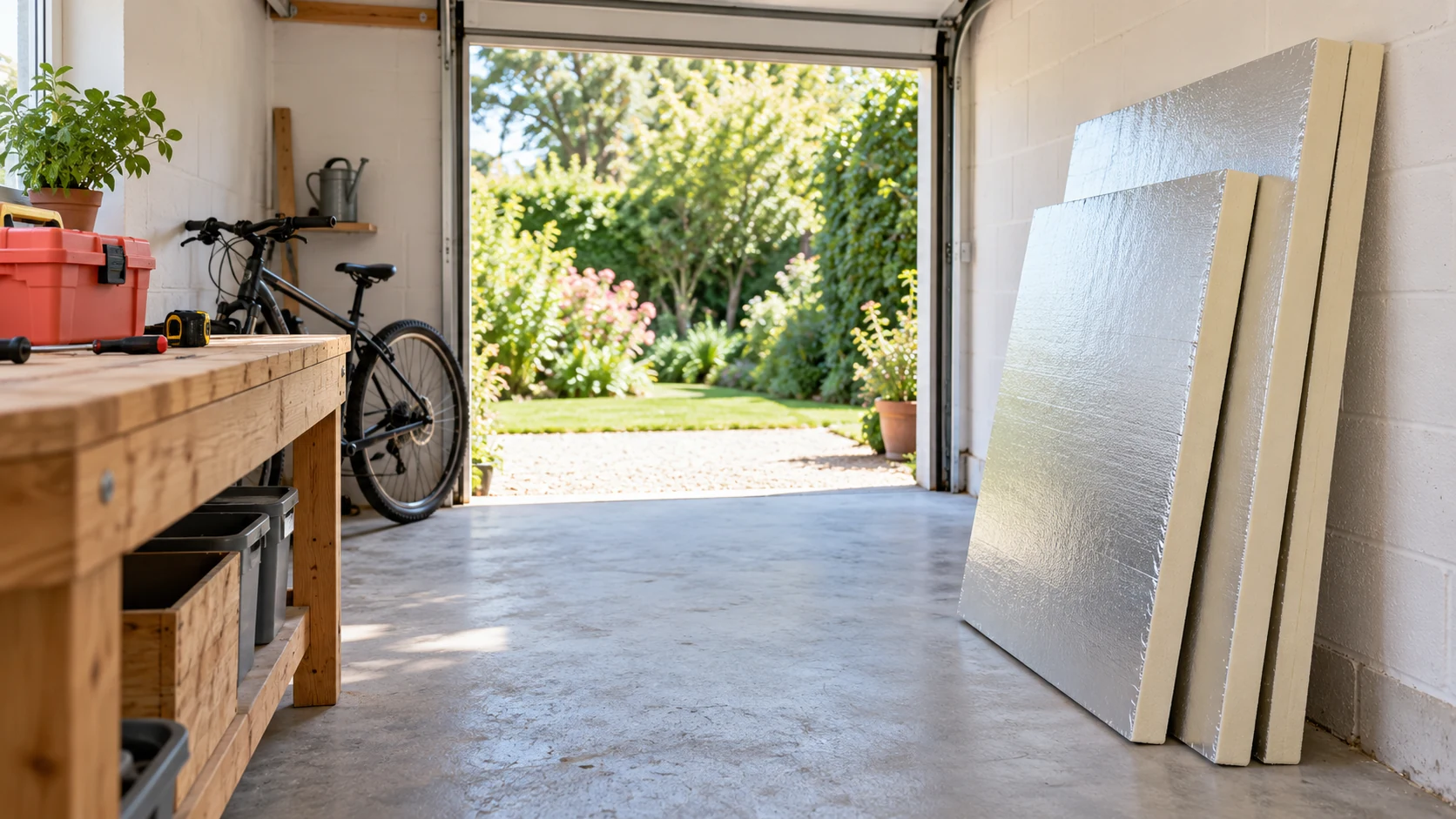
Intermittent use makes warm-up time, moisture on arrival and running costs between visits especially important. It calls for a different plan from a continuously heated house. PIR can reduce the thickness needed, but consider the roof, doors and airtight junctions too. Record heating hours and the temperature to maintain while the building is empty. A garage for a car, a Saturday workshop and a cabin used overnight have different requirements. Floor area alone cannot determine insulation: the number of occupants and the heating system also matter.

By |2026-11-12T20:15:08+01:0012 November 2026|PIR insulation|Comments Off on How should you insulate a garage or cabin used only at weekends?

How do you keep internal PIR insulation airtight?

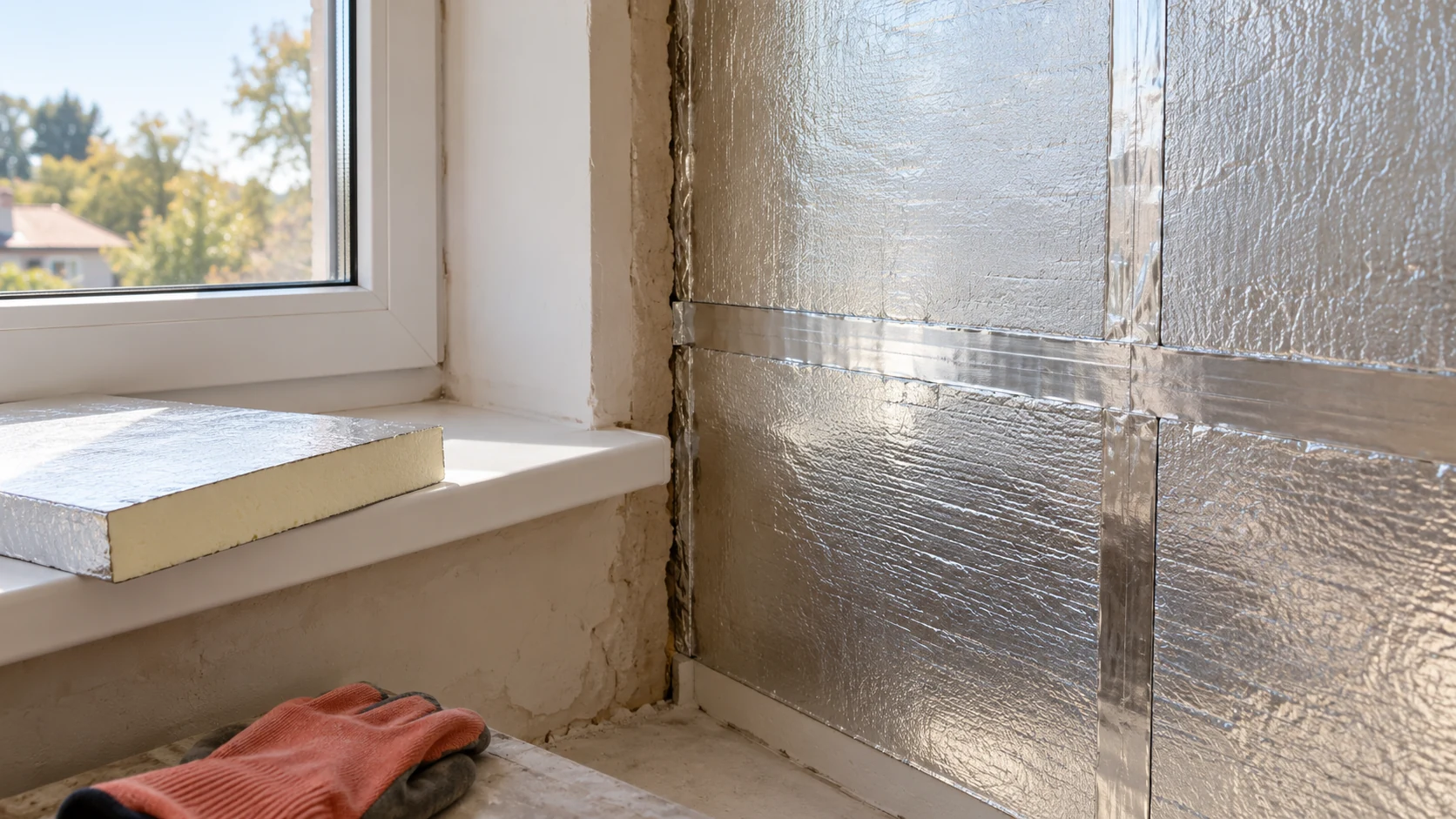
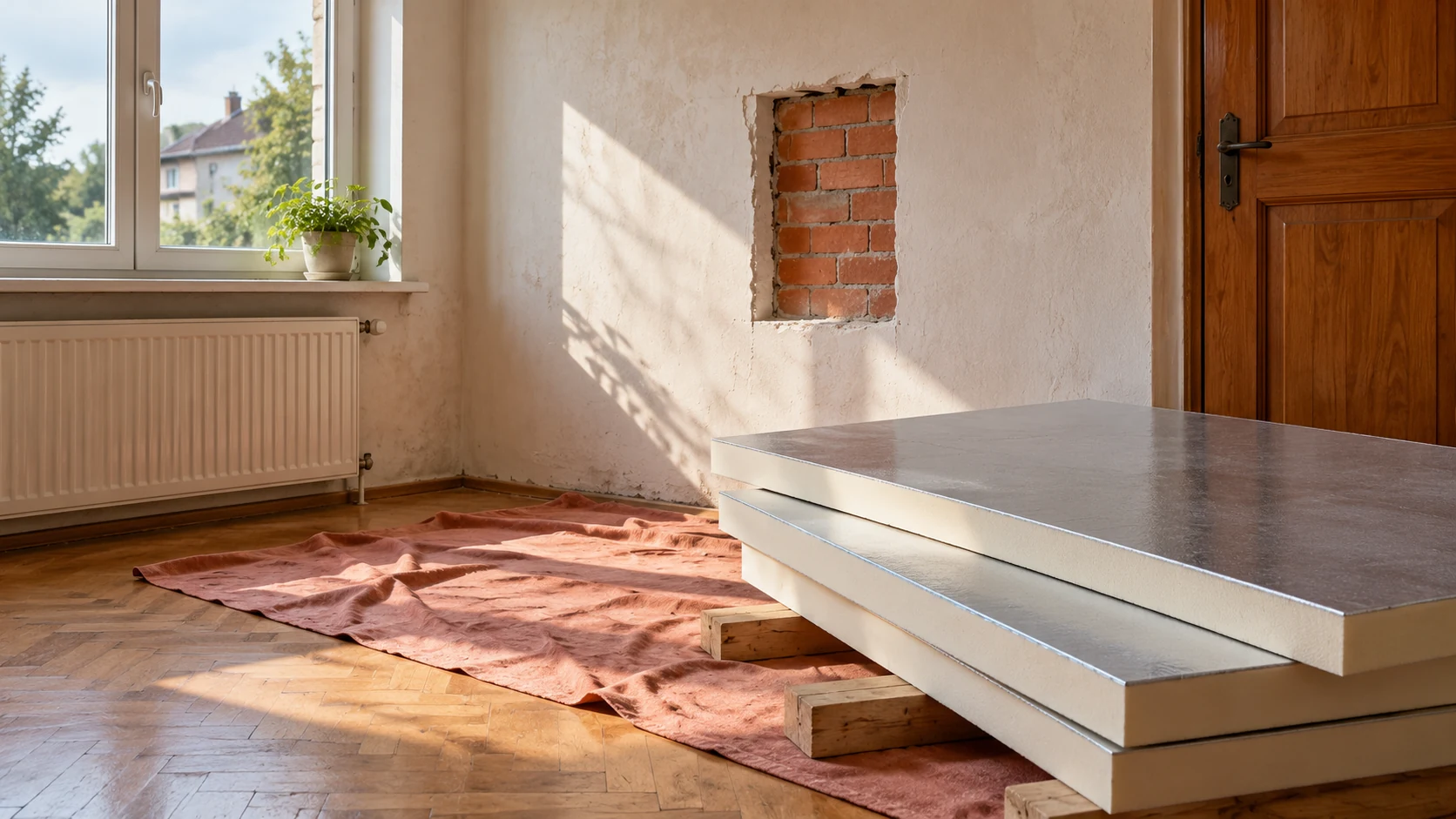
An aluminium facing restricts vapour diffusion through a board, but the insulation also depends on its connections to floors, ceilings, windows and services. Plan these before ordering. Seals are hardest to repair once the finish conceals them. The design should identify a continuous layer controlling airflow and water vapour. A suitable board facing can fulfil that role together with the specified joint system. A shiny surface alone tells you little: check the properties and condition of the particular laminate and how it connects to the surrounding construction.

By |2026-11-12T20:15:07+01:0012 November 2026|PIR insulation|Comments Off on How do you keep internal PIR insulation airtight?
Back to top