






What are the advantages of metal roofing?
Roof coverings
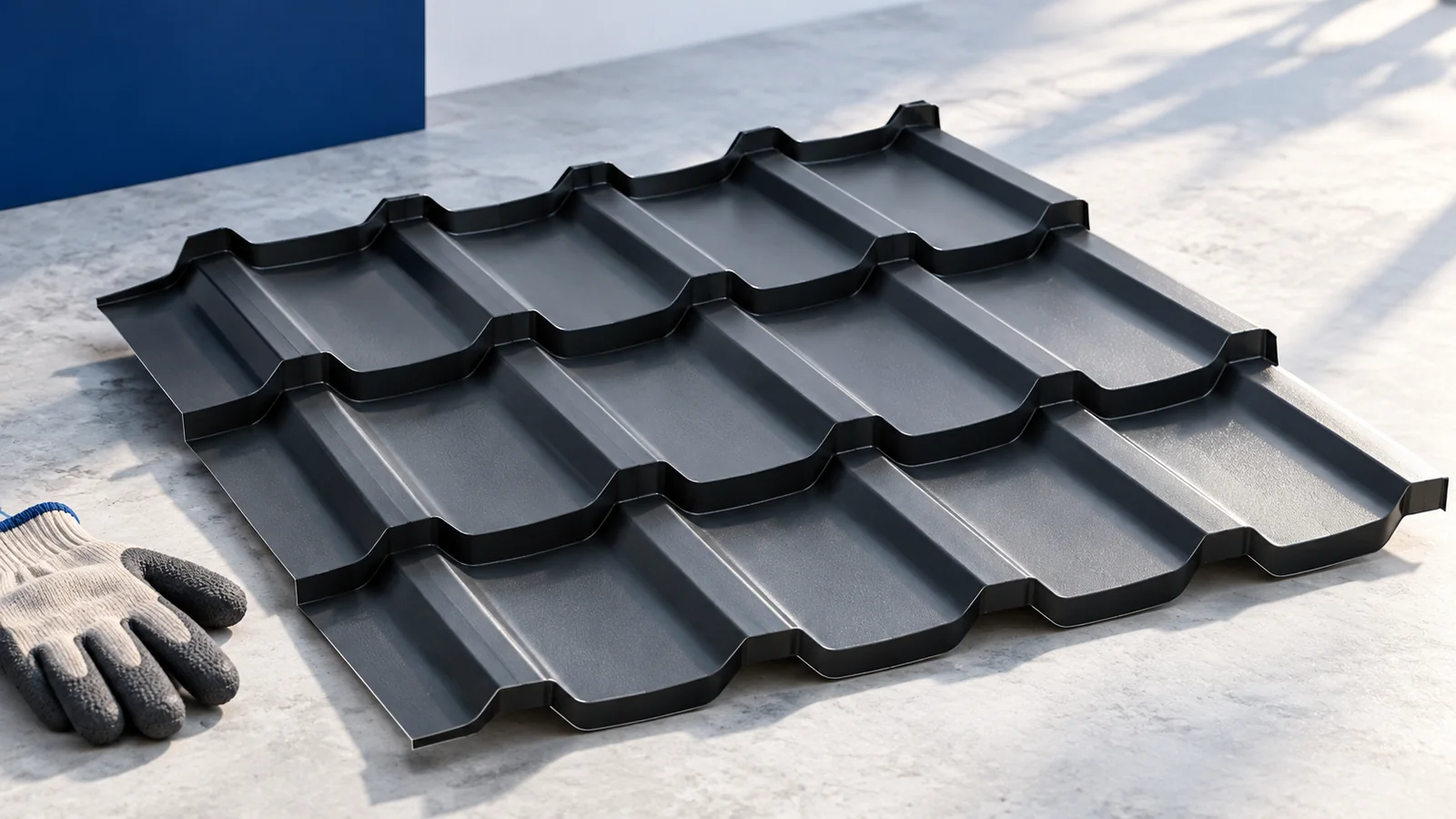
Metal roofing can reduce the weight the covering adds to a roof and gives the designer a choice of profiles, finishes and sheet lengths. Which advantage matters most depends on the building. A long sheet may cover a simple slope without an end lap; small tile-effect panels are easier to carry around a dormer. On an occupied loft, the insulation and airtight layers matter as much as the outer sheet. Compare complete roof assemblies and include flashings, fixings and drainage when working out the cost.
When is low weight an advantage?
Thin steel gains stiffness from its profiled shape, so the covering itself remains relatively light. This can help in a new design or a refurbishment. An existing timber roof still needs inspecting before it is reused.
The structure also carries the other roof layers and takes snow and wind loads. Replacing a heavy covering with steel does not repair damaged supports or joints. Allow for the change in dead load when assessing the whole roof.
What do different profiles offer?
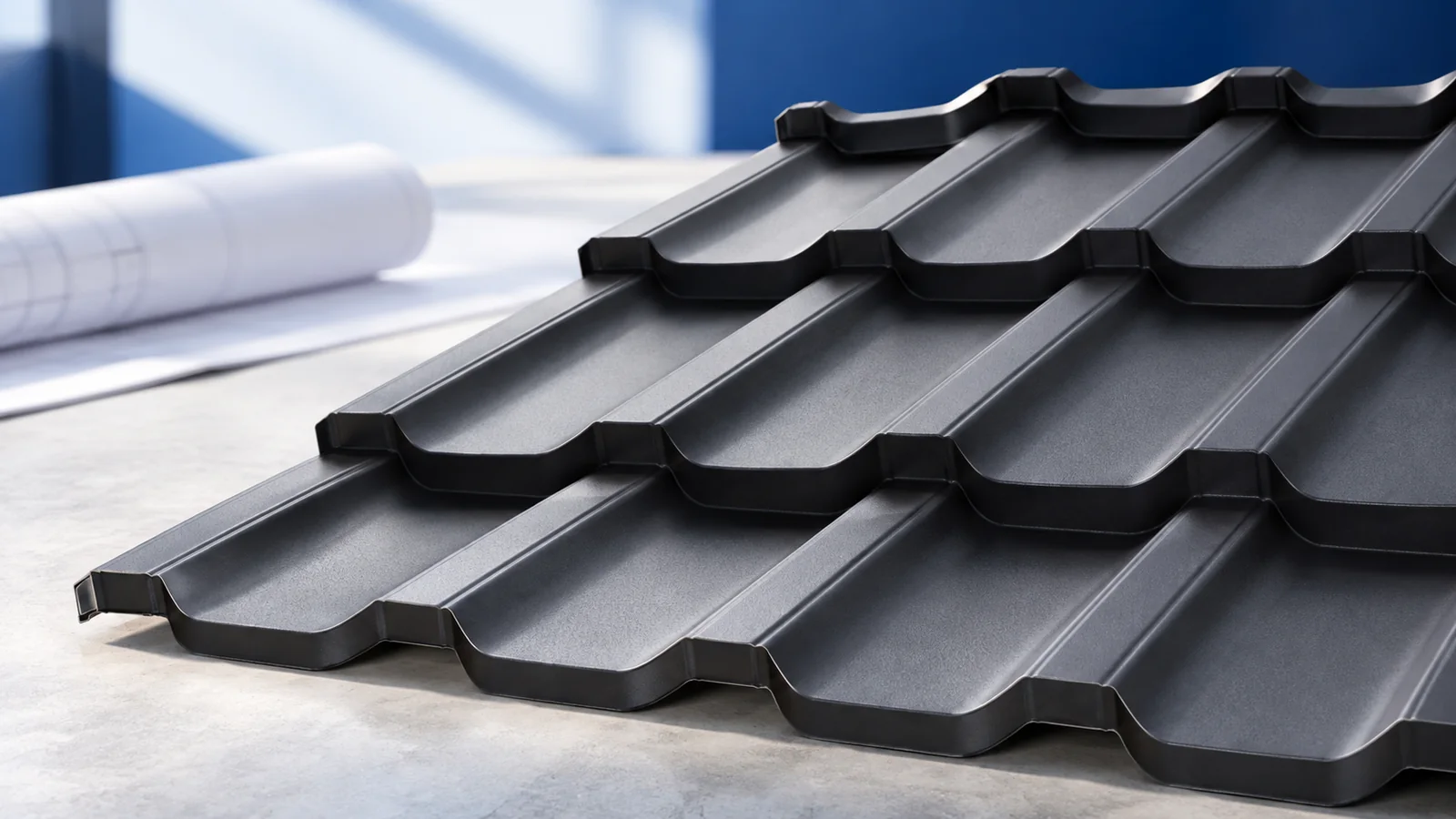
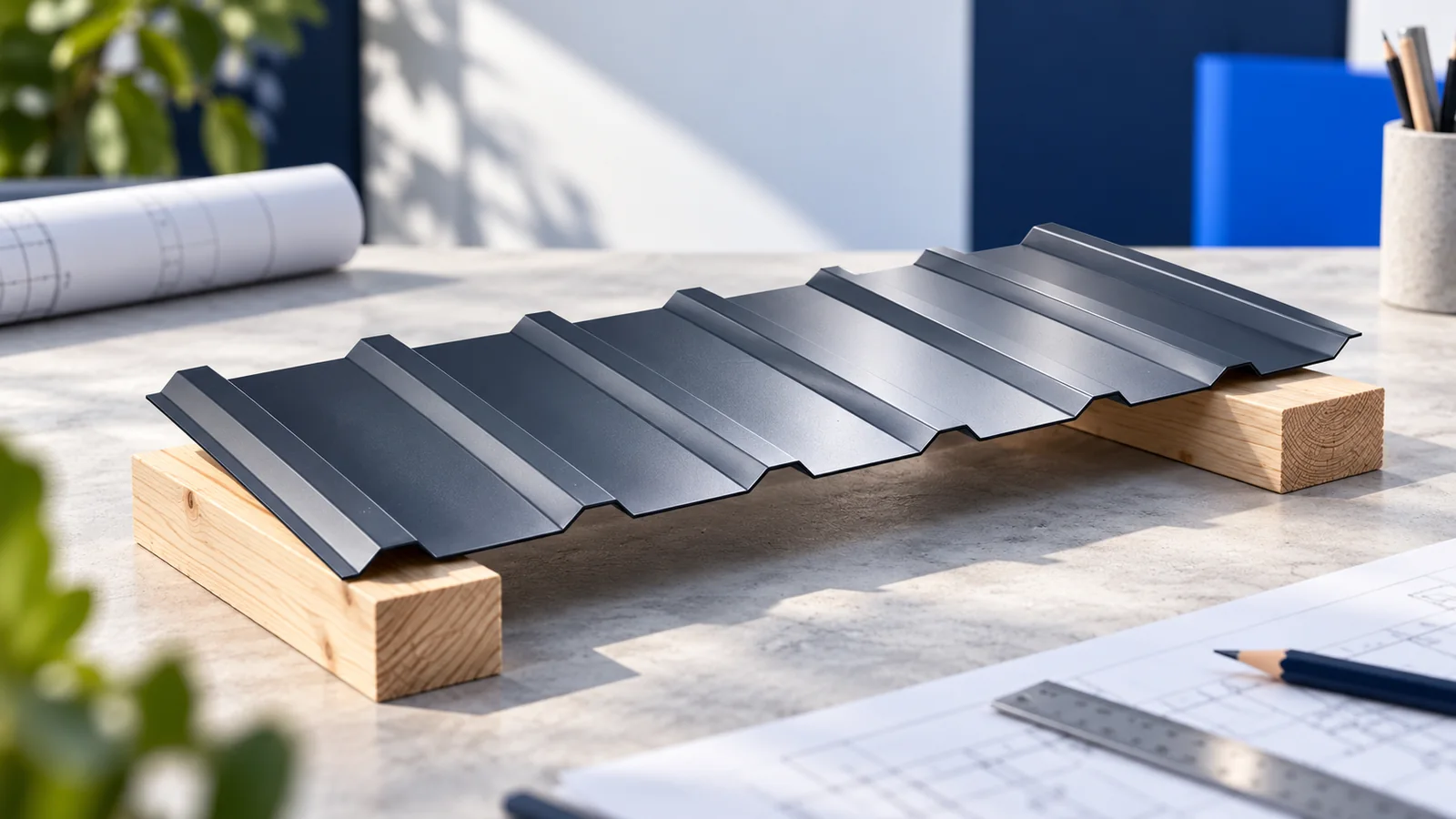
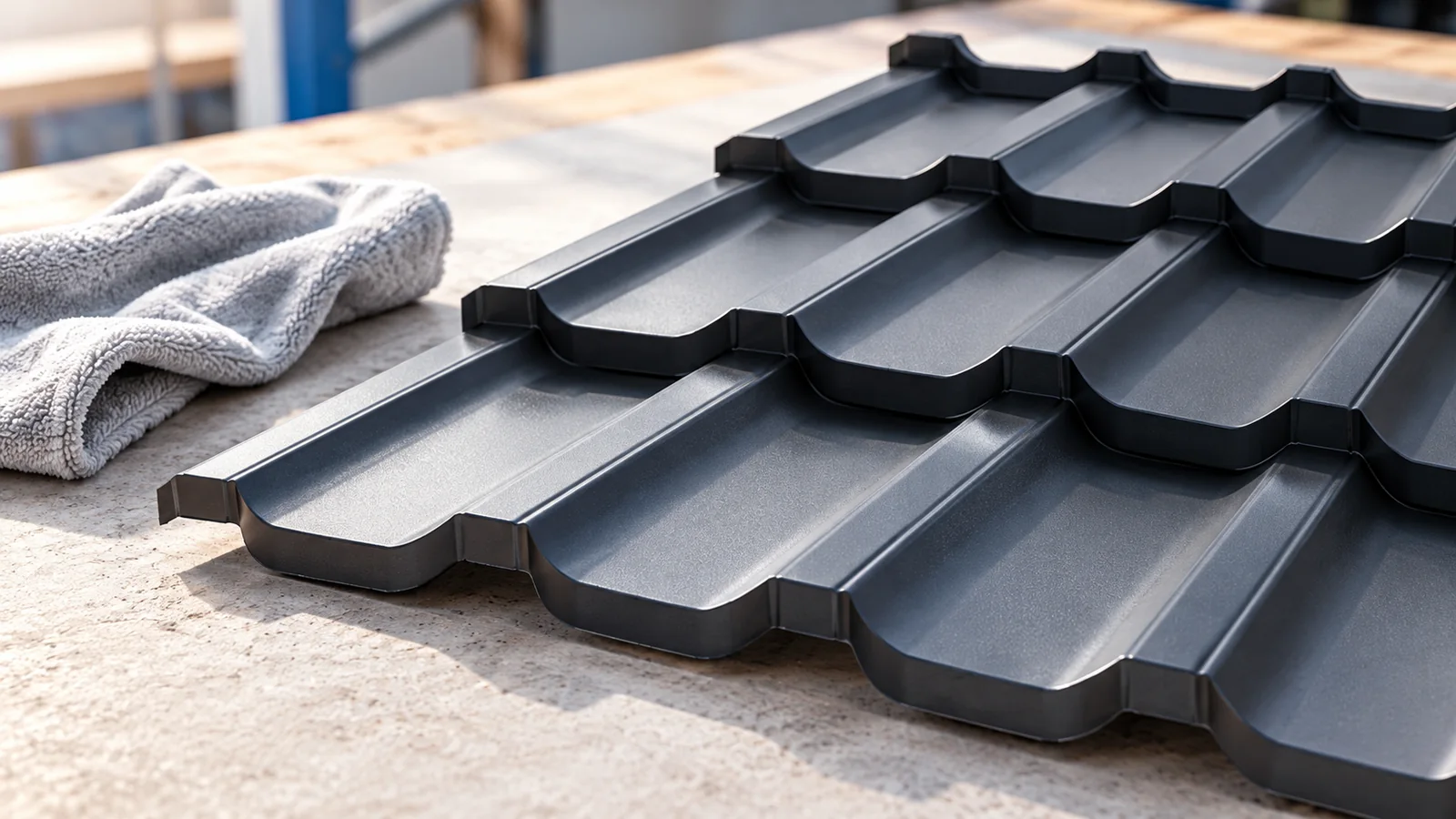
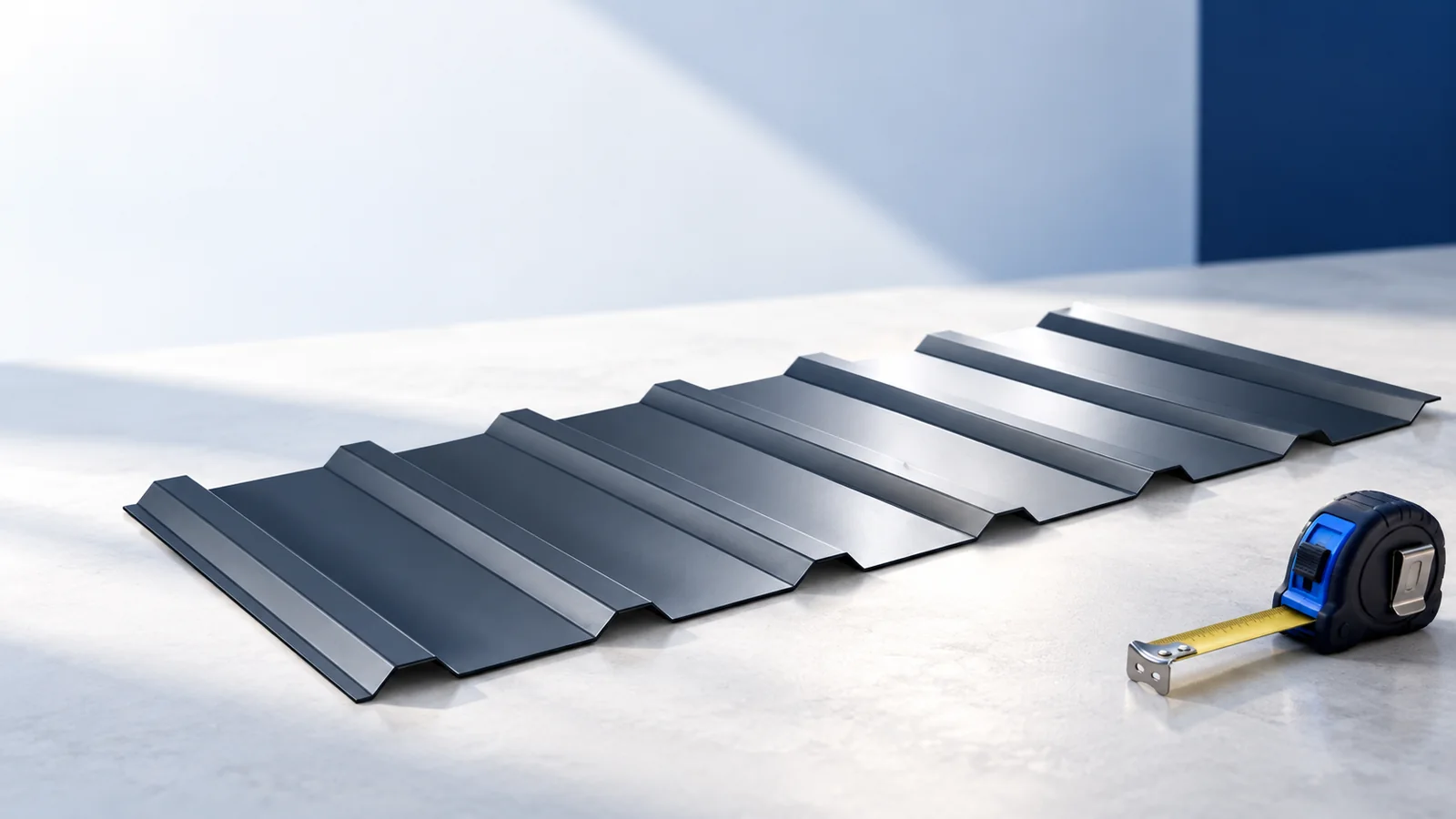
Tile-effect sheets reproduce the pattern of rows of tiles. T18 and T35 trapezoidal sheets have parallel ribs. Deeper structural profiles can form a load-bearing deck beneath the other layers. Colour and appearance alone cannot tell you which of these functions a product can fulfil.
Each family comes in several thicknesses and cover widths. Check the product data against the roof geometry and the building’s needs. A T35 designation does not tell you the allowable span, and the word ‘modular’ does not specify how a panel must be installed.
Can sheet size save time on site?
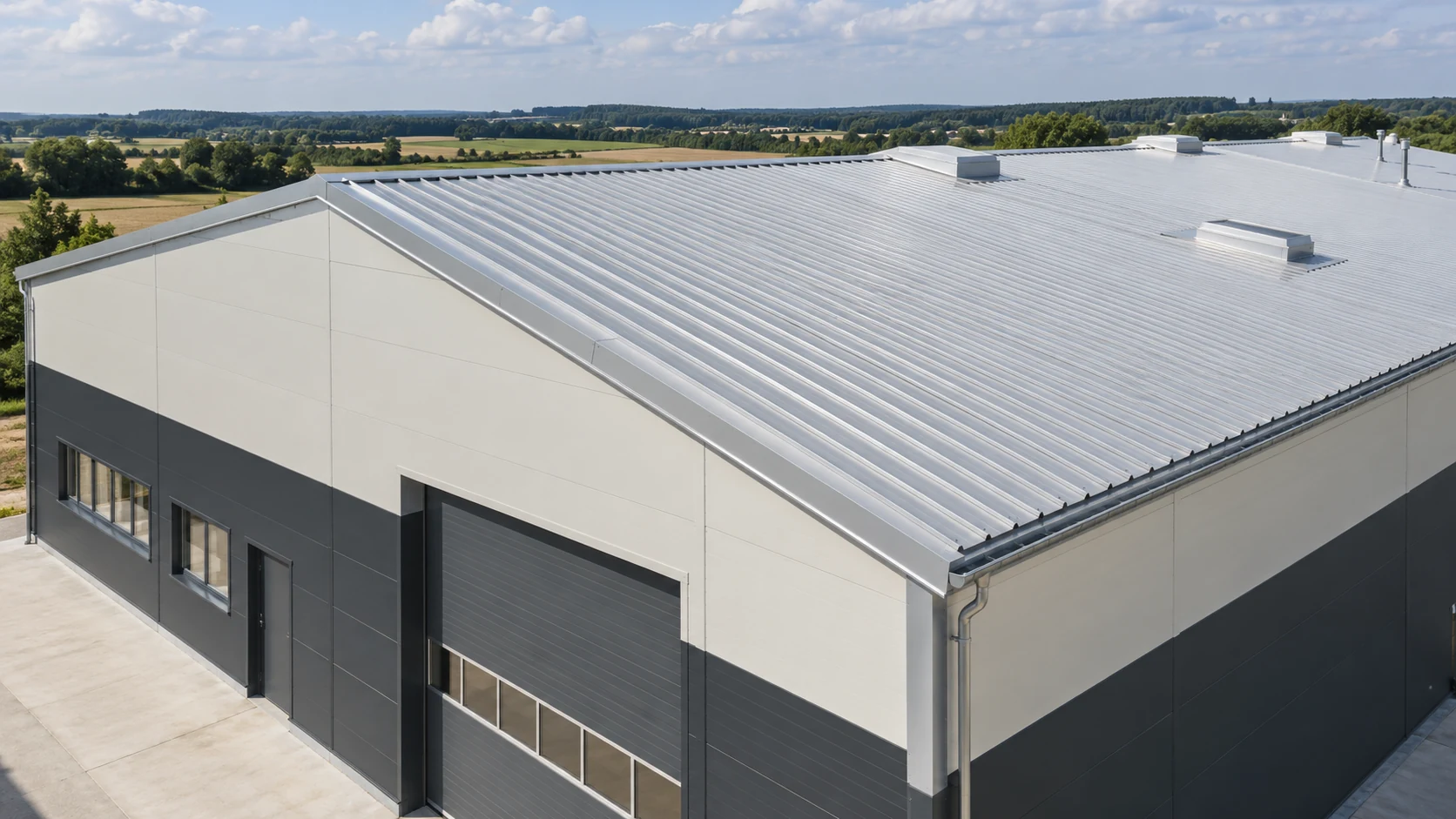
Cut-to-length sheets can cover simple slopes with fewer end laps. Smaller modules are easier to carry and to fit around complicated edges. Compare cutting plans for the actual roof and take site access into account before deciding which format saves time.
The substrate still needs to be suitable. Skipping checks on battens or flashings rarely saves time overall. The number of details, access and weather all affect how quickly the crew can lay the covering.
How can you choose the appearance?
Consider the colour, texture and profile shape together. Matt and gloss finishes reflect light differently. A deep profile casts a stronger shadow; a shallower one may suit a simple building. Look at a real sample alongside the façade and gutter finish.
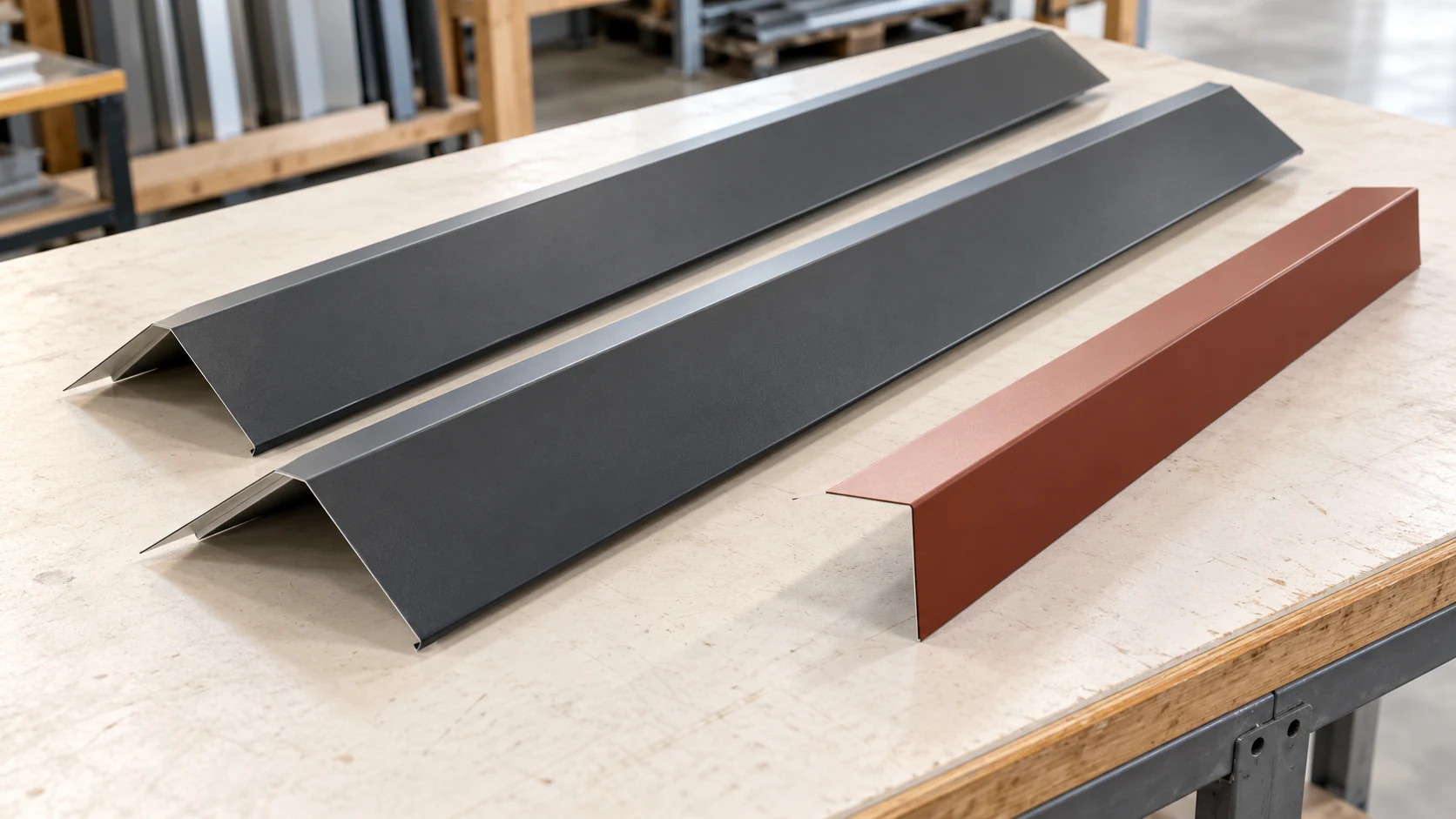
Slight shade differences between batches can show up on a large roof. Measure carefully and order matching quantities together. Coordinate accessories and flashings too: a neat eaves line or chimney junction depends on the detailing as well as the sheet.
What does a factory coating do?
The metallic coating and organic finish protect the steel from exposure. Match the system to the environment and compare the finish, UV resistance and warranty conditions. Colour or coating thickness alone tells only part of the story.
Protect the finish during transport and fitting. Unsuitable cutting methods, scratches and metal swarf left on the roof can cause local damage. Inspect the roof and remove deposits during use. A factory finish reduces maintenance but does not eliminate it.
Can a metal roof be warm and quiet?
Yes, if the complete roof is designed for that purpose. Insulation, airtightness and interior linings affect temperature and noise in the rooms below. Sheet metal alone will not make a heated loft comfortable, and anti-condensation fleece is no substitute for thermal insulation.
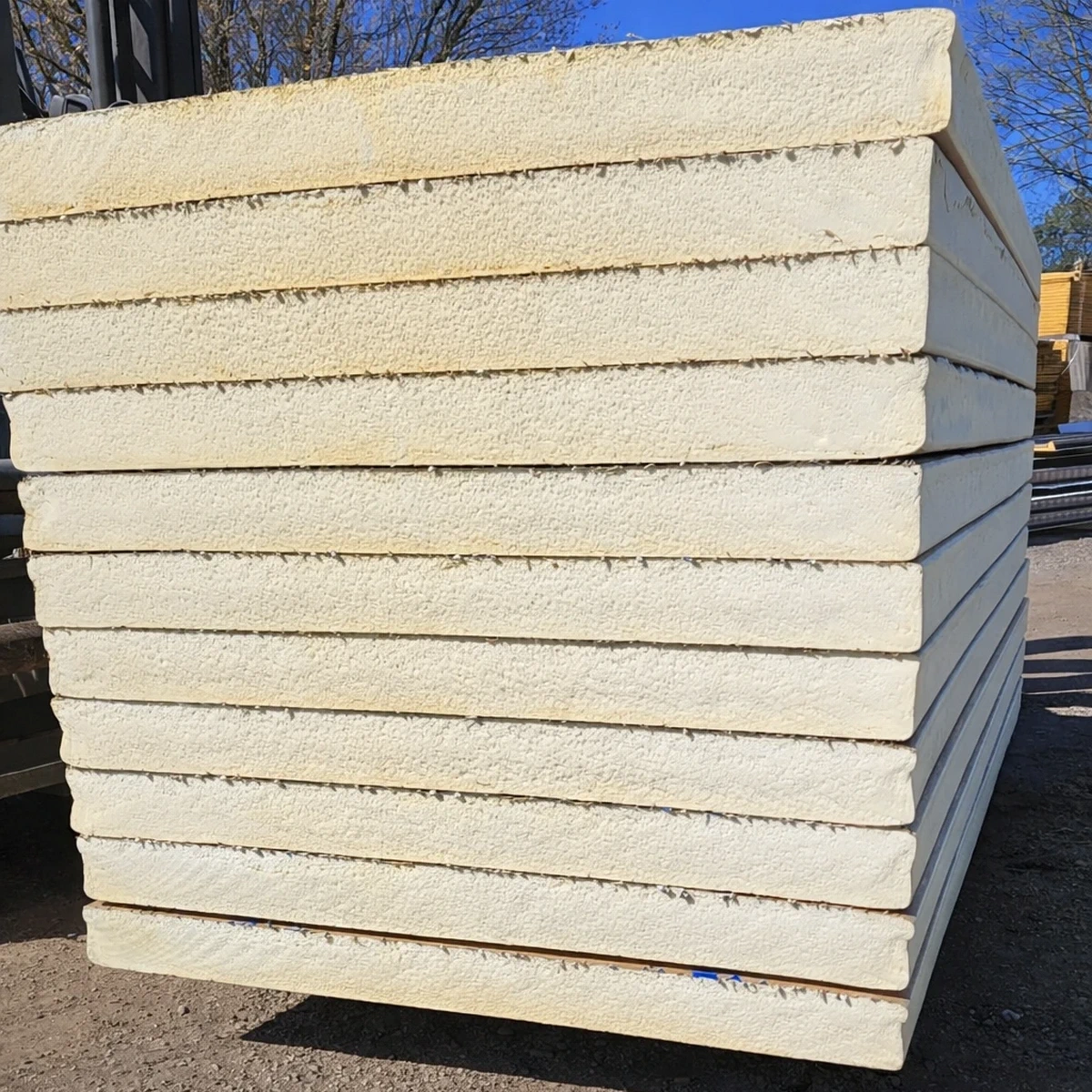
For some buildings, a roof sandwich panel combining facings and a core is a practical option. Select its properties for the individual project. Compare the finished assembly, including the joints, with a single-skin sheet and insulation fitted on site.
How do you avoid costly selection errors?
Check the pitch and supporting structure first. Then select the profile, sheet thickness and finish. Calculate quantities using effective cover and the cutting plan, and include flashings, fixings and drainage. A cheap sheet can be expensive if it is unsuitable for the job.
The benefits of metal roofing are greatest when the covering fits the building and the installer follows the details. Base the purchase on the actual shape of the roof rather than sheet price, low weight or a promise of rapid installation alone.

Free quote
What to include in your enquiry
Tell us how you plan to use the material, the dimensions and the quantity you need. Include the thickness, grade or variant name, along with the delivery town or your preferred collection branch. For a specific product, add its name or a link to the product page. We will reply to the email address you provide to discuss availability and the terms of your order.
Read next
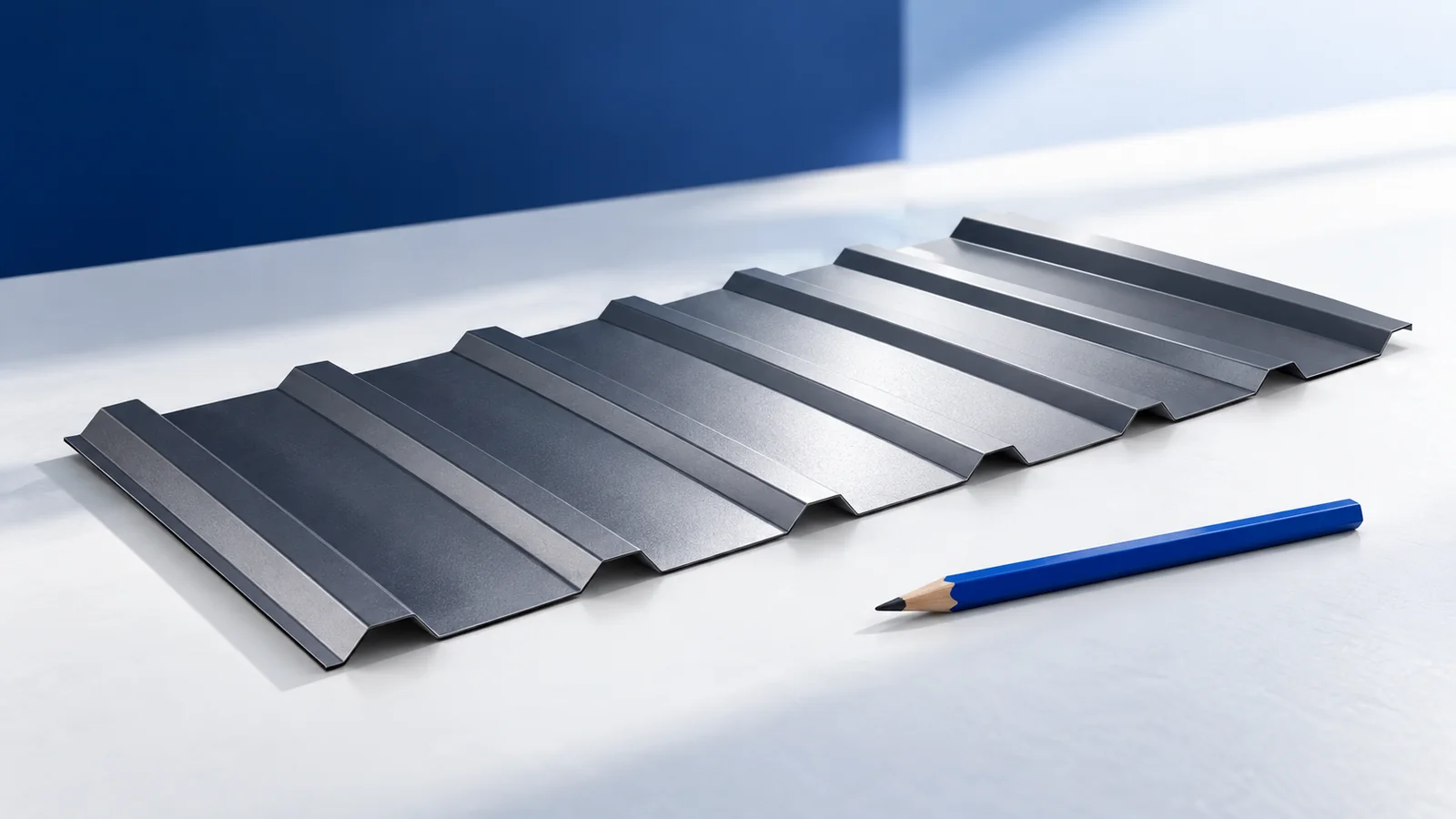
For an open shelter or carport, select the roof sheet together with the supports and anchors. Wind can reach the underside, and…
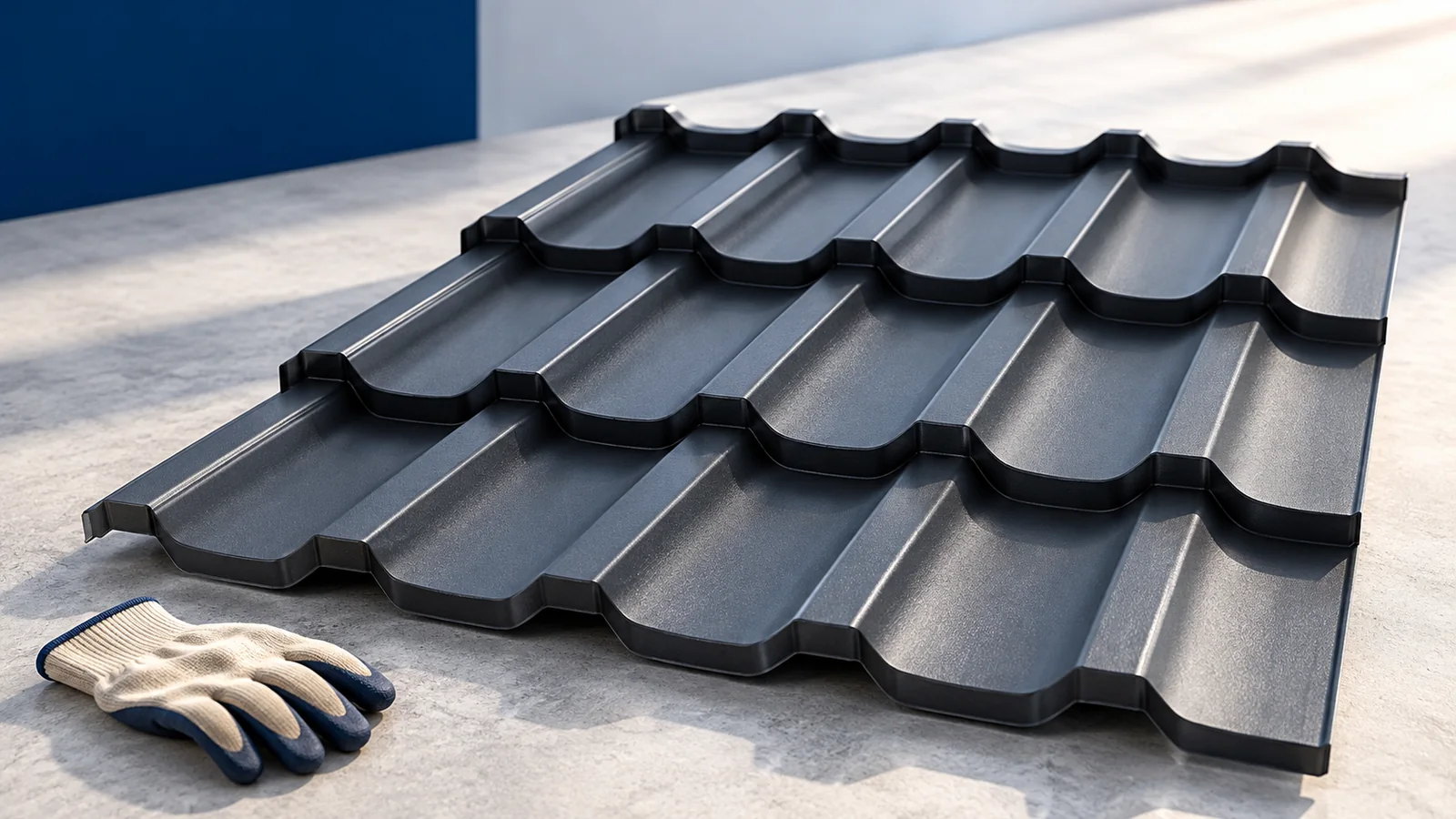
Metal roof tiles need supports set out for their profile. Bitumen shingles need a smooth, sufficiently rigid continuous deck. On a renovation,…
The frame, pitch and shape of a house roof determine which coverings you can consider. Cut-to-length metal tile sheets suit straightforward runs.…
The roof area alone tells you little about how many flashings to order. Mark each eaves, verge, ridge and valley on the…
Rafter size and spacing depend on the span between supports, the timber grade, the roof build-up and local wind and snow loads.…
Start with the fire requirements in the building design and the function the roof must perform. A PIR roof panel can meet…
When water appears inside a building, keep clear of wet electrics and sagging ceilings. Photograph the first signs from a safe position…
On a gable roof, measure each slope from eaves to ridge and mark the windows and chimneys before comparing materials. Cut-to-length tile-effect…
